- Yes
- No
Hello everyone, and welcome to this new suggestion.
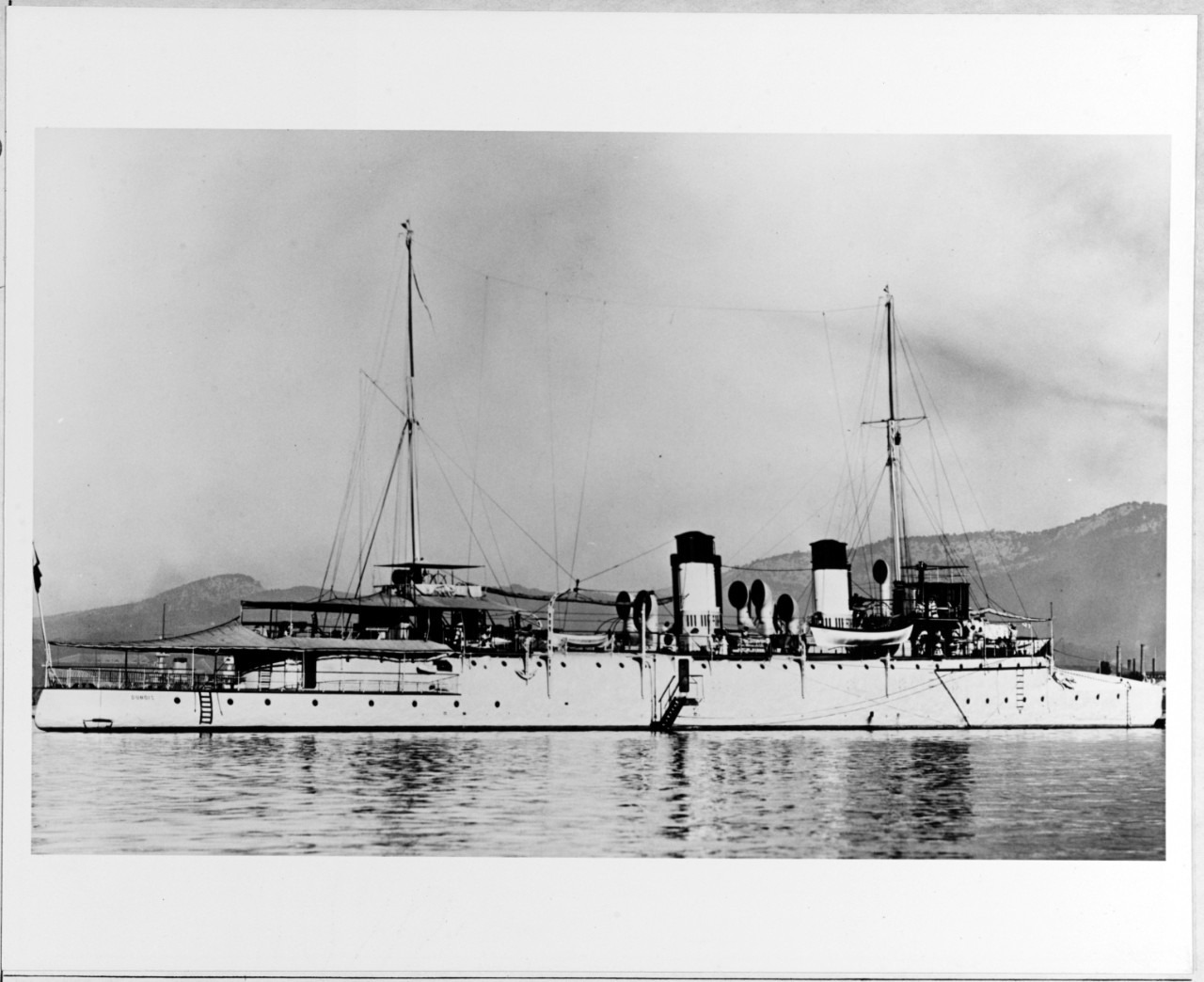
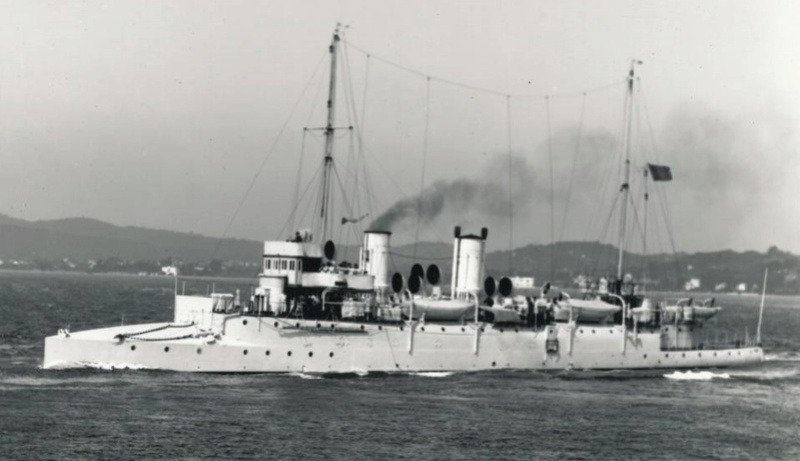
Today, I am presenting a new class of French ship, and quite an unusual one at that: the Dunois class. To begin, let me introduce the lead ship of the class, Dunois.
To put it simply, the Dunois class was a rather unconventional design. Developed as an evolution of the earlier D’Iberville destroyer class, the Dunois was intended to serve as a torpedo-armed aviso (sloop) or counter torpedo destroyer. However, the resulting vessel differed considerably from what would normally be expected from such a ship.
Despite its intended role, the Dunois carried no torpedo tubes at all. At the same time, the ship featured armor protection more commonly associated with a light cruiser, making it an unusual combination of characteristics for a vessel of its size and classification.
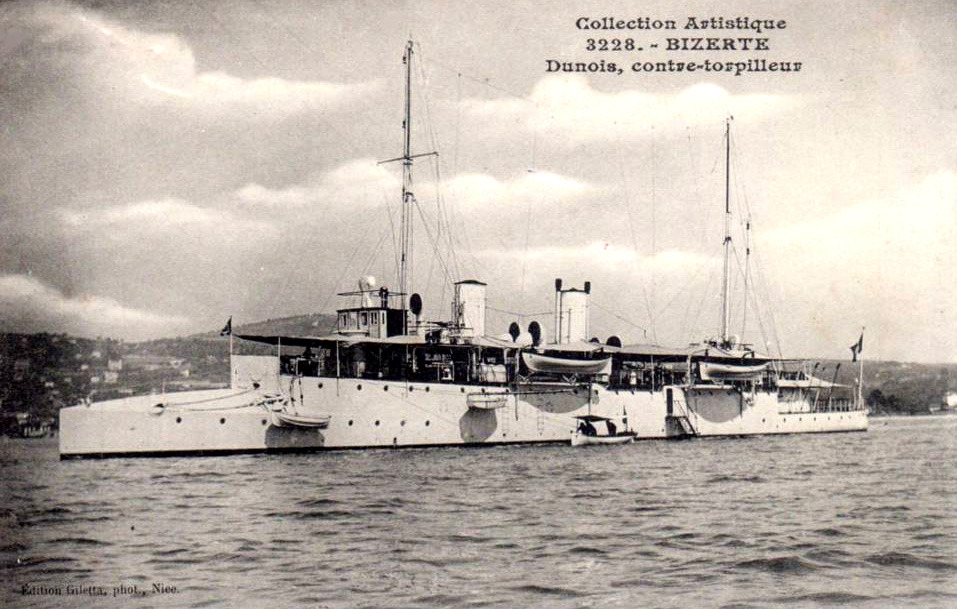
The lead ship was laid down at Cherbourg in 1896 and entered service with the French Navy in 1898. She was assigned to the Mediterranean Fleet and based at Bizerte, where she would spend nearly a decade. During this period, Dunois carried out a variety of patrol, surveillance, and maritime control missions across the Mediterranean. Her duties were generally routine, but she remained an active part of the French naval presence in the region.
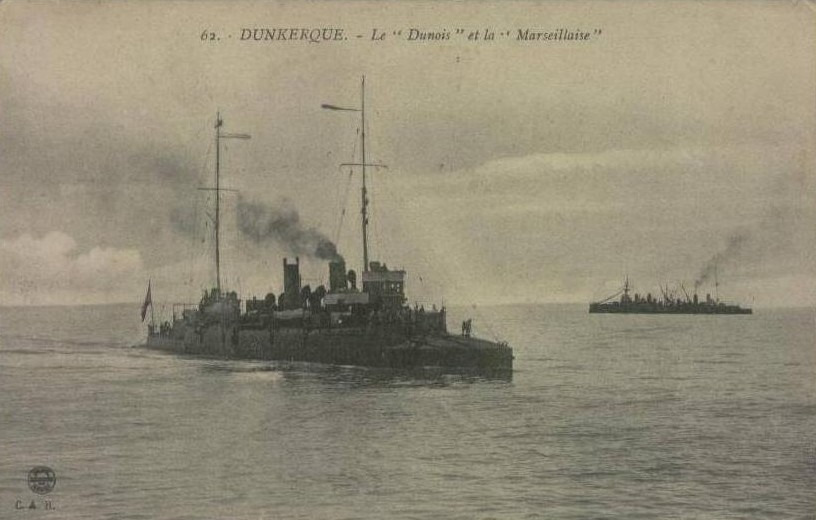
In 1914, Dunois was transferred to the English Channel. The timing proved particularly fortunate, as the First World War broke out only a few months later. Based at Dunkirk, Dunois was assigned to operations supporting the Entente forces in the region. Among her duties was helping cover the landing of British troops near Dunkirk, contributing to the protection of Allied forces operating along the northern French coast. The ship did not see actual combat during the war, firing only a few shots at a submarine spotted nearby, which promptly dived and moved away from the area. However, the Dunois did carry out rescue operations on several occasions, recovering Allied sailors from ships sunk by German U-boats, such as the crew of the British Q-18.
Following the end of the war, Dunois was transferred to the Baltic Sea, where she resumed patrol duties as part of the French naval presence in the region.
Her post-war career came to an abrupt end in 1919, when the ship ran aground on a reef and suffered significant damage. Although she was successfully refloated the following year, the aging vessel was not returned to active service. Dunois was eventually sold for scrapping, bringing an end to the career of one of the more unusual vessels to serve in the French Navy.
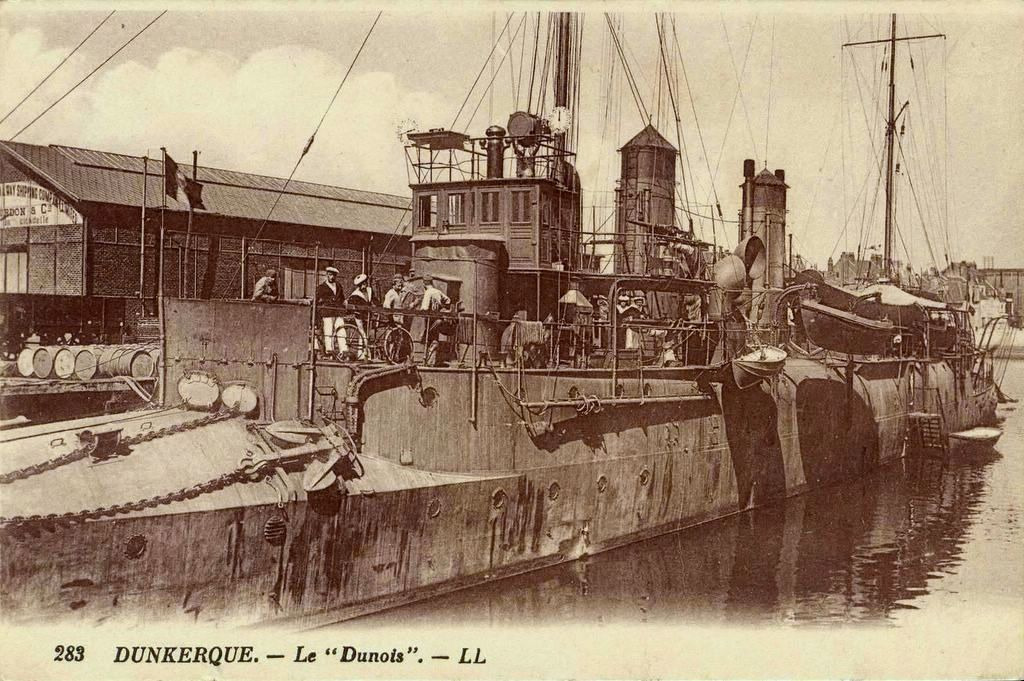
Characteristics
Length : 78.00 m
Width : 8.43 m
Draught : 3.90 m
Mass : 904 tons
The ship is powered by two steam engines generating 7,500 hp, fed by eight boilers and driving two propellers. This allows the vessel to reach a top speed of 22 knots and cover a range of 5,000 nautical miles at 10 knots.
The crew consists of 137 sailors.
Armor
Unlike other classes of French destroyers, this ship features armor protection. It is equipped with a 25mm armor belt, a 10mm armored deck, and a 50mm armored bridge.
Weapons
The ship’s armament is unconventional, to say the least; it lacks torpedoes and large-caliber guns, relying instead on several smaller-caliber guns:
- 6 x 65mm Mle 1891 guns
- 6 x 47mm Mle 1885 guns
In-game, this ship would be highly unusual; the combination of good armor and high speed, contrasted with very light armament, makes it particularly difficult to balance, yet it would be a truly unique addition to the French tech tree.