- Yes
- No
Hello everyone and welcome to this new feature.
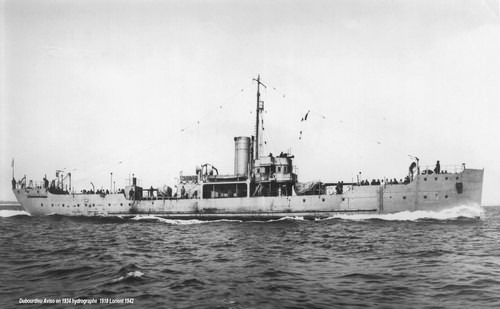
Today I’m presenting a new class of French ships, the Dubourdieu class. And to begin, here is the first ship of this class, the Debourdieu.
This class of ship is particularly obscure in naval history, and documentation about it is relatively scarce. Only a limited number of photographs and archival sources remain available today, so some aspects of their history are less well documented than those of more famous warships.
At the beginning of the World War I, German U-boat operations posed a serious threat to Allied maritime logistics. These submarines were capable of striking merchant shipping with little warning, and their stealth made them extremely difficult to counter with the naval technologies available at the time. Merchant vessels transporting troops, supplies, and raw materials suffered heavy losses, forcing Allied navies to rapidly adapt their defensive strategies.
The French naval staff initially responded by assigning destroyers and other warships to escort merchant convoys. However, it soon became clear that the number of vessels required for such missions would far exceed the fleet’s available resources. Warships were needed for many other tasks as well, including fleet operations, patrol duties, and coastal defense. As a result, the French Navy adopted a pragmatic solution: arming civilian and merchant vessels so that they could participate in convoy protection. This approach allowed a larger number of ships to be deployed without entertaining too many front-line combat units.
Within this context, numerous civilian ships were either requisitioned or specially designed to serve as auxiliary escorts. Several classes of vessels were created to fulfill this role, including ships such as the Arras-class aviso, the Ailette-class aviso, and the Ardent-class aviso.
The Dubourdieu class followed the same philosophy. These ships were designed with a silhouette similar to that of merchant vessels, allowing them to blend into civilian maritime traffic. The idea was simple but effective: by appearing to be harmless cargo ships, they could potentially lure German submarines into approaching, at which point the disguised escort ship could reveal its armament and attack.
Originally designed with a transport-type hull, these vessels combined the practical characteristics of merchant ships with light naval armament suitable for patrol and escort duties. In total, six ships of this class were armed and entered service with the French Navy between 1919 and 1920. Unfortunately, this was too late for them to take part in the First World War, as the conflict had already ended by the time they were ready for operational deployment.
Following the war, these vessels continued to serve in various secondary roles within the French fleet, including patrol, escort, and colonial service. However, naval technology advanced rapidly during the interwar period. By the late 1920s and early 1930s, the relatively modest capabilities of the Dubourdieu-class ships were becoming increasingly outdated. Consequently, most ships of the class were gradually decommissioned between 1933 and 1939, replaced by more modern vessels better suited to the evolving requirements of naval warfare.
One ship, however, remained in service longer than the others: the Dubourdieu itself. The vessel continued to operate with the French Navy into the early years of the World War II. During the Second World War, the Dubourdieu was stationed at Casablanca, which was then part of French North Africa. In 1942, during the Allied landings in North Africa known as Operation Torch, the ship was sunk during the fighting around Casablanca.
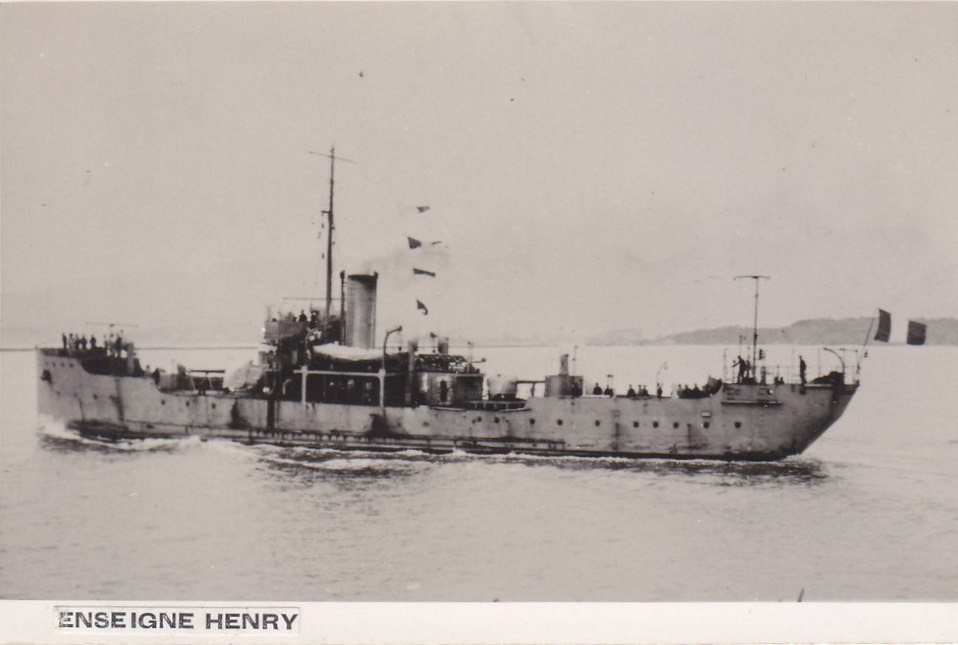
This ship is not the Dubourdieu but the Enseigne Henry, a ship of the same class; the 138.6mm guns at the bow and the 100mm guns at the stern are clearly visible.
Characteristics
Length : 64.9 m
**Width :**8.2 m
Draft : 3.1 m
Mass : 453 tons
The ship is propelled by two Breguet turbines powered by two steam engines, giving it a total power of 2,000 hp and allowing it to reach a speed of 16.5 knots and a maximum range of 2,000 nautical miles at 15 knots.
The crew consists of 74 sailors.
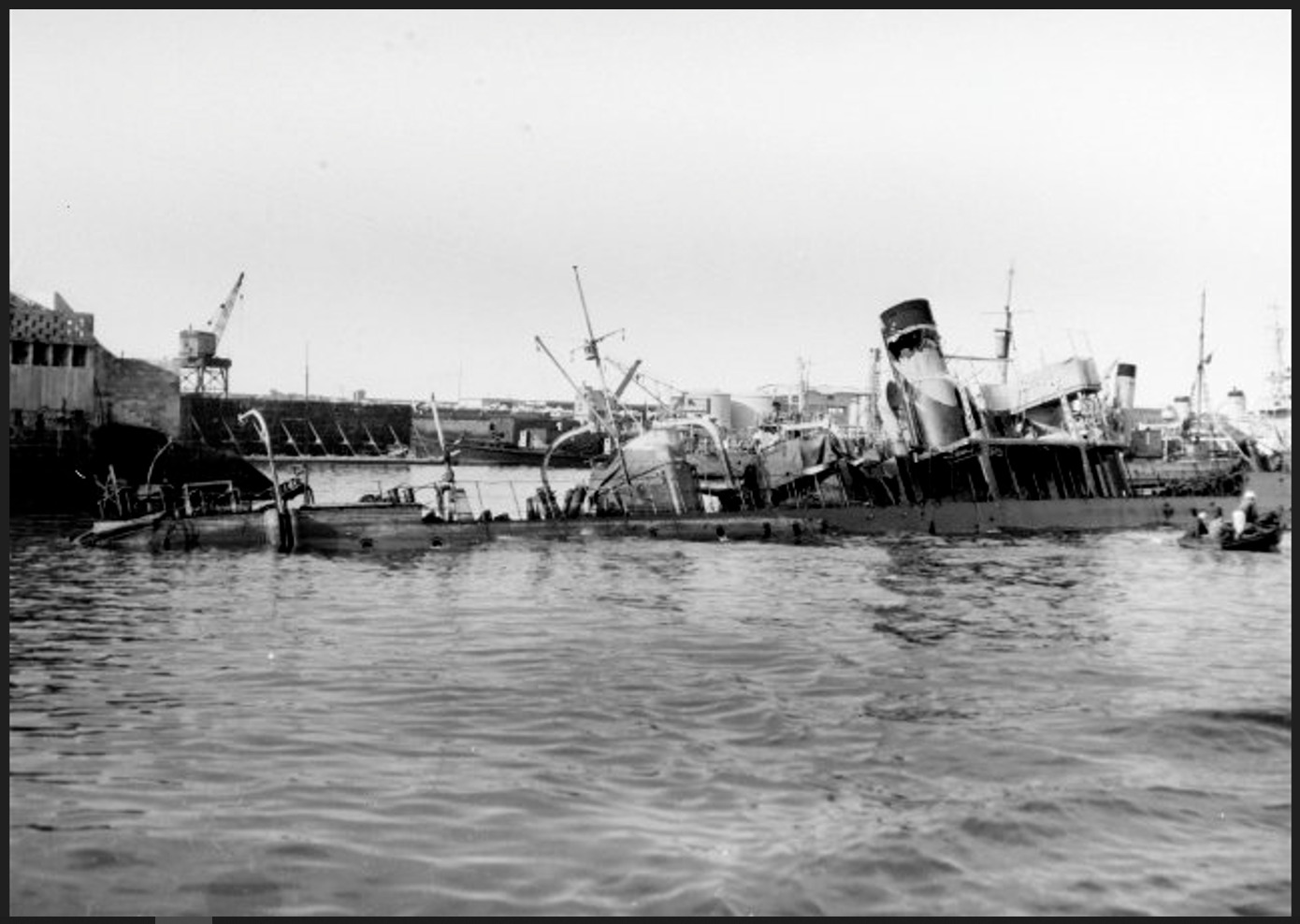
Remains of the Dubourdieu after its destruction in Casablanca
Weapons
The ship’s armament consists of standard cannons found on most French ships of the period. These include:
Guns :
- 1 x 138.6mm Mle 1884 canon
- 1 x 100mm Mle 1891 canon
Other :
- Depth charge (40 according to some sources)
In-game, this ship would be an interesting addition alongside the Arras and Amien, providing a versatile combat vessel for the French forces and thus complementing the French tech tree in a compelling way.
Pictures