- Yes
- No
Background
Spoiler
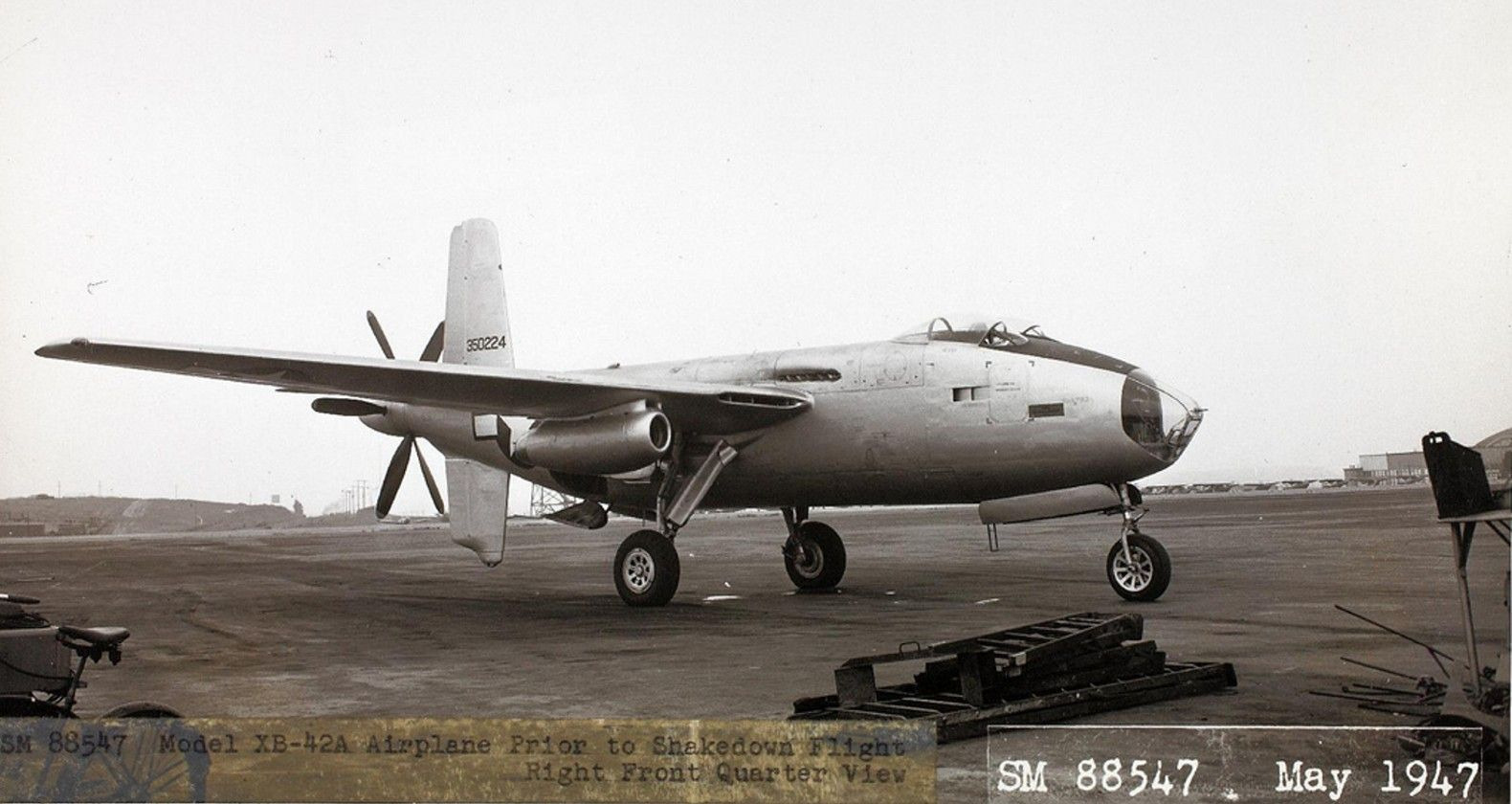
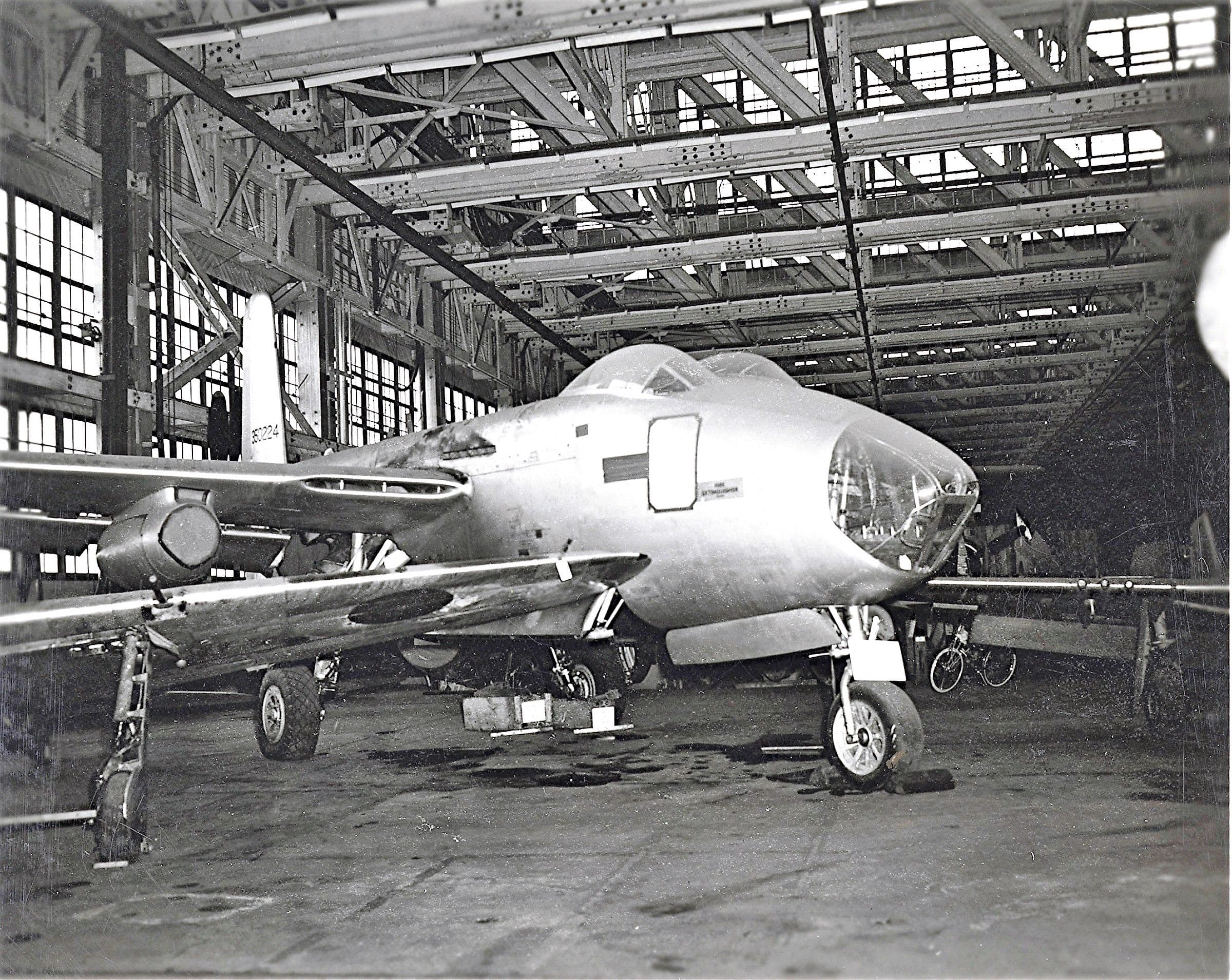
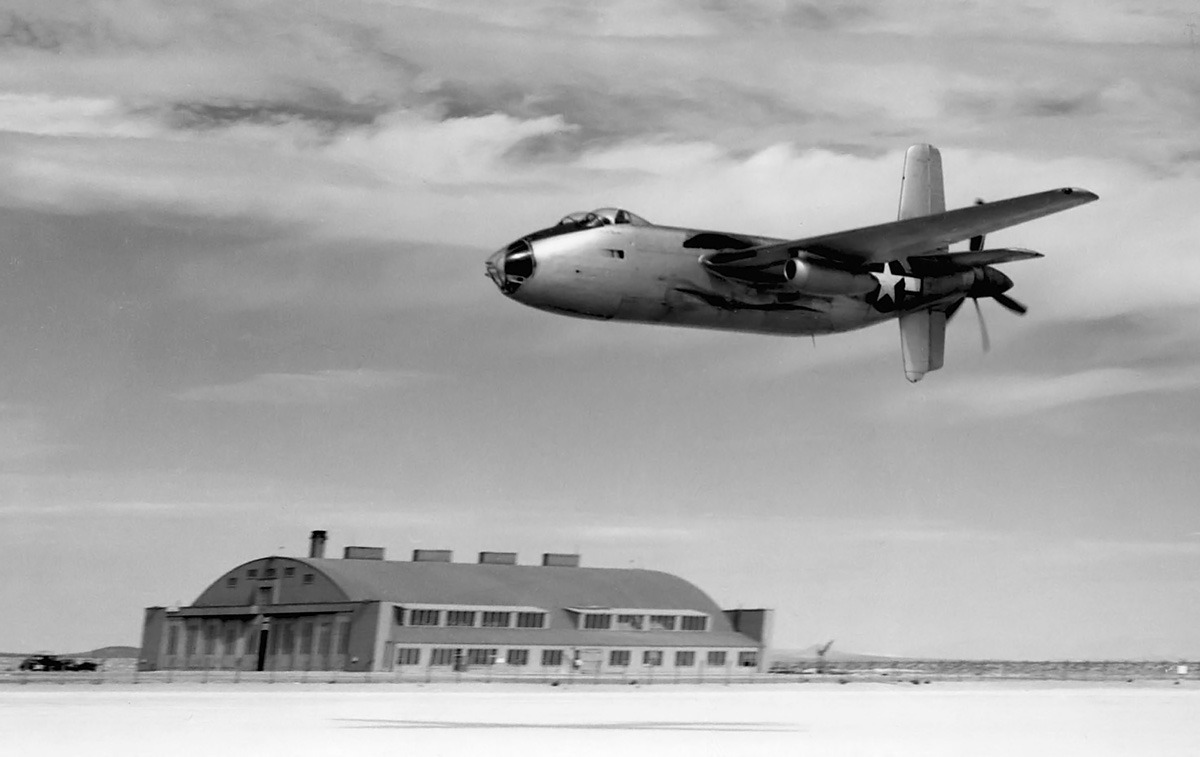
In April 1945, works were authorized to transform the XB-42 to become what is now known as the XB-42A. Although work was authorized in April of 1945, the modifications planned could not be carried out until March of 1946 due to the delay of the new turbine jet engines. following delivery of the engines, new landing gear, removal of two of the wing mounted fuel tanks followed by the addition of two internal fuel tanks located in the center fuselage, and finally the installation of two Westinghouse 19XB-2A turbine jet engines on the wings.
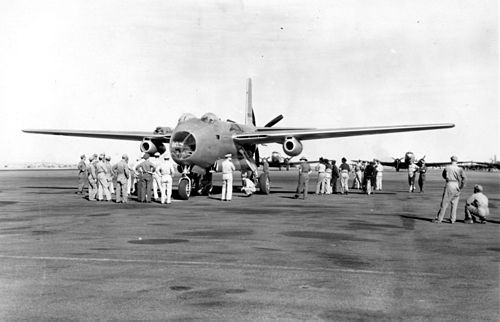
The first flight of the XB-42A would take place on the 27th of May, 1947, and had the aircraft fly from Santa Monica to Muroc Army Airfield. additional flights conducted from Muroc proved that the addition of turbine jet engines was unsatisfactory, and to make matters worse, on August 15th the XB-42A made a hard landing and damaged the lower vertical stabilizer and rudder. Following Repairs Douglas argued against the Air Force in that further developing the XB-42A would be too much of an economical strain on the company and that the XB-42A project be terminated.
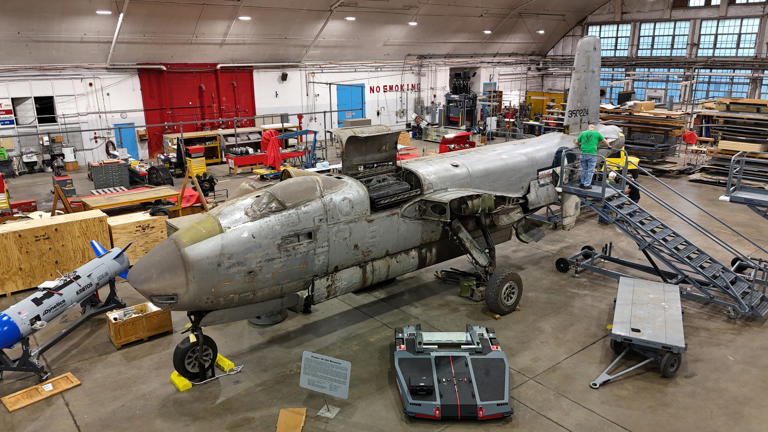
Following termination of the project the XB-42A was moved to a storage facility and eventually made its way to the Smithsonian, where it now resides in storage.
Technical Data
Specifications
Crew - 5
Length - 16.41 m
Wingspan - 21.52 m
Height - 5.74 m
Empty Weight - 11,238 kg
Gross Weight - 17,690 kg
Max Takeoff Weight - 20,366 kg
Powerplant A - 2 x Allison V-1710-133 Liquid Cooled V-12 Engines (1,300 kW each)
Powerplant B - 2 x Westinghouse 19XB-2A Turbojet Engines (7.1 kN each)
Max Speed - 713 km/h
Service Ceiling - 10,820 m
Armament
Up to 4,000 lbs / 1,814 kg of bombs in the bomb bay.
Images
Sources
Spoiler
(Book) Encyclopedia of U.S. Air Force Aircraft and Missile Systems, Volume II, Post-World War II Bombers 1945-1973
(Book) McDonnell Douglas aircraft since 1920, Volume 1