Please point out where it is defined that HAS means DU in both hull and turret. EXPLICITLY, without it being explicit it is not defined.
This logic tracks, it’s the first part where the defining happens that hasn’t happened.
No, it doesn’t. The HAS can just as well just contain the package as a part of it. No where is that definition stated.
No, there has been no definition that all of the Heavy Armor System is DU. Please prove this. Not argue it logically, prove it. Underline where the definition happens.
Correct.
No, it is a future study and prospecting of costs.
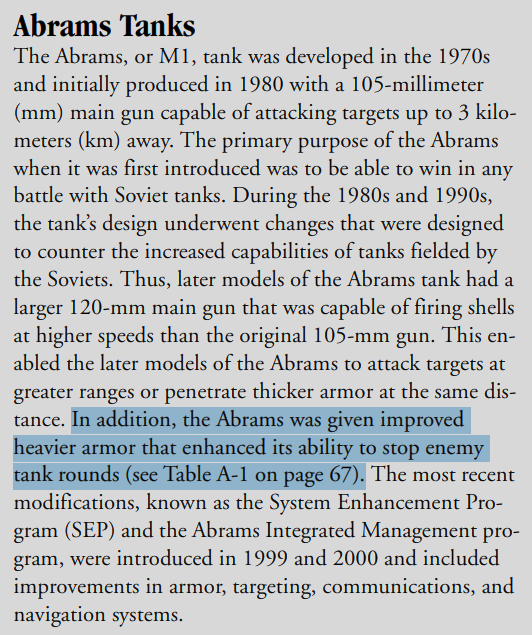
It also several times refer to “heavier armor” and mentions it adds weight when referring to the table in question.
And the source they used for the table in the Historical background section
(so not even part of the study to begin with but just there as an appendix to add context)
The “Heavy Armor System” is a generic term. It is used to describe several generations of armor packets used at different times and in different parts of the tank.
You are relying on a medical manual from 2001 to describe the fleet configuration in 2006 and 2016. That is your error.
A manual written in 2001 describes the tank as it existed in 2001. It does not account for the upgrades audited by the CBO in 2006 or the fleet licensed by the NRC in 2016.
You claim the Heavy Armor in the CBO report refers to a stronger non-DU hull.
That theory falls apart for two reasons:
The CBO already has a name for stronger non-DU hulls. They used it in the IPM1 column: Improved composite armor. If the AIM hull was just non-DU composite, they would have used that term. Instead, they switched to Heavy Armor.
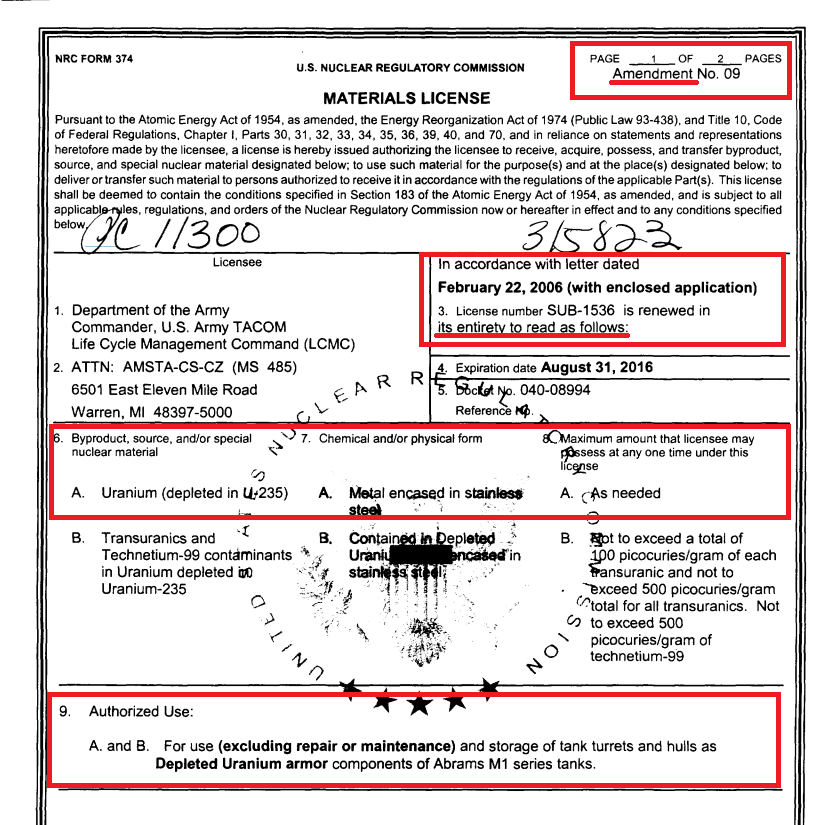
The NRC License. If the “Heavy Armor” hull was just non-DU steel as you claim, the NRC would not authorize the use of DU in the hull.
Item 9 of the license explicitly authorizes DU material for use in tank turrets and hulls.
If the hull is non-DU, why is the Nuclear Regulatory Commission licensing it for DU use?
Your theory requires the CBO to use the wrong name and the NRC to license a non-radioactive part. My theory just requires the documents to mean exactly what they say.
That makes no sense. The heavy armor package or HA is a specific armor upgrade, so your first point that IPM1 already has an improvement doesn’t mean it can’t have another one, which also aligns with what is suggested in the manuals.
Secondly as u said the NRC gave a license, which was applied for by the army, and application did not state they have any issues with what was added as item 9, so this was not army’s requirement, therefore it makes no sense that this has to have suggested that the NRC document acknowledges the existence of more DU hulls.
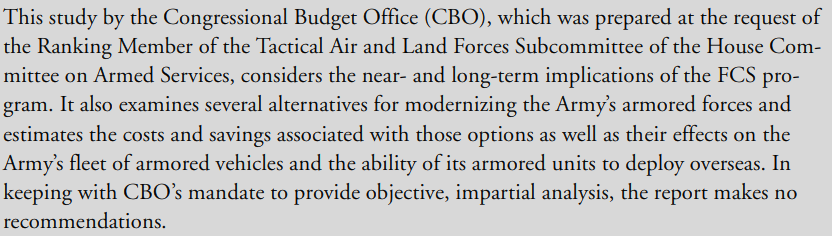
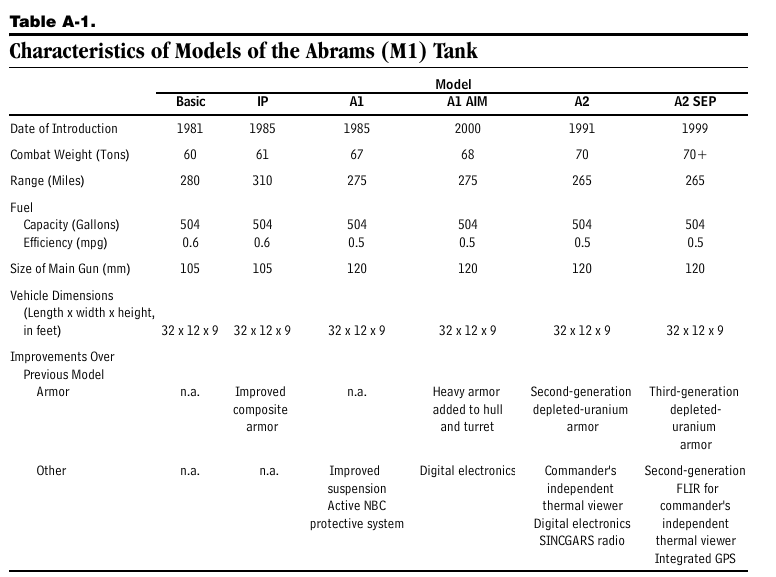
You are fundamentally misrepresenting the structure of the CBO Report to dismiss it. Yes, the Introduction and the main body of the report are analyzing the future costs of the FCS program. That is the purpose of the report. However, you are ignoring the section title where the actual data is located.
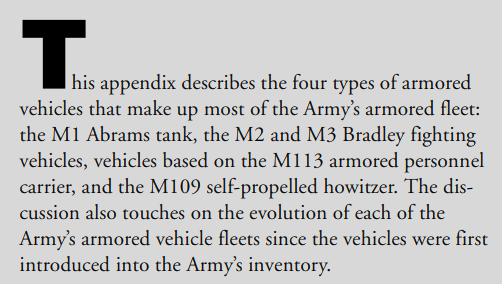
Table A-1 is located in Appendix A. The title of Appendix A is: A Description and History of the Army’s Current Armored Vehicles.
The very first sentence of that section states that it describes the fleet since the vehicles were first introduced. It is a historical audit of the existing inventory, not a future projection. When that table lists Heavy armor added to hull for the M1A1 AIM, it is describing a historical event that had already physically occurred and been paid for. It uses the past tense because the upgrade was already done. You cannot dismiss a historical inventory audit as “future prospecting” just because it is attached to a report about future spending.
You are also completely wrong about the source citation. You are pointing to a website in the bibliography and claiming the CBO just copied a blog. That is not how government auditing works. A bibliography lists all sources consulted for context, including public reference guides. But the specific financial and production block data in that table regarding the AIM program contracts comes from internal Department of the Army budget data. The random website you linked does not contain that specific financial and technical breakdown. You are accusing the primary auditor of the US Congress of incompetence because you found a website in the footnotes.
And regarding the definition, you keep insisting that Heavy Armor System is a generic term. It is not. If it were generic, it would be written in lowercase letters. In the Federal Register, it is capitalized as a Proper Noun: Heavy Armor System. It is the official name of a specific product.
More importantly, you cannot have a generic system that is legally defined by its radiation limit. Look at the text I quoted again. The Federal Register explicitly links the specific name Heavy Armor System to radiation exposure. Generic weight does not emit radiation. Steel does not emit radiation. Only the Depleted Uranium package emits radiation.
The Army explicitly defined the Heavy Armor System as the thing that emits radiation. The CBO explicitly stated that the Heavy Armor System was added to the hull. The NRC explicitly lists the hull as a container for Uranium.
You are fighting against the capitalization, the historical section of the CBO report, and the radiation clause in the Federal Register. All three of those documents align perfectly to show that DU is in the hull. You are the one introducing ambiguity by claiming the Army uses identical names for different materials and that the CBO relies on blogs for their data.
Man… you are ignoring why the terms are different. The CBO specifically called the IPM1 armor Improved Composite. They specifically called the AIM armor Heavy Armor. They changed the terminology because the material changed to the DU standard defined in the Federal Register. If the AIM hull was just more composite, they would have kept calling it composite.
And regarding the license, you are completely missing the legal reality. Item 9 lists Hulls as an authorized place for Depleted Uranium. The NRC does not regulate non-radioactive armor. If the hull armor was just composite or steel like you claim, it would be illegal for the NRC to list it as a Uranium component.
The mere presence of Hulls on Item 9 proves they contain the regulated material. You cannot have a nuclear license for a non-nuclear hull.
That website is linked inside of the table itself. Not as a general source for the rest of the document.
It attributes the radiation to the DU packages. Not the HAS as a whole. The DU packages are a part of the HAS, that does not mean that there aren’t other non DU parts as well.
No they didn’t.
Again show the explicit definition that HAS means DU in both hull and turret. Not assumptions and logic. Explicitly stated. You entire argument and entire diskussion is built on that definition that you have so far failed to prove. You have made a lot of statements regarding this definition with nothing concrete to back it up.
I’m not entirely sure how you even come to this conclusion when the CBOs own documents MAKE distinctions clear.
Spoiler
Let me explain it in simple terms for you, using your own logic.
WHY would the AIM which was meant to be a “refresh” or “like new” program for existing M1A1s in service list HA in both the hull and turret but came 9 years after the M1A2 which in there OWN document list as having Gen 2 DU armour.
Whats even better is the M1A2 SEP is listed as having Gen 3 which came 1 prior to the AIM being introduced. so by using your logic WHY would they not label the HA as Gen 2 or Gen 3 DU armour.
WHY make the distinction between HA/Gen2/Gen3 DU armour.
What you also seem to ignore and might make more sense is the cost, the AIM was basically a new tank but not, so rather than effectively scrap all current M1A1s in favour M1A2s they simply upgraded them/turned them into like new using the AIM program, now do you honestly think for one minute that in the years from 1985 to 2000 they would suddenly retro fit old M1A1s to M1A1 AIMs with DU armour especially when we talking several thousands of M1A1s here that they would have potentially refreshed.
Spoiler
From a logical POV it would make sense the army, government or whoever would cut costs on such a program to reduce well the cost/time involved and how would one party manage this exactly? simple you use armour that is more widely produced and easier to obtain, I’de hate to figure out potentially how much DU they might have needed even for the amount of current AIMs in service at the time let alone the planned further ones if they did push for all M1A1s to be changed/serviced.
The issue with your source like others have mentioned, HA doesnt exclusively refer to DU, and even if did you sadly would in reality only have 2 tank be effected (AIM/M1A1HA) you would still need sources for the M1A2/M1A2 SEP/M1A2 SEPv2 because just assuming they would use DU in hull across further variants when weight was already becoming a major concern has to be considered realistically
95% sure gaijin is literally using those trials reports themselves for the Swede Leopards, Leopard 2A5(and onward), M1 Abrams series and Leclerc.
At least for the M1A2 SEP+, Leclerc SXXI and Leopard 2A7 (all incorrectly based off the swede trials when their armor packages are updated later/were downgraded for export) that report is kinda iffy.
Yeah they probably did cause when i look at the picture it literally is correct to the ingame abrams, but note that this is the m1a2 from 1994 so we still don’t have info on newer ones
Well I mean I think it is right for Gaijin not to make speculations when solid evidence are present of what they are. If it comes along that we do see other evidence suggesting the American army ABRAMS are different then they could change it then. For now I think waiting for SEPV3 is more realistic.
But as provided before this amendment was not required by the army, and in fact the actual application letter of the army specifically asked for the 5 DU, and the rest of the previous license was to be maintained.
I would also say that all the DU armour modules claimed such as HA existed as of Feb 2001 at which point there was a document stating against HA holding hull DU.
Honestly, this constant argumentation and splitting of hairs over words is getting mind numbing and frankly stupid. We know there’s improvements and as what was stated by Necronomica
Means that going by legalese it is possible to point to DU being in AIM hulls. While there is interpretation that can be pointed to that’s not the case but there’s just some kind of… improvement. But we don’t know what.
So I’d have to ask. If everyone agrees that the hull needs an improvement. Why not just add DU to the hull anyway? It’s not ‘ahistorical’ as there’s enough slipperiness to go either way and Gaijin has been more than happy to make wild guesses and additions to vehicles that either should never have them or were planted on just a few prototypes anyway.
In fact, I’m surprised the 5 prototypes weren’t accepted as a means to just shove DU into the rest of the LFP of the M1A1 AIM and M1A2 SEPV models to buff the LFP. Of course I have my own theories as to why. But it’s really weird that this has become such an argument, when before Gaijin has clearly gone “eh, close enough.” and added the new addition. Gaijin thinks having 350mm or whatever of armor at top-tier is okay when there’s a lot of evidence that does lean in the direction of better armor, not even specifically DU.
Even if it’s not DU why not just just blindly throw a dart to a cork board as your explanation for buffing the armor as we both know for a fact at least that there was improvement to the armor.
We had solid proof it doesn’t, so if that text can be interpreted either ways, we should not add DU to hull, and instead a composite improvement, especially KE value wise should be introduced.
You are speculating on costs to ignore the actual text of the documents. DU is a waste byproduct of the enrichment process; it is actually cheaper for the US to use than high-end ceramic composites. Also, the CBO clearly knows the difference between materials. They labeled the IPM1 as having Improved Composite but labeled the AIM as having Heavy Armor. If the AIM hull was just more composite, they would have called it composite. They used the specific term Heavy Armor because it refers to the DU package defined in the Federal Register. You are assuming the Army skipped the armor in a fleet-wide rebuild but then still told the CBO they did it and got a nuclear license for the hulls.