I have spent the last week digging through the U.S. National Archives, NRC Dockets, and DTIC Technical Reports to clear up the confusion regarding the “Heavy Armor” package on the M1A1 HC and M1A2 series.
There is a common misconception that Depleted Uranium (DU) armor was strictly limited to the turret or to a small number of experimental hulls. However, when you cross-reference the production records across five different U.S. Federal Agencies (Army, Congress, NRC, DLA, and DOI), the documentation tells a very different story.
Below is a compilation of 5 Primary Sources establishing that DU Hull Armor was standardized for the M1A2 and M1A1 AIM fleet starting in 1996.
1. Defining the Terminology: What is “Heavy Armor”?
First, we have to establish what the Army actually means when they say “Heavy Armor System.” This isn’t a vague adjective; it is a specific program name defined in the Federal Register.
Source: Federal Register / Vol. 63, No. 134 / July 14, 1998
Agency: Department of the Army
Direct Link: https://www.govinfo.gov/content/pkg/FR-1998-07-14/pdf/98-18674.pdf
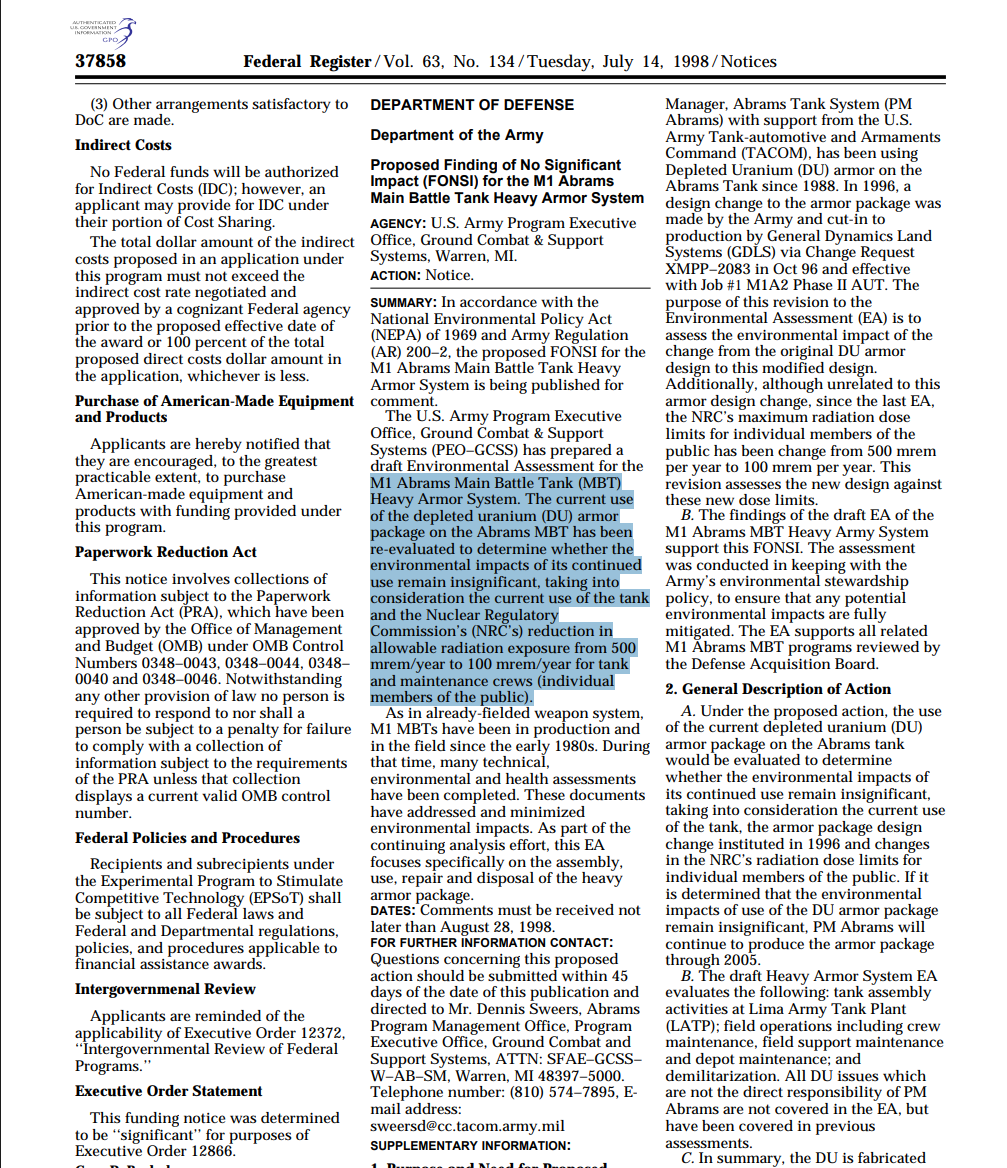
The document explicitly defines the “M1 Abrams Main Battle Tank (MBT) Heavy Armor System” as the “depleted uranium (DU) armor package.”
Crucially, it confirms mass production status. It states that in 1996, the design change was “cut-in to production… effective with Job #1 M1A2 Phase II.” This confirms that DU “Heavy Armor” became the factory standard for the M1A2 line in 1996, not an experimental run.
2. Location: Is it in the Hull?
Once we know “Heavy Armor” equals “DU,” we check the location.
Source: U.S. Federal Docket DOI-2021-0013
Agency: U.S. Department of the Interior / Wyoming Mining Association
Direct Link: https://downloads.regulations.gov/DOI-2021-0013-0995/attachment_1.pdf

This legal submission to the Department of the Interior regarding the end-use of uranium states:
“Some late-production M1A1HA and M1A2 Abrams tanks built after 1998 have DU reinforcement as part of the armor plating in the front of the hull and the front of the turret.”
This matches the timeline of the M1A2 SEP (1999) and SEP v2 (2005).
Corroboration:
Source: The Army’s Future Combat Systems Program and Alternatives (2006)
Agency: Congressional Budget Office (CBO)
Direct Link: https://www.cbo.gov/sites/default/files/109th-congress-2005-2006/reports/08-02-army.pdf
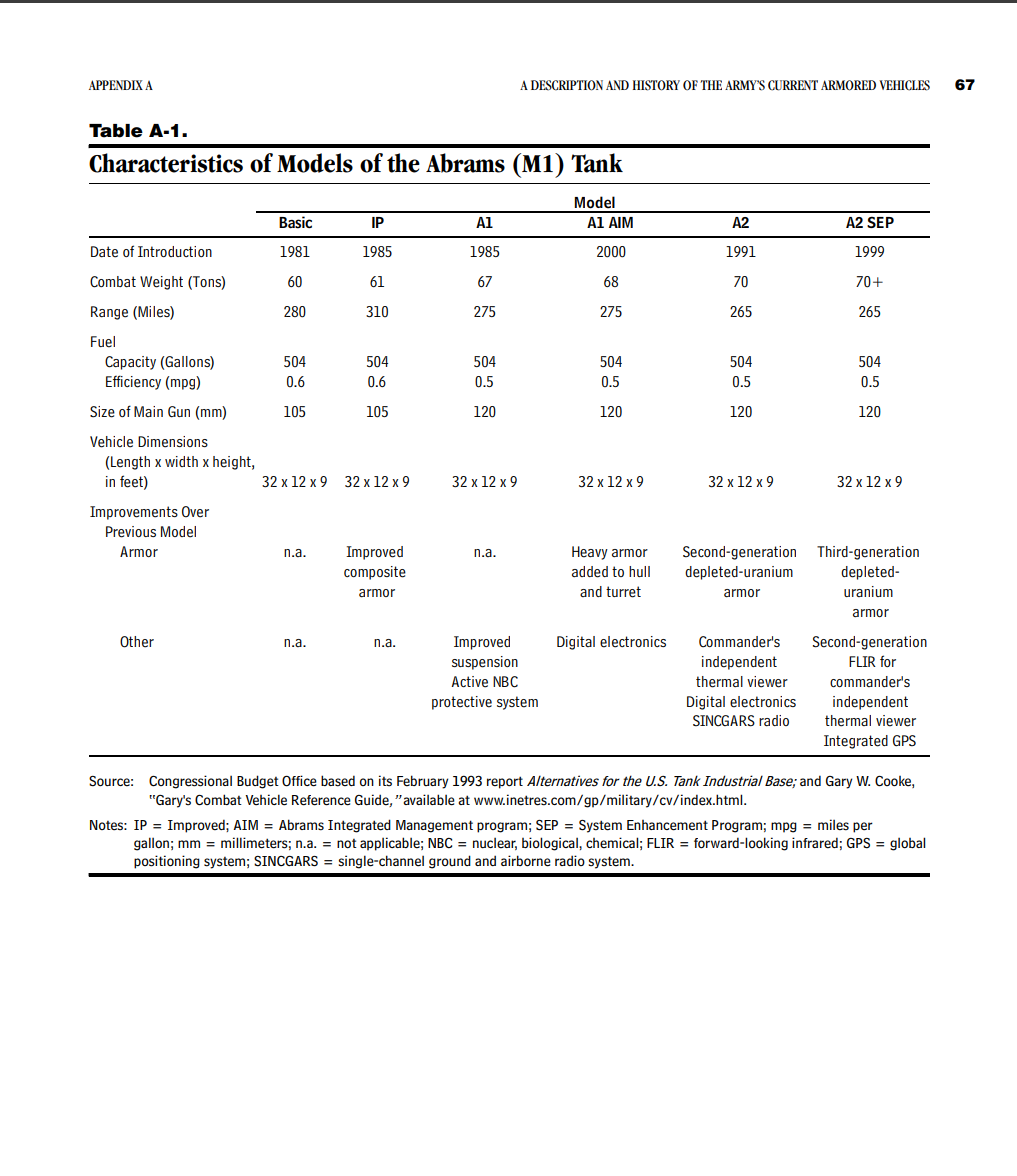
Table A-1 explicitly lists the upgrade for the M1A1 AIM and M1A2 as: “Heavy armor added to hull and turret.”
3. Performance: The 960mm RHAe Figure
Does the physical protection align with DU densities?
Source: Modeling, Simulation, and Analysis of a Weapon’s Lethality
Agency: Defense Technical Information Center (DTIC) / Naval Postgraduate School
Document ID: ADA619505
Direct Link: https://apps.dtic.mil/sti/tr/pdf/ADA619505.pdf
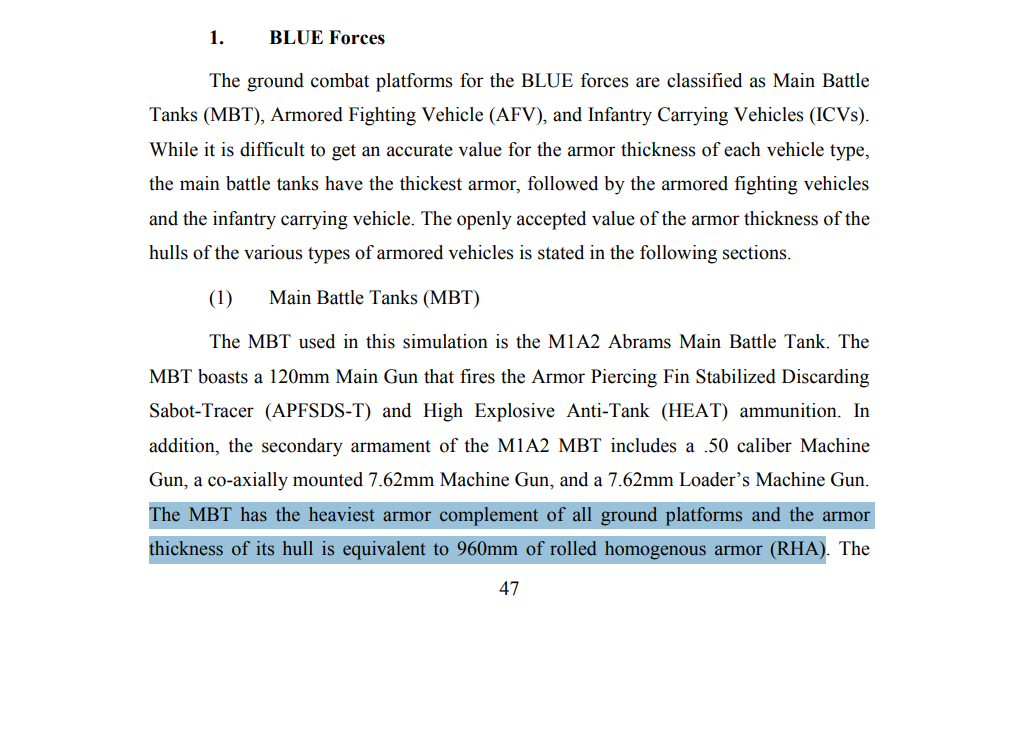
On page 47, the report explicitly states:
“The MBT has the heaviest armor complement of all ground platforms and the armor
thickness of its hull is equivalent to 960mm of rolled homogenous armor (RHA).”
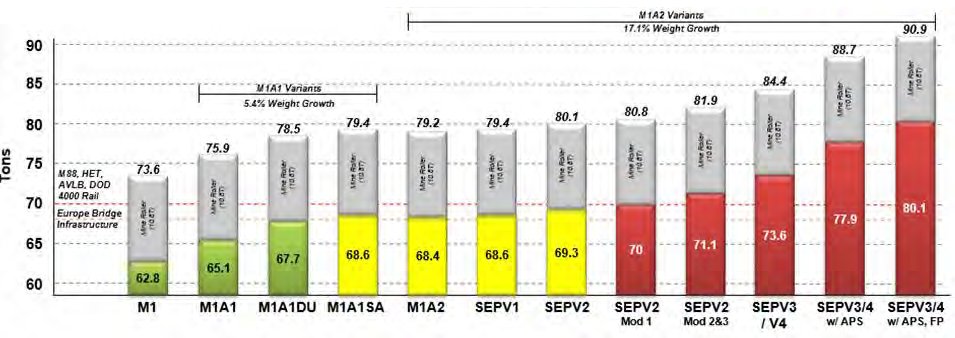
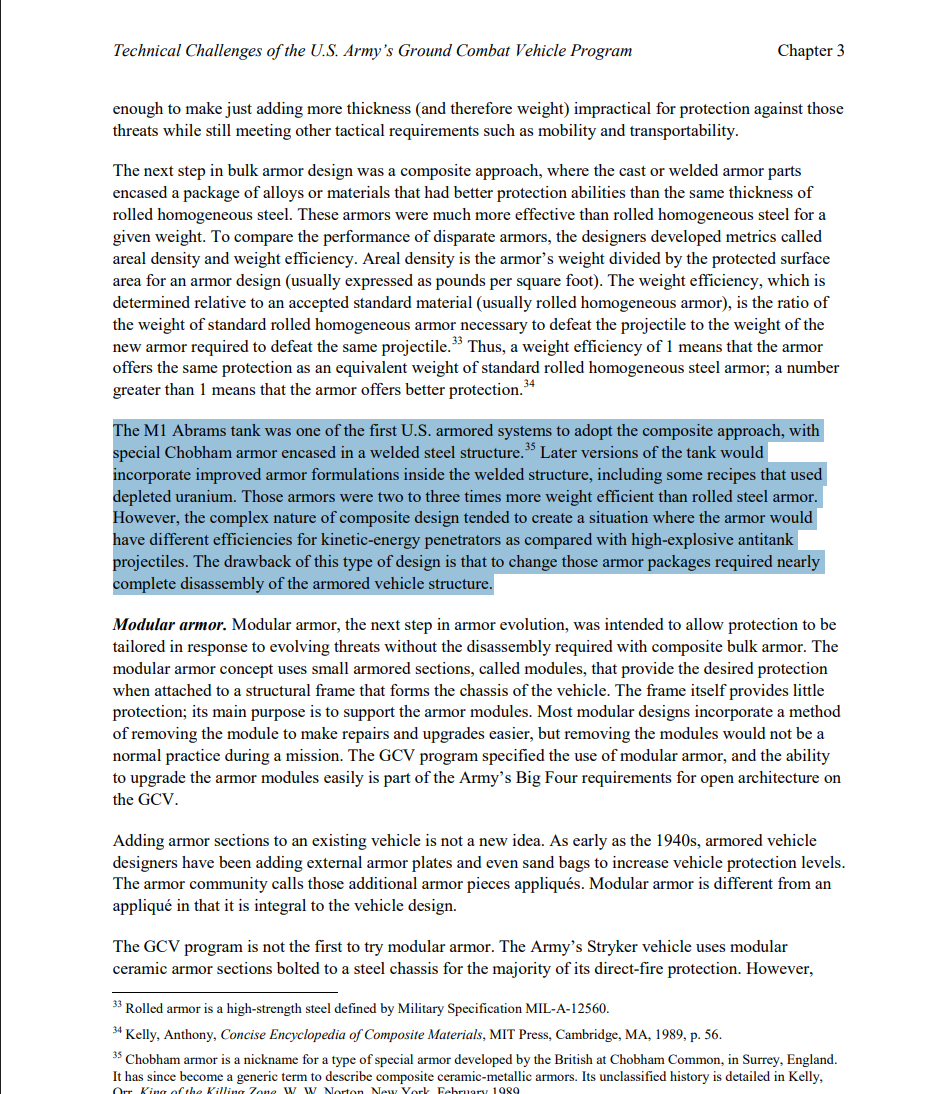
This figure is consistent with the massive weight increase of the M1A2 (~5–7 tons heavier than the M1A1) and the mass efficiency of DU. Another DTIC report (ADA591460 ) notes that these armors are “two to three times more weight efficient than rolled steel,” which explains how a ~650mm physical cavity can provide ~960mm of protection.
4. The License: Addressing the “5 Hulls” Myth
There is a common misconception that DU hulls were limited to “5 tanks at Army Schools.” This is based on an expired 2006 NRC application. That limit is legally obsolete.
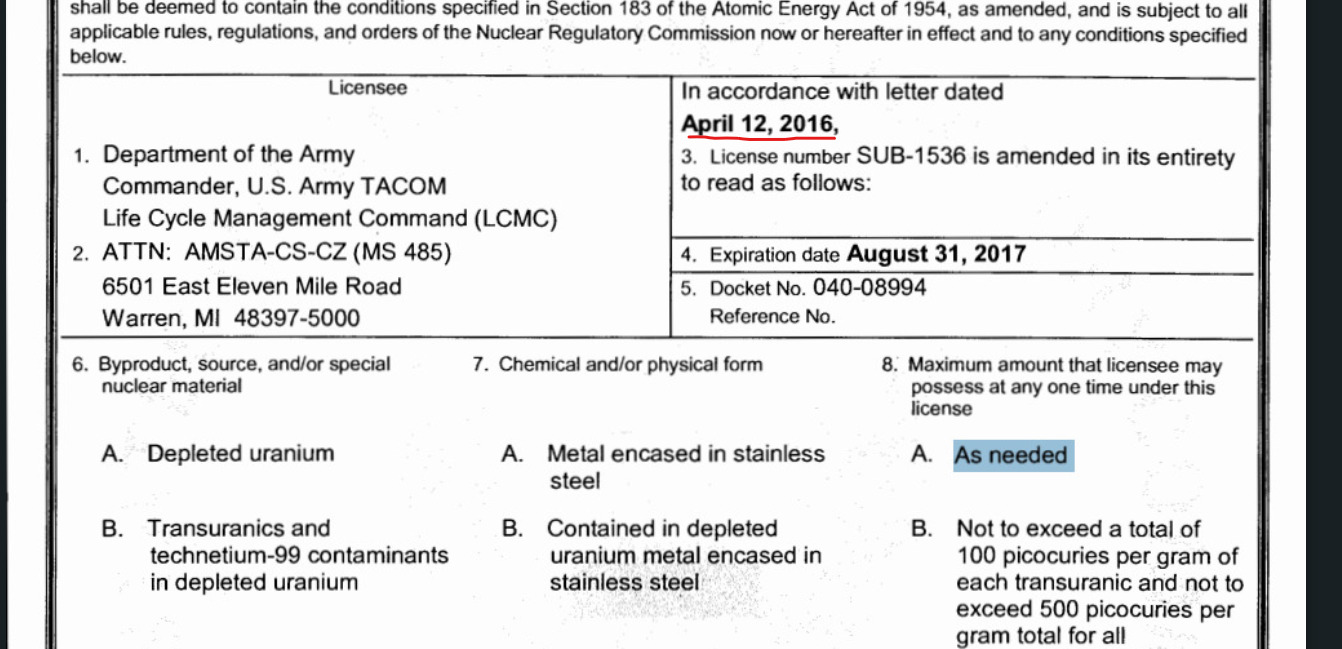
Source: NRC Material License SUB-1536, Amendment 10 (2016)
Agency: Nuclear Regulatory Commission (NRC)
Direct Link: https://www.nrc.gov/docs/ML1619/ML16190A098.pdf

The Change: In Amendment 10 (2016), the NRC removed the numeric limit on hulls.
The Current Law: Items 8 & 9 authorize the U.S. Army (TACOM) to possess “Tank Turrets and Hulls” as depleted uranium armor components in “As Needed” (Unlimited) quantities.
Analysis: The Nuclear Regulatory Commission would not grant an “Unlimited” fleet possession license for DU Hulls if they only existed on 5 experimental prototypes. The license authorizes the mass-produced fleet confirmed by the Federal Register.