
Though that is different capitalization yet again.
Look at the section for the M1A1 AIM on that same page. The blog text simply lists “Armor upgrade” with no further details.
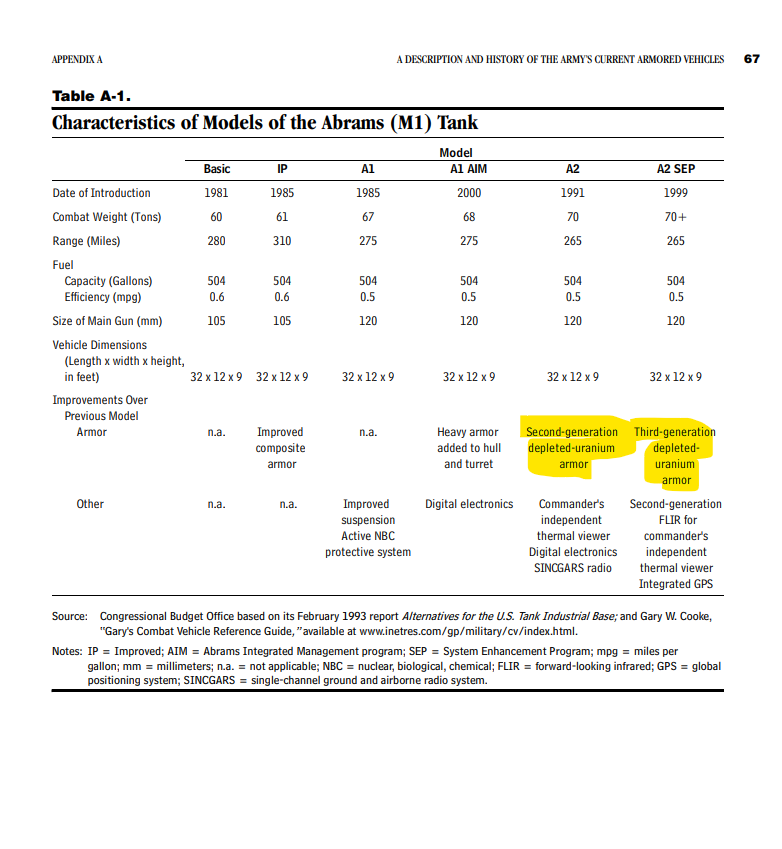
The CBO report explicitly lists “Heavy armor added to hull and turret.”
Since the specific location and material details for the AIM are missing from the blog but present in the CBO report, the CBO obviously referenced internal program data to fill in the blank. The blog is generic but the audit is specific.
Still different capitalization so doesn’t automatically refer to the same thing :)
Look at the M1A2 column in that same CBO table.
It lists Second-generation depleted-uranium armor using lowercase letters.
If your argument is that capitalization invalidates the definition, then by your own logic the M1A2 has no DU either.
So if Heavy Armor in the Turret is referencing the 1988 DU System what could possibly be referenced later as Heavy armor? Please explain what logically could be Heavy armor thats added to the hull that isnt DU then? I want to see what you think Heavy armor could reference otherwise that would be acceptable as a “Heavy” substitue. Logically DU would make the most sense since it is 2.5x more dense than steel.
You have not shown that there is a defined “Second Generation” term that they skipped capitalization on so that argument has no base to stand on.
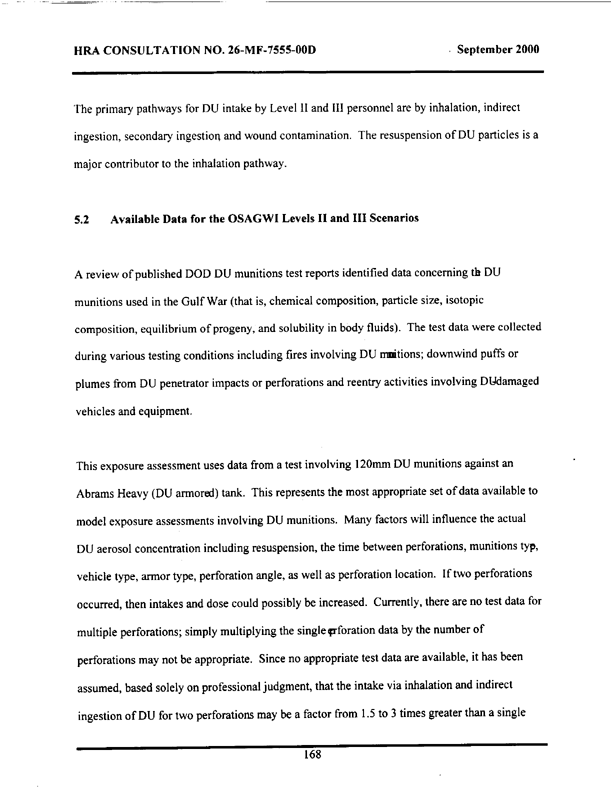
Just another thing to add to your “HEAVY ARMOR = DU” argument
This is a primary source documenting that verbiage
https://gulflink.fhpr.osd.mil/du_ii/du_ii_refs/n52en091/0335_003_0000208.htm
1 Like
The table uses standard sentence case for every single entry. Look at the IPM1 column. It lists “Improved composite armor” in lowercase. Look at the M1A2 columns. It lists “depleted-uranium armor” in lowercase.
Arguing that capitalization voids the technical definition is desperate. The report clearly distinguishes between Improved composite for the IPM1 and Heavy armor for the AIM. If the materials were the same, the CBO would have used the same text. Instead, they utilized the specific term for the radioactive package defined in the Federal Register. Capitalization is a formatting choice, not a material change.
Exactly that, heavy armor, armor that weighs more. They use the term that way 3 times in the document when referring to the Abrams. The Capitalization in the table is because it’s the start of a sentence.
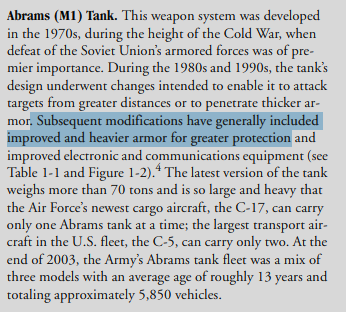
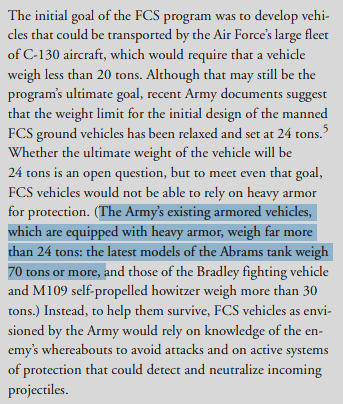
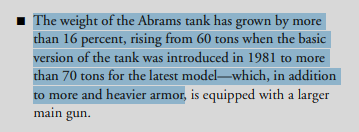
Yes, that is what he claims is previously defined and that they skipped capitalization on making that the standard for the table. I have not see a previous definition with that term capitalized.
You have not shown that there are previously defined versions of those other things that they also skipped capitalization on making that the standard for the table.
You used the exact same kind of argument to argue in favor for it previously. How does me using it now make me desperate but not you desperate previously?
The DoD defined this exact term in September 2000, the same year the AIM entered service.
HRA Consultation No. 26-MF-7555-00D explicitly refers to the testing of an Abrams Heavy (DU armored) tank.
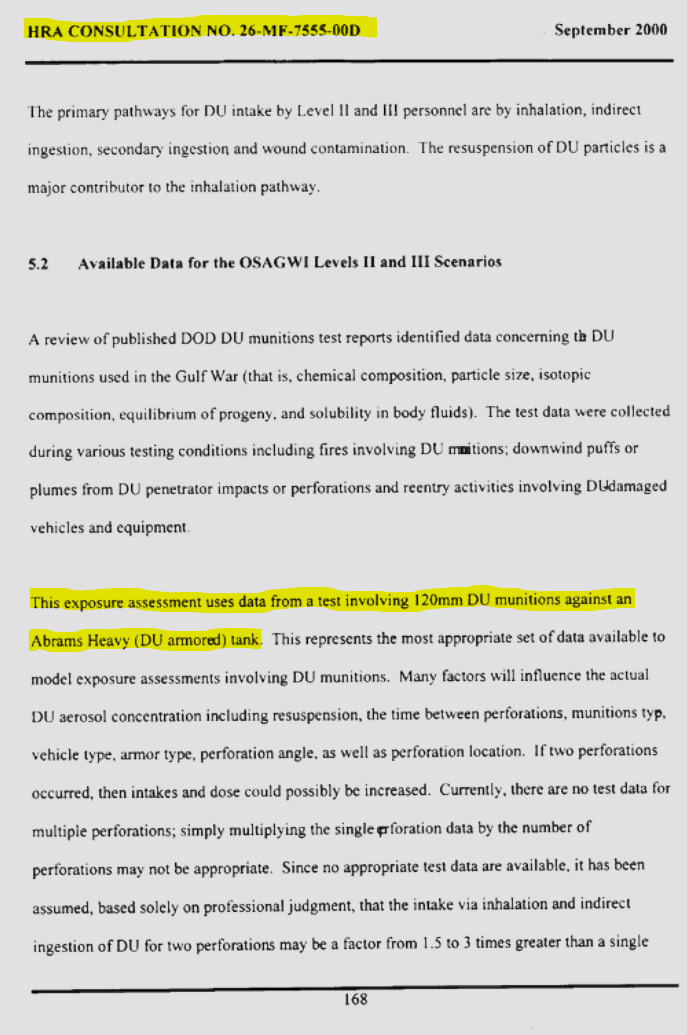
It puts DU armored in parentheses right next to Heavy. That is the official military definition. Heavy equals DU.
If your theory about it just being a descriptive word for weight was true, the CBO would have labeled the IPM1 as Heavy Armor too. The IPM1 gained substantial weight over the base M1. But they didn’t. They listed the IPM1 as Improved Composite. They only used the term Heavy Armor for the variants that the Federal Register and DoD confirm are radioactive.
Found it. Yes the Armor School trained ABRAMS tank personnel on depleted uranium characteristics and risks. The 5 training tanks with hulls were most likely part of that program.
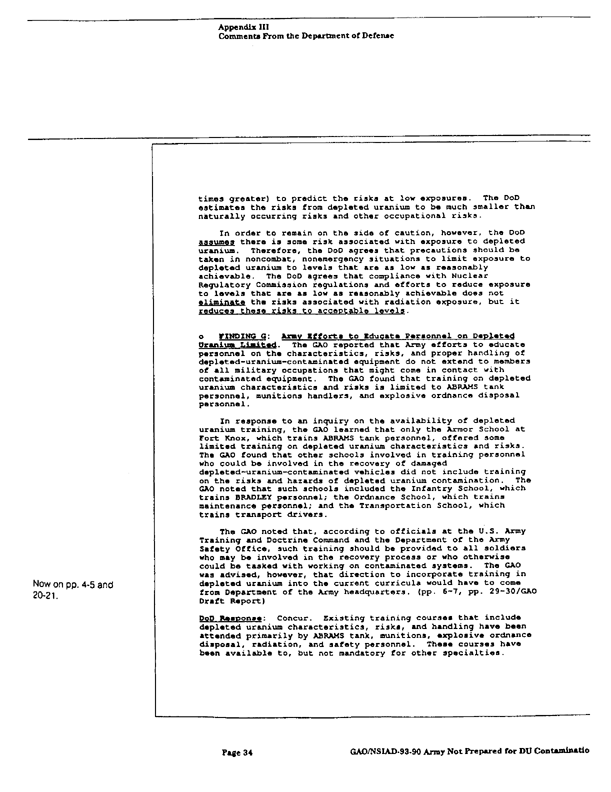
https://gulflink.fhpr.osd.mil/du_ii/du_ii_refs/n52en098/7317_005_0000006.htm
Sure, that doesn’t mean the CBO uses it that way. That would make using the term “heavy armor” at the start of a sentence impossible without it changing meaning.
Also, that doesn’t mean there is DU in the hull either.
The worse part about all of this is it takes away from the argument of the Hull armor just having received a better composite array or replacement of materials with other non DU materials that provide a better form of protection.
The Congressional Budget Office audits the Department of Defense. They utilize the specific technical nomenclature of the agency they are auditing.
The Federal Register (1998) defines the Heavy Armor System as the radioactive armor package.
The DoD Health Risk Assessment (2000) explicitly defines Heavy as DU armored.
The CBO Report (2006) confirms Heavy Armor was added to the hull.
If the term was merely a descriptor for weight, the IPM1 would be listed as Heavy Armor. It gained significant mass over the base model. The CBO listed it as Improved Composite. The distinction is based on material composition, not sentence structure.
It’s not an audit, it’s a study putting forth alternatives for a future heading.
Yes. but doesn’t state if the DU package IS the Heavy Armor System or if the Heavy Armor System simply contains the DU packages along with other non-DU parts.
Heavy is the name of those tanks . They are known to have DU in the turrets only.
Not necessarily the same term though.
There are several steps here with no clearly defined thing where you assume a definition that isn’t explicitly stated and isn’t semantically unambiguous.
You continuously fail to see this and i have given up all hope of ever making you realize that the things your are pointing out are ambiguous in their interpretations. I have given up all hope of you realizing that you are also cross referencing over several different US government instances. Two things that make this non valid as proof for reporting historical issues to Gaijin.
Can’t you find a document for disposure of the Abrams models of the years found, and if it mentions having procedures for the disposure of radioactive elements in the hull wouldn’t that basically be like a way more conclusive evidence for your point than trying to use procurement records? I mean it would likely very clearly distinguish the hull from the turret, and would have to then label hull procedures with a radioactive materials warning and such no?
1 Like
Both are easily true.
The DU package is the Heavy Armor System
The Heavy Armor System can contain non-DU parts. The LFP and Turret cheeks aren’t the only armored sections of the tank.