I hope they add the Finnish manufactured Blenheim bombers with enlarged bomb bay.
100kg bombs loaded.

250kg bombs being loaded.
I hope they add the Finnish manufactured Blenheim bombers with enlarged bomb bay.
100kg bombs loaded.
250kg bombs being loaded.
The fact that 8x100kg are carried semi-recessed in the first image and the bomb bay door are bulged outwards in the second one means that the images are from original British-built Blenheim’s which were modified in Finnish service. Finnish-built ones had the same improved 8x100kg or 2x250kg bombload but the bomb bay was redesigned internally so there was no need for external bulges or semi-recessed racks.
Finnish airforce actually divided their Blenheims into six series as follows:
Series 1: British-built Blenheim I (1937)
Series 2: Finnish-built Blenheim I (1941-42, delayed by Winter War)
Series 3: British-built Blenheim IV (1940), converted to photo-recon)
Series 4: British-built Blenheim I (1940)
Series 5: Finnish-built Blenheim I (1943) fitted with mk.IV engines and German flight-instruments
Series 6: Finnish-built Blenheim IV (1944, captured unfinished Yugoslavian fuselages)
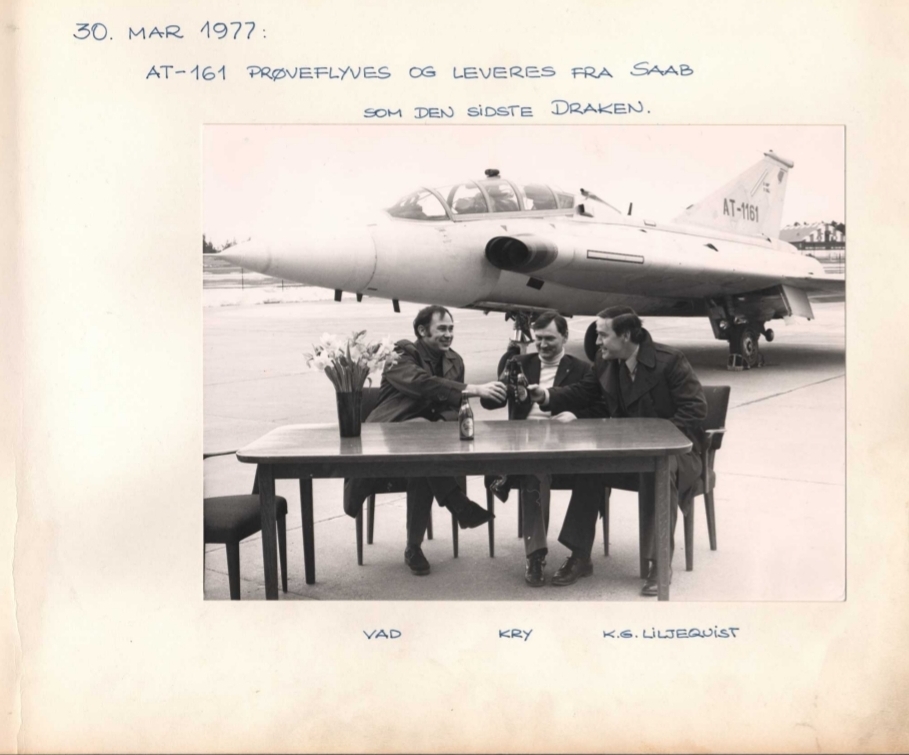
Very last Draken delivered from SAAB right after receiving the changes to the air frame for it to enter service as the F-35
Didn’t think id find another photo of the early Drakens we got from SAAB.
No unfortunately. And that applies to even the British (Hawk T.1A) & Export (Indonesian, Swiss, South Korean & Zimbabwean) counterparts. From what I read the Hawks only got their CM’s from the Hawk 100 series at the earliest.
Fortunately the Sk-60F can equip CM so it would fill in that role just fine
I asked that a year ago lmao
I’m aware of that
I just need some confirmation on the matter before making a conclusion
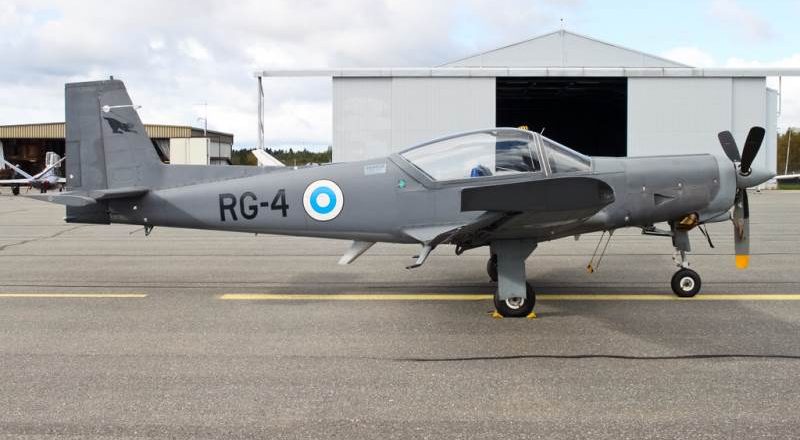
Aermacchi-Valmet L-90 RediGO
Finnish Armed Trainer & COIN aircraft built in the 1980’s-1990’s. It was never armed in Finnish Service. However Finland isn’t the only country to operate the L-90. The Air Arm of the Mexican Navy also operated the RediGO and unlike the Finnish L-90’s were armed. There were also mentions of Eritrea operating the RediGO however I haven’t found much on them in Eritrean service
The RediGO has 6 hardpoints for a maximum weight of 800kgs
Going to mention something left filed, an helicopter
Kawasaki KV-107II (HKP4C)
Japanese built Sea Knights for the Swedish Navy, used mainly for ASW & SAR profiles. Can equip either depth charges or a Torp (unsure if they can equip both at the same time). Either way could bolster the helicopter TT &/or the Naval TT when both Naval Helicopters & the Swedish Naval TT’s are added.
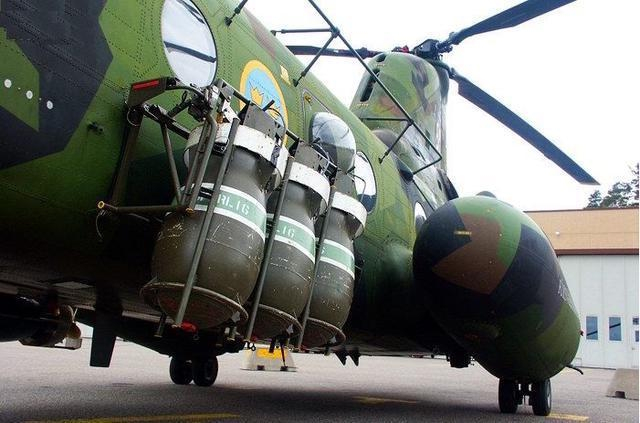


Edit: looked closer on the first pic and that may be a torpedo mounted on the other side so it seems it can mount 2 torps, maybe 6 depth charges too
Yes it was for naval use and can mount torps

Six depth charges, two tp 45s, four tp 42s in two twin mounts, or a mix between these. The tp 42s could be mounted as twins only by having the first torp break its wire guidance once the second was fired, hence why tp 45s were never carried in twin mounts

Helicopters, if they every go deeper into cold war era, would be an interesting experience with the massive amounts of AA + radars in mind.
Has anyone ever talked about the Mig-15 UTI?
I feel it’s a unique enough addition to not be called a copy paste and it would give Sweden a much needed alternative to the SAAB 105G
I was looking for information on the Finnish versions and I know they operated a few as trainers but I wanted to know if they kept their armament, I know some did and some didn’t and I wanted to see if anyone had more info.
(The MiG -15 UTI is a double seat trainer version that was bought and used by the Fins)
XT is still my main holdout when it comes to a Saab 105 replacement
A VL Myrksy II (late) could justifiably be added as a tech tree aircraft
Reportedly, numerous additional attempts to strengthen the Myrksy II’s airframe were undertaken after its introduction between 1944-1947. Although unlikely given Gaijin’s patterns, a late variant incorporating minor tweaks to rip characteristics could slot into the TT at Rank II. It would be a nice addition to dilute the early tree sloppy pasta.
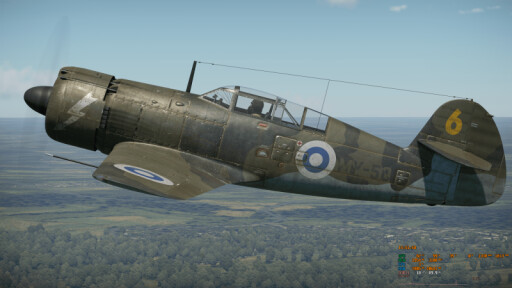
It seems like the camouflage of the VL Myrsky II in game represents the scheme circa 1944.
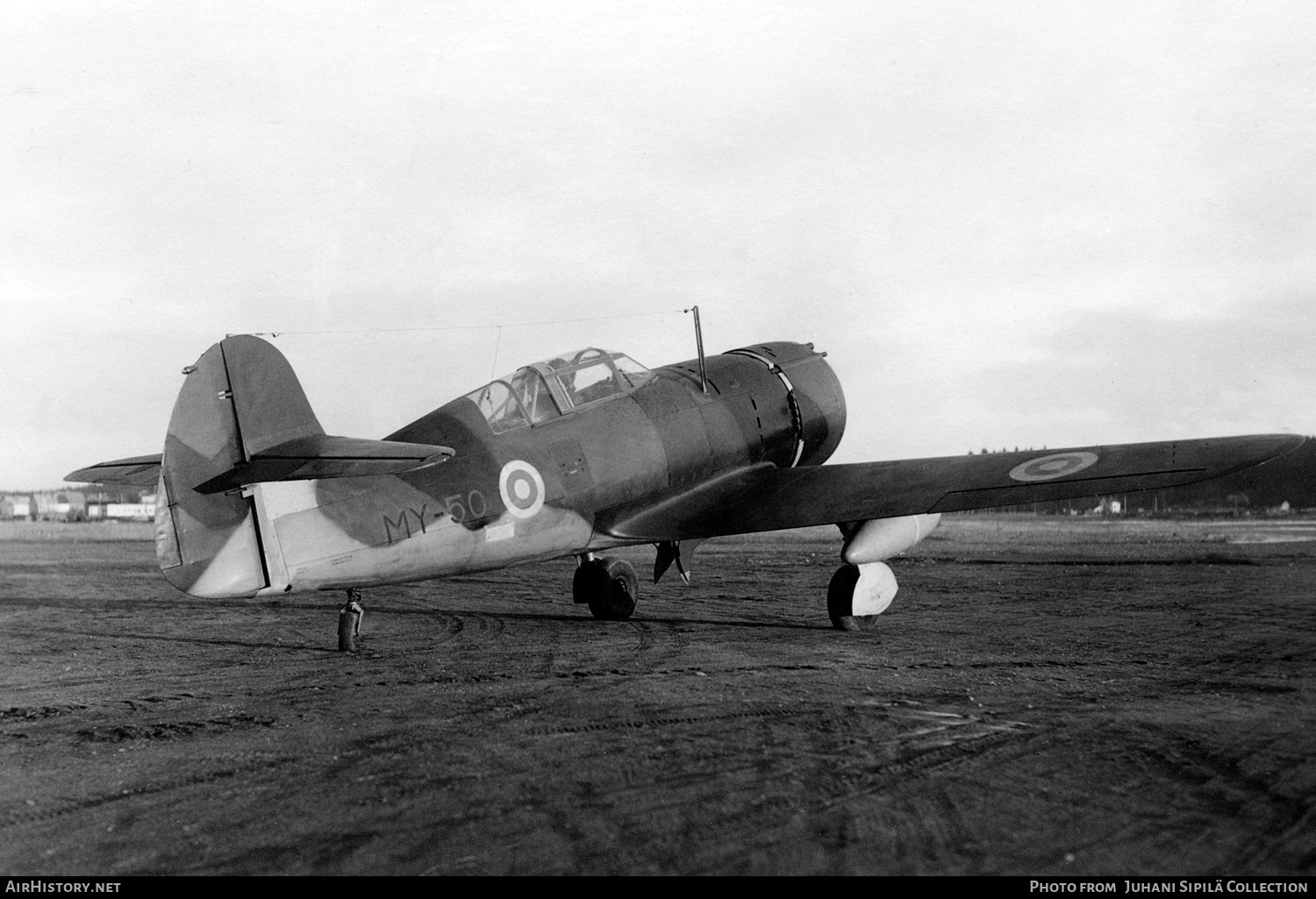
A “late” variant could feature a camo scheme (with postwar roundel) similar to the unlockable MY-50 skin, which depicts the last VL Myrksy II to fly in 1948.
That could be a possibility if we have A: sufficient sources to back that claim up and B: if those upgrades and strengthening programs have any gameplay difference over the existing Myrksy II.
At least it means we could have 2 or 3 Mytksy variants
Okay I quickly looked it up
Mrysky II number MY-50 had slotted wings as well as being prototyped for the strengthening since MY-50 was the Mrysky II that was the testbed for the VL workshop largely due to the Finnish Airforce rejecting that specific Mrysky II into service. In other words a second, TT Mrysky II variant can be justified without being Copy n Paste. The Mrysky I had a lot more fabric body components so it would be lighter than the II’s so the Mrysky I could be added too
The Mrysky Prototype only had 2 50.cals with the possibility of additional 2 30.cals (most like MG-17’s or Brownings). I’m not sure if the Mrysky I had the Prototype’s armament or the Production Model’s armament
I dont really want a replacement for the 105, the 105 is a great ground attack aircraft that Sweden definitely need to complete their 8.7 lineup (IKV-91-105 needs to go back down, I dont know why it’s at 9.0 😭)
I just think the Mig-15 UTI would give Sweden a competitive and unique air to air vehicle, the 105 is definitely strong but it’s main advantage over other vehicles is its air spawn
Agreed on all points; I mostly use it to farm SL and get first strike awards for tasks lmao
SK 60F, 9.7
J35B for Finland, 9.3
J35F2 for Finland, 10.0
J35J, 10.3
I collected these as easy additions and to fill potential gaps.
@Nirvana7125-live Are you aware that the Mig-15UTI was only armed with single Afansev 12,7mm machine gun with 150 rounds? Jet with only a single .50cal would be pretty useless in-game.
@AspandaIV According to the J.Raunio’s book Myrsky prototype went through four major modifications during it’s test flights as follows:
MY-1 Phase I (1942): as built, armed with 2x12,7mm in fuselage and 4x7,7mm (Browning?) in wings.
MY-1 Phase II (early 1943): weight and drag reduction program, 7,7mm wing-guns removed, fuel capacity reduced by 50l, also other protrusions removed, result was 10km/h increase in top speed.
MY-1 Phase III (1943): new tail fitted that was larger w/o external bracing, improving rudder effectiveness and another increase in top speed (now 504kph@3000m)
MY-1 Phase IV: new NACA cowling, cooling gills and exhaust piping, top speed increased to 518kph@3000m
The new Phase III tail was later found out have a flutter issue, MY-2 and MY-4 disintegrating in dive trials and MY-6 limping home without elevator. First modern Flight Data Recorder “Mata-Hari” helped to solve the crashes.
All the Myrsky I’s were basically also prototypes with individual differences:
MY-2: 3x12,7mm guns, new larger production model wing, thinner plywood covering, shortened NACA cowling, metal Hamilton-Standard propeller
MY-3: 3x12,7mm guns, new larger production model wing, regular strength plywood covering, extended NACA cowling, wooden VLS propeller
MY-4: 4x12,7mm guns, slotted wing, thicker plywood covering, wooden VLS propeller
Myrsky apparently had a tendency to suddenly fall on one wing nearing the stall speed. While this was not considered to be a issue during the war, but the post-war landing mishaps with rookie pilots caused the MY-50 being prototyped with slotted wing designed for destroyed MY-4.
Wartime Erzatz-materials were apparently a major issue post war, strenghtening was simply an attempt to keep them flying. (Plywood de-laminating, nails popping off, bearings failing etc.) MY-28 disintegrating in air in 1947 resulted in all planes being permanently grounded. MY-50 later got a one-off special permit to fly, only to crash when pilot forgot to extend the flaps on landing.
The book has almost 30 pages into Myrsky development and flight testing, way too much write here.