Natural selection, players that know how to notch will survive. If they don’t they will learn to notch
7 Likes
Or go to lower BRs lol
Sparrows give me brain aneurysms lmao
I agree, but I know so many people who still can’t get past the first wave of missiles.
Gaijin letting those players survive is a problem tbh
2 Likes
And that would be desirable if not for the fact AIM-120s are the most standard missile for the current top tier, and it looks like Gaijin prefers to focus its meta around niche missiles from particular nations.
Anyway, I don’t really expect them to fix AIM-120s as a whole anytime soon, at least I’m not virtually forced to only play them.
3 Likes
Yeah… unfortunately probably the case
You said it all. Since it’s the most present, it’s the most difficult to change.
The reduced size of the Clipped fins is offset IRL by moving the Center of gravity towards the center of lift reducing the static stability (Center of mass post burnout) of the “+5” motor’s requisite shortened control section so it rotates on its axis at a greater rate with the same force applied.
Also the max fin AOA of 24 degrees is clearly massively understated in game.
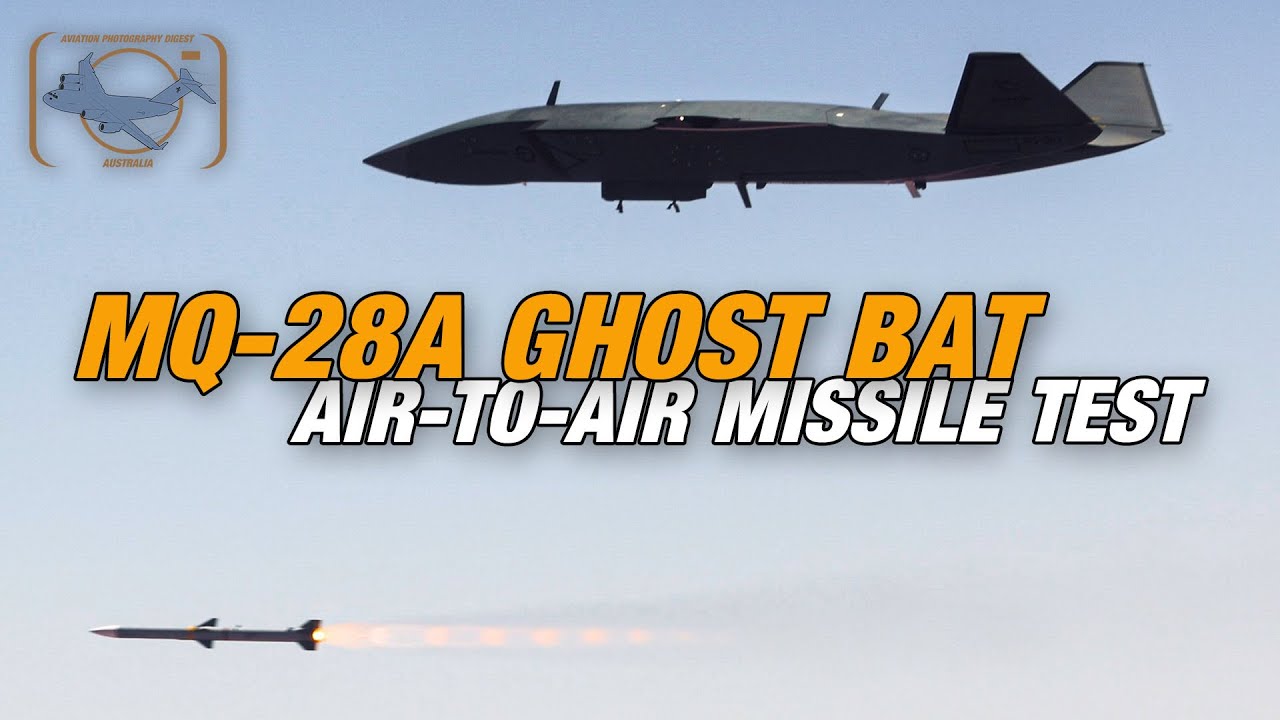
7 Likes
Does this f16 have 90 or 120 cm IRL? It looks like 60 in game is wrong
The statboard says 30 large and 60 normal, but only 60 seem to be modeled, so I don’t know.
Smaller surfaces usually mean less maneuverability, but then the problem with the AIM-120C5 is the ability of these surfaces to rotate ? Is there any documentation? I’m curious.
…
3 Likes
From what I understand, angular momentum is conserved only when no external torque acts on a system. This principle applies to isolated systems, for example, an object spinning in deep space without any external forces.
However, a missile such as the AIM-120 is not an isolated system while flying through the atmosphere. But I may be wrong, open to corrections.
If all conditions were the same, then the B would be more maneuverable than the C due to the larger fins. But IRL the c-5 can maintain the same maneuverability as the B as the smaller fins can generate equal turning force at the higher speed of mach 4.4. If you want to get into physics, just look at the lift force equation: L=1/2pV^2SC. Velocity is squared vs S or the surface area has a linear relationship. Plus the c-5 has better seekers and algorithms so it doesn’t need to pull hard in most cases. However, at low speeds the aim120B does pull more than the aim120c5
OK, so the Aim-120C5 only starts turning when it is already fast, and when the Aim-120B has a higher angle of attack capacity faster
The C-5 should turn the same as the B at max speed. There’s more to consider like reduced drag, internal mass redistribution, and actuator improvements but gaijin doesnt care about that
1 Like
Okay, I understand. The AIM-120C5 needs speed to generate torque with the surfaces to increase manoeuvrability. It needs speed, but in return, the missile gains less drag, etc. (along with a better seeker and any other advantages
correct
1 Like
Thank you for your help.
1 Like