- Yes
- No
Introduction
General Vampire History
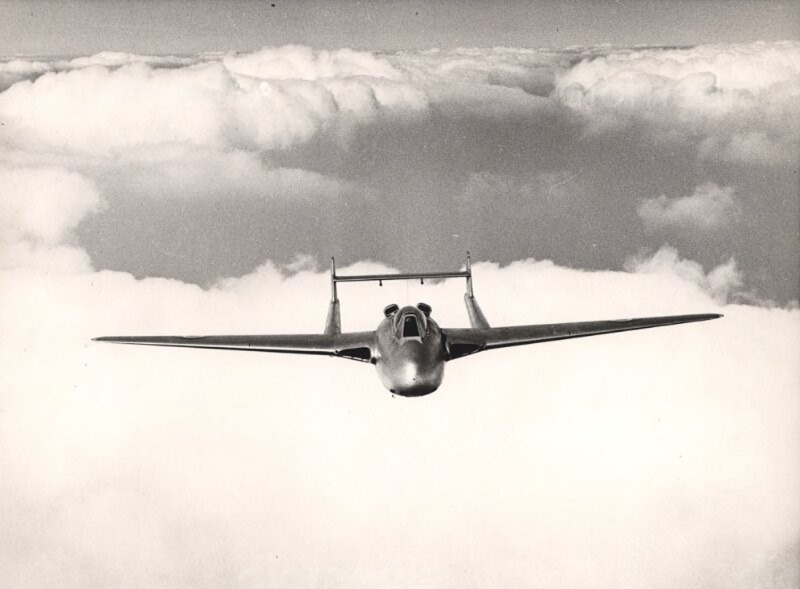
The de Havilland Vampire originated during the Second World War as the DH 100, developed in response to the Air Ministry’s requirement for a high-altitude jet-powered fighter under Specification E.6/41. Although de Havilland had initially envisaged a high-speed jet bomber, the urgent need for an interceptor redirected the programme toward a single-seat fighter. Designed around Frank Halford’s H.1 (later Goblin) turbojet, the aircraft adopted an innovative twin-boom configuration to minimise intake and exhaust duct length, while its composite wood/metal construction drew heavily upon techniques pioneered on the Mosquito. Despite development delays caused by wartime production commitments, the prototype, known during development as “Spider Crab”, made its maiden flight on 20 September 1943. Flight testing led to improvements in the aircraft’s handling, leading to modifications to the fins, rudders, ailerons and air intakes before the aircraft officially entered production as the Vampire.
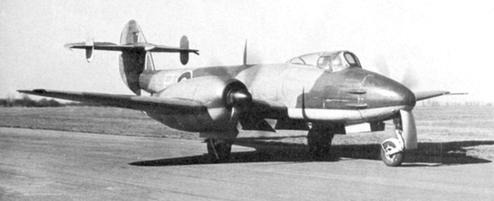
The Vampire entered RAF service in March 1946 as one of Britain’s first operational jet fighters and quickly established itself as a versatile post-war aircraft. Although the Gloster Meteor proved the superior interceptor because of its greater rate of climb, the lighter, simpler Vampire offered longer endurance and excellent maneuverability, making it particularly suitable for overseas operations and the fighter ground-attack role. Continuous development produced improved variants with more powerful Goblin engines, increased fuel capacity, pressurised cockpits and enhanced canopies, while specialised versions followed as night fighters, trainers and navalised aircraft. The type also achieved numerous aviation milestones, including the first jet aircraft to land on an aircraft carrier, the first jet to cross the Atlantic, and the basis for experimental aircraft such as the swept-wing DH 108.
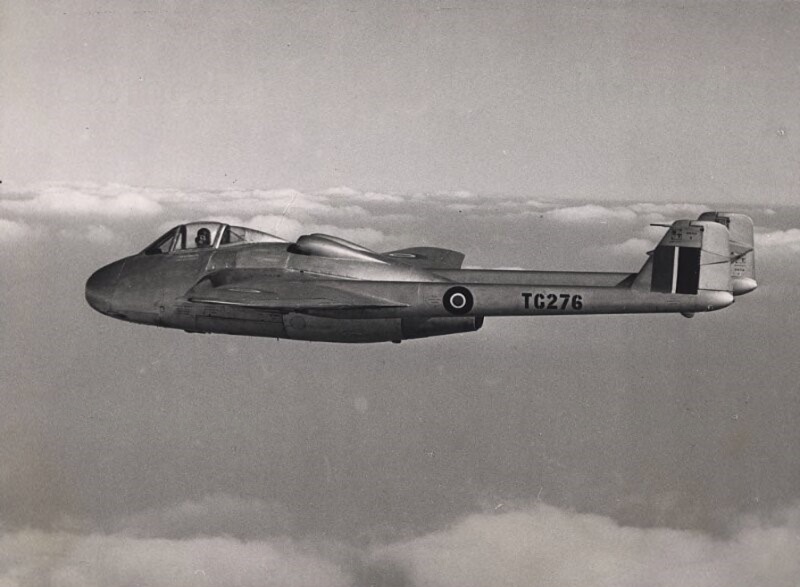
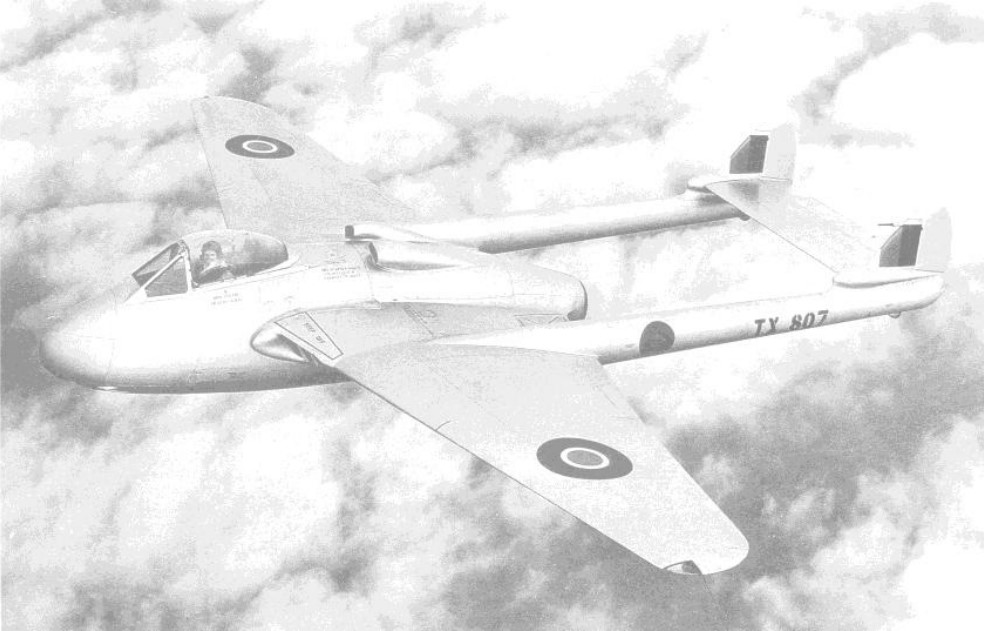
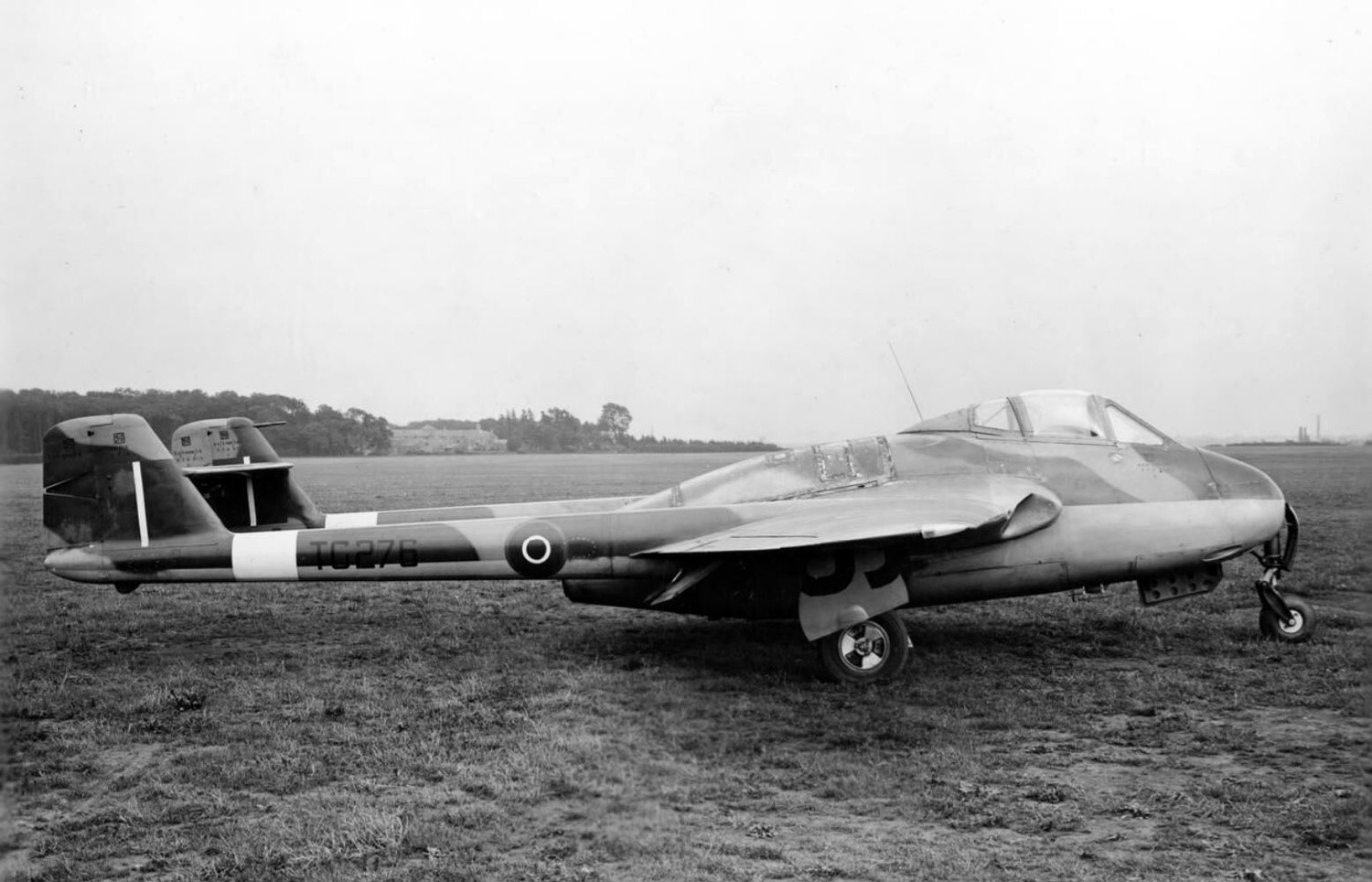
In the mid 1940s jet engines were developing at an astonishing pace, and by 1945/46 Rolls Royce had already designed the Nene, significantly outperforming the Goblins of the de Havilland Vampire in essentially all metrics. As such, development of a Nene-powered Vampire, the F.2 (F Mk II), was begun. Three prototype airframes - TG276, TG280 and TX807 - were fitted with Nene engines, significantly increasing top speed and climb rates, with projected rates exceeding 7,000 ft/min, but also introducing major engineering challenges. The larger, double-entry compressor of the Nene required auxiliary “elephant ear” intakes because the original wing-root intakes could not provide sufficient airflow, while the heavier engine shifted the centre of gravity aft and adversely affected stability. Although the additional intakes improved airflow, they created severe high-Mach handling problems.
Extensive trials continued with revised intake ducts, a conventional tailplane and aerodynamic refinements that improved performance, but despite the substantial investment in the programme and the Vampire F.2’s increased capability, the RAF abandoned plans for the production F.4. However, that was not the end of the Nene vampire, as one F.2 airframe, FX807, was sent to Australia for appraisal, where the Vampire F.2 was subsequently produced under license by de Havilland Australia as the Vampire F.30 for the RAAF. The work done on the Vampire F.2 was also highly influential on the French Nene Vampire, the Sud-Est SE.535 Mistral
Images
Specifications
Spoiler
Sources
Spoiler
The History Of The De Havilland Vampire - David Watkins
Postwar Military Aircraft: 5 - de Havilland Vampire, Venom and Sea Vixen - Philip Burtles
https://adf-serials.com/newsletter/ADF%20Telegraph%202017%20Spring%20.pdf
https://www.saam.org.au/aircraft_profiles/deHavilland-Vampire.pdf