- Yes
- No
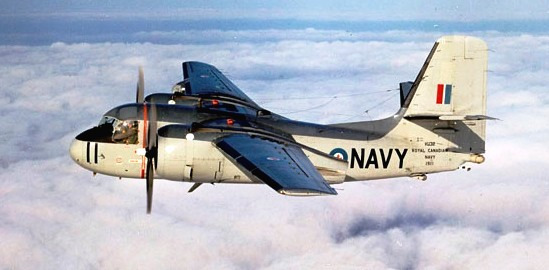
Hello, I’d like to suggest one of the aircraft, namely the first model of the Canadian Tracker.
History:
With the acquisition of HMCS Bonaventure(nicknamed Bonnie), the top brass of the RCN wanted the very best equipment available, even more so with the limited space. As before this on the previous carrier, HMCS Magnificent, the RCN was using Grumman Avenger AS3, which had to fly in teams of two, but this was undesirable due to the limited space in the carrier. This led them to look for a modern all-weather sub-hunter that both detects and attacks submarines. With the available space on the Bonnie, only two aircraft where sutiable options. Those being the Grumman S2 Tracker and the Ferry Ganet, as they were two hunter-killer designs that were compact enough to fit on the small hangers of Bonnie. Well, the Ganet was loved by the British, Australians, Germans and Indonesians; it wasn’t deemed a good fit for Canada’s needs. This left only the S2 Tracker as the viable aircraft for Canadian needs. Thankfully, for Canada, the aircraft had be desiganed has a sub-hunter for service on the US Navy’s Essex-Class carriers. These carriers were about the same size as Bonnie. Even tho the aircraft had been selected, they still needed to be equipped. Well, the trackers were being considered RCN was also developing the Canadiar CL-28 Argus. The Argus was set to operate from the bases on land; well, the trackers are set to operate from the carrier do to this it was intended for the two aircraft to share similar equipment. This would make sure that both aircraft were at the cutting edge of technology, as well as streamline training. The RCN wanted 100 aircraft and in turn set a budget of $100 million ($1.1 bilion in 2024 money), which made it the largest defence contract in Canada since WW2. Not long after, discussions would begin that would secure licensed production, plans, and production jigs, plus one operational pattern aircraft. After some debate, De Havlin Aircraft of Canada Limited would be selected to be the prime contractor, and final assembly of their aircraft would take place in Downsview, Ontario. These acts would ensure most of the $100 million would be spent in Canada and in support of the Canadian aviation industry. The contracts would be signed in April of 1954, and work would be underway.
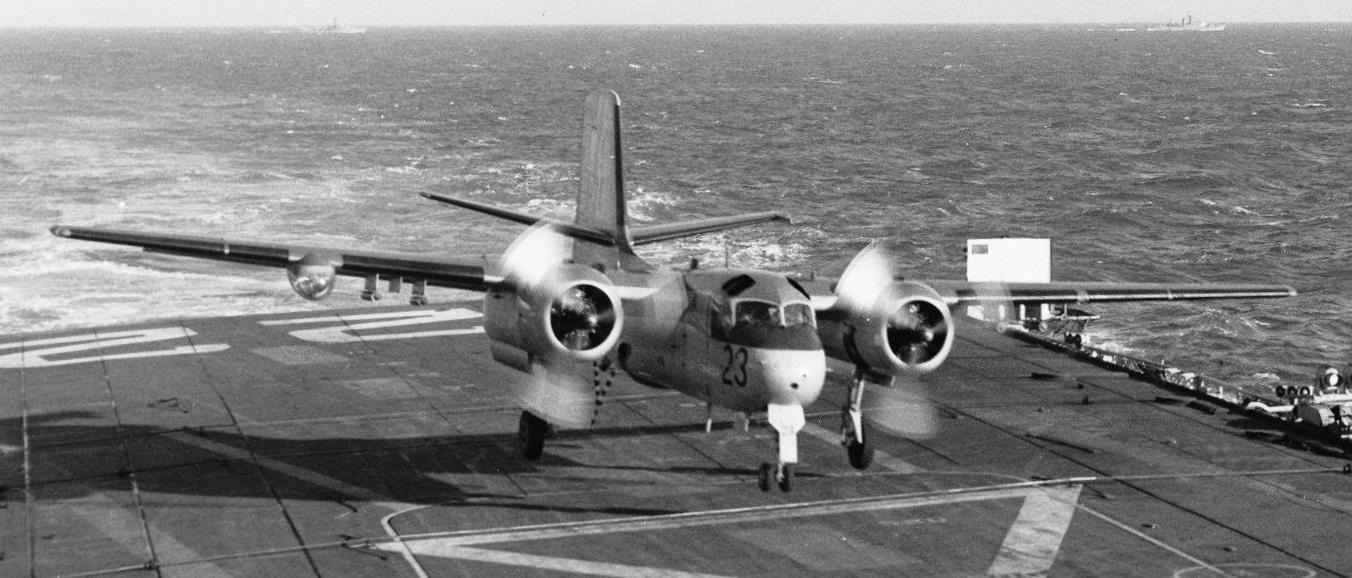
The first Canadian-built Tracker would take flight on the 31st of May 1956. The official designation of the variant was CS2F1 tracker; it was a crew of 4 with two pilots and two ASW system operators who had to sit facing forward in a loud, dark compartment behind the pilots. Despite the bleak-sounding situation, this actually helped the operators to operate and interpret the electronic systems on the aircraft.
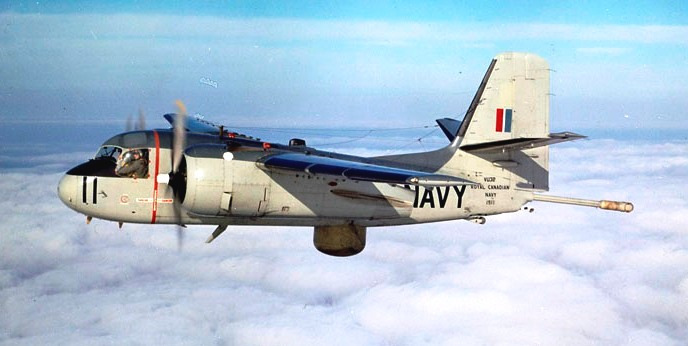
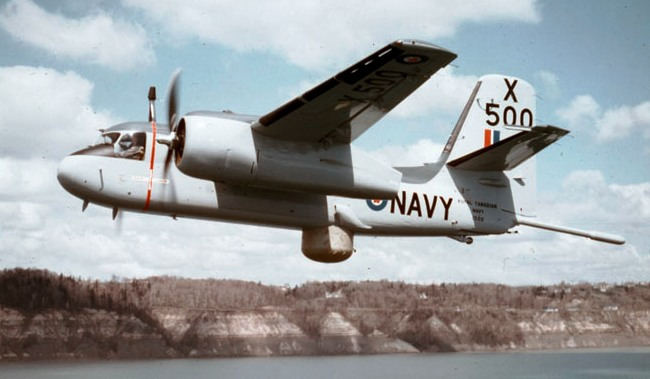
The Tracker was 13.3m long, 5.3m tall and had a wingspan of 22m, which reduced to 8.2m when folded. The aircraft had an empty weight of 8,300kg and a max takeoff weight of 11,860kg. In the wing nacelles, where two extremely noisy 1,125-horsepower Wright R-1820-82WA 9-cylinder air-cooled radial engines. With them in the wing nacelles was the landing gear and rear firing sonoboy launchers. The aircraft also included a system that allowed it to be safely flown and landed in case one of the engines failed. Well, the aircraft wasn’t a fast plane, patrolling at 240km/h; however, due to its large wings & engines, it was very maneuverable at low level. The aircraft also had a large window in the cockpit, allowing the pilots fantastic visibility. Except for a few antennas, the aircraft looks virtually identical to the American version.
The tracker had a large Bombay that was capable of carrying either two homing torpedoes, depth charges or a combination of both. It also had underwing hardpoints, which would carry rockets along with more torpedoes and depth charges. The aircraft was also able to carry a single Mark 101 Lulu, Mark 56 or Mark 105 hotpoint nuclear weapon; however, these were only tested and never carried operationally. The aircraft had a retractable dust bin that was located on the aircraft’s belly, which contained an APN59 surface search radar and in the retractable tail boom was an ASQ8 magnetic anomaly detector. The former being one of many things it shared in common with the Argus, the others being a Canadian system known as Julie, which was an advanced sonar system. There was also a 70 million candlepower searchlight mounted in the wing,
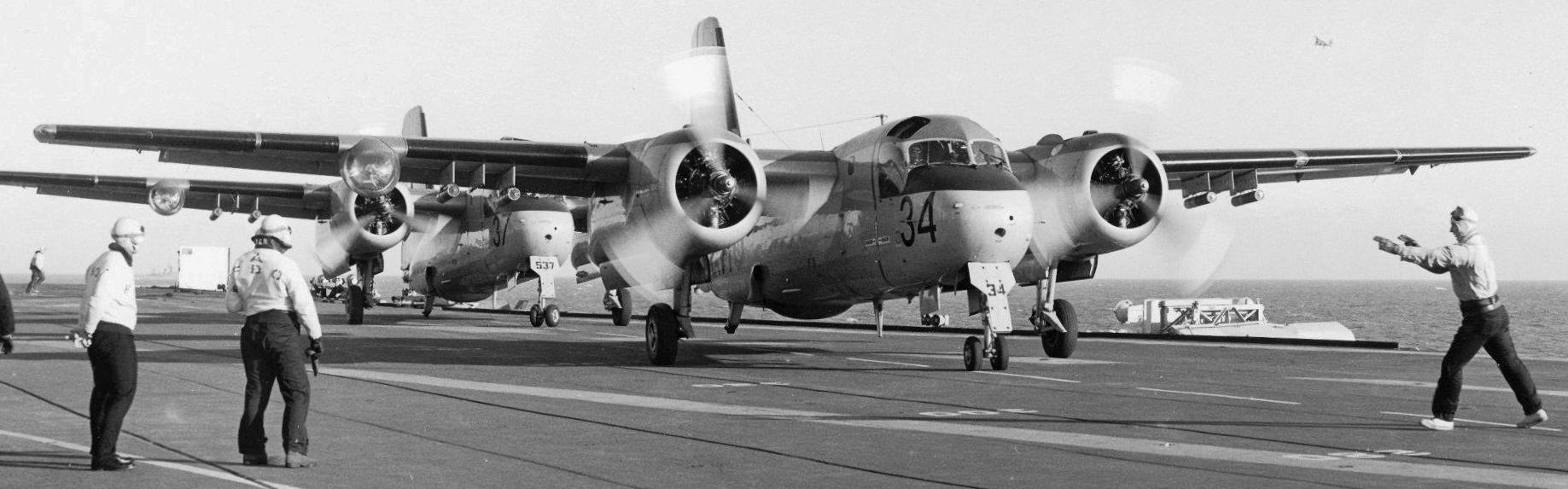
On October 13th, 1956, the first Trackers would start to make their way to squadron service. The first squadron to get them was VX10, a test and evaluation squadron. These would be followed by the ASW squadrons getting them on February 7th of 1957, for VS881 and VS880 in October of the same year. During that time, HMCS Bonaventure was being commissioned in Belfast, for these four Trackers and two Banshees were flown to Northern Ireland for carrier landing trials. The ship would begin it’s boyage across the ocean once everything was completed, with it arriving in Halifax on the 24th of June 1957. Both squadrons would serve on Bonnie until VS881 was merged with VS880 in July of 1959. When not aboard Bonnie, all but a couple of trackers were based at HMCS Sheerwater, with the others being out at Patricia Bay, BC. By the end, 42 CS2F-1s were built, and the remaining 57 aircraft were to be built to the CS2F-2 specs.
The CS2F-2 would include new tactical navigation equipment, longer range search radar and an improved magnetic anomaly detector, along with other minor modifications. This variant was partly given another piece of Canadian ASW technology, Jezebel. It was a passive low-frequency acoustic sonar system, which complemented the Julie system. The reason why it is considered partly is that the Jezebel system on board this variant wasn’t the full system, but the Jezebel signal relay system. This system sent sonobuoy data to either an Argus, a ship, or a land base to process the data, instead of doing it themselves on board. When the CS2F-2s entered squadron service, they displaced all the -1 models, with only a couple of the -1s being kept to serve as test beds. However, for the -2s, almost as soon as they entered service, plans were made to upgrade the fleet again with the -3 upgrades beginning in 1965.
The CS2F-3 would include the full onboard Jezebel system, which had recording and processing functions. The upgrades also included an AN501 tactical navigation computer and a Maronei AN503 Doppler radar. It also had a system to help pilots navigate over the open ocean, known as the anti-submarine warfare tactical navigation system. This system combined all the available data into a map, which was displayed to the pilots. 45 Trackers would be converted to this model by Ferry Aviation, with the first being done in July of 1966 and the last in April of 1968. That same year, the unification of the Canadian Armed Forces would happen, and all 3 Tracker variants would receive the name CP-121 Tracker. And with Bonnie’s retirement in the 70s, the aircraft were left to operate at bases on land. This led to their slow retirement starting in the 1970s, however they still served the CAF as marine reconnaissance aircraft until the full fleet was retired as of January 1991. The Trackers who had left military service before that date would serve as aerial firefighters for Ontario and Saskatchewan. With the excess aircraft up for grabs, the Conair Company would modify a bunch of them into the Firecat variant. For Canada, all versions of the Tracker would be retired by 2012.
Specs:
General Characteristics
Crew: 4
Length: 42 ft 0 in (12.8 m)
Wingspan: 72 ft 1 in (22 m)
Height: 17 ft 6 in (5.33 m)
Wing area: 485 sq ft (45.06 m2)
Empty weight: 18,750 lb (8500 kg)
Max takeoff weight: 26,300 lb (11,930 kg)
Fuel capacity: 430 imp gal (1970 L; 520 US gal)
Powerplant: 2 x Wright R-1820-82WA 9 cylinder radial engines, 1525 hp (1,120 kW) each. Manufactured under licence by Pratt & Whitney Canada
Propellers: 3-bladed metal variable-pitch, constant speed, fully reversing propeller 11 ft (3.3 m) diameter.
Performance
Maximum speed: 287 mph (462 km/h, 250 kn)
Cruise speed: 177 mph (285 km/h, 154 kn)
Range: 1350 mi (2172 km, 1173 nmi)
Endurance: 9 hrs
Service ceiling: 22,000 ft (6705 m)
Armament
Bomb load: 4810 lbs (2180 kg)
Internal load
- Mark 43, Mark 44 and Mark 46 torpedoes.
- 350 lb (160 kg) Mark 54 depth bombs and practice bombs.
- Sonobuoys: 32
- Mark 400 Signal Underwater Sound Charges (SUS).
External load: * 6 underwing pylons: depth charges or 5 in. HVAR CRV-7 rockets
Avionics
Radar systems: AN/APS-38 search radar.
Passive sensors:
- AN/ASQ-8 Magnetic Anomaly Detector (MAD) on extended tail boom to measure presence of iron from a vessel’s hull
- AN/ALR-8 radio direction finding and interception to triangulate location of radio transmitters
- AN/APA-74 radar signal pulse identification for identifying and locating submarine radar transmissions
Active sensors:
- AN/AQA-3 Julie - explosive echo ranging
Navigation:
- Anti-Submarine Warfare Tactical Navigation System? (ASWTNS)
Other
- 70 million candlepower searchlight for night visual identification
- AN/ARC-505 VHF transceiver
- AN/ARC-552 UHF transceiver
- AN/ARC 505 (Collins 618T) HF single sideband radio plus standby AN/ARC 38