- Yes
- No
- (independent) BeNeLux tree
- France: BeNeLux subtree
- other
- no/negative
- 2 × 12.7 mm Browning M2 HMG
- other (please comment)
- no/negative
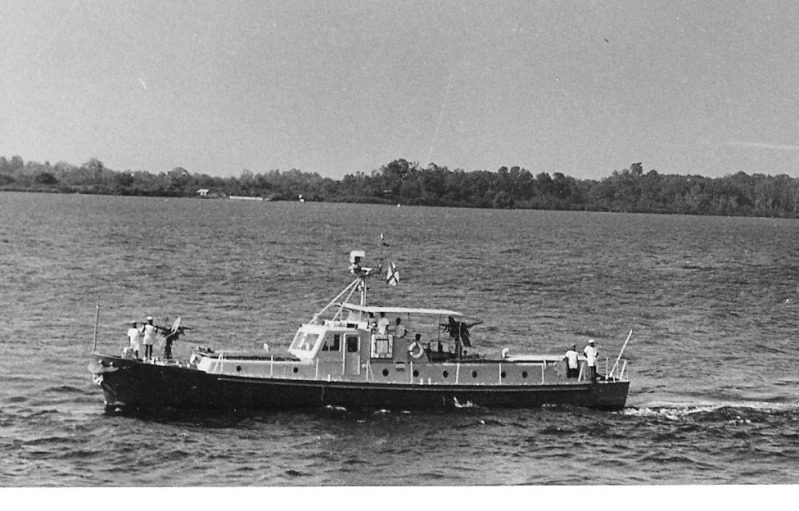
History
Service History of P908 Ourthe
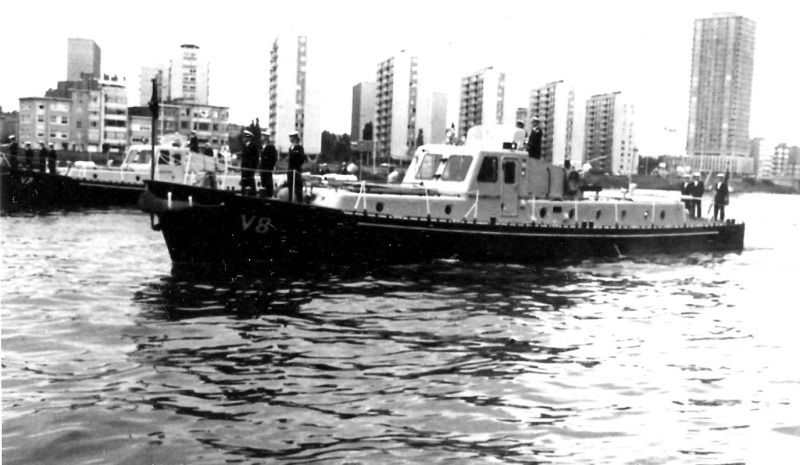
After commissioning, Ourthe served with the Belgian Force Navale until 1964. She was then loaned to the Corps Royal des Cadets de Marine (CRCM), Liège section, where she bore the number L 39 from 1964 to 1974. In 1974, she returned to the Force Navale, redesignated V 8, and was based at Kallo Naval Base, patrolling Belgian rivers and performing training duties.
From 1956 onward, three Congolais-class vedettes — the Ourthe, Rupel, and Dender — were deployed to Congo, operating from the Marinebasis Banana at the mouth of the Congo River. They were transported by Compagnie Maritime Belge (CMB) and later returned to Belgium. The Congolais-class differed from the Leie-class in several ways: the deck had less camber, raising the stern 25 cm higher; the wheelhouse windows were taller; and the aft crew compartment had round portholes instead of rectangular windows. Access from the cockpit to the upper deck was via a ladder. Engines used intercooling, while the underwater hull remained identical to the Leie-class. In 1958, the Semois was also sent to Congo.
During her Congo deployment, Ourthe carried out patrols, convoy escorts, and liaison missions, providing Belgian forces with effective riverine mobility. Her shallow draft allowed her to navigate complex river networks efficiently, while her small crew allowed for rapid operations and maintenance.
Repainted and in LiegeFrom 1974 to 1983, while back in Belgium, Ourthe was used under a loan system by the CRCM section Antwerp alongside Rupel. The ships were painted dark blue to differentiate them from the Belgian Navy’s fleet. The Force Navale maintained operational control, and a dedicated petty officer mechanic often accompanied each patrol.
1977 in Bruges as V8After 1983, Ourthe was sold to private owners in the Netherlands and Guernsey under different names and numbers, including V 8, DAZZLING BEAUTY, and operated by firms in Hansweert, Dordrecht, and Southampton. She remains an important example of postwar Belgian riverine patrol craft.
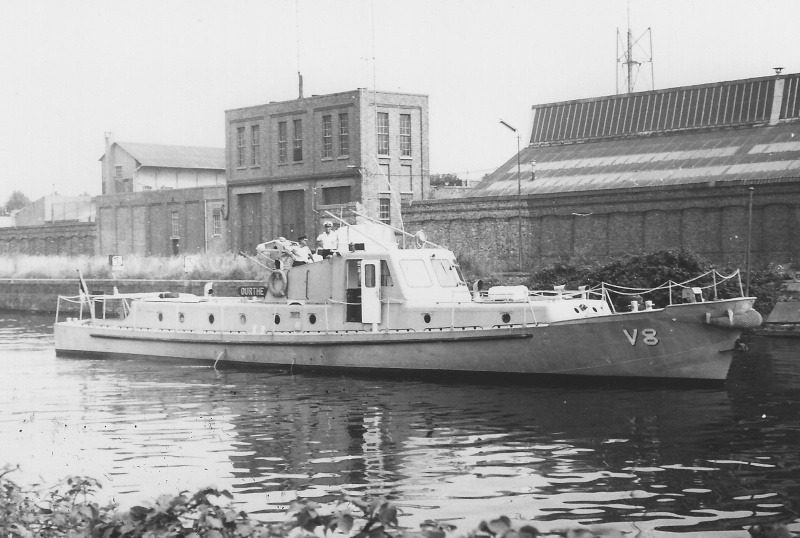
Specifications
Displacement: 25 tons
Length overall: 24.25 m
Length between P/P: 23.0 m
Beam: 3.8 m
Draught: 0.9 m
Range: 2,300 nm at 10 knots
Speed: 19 knots
Propulsion: 2 × MWM RHS 418 A 8-cyl diesels (220 hp each), 2 shafts
Radar: DECCA 707 (1954–1964)
Crew: 1 petty officer + 6 sailors
Radio call sign: ORJHArmament Layouts
Variant Weapons Placement Notes Dual HMG 2 × 12.7 mm Browning M2 HMG Fore & aft Original and sole documented configuration.
Place in War Thunder
The Ourthe would fit the lower tiers of a BeNeLux naval tree or a French subtree, representing postwar riverine patrol craft. With her dual twin HMG configuration, she could serve as an early patrol boat variant suitable for mid rank I.
Like her sister ships, the Ourthe highlights Belgian Cold War naval operations on rivers and in overseas deployments, such as Congo, making her a unique addition for historical naval enthusiasts.
Sources
Sources
- Agentschap Onroerend Erfgoed — Inventaris Onroerend Erfgoed
- Coulier, F. (2008–2009). Het Belgisch maritiem Rijnsmaldeel I–IV, Neptunus
- Anrys H., De Decker de Brandeken J.-M., Eygenraam P. (1992). De Zeemacht
- Van Ginderen L. & Delgoffe C. Fotoboek Belgische Zeemacht 1946–1996
- MAS Antwerp archives (for Leie-class and Congolais-class data)
- Jane’s Fighting Ships (1950s–1960s editions)