Still investigating the instability (aka its staying like this most likely), also like how their response to the SD-10(A) mach 5 report was increasing the STATCARD mach number and literally nothing else
3 Likes
I literally see no reason for the changes on the PL12s…only reason is a dev got his ahh kicked by some Chinese aircraft multiple times and decided to do some revenge changes lile that…ive experienced in couple of days(Air SB) fast flying targets are almost a no go if its not headon,targets changes direction while supersonic is basically impossible hit even if not using any CM,had a gripen to do a splits S,at around 10km,the missile even proxied but did nothing…a Kfir just cranking also managed to defeat a 20km shot…gaijin had no reason to change anything…
4 Likes
Someone knows if these data are ‘final’ or just placeholder?
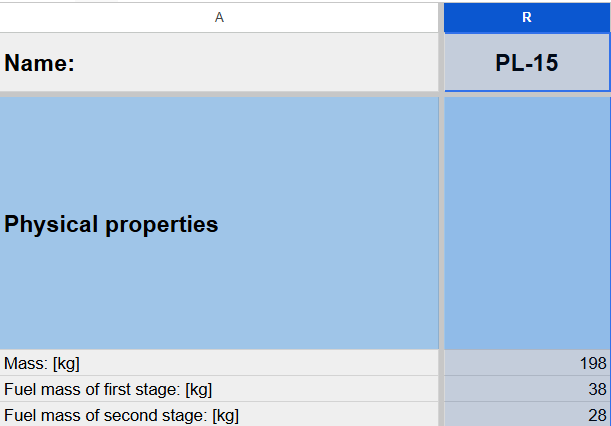
copy paste pre nerf pl12
3 Likes
only copy by pl12
1 Like
Oh… btw, you know if theres estimatives for these numbers?
nope
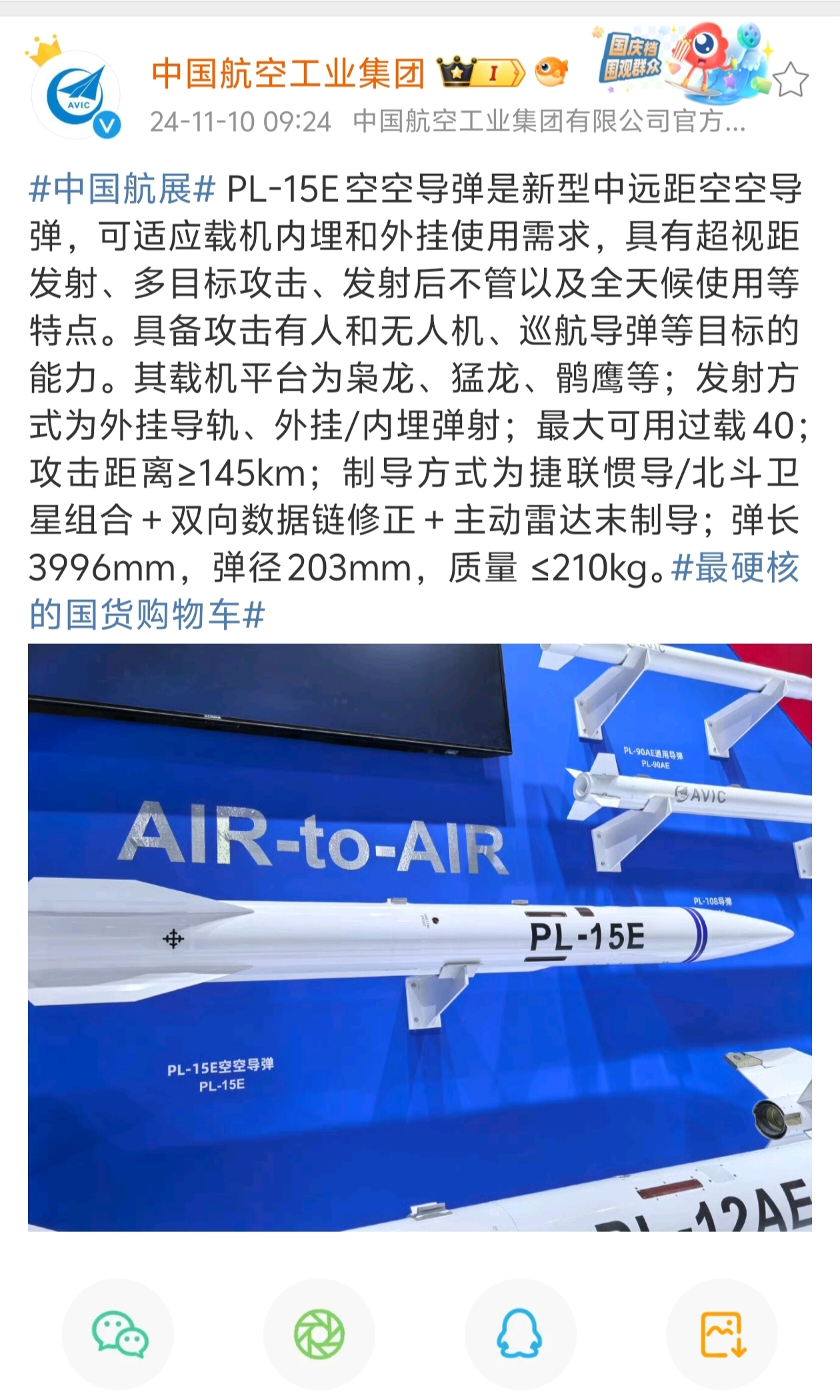
From the blog post published by AVIC (Aviation Industry Corporation of China) in 2024, the specifications of the PL-15E (export variant of the PL-15) are as follows:
-
Mass: 210 kg
-
Maximum usable overload: 40 g
-
Attack range: 145 km+
-
Length: 3996 mm
-
Diameter: 203 mm
-
Seeker: AESA + ARH + IOG + GNSS + DL
The 145 km range refers to the missile’s reach when its engine burns through all fuel in a single continuous burn. If the pulse interval is set to 30 seconds, its effective attack range can exceed 180 km.
(Due to platform restrictions, AVIC blog posts are automatically hidden after more than one year. Therefore, the version we are accessing now is actually the preserved copy from the 2024 Zhuhai Airshow period.)
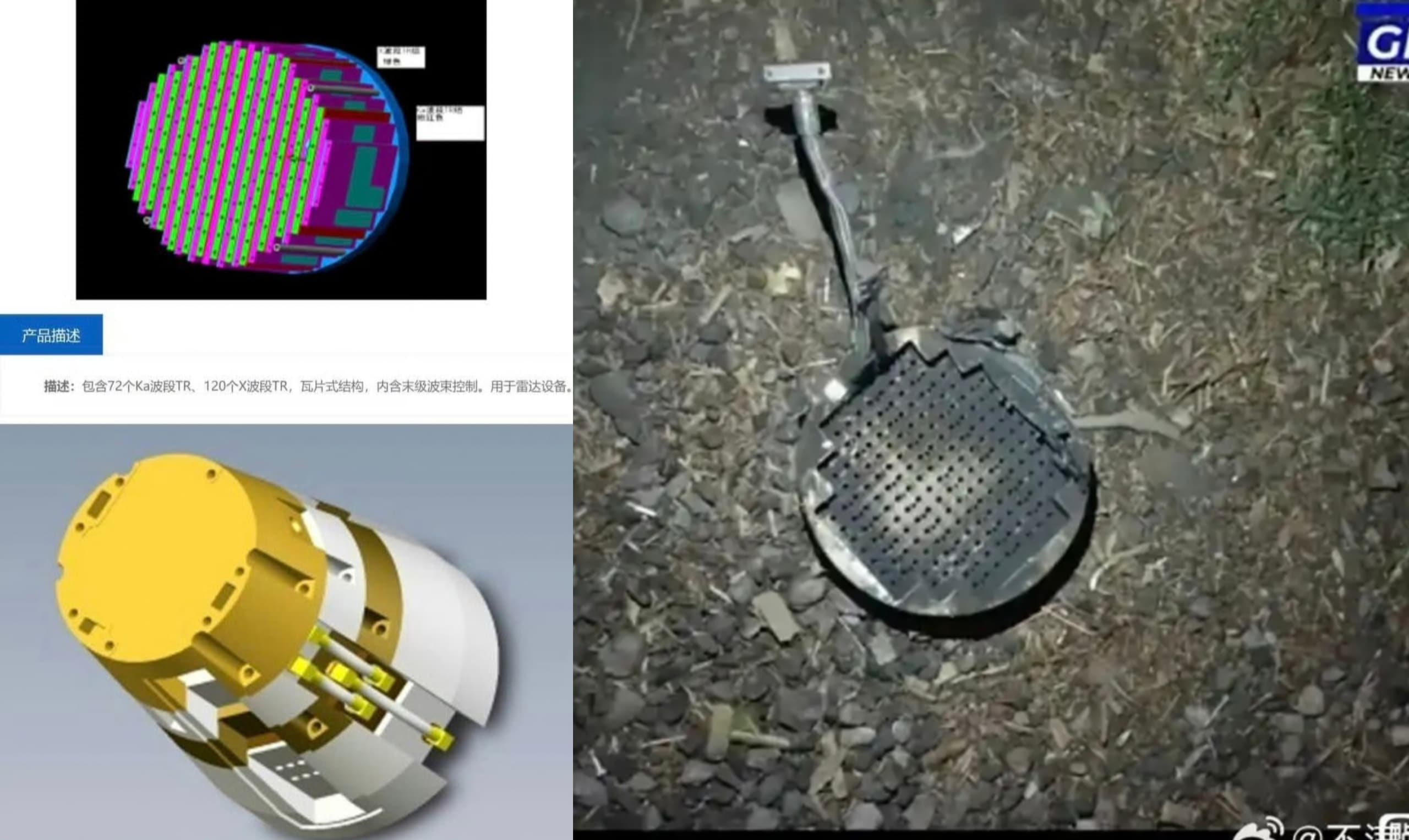
(It is likely AVIC’s official introduction to the PL-15E’s seeker, as well as images of the PL-15E seeker debris recovered from the India-Pakistan aerial engagement on May 7, 2025.)
2 Likes
The PL-15 has smaller wings, which means it will also have lower drag. Its actual overload performance in-game should at least match that of the current PL-12/A. I’m afraid the current PL-15 in-game is performing worse than the PL-12/A in terms of overload capability.The overload performance of the PL-12s should not be as poor as it currently is in the game.
1 Like
Doing a very very lazy guesstimative, i got ~100kg of propellant using a known propellant density (C-5s 5,71kg more per 5inch) and estimating the size of PL-15s motor
Im crazy or this numbers isnt that absurd?
what’s the source for this?
apparently pl-12a and pl-15 have the same length for the motor section, pl-12a has 75kg of propellant in game, 100kg of propellant for the pl-15 is probably too much
1 Like
This is a screenshot of a table from a technical paper on dual-pulse missiles. The 145 km range exactly matches the published attack range of the PL‑15E:
- At a pulse interval of 0 s:
- Condition 1 range: 145 km
- Condition 2 range: 17 km
- Terminal velocity: 936 m/s (Condition 1) / 581 m/s (Condition 2)
- Average velocity: 1102 m/s (Condition 1) / 551 m/s (Condition 2)
I am unsure if this paper is officially public, but it has at least been shared publicly on Chinese-language online communities.
did you mean 170km? i didn’t understand why the terminal speed is slower at 17km
naa, these two conditions actually correspond to different altitudes.
The 145 km range is probably at high altitude, while the 17 km is at sea level. I’m not entirely certain though.
these values seem way too optimistic, at a launch speed of mach 1.2 and altitude of 10km for both planes and 145km of range, a fakour-90 has a terminal speed of 770 m/s
You can check it out. This post from Baidu Tieba, a Chinese online community, contains a more complete screenshot of this table
These are all computer simulation data and can only be used for general reference. Even so, I don’t think it’s a bad thing to refer to the more optimistic set of figures.
that chart is very confusing ngl, could be a language barrier tho
Man the pl15 is so pretty 😍