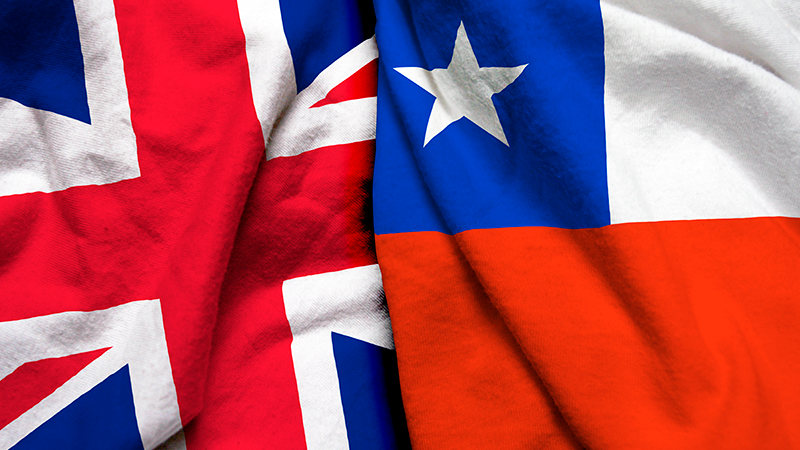
Hello everyone. Recently, a Greek sub-tree was added to the Israeli tree, which makes it highly unlikely that a Chilean sub-tree will also be included. When asked about this, Smin explicitly stated that there are no plans to add any Latin American country as a sub-tree to the Israeli tree. This raises the question of where Chile might be added in the future. Setting aside the proposals for a broader Latin American or Hispanic tree, which have been suggested on the forum without any response from Gaijin so far, the question remains: into which existing tree could Chile fit? In this regard, the United Kingdom comes to mind. At first, this option might seem strange or illogical, but these two nations share a history of cooperation that dates back hundreds of years and continues to this day; I will provide some context below.
The first British assistance to Chile occurred during the country’s struggle for independence, when Thomas Cochrane, a renowned captain in the British Royal Navy, offered his services to the Chilean Navy. He was granted the rank of vice admiral to fight against Spain and was also awarded Chilean citizenship in 1818. His maritime campaign, which spanned from 1819 to 1821, saw him engage in operations along the Chilean and Peruvian coasts; he secured control of the seas and captured the Spanish frigate Esmeralda, achieving several victories that helped ensure Chile’s independence. His time in Chile was so significant that he is considered one of the founders of the Chilean national fleet; it was thanks to him that the country transitioned from an improvised naval force to an organized one capable of dominating the Pacific Ocean. Furthermore, he introduced the Royal Navy’s regulations, signal codes, and disciplinary standards into the Chilean Navy, practices that remain in use to this day. His legacy in Chile is so profound that several naval vessels have been named in his honor.

Thomas Cochrane in the service of the Republic of Chile
Another prominent British figure was Robert Winthrop Simpson, who arrived in Chile in 1818 as a midshipman, accompanying Lord Thomas Cochrane. He served as a naval lieutenant under Cochrane’s command. He distinguished himself during the blockade and assault on El Callao in 1821, as well as in the campaigns to liberate Chiloé, a large island in Chile, from Spanish rule in 1826. Like Cochrane, he became a naturalized Chilean citizen and continued his service in the Chilean Navy, eventually attaining the rank of vice admiral. Later, he served as Commander-in-Chief of the Navy and as a senator of the Republic; consequently, several Chilean warships were named in his honor.

The Chilean super-dreadnought battleship Almirante Latorre, built in England
On September 14, 1823, the two countries established diplomatic relations. Subsequently, thousands of British immigrants settled in Chile, particularly in port cities such as Valparaíso, which to this day retains much of its British-influenced architecture, most notably the British Arch. Currently, Chile has the largest population of British descent in Latin America, with approximately 700,000 descendants. Due to the excellent relations between the two nations, Chile chose the United Kingdom as its primary naval partner. Over the years, Chile commissioned numerous warships from British shipyards, most notably during the arms race between Chile and Argentina (1880–1902) and the subsequent South American naval arms race (1905–1915), which also involved Brazil. A highlight of this period was the Chilean Almirante Latorre, a super-dreadnought battleship considered the most powerful in Latin America, which was also commissioned from the British shipyard Armstrong Whitworth. The shared naval history between Chile and the United Kingdom is extensive, encompassing more than 80 warships acquired by Chile, including frigates, corvettes, ironclads, monitors, protected cruisers, battleships, super-dreadnoughts, destroyers, torpedo boat destroyers, torpedo boats, submarines, and modern frigates. To this day, Chile’s primary combat frigates remain of British origin, including the Type 22 and Type 23 classes.
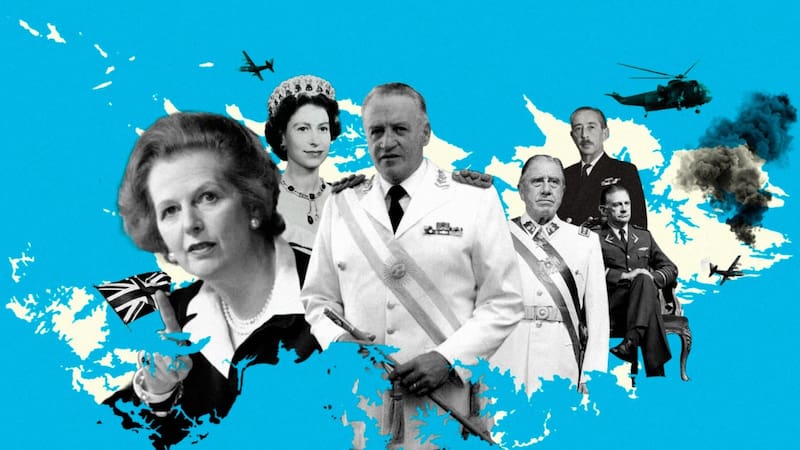
Chilean aid to Great Britain during the Falklands (Malvinas) War
During the 1970s, tensions between Chile and Argentina reached a critical peak, as Argentina laid claim to three islands at the southern tip of the continent, Picton, Nueva, and Lennox, which belonged to Chile. Argentina sought control of these islands because doing so would have granted it access to the Pacific Ocean, a prospect to which Chile objected, given that the islands were its own territory. To avoid an armed conflict, both nations agreed to submit to a British arbitration process to determine ownership. After several years of investigation, the British ruling confirmed that the islands belonged to Chile. Upon learning of the decision, the Argentine military government declared the ruling null and void, and began preparations to invade Chile under a plan codenamed “Operation Sovereignty.”
Both nations mobilized troops to the border. Chile, adopting a defensive posture, established several combat outposts, primarily in the south of the country, where the fiercest fighting was expected to take place, by constructing underground bunkers, machine-gun nests, emplacing anti-aircraft guns, and digging trenches. A large contingent was mobilized to defend the homeland against an Argentine invasion. By late 1978, the naval fleets of both countries set out to engage one another in the Beagle Channel; however, due to poor weather, the Argentine fleet decided to turn back and postpone the invasion. At the eleventh hour, Pope John Paul II intervened and succeeded in brokering peace between the two nations. Nevertheless, tensions persisted, and ground troops remained in their positions. By 1979, the two nations signed the Montevideo Act, through which they formally accepted the mediation of the Holy See.

The Chilean squadron heading to engage the Argentine navy during the Beagle conflict
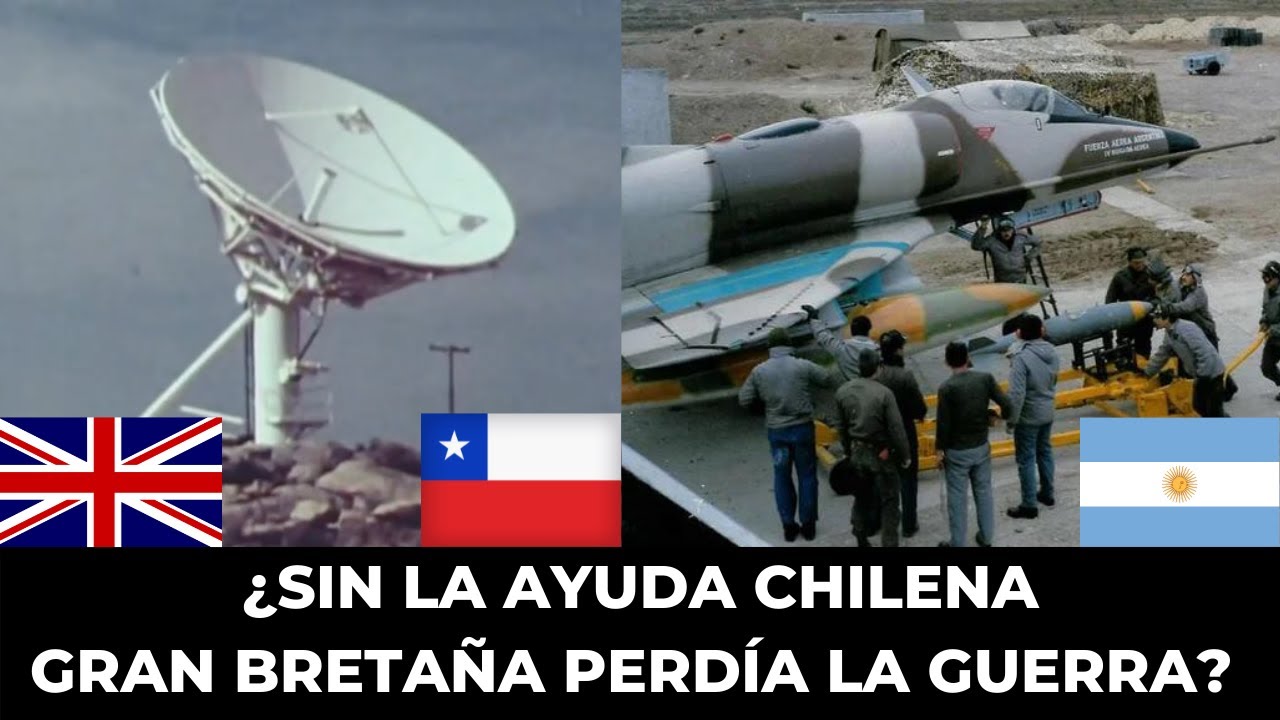
Despite maintaining a public stance of neutrality, Chile provided extensive support to the United Kingdom during the 1982 Falklands War, becoming the only Latin American nation to directly back the UK throughout the conflict. A primary form of assistance involved Chile intercepting Argentine communications, gathering intelligence on orders and troop movements of the Argentine Navy, and relaying this information to the United Kingdom. Additionally, a British Marconi radar system was installed in southern Chile to detect the movements and takeoffs of Argentine aircraft; this data was supplied to the British military, allowing them to prepare in advance, a contribution that was undoubtedly decisive and saved many lives. Through joint operations between the Chilean Air Force (FACh) and the Royal Air Force (RAF), reconnaissance flights were conducted from Chilean territory and airspace for intelligence-gathering purposes. Chile also granted access to its airspace and permitted the use of bases or stopover points on its soil. Furthermore, Chile’s support on the ground proved highly significant by deploying troops along the border, Chile forced Argentina to keep a substantial portion of its best forces and resources stationed in the western part of the country, fearing the opening of a new front. Consequently, Argentina was compelled to send its younger, less experienced soldiers to fight in the islands, a factor that undoubtedly contributed to the British victory.
An English Electric Canberra PR.9 gifted to Chile by the United Kingdom in recognition of assistance provided during the Falklands War.
In recognition of Chile’s assistance, the United Kingdom gifted Chile three high-altitude photographic-reconnaissance Canberra PR.9 aircraft, an entire squadron of Hawker Hunter FGA.9 and T.67 jets, and provided favorable purchasing terms, discounts, and spare parts. The UK also supplied the aforementioned Marconi radar, stationed in the south of the country, along with various armaments and equipment captured from the Argentines. Following the Falklands (Malvinas) War, British Prime Minister Margaret Thatcher herself traveled to Chile to express her gratitude for the Chilean support.

Currently, relations between Chile and Great Britain are very close, with significant cooperation in the field of defense. Notable recent developments include the transfer of three E-3D Sentry aircraft from Great Britain to the Chilean Air Force for a symbolic price, with some sources even suggesting they were provided entirely free of charge. Another significant milestone occurred in October 2026, when the United Kingdom included Chile in its Open General Export Licence (OGEL). This arrangement allows Chile to import British military equipment, software, and defense technology without the need for case-by-case permits, greatly streamlining military acquisitions. Currently, only three countries in the Americas, the United States, Canada, and now Chile, are included under the OGEL. Furthermore, Chile has recently been offered the opportunity to manufacture Arrowhead 140 combat frigates at shipyards in southern Chile, a proposal that would also include a transfer of technology. Other significant developments include the current border tension between Chile and Argentina, following Chile’s announcement that it would send a commercial vessel carrying a large quantity of supplies to the Falkland Islands (Malvinas). Argentina has opposed this move, and some Argentine military officials have even stated in interviews that they might intercept the ship, a scenario that could escalate into a new conflict.
Following this extensive historical introduction regarding the relations between Chile and the United Kingdom, I would like to delve into why Chile could fit into the United Kingdom’s tech tree in the game. Although my initial suggestion included a full Chilean sub-tree, the United Kingdom does not actually require much assistance; it already possesses a significant number of domestically manufactured vehicles and only needs minimal support to fill specific gaps across its various tech trees. Therefore, I believe Chile could be integrated as a “mini” sub-tree or perhaps not even as an official sub-tree like Australia, but rather by adding a few Chilean vehicles as premium or event rewards, or simply to fill specific gaps, as is already done elsewhere in the game. Regarding ground forces, Chile is notable for its many interesting domestic modifications and designs, such as the Chilean “Super Chaffee” and “Super Sherman,” which are the best of their kind globally and have been highly requested by the community for years, as well as vehicles produced by Cardoen featuring various armaments. At the “top tier,” Chile could also contribute, as it operates Leopard tanks; while I acknowledge that there are already too many Leopards in the game, the option remains available should the need arise. Perhaps the most significant contribution Chile could offer is in the realm of anti-aircraft systems, as it could provide several units to fill necessary gaps at specific Battle Ratings. Chile also operated the British FV101 Scorpion light tank, which featured a laser rangefinder and other upgrades; it could be included in either the main tech tree or as a premium/event vehicle. Below, I will share some conceptual technology trees that I created to illustrate, more or less, the idea I have in mind.

Mini Chilean terrestrial sub-tree within the Great Britain tree (Click Here)

Regarding combat aircraft, Chile acquired a number of planes from the United Kingdom that would certainly make for very interesting additions. To begin with, the first jet operated by the Chilean Air Force (FACh) was the de Havilland Vampire DH.115; Chile acquired three different variants over the years, the T.11, T.22, and T.55, which were notable for their extensive ground-attack armament, offering a greater variety than the British-tree version of the Vampire. These would undoubtedly be excellent candidates for premium or event vehicles. Another well-known fighter is the “Aguila” (Eagle) variant of the Hawker Hunter, which underwent extensive modifications in Chile; it features air-to-air missiles, a domestically developed Radar Warning Receiver (RWR), and countermeasures, capabilities that would be highly valuable in the British tech tree, where they are currently lacking. Additionally, the Chilean A-36 Toqui, a locally manufactured attack jet that was even equipped with the British Sea Eagle missile, could also be introduced. Finally, Chile operates top-tier aircraft, primarily the F-16. While I am aware that several F-16 variants are already in the game and that the community is somewhat weary of them, they could serve to fill gaps in the lines that currently lack top-tier options. Furthermore, Chile recently announced the acquisition of the F-35, ensuring that an even more advanced aircraft is a candidate for future integration.

Mini Chilean aerial sub-tree within the Great Britain tree (Click Here)

Undoubtedly, the area where Chile would contribute most significantly to the United Kingdom’s technological tree is the naval sector. Chile operated a vast number of British-built vessels, many of which were unique models manufactured specifically for the Chilean Navy. The list is quite extensive, but notable examples include the Almirante Lynch-class and Serrano-class destroyers, as well as the Almirante-class destroyers, the latter being particularly noteworthy for their unique automatic armament, which surpassed that of the British Daring class and could serve as a direct follow-on in the tech tree. Other examples include various protected and armored cruisers, pre-dreadnoughts like the Constitución class, and the crown jewel, the Almirante Latorre-class super-dreadnought. As the most powerful battleship in Latin America, armed with 356mm guns, it could be placed at a Battle Rating (BR) of 7.0; it would be comparable to the British Iron Duke class but with more potent weaponry. Regarding the coastal fleet, Chile also operated various vessels of British and Canadian origin. These could be integrated as premium or event vehicles, as they often featured different and in some cases, more powerful armament configurations than the original designs. However, the most significant addition to the coastal tree would be Chile’s fast attack craft. Although not of British origin, they would fill a crucial gap at the top tier of the British coastal tree, specifically the Type 148 Tiger class, Lürssen-Bazán class, and Sa’ar 4 class. These would cover the 3.7 to 4.7 BR range within Rank V of the British coastal tree, a segment that currently lacks this type of vessel entirely.

Mini Chilean Naval sub-tree within the Great Britain tree (Click here)


Finally, regarding the helicopter tree, Chile could contribute a domestically designed helicopter: the Cardoen-Bell CB 206L-III, an attack helicopter developed in Chile, of which two prototypes were built. Chile also operates the UH-1H, armed with Mamba anti-tank missiles. Both helicopters would undoubtedly make excellent premium or squadron vehicles at a Battle Rating (BR) of 8.0, a tier currently lacking in the British tree. Additionally, the MD 530F HeliCOAT could be added; equipped with up to eight Spike LR and ER anti-tank missiles and notable for its small size and high maneuverability, it would fit at BR 11.3, filling a significant gap in the British tree.

Mini Chilean Helicopter sub-tree within the Great Britain tree (Click Here)

Adding some of these vehicles would be an interesting option for the British tech tree; it would bring more variety to the gameplay while also filling in some gaps. It would also be quite interesting and fun to see the United Kingdom and Chile, both of which have historical rivalries with Germany and Argentina, facing off against them in-game. But now, I’d like to hear your thoughts: would you like to see something like this, or would you rather wait for Chile to be integrated into a Latin American or Hispanic tech tree even though Gaijin has shown absolutely no interest in that over all these years?
- Yes
- No