Oh so it’s another of those cases where evidence is hard to acquire, definitely relatable, I went crazy once trying to find information on the DASH HMD for Israel.
I hope some further evidence can be found soon, though it’s likely most of the material is in chinese.
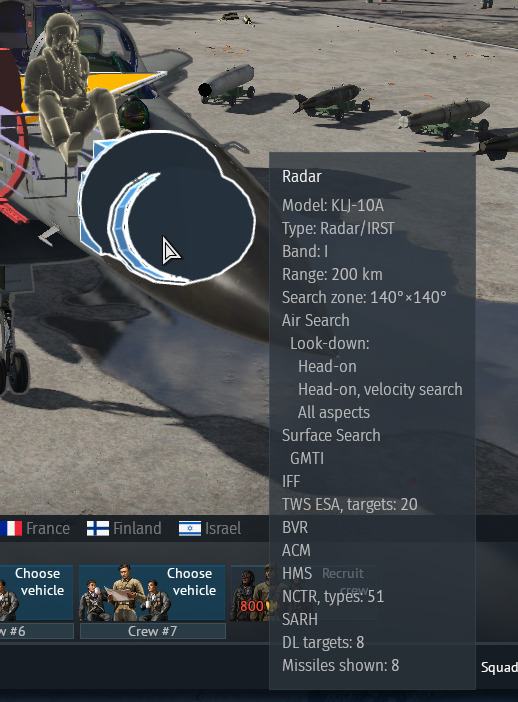
Where are you getting this information from? KLJ10 is currently more powerful thatn gripens radar in MPRF modes (weirdly not in HPRF tho but unless you know what you’re doing you are probably not using it)
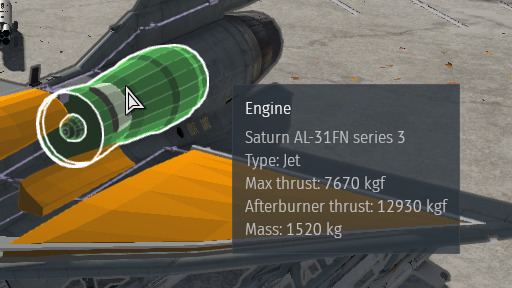
There is neither WS10B nor the modeling and assignment of the radar, which is disturbing…
I hope they can make some changes to make it as excellent as SU30SM2, Gusts and AESA typhoons, or at least on par with 39E
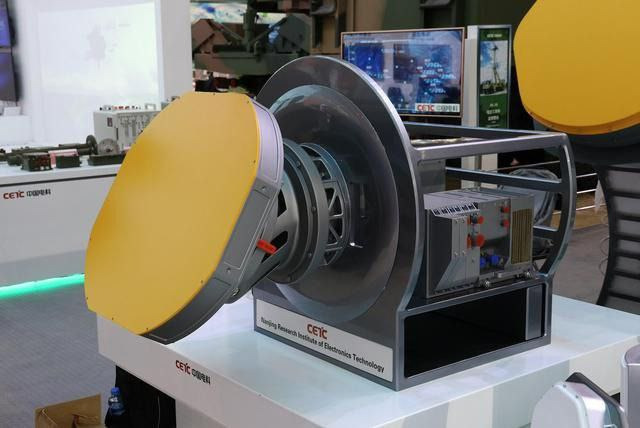
This is an improved version of the KLJ-7A with a mechanical scanning structure. I recall the KLJ-7A is the radar used on the JF-17 Block III (similar to the Captor-E radar in dev server). The KLJ-10A, however, does not have the rear mechanical structure; it is just a fixed, slanted radar array. Gaijin’s modeling is incorrect.
Are we stuck with this radar then? It seems incapable vs other aircraft the same BR and prob would get lowered or stay the same BR if decompression happens.
Although the designation KLJ-10A may not be entirely accurate, the J-10C’s radar IRL is known for its exceptionally long detection range—over 200 km in MPRF mode against targets with an RCS similar to the Rafale—rather than for a wide scanning angle. This primarily stems from the PLAAF’s operational doctrine, which emphasizes long-range detection and engagement with beyond-visual-range missiles. Under such a doctrine, scanning coverage beyond ±70 degrees is considered a secondary priority.
Of course, Gaijin has botched it again as usual.