It explodes on the outside at a distance because it’s a proximity fuse weapon.
All self guiding missiles aim for a direct impact and only detonate when they impact or detect that their distance to the target is increasing. None of them should ever pre-detonate. All of them should explode at their closest possible point to the target.
3 Likes
Nah bro, just need to aim better
2 Likes
You can visually see it exploding at a distance. It does not hit the plane directly. 40kg of explosives exploding a dozen or more meters away from a reinforced monocoque airframe designed to withstand huge punishment, while also being mostly hollow, won’t bring it down or do much damage. It likely won’t even do significant damage. There is a reason why nuclear warheads were considered to deal with these types of bombers.
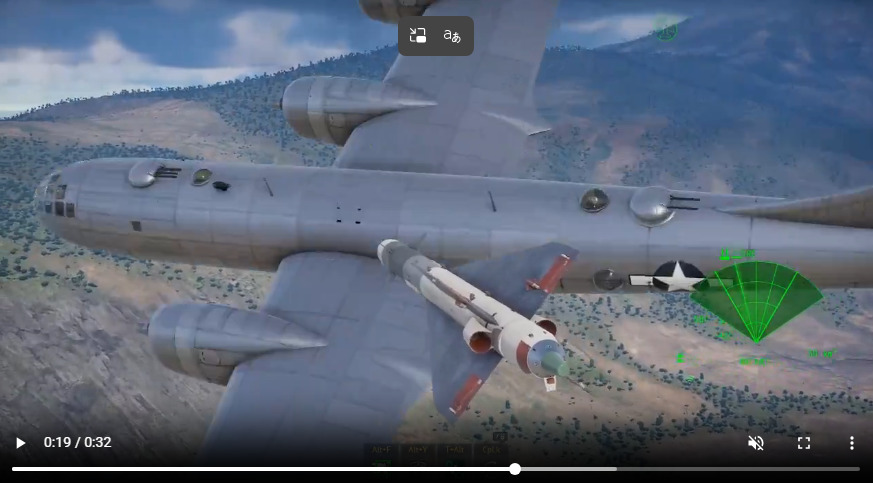
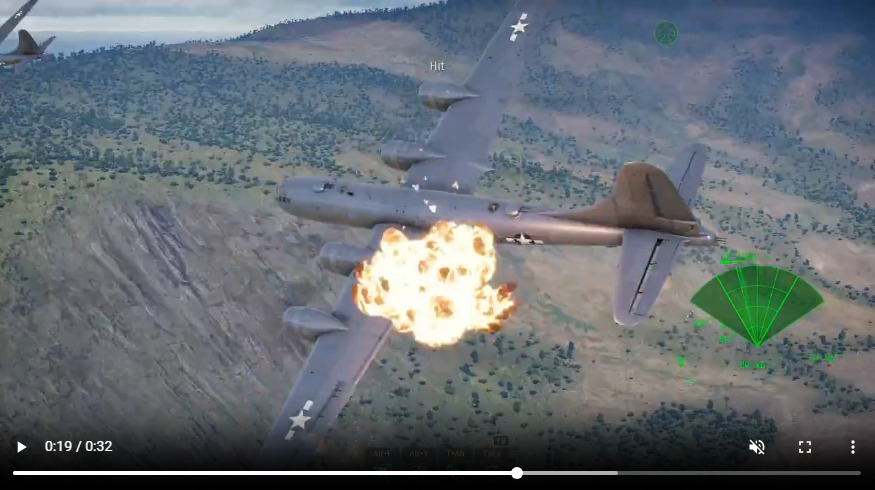
There’s simply nothing in the way of the lethal explosion distance of 40kg to destroy at this distance from the airframe. That’s all it is.
2 Likes
Are you even slightly aware how much 40Kg of TNT is?
6 Likes
Did you even do the math here? The B-29 has a 4.76 mm metal fuselage. If 40kg of TNT detonates 20 meters off the airframe, the overpressure would only measure around 20–25 kPa (3 PSI). The fragmentation would shred nearby surfaces, but the interior is mostly space and would be capable of blocking most fragmentation at this range. Realistically, it would do next to nothing but blow off exterior components at that distance and maybe warp the frame. That distance is what keeps the plane airworthy.
It’s a distant explosion behind a reinforced metal frame designed for that exact punishment. If it had hit directly, it would be lethal, but it didn’t.
All I can assume here is that you see a big number and automatically assume that it will nuke anything at any generally close distance. Fragmentation loses a lot of energy quickly, and so does pressure.
2 Likes
The system that Gaijin has in place is that parts detach from the airplane at a damage threshold that devs think would be aerodynamically useless, and that the way that parts detach in the visual model is to make the game feel more cinematic. This is something that they mentioned on the old forums.
So when you see a tail detach in-game it has never meant a 1:1 representation of what would happen in real life. This discrepancy in the visual model and the damage model has also caused odd issues in the past like the P-61 being able to flying without a tail because the games damage model still counted it as being there and the games visual model did not.
The tail detaching / wing detaching mechanics date all the way back to their first flight simulator game that was released on Xbox 360.
Wing snapping off is gross visual approximation for significantly part of the skin being blown off / the plane being aerodynamically compromised.
The 4-5 shells resulting in a bomber kill is something that is supported by the Ideal Caliber Study.
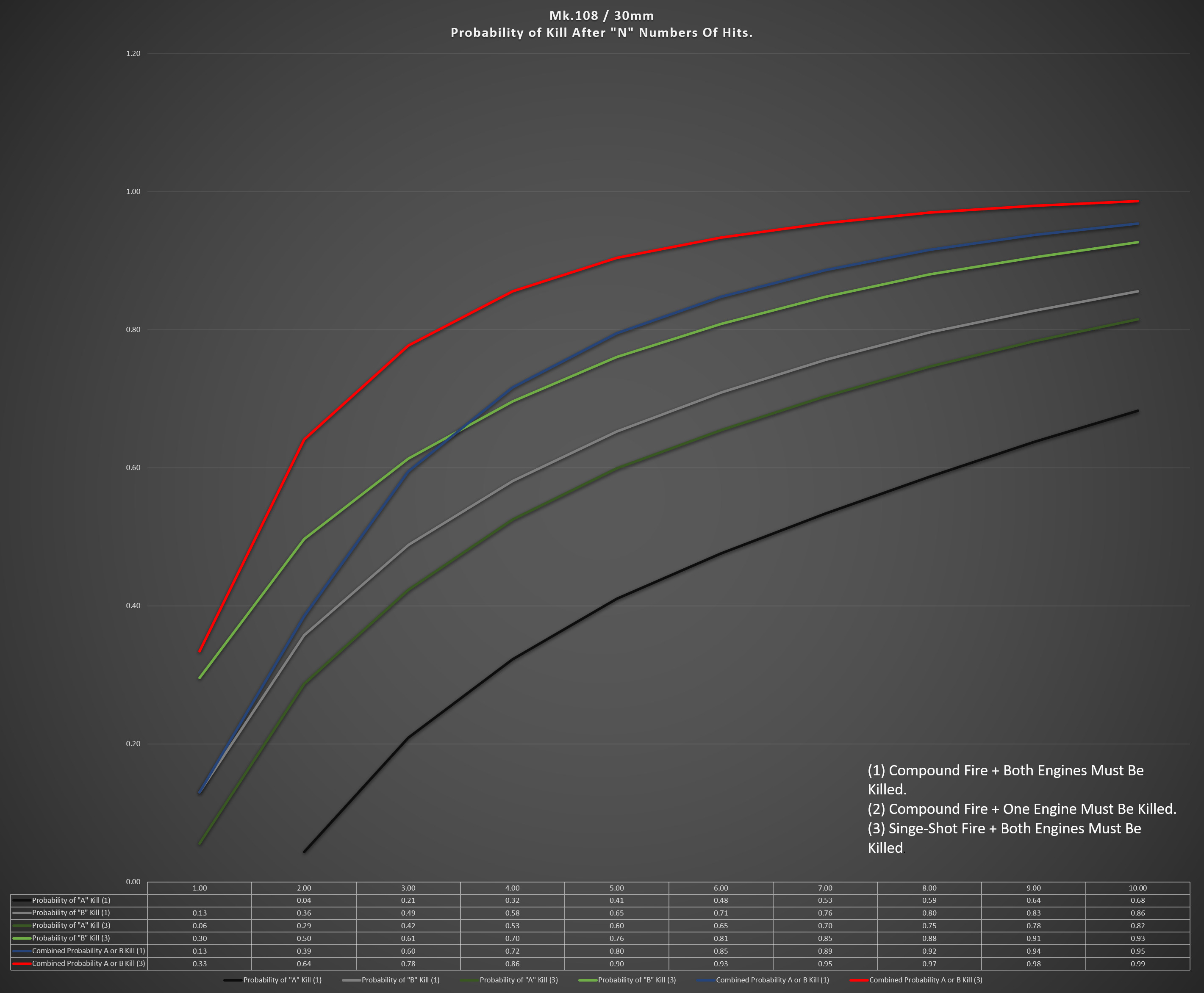
This chart is translated from the study. The only thing that I have done is perform the calculation for combined probability of A + B kill. I have omitted the 2nd condition since it will fall between conditions 1 and 3 for the sake of readability.
The charts relating to testing and structure damage are not though; which is how I am able to tell the following.

These are the 5 areas that resulted in an immediate K kill in their testing with 30mm. Also this criteria did not include the personnel in that determination.
6 Likes
So how do we know this wasn’t caused by the missile?
They see a big explosive and think it’ll knock down a plane armored in roughly 5mm steel on its fuselage, despite the fact 5mm can absolutely stop a 40kg explosive at 20 meters due to how blast pressure and fragmentation work.
1 Like
Buddy I think we need to stop arguing with these guys because no matter how accurate our claims are, they reject everything we say.
1 Like
Do you even physic here? Just the shear force of the blast of FORTY Kg of TNT would be enough to completely ruin the structural integrity between wings and fuselage without even considering the shrapnel hitting it at comically high speeds. Are you serious?
2 Likes
The reason for these damages, as I’ve said many times, is a design and coding problem with the missiles and the gaijin’s laziness in not adjusting this durability setting to affect the missiles.
1 Like
This statement proves you don’t know what the B-29 is to begin with. The Mixed Metal Monocoque fuselage is designed to hold the plane together alongside the airframe to reduce stress if it takes damage. Even if a large amount is carved out, it will still fly just fine. This was trivial even for the B-17.
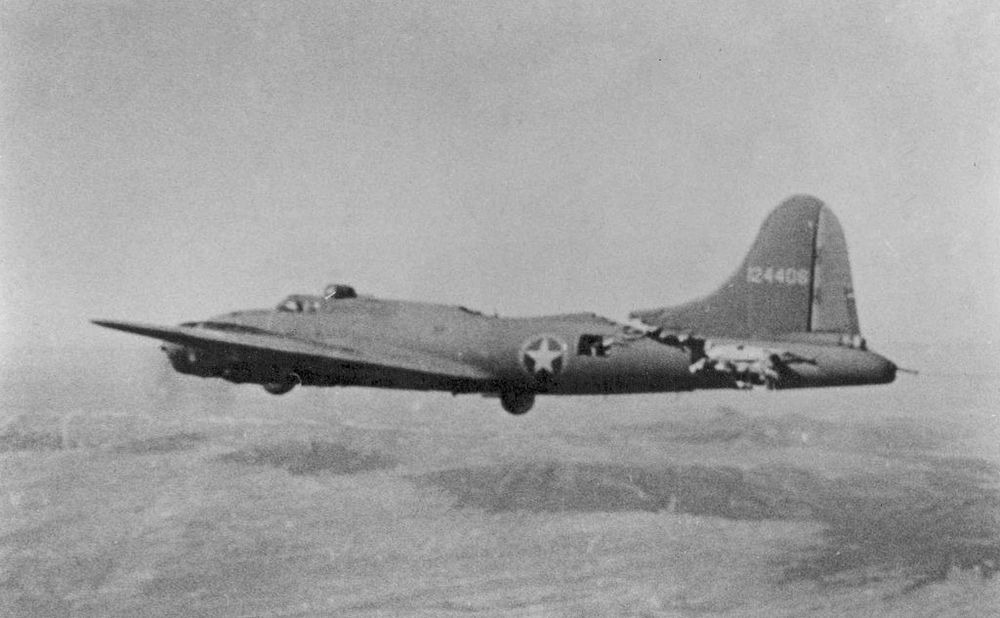
Even at such speeds, these aircraft are extremely durable and hold up to winds that exceed several hundred kilometers per hour. They don’t just tear apart.
2 Likes
I swear they should add back laugh reacts in this forum
2 Likes
Gaijin also heavily nerfs explosives in War Thunder, but the point still stands. Even a thinly armored BT-5 could likely absorb a 40kg explosive at that distance.
“I can’t win using math or physical evidence, so I resort to ad hominem”.
You do the math rather than saying “explosion big”. How about that?
1 Like
Bro you’re comparing an aircraft made mainly with aluminum and SOME reinforced parts of thin 5mm steel to a FULL STEEL TANK with double and even triple the amount of that protection
Stop being a clown
6 Likes
Hey I know this report, those very pages were so blurry on my copy, go to apendix F I believe its quite funny
Yes, by making a bug report and not basing bomber durability on a BROKEN round
Damn, B29 has twice the skin thickness of B17? Pressurization rocks