yes but its got the same skin as those bombers. so just as much of the skin would be blasted off. you get similar holes chewed out of them from the same rounds, just the frame holds up better
the lancaster has an aluminium alloy skin like a millimetre thick you can warp its skin with a finger and watch it pop back.
its just a damn strong frame with a skin weaker than the a cheap cars panels for skin
Blenheim mk4 used Alclad aluminium sheeting in 24 gauge, or 0.6mm thick, Identical to the spitfire.
B17 used 2024-T3 2mm thick over the central and stressed areas, which are the sections we are debating over. Infact if you go up to my earlier messages i did post mathematical equations and diagrams of how a hit of each shell would look on the skin of a b17
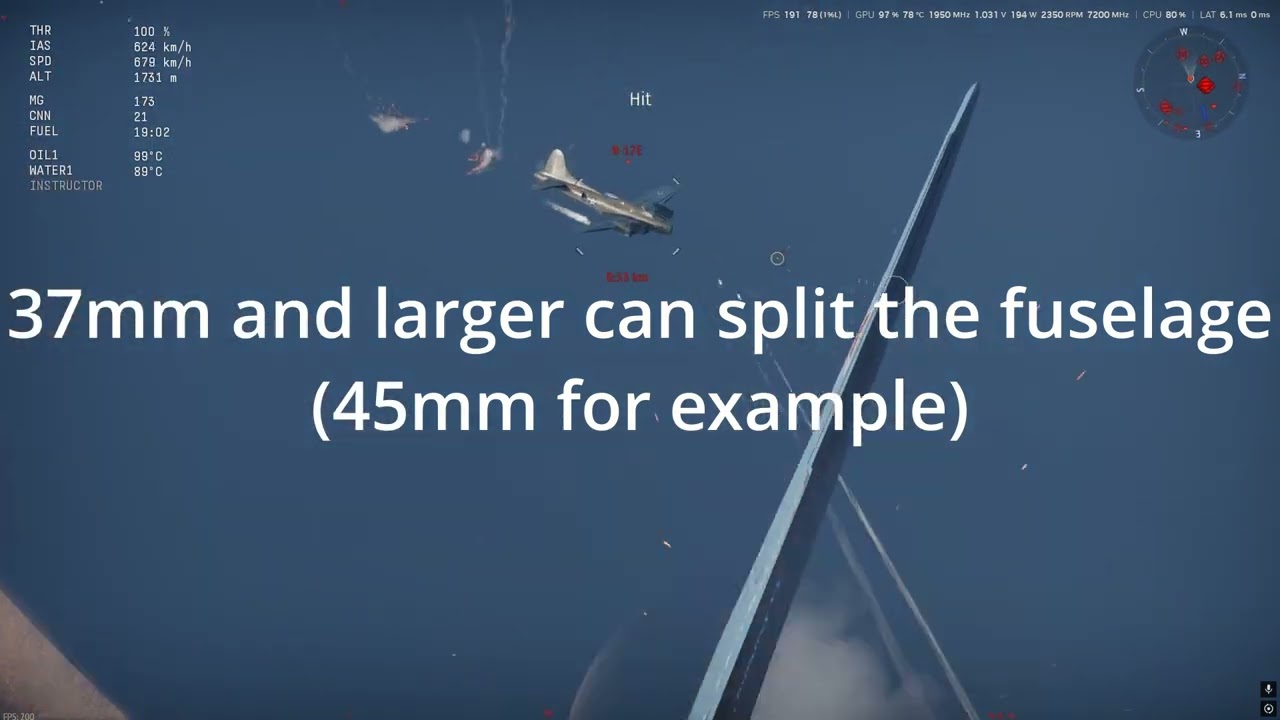
Its meant to visualize how big a hole would be punched in a b17s skin to sorta shut up the people posting spitfire tail sections and blenheim bits getting hit with a mk108, mk108 isnt blowing holes big enough you could crawl through in a plane with skin 3 times the thickness, holes will be blown, but not that big, and crucially absorbing enough of the blast for the airframe underneath to be able to somewhat resist it
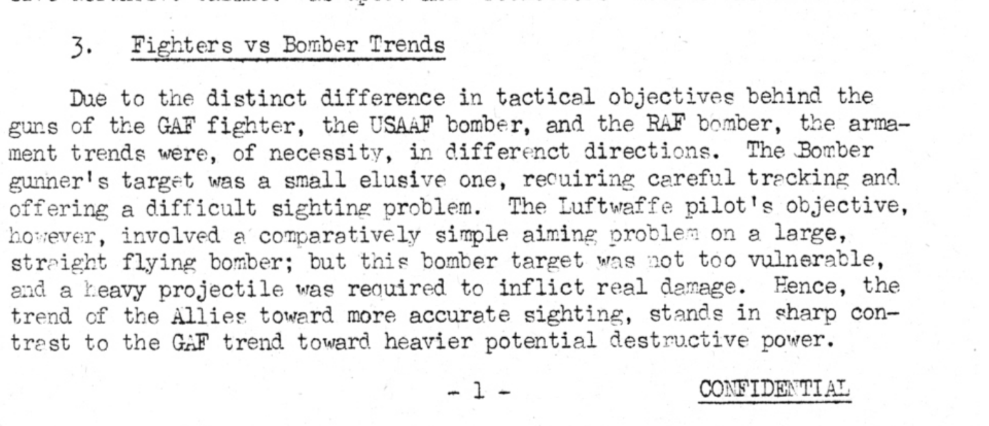
Allied fighters used smaller calibers and were primarily concerned with dealing with enemy fighters or tactical bombers past 1942. Germany had no meaningful capacity for strategic bombing throughout most of the war. In fact there was nowhere near the same impetus for the allies to develop increasingly better projectiles and cannons throughout the war.
This trend is highlighted by the US SBS multiple times in its reports.
The idea that the MK.108 only took 4-5 rounds is not some kind of myth that has been made up by historians. It is something that is consistently present in primary AAC literature during and immediately following the war.
again with the 4-5 mk108 shells, and again with the lack of evidence of what “taking down” a bomber actually means, is it not making it across the english channel or has the wing been blown off, I bet the wing has NOT been blown off
Now im not going to debate that, crew, squishy bits, yep. those are weakpoints that need to be vulnerable, I agree. My main focus this whole time has been lego bomber prevention if you know what i mean, entire tails getting blown off by something smaller than absolutely airframe shattering, or entire wings coming off from random spraying instead of proper concerntrated fire (which IS where we are at on the dev, ive said before and ill say it again, current DM feels good and logical)
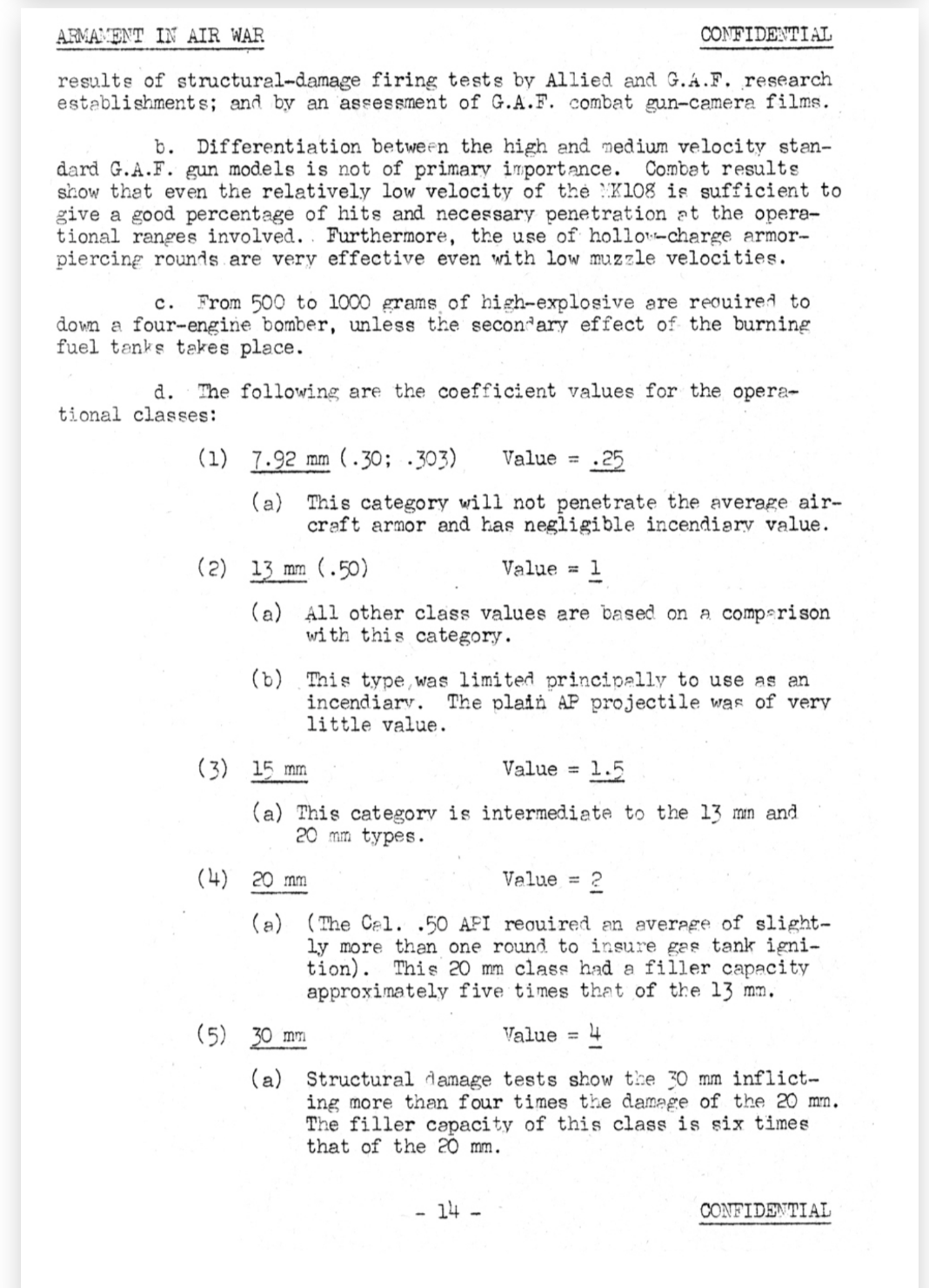
4 times the damage of a 20mm gun means little when the 20mm guns were already proving to do little damage when placed randomly. Notice the wording “sufficient” and not “excellent” or other terms. Not only do the German 30mm rounds have limited capacity, but the fact that they do “4 times the amount” means little when a 20mm in US service could have 1200 rounds instead of 100-200.
4-5 well-placed rounds is not the same statement as 4-5 rounds to down a bomber. Well placed indicates critical weakpoint, which would be the engine, pilot, or mid-tail section primarily.
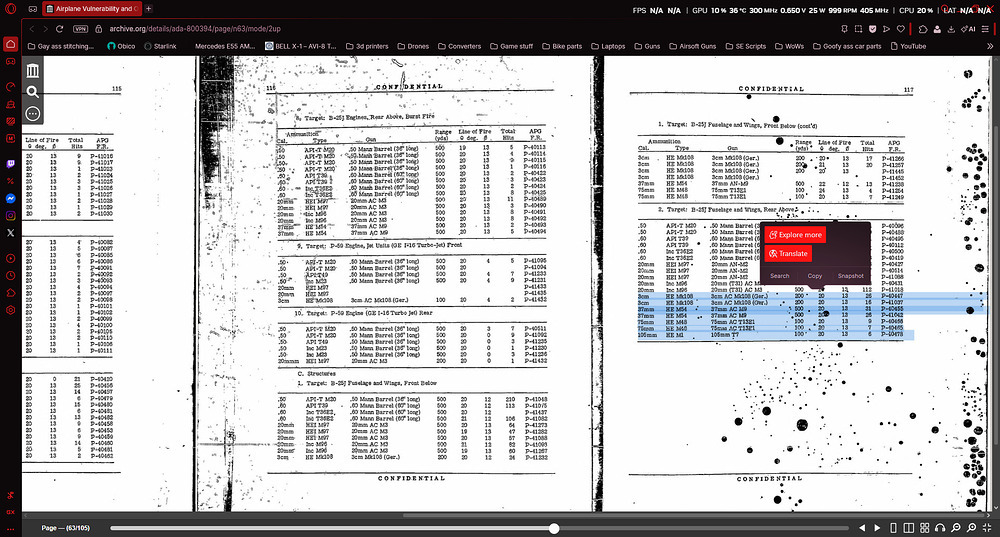
You can consult the firing table in the study that you like to quote and take out of context.
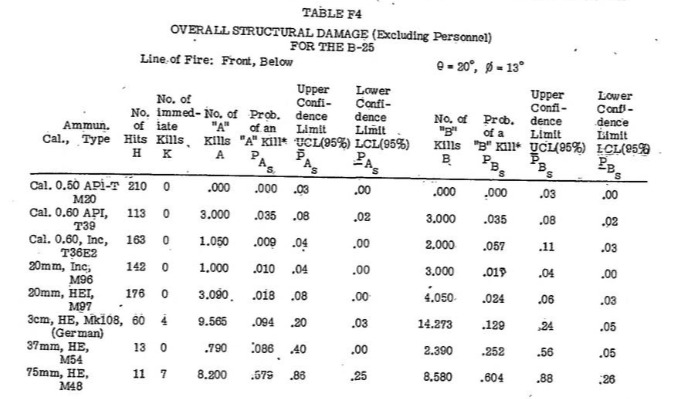
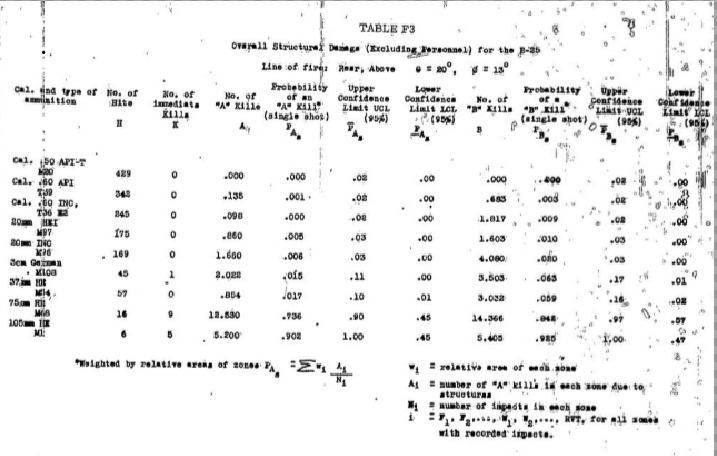
9.5 Type A Kills in 60 rounds on a B-25
14 Type B Kills in the same 60 rounds.
4 K kills in 60 rounds.
Assuming the K kills are also counted as A kills, that is around 6 rounds with random distribution for a A kill per B-25.
Or 2.6 rounds if you combine B kills with A kills.
In practice distribution of rounds will not be random; it is statistically more likely that rounds will impact closer to the aiming point than further away from it.
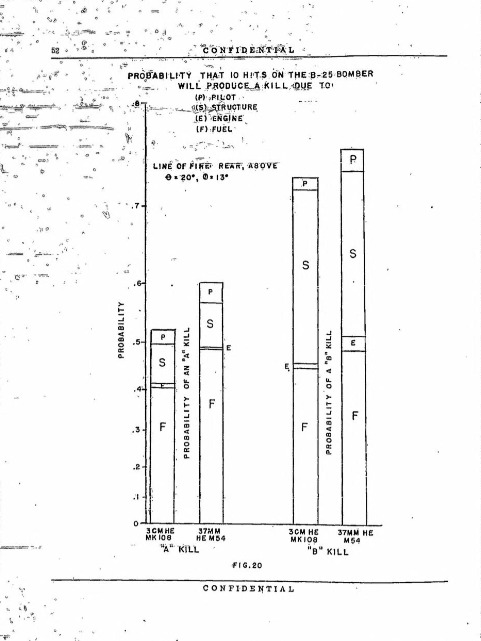
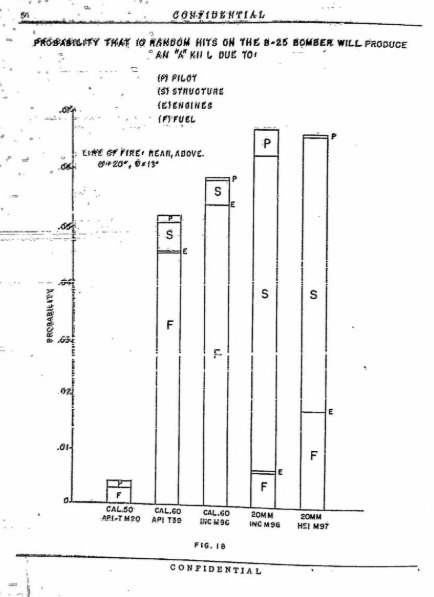
They also had graphs for the cause for type A and B kills.
“A” kill in particular lists 10 mk108 rounds here, and out of the 53% chance these rounds produce a catastrophic “A” Kill, About 8 Percent is a structural failure, the main threat is FUEL. Which makes sense. So, no, even after 10 rounds of mk108, even a “small” b25 isnt falling apart like legos.
And they mention “B” kill is an attrition death (slow), So the much higher structure chance there is referring to the skin getting torn up to the point where it cant produce lift anymore to sustain long term flight, and not a catastrophic instant death of an “A” kill structure failure, which would be a wing or tail off scenario
Also while we’re here, to the people complaining about .50s setting fires, 10 .50 cals have a 0.5 percent chance of “A” killing a b25, and 2/3rds of that is fuel, while the other 1/3rd is a pilot snipe lmao
Whaaaaaaaaat? The big HE round getting slammed right over the pilots head kills them? No way… But did the wings or tail fall off?
All you’re doing is confirming that bomber have weakspots to aim for, not “3-5 mk 108s will tear a b17 in half” like you guys have been chanting constantly, while I here posted proof that a b25 can structurally survive a 10 round mk108 assault with a high chance of NOT breaking apart
More trouble parsing information, See I thought we already made it clear, that a “B” kill isnt actually enough to really send a bomber down on a tiny war thunder sized map. These attritional deaths would be stuff that would stop a bomber from flying all the way back home in ENGLAND from germany or something, not limp like 30 or so km to an airfield. The very words “Bombers in war thunder can match the durability of bombers irl, but theyll always be more survivable because they dont have to fly as far to get home and the crew has no will to live” have already been uttered (and probably ignored by you) on this very thread
Except even the current damage model iteration doesn’t even duplicate probability of Type A kills. You can shoot the plane in the same place at the same angle that resulted in K failures in game and you will not duplicate the results with any consistency.
After re reading the definitions, of the document, now Im seeing that the “A” kill structural failure isnt even breaking apart, thats death in 5 minutes, stuff specifically mentioned as “KK” is airframe breakup, K is loss on control with 15-30 seconds, like say dead pilots, destroyed control lines, but not an airframe breakup.
Now for shots coming in from front and below, I see 4 Immediate “K” kills for the mk108, but nothing on KK structural breakups, and the B25s control lines run along the BOTTOM of the fuselage, so this makes sense, nonetheless, the plane is in one piece. And this just shows B25 has a weakness for pan shots
When you switch to Rear/Above, that drops to ONE, probably the incapacitated pilots you’re speaking of
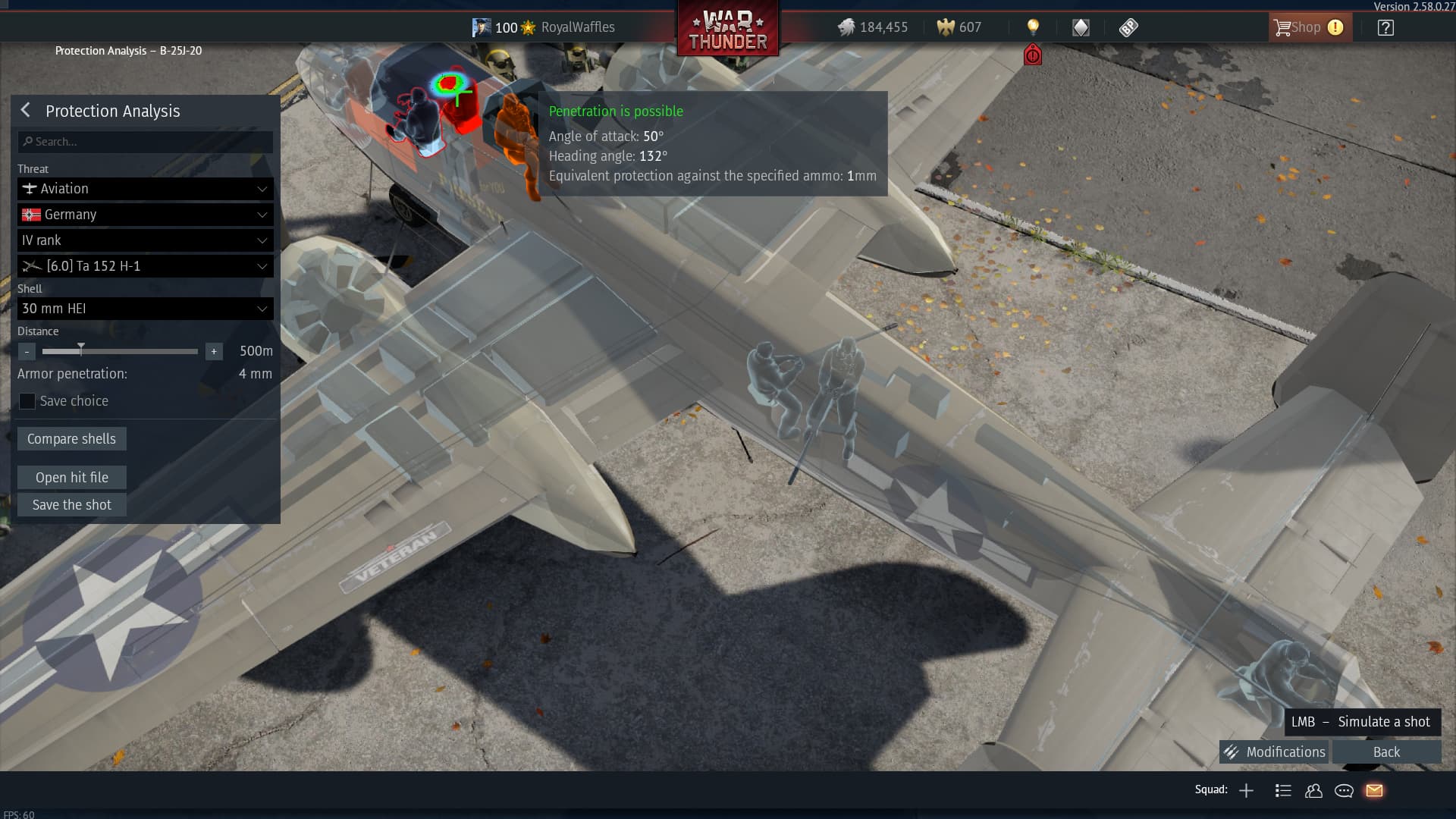
Just aim for the pilots lol, thats a hit on the area between the cockpit and turret you spoke of
Infact there is zero mention of a specific thing giving a full “KK” aircraft disintigration of the B25 in the entire report besides the insane durability test where they shot it 7-9 times with 75mm and a whole 6 times with a 105