IRL pilots aren’t laser-accurate and as suicidal as WarThunder Pilots. The real solution here is people start to aim for Bomber engines using armor-penetrating rounds rather than their fuselage using HE, which is mostly empty air and does nothing.
That is a separate issue here. Countless people claim that 30mm HE belts aren’t doing enough damage, but from actual footage, we can see they don’t do critical damage in most instances.
Obviously, it’s significantly larger than a machine gun, but more likely doesn’t mean fast or reliable.
True, but I still dont think it should take multiple ammo dumps either to bring down these aircraft
Eh… I still think it should be doing more. multiple 30mm HE to the fuel tank for example is at least gunna cause it to leak. Let alone shred the stabilisers, destroy control veins in the wings. Kill crew that are standing on the other side of the skin. etc etc.
I do, in fact. 1 fighter aircraft should not consistently down a large bomber. Period. The only exception should be significant skill over spray.
And it does cause a leak in War Thunder. We can argue that 30mm HE shells shouldn’t be getting their damage resealed, but the fact remains that footage from WW2 shows 30mm shells taking significant time to damage bombers. The same can be found in reports, which is why, despite multiple attacks, bombers often survive hoards of fighter aircraft, such as the Fw190s.
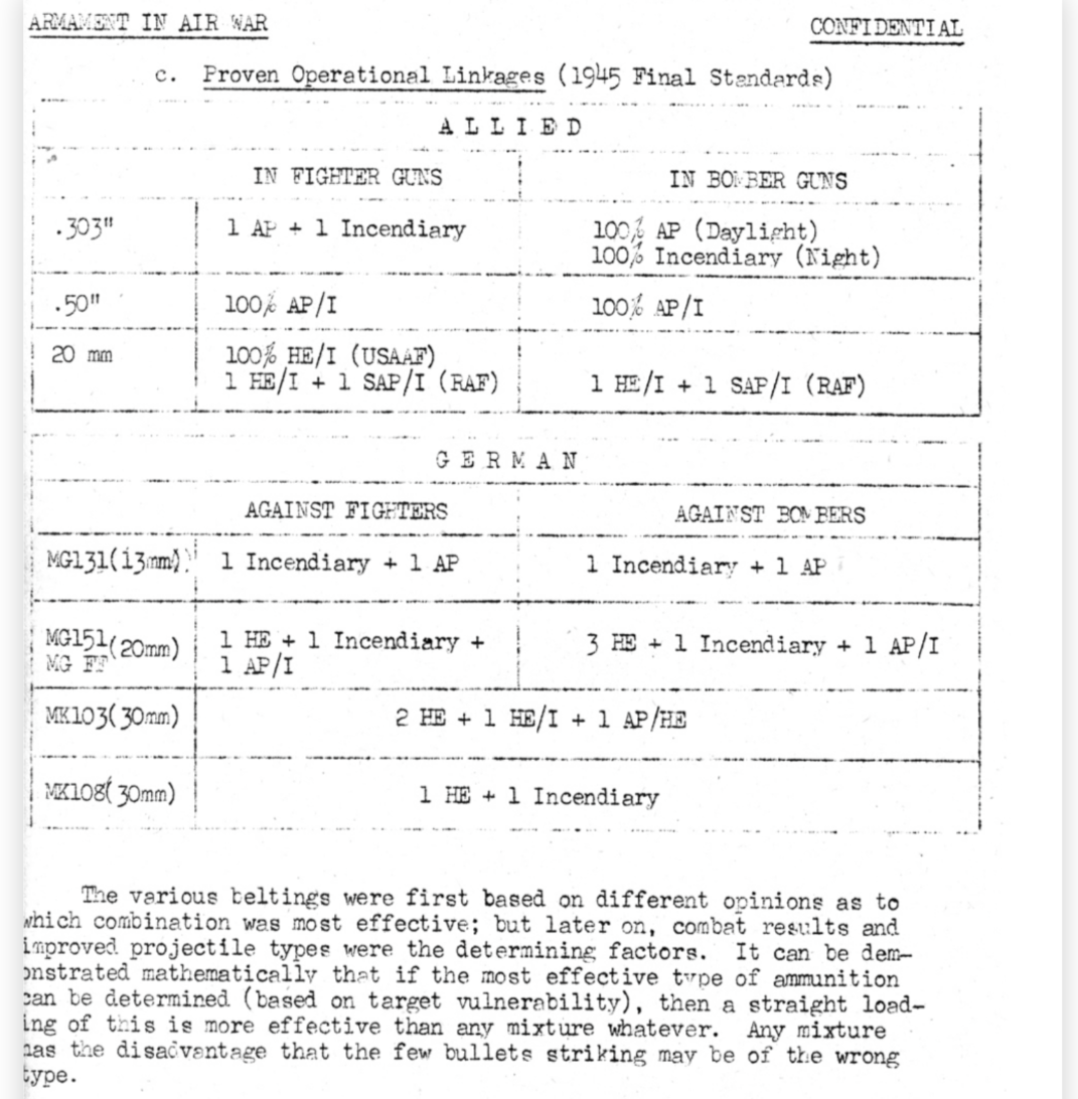
30mm HE isn’t as large as you think when we’re talking bomber-sized aircraft. We’re talking roughly 100 grams of explosive filler exploding outside the skin of an aircraft. What fragments remain after penetration are few and far between. You’re unlikely to kill a pilot unless you hit the cockpit directly. The same goes for certain modules like the engines. Chances are, a 30mm HE round or two won’t even penetrate the skin and do critical damage to a fuel tank to begin with, based on logic and historical documentation. That’s why mixed belts are so important.
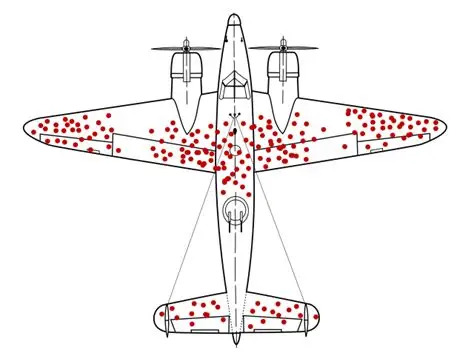
They had mixed belts for a reason. While HE is excellent for smaller aircraft, bombers are very large and require specific targeting. That’s the reason why the famous B-17 survivorship chart shows them being downed from engine and pilot hits, not the wings, fuselage, and tail.
Use a mixed belt and shoot at the engines. Even if the aircraft isn’t killed on the spot, it will die from lack of engine power over time, which was how they were taken out 9/10.
I cannot prove that they can or cannot seal that big of a hole, but based on how they work, it could be possible.
War Thunder doesn’t simulate the gradual degradation of outside material. Even then, the B-17 chart shows that fuselage hits were rarely critical to the plane.
You don’t need to block HE. The large space does it by itself. Even if it kills the gunners, that doesn’t result in the plane being shot down.
This says nothing about HE being superior. It shows that the Germans preferred HE while the US preferred AP and the British preferred Incendiary.
this is probably because the US mostly used .50 cal, germany 30mm and britain 20mm for their largest guns across most aircraft.
30mm has space for lots of explosives
.50 browning has no space for any notable incendiary (WT is completely wrong in this m20 API-T shouldnt one shot most planes) or anything else. best to hope to sever something valuable and keep pretending that .50 cal is actually enough to take planes down
20mm hispano is big enough to burn a plane up but not quite big enough to blow a hole in a bomber
a large explosive will always be better. later on the british went to 30mm aden as it would crumple most planes with that explosive shell. (ignore that we tried 25mm later, that was a crap gun)
Doctrinally different choices do not state superiority. WW2 was full of experimentation.
To make the claim “the Germans used HE a lot, therefore it is superior” is a foolish, borderline wehraboo statement, especially regarding the fact that German reports often found the time taken to down a bomber exceeded 40 minutes.
i wasnt. But you do need to give credit where credit is due, mine shells were very violent. so much so that we later on moved to 30mm as our main canon armament after ww2
the best gun on aircraft was probably the hispano as it was reliable and punched hard without needing absurd design tradeoffs like the germans did with their canons.
When well-aimed is what you’re forgetting to mention. Firing them into an open void inside a fuselage does nothing critical to the bomber itself. Mk.103s still nuke a bomber if you hit them in the engine and cockpit.
and that is fine. If the engines were properly modeled and too scale. Currently the damage model is too small and difficult to reliable hit from the rear as a result. Let alone that direct hits with HE do bugger all.
And maybe they need to in some way?
The point is, I dont think HE is even killing the gunner reliably.
That is preferable, but let bomber players enjoy themselves for now.
The players voted against it with tanks a long time ago. Chances are, Gaijin won’t try the same mechanic over again.
Then that’s an issue, but the tradeoff would be to allow bomber gunners to target people at a distance. Especially the B-52 and other radar-guided bomber gunners, which should accurately target threats farther and more easily.
Note that the mid-tail section is not red. This indicates it often resulted in the loss of an airframe, which you have sent as an image.
Obviously, a 7.7 hitting a pilot will hurt them, but a 30mm doesn’t have to hit directly, unlike a 7.7 does.
Which is why I then refer back to my list of previous suggestions on areas to “fix” the damage model in a fair way
Note I dont suggest once any changes to the structural model. Only adding additional damagable parts to the damage models with affects or improving the existing model
and that is entirely different issue, one that needs to be addressed on a lot of aircraft. But this bomber update seem like an ideal place to start withwise of modeling that extra redundancy/higher fidelity
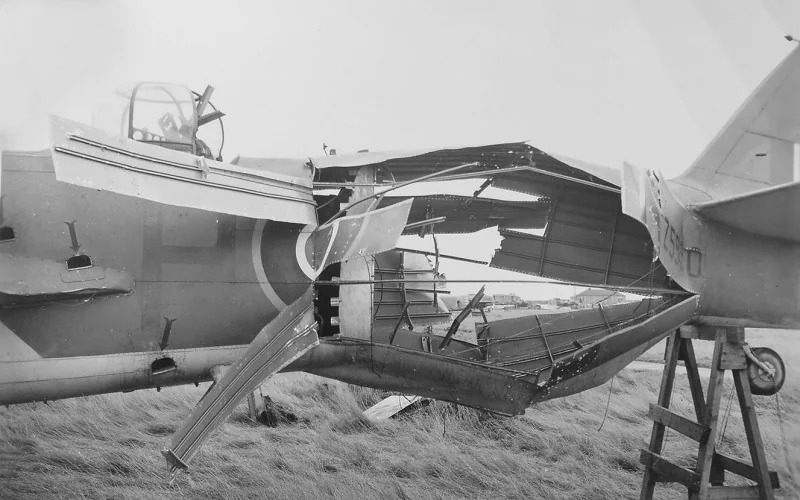
Blenheim =/= heavy bombers like b17 or even landcaster (few lanks tanked some weird upward firing recoiless 50mm nonsense on night fighters to the tail and it didnt come off), That thing was britains first attempt at an all metal bomber and unironically shared more in common with a spitfire than a bomber with how it was constructed and how thick the skin was, and also its way smaller so the point where this hit on a b17 would look pretty negligible in relative terms. Not that a 30mm shell is a firecracker, its a monster of a shell, but the b17 is a monster of a bomber, if not the most durable and overbuilt bomber of the war