- Yes - In the Tech Tree.
- Yes - Event/BP.
- Yes - Premium.
- No - I would not like to see HMAS Cerberus in game.
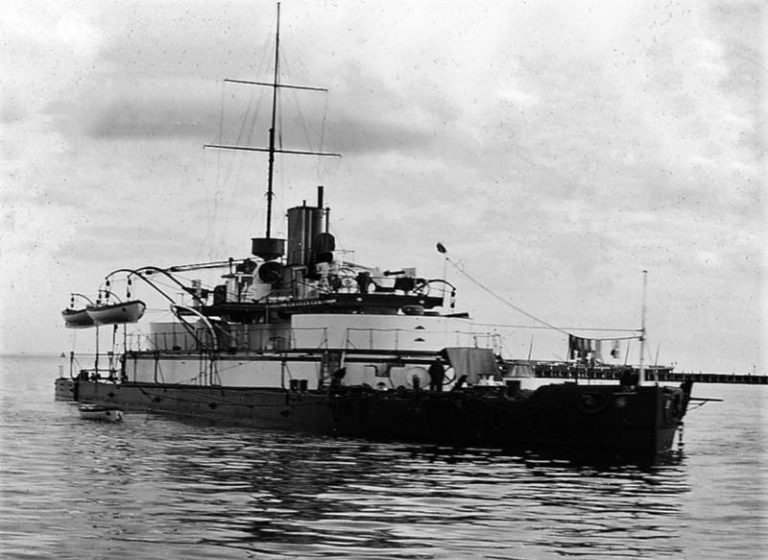
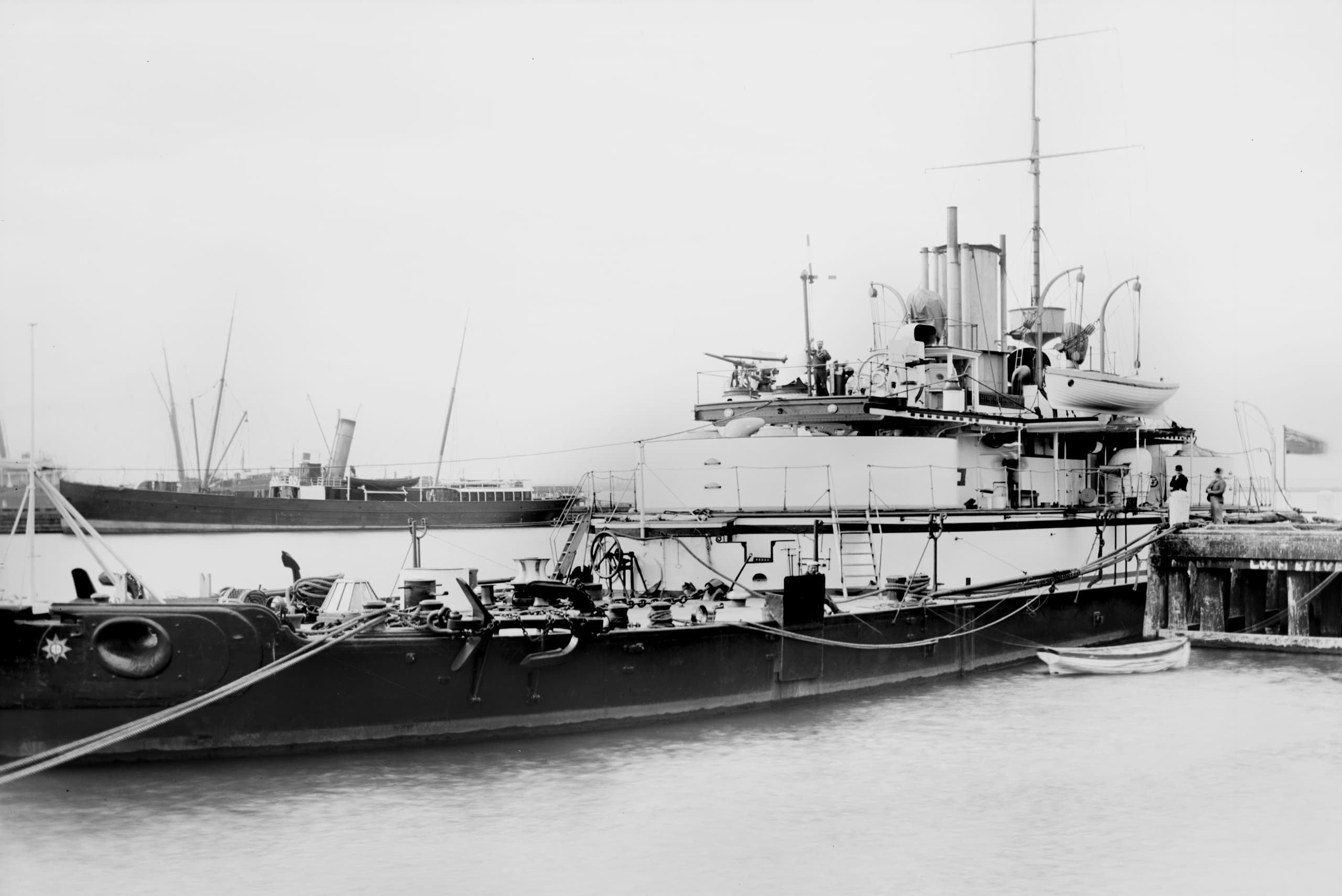
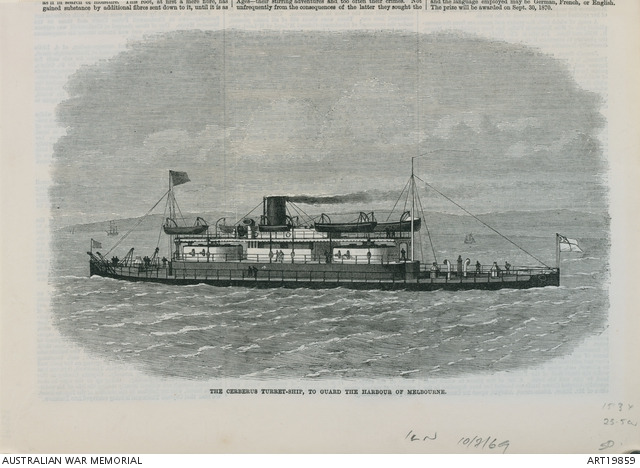
HMVS Cerberus on Patrol, (n.d)
Description:
HMAS Cerberus is a very unique vessel, ordered to unique specifications from the pre-federation Australian state of Victoria, who had been given the right to acquire warships only a few years before. She would be the most powerful warship in any of the Australian Colonial Navies.
The state of Victoria would commission such a large vessel to defend its ports and harbours from a potential Russian Invasion, this would be apart of the Naval fortifications and defenses built up by Australia and New Zealand around this time due to a perceived threat from the expansion of the Russian Empire into the Pacific, with the then recently created Pacific port of Vladivostok.
As she would be ordered and built for the state of Victoria, she would be called HMVS (His/Her Majesty’s Victorian ship), or HMCS (His/Her Majesty’s Colonial ship). She would also be one of the earliest turret ships to be constructed in Britain, Cerberus had one sister built for the Royal Navy, the HMS Magdala, as well as two other classes based upon it, the Abyssinia and the Cyclops-classes.
As with the Colonial navies pre operational independence, the Victorian navy would fall under the British Admiralty in times of War, only being in true Australian control in times of peace. This would be so until the creation of the RAN in 1911, when she would always be under Australian control.
She would be the second vessel in the Victorian navy, the first vessel being the 1st rate ship of the line, now acting as a sail training ship, HMVS Nelson. This suggestion is for the HMAS Cerberus as she commissioned into the Royal Australian Navy in 1911.
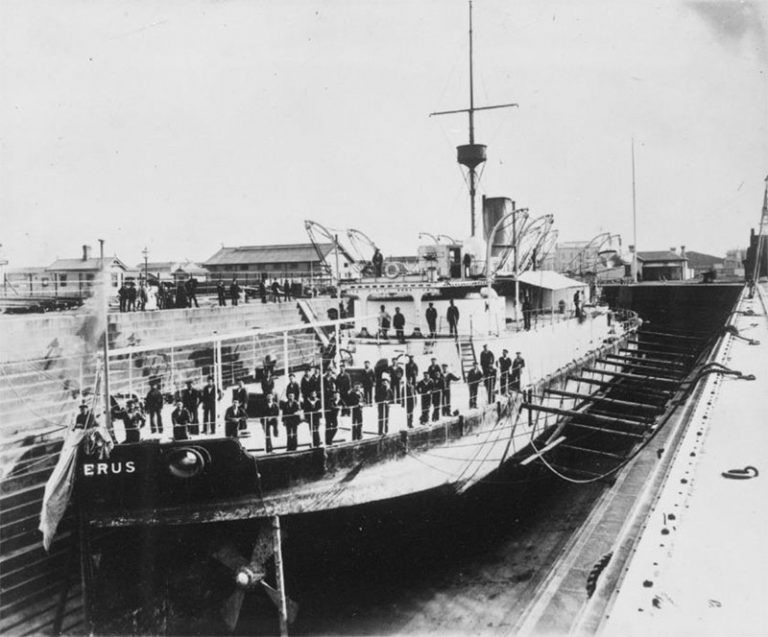
HMVS Cerberus in dry-dock for maintenance, during the Russian Scare of 1885.
History:
Pre Australian Federation state service:
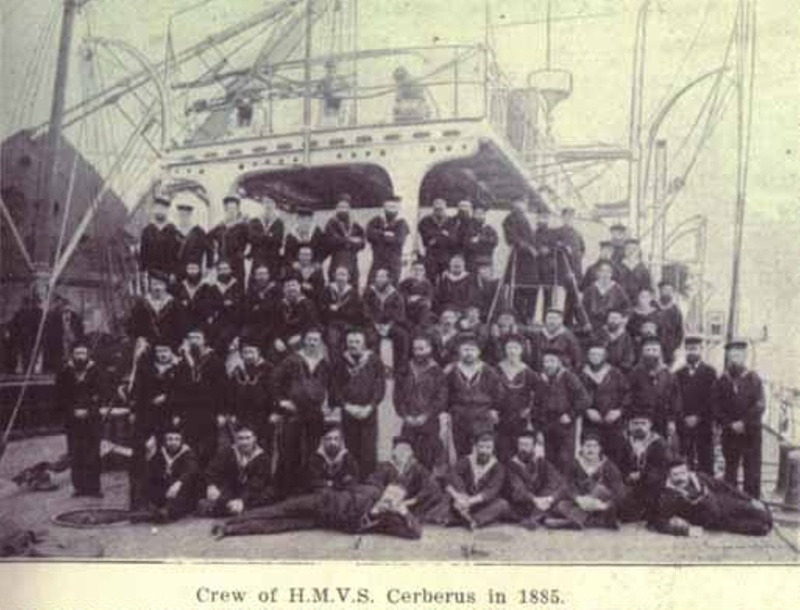
Independently ordered by the Victorian Government in 1866, she would be built by Palmer Shipbuilding & Iron. Co, Jarrow, England. She would be laid down on the 1st of August 1867, launching on the 2nd of December 1868, and completing in August 1870. For the Voyage to Australia, her freeboard was extended with extra panels, masts fitted with sails, giving her a barque rig, this was done to save coal, she was registered as a merchant vessel for this voyage.
She would reach Melbourne on the 9th of April 1871, commissioning as Flagship of the Victorian navy. During this time she had the nickname, ‘Floating Gasometre’, due to the appearance of her turrets. Her guns were so powerful, such that it was not allowed to fire them too close to shore, after public concern over damage to windows from the percussive effect of the gunfire.
She would operate entirely within Port Phillip Bay and Williamstown, and in those areas not much would happen in this time, as the Russian empire, who’s invasion she was commissioned to prevent, was not expanding as quickly as was expected.
During trials on the 5th of March 1881, her boat crew would strike a mine, (then called a torpedo), killing her Gunner and five Seamen. She would also assist in rescue efforts for Gold Miners during the collapse of the No.2 New Australasian Deep Lead Gold Mine, Australia’s worst mine collapse disaster. In 1900, one of her company contracted the bubonic plague. By the second Russian Scare ~1884, she would be sent to a dry dock, where over 50t of material which was fouling her hull was removed. She would also undergo a small armament refit, adding 6pdr Nordenfelt guns.
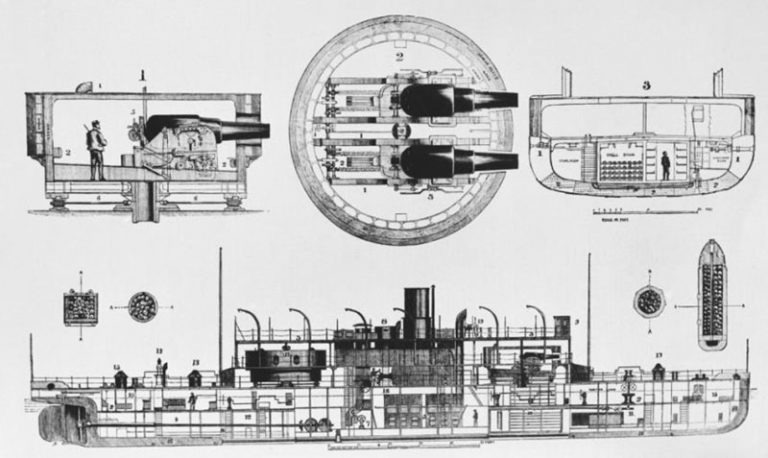
Cerberus-class general layout, including shell dimensions.
Commonwealth Naval Forces & Royal Australian Navy service:
With the federation of the Australian occurring in 1901, the many stately navies would combine into the commonwealth naval forces, under the new Australian Federation, as part of this, she would officially recommission as HMCS (His/Her Majesty’s Colonial ship), instead of the HMVS title she previously had. She would however remain on duty in the Port Phillip Bay. This would be done under the Defence act 1903. From this time to 1911, further independence from the Royal Navy was sought.
In 1911, King George V would allow for the Commonwealth Naval Force of Australia to be renamed as the Royal Australian Navy (RAN.). As part of this restructuring the Cerberus would become HMAS Cerberus. By 1913 the Australian Naval college had been founded, but as it was not a commissioned establishment, attendees would be assigned to the Cerberus’s paybooks.
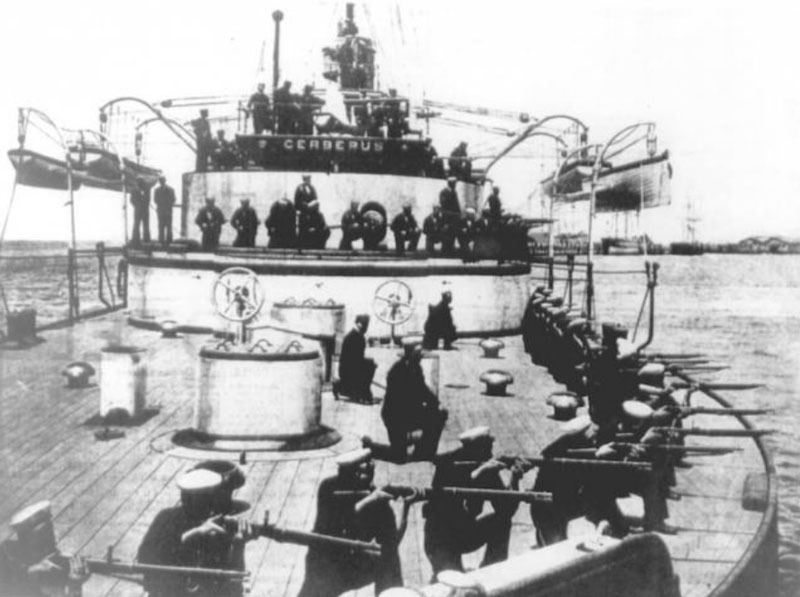
By the outbreak of the First World War in 1914 her 10" guns were completely worn out, and so now acting as the Port Guard ship of the Port of Melbourne, she would rely on her smaller 6pdr and small arms. Later in the war in 1917, she would become a storehouse for dangerous goods such as ammunition and explosives.
She would remain in this role until 1921, when she would be moved to Geelong, as to act as the submarine depot vessel for the six RAN J-class submarines. Her name would be changed to HMAS Platypus (II) on the 1st of April 1921. She would be sold as scrap to the Melbourne Salvage Co Pty Ltd, for just £409, compared to a cost of £117,556 to build her. Accounting for inflation (January 2026), this comes out to just £17,471 recovered out of £12,210,719 to build.
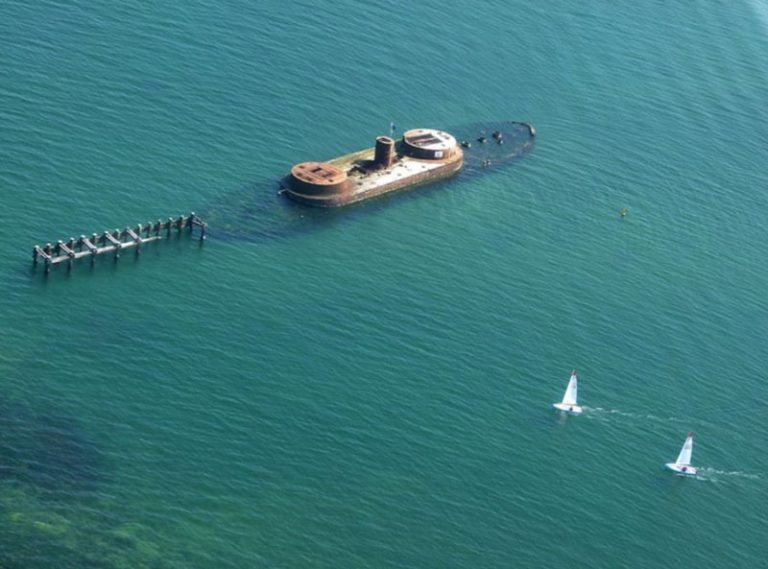
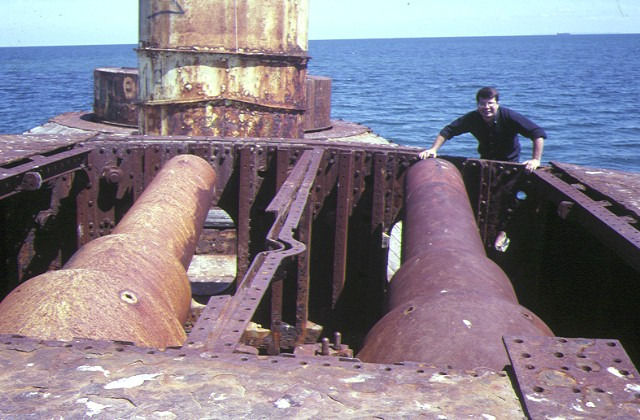
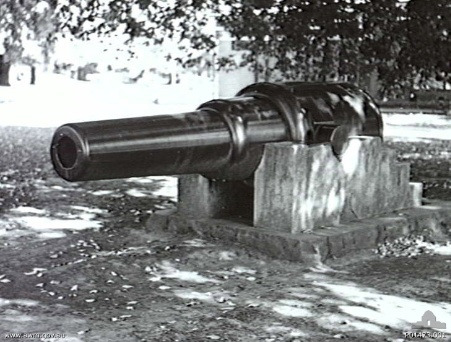
After removing the valuables, she would be sold on to the Sandringham council, for use as a breakwater at Half Moon Bay, where she remains to this day. Her guns were fitted until around 2004, when they were moved next to the wreck, for fear of their weight collapsing the structure. The site is still being stabilised, such that she may remain in that position.
| General Characteristics: | |||||
|---|---|---|---|---|---|
| Name: HMAS Cerberus | |||||
| Country: Australia | |||||
| Type: Breastwork Monitor | |||||
| Class name: Cerberus | |||||
| Year of commission: 1870 | |||||
| Refit: 1911 | |||||
| ----------------------------------------------------------------------------------------------------------------------------------------- | |||||
| Dimensions: | |||||
| Length: 225ft (69m) | |||||
| Beam: 45ft (14m) | |||||
| Draught: 15ft 4in (4.67m) | |||||
| Displacement: 3,390t | |||||
| ----------------------------------------------------------------------------------------------------------------------------------------- | |||||
| Propulsion: | |||||
| Powerplant: 2x coal fired Compound steam engines producing 1,369ihp overall (1,021kW), two shafts | |||||
| Speed: 9.75kt | |||||
| Endurance: unknown | |||||
| ----------------------------------------------------------------------------------------------------------------------------------------- | |||||
| Armament & sensors: | |||||
| Compliment: 136 | |||||
| Primary armament: 2x2 RML 10-inch (3xMk.I + 1xMk.II) | |||||
| Secondary armament: 2x1 QF-6pdr (Nordenfelt) | |||||
| Tertiary armament: 4x Gatling guns, 1x4 1-inch Nordenfelt MG | |||||
| Radar: -nil | |||||
| Sonar: -nil | |||||
| ----------------------------------------------------------------------------------------------------------------------------------------- | |||||
| Armour: | |||||
| Waterline Belt: 6-8" (150-200mm) + 9-11" (230-280mm) of Teak | |||||
| Breastwork: 8-9" (200-230mm) | |||||
| Deck: 1"-1.25" (25-32mm) | |||||
| Gun turrets: 9-10" (230-250m) |
The Wreck of the Cerberus, sitting off Half Moon Bay as a break water.
More Photos

Sources:
Gillett, R. (1983). Australian and New Zealand Warships 1914-1945 (pp.50)
Paine.L. (2000) Warships of the World to 1900. (pp.33-34)
https://seapower.navy.gov.au/history/units/hmas-cerberus-hmvs
HMVS Cerberus - Wikipedia
Timeline of significant events - HMVS Cerberus
http://vhd.heritage.vic.gov.au/search/nattrust_result_detail/64433
HMVS Cerberus - Naval Historical Society of Australia