- Yes
- No
Hello everyone, and welcome to this new suggestion.
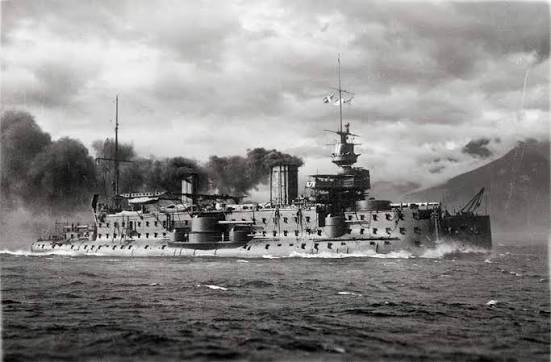
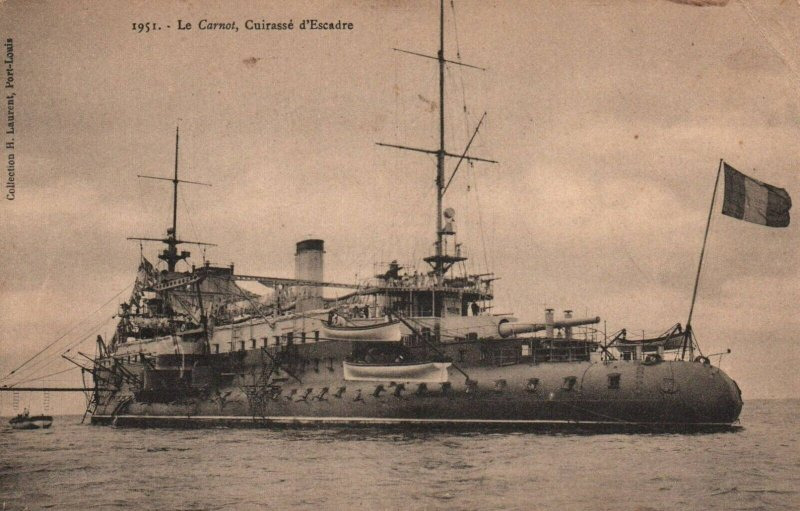
Today, I am presenting a unique French ship that served in the French Navy during the late nineteenth and early twentieth centuries: the Carnot.
In the early 1890s, the French Admiralty launched an unusual shipbuilding program known as the “sample fleet” (flotte d’échantillon). The objective was to develop a series of five ships, each constructed at a different shipyard. Rather than imposing a detailed set of requirements, the Admiralty provided only a few fundamental specifications, notably concerning the main armament and the type of armor to be used.
This approach was intended to give naval architects considerable freedom, allowing each shipyard to develop its own interpretation of the ideal warship while incorporating the latest lessons from naval construction.
The Toulon shipyard was selected to build one of these vessels. Construction of the Carnot began in 1891, and the ship was launched in 1894. She then underwent an extensive two-year period of trials before finally entering service with the French Navy. The design was based partly on ships previously constructed at Toulon. However, the designers also incorporated lessons learned from earlier vessels, retaining successful concepts while modifying other features in an attempt to improve the ship’s overall performance.
Once in service, Carnot was assigned to the Mediterranean Squadron. In 1897, she participated in the International Squadron assembled during the Greco-Turkish War, joining the multinational naval force deployed to the region. After this deployment, Carnot returned to her regular duties in the Mediterranean. She carried out patrol missions and participated in training exercises alongside other units of the French fleet.
The ship was later transferred to the Northern Squadron, which was responsible for operations and patrols in the Atlantic. After spending some time with this force, Carnot eventually returned to the Mediterranean in the early 1910s.
By this point, however, the rapid development of naval technology had made many of the ships of the flotte d’échantillon increasingly obsolete. As newer and more capable vessels entered service, the older ships were progressively withdrawn from active duty.
Carnot was no exception. In 1913, she was placed in reserve at Brest, meaning that she would not take part in the First World War despite remaining in the French Navy during the conflict. After spending several years in reserve, the veteran ship was finally dismantled in 1922.
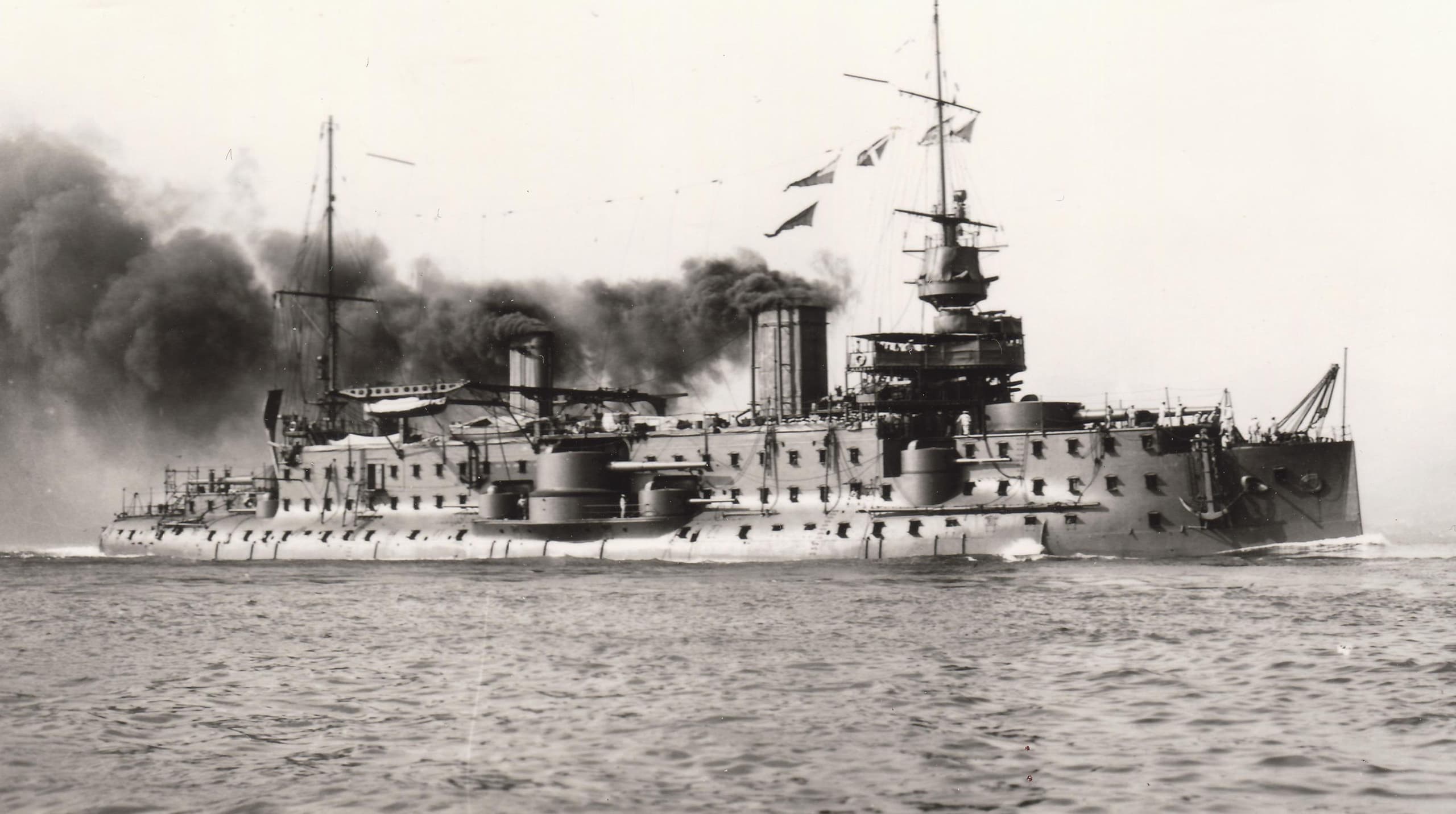
Characteristics
Length : 117.00 m
Width : 22.00 m
Draught : 8.40 m
Mass : 12,200 tons
The ship is propelled by two triple-expansion engines powered by 24 coal-fired Lagrafel & d’Allest boilers, delivering a total output of 15,000 hp. The Carnot achieved a top speed of 17.9 knots during trials and has a range of 868 nautical miles at 12 knots.
Its crew consists of 654 sailors.
Armor
As a battleship, the vessel features highly effective armor protection, with the following specifications:
- Belt: between 254 and 450 mm
- Turrets: 375 mm
- Deck: 70 mm
- Barbettes: 150 mm
- Conning tower: 230 mm
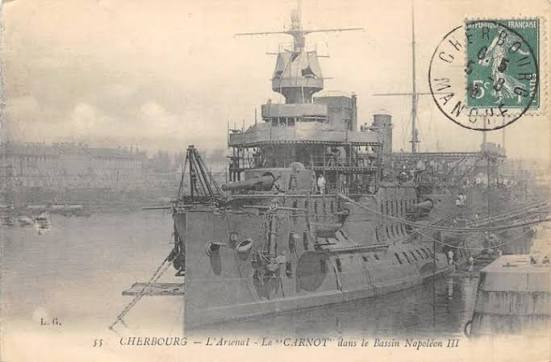
Weapons
The ship’s armament is particularly noteworthy; despite the vessel’s age, it carries a large number of smaller-caliber weapons, enabling it to defend against both naval and aerial threats. Before 1900:
Guns:
- 2 x 305mm Mle 1897 (single turret, fore and aft)
- 2 x 274mm Mle 1898 (single turret, port and starboard)
- 8 x 138mm Mle 1888 (side barbettes)
- 4 x 65mm Mle 1891
- 16 x 47mm Mle 1885
- 5 x 37mm Hotchkiss
Torpedoes:
- 2 x 450mm torpedo tubes
After 1900:
Guns:
- 2 x 305mm Mle 1887 (single turret, fore and aft)
- 2 x 274mm Mle 1887(single turret, port and starboard)
- 8 x 138mm Mle 1888 (side barbettes)
- 4 x 65mm Mle 1891
- 18 x 47mm Mle 1885
- 2 x 37mm Hotchkiss
Torpedoes:
- 4 x 450mm torpedo tubes
In-game, this ship would be a great addition to the French tech tree, offering heavy armament, effective armor, and decent sailing performance, making it a unique and highly interesting addition to the line.
Pictures