- Yes - In the Tech Tree.
- Yes - Event/BP.
- Yes - Premium.
- No - I would not like to see HMNZS Canterbury in game.
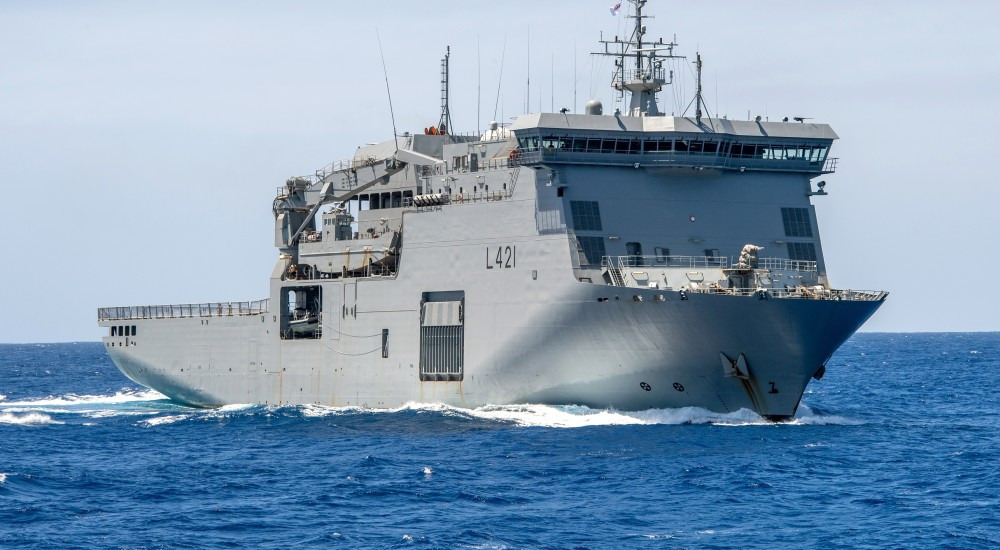
HMNZS Canterbury leaving New Zealand for Tokelau as part of Operation Calypso, 2026
Background:
HMNZS Canterbury is the only sealift vessel in the Royal New Zealand Navy (RNZN), and thus the only vessel of her class. She is designed to provide a sealift capability to the RNZN, being specifically designed to transport the New Zealand Army to South Pacific island nations via landing craft and boats, using helicopters to support operations. She also provides medical and command and control facilities to ensure that landing operations go smoothly. She was also designed with humanitarian relief capability, and facilities to assist as the RNZN’s primary training vessel.
Development of the Canterbury would begin in November 2000, with the failings of the RNZN’s then current sealift vessel, the formerly civilian Mercandian 2-in-1 class ro-ro vessel HMNZS Charles Upham, (best known as HMNZS Chuckup or HMNZS Charles Chuckam), coming to light under the NZDF Sealift Review. This report came to a definitive conclusion that the current sealift vessel (the Chuck-up) was unsuitable for service due to her extremely poor sailing qualities, and presented four options to give the NZDF reliable sealift capabilities. These were;
- Reliance of commercial chartering with civilian vessels.
- Purchase of a used military sealift vessel from another nation.
- Purchase of a new purpose built military sealift vessel.
- Modifications to the HMNZS Charles Upham.
By December 2000, another report was submitted to the MOD, which stated that the HMNZS Charles Upham was to be sold immediately, any current requirements for strategic sealift be undertaken by charter, and that requirements for a new strategic sealift vessel with a multipurpose role be explored. By February 2001 the Maritime Patrol Review was written, and work started on a new patrol fleet for the RNZN, and by May of the same year, both projects had merged together under the ‘Project Protector’ title. As the sealift vessel had it’s requirements laid out earlier than the patrol vessels, it was the first to progress to the design stage in 2002.
As the specifications demanded a greater size of vessel that any shipyard in New Zealand could produce, and the fact that no shipbuilders in Australia had experience in designing or building such vessels, design and hull construction was sub-contracted to IHC Merwede by the main contractor for the Project Protector fleet, Tenix Defence. Design was done to civilian standards as to cut down on cost. The future HMNZS Canterbury was to be based off of the MS Ben-My-Chree, a ro-pax vessel built for the Isle of Man Steam Packet Company.
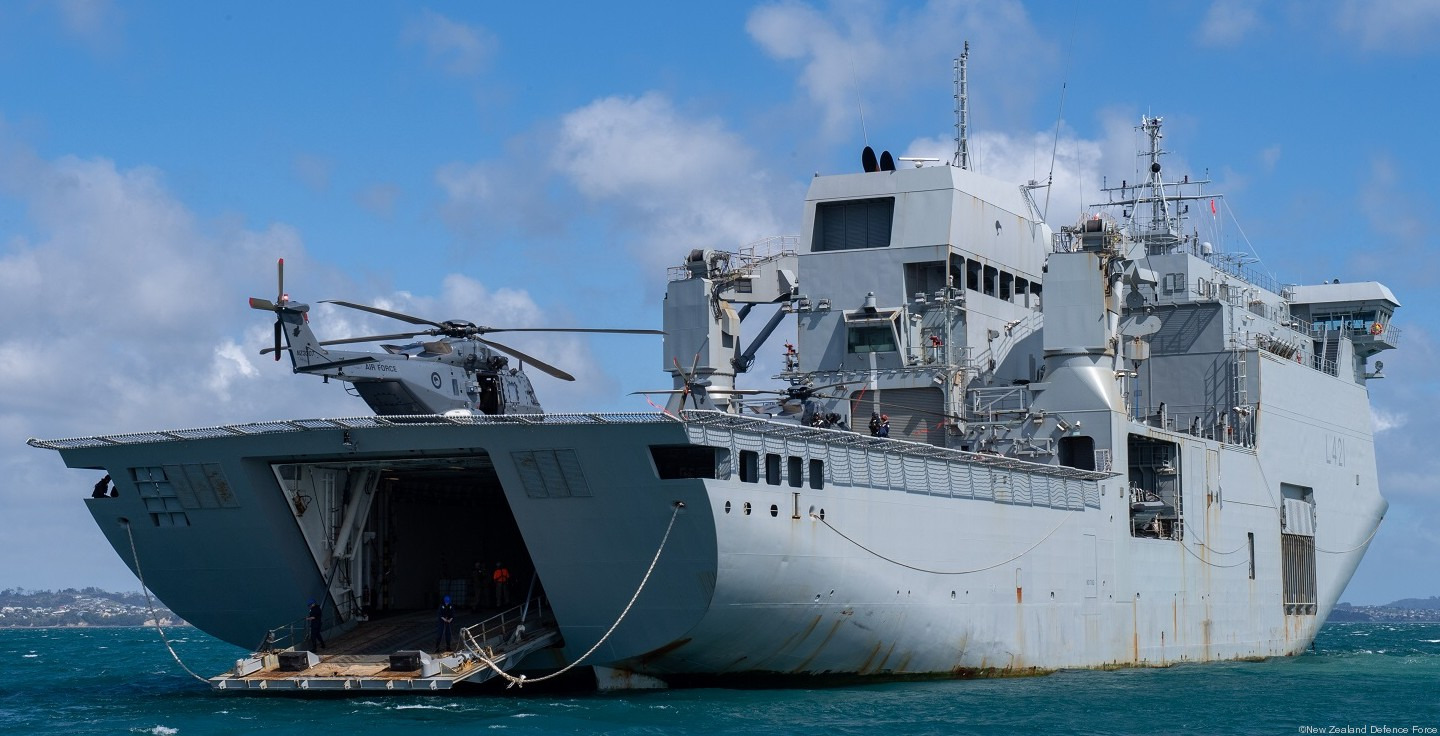
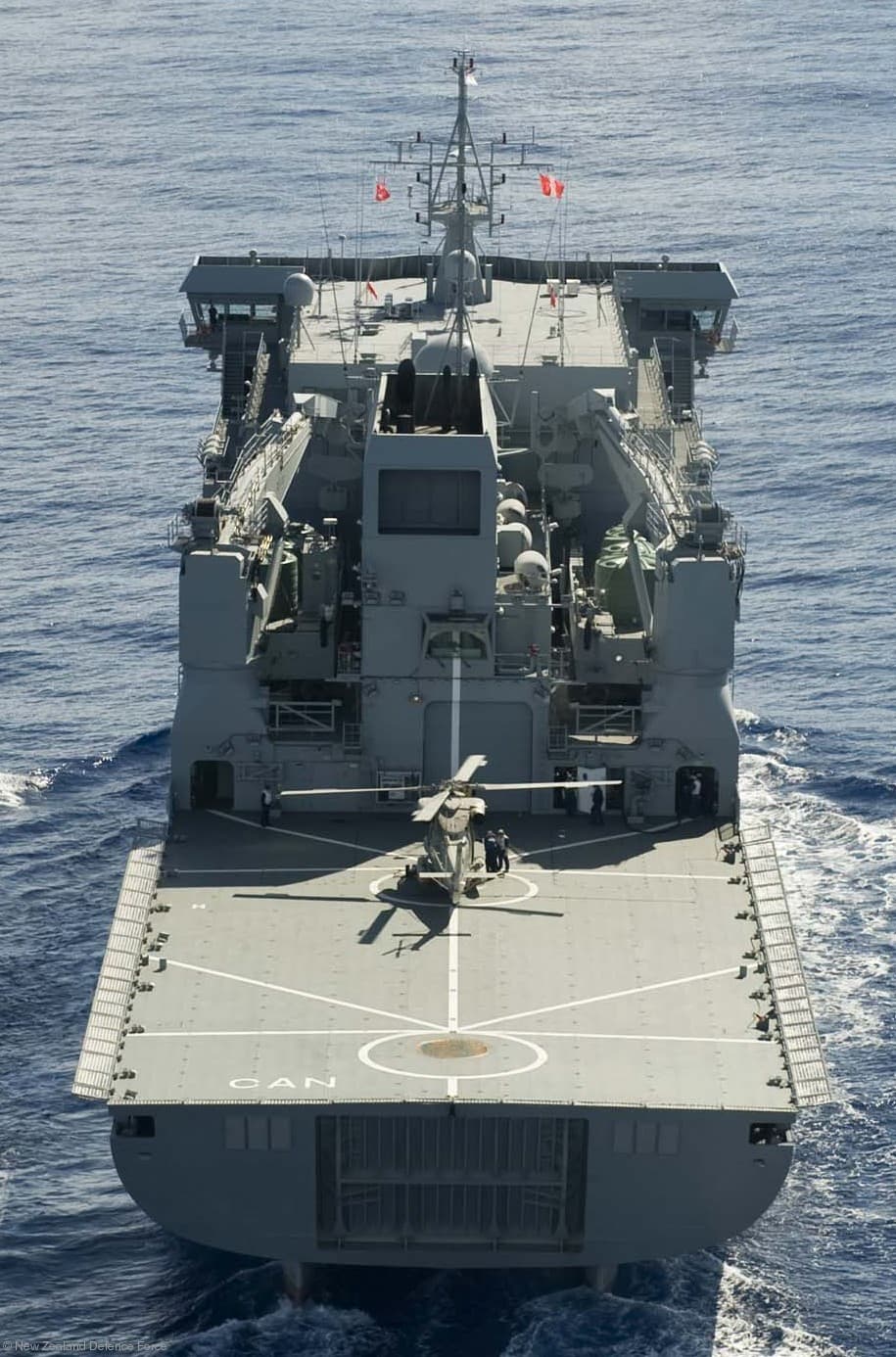
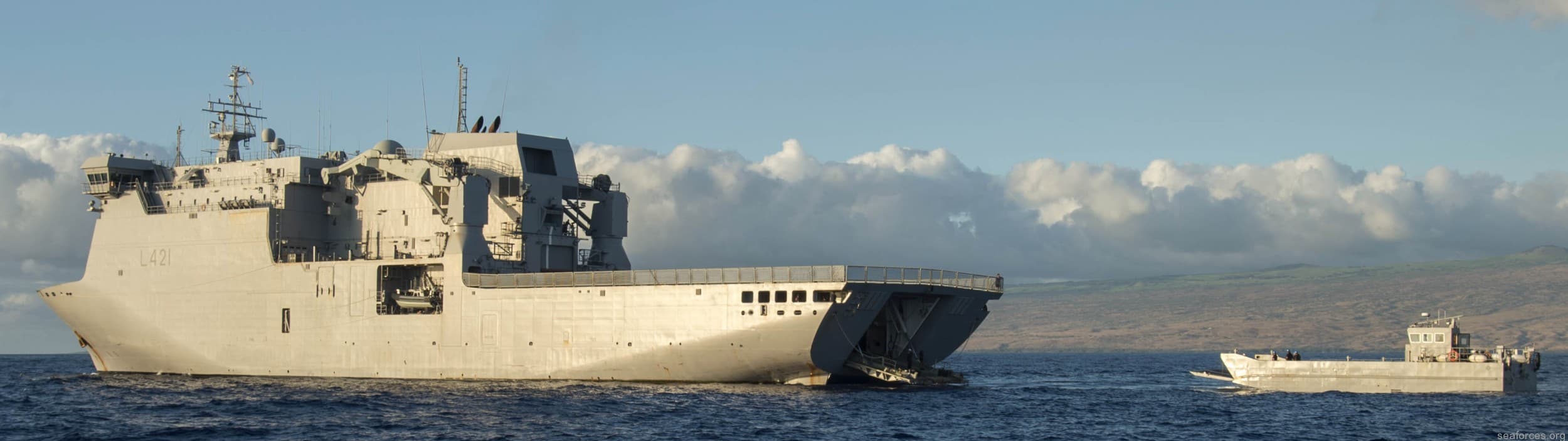
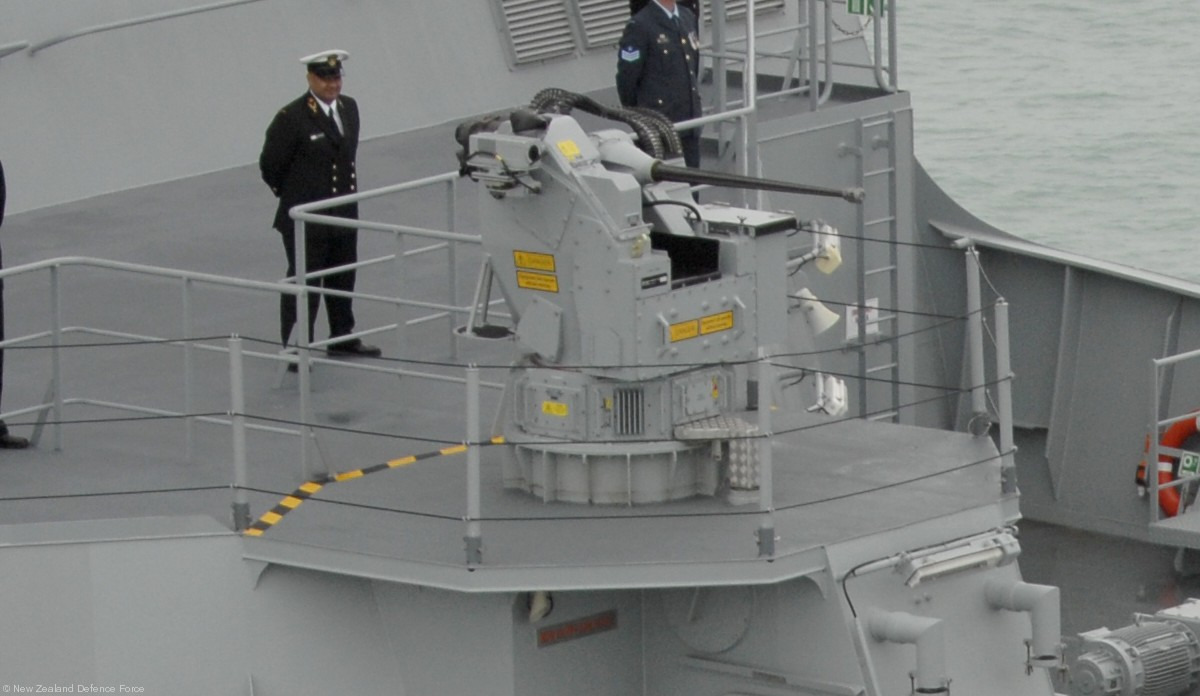
Modifications of the design for military service included stronger engines & electricity generation facilities to enable the use of stronger electronic systems, including extra radars among other systems. A platform for a 25mm Bushmaster fitted to an MSI-DS25 remote weapons station (RWS) and a helipad large enough for two SH-2G Seasprites to launch at the same time, with hangar space for for up to four was also added. A sideramp was added to the starboard side to assist in off/on loading in addition to the sternramp, she can also load 33x 20ft TEU containers. For operations in the Southern Ocean, her hull was fitted with class 1C ice strengthening. Unlike a traditional amphibious sealift ship, she has no welldeck.
Although the requirements for this vessel specified a 40-76mm main gun to be fitted, a 25mm gun was fitted as to keep the project inside the NZD $500 million budget, as it was not only directly cheaper, but parts and ammunition acquisition could be piggybacked off the Army’s NZLAV supply chain, as those vehicles used the same guns.
This suggestion is for the second HMNZS Canterbury as she commissioned in 2007. She is the second of her name, with the first being a Leander-class (Type 12I) Frigate used by the RNZN from 1971-2005.
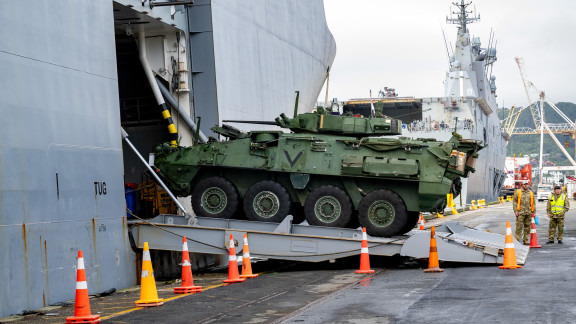
An NZLAV being driven into HMNZS Canterbury’s side ramp for transportation to Australia during exercise Talisman, 2025.
History:
With design work finalised, HMNZS Canterbury would be laid down on the 6th of September 2005 at Heijsehaven, Rotterdam. She would launch on the 11th of February 2006, completing trials within the Netherlands, before being moved to Tenix Defence’s facilities at Williamstown, Victoria, Australia for fitting of military equipment. This work was delayed somewhat by late delivery of some documentation, and altercations that needed to be made to the ship’s hospital, upon completion of this work she commissioned in Port Melbourne, Australia, on the 12th of June 2007.
Initial issues with the Canterbury were encountered by the RNZN during early operations, this included poor sea keeping allowing the RHIB alcove docks to be swamped with water, damaging the boats. This was due to the design she was based off, the MS Ben-My-Chree, being designed for the calm Irish Sea, and not the deep ocean encountered in the waters of the Pacific in which she would operate. During her first strong storm, only a month after she was commissioned on the 10th of July 2007, she would lose one of her RHIBs, and nearly the other. A September 2008 report from the NZDF also claimed that in rough weather, the props would come out of the weather and race, and recommended that further ballast be fitted. Issues with her landing craft medium (LCM)s were also encountered, with multiple weak ramps and further stability problems.
First tests of her embarkation and dis-embarkation capability would take place in September 2007, loading 250 troops, 20 NZLAVs, and 30 other vehicles, including trucks and Pinzgauers. Due to her sheer size, no dry dock in New Zealand can hold her, due to this she has to take her 5-year maintenance docks at Singapore.
BAE, who had purchased Tenix Defence in June 2008, would pay the NZDF $86.4 million NZD in settlement, and would replace the LCMs with new craft. Other work to improve the ship’s sea keeping included medications to the RHIB deck. This work would conclude in late 2009.
On the 11th of February 2011, HMNZS Canterbury was announced to be the ‘core’ of an Australia-New Zealand disaster relief task force. This was done as she was the only suitable vessel available, as all three Australian ships, HMAS Tobruk II, HMAS Kanimbla II, and HMAS Manoora II, were experiencing significant maintenance problems, and were not available to sail at any given time, compared to the brand new HMNZS Canterbury.
This was fortunate, as she was transporting 116 Singaporean soldiers to Lyttelton, NZ for joint Singapore-New Zealand exercises when the 2011 Christchurch Earthquake occurred on the 22nd of February. During this event, the crew of the Canterbury assisted in the logistics for all the aid that needed to be delivered to all the affected peoples, including cooking over 1,000 meals and providing shelter for a few individuals. Her Hospital was also put into use helping individuals who had been injured during the earthquake and subsequent aftershocks. This would be the first of many such operations.
Canterbury collected pumice rocks from an extremely large pumice raft measuring 500km in length and 50km in width in 2012, after an un-noticed large volcanic eruption in the Kermadec Islands. The pumice raft was spotted by an RNZAF P-3K2, who then directed the Canterbury to collect samples. An officer from the Royal Australian Navy (RAN) said on the pumice raft, “the weirdest thing [he had] seen in 18 years at sea”.
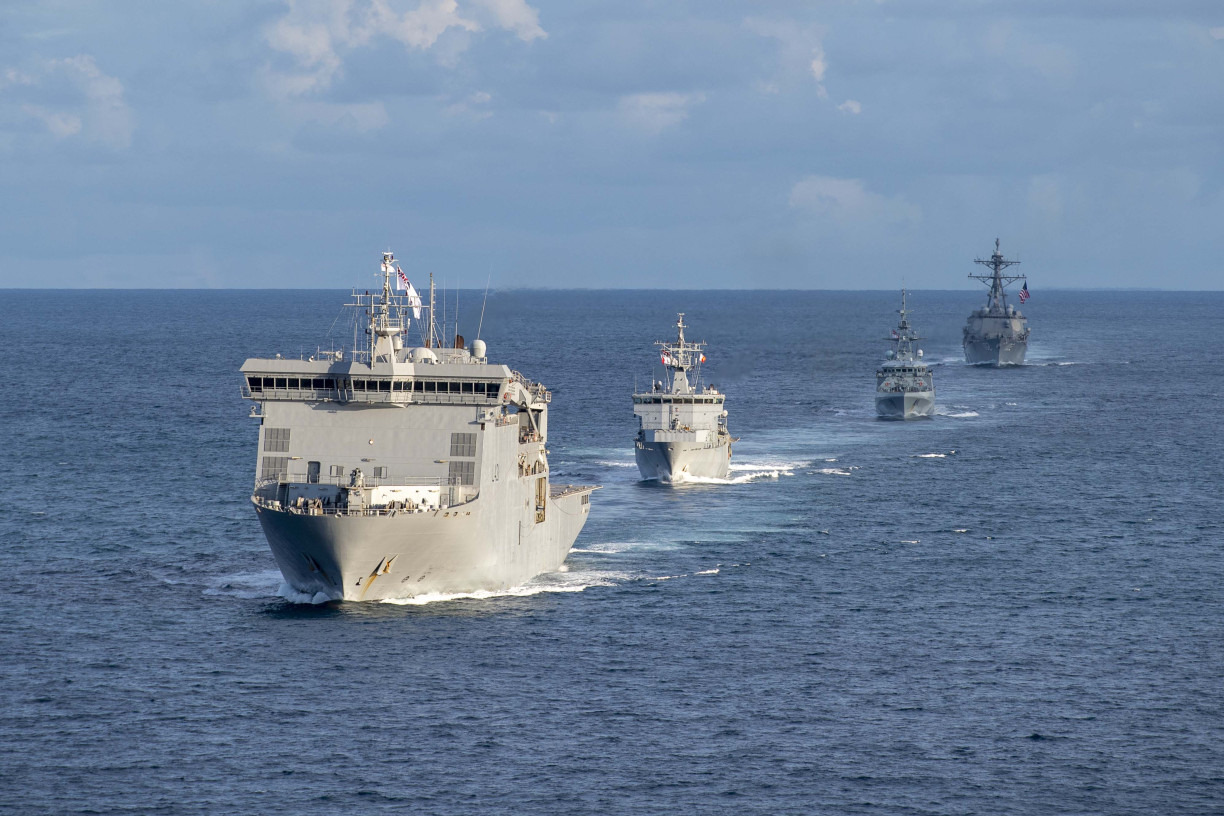
HMNZS Canterbury and Wellington leading HMS Spey and USS Sampson into Tonga, 2022
By 2015, she would become integrated with the RNZAF’s new NH-90 helicopter in addition to the Seasprites. Un-armed, these helicopters would serve as superior transports than the Seasprites, which had issues as they were not designed for hauling loads in quantity. During this time, she was also upgraded alongside the Protector-class OPVs, replacing the MSI-DS25 RWS mount with the Typhoon RWS; the 25mm bushmaster itself was kept. During this upgrade, her sensors were also improved.
HMNZS Canterbury would serve as the primary logistical base for the NZDF’s humanitarian aid response to the 2016 Tropical Cyclone Winston, which devastated parts of Fiji. She would supply 300 personnel, 45 military vehicles, and carried a single Seasprite, as well as two NH-90s in her hangar. Part of operations in this area included acting as a moveable airfield as to conduct airlift operations, and landing vehicles as to re-establish communication and civilian supply lines
Soon after, the Canterbury would assist in relief efforts for Kaikōura, after an earthquake and it’s aftershocks cut off the town via road routes, only leaving the port as the sole entrance to the township. HMNZS Canterbury would offload supplies from Lyttelton, and would evacuate foreign tourists. This was done in company with the HMNZS Wellington, who conducted seabed surveys, as to ensure safe passage to the port.
After the January 2022 Hunga Tonga–Hunga Haʻapai eruption and tsunami in Tonga, HMNZS Canterbury would deploy in company with HMNZS Wellington and Aotearoa, again to deploy aid. Canterbury’s helicopters would provide support to restore communications, but also provide helicopter rescue. She would also provide medical assistance, as well as water and food supplies. Canterbury would be extremely important for these operations, as the Aotearoa and Wellington both only have hangar space for a single helicopter, while Canterbury had four.
In February 2026, HMNZS Canterbury would carry New Zealand’s Governor-General to Tokelau, which is a New Zealand dependency, as to meet with local leaders. She would enter Tuas Drydock, Singapore, in September 2026 for her 5-year maintenance period, she would exit this on the 25th of September, and is still active.
HMNZS Canterbury’s replacement is marked under the ‘Future indicative investments’ under the 2025 Defence Capability Review, meaning that she is due to be replaced from 2029-2039, as to ensure that the NZDF’s amphibious capability does not age out.
| General Characteristics: | |||||
|---|---|---|---|---|---|
| Name: HMNZS Canterbury | |||||
| Country: New Zealand | |||||
| Type: Multi role Vessel | |||||
| Class name: Canterbury | |||||
| Year of commission: 2007 | |||||
| Refit: 2007 | |||||
| ----------------------------------------------------------------------------------------------------------------------------------------- | |||||
| Dimensions: | |||||
| Length: 131m (430ft) | |||||
| Beam: 23.4m (77ft) | |||||
| Draught: 5.4m (18ft) | |||||
| Displacement: 9,000t at full load | |||||
| ----------------------------------------------------------------------------------------------------------------------------------------- | |||||
| Propulsion: | |||||
| Powerplant: Combined Diesel & Diesel electric, 2x Wärtsilä @ 4.5MW (6,034hp) ea, 3x aux diesel engines (not specified) 2x Bow Thrusters | |||||
| Speed: 19.6kt | |||||
| Endurance: 8,000nmi @ 16kt | |||||
| ----------------------------------------------------------------------------------------------------------------------------------------- | |||||
| Armament & sensors: | |||||
| Compliment: 78 core personnel, 10 aircrew, total accommodation for 243 including embarked troops. | |||||
| Primary armament: 1x1 25mm Bushmaster MSI-DS25 mount | |||||
| Secondary armament: 2x1 12.7mm M2HB | |||||
| Tertiary armament: -nil | |||||
| Radar: Exact Models unknown, known to have nav, surface/air search radars | |||||
| Sonar: -nil | |||||
| Fire Control & ESM: CEA Warrlock HF/DF, Vistar Electro-Optical fire control for 25mm Gun | |||||
| Boats: 2x 7.4m RHIBs @ 35kt, 2x 11m RHIBs | |||||
| Landing Craft: 2x Medium Landing Craft | |||||
| ----------------------------------------------------------------------------------------------------------------------------------------- | |||||
| Aircraft Specifications: | |||||
| Type: 4x SH-2G (I) Super Seasprite | |||||
| Armament Carried: 1x1 7.62mm FN MAG, 2x AGM-119, 2x Mk.46 12.75" torpedoes, or 2x depth charges, 2x external fuel tanks | |||||
| Systems: AN/ALR-93, ATK AN/AAR-47, AN/ALQ-144AN/ALE-39, AN/ALE-39 flares/chaff, LR-100 ESM, APS-143, AN/AAQ-22 | |||||
| Engines: 2x GE T-700, producing 1,723hp (1,285 kW) each | |||||
| Crew: 3 | |||||
| Main Rotor Diametre: 13.4m | |||||
| Length: 15.9m | |||||
| Height: 4.5m | |||||
| Range: 1,000 km clean | |||||
| Max Speed (Never exceed speed) : 278 km/h | |||||
| Empty Weight: 4,170 kg |
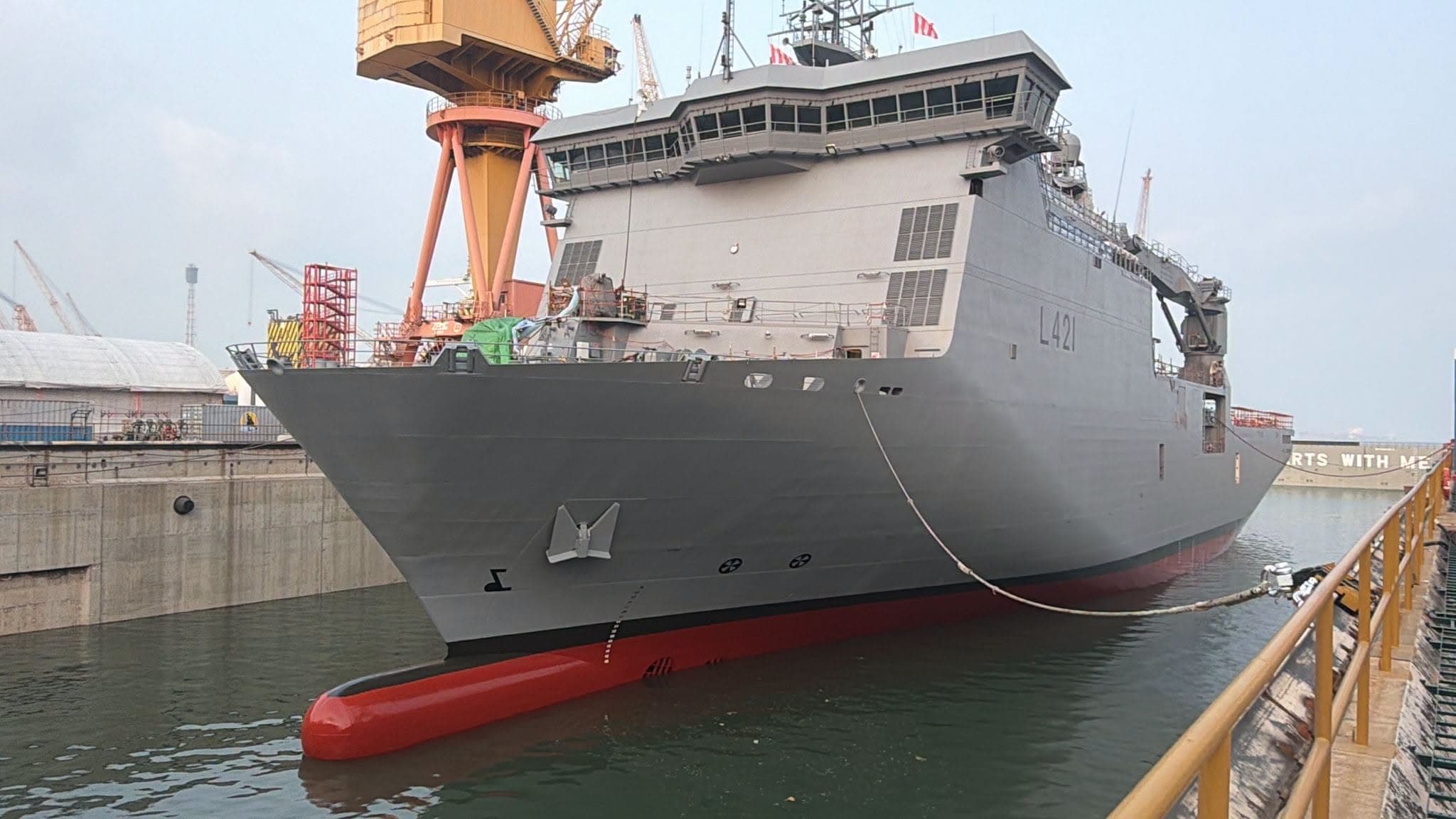
HMNZS Canterbury at the Tuas drydock, Singapore, for a maintenance period, 2026
Extra Photos:



Sources:
P.Greener (2009) TIMING IS EVERYTHING: The Politics and Processes of New Zealand Defence Acquisition Decision Making (pp.66-72)
https://web.archive.org/web/20081014042609/http://www.defence.govt.nz/pdfs/independent-review-safety-hmnzs-canterbury.pdf
L-421 HMNZS Canterbury multi role ship MRV New Zealand Navy
https://www.nzdf.mil.nz/nzdf/our-equipment/ships-and-watercraft/hmnzs-canterbury/
HMNZS Canterbury (L421) - Wikipedia
Project Protector - Wikipedia
https://www.naval-technology.com/projects/hmnzs-canterbury-multi-role-vessel-mrv/
RNZN - MRV and Landing Craft