- Yes
- No
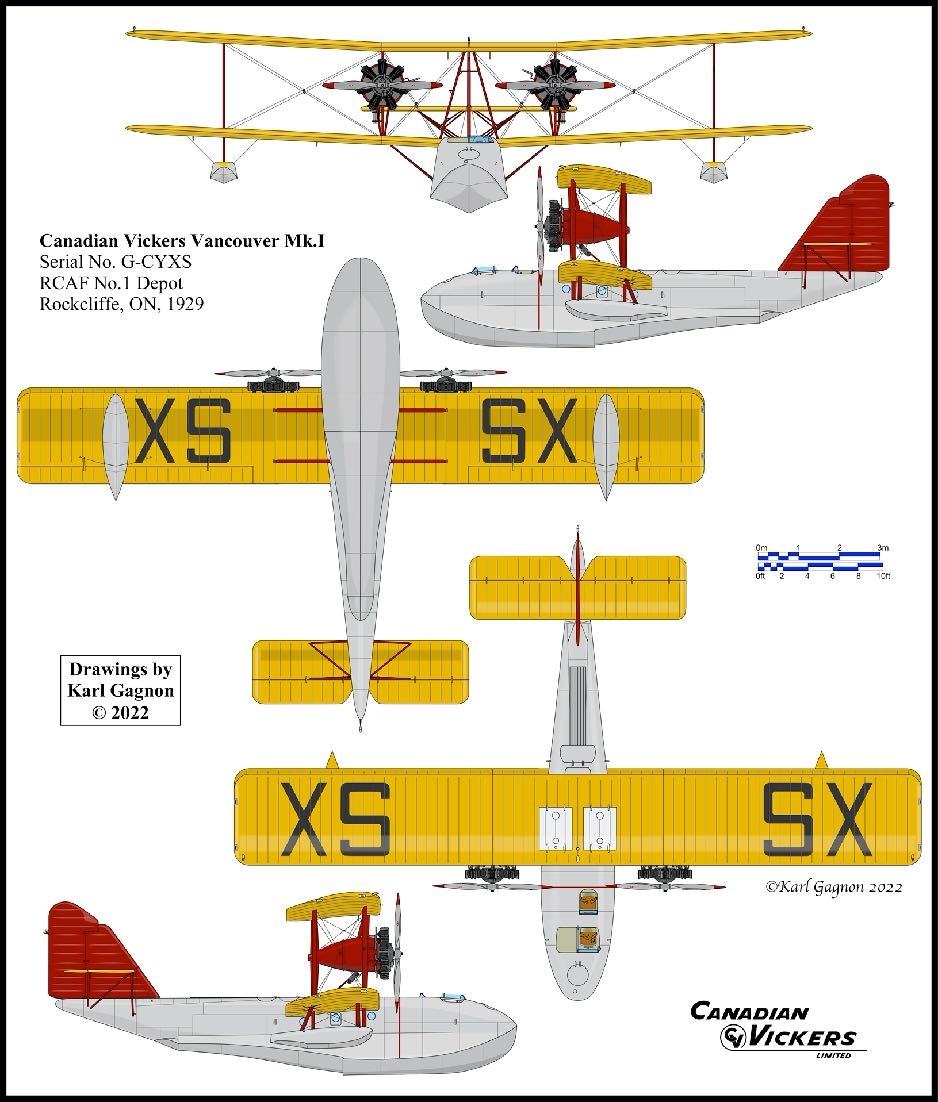
Hello, I’m here suggesting a domestic Canadian aircraft, an interwar flying boat. An aircraft that even saw limited service during WW2.

History:
Canada Vickers Limited was an aircraft and ship building company that operated in Canada until it’s merging with Canadair in 1944. Well, initially invited over to Canada in 1911 to build vessels for the Royal Canadian Navy, it would have a big break into Aircraft in 1923, when it was contracted to build Vickers Vikings for the Canadian Air Force. It would proceed to build a number of flying boats & other aircraft for Canada, both domestic designs and licensed-built. Starting with the Vickers Vicking, as the first flying boat built by them and Canadian Vickers (C.V.) Vedette as the first domestic flying boat for Canada, built by them and a number of other aircraft, right up to the Varuna, which the Vancouver is a replacement for. As in the 1920s, well, it was possible to see forest fires through surveillance aircraft, but getting people and equipment to them was another story. Well, using smaller flying boats was possible, but due to size and weight limitations, it was inefficient, so work on a metal-hulled aircraft based on the Varuna would begin.
Canada had wanted Vancouver ready by the operational season of 1929; due to this, the Vice-President R. H. Mulock of Canadian Vickers would promise delivery as soon as the water was free of ice in 1929. Well, originally meant to be a Veruna variant, Canadian Vickers would propose to have the project switched to a completely new design. The RCAF would approve of this idea on May 17th, 1928 and the proposal for a twin-engine flying boat with a goal for a maximum weight of 6,310 lb (2,862 kg) and a performance of 92mph (145 hm/h) at 12,00 ft (3,658m). Despite wanting these requirements set in stone, the RCAF would consistently request changes. As of June 1st, 1928, there was a request for the pilot’s cockpit to have seating providing fore and aft seating, and on June 14th, they’d want a canoe hatch, and on the 18th, wanted mounts for only Lynx engines. Nearly a month later, the RCAF would realize, nearly a month later on July 10th, they would want extra range and requested extra fuel and oil tankage, with the exact amount being defined on July 12 as an extra 50 imp gal (227 litres) of fuel, howevere this would come at a cost of an extra 100 lb (45 kg) of dry weight Canadian Vickers would estimate. These would lead Canadian Vickers to ultimately complain about all the extra weight being added on August 9th, the would begin a back and forth of both sides rejecting changes the other side put forward. This back and forth would go on until November 26th, when Canadian Vickers would request an “official” specification, which would be received by them on the 7th of December.
On January 15th of 1929, an official order for the Vancouver would be raised, and eleven days later, the RCAF Engineering Branch would send out even more revisions. The hull finish would be changed twice, on January 26th and on February 1st, with the addition of a passenger hatchway as well. On February 5 and March 1st, the electrical wiring would be revised, and Triplex material would be specified for all portholes, respectively. Along with the Triplex on March 1st, the requirements for the slinging gear and beaching trolley were further defined, and on March 22nd, the cabin hatch would be changed, with a Yarmouth bridle being specified, rubbing strips added, and the oil system changed. Two more changes would be asked for in June and July, and on August 1st, 1929, the weight of the prototype would be reported. With it now being 6,625 lb (3,005 kg) compared to the original 6,310 lb (2,862 kg) that was wanted, the extra 275.5 ib (125 kg) is the outcome of the additional requests by the RCAF, as claimed by Canadian Vickers. If this is acceptable, the aircraft would only be 39.5 lb (18 kg) overweight.
On August 8th, flight trials would be flown with a disposable load of 1,772 lb (804 kg) at an altitude of 12,500 ft (3,810 m). Although it should be noted that the last 1,000 ft (305m) took 9 minutes and 10 seconds to achieve. Well, on a timed speed trial, it would achieve 100.7 mph (162 kph) over the specified speed of 92 mph (145 kph). With some reservations, the Vancouver would be confirmed to have met the specifications. Despite some reluctance, the prototype Vancouver would be accepted by the RCAF on the 23rd of August 1929 and would be taken on charge at RCAF Station Ottawa. The aircraft would continue to be used for testing with the realization that the season was far too advanced to try it in operations. After some further modifications, such as lowering the wing tip floats to reduce poor aileron control at low speed, such as take off and landing and much more significantly, the fitting of geared Lynx engines, which was originally rejected by the RCAF after Canadian Vickers proposed it the first time, it would be called for a complete inspection by No. 1 Depot.
The water on the Ottawa River in November of 1929, which led the prototype Vancouver to be reassigned to the station on November 18th. This allowed for initial service pilot reports and further engineering analyses to produce a list of further changes to the prototype, before the increased Vancouver fleet for the coming season was completed. Because of this, W/C Stedman would issue a list of changes to be made in December when flying boats were forced to use only their beaching gear. The exact list of changes sent to Canadian Vickers by the Engineering Branch would be as follows:
• The first pilot will remain on the port side, but the after coaming of his cockpit will be brought back to frame 5. This will necessitate either cutting frame 4 at the top or altering the position. It is desired to increase the fore and aft length of the cockpit a few inches so as to improve the comfort of the pilot and the visibility of the instrument board.
• The second pilot is to be brought forward to a position along side the first pilot.
• The opening at the Pilots’ seats will go right across the hull and will be provided with a central, removable spine member, hinged at one end and secured at the other by some easily removable device.
• Second pilot’s seat to be cantilevered from right side of hull, and constructed so that it may be folded simply into the side.
• No floor is required under the second pilot, but possibly some heel rests, integral with the folding seat may be required.
• A central control column with swing over type of control is to be installed. It is considered that the best rudder arrangement to suit the Department’s requirements will necessitate rudder controls of the pedal type, the second pilot’s pedals being made so that they can be easily removed from permanent sockets on the torque tubes. To facilitate passage of personnel along the hull, a housing to protect the second pilot’s rudder arrangements will be required.
• The size of the hatch between frames one and two should be increased so that two men can stand up side by side.
• It is suggested that the hatch be made “D” shaped, in plain view and that the hatch cover be split down the line of symmetry and hinged downwards and outwards.
• The junction of the chines and keel at the nose should be arranged to have sufficient strength to accommodate a strong bollard.
• A one-piece windscreen right across in front of the pilots is contemplated, with arrangements for folding down and covering with a wooden cover when loading and maintenance operations are in progress.
• It is considered that provision should be made for a socket near the nose of the hull for carrying a sight arm, which will be mounted in flight to give the pilot greater facility for judging his fore and aft trim.
Well, the changes would have been directed at the prototype Vancouver; they’d also be applied to the five additional Vancouvers that were on order for the RCAF. Despite the fact that all the aircraft were to be built with geared Lynx engines, two of the Vancouvers, for some reason, were ordered and made with Wright Whirlwind J-6E engines.
1930 would end up being a busy year of growth for the RCAF. Work on the first Vancouver would continue, up to the spring breakup of the ice on the Ottawa River. Well, during the summer, it would have its test flying time increased to 52 hours and 55 minutes, before it would be turned over to No. 1 Depot on the 5th of August to be converted to Mk II standard. As mentioned earlier, the Vancouver was designed to replace the Varuna in the role of air transport, however tensions were running high in the planning office of the RCAF Headquarters, as well deliveris where promised for the fire season of 1930, there were people anticipating the worst. The two Wright J-6 power Vancovers would be taken on charge on July 16th & 24th, with both setting out for the mid-west on July 29th. With the former heading to Ladder Lake, MB and the latter to Lac du Bonnet. This left Canadian Vickers under tremendous pressure to deliver the remaining Lynx-powered Vancouvers. The first one would be taken on charge on August 28th, and sent to Cormorant Late MB on the 29th, followed by the next one on September 4th and sent to Lax du Bonnet, and the last one would be assigned to RCAF Station Ottawa on October 8th, 1930. Even though the season was now well advanced, Canadian Vickers had done well to get the order done within the summer months. As the year had been very active for RCAF Station Winnipeg, with over 500 forest fires that had been reported between the provinces of Manitoba and Saskatchewan, with Manitoba reporting 417 of them, in which most was detected from the air. Despite its late arrival, the Vancouver would play a very active part in transporting fire suppression crews to the nearest lake, so they could battle each fire.
1931 would, unfortunately, see a curtailed budget that would reduce the number of aircraft assigned to one-third. Because of this change, depending on where they were located, at times, only one Vancouver was in use at all times. The Vancouvers would see some more demanding employment, as not only would they fly 78 hours in fire-related missions, they would also take part in testing the air mail concept, primarily of taking form commercial steamers. They’d also see action in patrols to deal with those performing rum-running activities. Unfortunately, with further reduced money for the civil activities for the RCAF in 1933, and in turn due to the cost of twin-engine aircraft, the Vancouvers would be deemed too expensive to use, and most were put into storage. This wouldn’t stay down for them for two long, as plans for them to be switched to a military service configuration would be looked at around the time, this being defined as Mk. IIS.
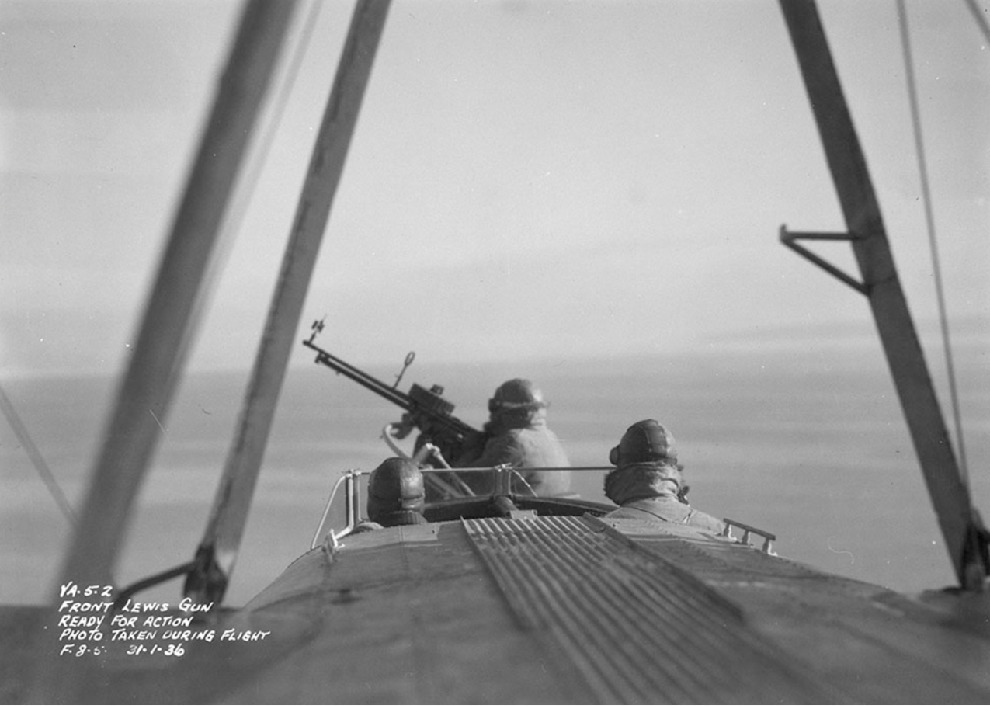
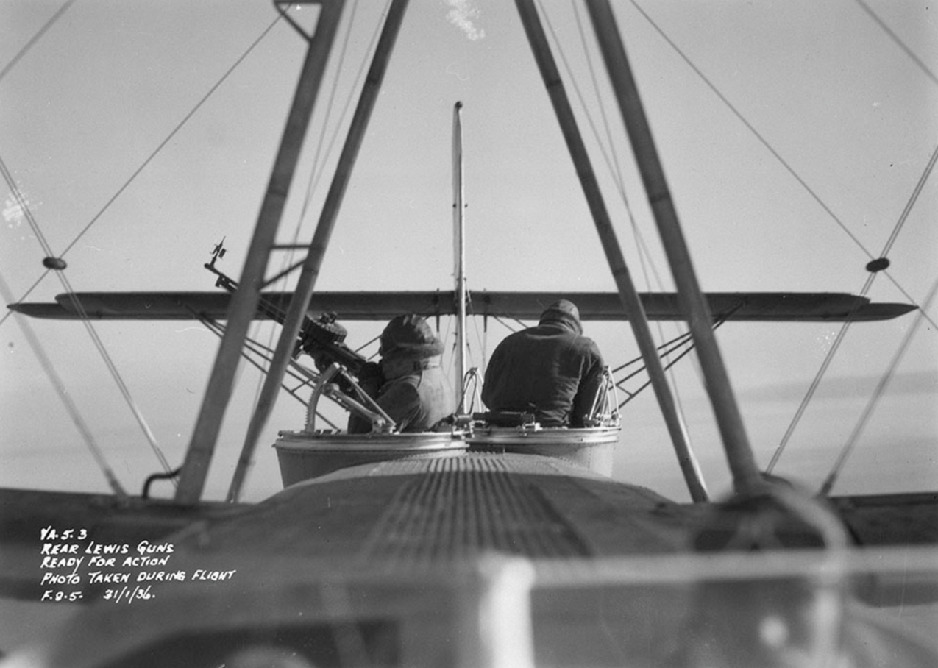
1934 would see the formal decision to employ the Vancouvers on service tasks over the civil operations they had been performing. This was helped by the fact that there was no other large flying boat in the RACF’s inventory, and a need for them in coastal waters. Well, the original intent was for all of the Vancouvers to be converted to the new configuration. After a re-evaluation of the prototype Vancouver, it would be reduced to spare parts. There would be improvements in the budget for the RCAF in 1935, which would allow the Vancouvers to see more active service. Two of the Lynx-engined Vancouver would have their engines switched to Armstrong Siddeley Serval engines, whiched there horsepwoer to 340-370 hp (254 - 276 kW). During this year, they’d see service training exercises and civil tasks. The year 1936 would see the militarization of the Vancouvers completed; this came with the caveat that the process increased drag and added weight. As the addition of a nose gunner position and aft fuselage gunner cockpit which disturbed the previously smooth contours of the aircraft. Well, the gross weight would increase due to the planned equipment, like the planned 700 lb (318) bomb load, which would have resulted in a gross weight of 9,576 lb (4,344 kg). Because of this, it became evident that the Lynx engines were incapable of meeting the required power; the Wright J-6 engines, despite being considered adequate for training, were also considered too weak. These led to the demand for Armstrong Siddeley Serval, twin-row radials. The Vancouvers who had been modified to the full service configuration would be re-designated as C.V. Vancouver Mk IIS, with the S to indicate service. later one, the designations would become more detailed to specify the engine. With those equipped with the A.S. Serval as the Mk IIS/S and those equipped with the Wright J-6 as the Mk IIS/W. During the year, it would see one aircraft lost as it dragged its anchor during a fierce storm, damaging the aircraft beyond repair and forcing it to switch to being cannibalized for spare parts. With the increasing tensions in both Europe and the Far East, it would lead Canada to look at its own defences, and a survey for a new base site on the west coast would start.
The Canadian Parliament would recognize the need for a strong air force that met the standards established by the RAF in 1937. No. 4 (General Reconnaissance) would take charge of the four remaining Vancouver, two with each engine type. The Servals would be unpopular with the aircrew despite their reliability, as they produce excessive vibration and penetrating noise from the Canadian Vickers propellers. Attempts to fix these problems would have replacement propellers tested in hopes of dealing with the noise; well, the vibrations couldn’t be dealt with due to the flexibility of the engine mounting between the wings. 1938 would see the efforts of the surveys done by the Vancouvers bear fruit, with 3 new bases authorized. Well, the Vancouvers would countie to proved experience for the crews, they where noew anticipating the Supermarine Stranaers that were to be entering service soon. With a Royal visit to take place between May 17th and June 15th, 1939, which led to the need for increased preparedness. The Vancouvers would fly on a number of coastal patrols throughout the year, as part of the now re-designated No. 4 (Bomber Reconnaissance) Squadron. One of the Vancouvers would provide an air escort for the Royal Yacht when it departed from Vancouver on May 29th. The yacht located at Sidney Island would be picked up by the Vancouvers at 7:45 pm and after half an hour would be returned to the new base at Patricia Bay. Three of the Vancouvers would fly in formation when the Royal Yacht returned to Vancouver from Victoria on May 31st. The squadron would receive some relief, due to the fact that they received the first of the Stranraers on July 16th, as the age and ravages of salt water could be felt on the aircraft. With the Vancouver’s being able to completely retire in 1940, as enough of the Stranreaers would have been received. The ultimate fate of the aircraft is unknown, likely being reduced to parts, although a civilian company had tried to buy an airframe in October of 1940, but was rejected.
More pics
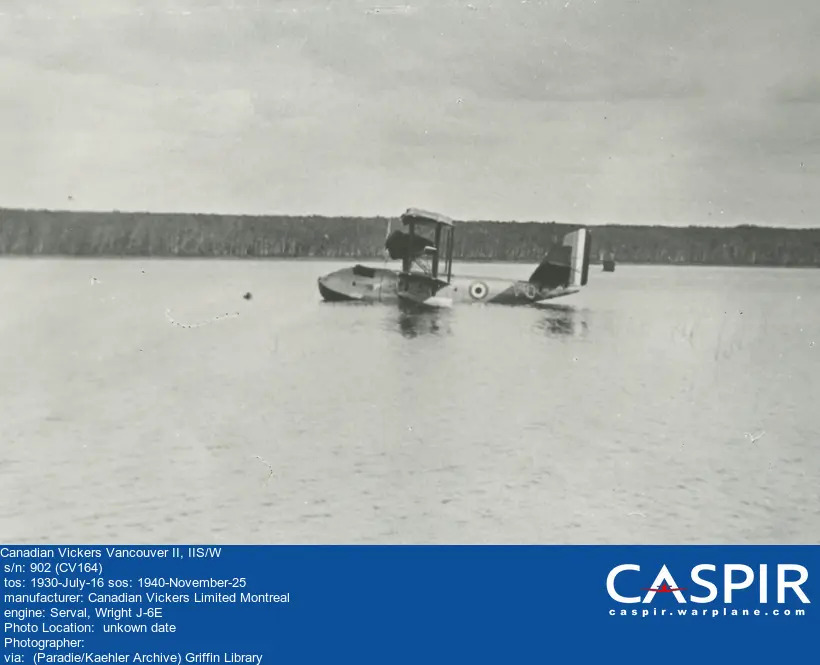
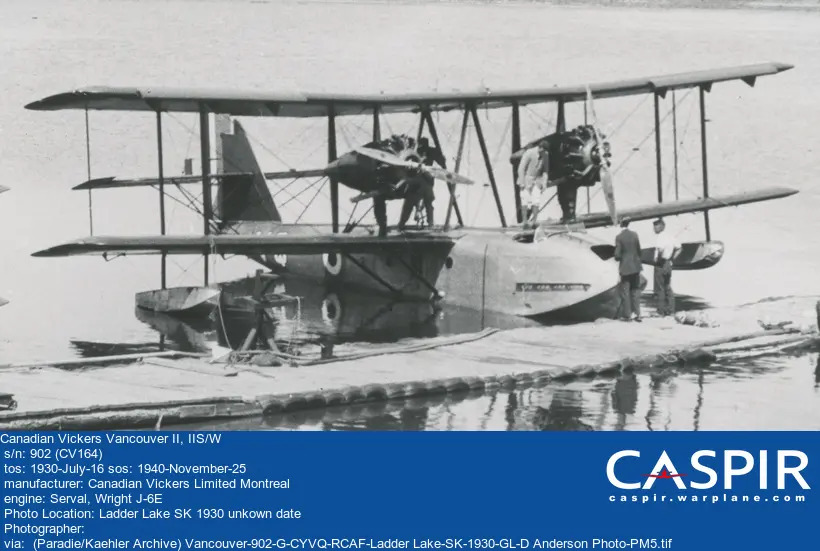
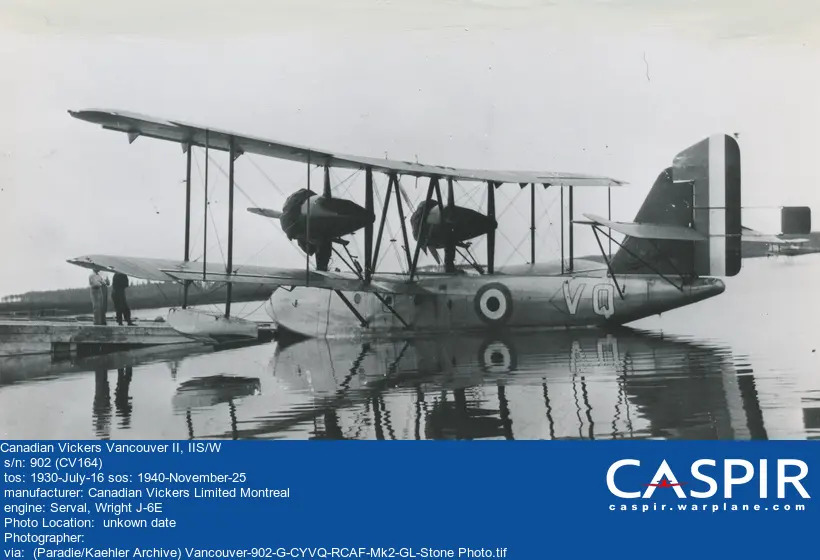
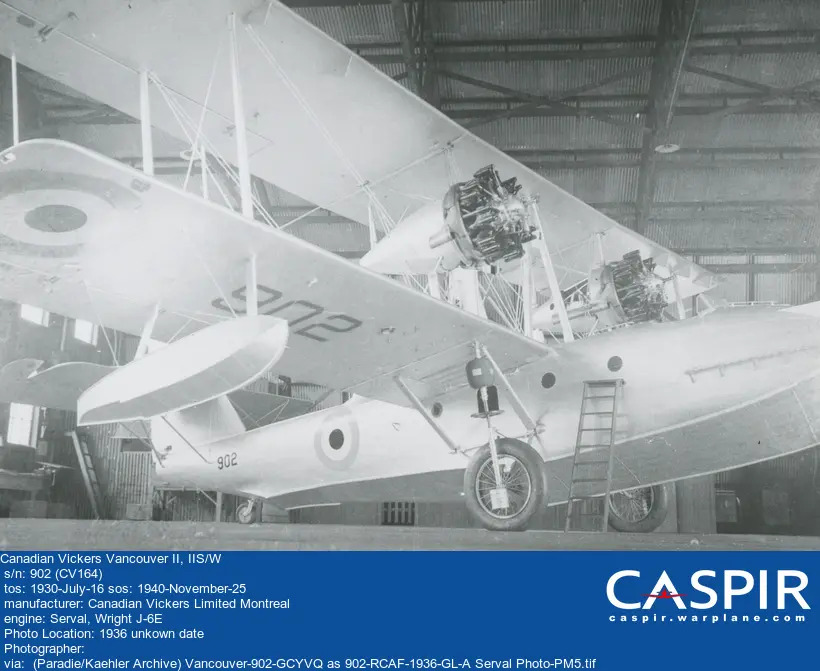
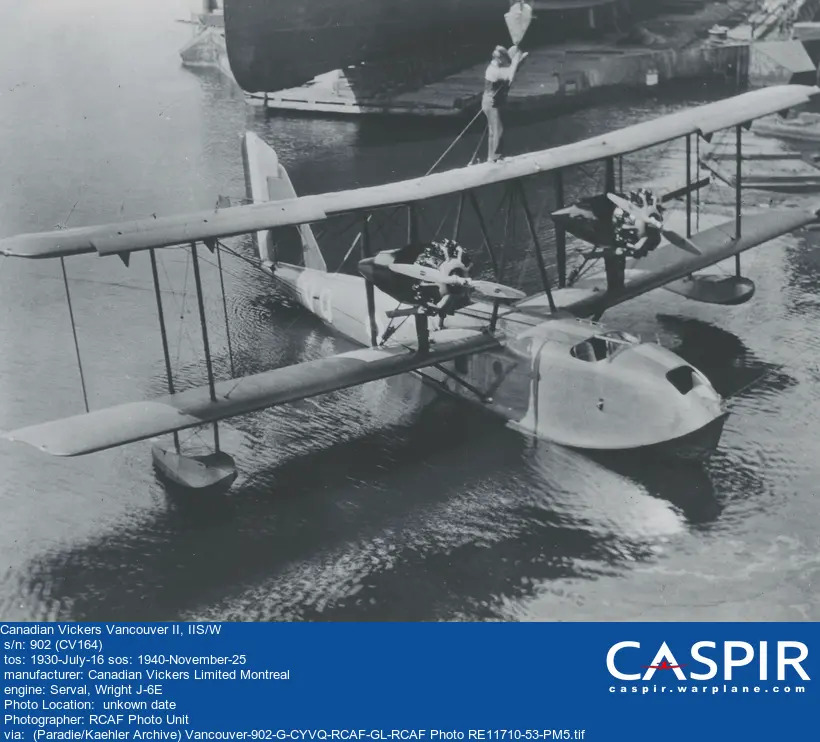
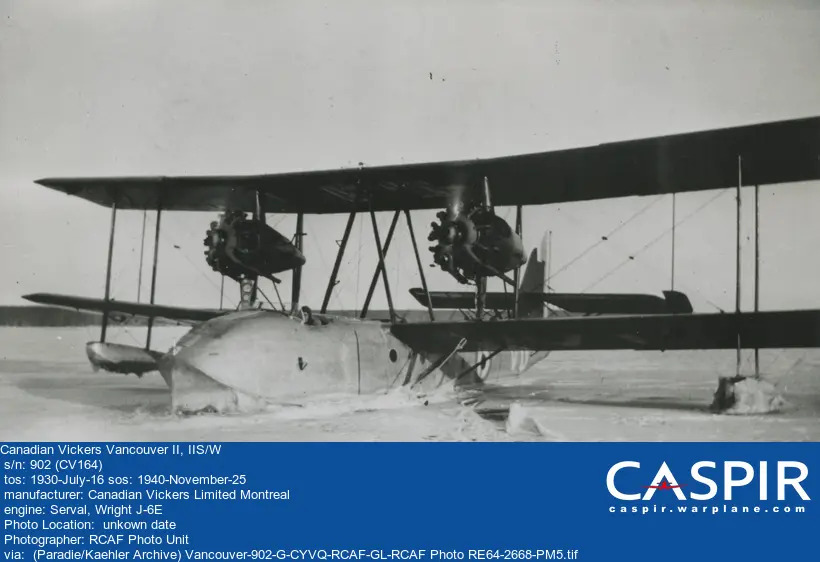
Below are two photos of the guns mounted:
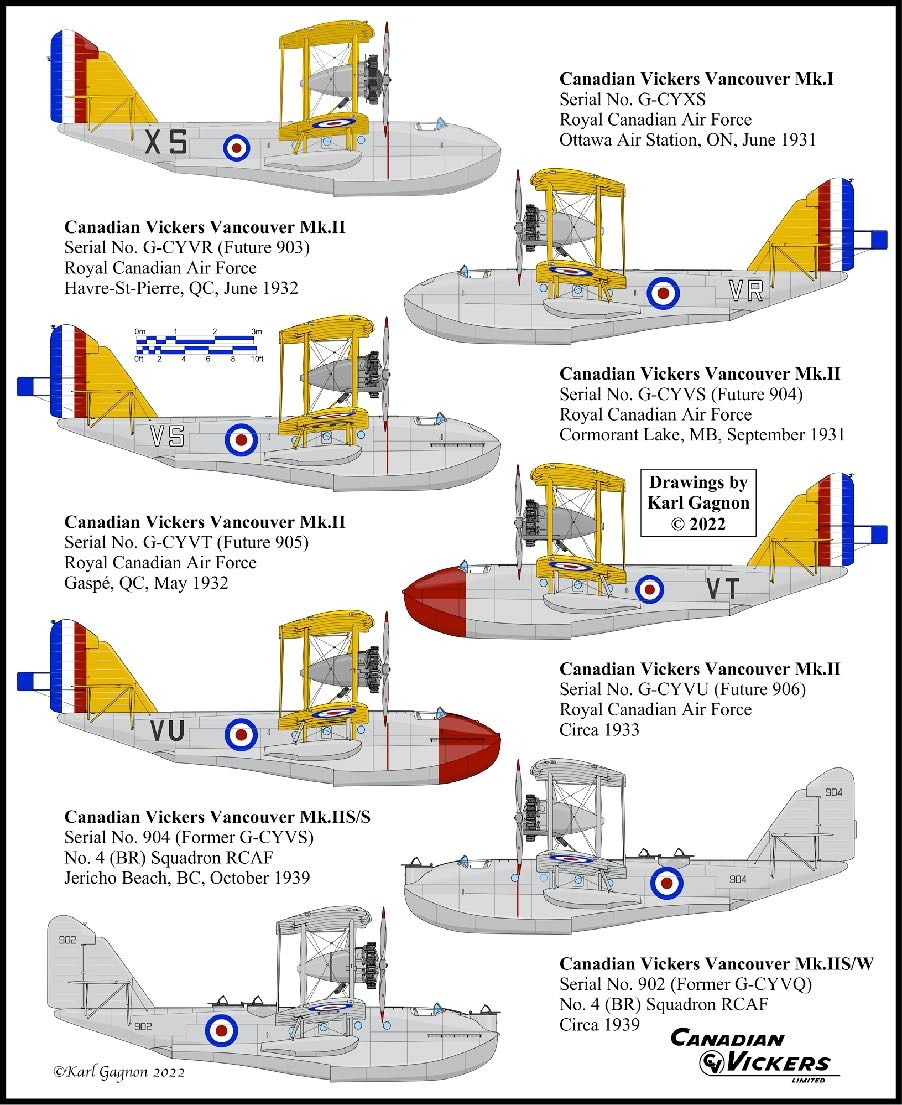
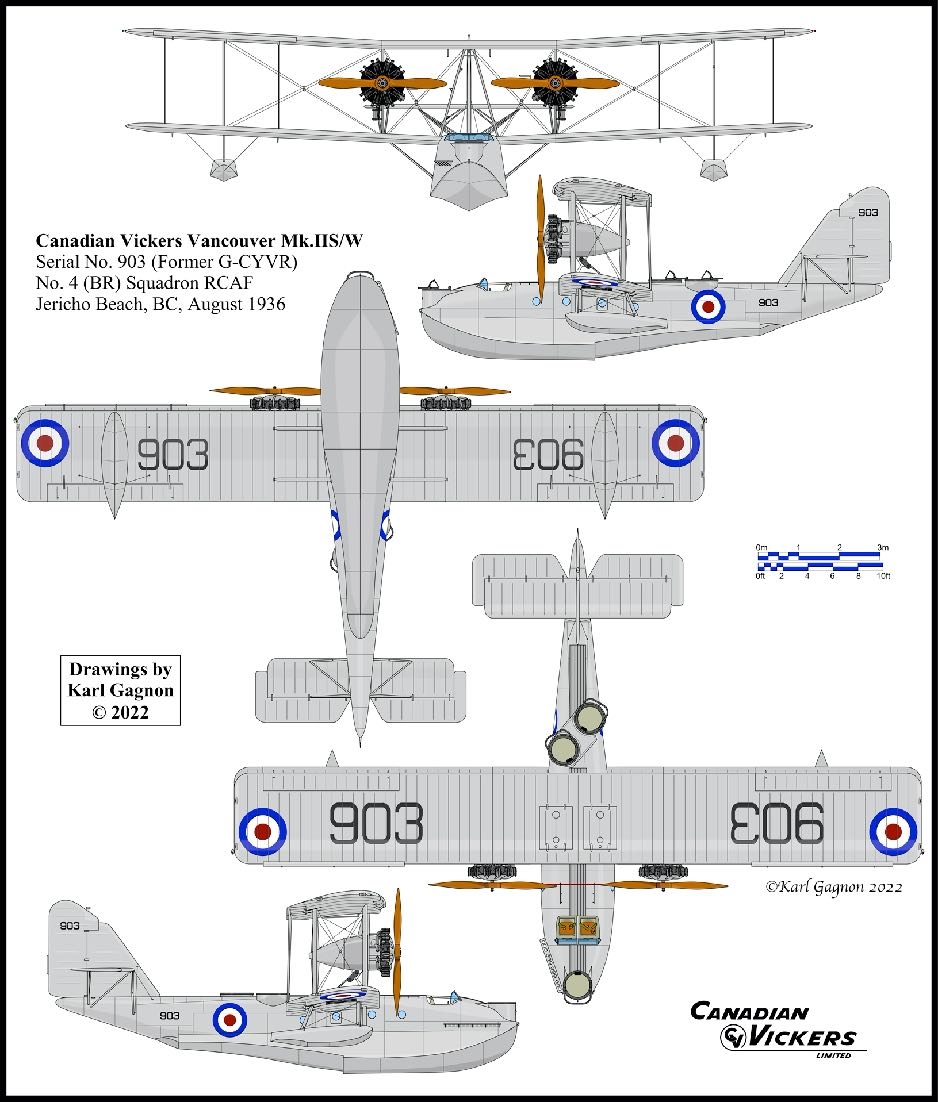
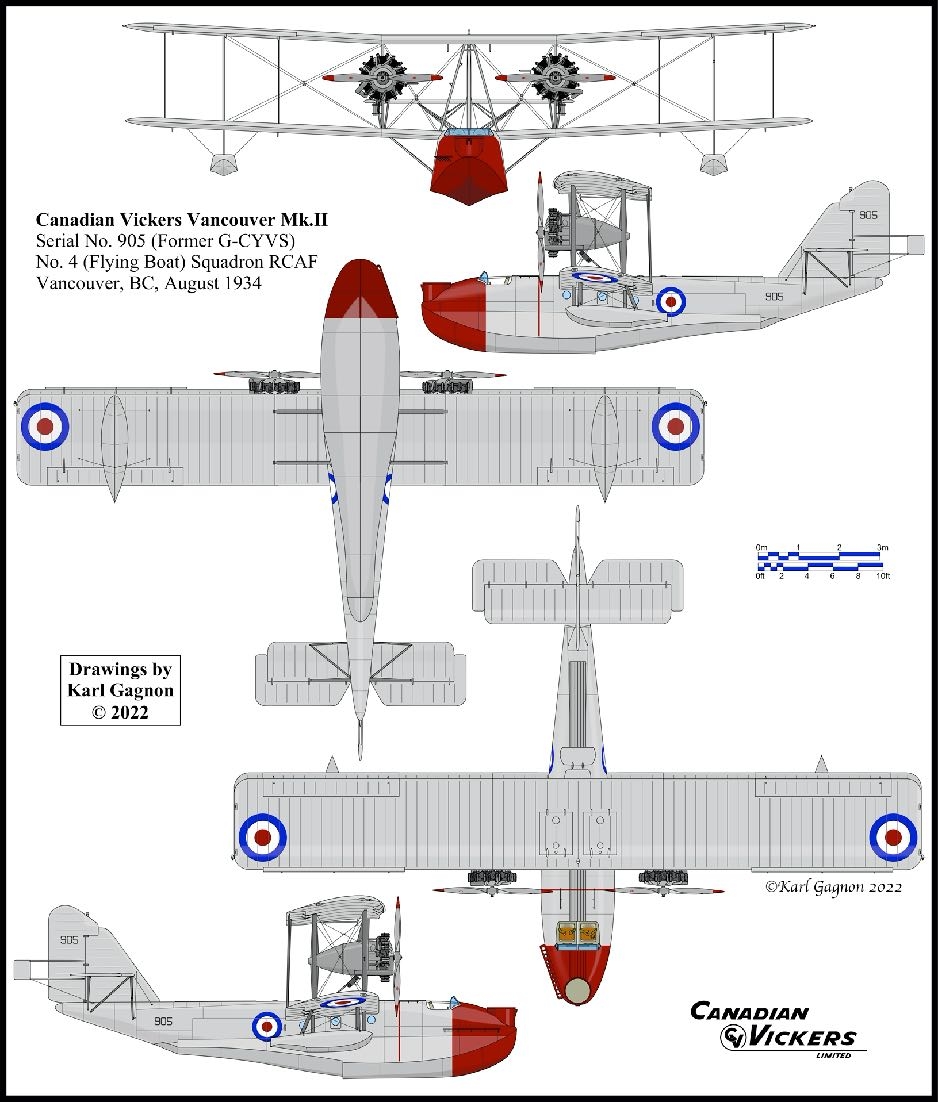
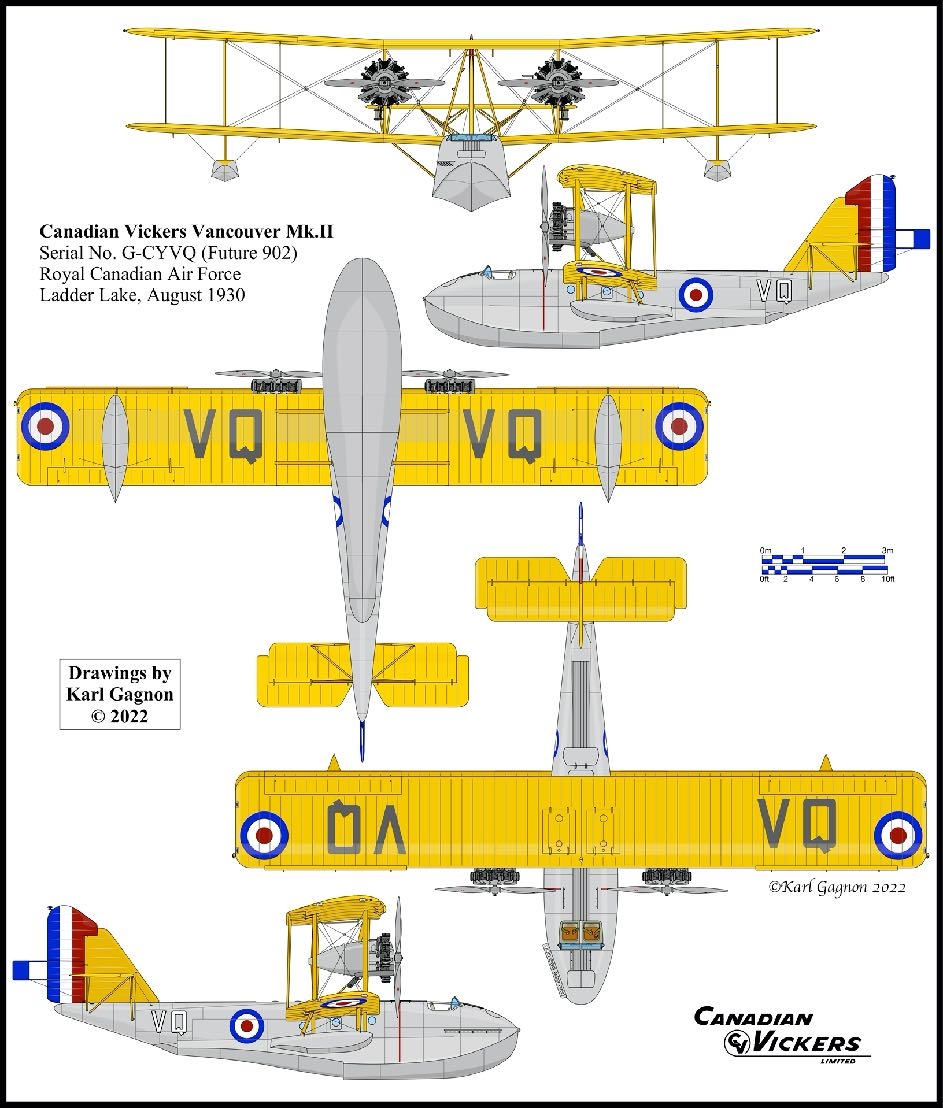
Specs:
Crew: 9 (2 crew in civil versions)
Capacity: (7 pax in civil versions)
Length: 37 ft 6 in (11.43 m)
Wingspan: 55 ft 0 in (16.76 m)
Height: 15 ft 7 in (4.75 m)
Wing area: 772 sq ft (71.7 m2)
Airfoil: Clark Y
Empty weight: 5,159 lb (2,340 kg)
Gross weight: 7,606 lb (3,450 kg)
Powerplant: 2 × Wright J-6 Whirlwind 9-cyl. air-cooled radial piston engine, 300 hp (220 kW) each
Propellers: 2-bladed Standard steel fixed-pitch propellers
Performance
Maximum speed: 94 mph (151 km/h, 82 kn)
Cruise speed: 86 mph (138 km/h, 75 kn) *Alighting speed: 45 mph (39 kn; 72 km/h)
Service ceiling: 15,000 ft (4,600 m) plus
Rate of climb: 565 ft/min (2.87 m/s)
Armament
Guns: 3 x 0.303 in (7.70 mm) Lewis Guns
Bombs: 1,000 lb (450 kg) of bombs
Sources
The Canadian Vickers Vancouver in Royal Canadian Air Force Service by T.F.J. Leversedge
Canadian Vickers Vancouver - Wikipedia
CASPIR Serial Search
https://publications.gc.ca/collections/collection_2024/mdn-dnd/D2-657-2024-eng.pdf
