- Yes - In the Tech Tree.
- Yes - Event/BP.
- Yes - Premium.
- No - I would not like to see the TR-class in game.
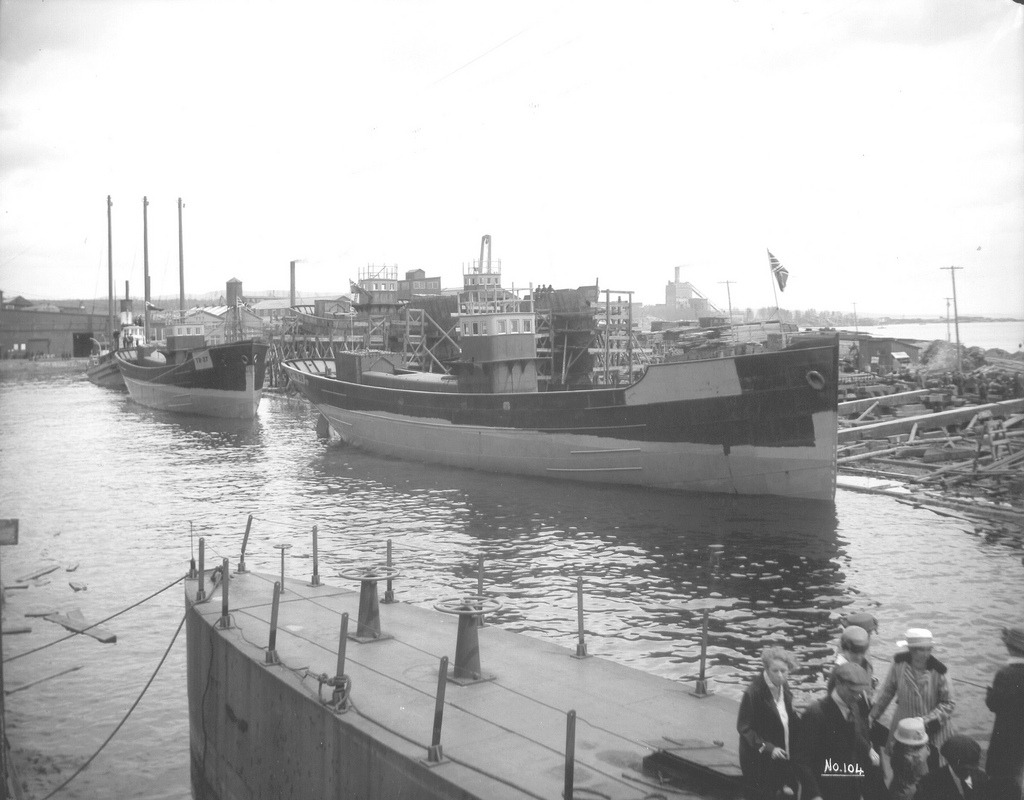
Launching of the HMCS TR-38, with the TR-37 aft. (1917)
Description:
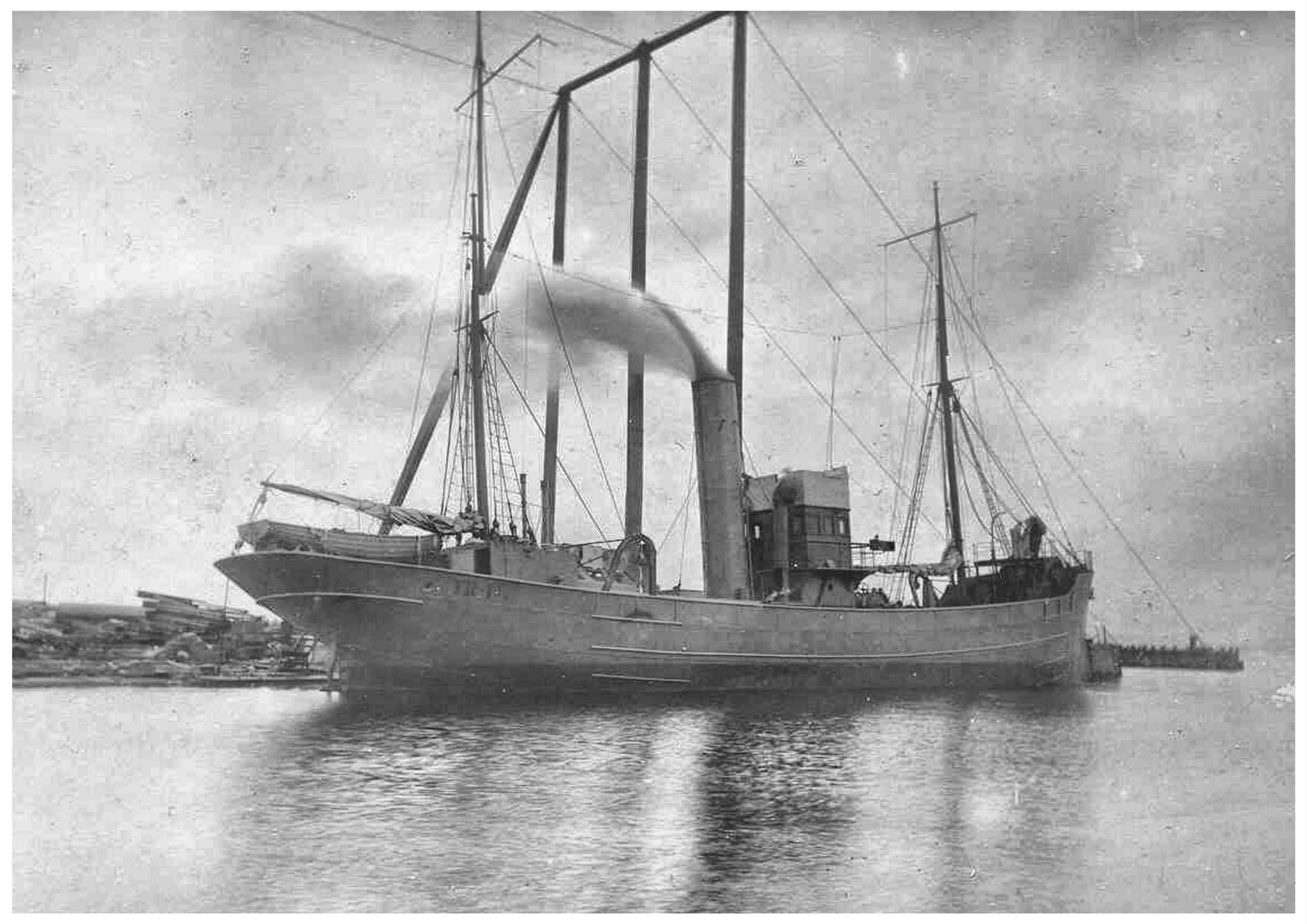
Canada’s indigenous copy of the Admiralty Castle-class Minesweepers used by the Royal Navy, stems from a warning from the British Admiralty to the Canadian government about the need for more ASW patrol craft for the Atlantic seaboard of Canada. For this role, the Admiralty Castle-class would be chosen for mass production in Canadian yards, albeit with very minor modifications due to its base upon a Trawler design, which their yards had experience building and could thus build quickly.
It should be noted that they were differentiated from the British built Castle-class in RCN service, with the British builds being labelled as Castle-class, and the Canadian vessels as the TR-class.
In service they would supplement and replace civilian vessels pressed into military service, which were proving to not be as effective as hoped. Due to the basis of the design on North Sea Trawlers, it was also hoped that many vessels that would be excess post war could easily be sold to replenish the allied fishing fleets.
Due to their short span within the RCN, they would only have one fit within that force. This suggestion is for their fit with the Royal Canadian Navy (RCN) as she commissioned in 1917.
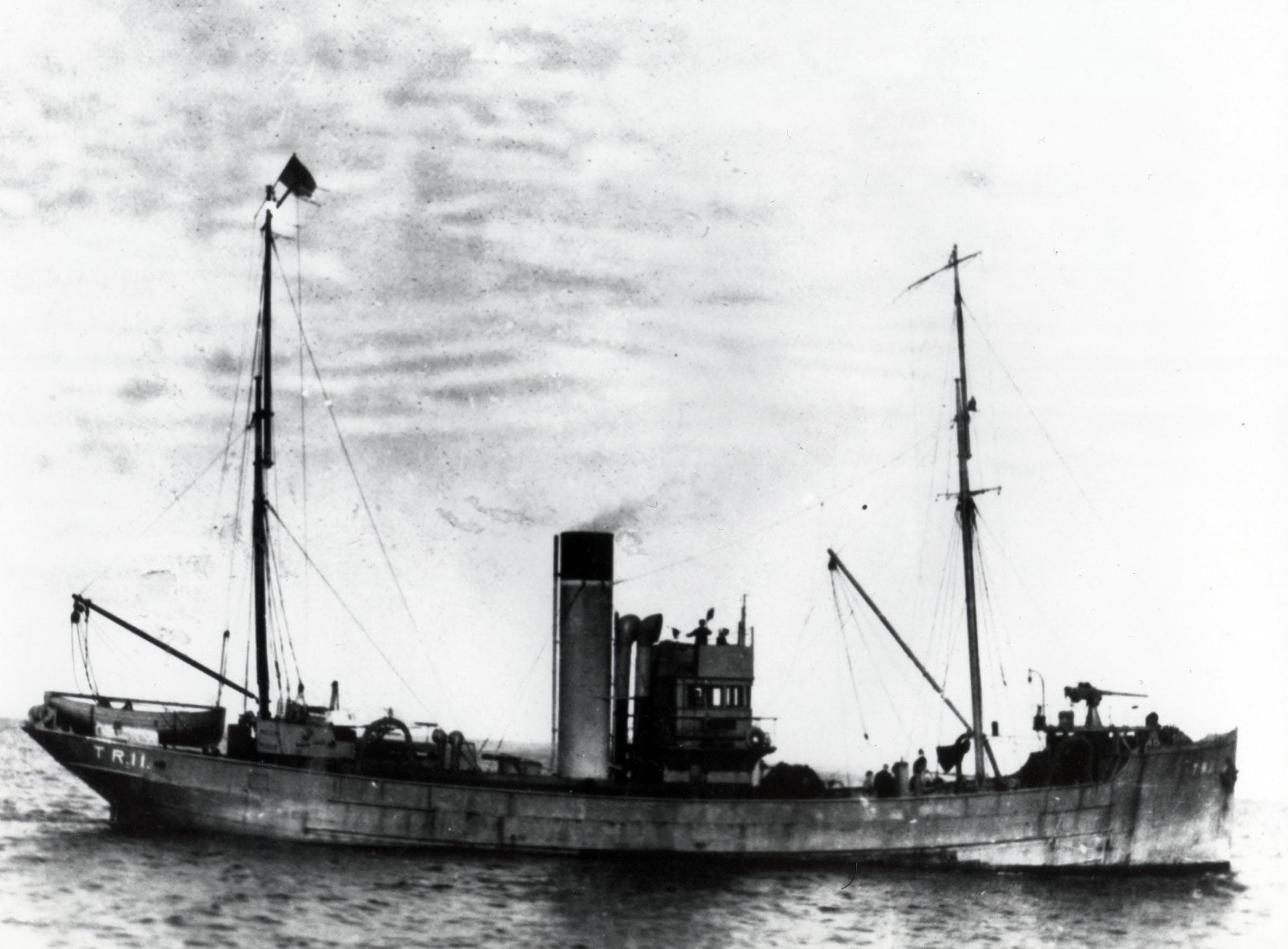
HMCS TR-11 during her war service, ~1918
History:
The first vessel to be laid down was the TR-1, on the 31st of May, 1917, by Port Arthur Shipbuilding at Port Arthur, Ontario. She would complete on the 17th of October that year. This yard would construct TR 1-6, and TR 39-44, with TR 7-12 being constructed by Collingwood Shipbuilding, at Collingwood Ontario, TR 13&14 by Thor Iron Works, Toronto, Ontario. TR 15-18, and TR 54-57 was built by Kingston Shipbuilding at Kingston Ontario, and TR 21-31 by Canadian Vickers, at Montreal Quebec. TR 32-34 and TR 51-53 by the Government Shipyard, at Sorel Quebec, TR 35-36 and TR 45-50 were built by Davie Shipbuilding at Lauzon Quebec, and finally, TR 58-60 by Tidewater Shipbuilding, Trois-Riveres, Quebec.
TR 37-39, 51, and 55-60 would be loaned to the USN, from 1918-1919, being later returned and commissioning into the RCN from 1919 directly into reserve.
Upon arrival from the shipyards, the vessels would be sent to Sydney, Nova Scotia, to join the East Coast Patrol fleet. This would take place from late 1917-1918. They would be used along with the similar Battle-class Trawlers for port defence of convoy ports, mostly Halifax, but also to escort slow coastal convoys. Due to their late entry into the war, they would not see much action.
TR 11 would join the hunt for the U-156 in August 1918, which had just sunk the tanker Luz Blanca near Halifax, however the U-boat would not be discovered by the warships hunting her. Later, after another attack on Canadian fishing fleets, the U-156 would be set upon by TR 22 and 32, but were forced to break off due to a signal from command. All vessels would remain in service until the end of the war, when they were decommissioned and laid up. Most were sold in 1920, however the better maintained vessels survived in reserve until 1926, when they too were sold.
HMCS TR-1 as the HMNZS Wakakura, after being sold to the RNZN in 1926.

This would not be the end of the class however, with many being sold to civilian buyers around the world to replenish allied fishing fleets, who’s numbers had been severely effected by the war. Some others would be sold as warships to foreign nations, such as the HMCS TR 1, which would be sold to New Zealand as a training vessel in 1926, and renamed the HMNZS Wakakura T00.
Some vessels, sold to foreign nations as de-armed trawlers would find themselves re-armed and brought into service again, such as the HMCS TR 41, which was sold to France and renamed Marie Simone, before being captured by advancing German Forces and commissioned into the Kriegsmarine as the HS8, later V729. She would be sunk by the Light Cruiser HMS Mauritius.
Individual vessel History post RCN service
TR 1 - Sold to NZ as the HMNZS Wakakura in 1926, served through WW2 as patrol vessel, broken up in 1952
TR 2 - Sold to Mexican owners in 1920 and renamed Cobarribas.
TR 3 - Sold to Mexican owners in 1920 and renamed Guaymas.
TR 4 - Sold to Canadian owners in 1920, sold again to Brazilian owners, sunk on delivery in 1928.
TR 5 - Sold to Brazilian Navy in 1919, renamed Commandante Lorette
TR 6 - Sold to Mexican Navy as Mazatlan in 1920, broken up in 1949.
TR 7 - Sold to UK owners 1920, sold again to US owners 1926, sold to Brazil 1927, renamed Santander, unknown fate.
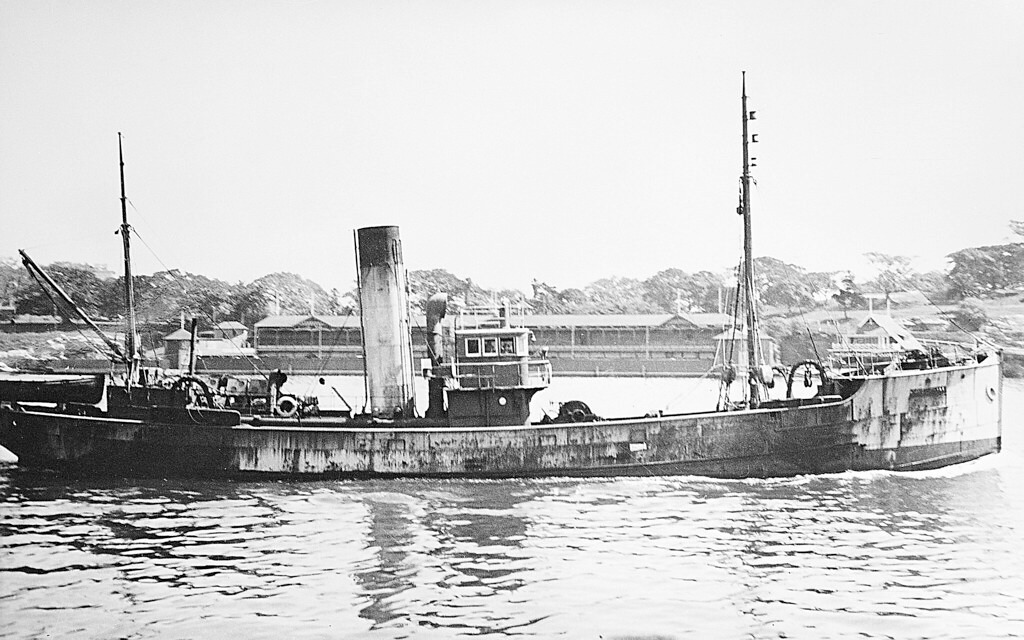
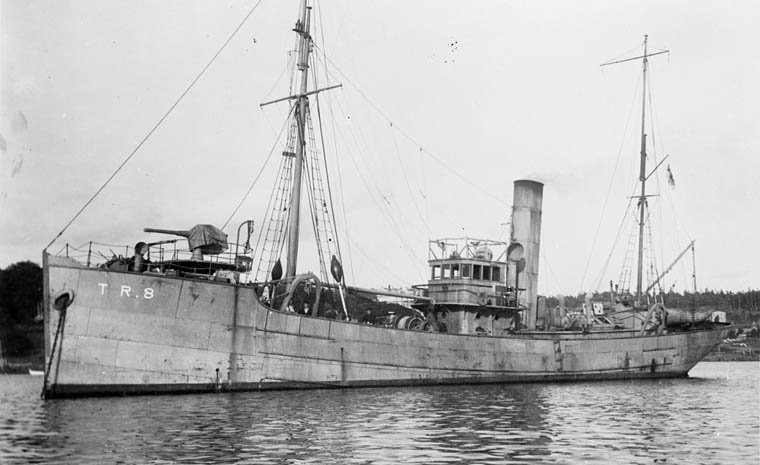
TR 8 - Sold to Australian owners in 1920, acquired by the RAN in WW2 as HMAS Bonthorpe, sold 1948, wrecked 1959
TR 9 - Sold 1920, renamed Somersby, unknown fate.
TR 10 - Sold to Mexican Navy as Vera Cruz, broken up 1959.
TR 11 - Sold to US owners in 1926, as San Sebastian, ran aground 1937
TR 12 - Sold to UK owners 1920, unknown fate.
TR 13 - Sold to UK owners 1920, resold within UK in 1926, ran ashore 1931
TR 14 - Sold to UK owners 1920, resold within UK in 1926, unknown fate
TR 15 - Sold to French owners 1920, reamed Jacqueline, captured by Germany 1941 recommissioned into Kreigsmarine as M-3630, sunk by aircraft, raised, surrendered 1945 and sold, unknown fate.
TR 16 - Sold to Mexican navy as Salinas 1920, later Acapulco, sold 1959
TR 17 - Sold to French owners 1920 as Jeanne, unknown fate.
TR 18 - Sold to Belgian owners 1926, requisitioned by Belgian Navy as boom defence vessel, returned 1945, sold to Norwegian owner, unknown fate.
TR 19 - Sold to Australian owners in 1920 as Almeria, sold within Australia as Goolgwai, acquired by the RAN in 1939 as HMAS Goolgwai, paid off 1945 broke up in 1955 while in heavy seas.
TR 20 - Sold to Australian owners in 1920 as Seville, sold within Australia as Durraween, acquired by the RAN in 1940 as HMAS Durraween, paid off 1945, broken up 1952.
TR 21 - Sold 1921, renamed Sacip, unknown fate.
TR 22 - Sold in 1920 and renamed Marie Evelynne, unknown fate.
TR 23 - Sold 1926, renamed Fontenay, resold as Marie Roselyne 1926, scrapped 1937
TR 24 - sold to French Owners 1926 as Goose, fate unknown.
TR 25 - Sold in 1920, renamed Yvonne Claude, fate unknown.
TR 26 - Sold in 1920, unknown fate.
TR 27 - Sold to Marine Nationale 1920, renamed Galopin, captured by Germany 1940, renamed M-4403, scuttled 1944.
TR 28 - Sold to US owners 1926, laid up 1932, resold within US, missing at sea 1939.
TR 29 - Sold 1920, renamed Fernando de C. Fate unknown.
TR 30 - Sold 1920, renamed Blanca de C, renamed Teruca in 1963, broken up 1987.
TR 31 - Sold 1920, renamed Jose Ignacio de C. Fate unknown.
TR 32 - Sold to US owners 1926, resold to French owners 1936, Chartered to Spanish Government Forces during their civil war. Sunk 1939, raised, recommissioned into the Spanish navy as a tug 1942, renamed Alhucemas, scrapped 1954
TR 33 - Sold 1927, renamed Freddy, sunk by German aircraft 1940, raised and recommissioned by Kriegsmarine as M-3230, sunk by mine 1944.
TR 34 - Sold 1919 as Valentia, sold to French owners 1928, renamed Etoile de Nord, sunk via mine 1940.
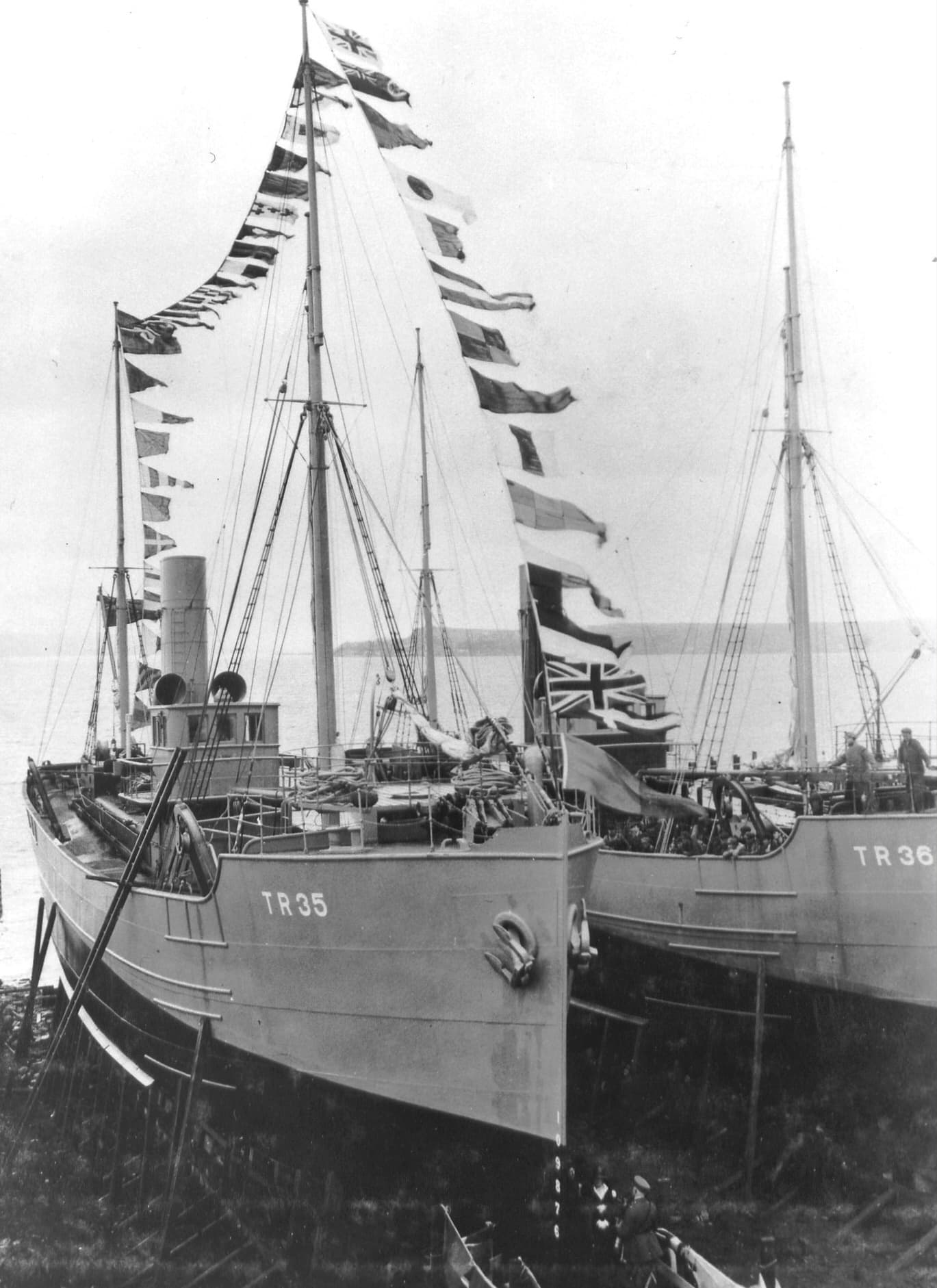
TR 35 - Sold to Mexican navy as Tampico 1920, resold 1949, fate unknown.
TR 36 - Sold to US owners in 1926, ran aground 1931.
TR 37 - Sold to UK owners, renamed Their Merit in 1925, acquired by RN, recommissioned as HMS Their Merit, returned 1945, sold to Belgian owners 1959, fate unknown.
TR 38 - Sold 1920, renamed Alcatraz, fate unknown.
TR 39 - Sold to Indian Navy as HMIS Chandbali in 1930, broken up 1990.
TR 40 - Sold to Marine Nationale 1921, renamed Marie Yette, sunk after collision with merchantman 1940
TR 41 - Sold to French owners 1920, renamed Marie Simone, captured by Germany, recommissioned into Kreigsmarine as HS8, later V729, sunk by HMS Mauritius 1944.
TR 42 - Sold to Marine Nationale 1920, renamed Marie Gilberte, fate unknown.
TR 43 - Sold to Marine Nationale 1920, renamed Marie Anne, captured by Germany 1940, recommissioned as M-4405. Sunk by aircraft 1944.
TR 44 - Sold to Canadian owners 1920, floundered 1929.
TR 45 - Sold to Canadian owners 1920, renamed Labrador, resold to Canadian Government in 1930 as Mardep, later Bernier in 1935, resold 1960, wrecking 1965.
TR 46 - Sold to South African owners 1926, renamed Algoa Bay, requisitioned 1939, recommissioned as HMSAS Algoa Bay, paid off 1940, fate unknown.
TR 47 - Sold 1919 and renamed Heron, unknown fate.
TR 48 - Sold 1919, eventually sold to French owners, captured by Germany 1940, recommissioned as M-4407 in 1940, surrendered 1945 and sold. Fate unknown.
TR 49 - Sold to French owners 1919, renamed Joselle. Captured by Germany in 1940, recommissioned as M-4202, Scuttled 1944.
TR 50 - Sold 1919, renamed Colonel Rockwell, fate unknown.
TR 51 - Sold 1919, renamed Marie Caroline, fate unknown.
TR 52 - Sold 1919 to Marine Nationale, renamed Marie Mad, sunk by mine 1943.
TR 53 - Sold 1920 to Marine Nationale, renamed Marie Therese, captured by Germany in 1940, recommissioned as M-4204, sunk by aircraft 1944.
TR 54 - Sold 1925, renamed Table Bay, fate unknown.
TR 55 - Sold to French owners 1920, renamed Marie Jacqueline, resold to Norwegian owners 1935 and renamed Svalbard 2. Requisitioned by Norwegian Navy as HNoMS Scorpion. Captured by German forces 1940, recommissioned as NN02 Scorpion. Surrendered 1945 and returned to owners. Scrapped 1966.
TR 56 - Sold to Puerto Rican owners 1921, renamed Romanita. Fate unknown
TR 57 - Sold to US owners in 1920, renamed Colonel Roosevelt, then Texas in 1926. Acquired by RN in 1941 and commissioned as HMT Texas, lost in collision 1944.
TR 58 - Sold to UK owners 1920, wrecked same year.
TR 59 - Sold to French owners 1920, renamed Gironde, captured by Germany 1940, recommissioned FB-07 1942, surrendered 1945 and sold. Fate unknown.
TR 60 - Sold to South African owners, renamed David Haigh, acquired by South African Navy and commissioned HMSAS David Haigh in 1939, sold 1947, fate unknown.
| General Characteristics | |||||
|---|---|---|---|---|---|
| Name: TR 1-60 | |||||
| Country: Canada | |||||
| Type: Armed Trawler | |||||
| Class name: TR-class | |||||
| Year of commission: 1917 | |||||
| ----------------------------------------------------------------------------------------------------------------------------------------- | |||||
| Dimensions: | |||||
| Length: 135ft (41m) | |||||
| Beam: 23ft (7m) | |||||
| Draught: 13.6ft (4.1m) | |||||
| Displacement: 279t standard | |||||
| ----------------------------------------------------------------------------------------------------------------------------------------- | |||||
| Propulsion: | |||||
| Powerplant: 1x coal fired boiler driving a reciprocal engine @ 480ihp (357.9kW) across one shaft | |||||
| Speed: 10kt | |||||
| Endurance: Unknown | |||||
| ----------------------------------------------------------------------------------------------------------------------------------------- | |||||
| Armament & sensors: | |||||
| Compliment: ~25 | |||||
| Primary armament: 1x1 QF 12pdr 12cwt (HA) | |||||
| Secondary armament: 2x1 .303 Lewis | |||||
| Tertiary armament: Unspecified amount of Depth Charges, Minesweeping gear | |||||
| Sensors: - nil |
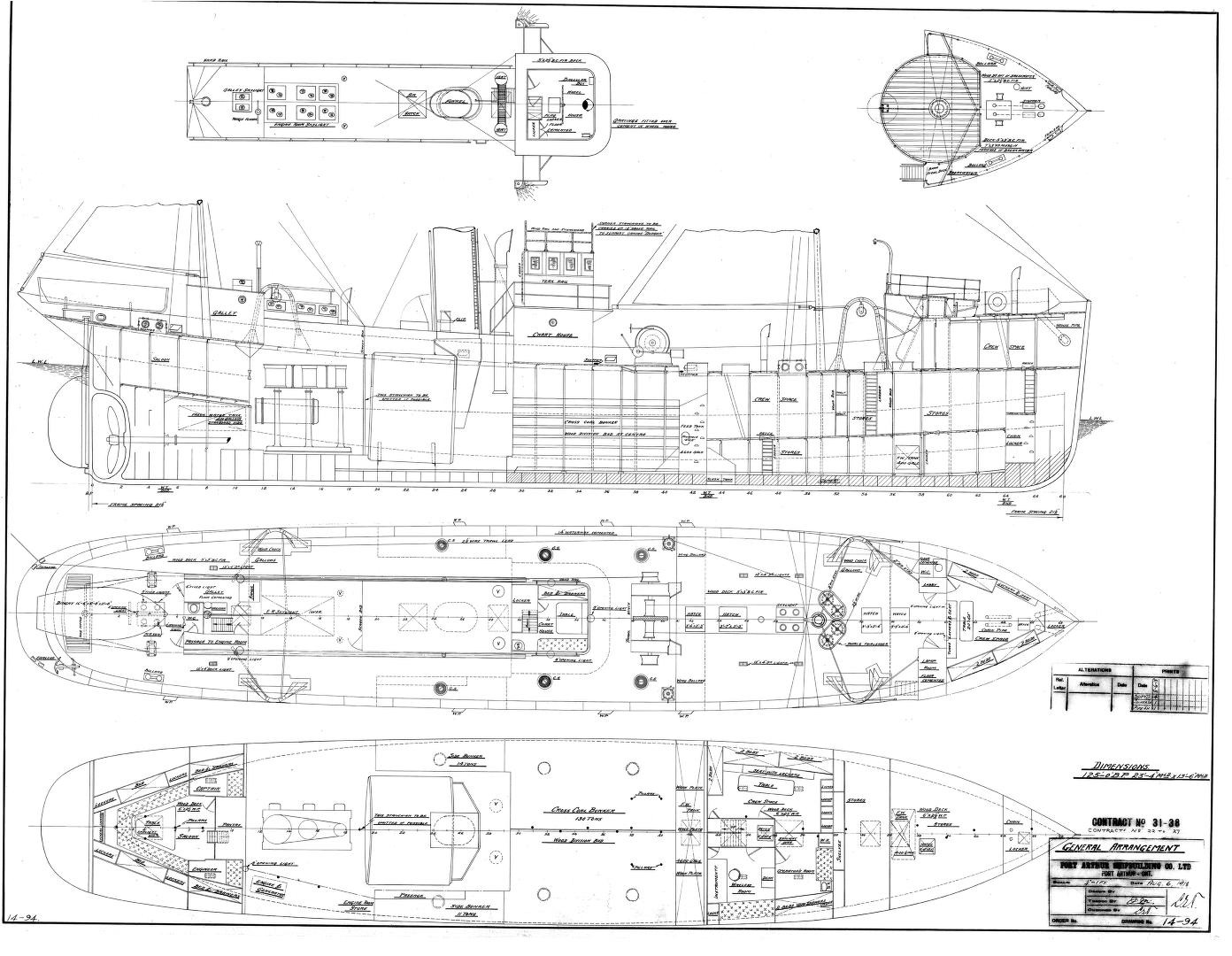
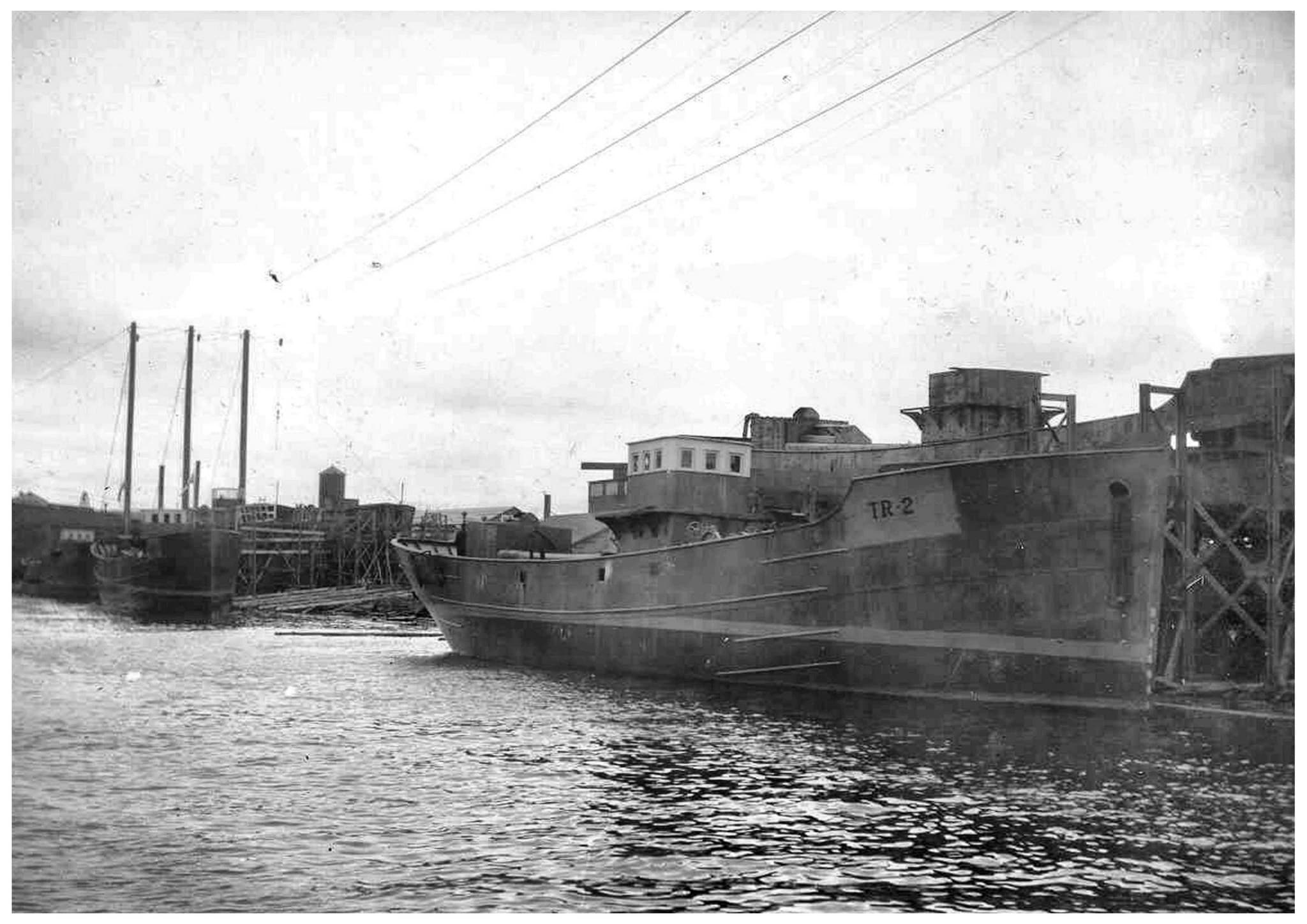
HMCS TR-2 General Arrangements as a Trawler post war
Sources:
Macpherson, K, & Burgess, J. (1982). The Ships of Canada’s Naval Forces 1910-1981 (pp.21,144,147, 206)
Johnston, et al (2010) The Seabound Coast: The Official History of the Royal Canadian Navy, 1867-1939 (pp.603-607, 643-650, 680-681, 685-686)
TR series minesweeping trawler - Wikipedia
Royal Navy Auxiliary Patrol ships of World War 1, based on British Warships, 1914-1919 by Dittmar and Colledge
TR 1-60 | Ships of the Royal Canadian Navy
RCN Auxiliary Patrol Trawlers, TR (Castle-class) Minesweepers: TR 1 to TR 60 - SilverHawkAuthor Website Military History Materials