- Yes
- No

HISTORY
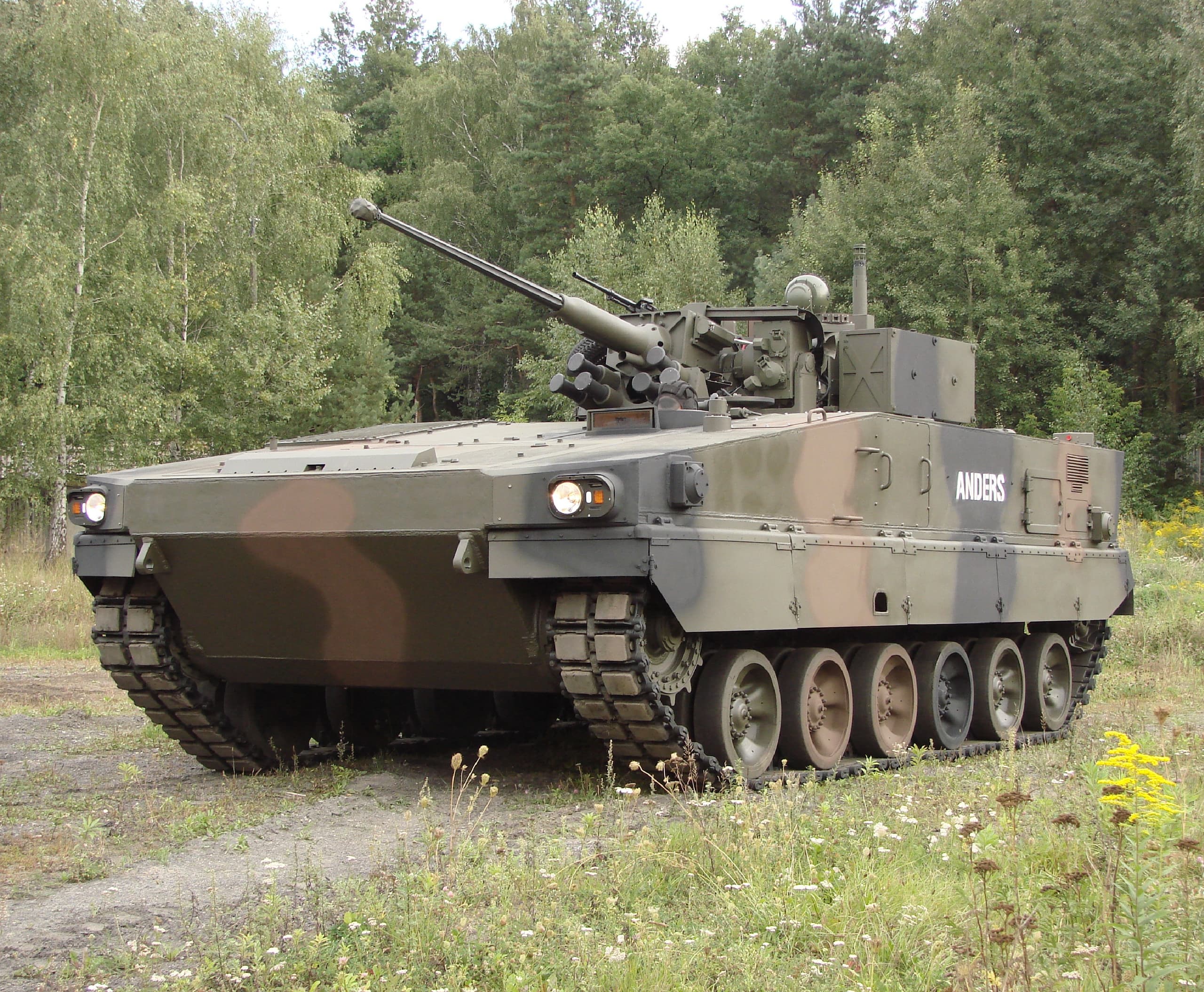
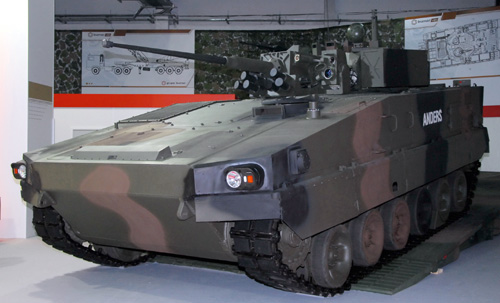
The Anders Multi-Role Tracked Platform was a chassis project intended to become the basis for a unified family of tracked armored vehicles. The Anders concept was developed as part of the Polish Vision of the Future Battlefield (similar in its conclusions to the canceled American Future Combat Systems program).
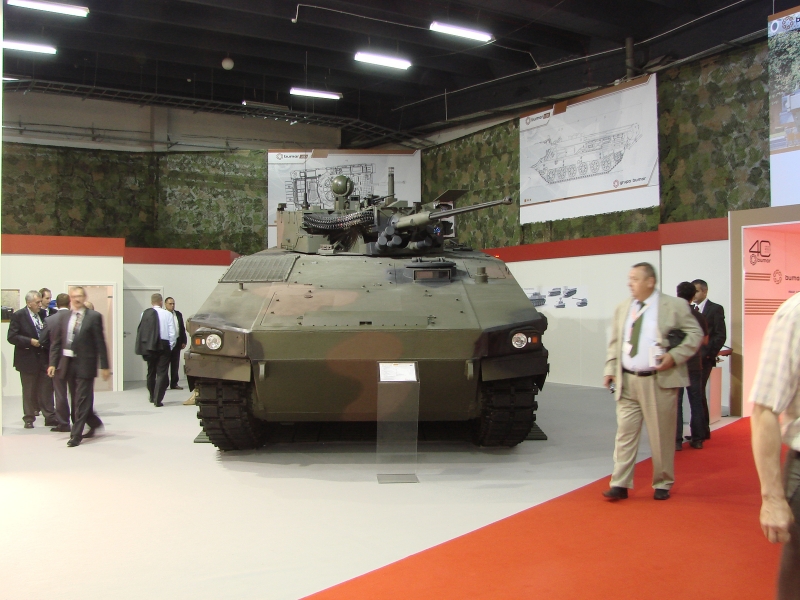
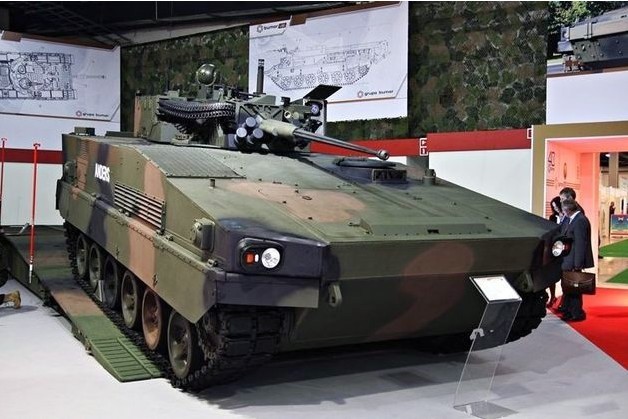
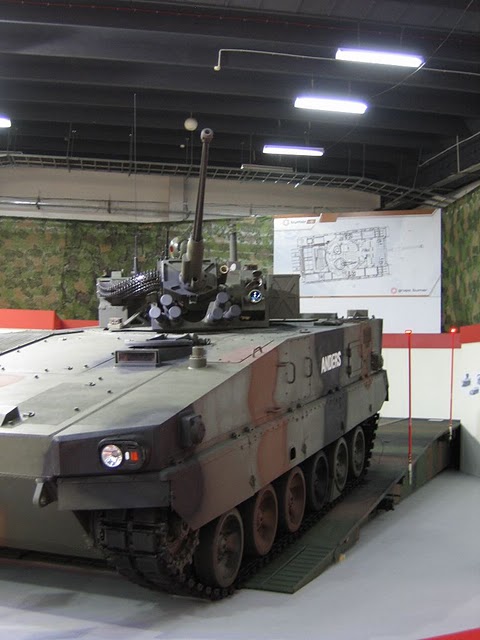
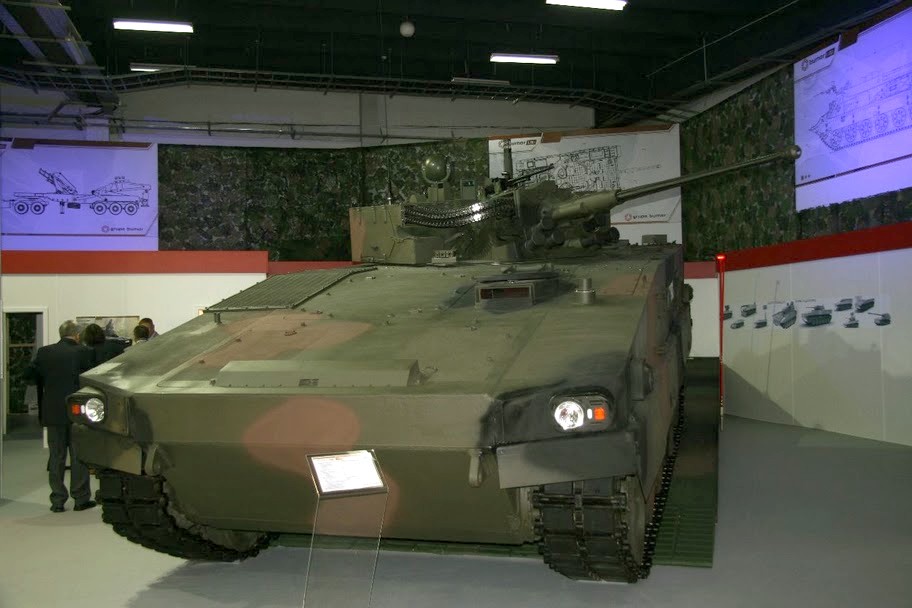
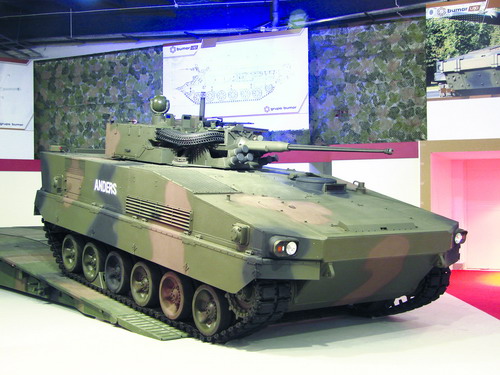
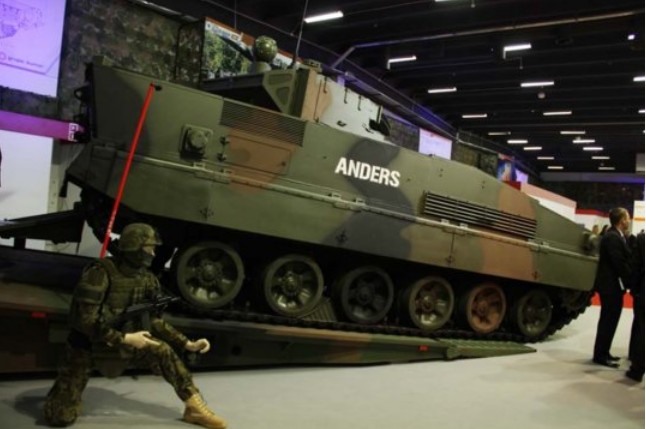
It was publicly presented for the first time in fire support vehicle configuration during the MSPO 2010 in Kielce, and it was then that the vehicle was ceremoniously named after general Władysław Anders. The name was given to the platform by the general’s daughter, Anna Maria Anders.
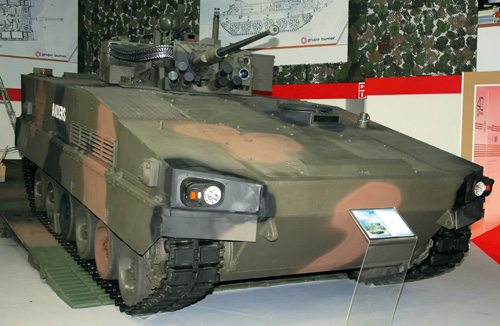
BWP Anders at MSPO 2011
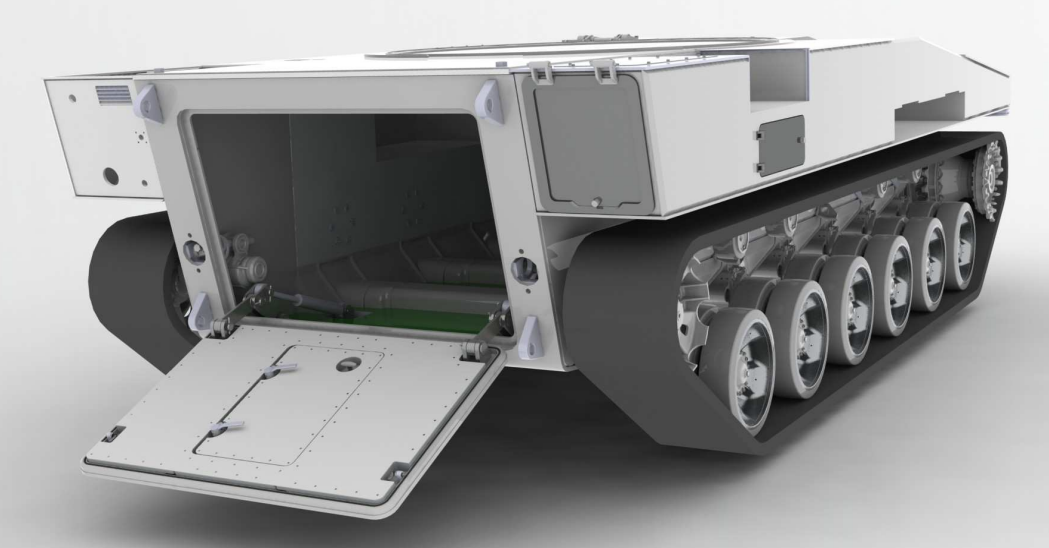
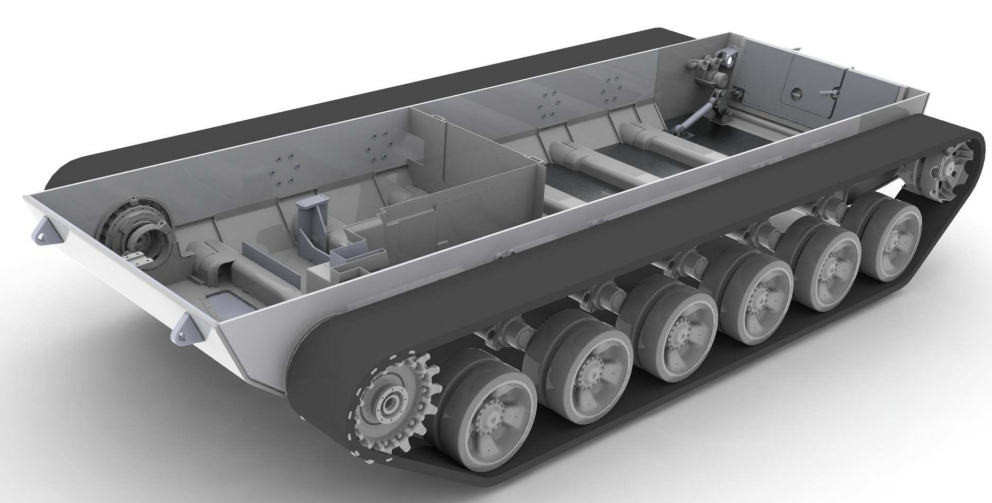
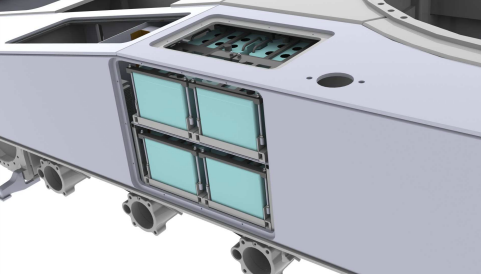
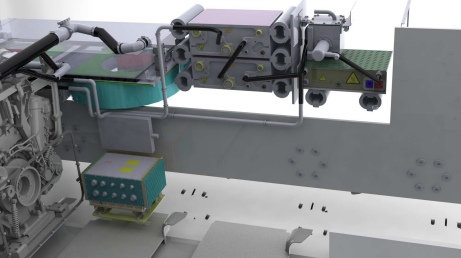
The hull is welded from Secure 500 armored steel from the ThyssenKrupp corporation and was designed and manufactured at OBRUM with the participation of AMZ Kutno and ZM Bumar-Łabędy. Its box-shaped construction enhances crew safety when the vehicle is hit on the side at the height of the crew compartment, and the design of the side screens protects the equipment and crew’s legs from anti-tank missile attacks. The over-track equipment compartments house the APU, cooling and filtration-ventilation systems, ammunition stores, batteries, etc.
The over-track equipment compartments house the APU, cooling and filtration-ventilation systems, ammunition stores, batteries, etc. The basic ballistic resistance of the hull according to STANAG 4569A is rated at 3+ and mine resistance corresponds to level 3 according to STANAG 4569B.
Specially for this vehicle, OBRUM, together with the companies Nissens, Komel, and Wiropol, developed a cooling system with embedded radiators, allowing unlimited deep wading over time. High-voltage power system from the German company ESW GmbH with a 120 KW starter-generator, was also specially designed for the Polish combat vehicle.
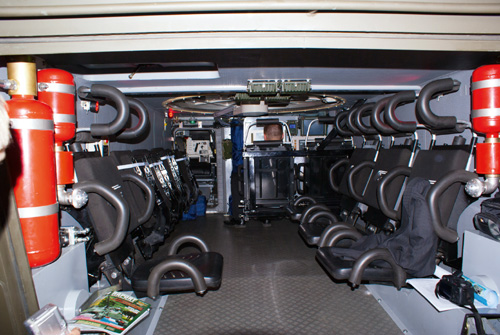
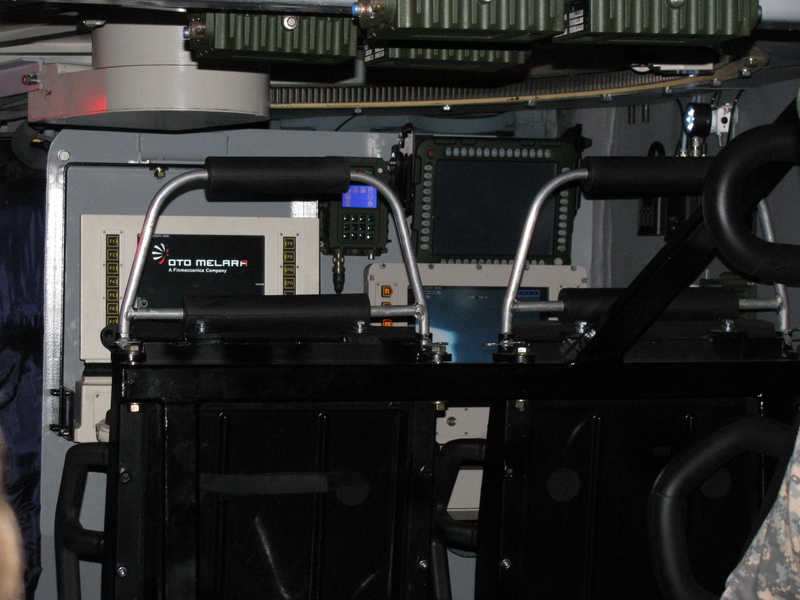
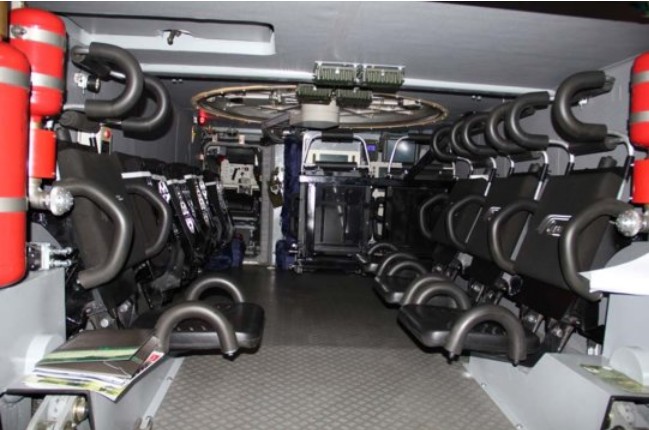
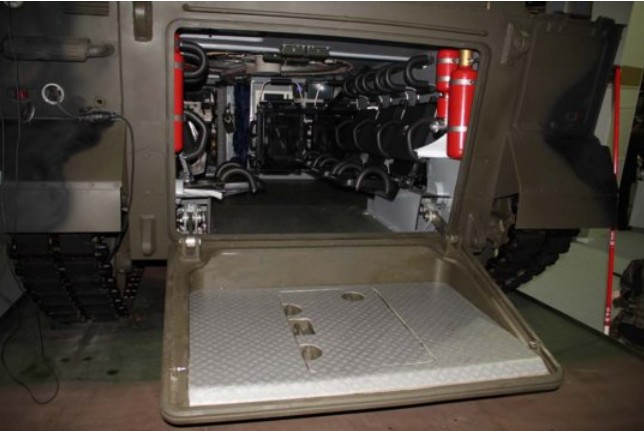
BWP Anders interior
In early December 2010, the platform successfully integrated its second weapon configuration: the standard manned Oto Melara HITFIST-30P turret, identical to the combat-proven variant used on the KTO Rosomak. Initial mobility and traction trials proved highly successful, demonstrating field speeds exceeding 72 km/h. After that, the vehicle was completely stripped down for component inspections and structural adjustments based on test data, which resulted in redesigning the front hull plates and updating the lighting configuration.
By spring 2011, with the Polish Ministry of National Defense preparing a future tender for remote weapon stations, the development team elected to outfit the chassis with the unmanned Oto Melara HITFIST OWS 30 turret system. This integration transformed the vehicle’s interior layout because the turret was unmanned. The commander and gunner stations were located side-by-side directly behind the engine compartment bulkhead.
This optimization cleared significant space in the rear, enabling the installation of advanced anti-blast seats developed by Germaz and the Wrocław University of Technology to protect the crew from mine and IED detonations. This configuration allowed for a crew of 3 and a full 8-man dismount squad. For its showcase at MSPO 2011, BWP Anders was equipped with dual Spike-LR anti-tank guided missile launchers, a Janus panoramic sight, a Finnish Environics CBRN detection system.
After the exhibition, to demonstrate true multi-role modularity, the HITFIST-OWS turret was removed immediately and replaced with a Belgian CMI Defence CT-CV 105 mm (repurposed from a Rosomak variant) to prove the chassis could handle instantaneous configuration changes.
In 2012, project was suspended due to lack of interest from the military.
CHARACTERISTICS
ARMAMENT
Turret: HITFIST OWS 30
- Horizontal guidance speed: 1 rad/s (≈57.3 deg/s)
- Vertical guidance speed: 0.8 rad/s (≈45.8 deg/s)
30mm Bushmaster Mk.44
- Elevation: -10°/+75°
- Two-plane stabilizer
- Fire rate: 200 rds/m
- Ammo capacity: 200 rds ready racked
- Ammo feeding: Dual-feed
2x3 81mm smoke grenades
- Ammo:
- Standard 30mm
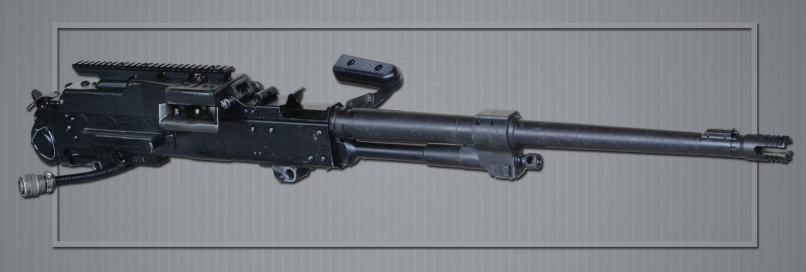
7,62 mm UKM-2000C
- Magazine capacity: 250 rounds
- Rate of fire: 700-900 rds/m
- Velocity: 850 m/s
- Range 1500 m
- Length: 1058 mm
- Barrel length: 521 mm
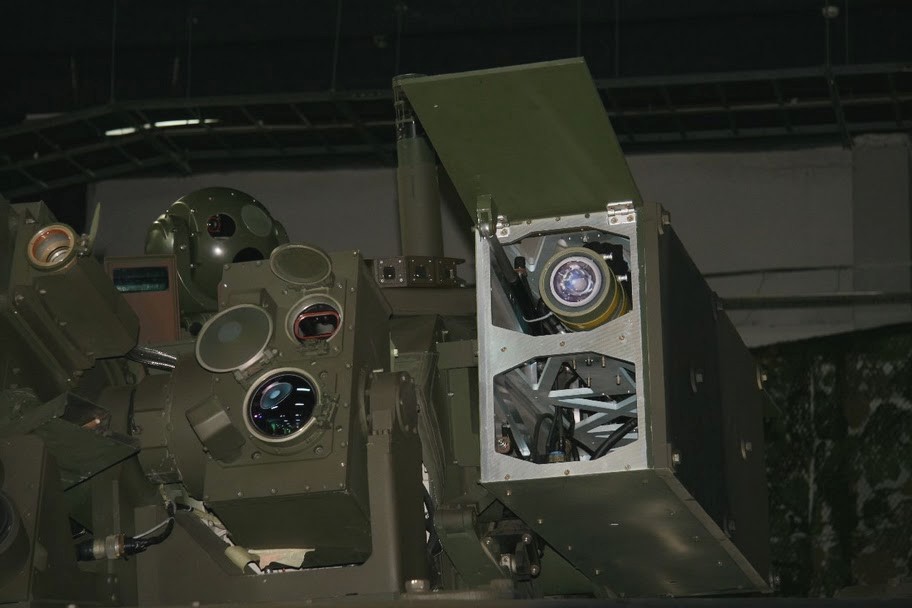
2 x Spike LR launcher
- Ammo capacity: 2 ready to use
MOBILITY
- Crew (3): Driver, Commander, Gunner
- Engine: MTU 8V 199 TE20
- power: 530 kW / ≈721 PS @ 2300 rpm
- Transmission:
- Gears: 4 forward, 1 reverse
- Max speed: 72 km/h
- Combat weight: 22 - 24 000 kg
ARMOR
- STANAG 4569 protection
- Hull: Level III+
OPTICS, ELECTRONICS
- Gunner optic: (in-game)
- Thermal camera
- 2nd generation
- Commander optic: (in-game)
- Thermal camera
- 3rd generation
Laser warning system: OBRA-3
- Detection angular range in vertical plane: -6°/+30°
- Detection angular range in horizontal plane: 90° per module
- Dange of detected radiation: 0.6 μm – 11 μm.
- Laser rangefinder
Zaslon APS isn’t included because it’s a mock-up
DIMENSIONS
Hull length: 6900 mm
Overall width : 3300 mm
Height: ? mm
Ground clearence: 470 mm
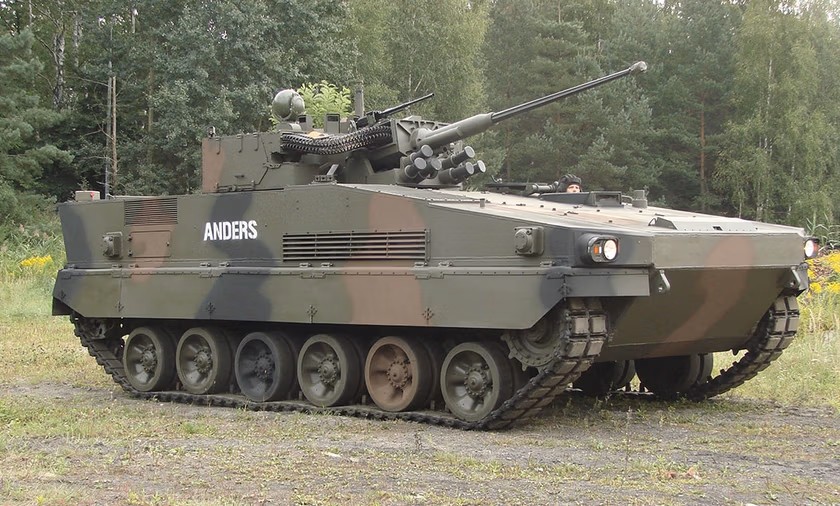
Summarized characteristics
- Crew (3)
- Driver, gunner, commander
- 30mm Bushmaster Mk44
- Ammo: Standard 30 mm
- Elevation: -10°/+75°
- Two-plane stabilizer
- Fire rate: 200 rds/m
- Commander sight
- 3rd Gen thermals
- Gunner sight
- 2nd Gen thermals
- LWS Obra 3
- Laser Rangefinder
- 6 x 81mm smokes
- Combat weight: ~22 - 24 t
- Engine: MTU 8V 199 TE20 / ≈721 PS
- Max speed: 72 km/h
- Length 6,9 m Width: 3,3 m Height: ? m

Sources
Broshures/Books/Magazines/Manufacturer
- General data by Obrum
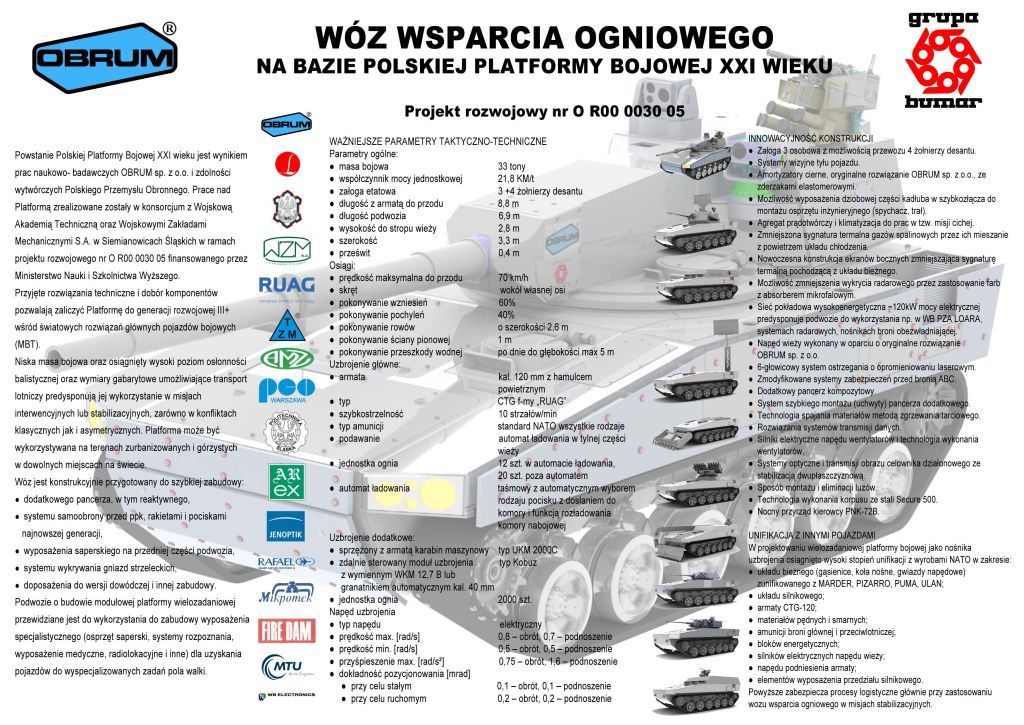
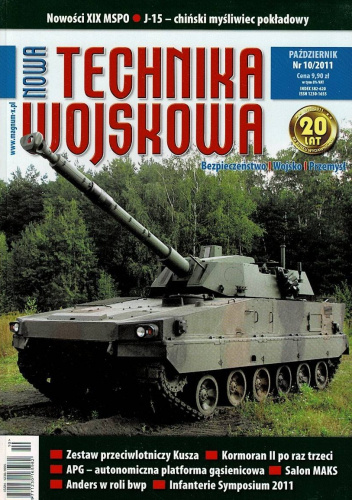
- Nowa Technika Wojskowa 10/2011
Armament
- HITFIST OWS 30
https://warwheels.net/images/FrecciaOWS30salescio.pdf