Would you like to see BTR-60-37-2 in-game?
- Yes
- No
0
voters
BTR-60-37-2 (Duplex-BTR-37)
Introduction
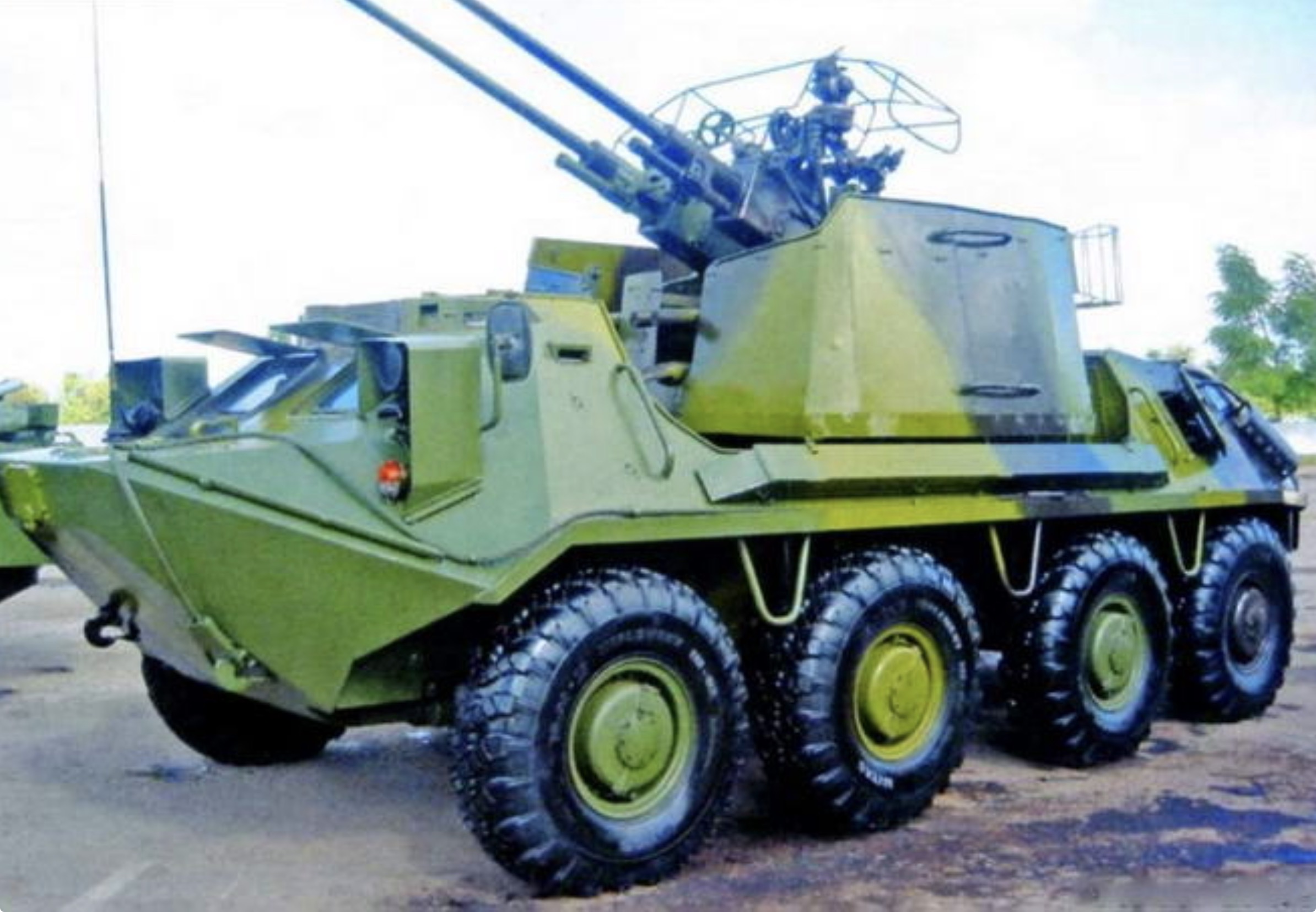
The BTR-60-37-2 “Duplex-BTR-37” is a Cuban self-propelled anti-aircraft gun based on the Soviet BTR-60 armored personnel carrier chassis. It was developed as part of Cuba’s wider effort to keep older Soviet equipment relevant by converting existing vehicles into new battlefield roles. In this case, the original troop-carrying function of the BTR-60 was largely sacrificed in order to create a mobile fighting platform armed with two 61-K/M1939 37 mm autocannons.
This is not the first mobile fighting platform developed by the Cubans, but it is certainly one of the most interesting vehicles in Cuba’s already unusual arsenal of modified platforms. Among the various Cuban anti-aircraft conversions, I believe this is the one that deserves to be added to War Thunder the most.
History
Spoiler
Cuba received large numbers of Soviet armored vehicles during the Cold War, including BTR-60 armored personnel carriers, tanks, infantry fighting vehicles, artillery, and air-defense systems. These vehicles formed the backbone of the Cuban Revolutionary Armed Forces for decades. After the collapse of the Soviet Union, Cuba lost access to the same level of spare parts, replacement vehicles, and technical support. As a result, the Cuban military industry was forced to preserve, rebuild, and modify the equipment it already had. This situation encouraged a highly practical modernization philosophy. Rather than retiring obsolete systems, Cuban workshops reused available hulls, turrets, guns, and launchers to create new vehicles. The BTR-60 chassis was especially useful because it was available in numbers, mechanically familiar, and offered good road mobility.
Based on their experience in Angola, the Cubans quickly realized how important mobility was to battlefield survival. This led them to launch a broad modernization campaign aimed at making otherwise static or towed weapon systems far more mobile, arguably earlier and more extensively than many other nations facing similar equipment limitations. The BTR-60-37-2 was one of these projects. Its purpose was to provide mechanized units with a mobile gun system capable of engaging low-flying aircraft, helicopters, and lightly armored ground targets. The vehicle was not a modern radar-guided SPAAG, but it offered a way to turn older towed 37 mm static anti-aircraft guns into a more mobile battlefield weapon.
Design In-depth
Spoiler
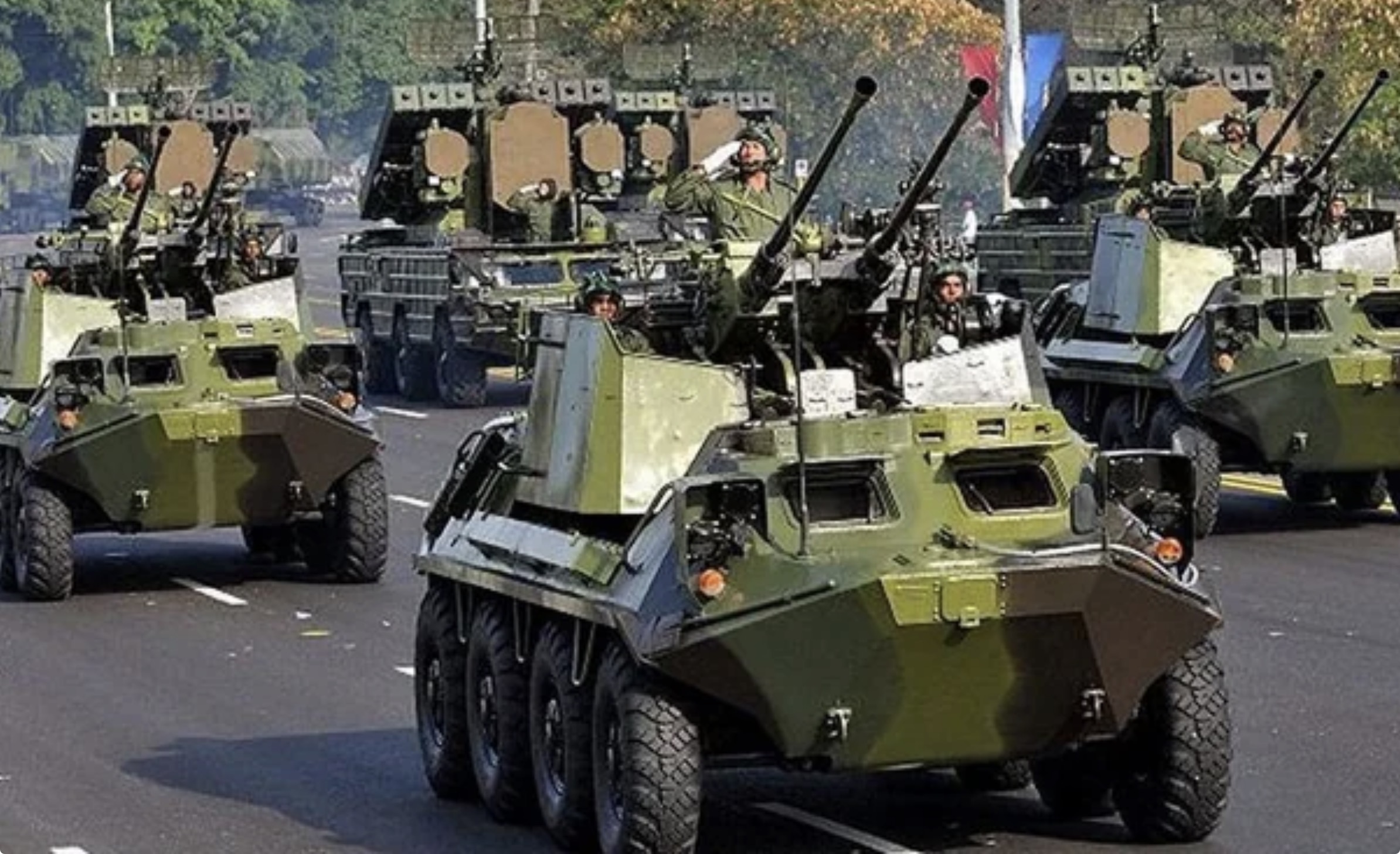
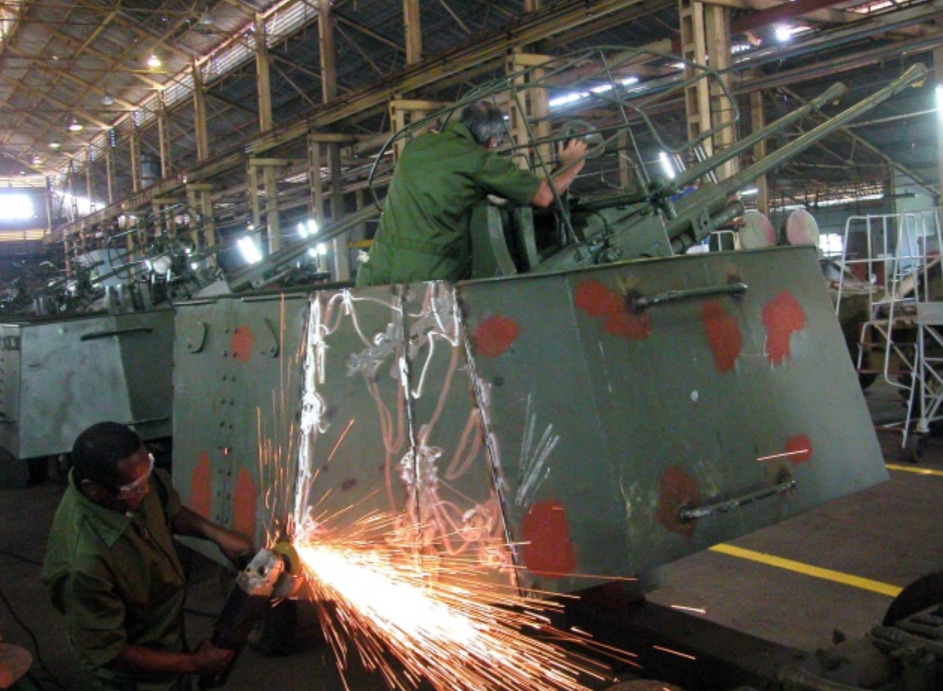
Based on the available images, the modernization appears to have been carried out as follows. First, two 61-K/M1939 37 mm autocannons were joined together to create a single anti-aircraft artillery unit. This was not a factory-built Type 76 twin 37 mm anti-aircraft gun, but rather a domestic Cuban solution. This can be seen from the noticeably wider spacing between the barrels on the Cuban version. The twin-gun assembly was then mounted onto what appears to be a 61-K trailer frame. Armored plates were added around the mount to form a protective shield for the crew. Finally, this entire contraption, seemingly including part of the original wheeled frame but without the wheels, was mounted onto the BTR-60 chassis.

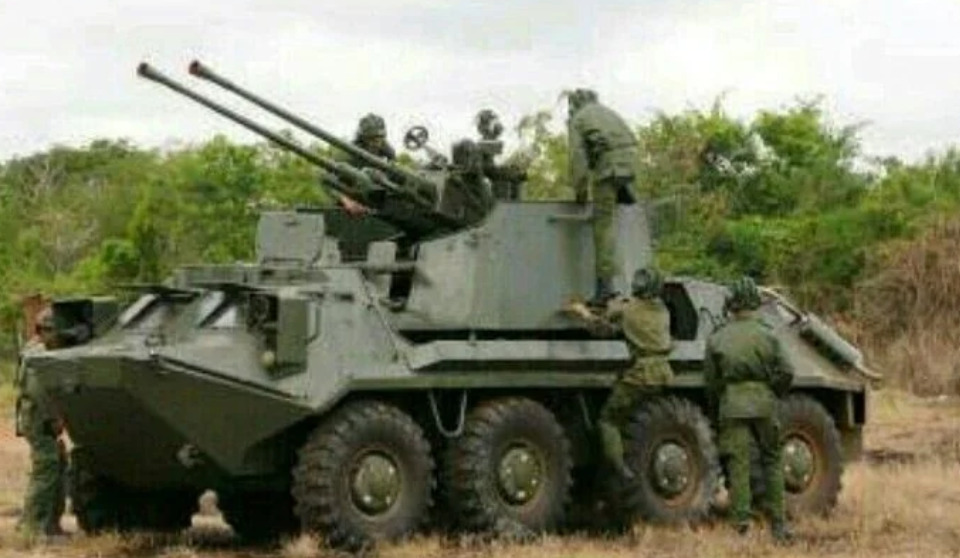
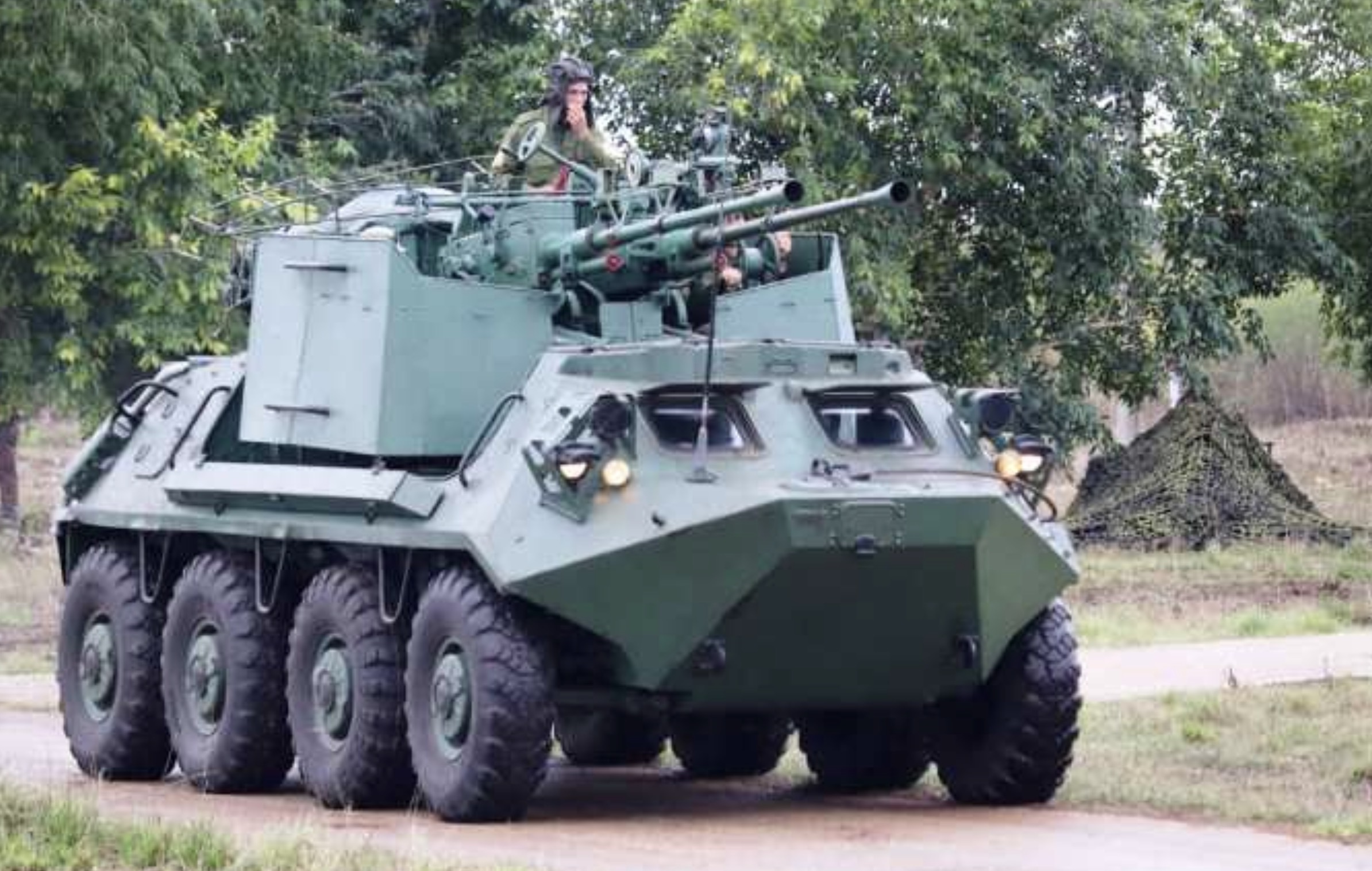
Meanwhile, there have been two main versions of this SPAAG. The first type mounted the twin 37 mm assembly directly on top of the BTR-60’s roof. This likely created serious problems for the Cubans, especially in terms of height and stability. This may explain why a later version used a much more extensive hull modification. Instead of placing the gun mount on top of the vehicle, the Cubans have cut open the central section of the BTR-60 hull and installed the gun lower inside the chassis. This brought the weapon closer to the vehicle’s center of mass, improving stability and making it a more practical fighting vehicle. The trade-off was that the BTR-60 lost all, of its original troop-carrying capacity. However, the lower-mounted arrangement created a far better combat platform, allowing the guns to fire in all directions with greater stability.
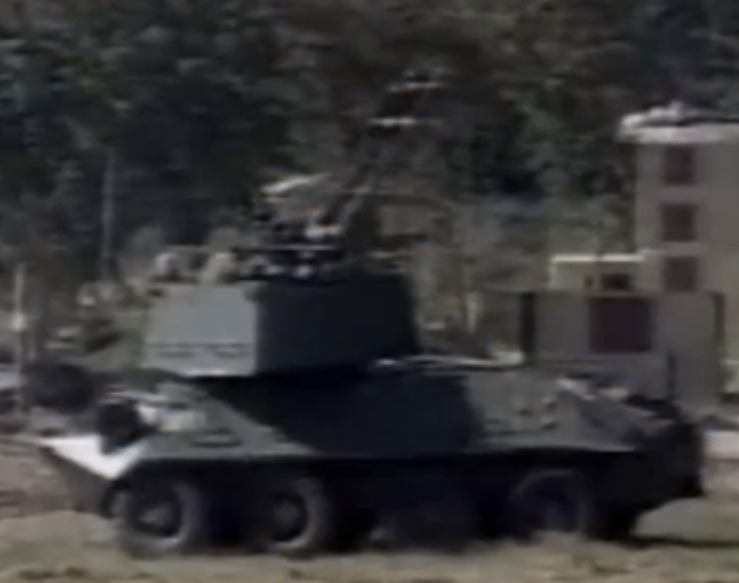
The photograph above depicts the first type of the vehicle. Very few images of this version appear to exist, suggesting that it was rare and likely less widespread than the later type I am suggesting. This supports my assessment that the roof-mounted version was probably an earlier or less successful configuration, while the lowered, hull-cut version became the more practical combat vehicle.
The main armament consisted of two 37 mm 61-K automatic anti-aircraft guns. The 61-K was a Soviet World War II-era automatic cannon designed for short- and medium-range air defense. It fired a much heavier shell than the 23 mm ZU-23-2, giving the Duplex-BTR-37 better destructive effect against aircraft, helicopters, and lightly armored targets. Against ground targets, the Duplex-BTR-37 is still highly dangerous. However, the weapon is also older, heavier, and slower to handle than more modern automatic cannon systems. The original 61-K used clip-fed ammunition, which meant that the theoretical rate of fire could not always be maintained in practice. In Cuban service, the twin 37 mm mount offers strong burst firepower, but it lacks a radar, modern fire-control systems, and stabilized tracking equipment needed to effectively fight modern fast-moving aircraft.
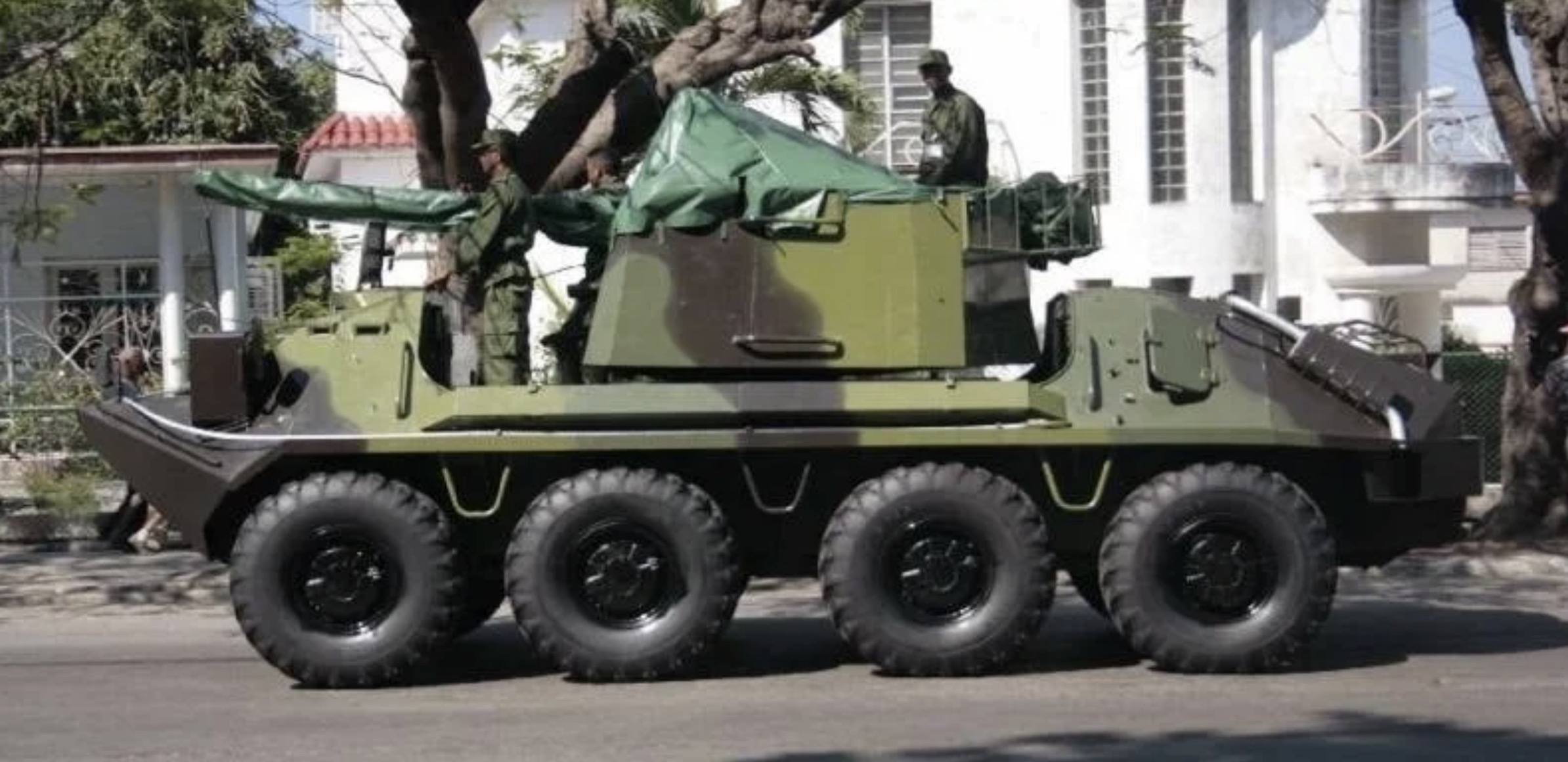
The vehicle’s mobility would still be excellent. If it retained the original BTR-60 engine layout, then this SPAAG would also have kept its distinctive twin-engine configuration. Each gasoline engine powered a separate set of four wheels, meaning that if one engine broke down or was disabled, the vehicle could theoretically continue moving using the remaining engine. From a War Thunder perspective, this would be an incredibly interesting feature. It would give the vehicle a unique form of mobility-based survivability, allowing it to remain partially operational even after suffering engine damage. At the same time, it remains unclear whether the Cuban conversion retained the BTR-60’s original amphibious capability, as the added weight and hull modifications may have reduced or eliminated its ability to swim.
Specifications
Spoiler
| Characteristic | Details |
|---|---|
| Designation | BTR-60-37-2 “Duplex-BTR-37” |
| Country of origin | Cuba |
| Base vehicle | BTR-60 series chassis |
| Role | Self-propelled anti-aircraft gun / fire-support vehicle |
| Configuration | Twin 37 mm anti-aircraft gun mount installed on a modified BTR-60 hull |
| Crew | ~5-7 |
| Main armament | 2 × 37 mm 61-K/M1939 automatic anti-aircraft guns |
| Gun type | Recoil-operated automatic cannon |
| Caliber | 37 × 252 mmR |
| Barrel length | 2,316 mm |
| Fire rate | 160–180 rounds/min per gun theoretical; approximately 320–360 rounds/min combined theoretical |
| Feeding system | Manual loading from 5-round clips |
| Muzzle velocity | Around 880 m/s with HE-fragmentation tracer ammunition; around 872 m/s with AP-T; up to 960 m/s with APCR-type ammunition |
| Ammunition types | HE-fragmentation tracer, armor-piercing tracer, and APCR-type armor-piercing rounds |
| Projectile weight | Approximately 0.73 kg for HE-fragmentation tracer; approximately 0.785 kg for AP-T |
| Explosive filler | Around 34–37 g in HE-fragmentation tracer rounds, depending on shell type |
| Maximum firing range | Approximately 8,500 m |
| Effective anti-air range | Around 3,500–4,000 m against aircraft, depending on target speed and sighting conditions |
| Effective ceiling | Approximately 2,500–4,000 m depending on source and ammunition limits |
| Direct-fire range | Approximately 940 m for direct fire |
| Elevation | -5° to +85° on the original 61-K mount; actual depression may be affected by the Cuban vehicle’s hull layout |
| Traverse | 360° on the original gun mount; likely full traverse on the Cuban turreted version |
| Sighting equipment | Optical/manual anti-aircraft sights; no radar or modern fire-control system known |
| Target engagement type | Low-flying aircraft, helicopters, light vehicles, trucks, infantry positions, and soft targets |
| Armor penetration | Approximately 47 mm at 500 m at 90° with standard AP-T; higher with APCR-type ammunition |
| Secondary armament | None known |
| Armor | Light BTR-60 welded steel hull armor, with locally added armored plates around the gun crew |
| Hull armor | Approximately 5–9 mm on most BTR-60 variants; up to around 11 mm on some frontal areas of the BTR-60PB |
| Engine | Likely two GAZ gasoline engines inherited from the BTR-60 family |
| Power output | Approximately 2 × 90 hp, 180 hp combined, if original drivetrain was retained |
| Drive | 8×8 wheeled |
| Transmission layout | Twin-engine layout, with each engine powering a separate set of four wheels |
| Mobility feature | If one engine fails or is disabled, the vehicle may still be able to move using the remaining engine, though with reduced performance |
| Maximum road speed | Up to 80 km/h on the original BTR-60; probably lower on the Cuban conversion due to extra weight |
| Single-engine road speed | Up to around 60 km/h on the original BTR-60 drivetrain, if one engine is disabled |
| Operational range | Around 500 km on the original BTR-60 |
| Amphibious capability | Unknown; probably reduced or possibly lost |
| Known variants | Early roof-mounted version and later lowered hull-cut version |
| Production status | A number of Version 2 vehicles have been produced, exact number unknown |
Additional Images (Duplex-BTR-37)

More Domestic Cuban SPAAGs
View
In this section, I would like to introduce readers to several other interesting Cuban SPAAGs, as they help show that the BTR-60-37-2 was not the only “experiment”, but a part of a much wider Cuban effort to create mobile anti-aircraft platforms from existing equipment.
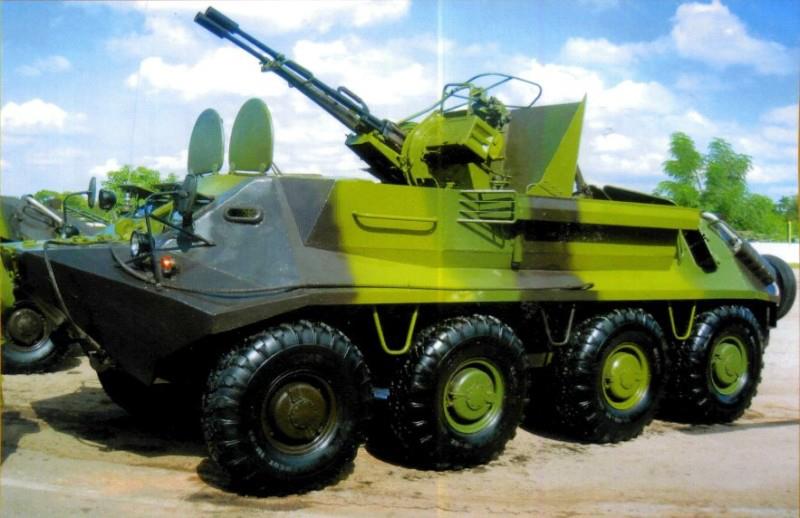
The photograph above shows a modified BTR-60 designed to carry the familiar ZU-23-2 anti-aircraft gun (BTR-60-23-2, BTR-60-ZU-23 or BTR-23).
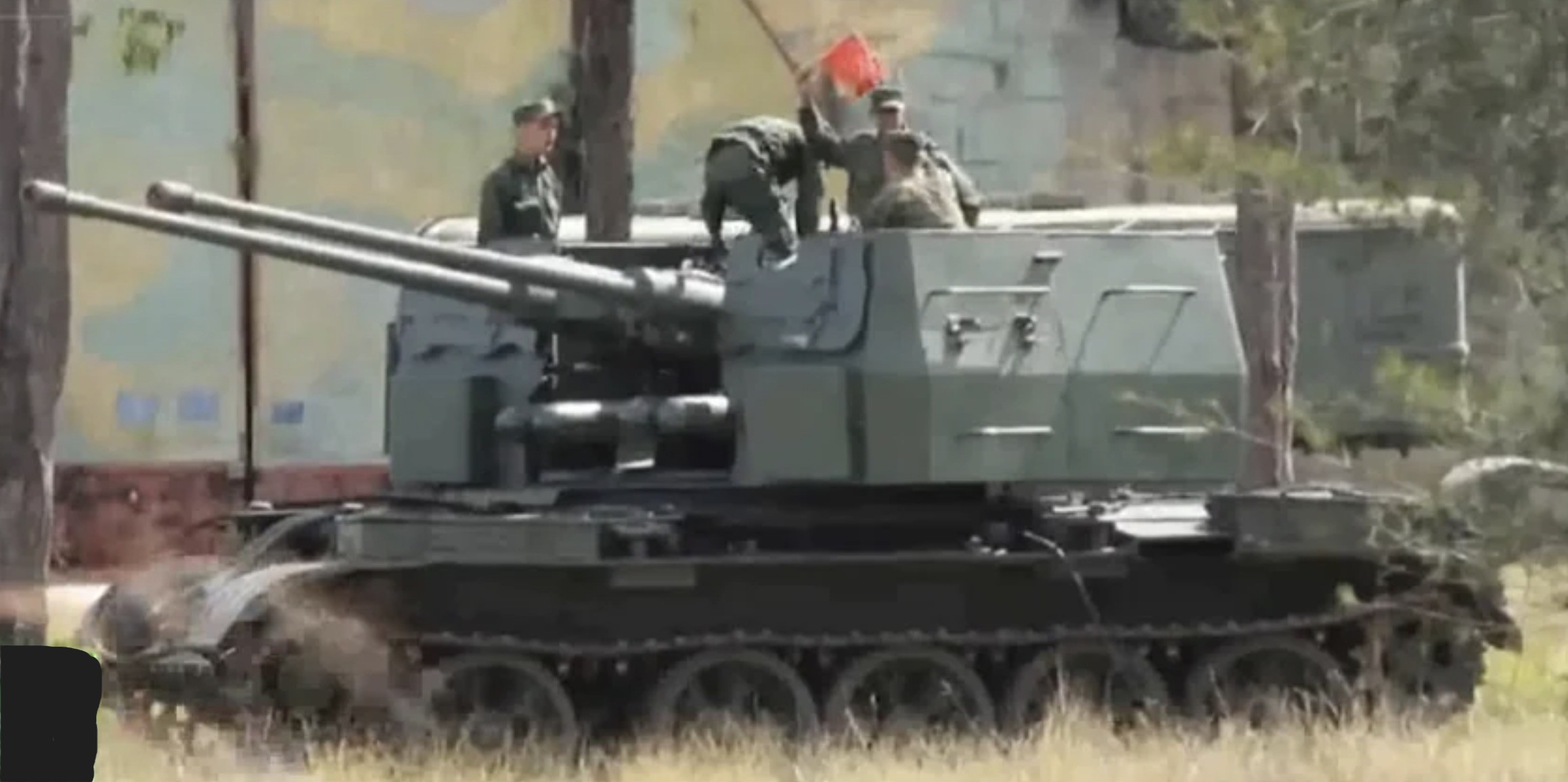
The photograph above shows a Cuban domestic equivalent of the ZSU-57-2. Following a similar approach to the BTR-60-37-2, Cuban engineers took two 57 mm AZP S-60 autocannons, mounted them together, placed the guns inside a locally built armored box, and installed the entire assembly onto a T-55 hull (T-54-57-2 or Duplex-T-57).
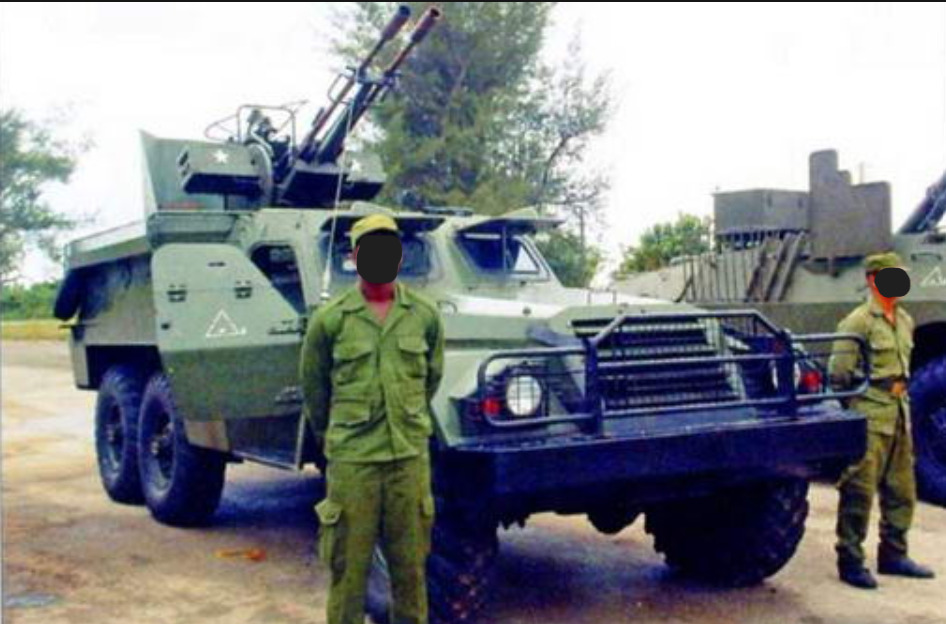
The Cubans also mounted the ZU-23-2 anti-aircraft gun on BTR-152 armored personnel carriers, creating another simple but practical mobile air-defense platform from existing Soviet equipment (BTR-152-23-2, BTR-152-ZU-23 or Yatare-23).
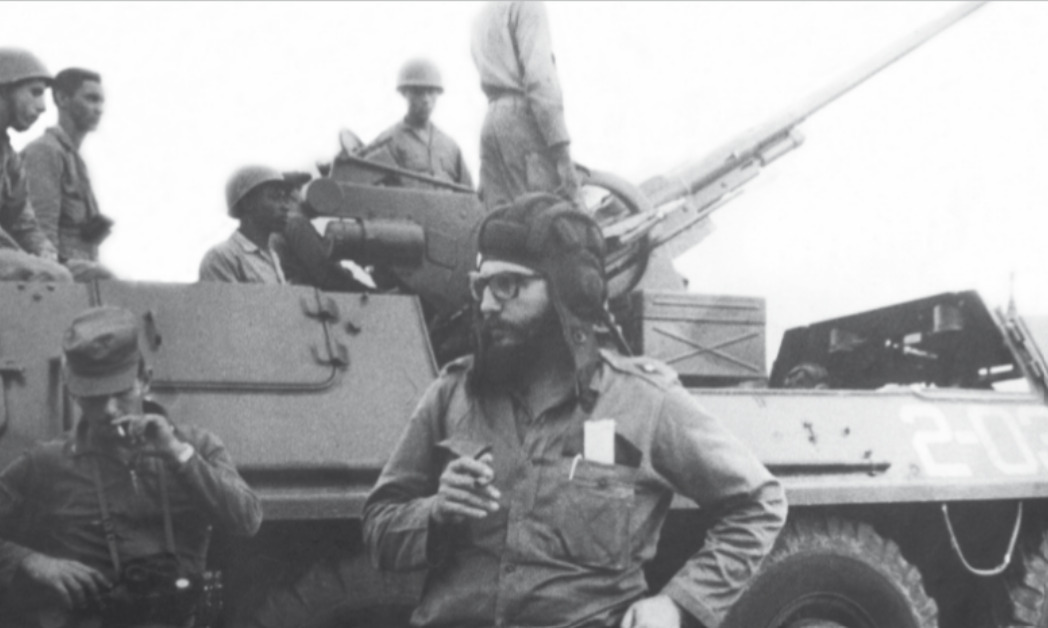
The Cubans also used BTR-60s with hull cutouts made to fit the Czech vz. 53/59 twin anti-aircraft mount, the same weapon system used on the Praga (BTR-60-30-2).
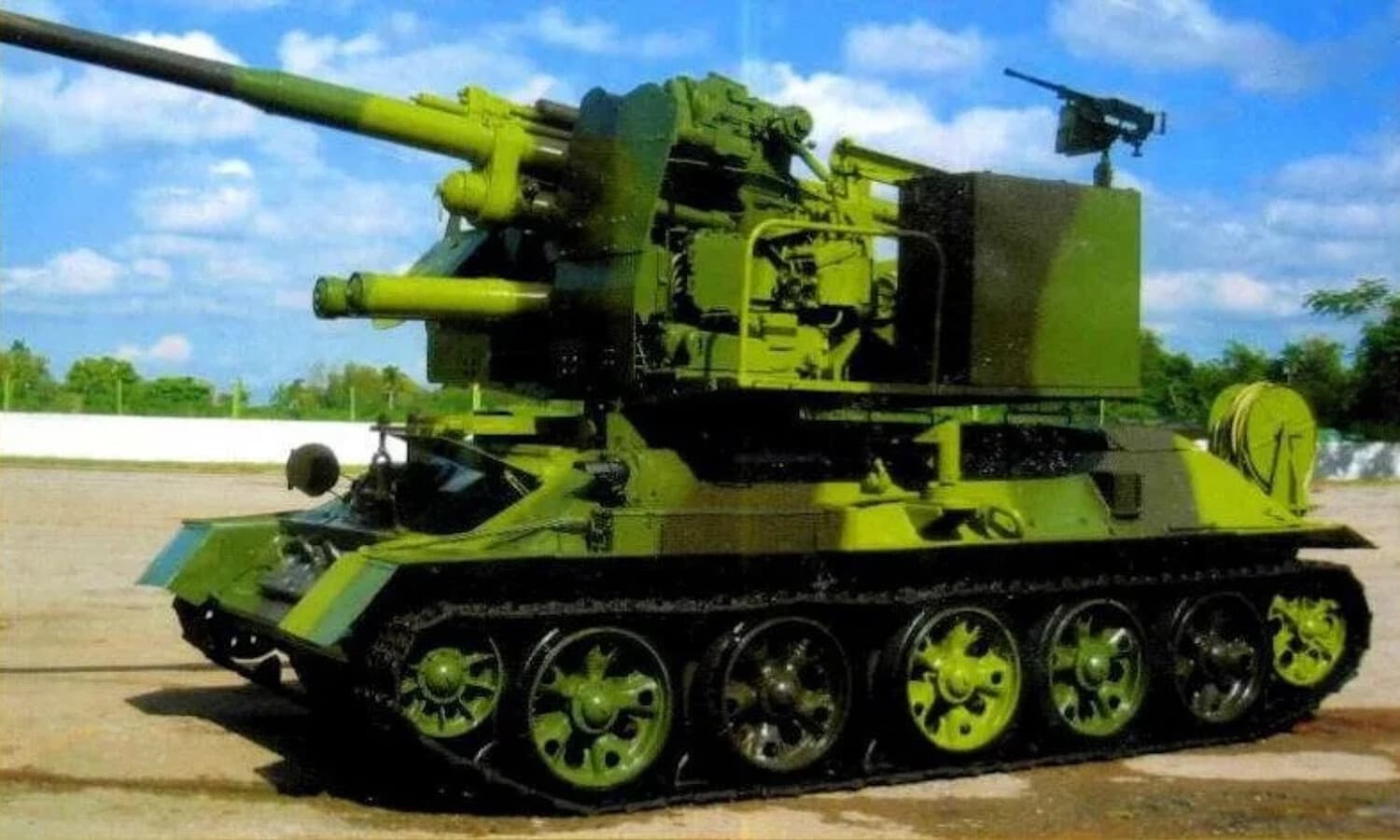
The King of Cuban Domestic SPAAGs, however, would have to be the T-34-based vehicle armed with the 100 mm KS-19 anti-aircraft gun (AAPMP-100 or C-AP-MP-T-100).