Britain Naval Tree - What’s left to be added for all BRs

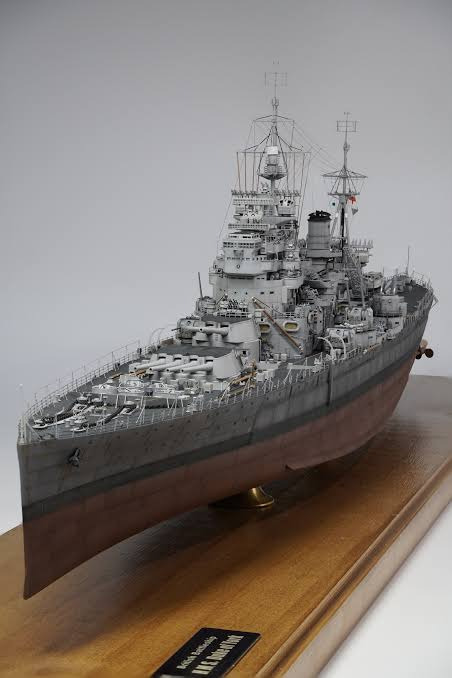
Specific parts were constructed and subsequently re-used on the Tiger class cruisers, which makes them viable as a suggestion.

It was also my understanding secondary point is that they weren’t laid down because they when work began they were to be converted from a prior class that had already began construction on the slipway (so was laid down).

However thats from the top of my head, I need to find my source for that.

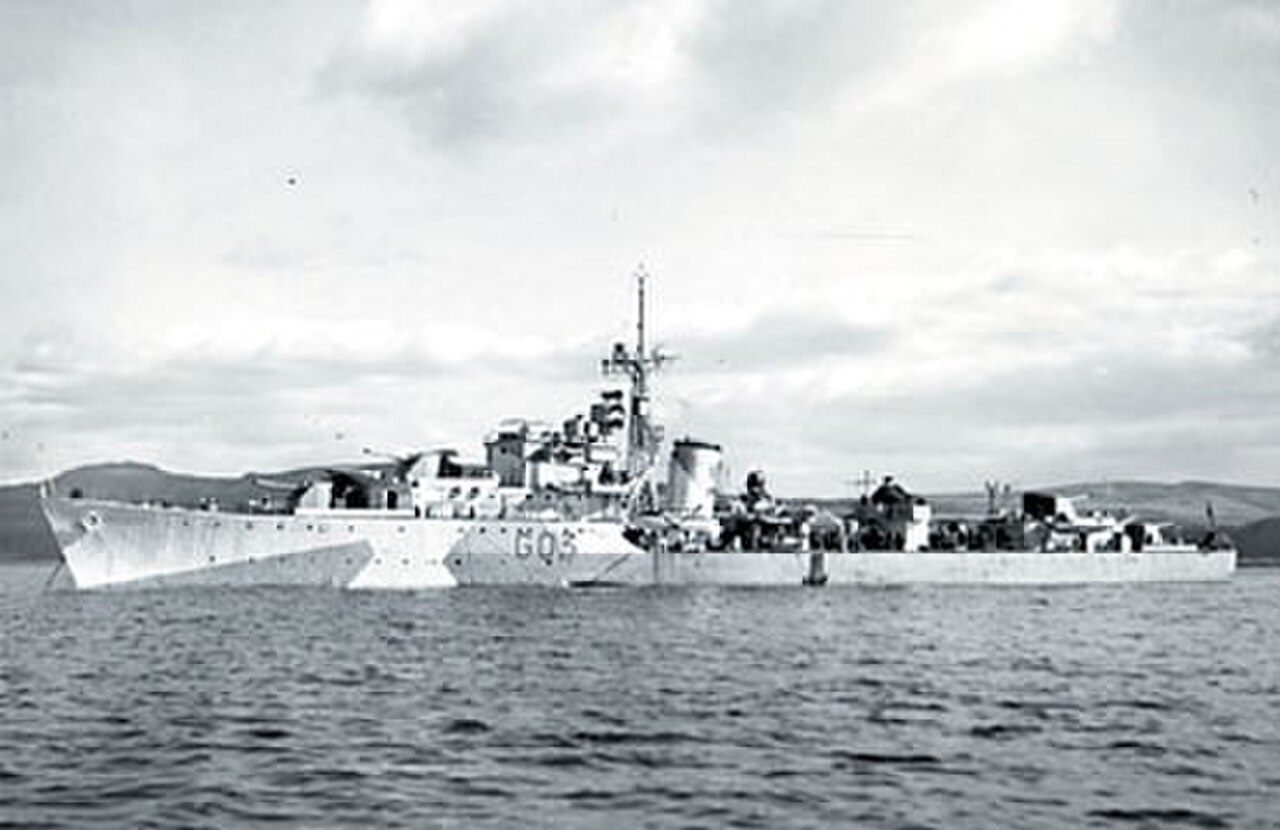
HNoMS Svenner G03, initially HMS Shark before handing over to Norwegian department of the Royal Navy.

An S class Destroyer similar or HMS Saumarez. She had the unlucky distinction of being the only vessel lost to the Kriegsmarine during the initial D-day landings having been on the receiving end of a torpedo attack by S-Boots.

Being little different to Saumarez I suggest Premium. Alternively she is an option for the D-day event, although Gaijin seems to have forgotten that ‘amphibious’ assault includes ships and boats.

The Didos are good, and the Bellonas are better, but the Leanders are the GOATs.

(I’m also quite fond of the 1910 Town-class & Danae-class)

Well you can look towards the TT Type 12 ASW Frigate for probably the current best ASW ship if gaijin models everything correctly. You get Blackpool, it has two sets of Limbo mortars & fourteen Bidders, both of which would be terrifying for a Submarine.

Than there’s the Squid mortars found on the Type 41 AA Frigate as an actual model, but could be seen on further ships if gaijin actual goes back an models in the squid mortars on all post war destroyer types. You can see the reloading doors, rails on the post war Battle class, Australian Battle class, the Daring class, but the squid mortar is plated over on all those ships…

Heh we might even see the squid mortars operational on the American Dealey class Ocean Escort, since it was a prototype ship, it only got two squid mortars sunk underneath ahead of the bridge, meanwhile all other ships got a RUR-4 & other torpedo batteries (curse you gaijin for modelling USS Dealey DE-1006 as such, can’t even give it its fire directors after three bloody years…).

Other ships do also carry the Limbo mortar, as seen by the premium Blackpool (Whitby but she’s a true clone of Blackpool as the plaque reads Blackpool), there’s also the Canadian Restigouche class Destroyer HMCS Terra Nova DDE-259 with a battery of those (if only it was a later refit with an RUR-5).

on that note, while the ships may founder behind, at least British Coastal Command & Fleet Air Arm aircraft are ready, all of which carry the AP rockets or the 57 mm anti sub gun, add in aerial depth charges & they’ll be super ready.

HMAS Adelaide (I) when? She was a Town class (1910) cruiser, she served during the second world war & saw AA refits for service in the Pacific theatre (mainly screening convoys in escort life).

Then we’d finally have the last Town class we’re missing, as currently we’ve got the Town class (1936) cruisers & the Town class (1940) destroyers (with the extra bonus of having the only Wickes class destroyer in game as seen by USS Wickes DD-75 as HMS Montgomery G95). Come on gaijin, you keep swapping out reserve destroyers or adding constant Rank I’s, where’s the asset swap of a Wickes class for America already???

Ah the HMAS Longdelayed (Shameless suggestion plug). She’s quite unique even in her initial 1922 fit, as she was based on the Chatham sub-class, but was longer with greater fuel loads and an extra 6" mount. By the time she was launched in 1918 she was more similar to the Birmingham sub-class than the Chathams she was based on.

British SSN - Foreign SSN/SSK Submarine comparison:

Data based on estimates, AI research in some areas where I didn’t know about foreign vessels and AI formated the table, I have however peer checked information and where scarce I used relative comparisons and book sources.

Class & Era Speed Profile (Sprint / Silent) vs Contemporaries Radiated Noise vs Contemporaries Torpedo Lethality vs Contemporaries (Tube Count, Layout, Kinematics) Sensor Suite vs Contemporaries Misc WT Gameplay Mechanics (Handling, DM, Decoys & Mag Size)
HMS Dreadnought
(1960–1964)
(28 kts / ~6 kts)
• US: Slower sprint. Skipjack hits ~30 kts.
• USSR: Slower sprint. November hits ~30 kts.
• France: Lacks SSNs. (Outpaces French diesel Narval’s 18-knot sprint).
(~135 / >165 dB)
• US: Par with Skipjack (both use noisy S5W steam plant).
• USSR: Quieter than November (which lacked isolation).
• France: French diesels are quieter on battery.
Mk 8 Mod 4 / Mk 20S Bidder / Mk 23 Grog (6 Bow Tubes)
• US (Skipjack): 6 Bow Tubes. The Mk 23 Grog (20 kts) equalizes the tactical gap with the US Mk 37 (26 kts, active sonar); the Grog’s wire-guidance allows you to manually steer past decoys or hit silent targets, offsetting the US active-ping advantage.
• USSR (November): 8 Bow Tubes. Soviet SET-53 (29 kts, passive acoustic, 287 kg) is faster than Bidder/Grog, but British Mk 8 (45 kts, 365 kg) has vastly superior unguided kinetic punch.
• France (Narval Diesel): 6 Bow + 2 Stern Tubes. French L3/E14 (25 kts, active/passive, 200 kg) are faster than Grog, but lack wire-guidance.
Type 2001 Bow Array:
• US: Par with Skipjack (BQS-4).
• USSR: Better than November (Arktika-M).
Awkward Handling: Married a British whale-like forward hull to an American rear; handles worse and has a larger turning circle than the pure teardrop US Skipjack. Low Countermeasures: Relies purely on evasive maneuvers; no dedicated automated torpedo decoys.
HMS Valiant / Churchill
(1966–1973)
(28 kts / ~8 kts)
• US: Faster sprint. Sturgeon tops out around 26 kts. Silent speed is par (~8 kts).
• USSR: Vastly slower sprint. Victor I hits 32 kts; Alfa hits 41 kts.
• France: Lacks SSNs.
(~125 / ~158 dB)
• US: Par with Sturgeon (Both introduced machinery rafting).
• USSR: Vastly superior to Victor I and the screamingly loud Alfa.
• France: Diesels are quieter on battery.
Tigerfish Mod 0 / Mk 8 (6 Bow Tubes)
• US (Sturgeon): 4 Amidships/Angled Tubes. US Mk 48 (55 kts, wire/active) makes the Tigerfish (35 kts, wire/active) obsolete in closing speed. However, the UK 6-tube forward volley is easier to aim than the angled US layout.
• USSR (Victor I/Alfa): 6 Bow Tubes. Soviet 53-65K (45 kts, wake-homing, 308 kg) creates an undodgeable surface-ship threat the UK lacks.
• France (Agosta Diesel): 4 Bow Tubes. French L5 (35 kts, active/passive, 150 kg) matches Tigerfish speed but lacks wire-guidance precision.
Type 2001 + Type 2007 Flank Array:
• US: Sturgeon bow sphere is better, but Valiant flank arrays beat US side hydrophones.
• USSR: Far superior to Victor/Alfa.
Deep-Diver Meta: Built from high-tensile steel with high test-depth ratings. In WT, you can dive below thermal layers faster to break enemy sonar locks or evade shallow-set depth charges better than early Soviet SSNs.
HMS Churchill
(1979 Pump-Jet Trial)
(28 kts / ~14 kts)
• US/USSR: Sprint is par/slightly worse. However, Silent Speed is superior. The pump-jet allows 14 kts silent while US/USSR cavitate heavily above 8–10 kts.
(~118 / ~148 dB)
• US/USSR/France: Superior intermediate stealth to ALL contemporaries. The pump-jet delays cavitation, remaining as quiet as a Sturgeon at 8 knots.
Tigerfish Mod 1 (6 Bow Tubes)
• (Identical torpedo kinematic capability gap as base Valiant).
Type 2001 + Type 2007 Flank Array:
• (Sensor capability identical to Valiant, but lower self-flow noise improves high-speed listening).
Superior Acceleration: The pump-jet propulsor provides immense low-end torque. In WT, this allows for rapid “crash-starts” to dodge incoming torpedoes better than standard skewed-screw contemporaries.
HMS Swiftsure
(1973–1981)
(30 kts / ~10 kts)
• US: Slower sprint. 688 hits 32–33 kts; silent speeds are par.
• USSR: Par sprint with Victor III (31 kts); British silent speed is superior (10 kts vs 8 kts).
• France: Vastly faster sprint. French Rubis maxes out at 25 kts.
(~115 / ~145 dB)
• US: Slightly quieter than early 688 Flight I.
• USSR: Much quieter than Victor III.
• France: Outclasses the French Rubis, which is loud for its size at sprint.
Tigerfish Mod 2 / Harpoon (5 Angled Bow Tubes)
• US (688 Flight I): 4 Amidships/Angled Tubes. Mk 48 (55 kts) remains critically faster than Tigerfish (35 kts).
• USSR (Victor III): 6 Bow Tubes. Soviet TEST-71 (40 kts, wire-guided) outperforms Tigerfish speed, while the 65-76 Kit (50 kts, wake-homing, 557 kg) massively outclasses UK surface lethality.
• France (Rubis): 4 Bow Tubes. French F17 (40 kts, wire-guided, 250 kg) is slightly faster than Tigerfish with identical guidance mechanics.
Type 2020 Bow + 2046 Towed Array:
• US: Par with 688 (BQQ-5).
• USSR: Better than Victor III.
• France: Vastly superior to Rubis (which lacks hull space for large arrays).
The Dogfighter: Extremely compact, “fat” hull design giving it a phenomenal turning circle compared to the US 688 (which handles like a bus). Weakness: Smaller magazine capacity; you will run out of torpedoes faster in WT Enduring Confrontation than US/USSR equivalents.
HMS Trafalgar (Early)
(1983–1988, Skewed Screw)
(31 kts / ~10 kts)
• US: Slower sprint. 688i matches silent run but reaches 32+ kts sprint.
• USSR: Slower sprint. Akula I reaches 33 kts.
• France: Vastly faster sprint than Améthyste (25 kts).
(~110 / ~142 dB)
• US: Matches 688 Flight I/II.
• USSR: Quieter than Akula I.
• France: Superior to the Améthyste refit.
Tigerfish Mod 2 (5 Angled Bow Tubes)
• US (688 Flight II): 4 Amidships/Angled Tubes. Critically outpaced by American Mk 48 ADCAP (60 kts).
• USSR (Akula I): 8 Bow Tubes (4x 533mm, 4x 650mm). Outpaced by Russian USET-80 (48 kts, active/passive/wake).
• France (Améthyste): 4 Bow Tubes. Par with French F17 Mod 2 (40 kts, wire-guided).
Type 2020 + 2046 Clip-on Array:
• US: Matches 688 Flight II.
• USSR: Better low-frequency sorting than Akula I.
• France: Superior to Améthyste.
Submarine Flares: Standardized 2x SSE Mk8 launchers for Type 2066/2071 acoustic decoys. Acts like aircraft flares against incoming active torpedoes. High Survivability: Anechoic tiles could act as a buffer against kinetic warhead overpressure in the WT damage model?
HMS Trafalgar (Late)
(1989–1991, Pump-Jet)
(32 kts / ~15 kts)
• US: Slower overall than Seawolf (35 kts / 20 kts silent). Par sprint with 688i, but pump-jet gives vastly superior silent speed.
• USSR: Slower sprint than Akula II (33 kts), but much faster silent speed.
• France: Outclasses Améthyste in all speed metrics.
(~105 / ~136 dB)
• US: Par with 688i / Seawolf at slow speeds; pump-jet is superior at intermediate sprint.
• USSR: Par with Akula II (Vepr) at low speeds.
• France: Quieter than Améthyste.
Spearfish (80 knots) (5 Angled Bow Tubes)
• US (688i / Seawolf): 688i (4 Amidships); Seawolf (8 Amidships 660mm). Spearfish (80 kts) completely outclasses the Mk 48 ADCAP (60 kts) in raw closing velocity.
• USSR (Akula II): 8 Bow Tubes. Spearfish is drastically faster than Russian USET-80 (48 kts).
• France (Améthyste): 4 Bow Tubes. Spearfish doubles the speed of French F17 Mod 2 (40 kts).
Early Sonar 2076:
• US: Matches 688i, slightly behind Seawolf sphere.
• USSR: Superior flank resolution to Akula II.
• France: Far superior to Améthyste.
Apex Ambush Profile: High-speed pump-jet acceleration + acoustic decoys + 80-knot Spearfish. You can pop flares to defeat an incoming Russian USET-80, crash-accelerate away, and fire an undodgeable 80-knot return shot.
HMS Astute
(2010–Present)
(30 kts / ~16 kts)
• US: Seawolf is still kinetic king (35 kts / 20 kts silent). Astute edges Virginia in silent speed, par in sprint.
• USSR: Par with Yasen-M sprint (31 kts); Astute has faster silent speed.
• France: Vastly faster sprint than Suffren (25 kts); par silent speed.
(<95 / ~128 dB)
• US: Matches/exceeds Virginia.
• USSR: Quieter than Yasen-M.
• France: Par with / slightly quieter than Suffren.
Spearfish Mod 1 (6 Bow Tubes)
• US (Virginia): 4 Amidships Tubes. Spearfish (80 kts, fiber-optic) is faster than Mk 48 Mod 7 (60+ kts), though US matches it in shallow-water ECCM.
• Russia (Yasen-M): 10 Amidships Tubes. Spearfish dominates Russian Fizik (50 kts, fiber-optic) in speed.
• France (Suffren): 4 Bow Tubes. Faster than French F21 (50 kts, fiber-optic).
Full Sonar 2076 Suite:
• US: Rivals/exceeds Virginia; superior to Seawolf.
• USSR: Far superior to Yasen-M.
• France: Superior to Suffren.
The Arsenal Ship: Massive 38-weapon internal magazine layout. You can spam torpedo salvos into cap-zones indefinitely, whereas the US Virginia has a very small internal torpedo room (heavily reliant on VLS tubes which WT won’t use in sub-vs-sub).

The summary is that the early torpedo’s absolutely suck, and that’s not even considering the abysmal readiness and reliability rates they struggled with IRL, however later on the Tigerfish its alright, the Spearfish will be the singular best torpedo in the game overall, outclassing all other Western torpedo’s and being situationally better than Soviet ones.

The vessels themselves are very very capable, with individual strengths and letdowns compared to contemporaries, however generally more wins than losses making most of them the best package in their class. The stealth and high silent-running speeds/strong cruise speed acoustics will allow you to make up for poor speed and range with closer shots, and the high volume of tubes allows you to mitigate the smaller warheads.

Sensor suites are always either the best or second best, and acoustics are near universally the best, remember every feature of SSN construction post-nuclear reactor was pioneered by British vessels until the recent addition of X-Planes which we have to give credit to I believe the French for the first production SSN with an X-plane.

Generally I expect to sprint towards choke points, before slowing down when I detect cavitation of a high speed enemy who will likely be deafening themselves, either move for a flanking maneuver or consider gravitating towards objectives for raiding.

You will be hearing enemies before they hear you.

2 Likes

Bellona but with the ability to jam RC bombs lol

You wouldn’t happen to have one of these charts for british diesel electrics like the T-class or amphion classes would you?

I was planning on making one today for boats from T class (Pre-super T upgrade) right up to the Upholder class (including the Victoria class modifications) and with a special addition of the Collins class too.

I’ll tag you when its done.

Full disclosure though frankly our diesel electrics will be some of the worst in-game as a package.

Due to low speed, and poor torpedo’s, they can’t get where they need to be, nor can they reach out and attack targets from afar despite their strong sensor suites, this will make them largely irrelevant gameplay-wise. I’d imagine it like a Hawk 200 with Skyflashes fighting an F-14 with AIM-7P’s, and that applies to just about everything until the Upholder and Collin’s class subs.

They are however usually the quietest of their respective era’s.

1 Like

Low speed and poor torpedoes, but from what I understand, some of the most quiet boats in service at the time.

Thats the main thing yes, but they’re just too… slow and poorly equipped really to be useful.

They’d do better (in WT) to be 10db louder, 5 knots faster, and have tigerfish from the get-go and spearfish early on.

I haven’t had time to properly proof read this tbh, so will likely delete and repeat tomorrow.

Class & Era Speed Profile (Sprint / Silent) vs Foreign SSKs & British SSN Radiated Noise vs Foreign SSKs & British SSN Torpedo Lethality vs Foreign SSKs (Tube Count, Layout, Kinematics) Sensor Suite vs Foreign SSKs & British SSN Misc WT Gameplay Mechanics (Handling, DM, Decoys & Mag Size)
T-Class
(WWII – Pre-Refit)
(~9 kts submerged / ~15 kts surfaced)
• US: Slower. Gato/Balao hit 20 kts surfaced / 9 kts submerged.
• USSR: Par with S-class (9 kts submerged).
• Japan/Italy: Slower surfaced than Type B (23 kts) or Marcello (17 kts).
• SSN: N/A (Pre-nuclear era).
(High Flow Noise / Riveted Hull)
• US/USSR/Japan: All WWII boats are noisy submerged, but British riveted hulls creak loudly at depth compared to late-war welded German or US hulls.
Mk 8 Mod 4 (10 Tubes: 8 Bow, 2 Stern)
• US: Balao has 10 internal tubes. US Mk 14 is unreliable early on.
• Japan: 6 tubes. Type 95 oxygen torpedoes are wake-less and devastating.
• Italy/USSR: Better forward salvo (8 bow tubes vs standard 4-6). British Mk 8 has immense kinetic punch.
ASDIC / Early Hydrophones:
• US: Worse. Lacks the advanced radar integration and Torpedo Data Computer (TDC) of late-war US subs.
• Japan/Italy: Par or slightly better optics/hydrophones.
The Surface Brawler: Features external torpedo tubes and a massive 4-inch deck gun. Large, bulky hitbox makes it very vulnerable to aircraft and PT boats while surfaced. Slow crash-dive time.
Amphion Class
(1950s Streamlined / Super T)
(~15-17 kts submerged sprint)
• US: Slower. Tang class hits 18+ kts.
• USSR: Faster than standard Whiskey (13 kts); par with Romeo.
• France: Par with Narval (18 kts).
• SSN Comparator: Completely outclassed by HMS Dreadnought (28 kts).
(Moderate Flow Noise / Quiet on Battery)
• US/USSR: Quieter than early Soviet Whiskey class. On par with US GUPPY and Tang on battery, but much quieter than the early SSN Dreadnought.
Mk 8 Mod 4 / Mk 20 Bidder (6 Bow, 2 Stern)
• US (Tang): 6 Bow, 2 Stern. US Mk 37 active pinging vastly outperforms the passive Bidder.
• USSR (Whiskey): 4 Bow, 2 Stern. British 6-tube forward volley is superior.
• France (Narval): 6 Bow, 2 Stern.
Type 187 Sonar:
• US: Slightly behind US BQR-2 passive arrays.
• USSR: Superior to Soviet Tamir sonar suites.
Stopgap Meta: Fiber-glass sails remove the WWII deck guns, drastically shrinking your hitbox and improving underwater turning circle. Snort mast allows battery recharge at periscope depth.
Porpoise / Oberon
(1960s–1970s)
(17 kts sprint / ~3 kts silent)
• US: Par with Barbel (last US SSK).
• USSR: Faster than Foxtrot (15 kts).
• France/Japan: Par with French Daphné and Japanese Uzushio.
• SSN Comparator: Left in the dust by HMS Valiant (28 kts). You cannot chase targets.
(Absolute Ghost: <100 dB on battery)
• US/USSR: The quietest submarine in the world in its era. Vastly quieter than Soviet Foxtrots and completely invisible compared to loud early SSNs like Valiant or Victor I.
Tigerfish Mod 0 / Mk 8 (6 Bow, 2 short Stern)
• US (Barbel): 6 Bow. US Mk 48 (55 kts) makes Tigerfish (35 kts) obsolete.
• USSR (Foxtrot/Tango): 10 tubes. Soviet 53-65K wake-homers are lethal to surface ships.
• France/Japan: Par with French L5 kinematics.
Type 2007 Flank Array:
• US/USSR: Absolutely dominates foreign SSKs. The flank array gives SSN-level passive tracking to an ultra-quiet SSK hull.
The “Hawk 200” Experience: God-tier sensors and stealth, but atrocious kinematics. If you get spotted, you are dead (no speed to run). You must ambush, but the 35-knot Tigerfish struggles to catch fleeing 30-knot ships.
Upholder Class
(Type 2400 / 1990s)
(20 kts sprint / ~4 kts silent)
• USSR: Par with Kilo 877/636 (20 kts).
• France: Par with Agosta (20 kts).
• Japan: Par with Harushio.
• SSN Comparator: Still outpaced by HMS Trafalgar (32 kts sprint).
(Black Hole: Anechoic Tiles + Battery)
• USSR: Rivals the Soviet Kilo (“Black Hole”) for the quietest sub in the game.
• SSN: Quieter on battery than Trafalgar or Los Angeles at dead-slow speeds.
Spearfish (6 Bow Tubes)
• USSR (Kilo): Kilo has 6 tubes (TEST-71 / Wake-homers). Spearfish (80 kts) completely dominates everything.
• France (Agosta): 4 tubes. Spearfish doubles the speed of French F17.
Type 2040 / 2074 Suite:
• USSR/France: Literally a nuclear submarine sensor suite (Trafalgar’s sonar) crammed into a diesel hull. Vastly superior passive processing to Kilo and Agosta.
The Sniper Turret: Finally solves the kinetic gap. You are still too slow to chase (20 kts), but you no longer need to. You can sit silently in a cap zone and fire undodgeable 80-knot Spearfish at anything your massive sonar detects.
Collins Class
(Australian / 1990s–2000s)
(20 kts sprint / ~4 kts silent)
• USSR: Par with Kilo 636.
• Japan: Par with Oyashio.
(Very Low / Anechoic Tiles)
• Based on the Swedish Västergötland, scaled up. Exceptional acoustic isolation, rivaling Upholder and Kilo.
Mk 48 ADCAP (6 Bow Tubes)
• Firing American Mk 48 ADCAPs (60+ kts) and Sub-Harpoons. Faster than Soviet/French torpedoes, slightly slower than British Spearfish.
Scylla / ISUS 90-55 Suite:
• Replaced original troubled combat system with the US Virginia-class equivalent AN/BYG-1 tactical system. World-class processing.
The Pacific Predator: Massive range and endurance for a conventional boat. Plays very similarly to Upholder, trading the 80-knot Spearfish for the shallower-water ECCM reliability of the American Mk 48 ADCAP.
2 Likes

News of DOY has come, and I’m surprised this thread is silence.
So sad that she is not in her historical camo. It should be rather just simple late-1943 camo

image

2 Likes

It’s a bit of a nothingburger tbh.

Not even coming in her 1945 fit.

I don’t even have PoW yet, but all I’ve heard from people is that she can take a hit and then basically do nothing in return. With top tier naval compression as it is, it’s kinda a shame tbh.

Would have quite happily bought a 5.3 premium HMS Exeter instead, but like Nelson, will pass for now, maybe when she’s on 50% sale in a few years

1 Like

Well for that I prefer 1943 version more, as it is when she pound Scharnhorst, and in WT existence of hydroplane will be better than AA in upcoming submarine

2 Likes

There’s still HMS KGV herself that can come as a 1945 fit so it’s not the worst thing ever.

1 Like

True, probably our next naval event

Hopefully they will redo the camo, i’ll look forward to trying to replicate the shots she made through Scharnhorst and seeing if they are possible to replicate in game.

We may need a new deformation mechanic applied to higher weight shells.

(I know I could’ve done this with the existing ships in-game but I haven’t even had time recently).

2 Likes

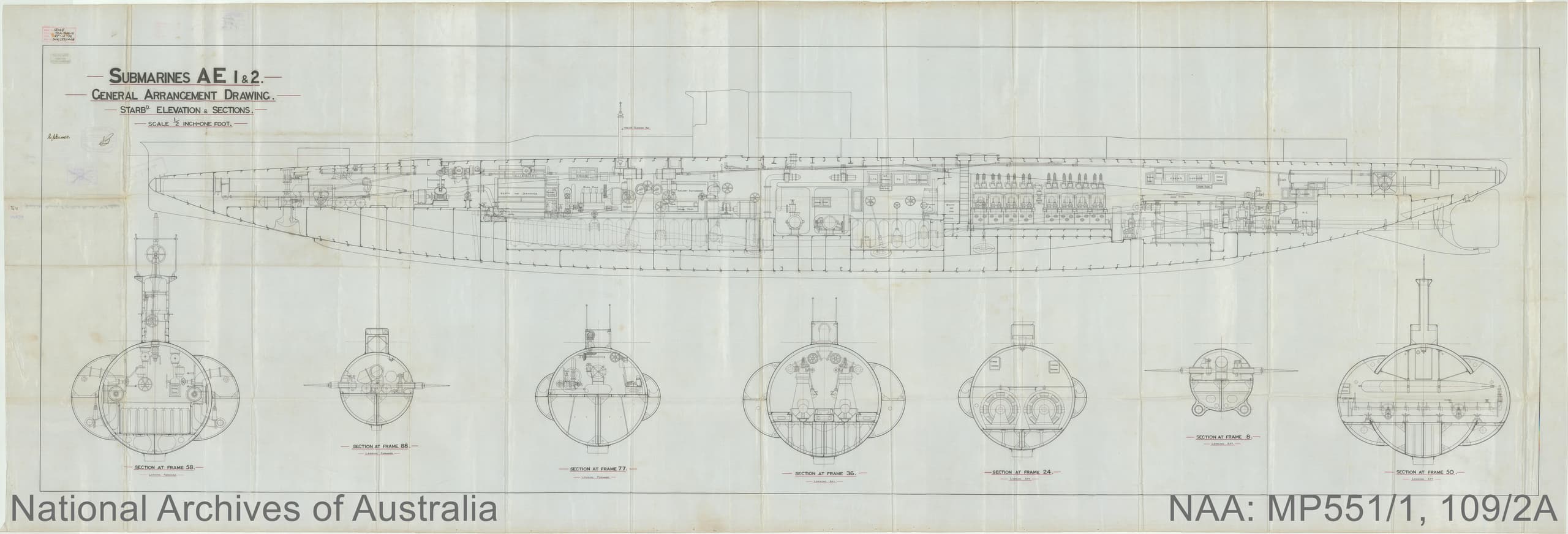
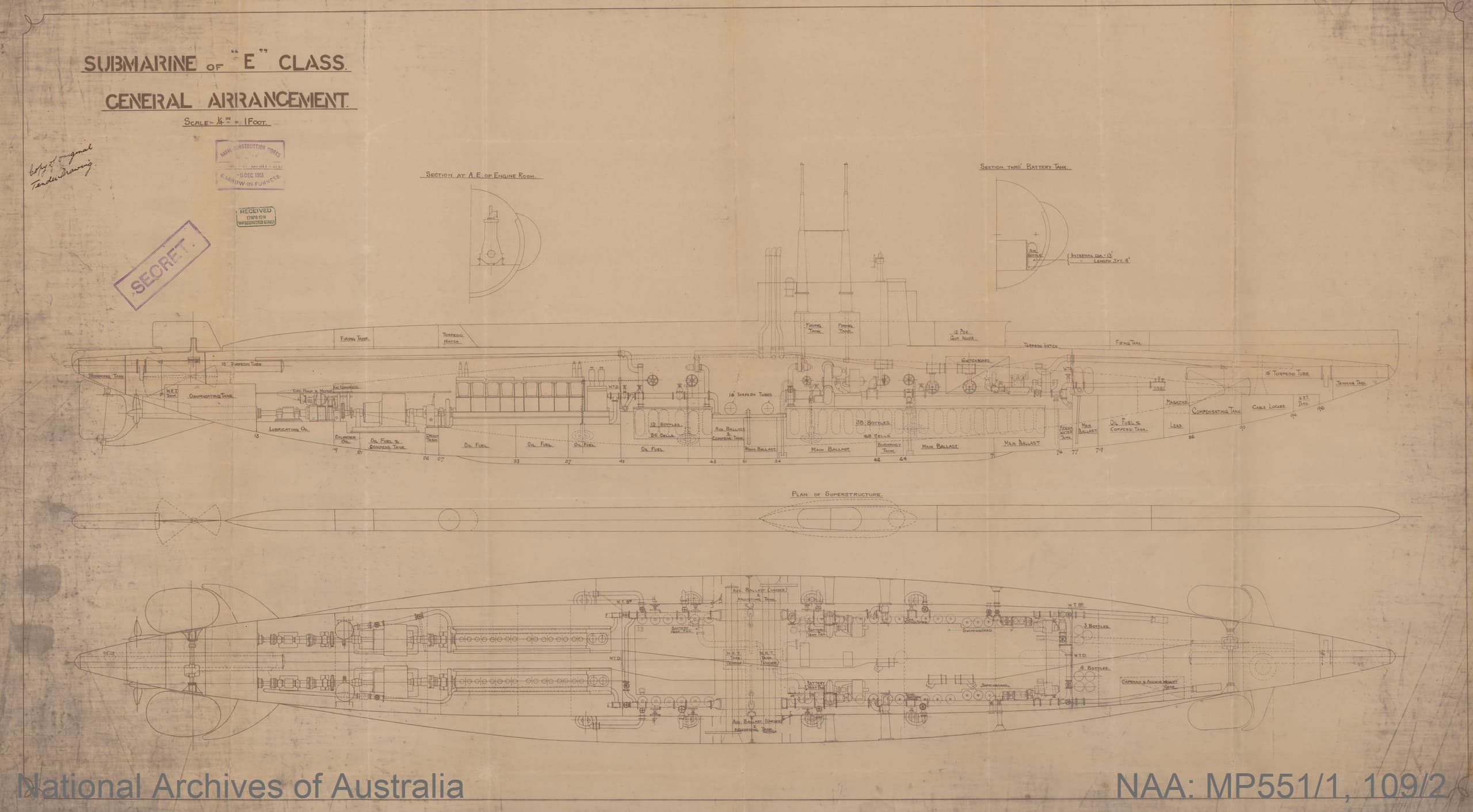
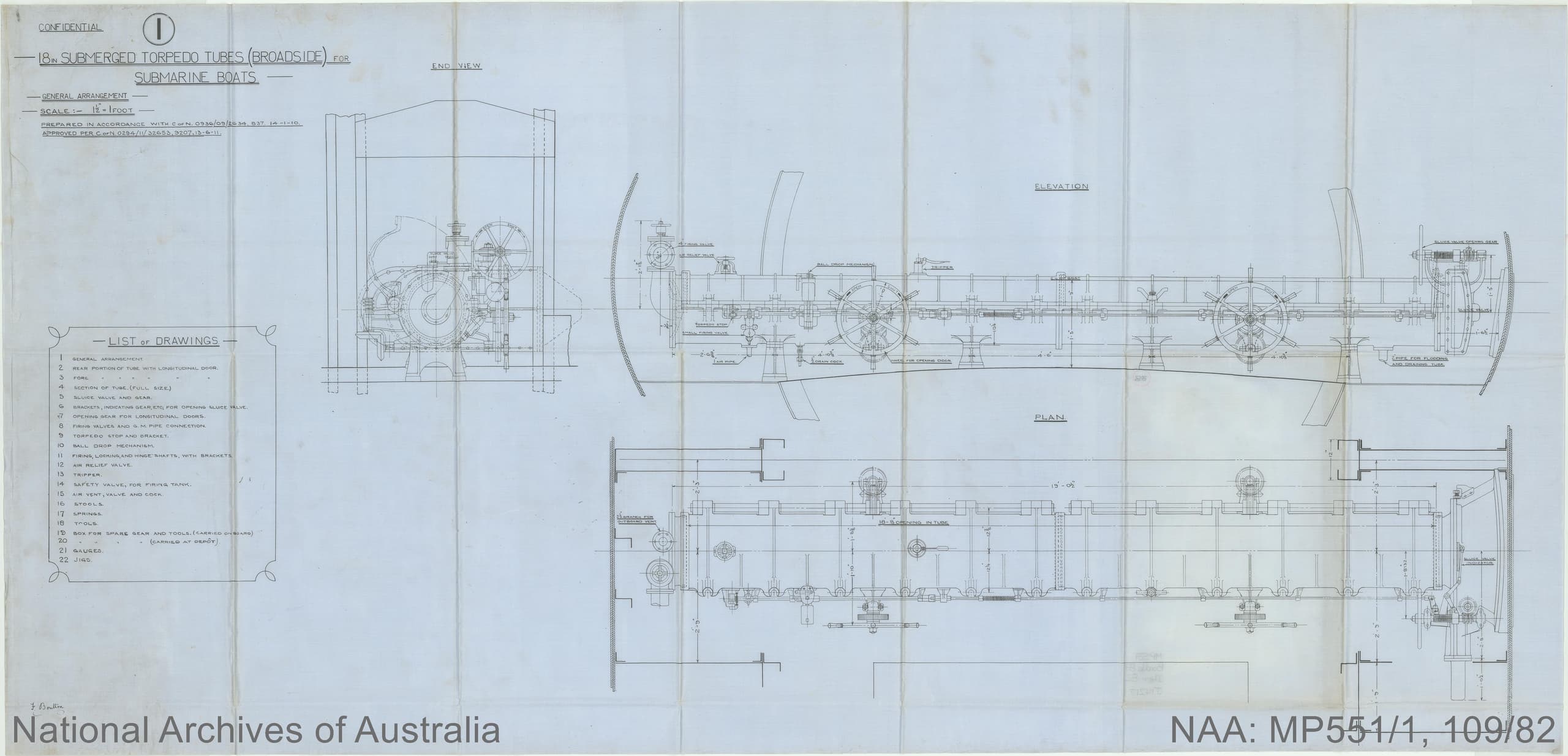
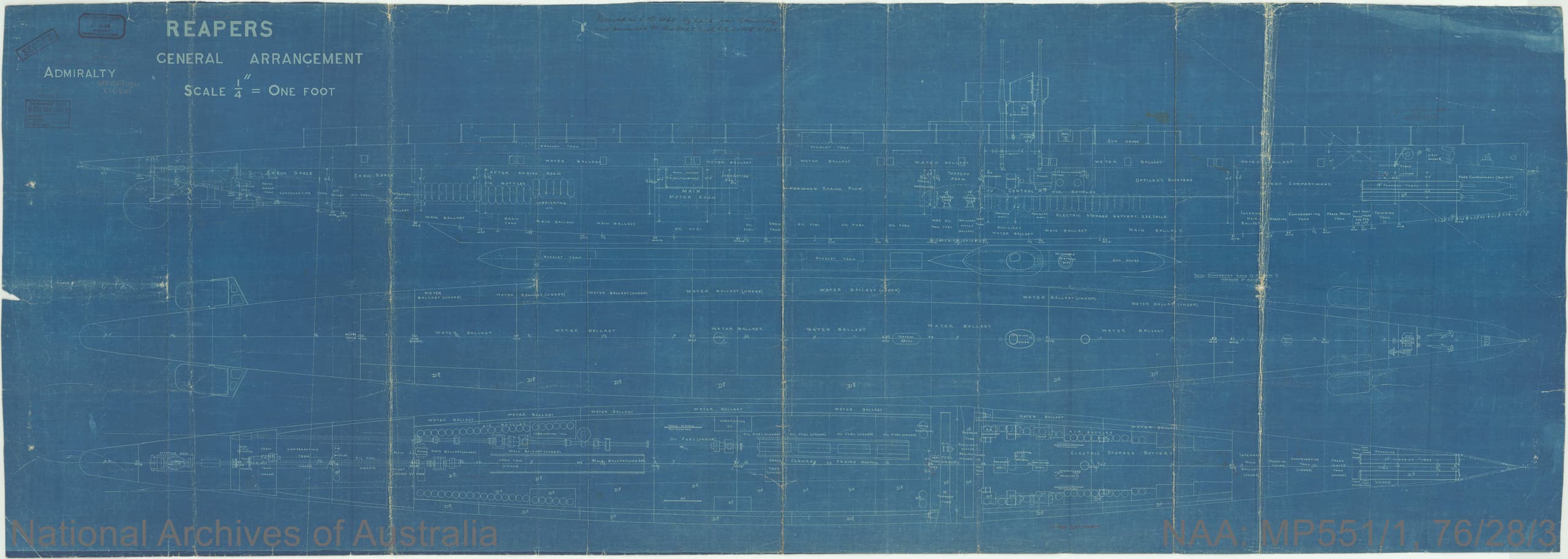
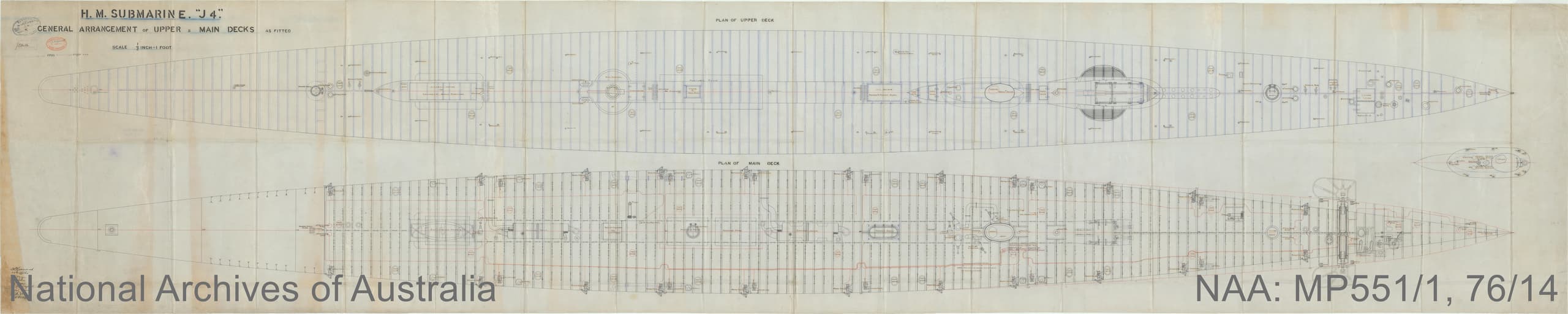
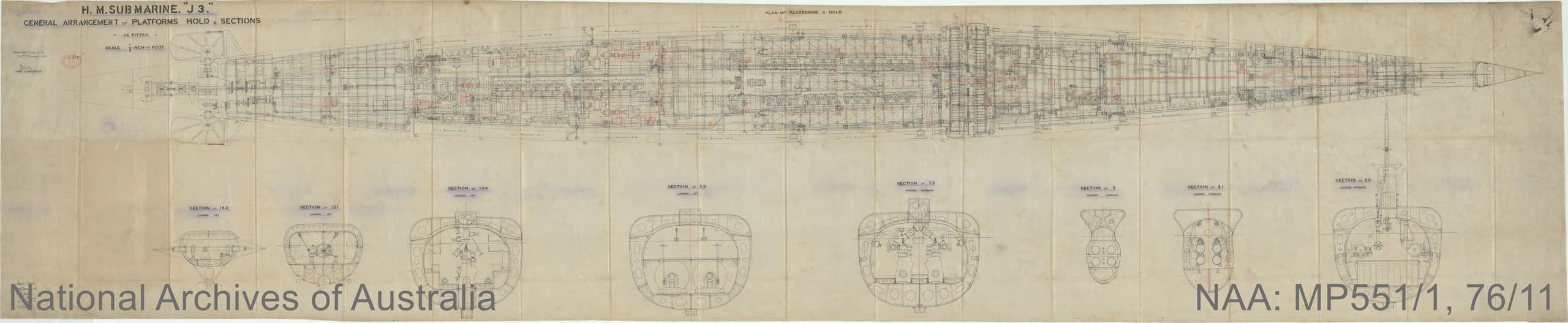
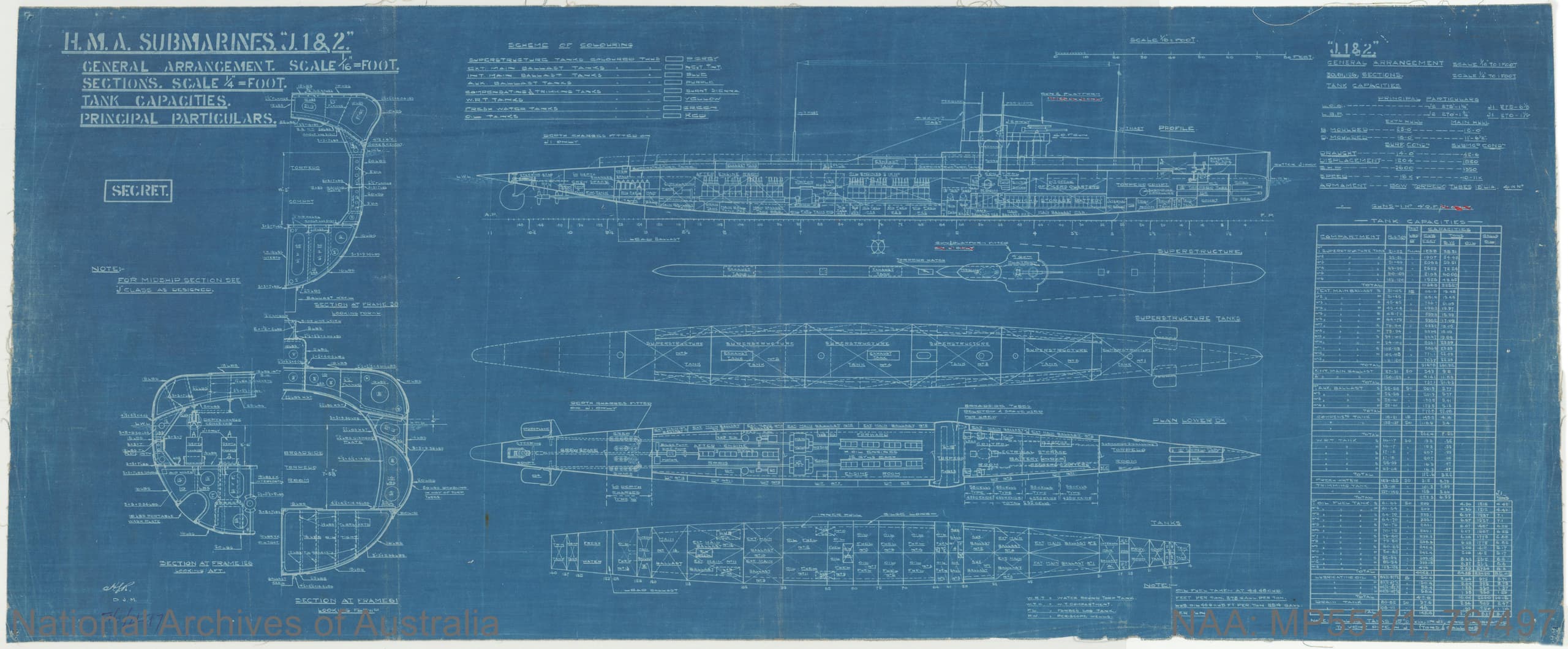
Not really sure where to put these, so I’ll just leave them here for you lot to stare at considering they are RN designs.


E-class Submarine (1912), HMAS AE1&2 general arrangement.


J-class Submarine (1916), Mix of plans for the HMAS J1 through to J7


These early subs would be interesting to play to say the least, they’ll be slow, poorly armed, loud, and overall just pieces of crap, but they just might be interesting to see if we get more WW1 era vessels in game.

1 Like