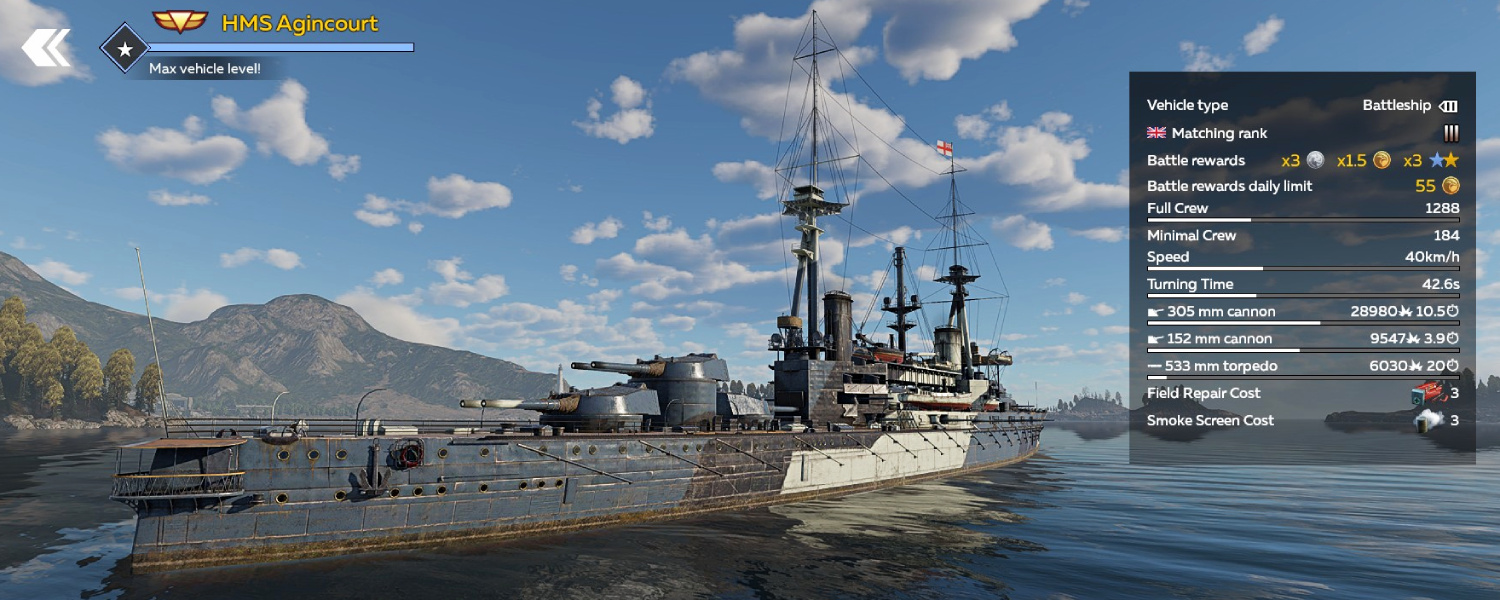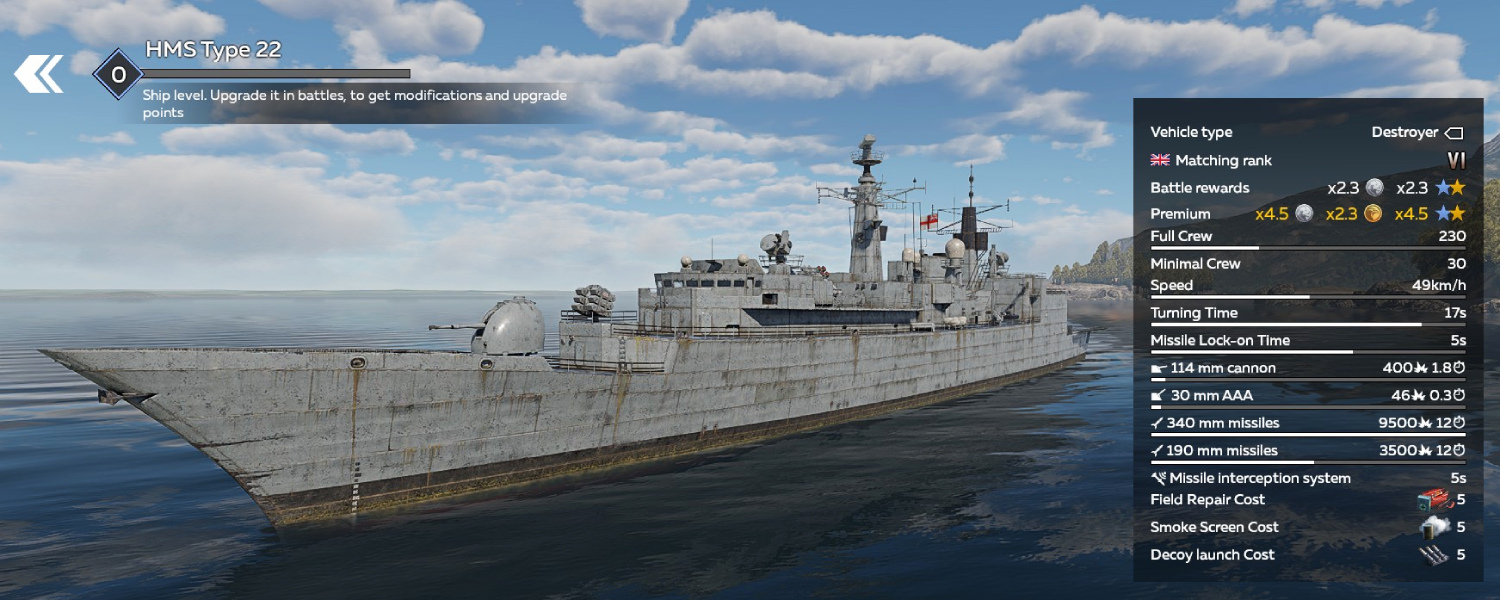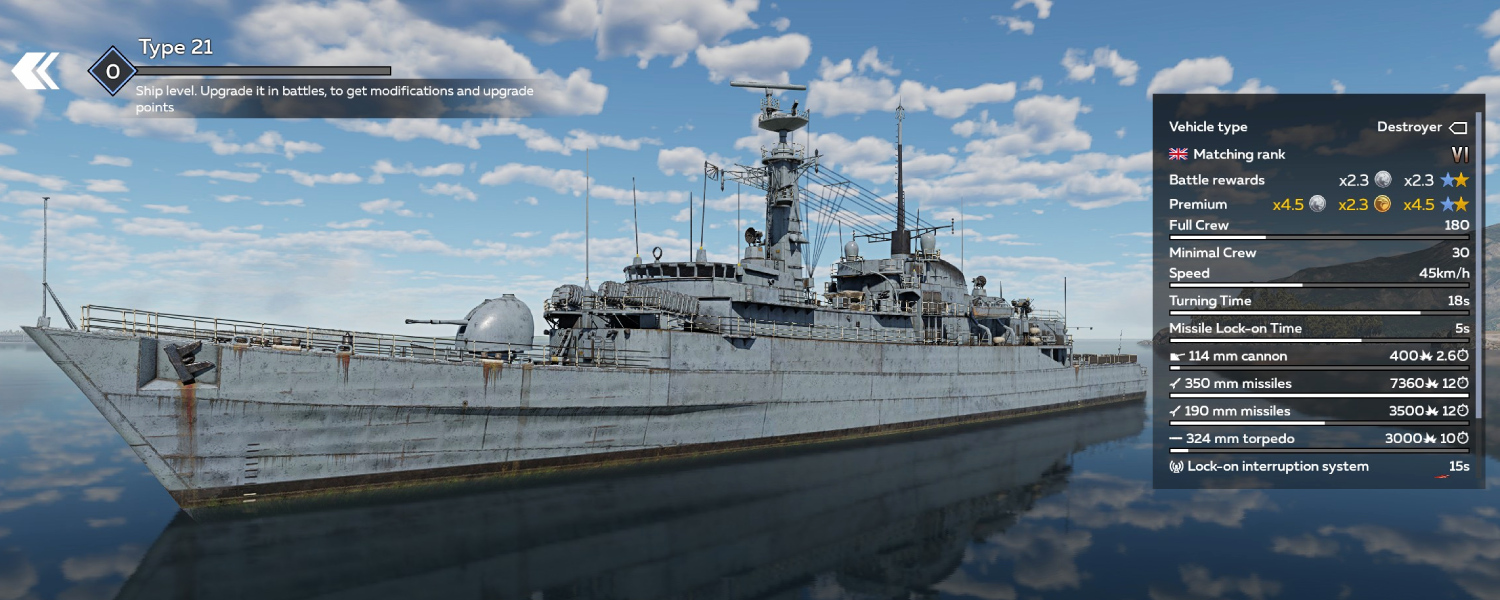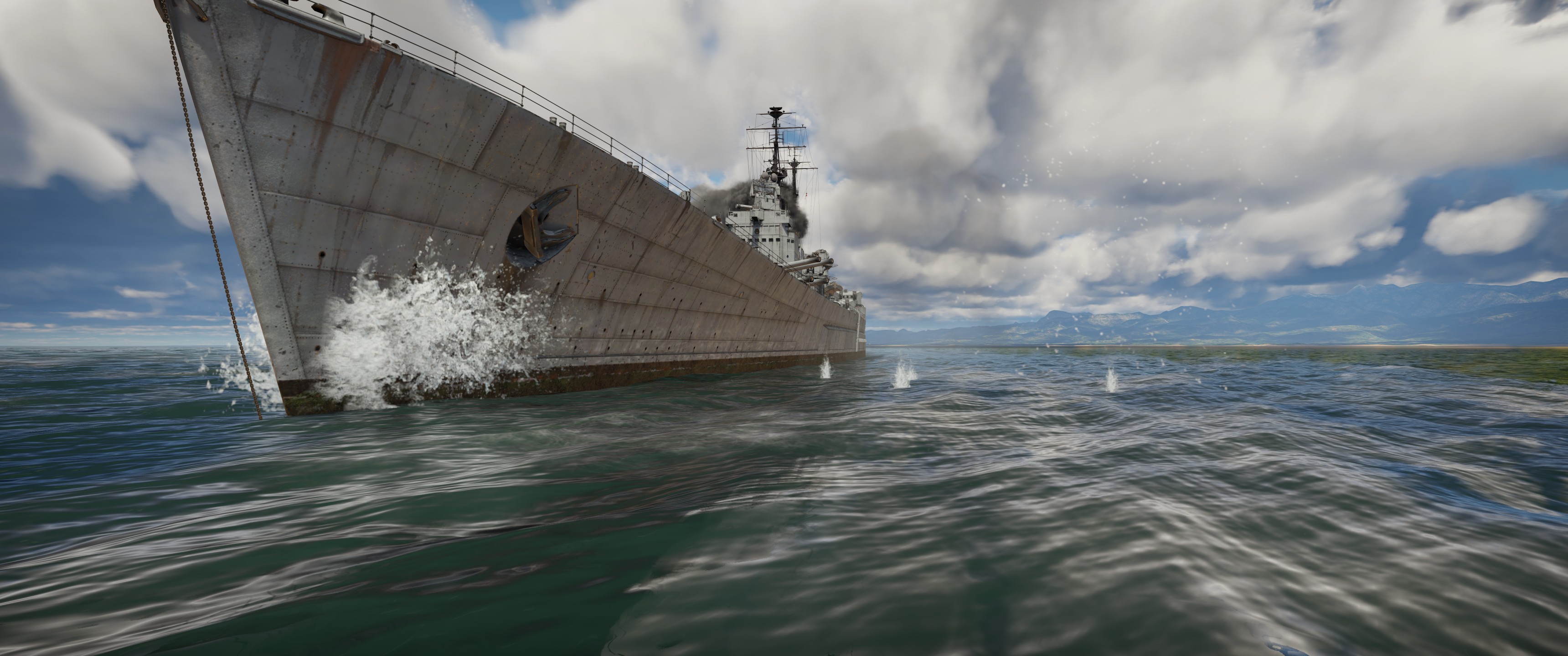
3 Likes
It’s a problem with a lot of ships. Gaijin is completely inconsistent with ship drafts. If it’s a Soviet ship, it will be practically underwater, but anything else might as well be filled with ping pong balls.
5 Likes
So that is historically accurate then :P
8 Likes
Or you have Something like HMS renown, where she is legit sitting way low in the water, meaning her main belt armor is basically useless.
1 Like
This is why Gaijin should standardise draught at the vessel’s standard displacement, as both too high and too low of a draught come with big penalties, either exposing the magazine if too high, or by bypassing the scheme entirely if too low.
keeping all vessels at a standard displacement allows for all vessels to get their ideal protection and evens out the playing field between ships, as they are all at their best.
3 Likes
Also Riley, did you ever mull making a “modern ship TT” ?
dam still no R class
1 Like
Still no County Class Destroyer. I want a British Bluewater ship that has missiles. Russia, US and Germany have one now.
4 Likes
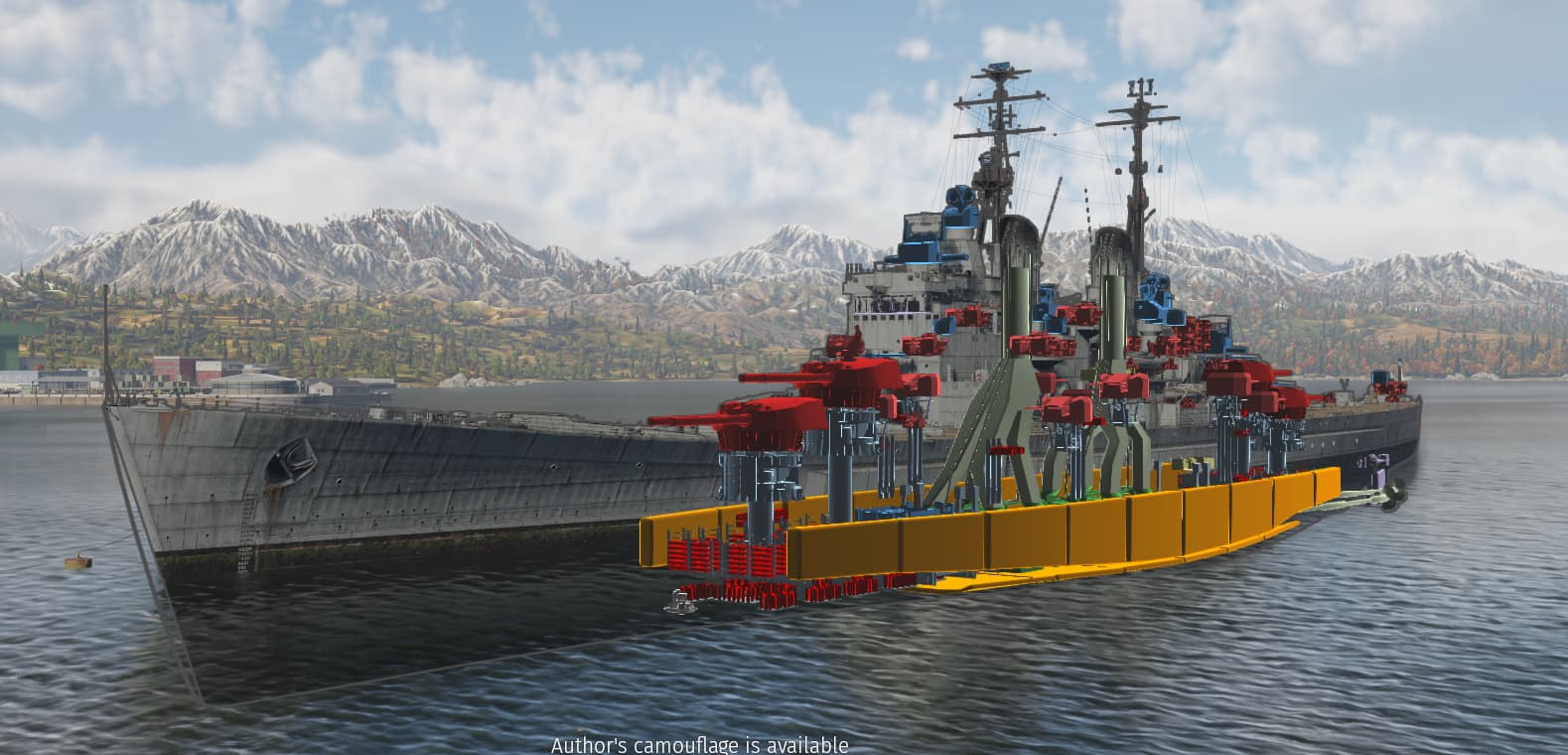
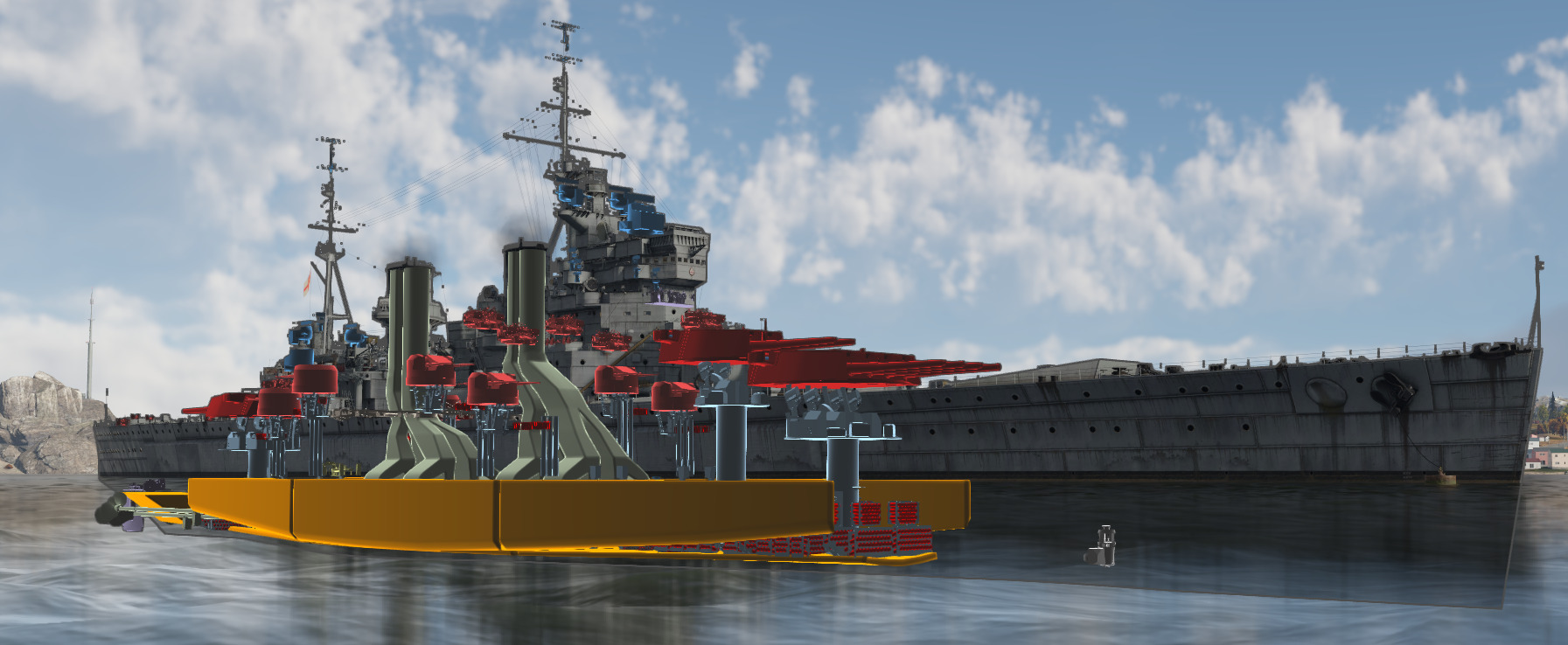
It seems Vanguard and Prince of Wales excluded among the list of anti-torpedo protection not implemented along with Bismarck while almost all other battleships(even including British itself) gets anti-torpedo bulge as module in x-ray.

I’ll show HMS Rodney as comparison.
This is shame as KGV class and Vanguard were one of most well protected against torpedo in real life.
5 Likes
What did they change exactly?
I have serious doubts about that. Considering that the KGV, for example, had very weak torpedo protection and was very small. This has been discussed extensively in many sources.
I can’t comment on the Venguard, but I strongly disagree with the KGV’s claim that it was “all good.”
could you give some sources for that?
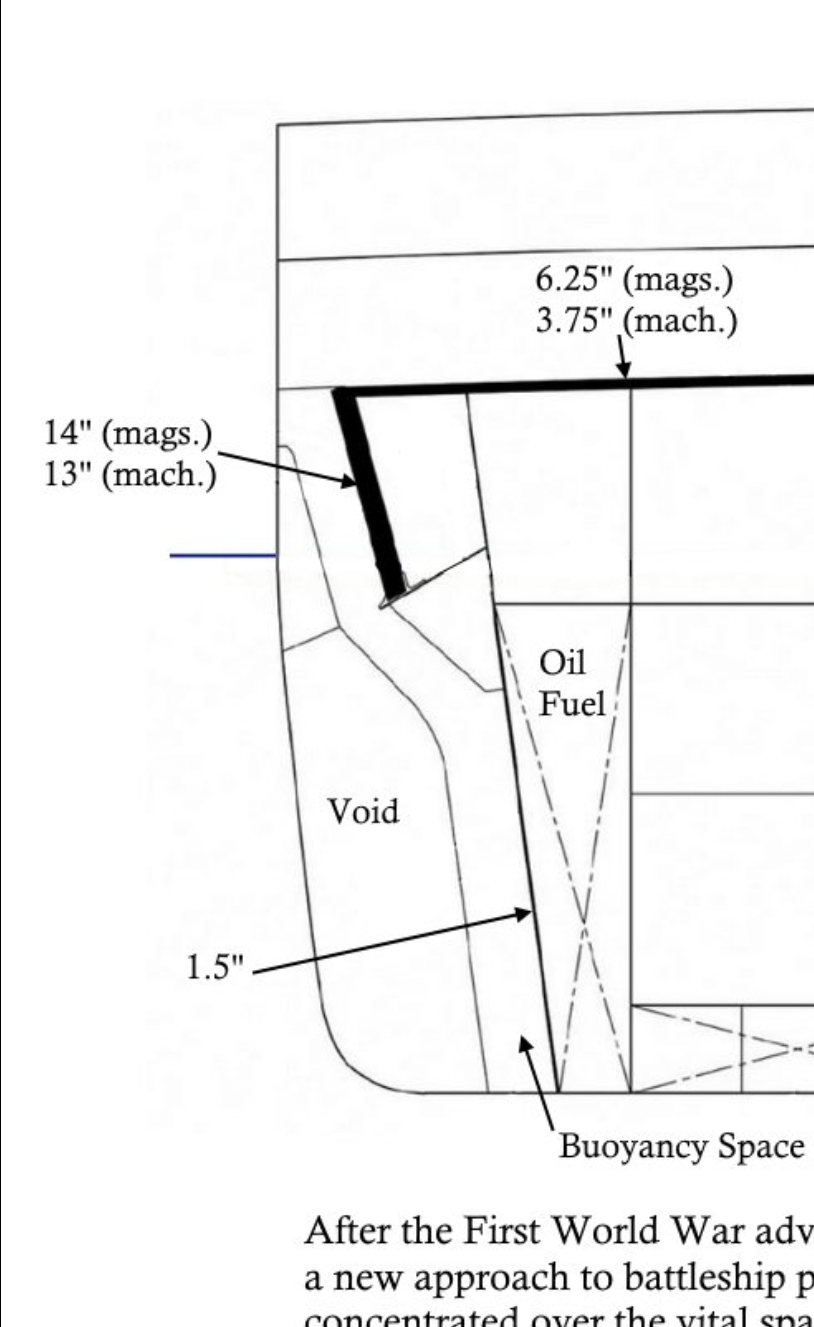
It might be down to both vaguard and POW using a torpedo protection system that sits behind the main belt so gajin didnt model it as a bulge since it technically isnt
That can’t explain Nelson class with similar system gets anti-torpedo bulge. Every battleship that has torpedo protection system, no matter of what kind it is, gets anti-torpedo bulge in x-ray except those two and Kriegsmarine’s.
2 Likes
Bit bizarre as yes it would function as a dampener for the initial explosion and as a secondary effect of the anti-torpedo protection system but still, its not a torpedo bulge its still required for reserve buoyancy.
This is just a myth that appeared due to the fact that it was not previously known what actually sank HMS Prince of Wales - in fact, her anti-torpedo bulkhead was not penetrated by Japanese torpedoes
Also, people only look at the depth of the anti-torpedo protection, forgetting that its height is no less important
1 Like
1 source doesn’t show anything
Disadvantages of the King George V-class battleship’s torpedo protection:
- The longitudinal bulkheads were insufficient in height—they only extended to the lower deck.
- Poor attachment of the bulkheads to the rest of the hull structure in the upper section.
- Possibility of flooding through the top of the torpedo protection, which was covered only by a lightweight bulkhead made of shipbuilding steel.
- Shallow gas expansion zone—less than 4 meters.
- With the first torpedo hit, the outer layer filled with water, reducing its effectiveness to zero.
And this says that “everything is fine” there?
I didn’t say that the anti-torpedo protection of King George V was perfect, but it was much better than is commonly believed.
Despite the disadvantages, the bulkhead withstood a real torpedo hit. Flooding through the upper compartments was mostly due to counter-flooding of the torpedo protection compartments and the port list from the previous hit.
. . .
If a torpedo hits the anti-torpedo protection, flooding of the outer layer is inevitable. In addition, it has little effect on efficiency.
1 Like