History
The F2A Buffalo was the Navy’s first American-designed monoplane fighter with an arrestor hook and equipment intended for carrier operations. It had beaten the Grumman F4F Wildcat in the 1939 competition. Across its iterations, the F2A-3 represented Brewster’s third and final Buffalo variant intended for US Navy service. The Navy ordered 108 F2A-3 aircraft, enough to equip five squadrons and reserves. Compared to the F2A-2, the F2A-3 featured a redesigned nose with a ten-inch extension forward of the fuselage between the wing and the cowling, removal of the propeller spinner, a revised canopy, expanded fuel capacity to 240 gallons with additional fuel cells, increased armor, and greater ammunition capacity for its M2 Browning machine guns. As a result, the gross weight increased significantly, over 1,400 pounds heavier than the F2A-1, negatively impacting flight performance.
F2A-3 production began in January 1941, and the Navy soon began receiving them, replacing F2A-2s in active squadrons by the summer of 1941. VF-2, VF-3, and VS-201 were among the units that were equipped with the F2A-3. VF-3 used the type only briefly before converting to the F4F-3. VS-201, operating from USS Long Island (CVE-1), flew F2A-3s alongside Curtiss SOC Seagull aircraft on Atlantic Neutrality Patrols and antisubmarine missions, retaining them until April 1942. VF-2, assigned to USS Lexington (CV-2), was the only active Navy squadron operating the F2A-3 at the time of the Pearl Harbor attack. These aircraft were used on scouting missions in the Pacific during December 1941 and January 1942, relieving SBD Dauntless scouts on distant stations. By late January 1942, VF-2 transitioned to Wildcats, with their F2A-3s transferred to Marine Corps land-based squadrons.
Two Marine squadrons operated the F2A-3: VMF-211 on Palmyra Island and VMF-221 on Midway Island. VMF-221 achieved the first American Buffalo victory on March 10, 1942, when an F2A-3 intercepted and shot down a Japanese pre-production Kawanishi H8K “Emily” flying boat near Midway. The type saw its final combat during the Battle of Midway. VMF-221 launched 20 F2A-3s and 5 Wildcats to intercept incoming Japanese aircraft, but losses were severe; 13 Buffalos and 2 Wildcats were shot down, representing roughly 60% losses. The Buffalo proved no match for the Mitsubishi A6M2 Zero, even in the hands of experienced pilots. Despite this, VMF-221 claimed 2 Zeros and 7 Nakajima B5N “Kate” bombers. After Midway, all Buffalos were withdrawn from frontline service and relegated to training roles.
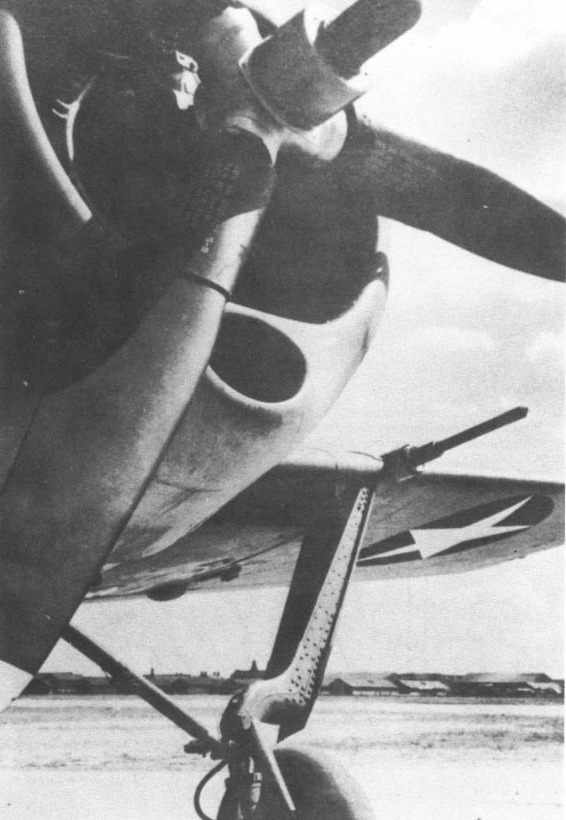
In a final effort to improve the F2A-3’s firepower, Brewster modified nine sets of spare wings by replacing the .50-cal machine guns with 20 mm Hispano-Suiza cannons, likely the AN/M2 in US service. At least one F2A-3 was fitted with these modified wings and sent to NAS Norfolk, Virginia, for trials. However, the evaluation was canceled when the Navy terminated further development of the F2A program. Brewster subsequently shifted to license production of the F3A-1 Corsair, but continued production issues led to the Navy canceling Brewster’s final military contract on July 1, 1944, eventually sending the company to its demise.
The modified F2A-3 with 20 mm cannons did not receive a new designation, as it remained an experimental configuration. No confirmed Buffalo serial number, cannon model, or ammunition capacity figures have been found; however, with only one photo of the modified F2A-3 with the installed cannons, my conservative estimate suggests each wing could hold approximately 60 rounds per cannon.