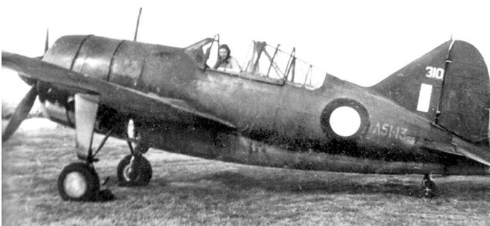
Vehicle Type: Fighter / Photo-Reconnaissance
Great Britain (UK Tech Tree / Australian sub tree)
Proposed Rank / BR: Rank II / ~2.3 BR
- Yes as a Tech Tree vehicle
- Yes as a Premium vehicle
- Yes as an Event vehicle
- No
Overview
The Brewster B-339-23 (sometimes designated B-439) was the final export variant of the Buffalo family, originally ordered by the Netherlands Purchasing Commission for the Royal Netherlands East Indies Army Air Corps (ML-KNIL). Featuring the longer fuselage and larger fuel tanks of the US Navy’s F2A-3, these aircraft were powered by 1,200 hp Wright R-1820-G205A engines. Following the fall of Java in early 1942, 20 undelivered B-339-23s were diverted to Australia and taken on strength by the Royal Australian Air Force (RAAF). Operated under serials A51-1 through A51-17 (with three taken by the USAAF), they served primarily in photo-reconnaissance, air defence, and secondary patrol duties. Adding the B-339-23 fills out early-tier RAAF representation in the British tech tree with a unique, late-model Buffalo airframe.
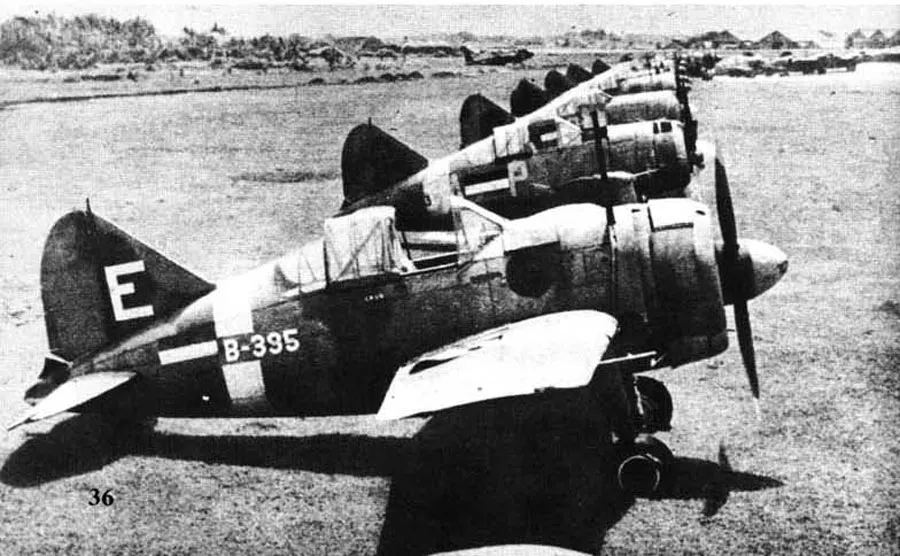
B-339 Buffalo in ML-KNIL service
History
In 1941, the Dutch government placed an order for 20 additional B-339-23 aircraft to reinforce the Dutch East Indies. Derived from the F2A-3 airframe rather than the lighter F2A-2/B-339E, this variant incorporated increased fuel capacity and full armour protection. By the time the shipment reached Australia in March 1942, the Netherlands East Indies had capitulated. The airframes were assembled at RAAF Laverton and allocated to No. 1 PRU (Photo Reconnaissance Unit) and No. 24 Squadron RAAF. These airframes were later attempted to be replaced with newer P-43B and P-43D. Unlike their Buffalo Mk. I brethren, these aircraft did not cut their teeth above Malaya or Burma, instead due to their long endurance and reliable heavy armament, RAAF pilots utilized them to fly crucial high-altitude mapping, coastal defence, and reconnaissance sorties over Northern Australia during the height of Japanese air raids on Darwin and Broome. Survivors were later transferred back to USAAF units or converted to target tugs before being phased fully out by 1943.
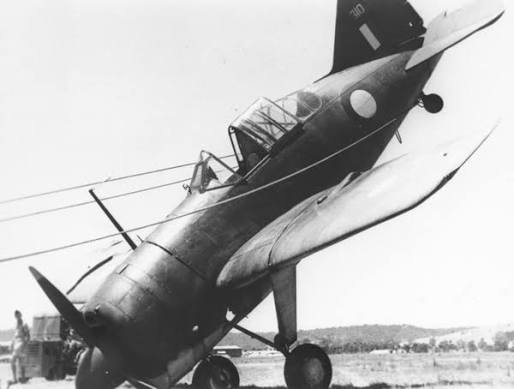
USAAF Duties (1942–1943): The After
Between late 1942 and mid-1943, the surviving B-339-23s were returned to the USAAF Fifth Air Force in Australia and conducted non-combat roles within the USAAF never being deployed as an operational fighter. Instead, they were utilized as base hacks, target tugs, utility transports, and advanced operational trainers for American pilots arriving in the Southwest Pacific. Some were also used for reconnaissance & liaison with a few airframes seeing limited use in secondary photo-reconnaissance and coastal patrol duties out of Australian airbases. All were eventually scrapped due to chronic spare-part shortages and the arrival of modern P-40 Warhawks and P-38 Lightnings, the USAAF permanently retired the B-339-23 fleet by mid-1943. Most were stripped and broken up for scrap at Brisbane.
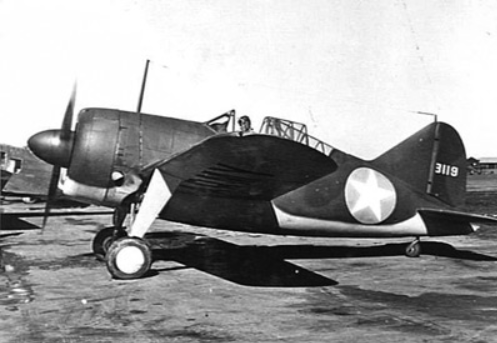
Ex-RAAF Buffalo B 339-23 sporting a Dutch camouflage and USAAF markings
Specifications & Armament
- Engine: Wright R-1820-G205A Cyclone 9-cylinder radial engine (1,200 hp)
- Maximum Speed: ~517 km/h (321 mph) at 5,000 m
- Service Ceiling: 10,000 m (33,200 ft)
- Range: ~1,500 km (extended internal tanks)
- Armament:
- 4 × .50 cal (12.7 mm) M2 Browning machine guns (2 in the upper cowl, 2 in the wings)
- Provision for underwing bomb shackles (2 × 100 lb bombs)
Its Place in War Thunder
The B-339-23 would sit comfortably at Rank II (BR 2.3) in the British aviation line, folderd alongside or near other early Commonwealth models like the Boomerang or Wirraway.
- Pros:
- Powerful 12.7 mm nose and wing armament with generous ammunition capacity for BR 2.3.
- Larger engine output (1,200 hp) compared to earlier British B-339E variants.
- Excellent nose authority and stability at medium-to-low speeds.
- Cons:
- Heavier airframe than earlier Buffalos, resulting in poorer climb rate and vertical energy retention.
- Easily outperformed in tight turn-fights by Japanese biplanes and early Zeros.
Sources:
Brewster Buffalo Model 339-23, A51-13, 25 Squadron RAAF, Dunreath, West Australia, 1942, Sgt. John Bailey . (2026). Hobbymasterarchive.Org. Brewster Buffalo Model 339-23, A51-13, 25 Squadron RAAF, Dunreath, West Australia, 1942, Sgt. John Bailey
asisbiz.com. (2017, January 14). AsisBiz. Asisbiz. Asisbiz Brewster Buffalo Model 339-23 RAAF 1PRU AS113 Hughes airbase Australia 1942-01
Brewster B-339 Buffalo. (2015, April 6). The Java Gold’s Blog. Brewster B-339 Buffalo | The Java Gold's Blog
Special Hobby 1/32nd Brewster M339-23 Buffalo of the Royal Australian Air Force | Large Scale Planes. (2026).