- Yes
- No
Hello everyone and welcome to this new suggestion.
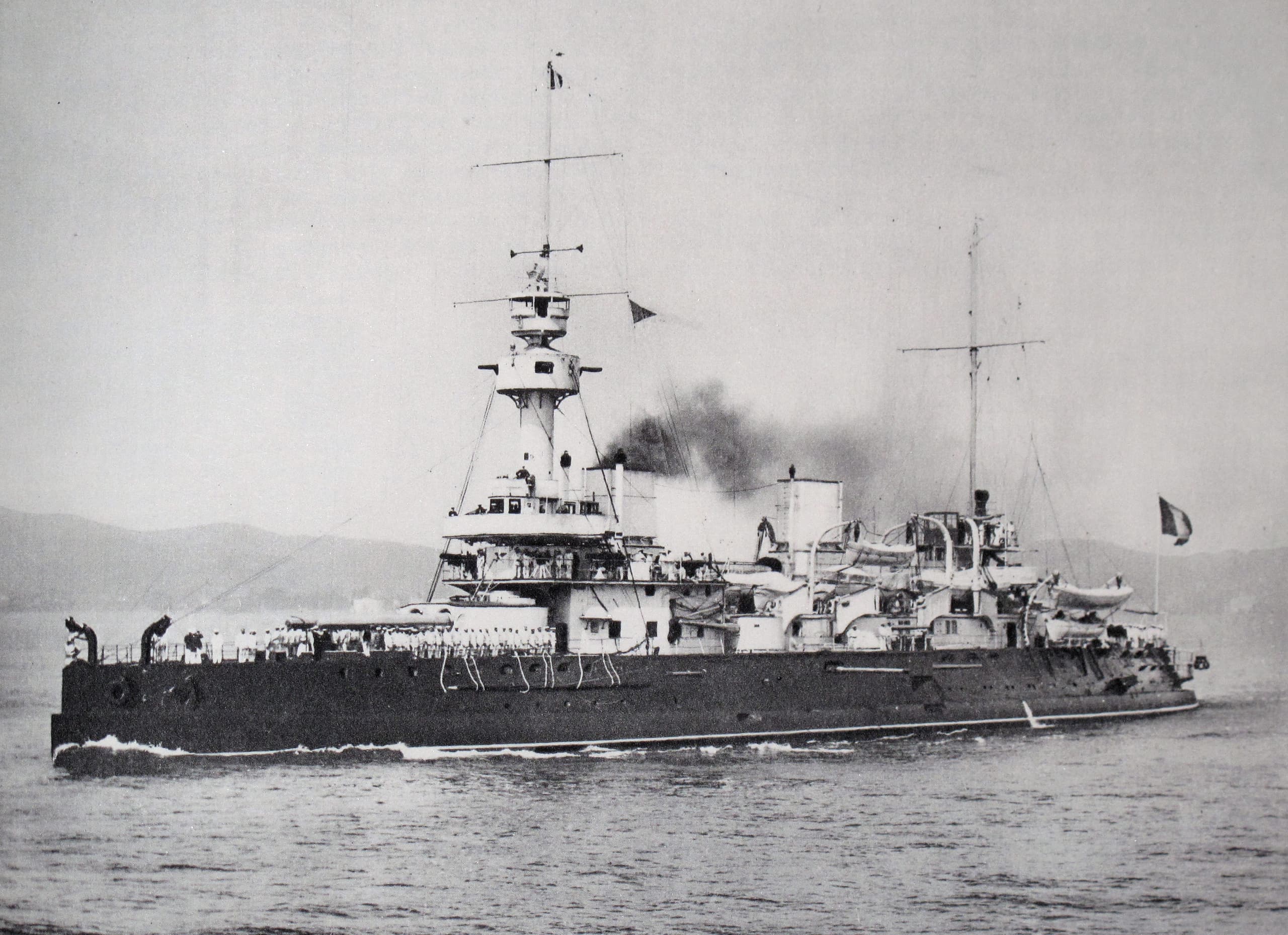
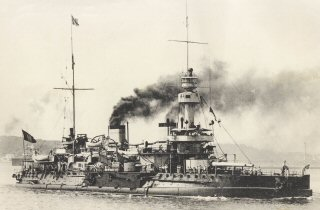
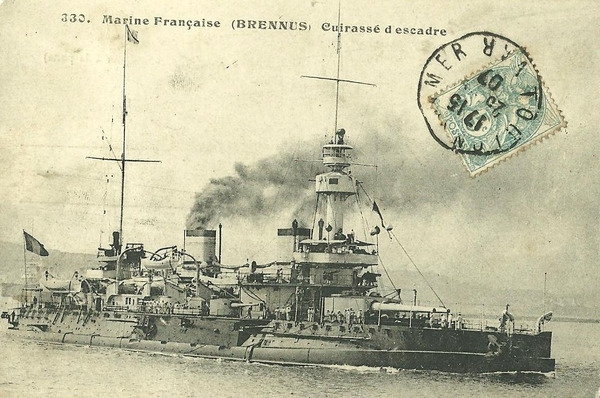
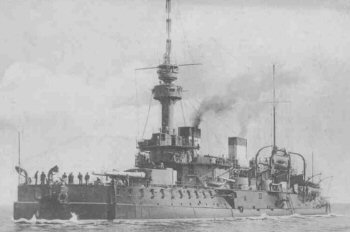
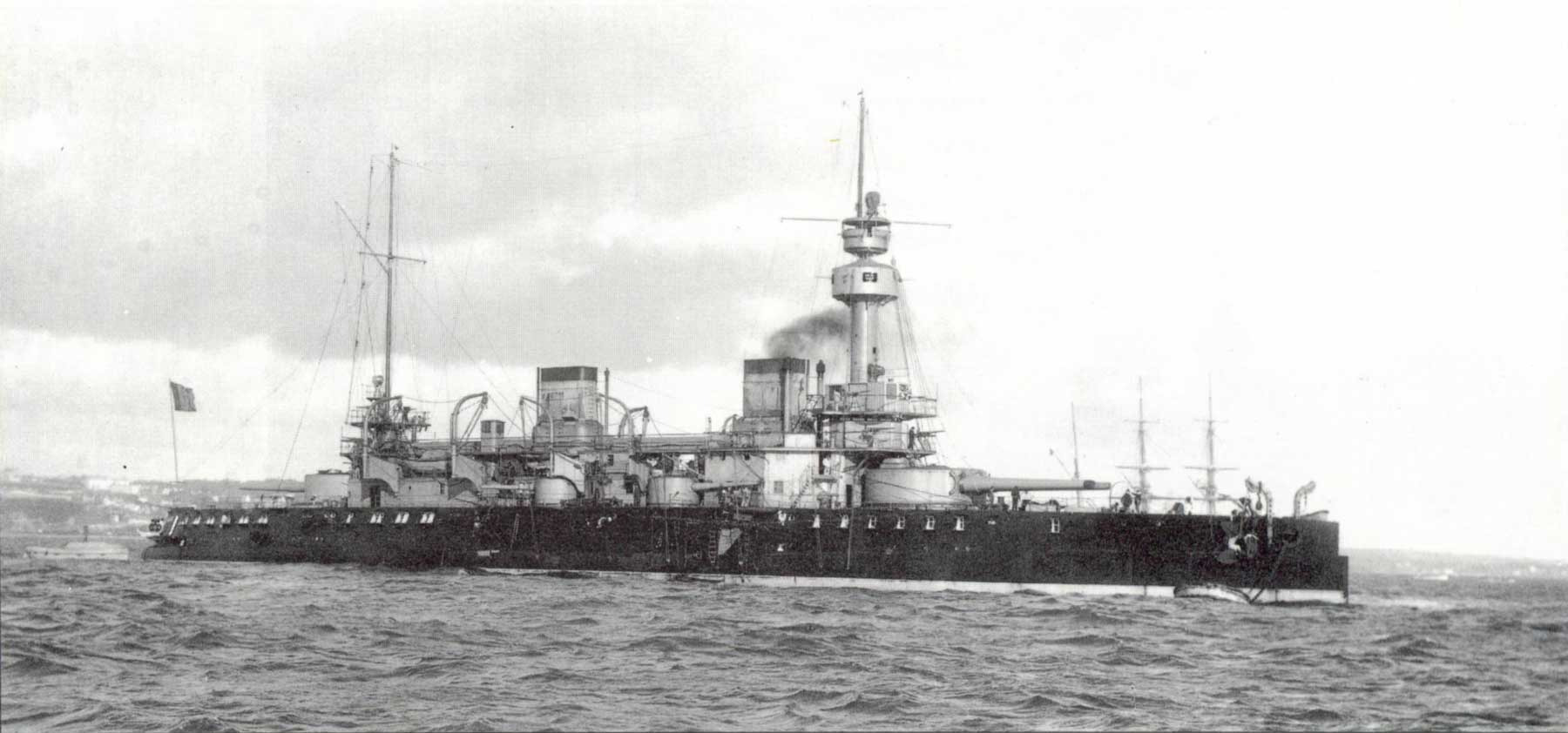
Today I’m presenting a new ship from the French fleet, a unique vessel: the Brennus.
The Brennus is the very first French pre-dreadnought. Designed at the Lorient arsenal in 1889 and commissioned the same year, the Brennus was France’s attempt to catch up in terms of large warship production. It was also the first ship to abandon all the features of the early Ironclad class, ushering France into the era of modern warships. However, it’s worth noting that this ship was also the last to have a figurehead, this one depicting the bust of Brennus, the Gallic chieftain and a figure in French history.
From its commissioning, the Brennus served primarily with the Mediterranean Squadron, the main battleship force of the French Navy at the time, based in Toulon. It quickly assumed the role of flagship, a symbol of the power and prestige of the French Navy. During its career, it did not participate in any major naval battles. However, it was involved in the French Navy’s daily operations, training exercises, and naval presence in the Mediterranean, reflecting French strategic doctrine outside major theaters of war.
As newer, more modern battleships entered service, the Brennus was gradually relegated to the reserve squadron in the early 1900s, with a reduced crew and limited activity. Later, from 1908, it was even used as a training ship in preparation for the First World War. By the outbreak of the First World War in 1914, the Brennus’s advanced age and outdated design prevented it from being engaged in significant operations. Its operational role was essentially inactive, and it saw no major combat action during the conflict. Following the war, due to its age and limited usefulness, it was withdrawn from active service. The ship was struck from the lists in 1919 and then sold for scrap, its dismantling continuing until 1922. Within the French forces, the Brennus marked a major turning point, signaling the end of the old-style warships and paving the way for modern vessels, thus ushering the French Navy into the era of modern naval warfare.
This ship underwent a very rapid refit during its career; indeed, a large amount of equipment was missing, and some elements were simply incomplete. Therefore, in this suggestion, I propose that we focus solely on the final version of the ship.
This ship is named in honor of a Gallic chieftain from the 4th century BC known for defeating the Romans and sacking Rome.
Characteristics
Length: 114.46m
Width: 20.4m
Draft: 8.28m
Mass: 11,370 tons
The ship is propelled by two steam engines, powered by 32 Belleville boilers (a major technical innovation of the time), allowing it to reach a maximum speed of 17 knots and to travel 2,800 nautical miles at 10 knots without needing to refuel.
Weapons
The ship’s armament was very important for its time; it contained various elements that would later be used on many French ships.
Canons :
- 1x2 340mm Mle1887
- 1x1 340mm Mle 1887
- 10x1 164.7mm Mle1893
- 4x1 65mm Mle1891
- 14x1 47mm Mle1886
- 14x1 37mm (various model)
Torpedo :
4x1 450 torpedo tube
Armor
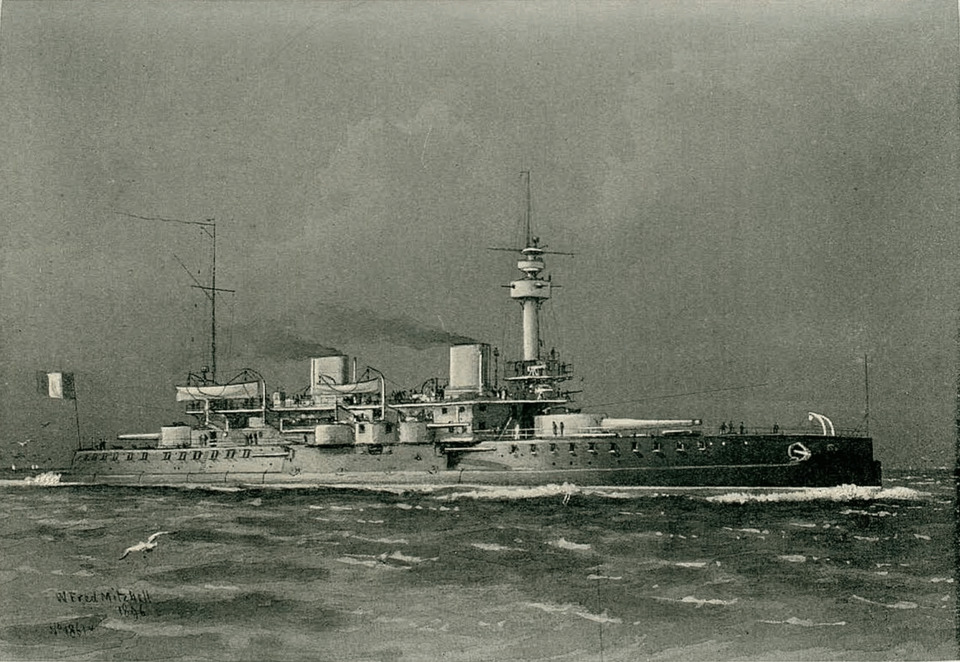
The ship’s armor is quite remarkable, allowing it to withstand fire from contemporary vessels but leaving it rather vulnerable against slightly more modern ships.
- Belt: 300-400mm
- Deck: 60mm
- Turret: 450mm
- Conning Tower: 120mm
In the game, this ship would be a particularly interesting and relevant addition to the French tech tree, bringing a combat ship that marked a turning point in the history of the French Navy.
Sources
- https://www.servicehistorique.sga.defense.gouv.fr/ark/1022273
- https://imagesdefense.gouv.fr/fr/58-bizerte-le-cuirasse-brennus-traversant-le-canal-collections-nd-phot-legende-d-origine.html
- Photographie du Brennus cuirassé Lorient 1882 1920 (école des mécaniciens) | Service historique de la Défense
- NOTES SUR LE CUIRASSÉ BRENNUS
- le cuirasse d'"escadre brennus
- CLASSE Brennus 1887
- Marcophilie navale le courrier des Marins: cuirassé Brennus Framée torpilleur contre collision naufrage cap saint-Vincent cap Santa-Maria Gibraltar Lorien escadre Foudre Hallebarde