The Breda-SAFAT is generally regarded as the weakest HMG of WW2.
Even in it’s class of “light caliber” HMGs like the Ho-103 and the German MG 131, it stands out for being extraordinary heavy and slow firing, with a mere 700 RPM.
In fact the gun, firing 12.7x81mm ammunition, weighs practically as much as the US M2, which uses more powerful 12.7x99mm ammo.
Turns out the Italian gun has a barrel that’s not only shorter (800mm) but also heavier (4.72kg) compared to the US gun with a longer (914mm) and lighter barrel (4.4kg).
Using the US barrel as reference a 800mm barrel would otherwise weight roughly 3.85kg.
This might be one of the reasons for the relatively low RoF of the gun, having to move a heavier barrel with a less powerful cartridge.
(Reducing the weight of the parts, like on the Japanese Ho-103, increased the RoF naturally.)
At the same time this would give the gun an edge in accuracy.
A big downside of the US .50cal was it’s moddest sustained fire accuracy of 4 mils, reducing the effective range to 400yd (366m).
Not only is the barrel shorter and sturdier, the round is also moving at lower velocity, inducing less vibration than a faster moving bullet out of a longer and lighter barrel.
If we imagine the Breda-SAFAT having a sustained fire accuracy of 3 mils (similiar to the Hispano), this would mean the effective range would increase by 1/3, so 488m.
In a synchornized installation, where the RoF is further reduced, the accuracy might even be higher than a gun firing at it’s maximum possible rate.
So while the gun might be heavy, it probably traded RoF (useful in dogfights) for range (useful for targeting bombers or as defensive turrets).
So it might have been a compromise, sacrificing some capabilties against fighters for being able to accuractly target bombers outside the effective range of rifle caliber defensive guns.
Being built sturdily most likely also increased reliablity, reducing the amounts of mulfunctions while fighting.
If you have some stories about Italian pilots praising the guns accuracy, feel free to share them.
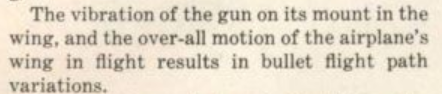
Oh thats not because of the gun itself, thats because its mounted in a aircraft, the barrel type and velocity has little effect on this. The reason for that dispersion is even listed in your own document.
Unless Italy has found a way to negate the effects of movement and vibrations from aircraft, a similar effect on dispersion should be expected, same goes for any aircraft in any military.
Mounts dictate the accuracy of a weapon like the M2 far more than other components in situations like this, a modern, robust mount like the modern CROWS system can effectively reach out roughly about 3 miles, meanwhile, something like the quad mount M45 would never even hope to get close to such range, yet, both mount the same M2HBs.
To that same end, a AN/M2 in say a B-17’s turret mount would have markedly worse dispersion than those mounted in the wing of a P-47 as they are in flexible mounts.
Therein still lies the issue, the only way to properly compare these weapons would be to put them in identical test stands as the means of mounting has such a grand effect on their accuracy.
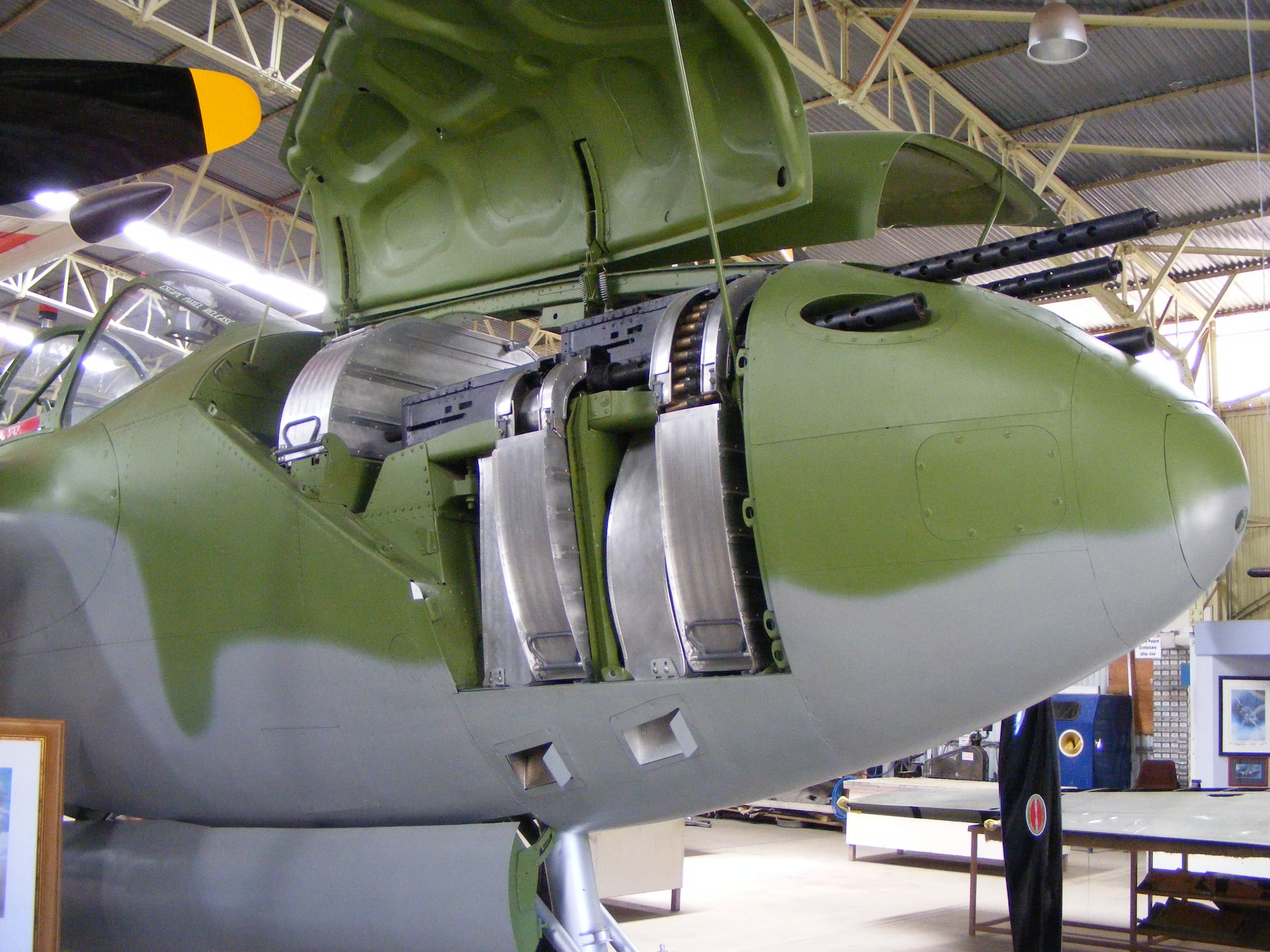
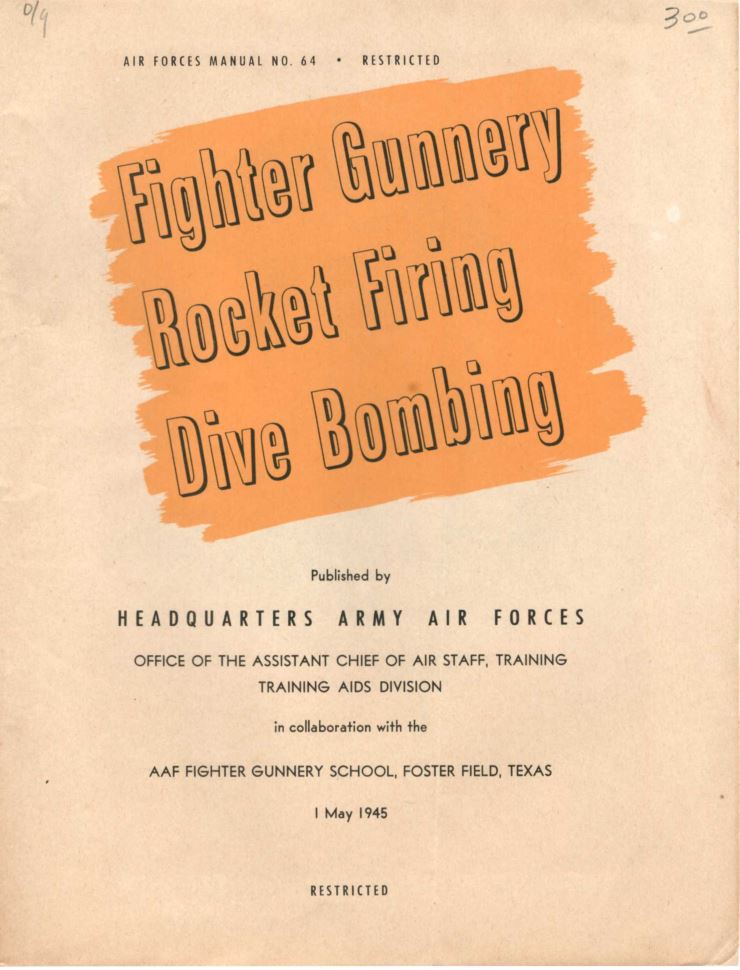
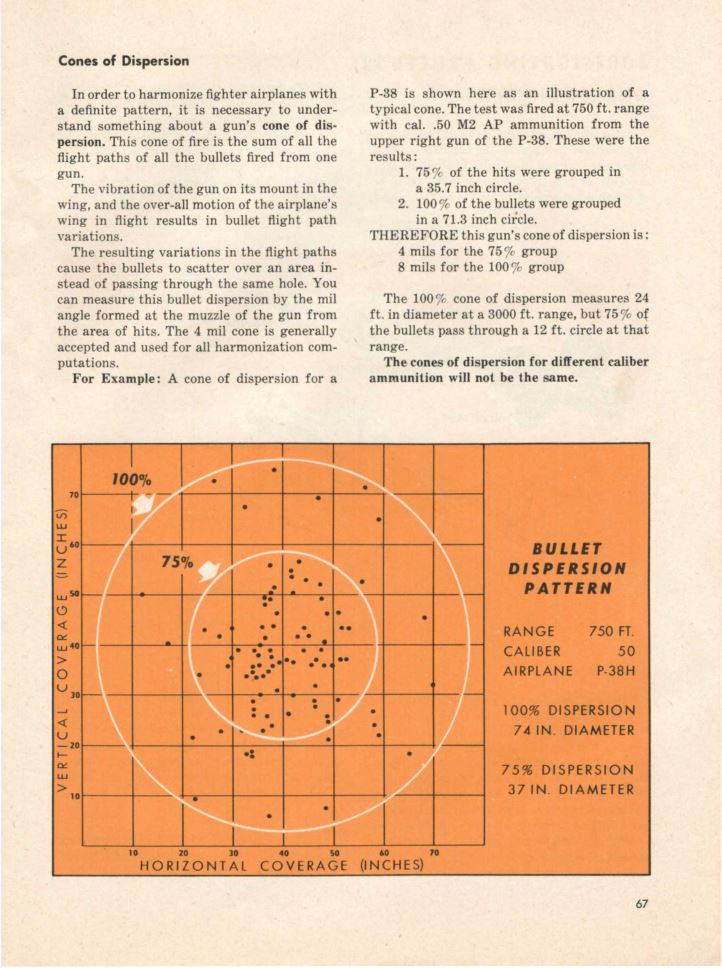
Well, the dispersion comes from a P-38, mounting the gun in the nose.
As well as the 20mm M2 cannon having a dispersion of merely 3 mils, for 75% of hits.
So there is that.
Thats easily said but where is your proof then?
Whats flexible in the B-17 is the turrets. The guns are still mounted in the same fixed way as they would in a wing or nose.
They are not on a pintle mount.
You’re being overly dramatic.
There’s hardly any data on aircraft gun accuracy yet you frame it like the accuracy could greatly differ between nations, by how they mounted their guns.
There’s hardly going to be any difference with how you’re end up mounting a gun to an aircraft in a fixed position.
You are comparing apples to oranges bringing flexible ground or vehicles mounts into this.
Indeed, and guess what having all your guns clustered together does, it causes vibrations when firing that can effect other mounts.
No they are not, if you say compare the ball turret’s mounts to that of a P-47 the design is quite different, with the most notable change being the means in which the barrel is fixed to the aircraft, namely, on the ball turret, there is no support given to the barrel at all, while the P-47 does away with the air cooling shroud in it’s entirety and affixes the barrel to the leading edge of the wing.
EG, on functionally any bomber in the US inventory, the barrels were not supported in any way shape or form, as such would impede their air cooling.
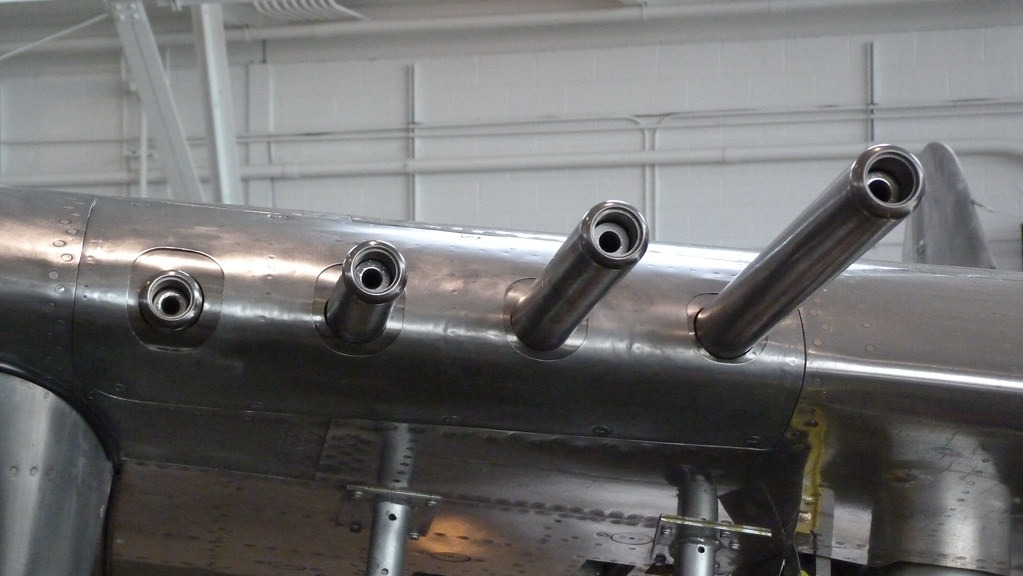
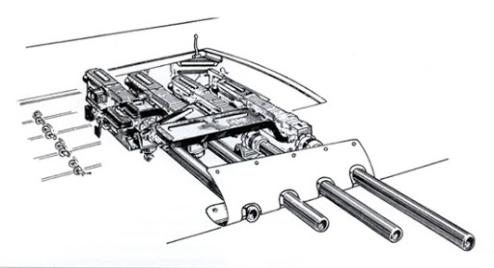
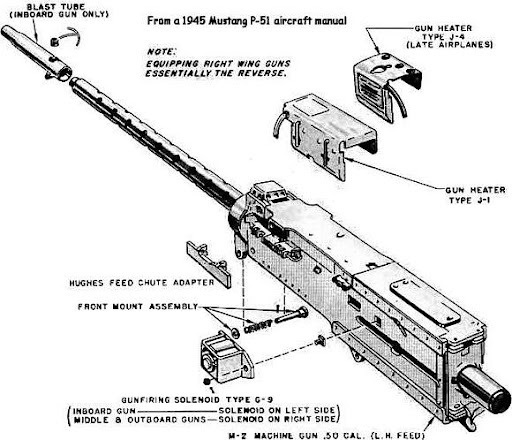
Install for a P-51.
Such mounting had the barrel screw directly into the wing blast tubes, which provided a physical mount for the barrel of the gun. The tubes without the shroud that mounts to the wing installed.
A closeup of the barrels with the shroud installed, take note of the actual barrels being slightly recessed inside the wing mounting shroud.
Now, by comparison, the P-38 does not have this luxury and instead simply has the air cooled barrels stuck out from the nose, much akin to how the guns are mounted on the turret flex mounts in bombers as already shown.
This is one of the many reasons as to why the P-38 in particular sports different dispersion, it is however no the only reason, but it is one of the most notable. (Clustered guns with no sequencer, airflow, and blast from nearby guns and many more issues also contributed to varying degrees as well.)
I never stated they were.
Thats very much so the case, Japan in particular has many such instances of having to down rate the rate of fire of their aerial machine guns because their high cyclic rates were causing extreme vibrations and subsequently terrible mounted accuracy. As they could not improve the rigidity of their existing aircraft mounts without re-designing aircraft they chose to down rate the cyclic of the guns instead. The type 3 HMG and 20mm Type 99 20mm are two such cases, with the former being downrated early in development, and the latter being redesigned into the Type 99 Mark 2 after 1942.
There is going to be a extreme amount of difference if your mount permits the weapon move or vibrate when firing, if you want the best modern day example of this, look no further than the famed 2A42 30mm cannon of the Russian Armed Forces.
Do you ever wonder how that gun achieves such abysmal dispersion IRL? Its not just the gun itself, its the fact that it’s mounts are very loose and it’s barrel is totally unsupported, allowing the entire gun to be wiggled by the barrel’s flex during firing. Russia attempted to correct this with the 2A72 by both downrating the rate of fire and also physically mounting the barrel to other rigid objects, such as the 100mm gun on the BMP-3, and guess what, the 2A72 is a vastly more accurate system, yet, it fires the same exact rounds at the same exact pressures.
EG such is why so many new 2A72 or derived guns are equipped with these rigid frames around their barrels as well.
If we really want to go deep into the weeds on this we can also look at what Carlos Hathcock did to his M2HB, making it the world’s first anti-material sniper rifle, but we can go into that for fun later.G
A M2HB isn’t an aircraft MG and comparing single shots to full auto fire also makes no sense.
Full auto fire causes massive vibrations in guns, hence why NATO autocanons have such low RoF, since advanced fire control systems make high RoF to increase hit chance redundant, while high accuracy results in less ammunition consumption.
For airplanes, RoF was always much more important than muzzle velocity, since without any computer you’re just more likely to hit firing as many rounds as possible.
You have to balance weight, accuracy, RoF and reliability.
But I won’t further discuss this. So far you just made some arguments but without any actual facts.
Why would I care how the guns are mounted in a P-47 vs. a B17.
What matters are the results.
Coming up with theories is completely pointless.
Like this: Well, actually, the P-38 has the guns close together, that’s why they shake each other, reducing accuracy 🤓
Boi, I wonder what happends when you cram 3-4 next to each other in a wing.
Not to mention the result where from a single .50cal being fired.
And these are some actual facts:
Full auto accuracy increase the less the barrel vibrates
→ Ammunition for synchronized guns = more consistent firing time = higher accuracy
So by all these means, the Breda-SAFAT is going to be a more accurate system compared to the US gun.
Which just happen to work on the same operating mechanism, making them ideal for comparing them against each other.
Now, can we say the gun was actually more accurate?
No. But we can assume it was, based on the characteristics.
Do we know, whether the Italian way of mounting the guns decreased the accuracy?
No, but we also don’t have any reason to assume they somehow mounted their guns in a way to lower the accuracy more than what others could do.
On the Ho-103 subject. Japanese Army fighters were really built to be as light as possible.
They considered to copy the Italian gun but apparently they couldn’t manufacture it.
So they copied the Browning design and built their own gun, which also happened to be lighter, less reliable and suffered from parts breakages, due to lack of certain alloys.
I think they tried to reduce the weight further but that project failed, as it made gun too unreliable.
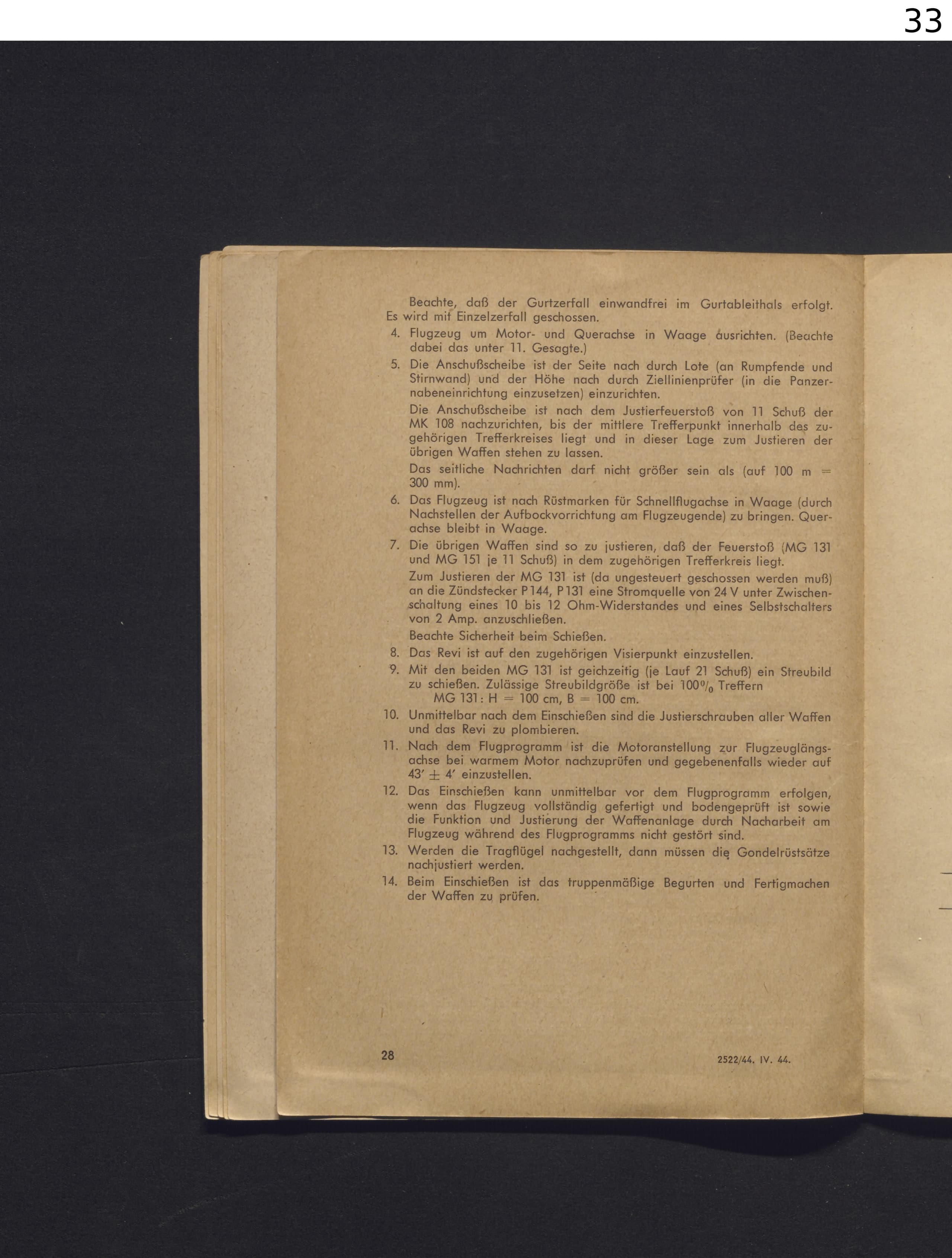
Thats from US report which investigated Japanese gun development of WW2.
In contrast, the Navy’s Type 3 which weight just as much as the US gun, since it was a carbon copy for the most part.
Good to see that you do not know why Hathcock’s M2HB was as accurate as modern, purpose built anti-material rifles today then.
Yes and no, NATO autocannons have their fire rates because that is doctrine, as a reminder, NATO fields multiple high ROF autocannons for air defense work which are some of the most accurate in their weight class, however, all of them sport exceedingly robust mounts and heavy, long, barrels, oh and the KDA’s known dispersion is 0.3 to 0.5 mils, or around 1.03 MOA to 1.72 MOA.
You should already know one of them very well.
That is once again very much so a doctrine thing. Tell me, why do you think a large portion of the world’s militaries in WW2 chose to adopt slow firing cannons sporting high velocity and low payloads (hispano) or low velocity with high payloads (MK108). Both weapons are inverses of eachother, yet were used quite often by their respective nations, such is because it fit the doctrine and targets those nations expected to face.
The US chose the AN/M2 early war for aircraft as it was seen as a sustainable middle ground, it had ample stopping power when used in the quantities on existing airframes, very high velocity for it’s class, leading to flatter trajectories, low maintenance, and very high ammo capacity. Said gun only began to be usurped when revolver cannons like the M39 started coming to be, which sport very high muzzle velocity for a cannon of it’s era at 1030 m/s, compare this to it’s direct, british counterpart, the ADEN cannon at 795 m/s and we see another instance of the hispano vs MK108, expected targets and warhead vs velocity, once again, doctrine.
Pot calling the kettle black here.
Because it effects the actual accuracy results of the weapon.
You don’t seem to care much about those it seems.
Ah yes, the theory, which is directly sourced from the document you posted.
I cant believe I have to post this again, pray tell what the line “THE VIBRATION OF THE GUN ON IT"S MOUNT IN THE WING” could possibly mean, I’m sure the gun IN ITS MOUNT is just somehow vibrating on it’s own and such is totally not a factor of the myriad of moving objects INCLUDING THE GUNS AROUND IT causing such.
No no no, these guns are locked in their own physical realities they cannot possibly effect eachother, psh.
Hmmm yes, I wonder if the designers did something in that regard to mitigate that, like a shroud or something attached to the wing that mitigates vibrations from the operation of the guns…
Oh thats right I already posted about that.
Indeed and as already explained, you counter barrel vibrations by having a rigid barrel mount, which the P-38 does not have.
Incorrect on both accounts, longer barrels impart more effective spin on a round and lower velocity can actually lead to inferior ballistic properties.
If this had any actual merit then every single precision rifle manufacturer on earth are making their rifles wrong.
You want velocity + weight on a high precision round unless your round is carrying a titanic amount of mass like a naval rifle, which we are very much so not doing here.
Just take .338 Lapua Magnum for example, one of the current gold standards for high accuracy marksmen rounds, your average long range round is matching the likes of the M39 cannon at around 1030 m/s, such a round hold a record kill at 2475m and commonly sports a sub 0.5 MOA at 100 yards depending on the quality of the rifle. Now, lets grab a modern round that matches your description, low velocity, shorter barrel, 9x39, 290m/s velocity on average and a maximum range of 200 meters, and, from VSS, the most accurate version of a rifle sporting this round and a dedicated sniper mind you, it sports a 3 MOA at 100 yards.
Yeah, no hoss, thats not right at all.
Heck, I’ll go one step further and bring up the literal eternal rivalry that is the AK vs the AR, 5.56x45 vs 7.62x39.
Slow an fat vs, fast as heck and tiny.
The baseline M16A1 running M193 has an as designed maximum MOA at 100 yards of 1 at 993 m/s with a full 20 inch barrel.
The Type 2 AK-47 firing 57N231 has a as designed maximum MOA at 100 yards of 4 at 730 m/s with a 16.3 inch barrel.
No son, that is very much so not how firearm accuracy works.
Hey, you got one correct, yes, a heavier barrel makes the barrel more rigid, and thus reduces barrel yaw when firing, leading to higher accuracy.
Such is not an issue for any .50 BMG weapon as all military quality rounds bar SLAP are match grade. If you trying to say that .50 BMG somehow has variable powder burn or ignition, I’m sorry to say, such was not a thing in the US since the 1910s, people were not using black powder or early smokeless powders in the US during WW2.
“Just happen” short recoil operated MGs were not uncommon in WW2 my guy, if you want a more direct weapon to compare to the Ho-103 would be the gun to go to.
Per aircraft, well yes, you would just need to find the dispersion tables like you did for the P-38 above, I would also wager that there is some test stand data somewhere for both guns which would be a far more apt comparison as it would remove the primary cause of additional deviation, the aircraft and it’s mounts.
Except that your choice of characteristics do not show such.
For Italian aircraft, not yet as information on their mounts have not been posted, for US aircraft, very much so yes, as I have already explained at length above.
Emphasis on “mor that what others do”. There is also no reason to assume they would mount their weapons in a superior way to the P-38, as nothing to either way has been posted.
Oh they could, the gun is very similar to the SAFAT indecently, I also find your statements here quite interesting as, at least per the TM documents on the matter, the primary reason Japan attempted to make domestic rounds for these guns was due to the inconsistencies found with the existing Italian rounds, and such is mirrored in the statements I can find for the SAFAT itself, namely it’s HEIT round, which is one of the rounds Japan procured.
Indeed, and once they downrated it to 800 RPM and fixed the mounting issues in later aircraft it went on to have a quite successful career in comparison to the Ho-103 which it more or less supplanted.
Anyway, I would implore you to actually go and spend some time learning how ballistics actually work when it comes to proper long rang accuracy.
There is a ton online as to how this field of study works, if you are ever actually interested in using a firearm yourself, I would highly recommend at least partially delving into it as it will stop you from making some rookie mistakes, EG, using a barrel with a incorrect twist rate on a 5.56 rifle for certain ammunition. (Will cause your fired rounds to tumble like crazy)
Why does it need to be superior when the gun is going to be inherently more accurate?
It can just be as effective. It’s just a gun mount to keep it steady. It’s not that complicated to figure out.
You can also place a M2HB in a plane and it will inherently be more accurate than a light barreled version.
You know, I’m glad you brought up the MG131, since it just so happens to be one of the guns that I have dispersion values for based upon it’s mountings, along with some of it’s cousins that were used on similar aircraft.
Now, currently you claim that mounts do nothing to the dispersion of a weapon, correct?
These values come from data scraped from the aircraft manuals that mounted them and testing reports.
MG-17 nose cowling mount - 6 to 8 mils
MG-17 wing mount - 3.5 mils
MG-131 nose cowling mount - 10 to 12 mils
MG-151/15 through engine mount - 3.5 mils
MG-FF through engine mount - 2 mils
MG-FF wing mount - 3.5 mils
MG-151/20 through engine mount - 3 mils
MG-151/20 inner FW wing mount blast tube - 7 mils
MG-151/20 outer FW wing mount no blast tube - 8 mils
MK 108 through engine mount - 3.5 mils
Most interesting, the mean dispersion changed based upon where and how the guns were mounted, with the extremely rigid through engine mounts having the best accuracy possible, while the nose cowling mounts which had no blast tube and no barrel support, sport impressively bad dispersion by comparison to every other type of mounting.
Because contrary to your claims, ballistics don’t work the way you seem to think, and having a shorter, heavier barrel, can assist with short range accuracy, but can also be detrimental at actual range. At 25 yards any weapon can be accurate short of a blunderbuss, but when you begin to reach the laws at play become far more stringent.
Because its not being applied to the Breda in this situation as we do not know the mount quality of the comparing aircraft in this situation, as already stated multiple times now, the aircraft and the mounting of the gun in it can cause enough variance to skew the actual perofrmance of the mounted weapon.
If you want to have a actual, accurate and fair comparison, both weapons would need to be in a lead sled, on a test range, not onboard different aircraft.
Correct, that value you have there is cited in other books for other aircraft, which makes it’s validity dubious at best as the mounting for the same gun varied greatly, with even some aircraft, like the TBF Avenger, outright having totally different barrels. All of these guns in so many different mounts having the exact same MOA when other guns from other nations in differing mounts varied wildly in accuracy is just not possible.
Can you send me the Manual for the Mg 131 with the dispersion? I have been looking for that.
But you dont mean this right? Because this isnt the standart dispersion, its the allowed Maximum dispersion.
I never said it was the standard dispersion, and if its the F-190A manual then yep thats what I believe was being referenced. Such was aggregated list from documents that just had any actual value present on the IL-2 forums.
Currently going through said forums to see if more direct citations exist.
For the MK108 it would be “Flugzeughandbuch Ta 152 H-0/H-1 Schusswaffenanlageteil 8A”
Feel free to do so yourself as well since you’ve posted nothing to actually back up the SAFAT having the accuracy you claim. Surprised I did not call that out earlier since you claim 3 mil dispersion with no actual source.
Don’t tell me you think accuracy and precision are the same thing.
lol, lmao even.
Amazing, you just keep saying wrong things, I’m getting the feeling you have 0 idea how firearms work at this point.
I don’t claim it I strongly suggested it based on the fact that a gun with a shorter, thicker barrel is going to be more accurate.
Then you disagreed and started to ramble on about the the mounting of the guns.
Your reluctance to share the sources for your information just shows that you’re not interested in a discussion but just want to get onto people’s face that they are wrong while you are right.
If I want to prove a point, I drop the truth bomb on them to show I’m undoubtfully right, not make excuses.
Nope, this sounds very much so like a claim to me, to that same end I’ve already explained at length that shorter barrels that are heavier do not lead to higher accuracy at long range.
Which I’ve already explained the relevance of such multiple times now, I will not again.
I regret to inform you that you are the only one here not posting any sources. The only citation you have is of the dispersion of the guns mounted on the P-38H.
You have then went on to attempt to lecture me on how you think ballistics works with no citations, no evidence and have failed to disprove or even comment on any of the examples and references I’ve maid on the actual subject of firearm ballistics.
Still waiting on such. I would love to see you somehow try to prove that barrel twist rate is exclusively tied to barrel length or the myriad of other fundamentally flawed claims you’ve made.
I can lead a cow to water but I cannot make them drink.

 Install for a P-51.
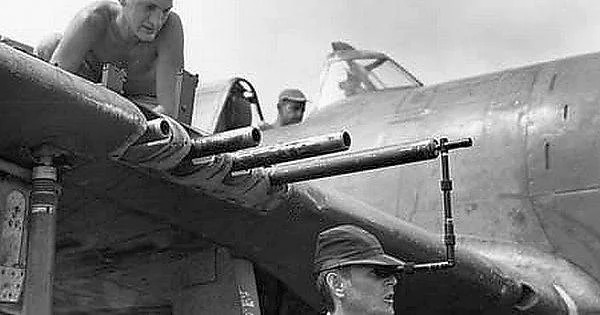 The tubes without the shroud that mounts to the wing installed.