- Yes
- No
History
In 1980s, United States Navy Carrier Air Wing (CVW) was extremely capable. The F-14, F/A-18 and A-6 (and also EA-6B) combinations which built on the assumption of Soviet threats, had no blind spots. However the good old days were passing slowly. The massive cuts in defense budget due to the collapse of the Soviet Union in 1992 had a significant impact on the Navy.
At that time, the Navy had serious trouble in finding successor of aging A-6. The A-6F program was cancelled, and A-12 Avenger II was failed because of cost overruns. The last attempt, A/F-X which was planned to replace both F-14 and A-6, was also dropped. However the Navy still had some options, the JSF and new enlarged F/A-18.
Back in the late 1987, the McDonnell Douglas evaluated several ‘advanced’ F/A-18 concepts in Hornet 2000 study. Although there were differences between each design, they shared the common characteristics: enlarged wings, more powerful engines, more fuel. This concepts form the basis of new strike fighter, F/A-18E/F. Despite of some criticism (especially from F-14 supporters), there is no doubt that the E/F Hornet was most suitable and affordable near-term option for Navy.
The first flight of Super Hornet happened in November 29, 1995. It entered service in 1999, and achieved initial operating capability two years later. Even after introduction of F-35C, the Super Hornets are still remains the backbone of naval aviation. It is also nicknamed ‘Rhino’, which was inspired by protruded IFF antenna on its nose.
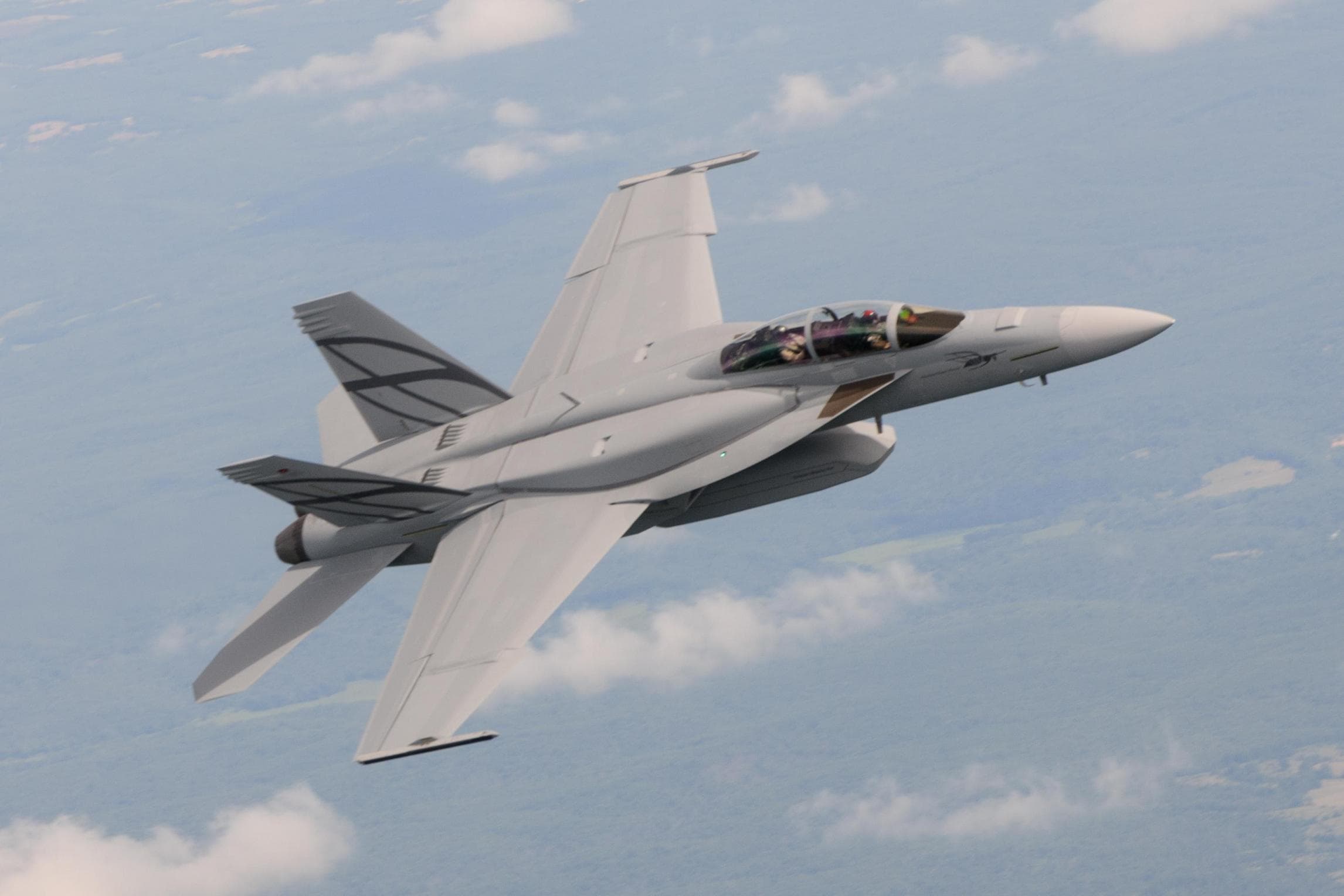
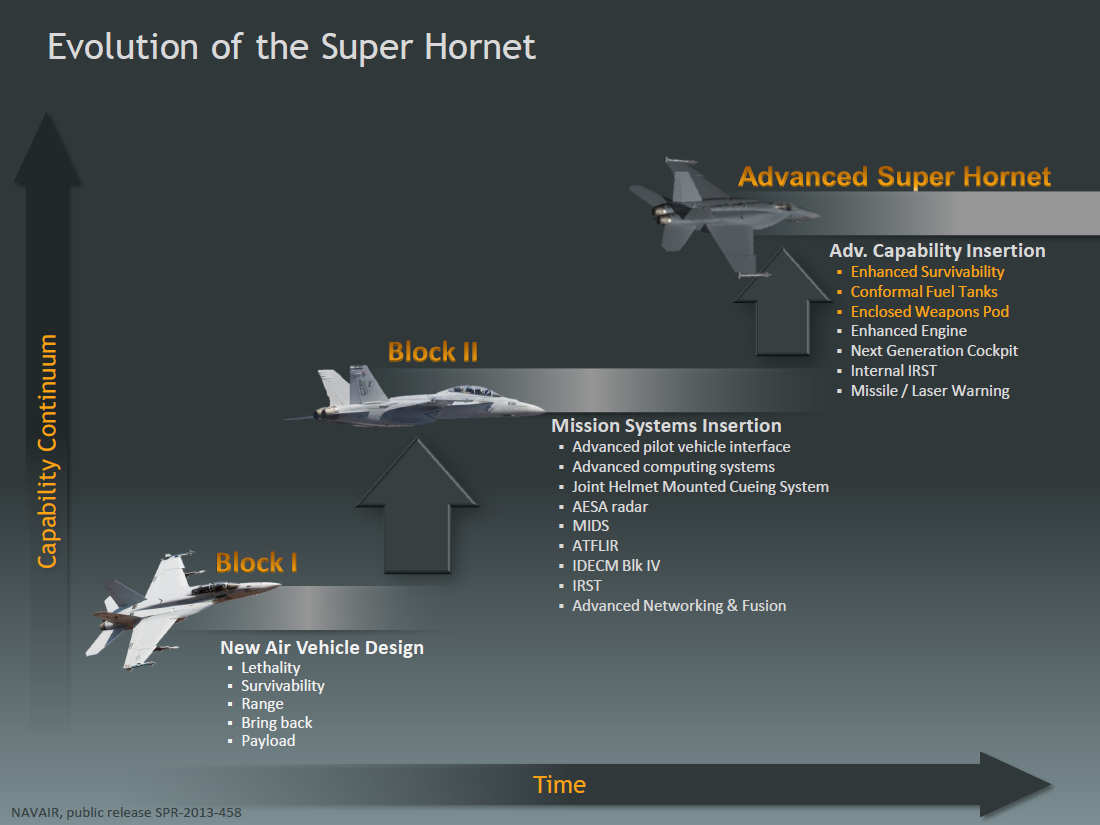
Later, the Super Hornet once again evolved to the Advanced Super Hornet. This variant which made its prototype flight in 2013, was a further development of the Block II and used to be referred as the Super Hornet Block III. However there were no customers interested in ASH, so it never became operational. But some of the key elements such as the more advanced glass cockpit and the DTP-N survived, and later adopted in the real Super Hornet Block III.
Design
Airframe
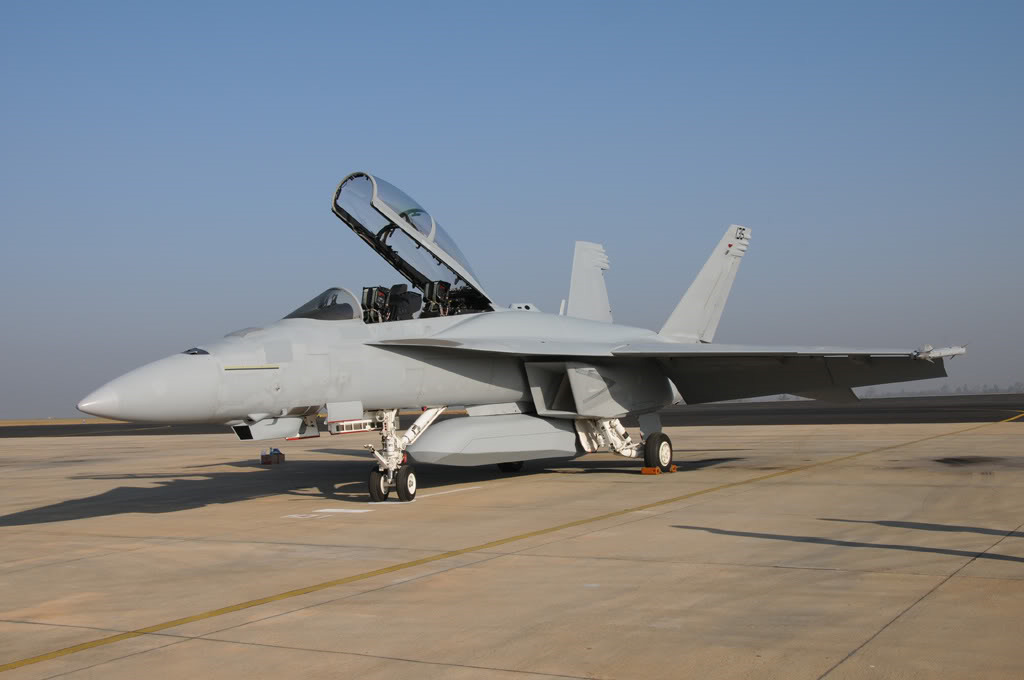
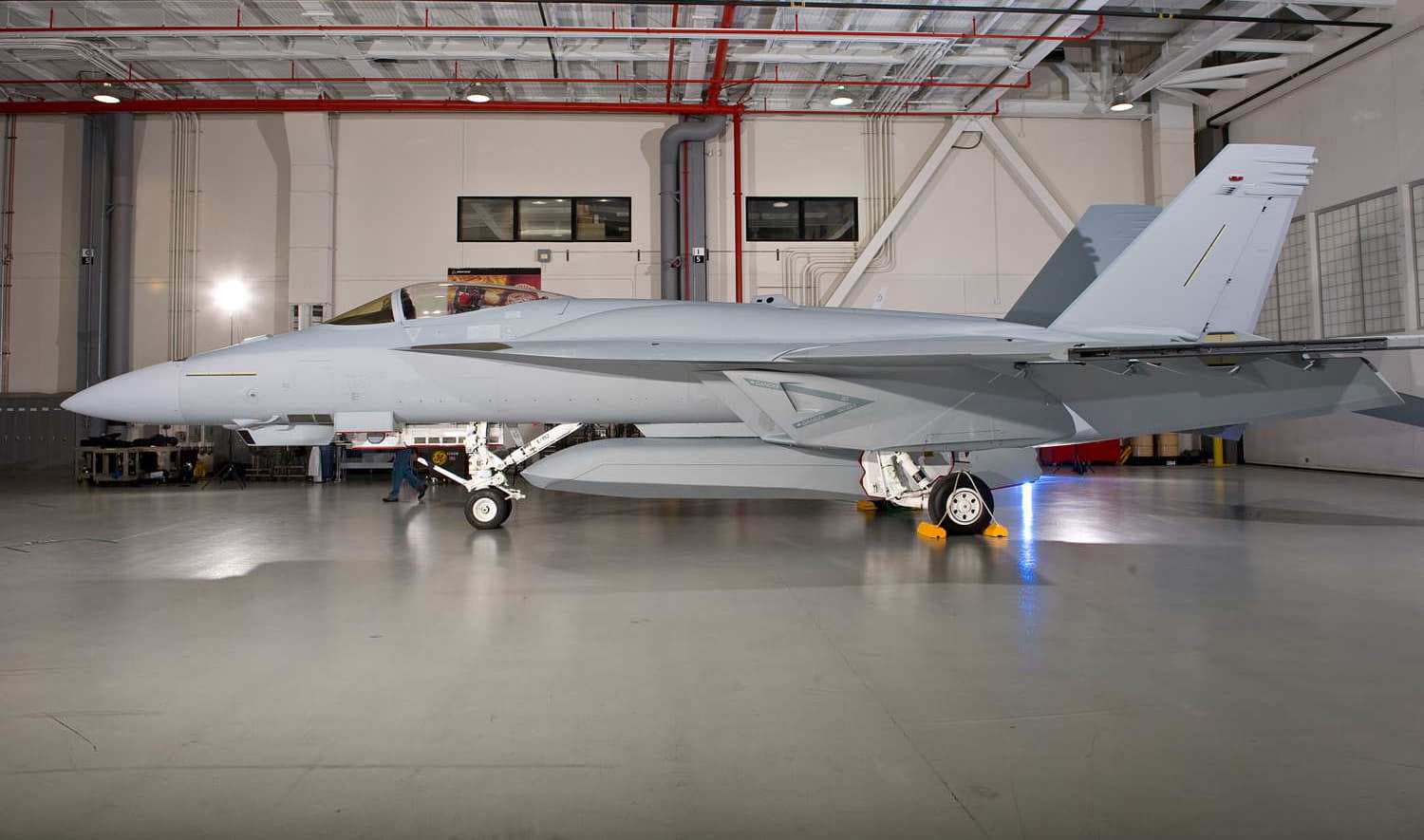
The Advanced Super Hornet is based on the F/A-18E/F Super Hornet Block II. The best known is the two-seat version based on the F/A-18F, but a single-seat version was also built.
Conformal Fuel Tank
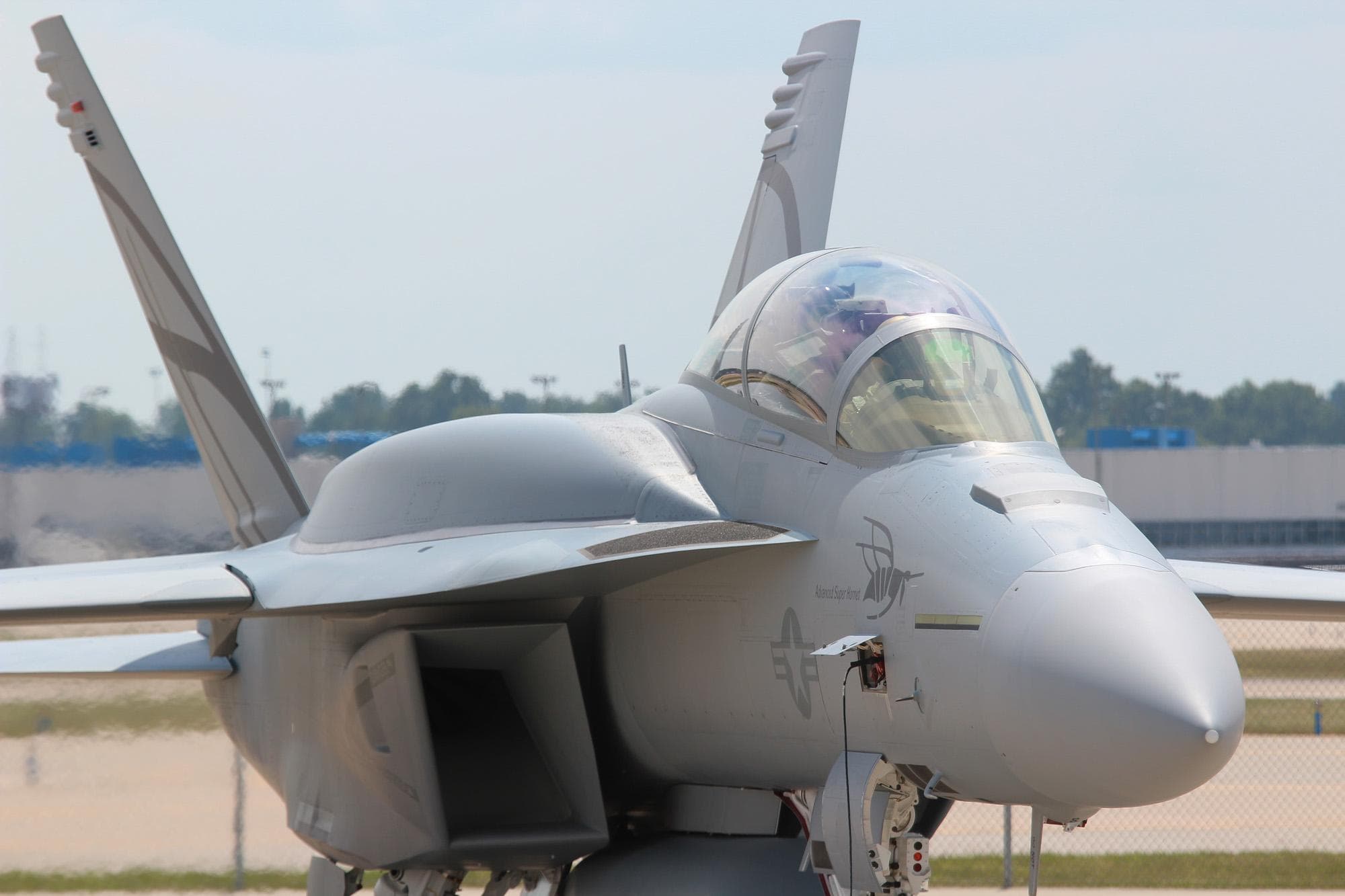
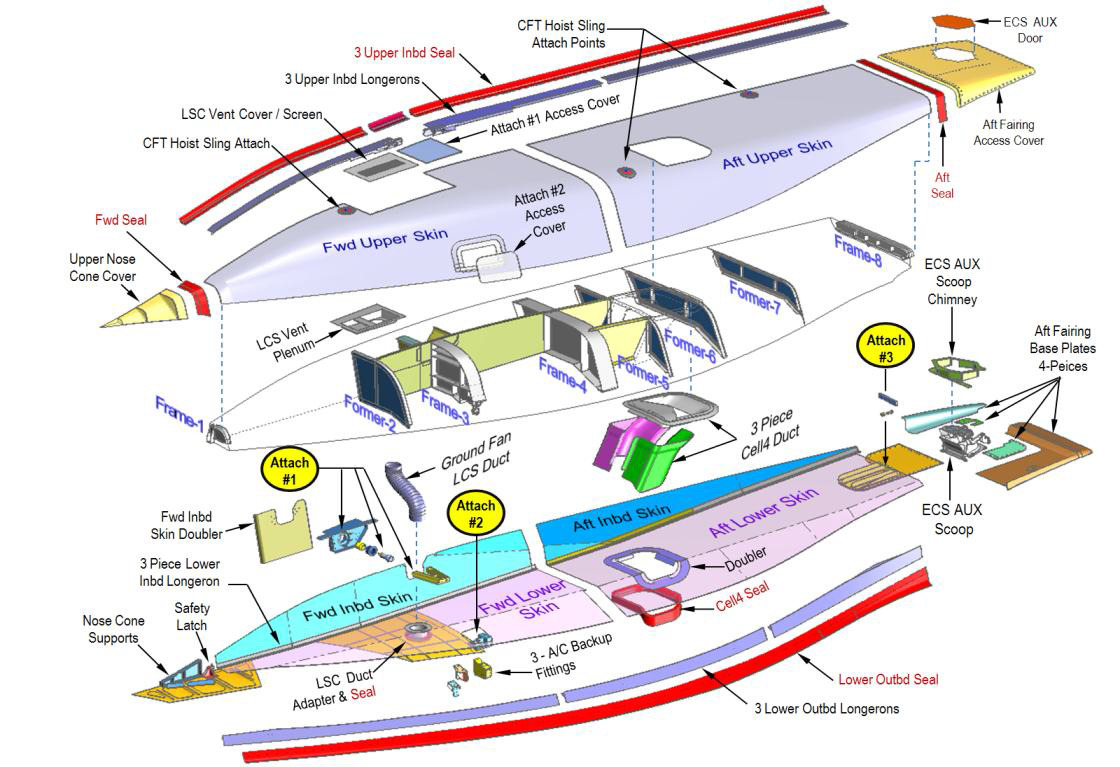
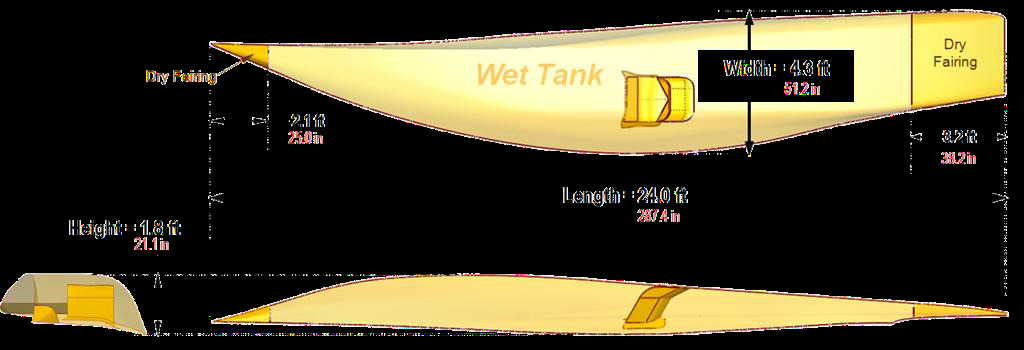
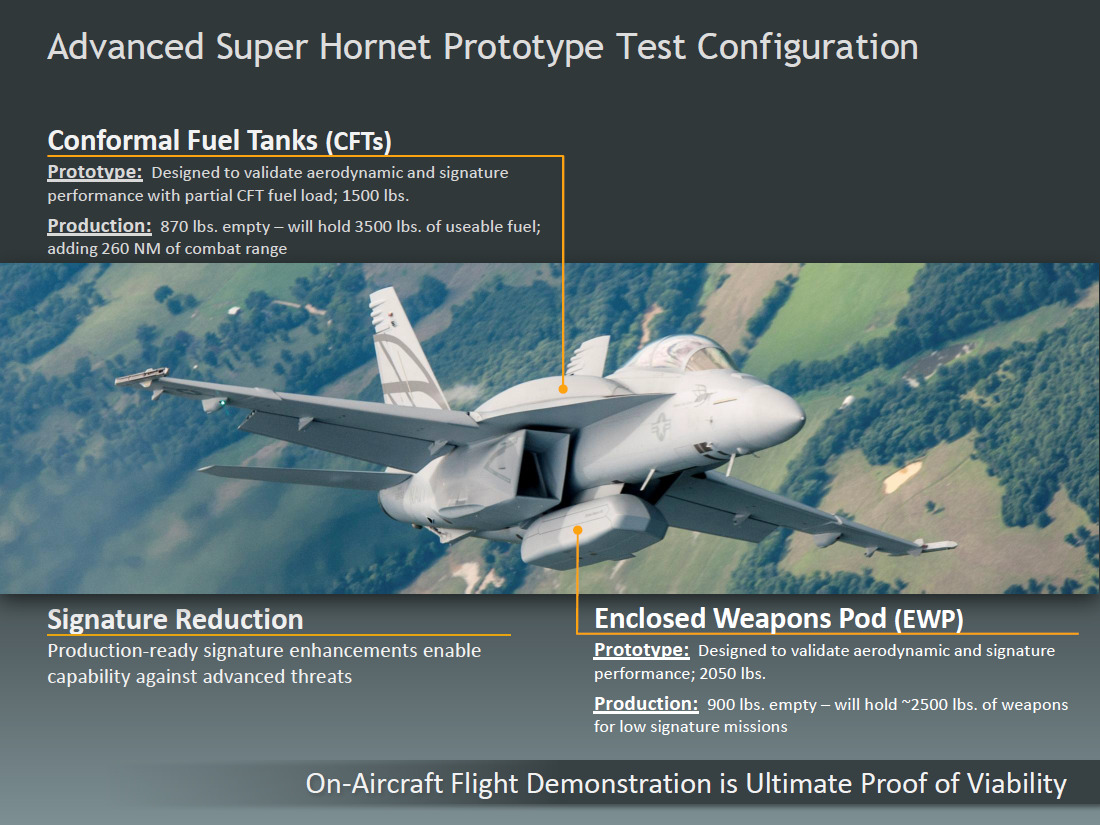
The Advanced Super Hornet featured the conformal fuel tank (CFT) for the Super Hornet. Each CFT weighs 870 lbs (395 kg), and can hold 3,500 lbs (1,587 kg) of useable fuel.
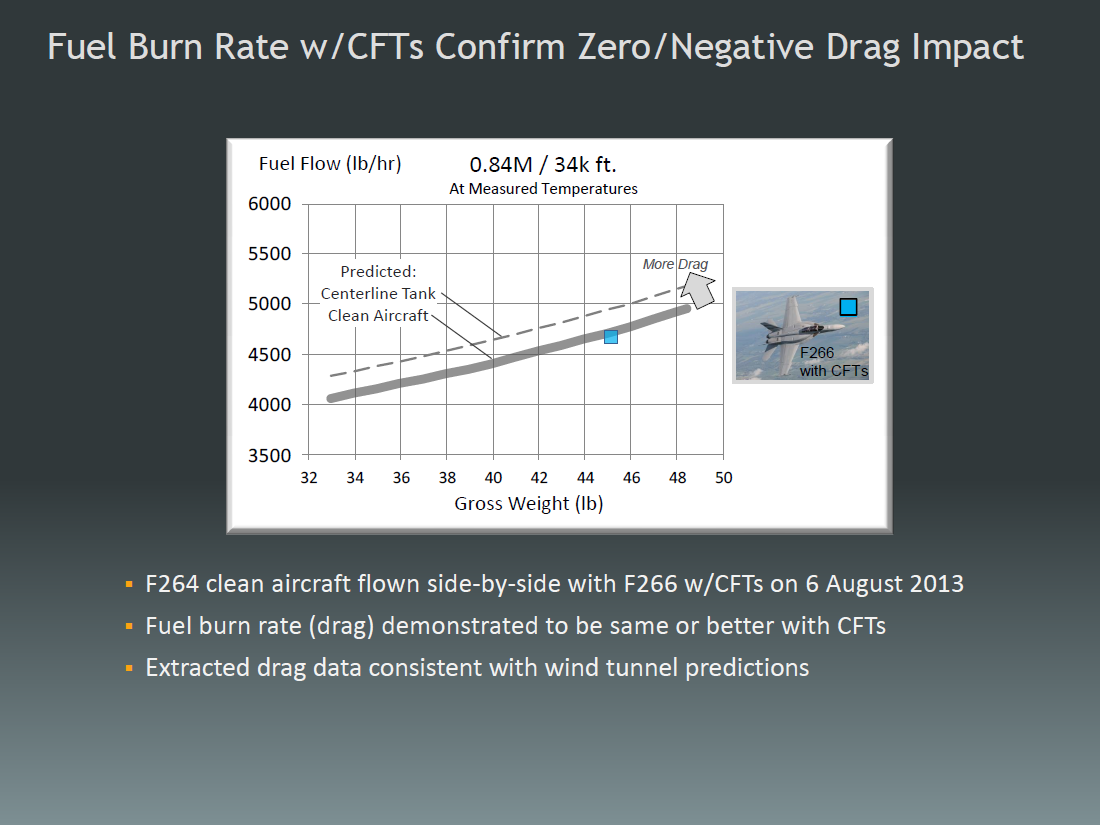
The Super Hornet’s CFT is notable for zero negative impact on drag. In fact, it not only has no parasitic drag, it actually reduces drag even further.
A prototype of the CFT was actually built and subsequently considered by the Navy, but the project was discontinued in 2021 due to issues in the carrier environment.
Engine
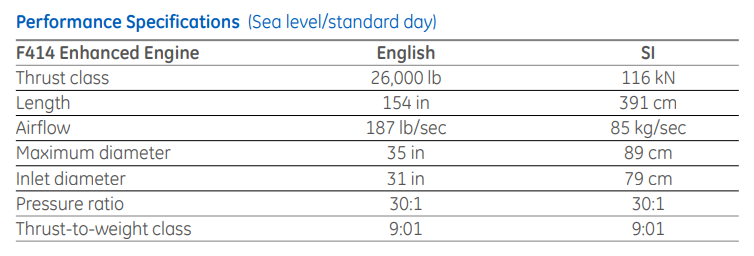
The Advanced Super Hornet demonstrator uses General Electric F414-GE-400 engine like the normal Rhino. However the F414 Enhanced Performance Engine (F414 EPE) with 26,000 lbf of thrust (20% increase over normal F414) were proposed. According to the GE, the F414 EPE could be upgraded from the legacy F414 engines by retrofit.
Radar cross section reduction

The Advanced Super Hornet retains all radar cross-section (RCS) reduction features of the F/A-18E/F. Most of gaps are filled with form-in-place (FIP) sealant or conductive FIP sealant, and corrosion-proof radar absorbing material (RAM) was applied in many places including inlet lip , duct, vertical tail openings, vents, screens, flap hinges and fairings, pylons, external tanks. A multi-layer RAM is also used in few locations.
This made Rhino the least observable U.S. non-stealth fighter, with a same level of RCS (1 m²) to the Eurofighter or Rafale.


One more thing to note is the engine inlet device (EID) located in front of F414 engine’s inlet guide vane. The EID, usually known as “radar blocker”, is fixed in place rather than rotate and conceals engine fan blade from radar wave. This helps significantly with RCS reduction, while also making it harder to identify via NCTR.
Avionics
Radar


The Advanced Super Hornet uses AN/APG-79 active electronically scanned array (AESA) radar, which is based on AN/APG-73 radar. It consists of 1,100 T/R modules with a power of 21 KVA and cooling performance of 15.6 kW.
The APG-79 features superior detection/tracking range, ability to track twice as many targets than APG-73 and performing scan with up to 2,800 radar beams per second. According to Raytheon, it could scan at nearly the speed of light.
EO sensors

Specifications of AN/ASQ-228 ATFLIR

Weight: 420 lb (191 kg)
Resolution: 640 × 480 pixel
Field of view:
- NFOV: 0.7°
- MFOV: 2.8°
- WFOV: 6.0°
For air-to-ground mission, Super Hornet could mount AN/ASQ-228 ATFLIR on station 5.
Pilot device


Joint Helmet Mounted Cueing System (JHMCS) provides a collimated symbology/imaginary and FLIR/IRST pictures to pilot. It could also be used in conjunction with radar and AIM-9 missile for high off boresight target acquisition.
Armament, Countermeasures

In terms of weapons, Advanced Super Hornet retains all capability of the F/A-18E/F.

Just like normal Super Hornet, ASH is equipped with four AN/ALE-47 countermeasure dispensers that could hold 30 chaff or flares each.


In addition to these, there is a three AN/ALE-50 or AN/ALE-55 towed decoy under fuselage, directly behind centerline hardpoint. These expendable decoys are connected to the aircraft with fiber optics to provide continuous jamming while ‘following’ aircraft.


data on TADIRCM pod


There is an optional DIRCM pod called Tactical Aircraft Directed Infrared Countermeasures. TADIRCM consisted with six 256 × 256 pixel FPA missile detector sensors and two Agile Eye II laser-based IR jammers, and could be mounted on outboard wing pylon. The pod was actually functional and performed well during tests.
Proposed Components
Note: This section deals with potentially unfinished equipment.
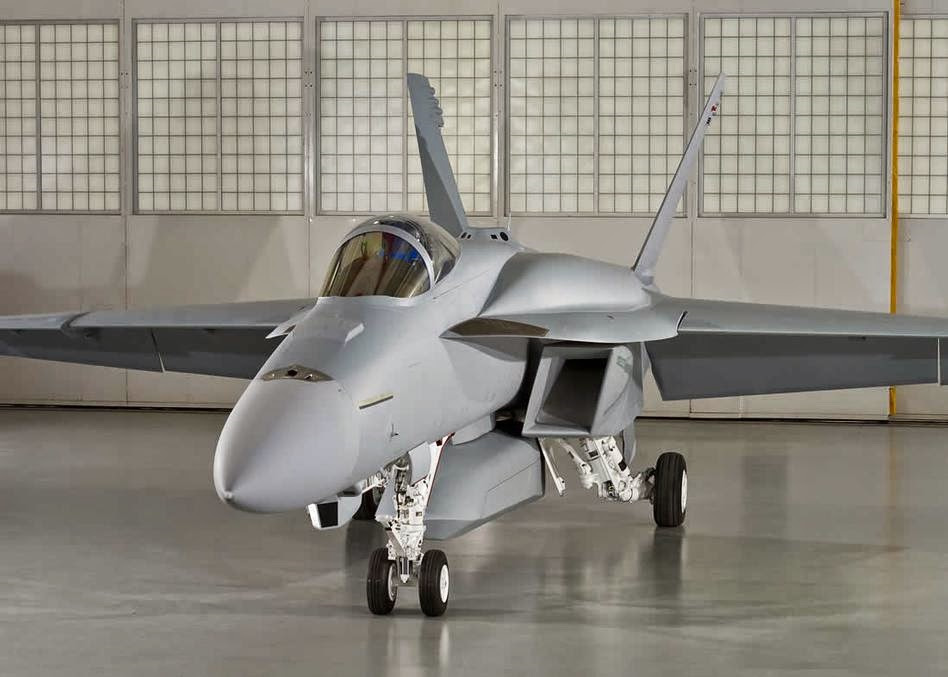
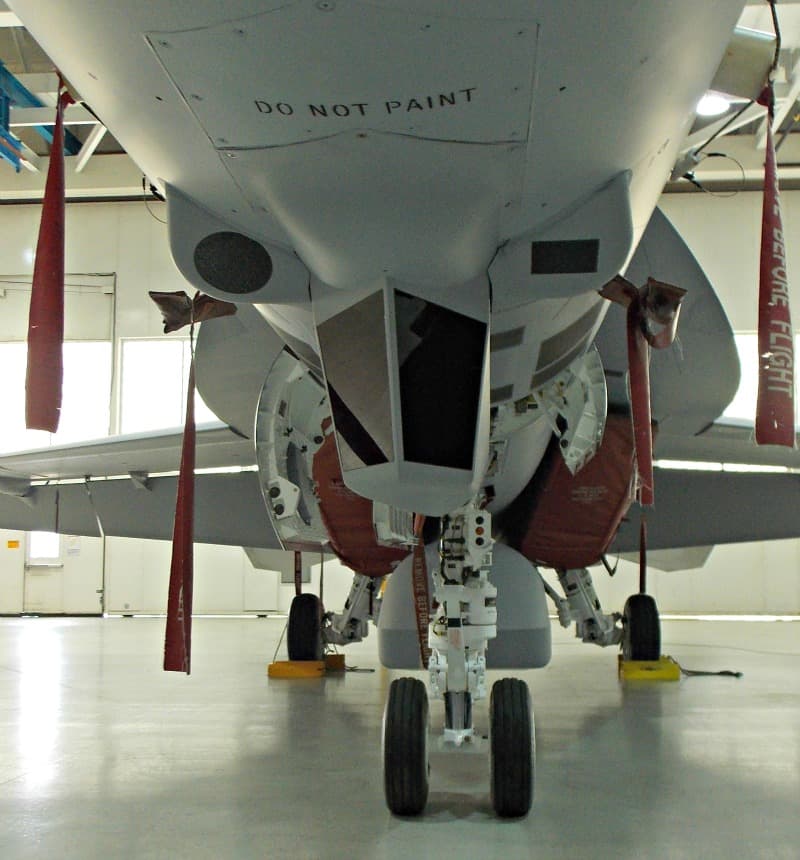
The Advanced Super Hornet was to be equipped with the IRST, MAW and LWS. The MAW/LWS sensors were distributed to provide full spherical coverage.
Structure of EWP
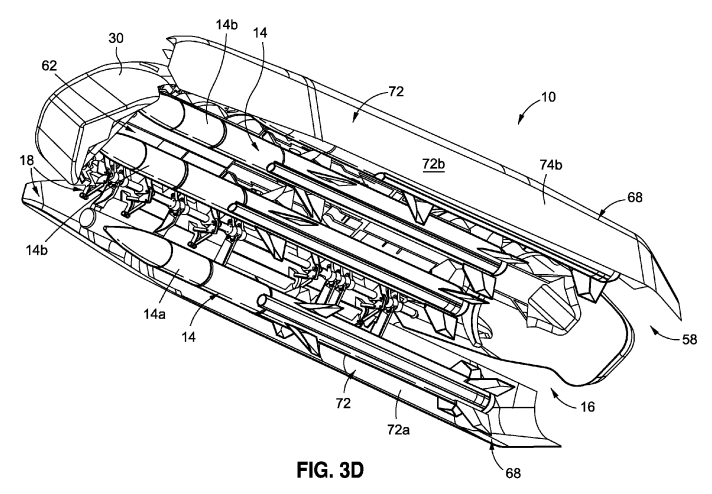
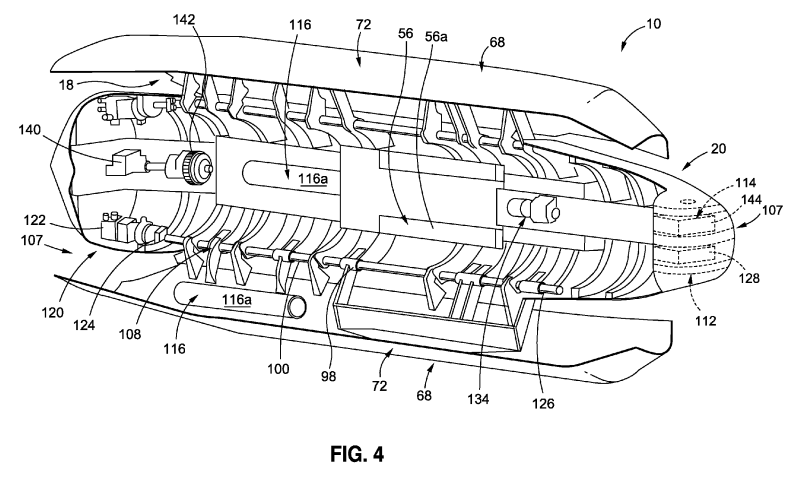
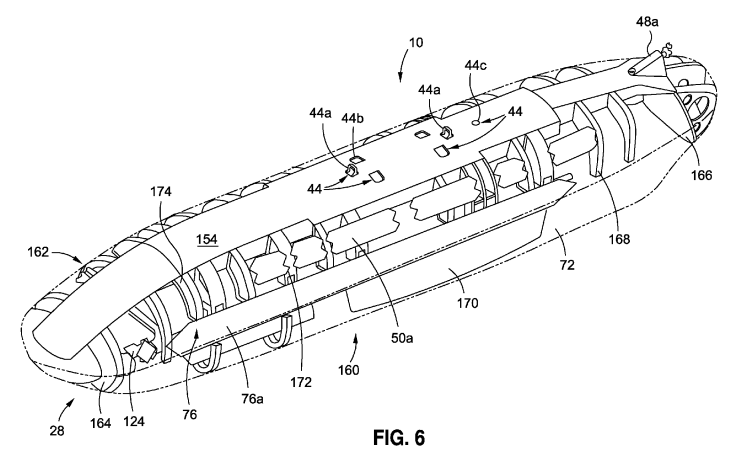
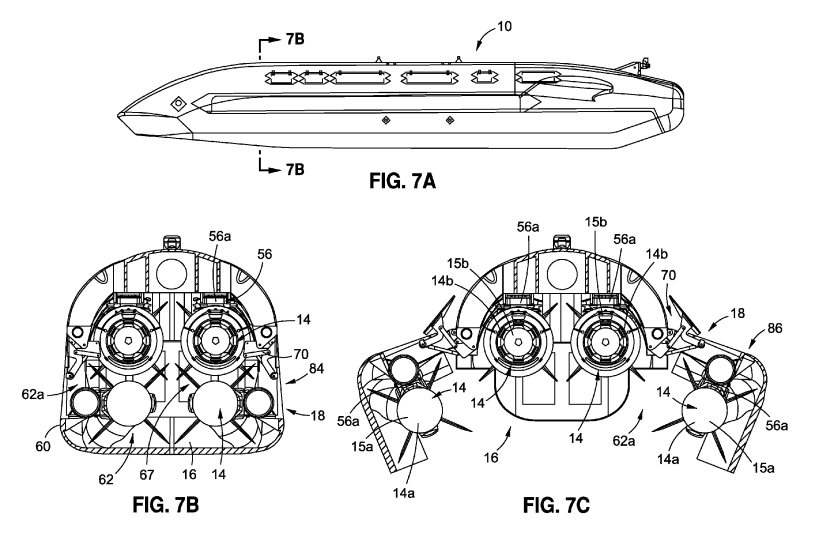
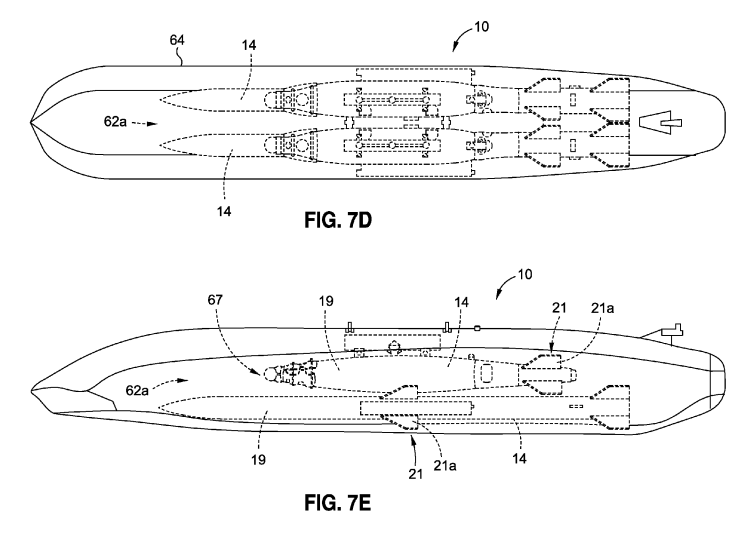
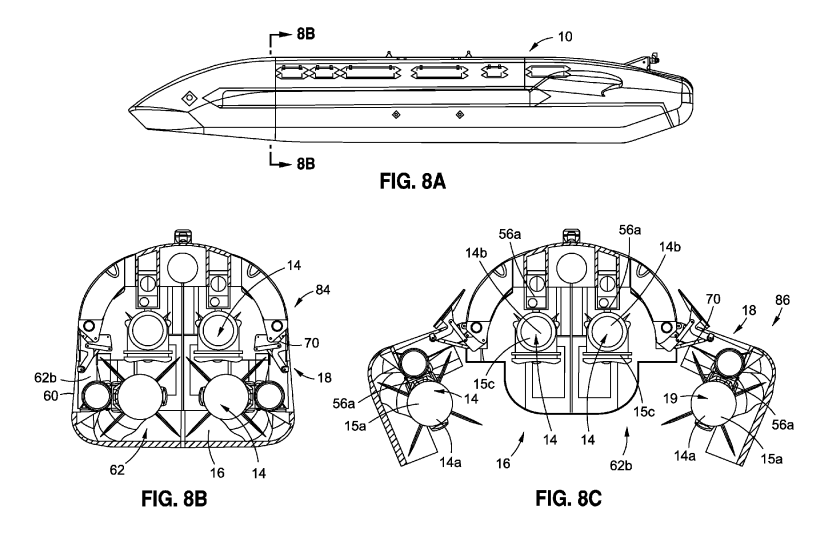
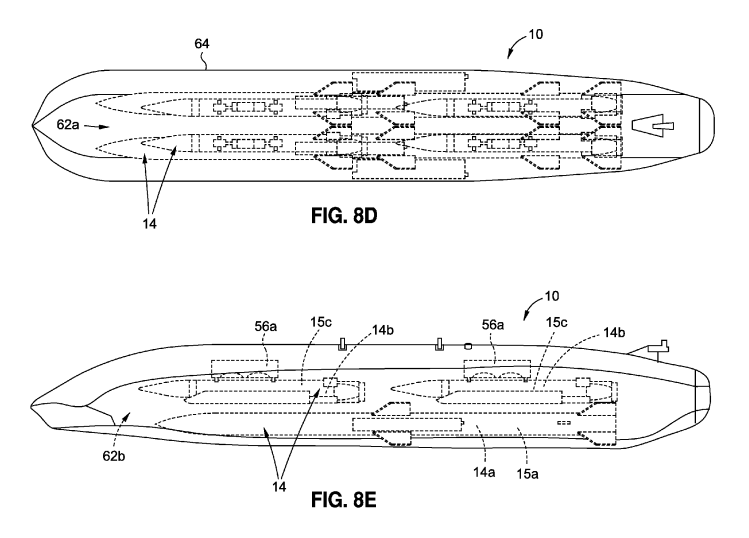
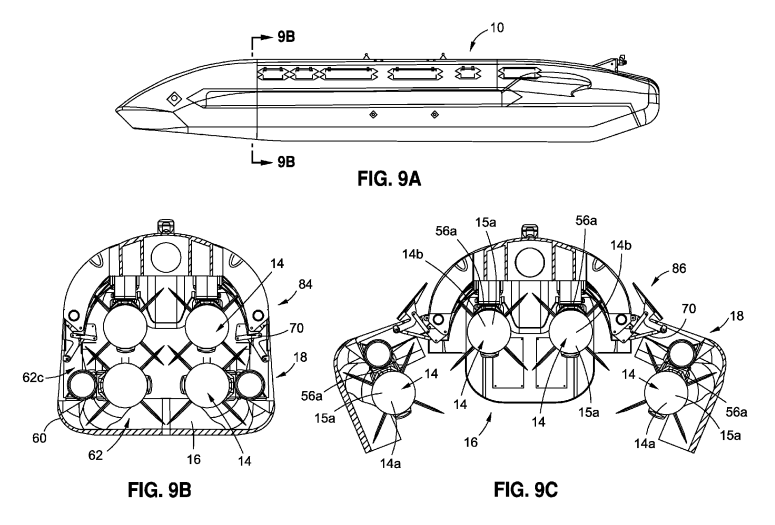
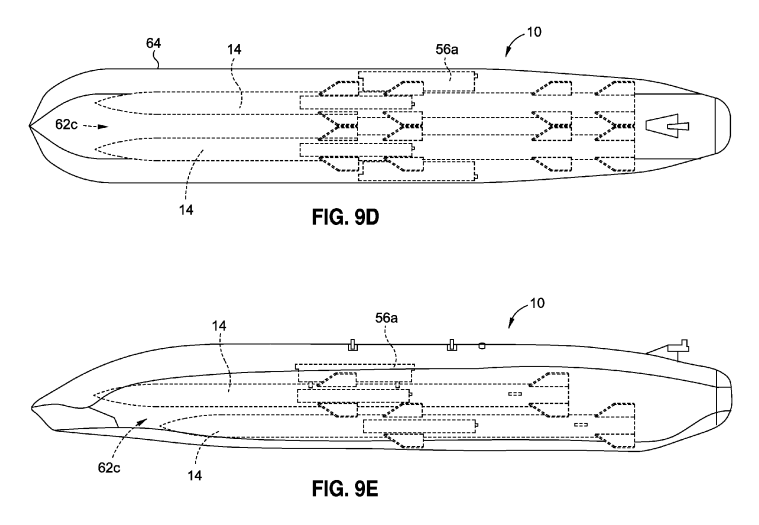
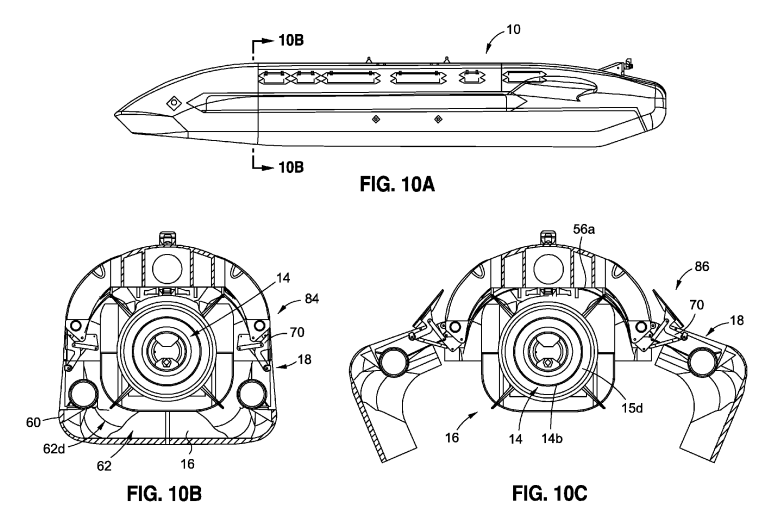
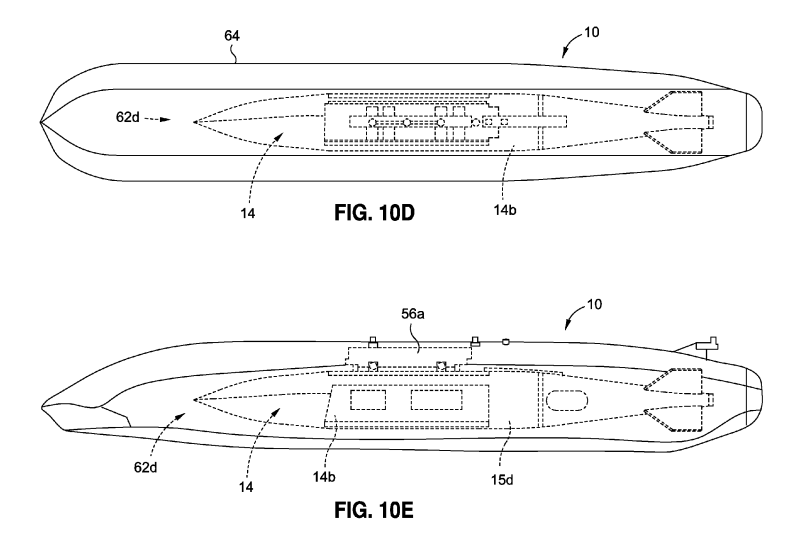
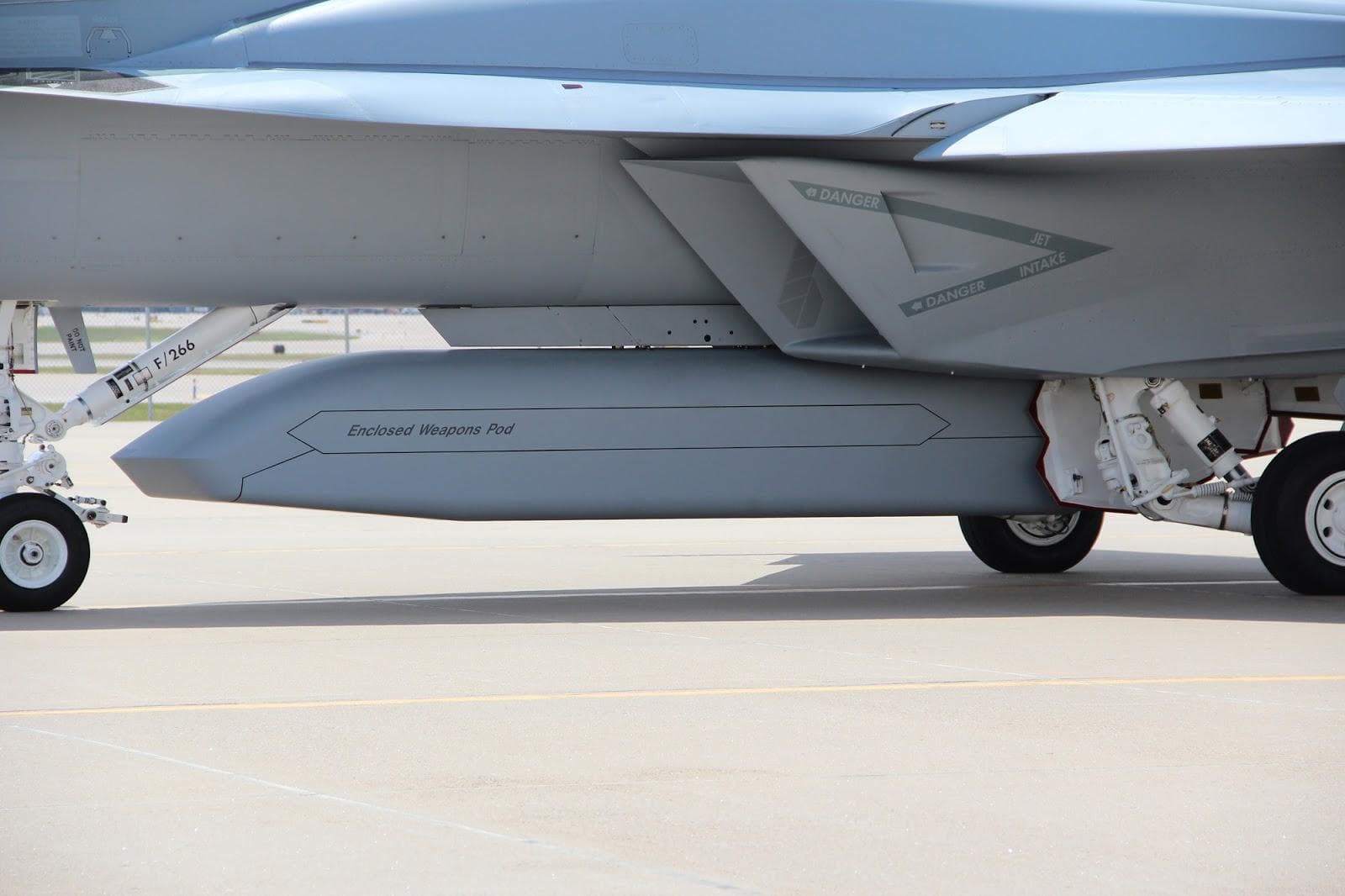
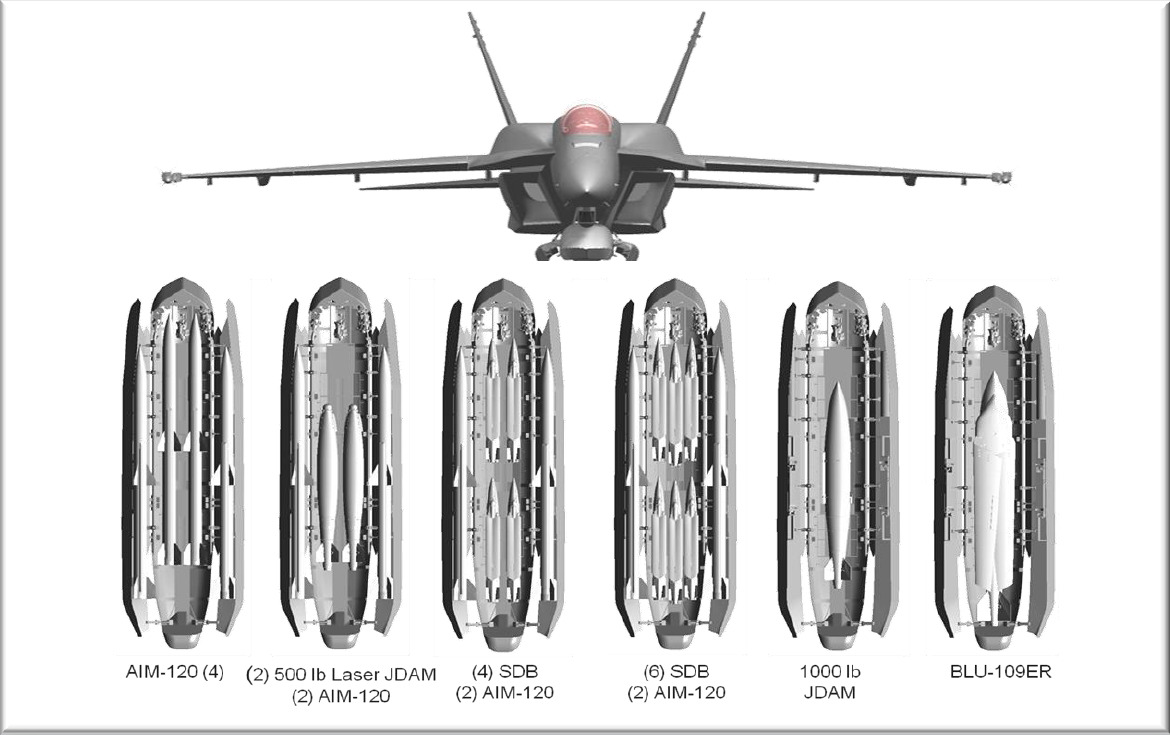
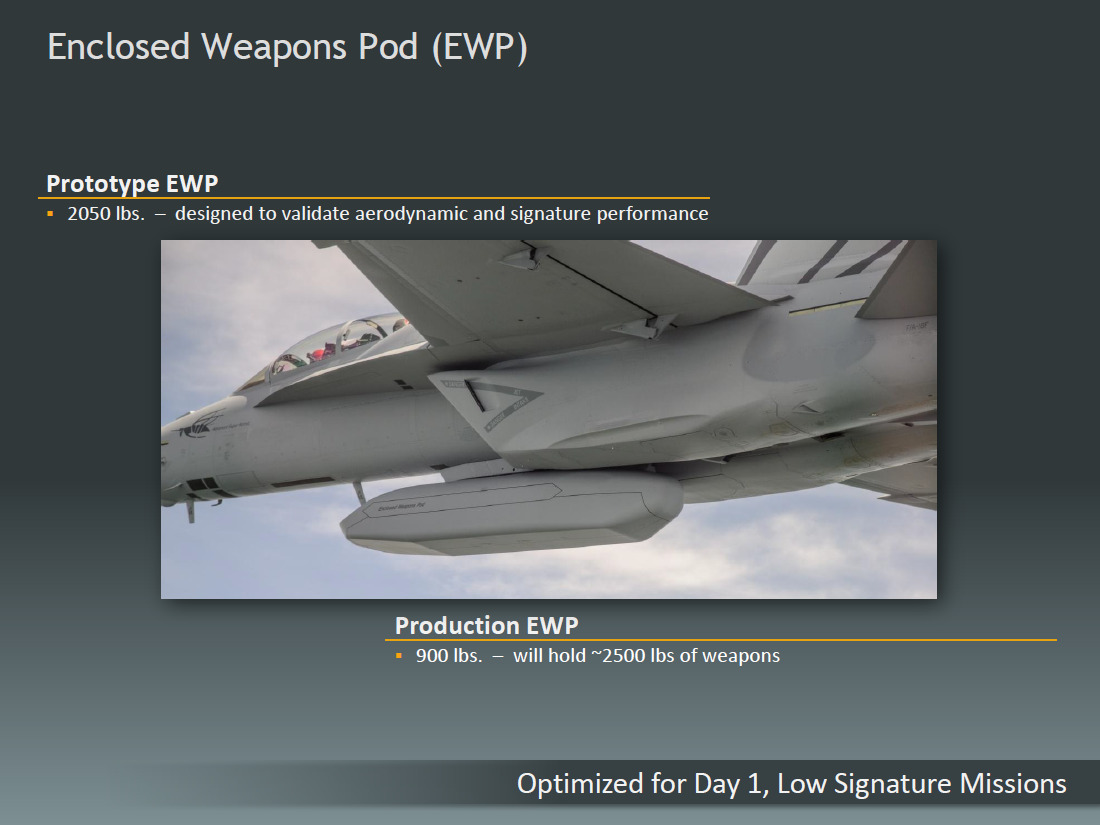
The EWP is probably the most iconic feature of the Advanced Super Hornet proposal. It is a stealthy weapon pod with 900 lbs (408 kg) of weight and ability to carry up to 2,500 lbs (1,133 kg) of weapons. Along with the CFT, this has the effect of reducing RCS by more than 50%. It could be loaded on centerline and inboard wing stations, and can be jettisoned.
Specifications
Crew: 1 or 2
Length: 60.3 ft (18.38 m)
Height: 16 ft (4.88 m)
Wingspan: 44.9 ft (13.68 m) w/ missiles
Wing area: 500 sq ft (46.45 m²)
Weight: 32,764 lb (14,862 kg) empty
Fuel (JP-8):
- Internal:
- Single-seater: 14,480 lb (6,568 kg)
- Two-seater: 13,560 lb (6,150 kg)
- Conformal: 7,000 lb (3,175 kg)
- External: 9,590 lb (4,349 kg) with 3× FPU-12/A fuel tanks
Powerplant: 2× F414 EPE
- Uninstalled maximum thrust: 26,000 lbf (116 kN)
Performances:
(Note: ‘fighter escort configuration’ is 60% internal fuel, 2× AIM-9 Sidewinder, 2× AIM-120 AMRAAM)
- Design limit speed (fighter escort configuration):
- @ Sea level: Mach 1.1
- @ 35,000 ft (10.6 km): Mach 2.0
- Altitude: 53,000 ft (16,154 m)
- Angle-of-attack limitations: None (in any symmetric configurations)
- Pitch rate: in exceed of 50°/s
- Approach speed: 125 kt (231 km/h)
- Radar cross section: 1 m² (0 dBsm)
Armaments:
- Hardpoints: 11 total (2× wingtip, 6× under wing, 3× fuselage) for 17,747 lb (8,050 kg) of ordnances
- Gun: 1× M61A2 20 mm gun (412 rounds)
- Weapon pods: 3× EWP
- 4× AIM-120B/C/D AMRAAM
- 2× AIM-120 + 2× GBU-38 JDAM/GBU-54 LJDAM
- 2× AIM-120 + 4× GBU-39 SDB/GBU-53 Stormbreaker
- GBU-31 JDAM/GBU-64 JDAM-ER
- Air-to-air missiles:
- 8× AIM-7P Sparrow
- 12× AIM-9M/X Sidewinder
- 12× AIM-120B/C/D AMRAAM
- 4× AIM-174B
- Air-to-surface missiles:
- 6× AGM-65E/F Maverick
- 4× AGM-84D Harpoon
- 4× AGM-84E SLAM
- 4× AGM-84H/K SLAM-ER
- 6× AGM-88A/B/C HARM
- 6× AGM-88E AARGM
- 4× AGM-158C LRASM
- 18× AGM-179 JAGM
- Guided bombs:
- 4× AGM-154A/A-1/C JSOW
- 7× GBU-12/16 Paveway II
- 4× GBU-24B Paveway III
- 4× GBU-31 JDAM
- 11× GBU-32/38 JDAM
- 10× GBU-53 Stormbreaker
- 11× GBU-54 LJDAM
- Unguided bombs:
- 11× Mk 20 Rockeye cluster bombs
- 11× Mk 82/83 general-purpose bombs
- 4× Mk 84 general-purpose bombs
- 11× Mk 82 Snakeye high-drag bombs
- 11× Mk 83 AIR high-drag bombs
- 11× Mk 84 AIR high-drag bombs
Avionics:
- Radar: AN/APG-79
- RWR: AN/ALR-67(V)3
- Targeting pod: AN/ASQ-228 ATFLIR
- HMD: JHMCS
- Night vision device: Vision Systems NVCD
Countermeasures:
- Chaff/Flare: 4× AN/ALE-47 (120 total)
- Towed decoy: 3× AN/ALE-50 AAED or AN/ALE-55 FOTD
- DIRCM: 2× TADIRCM
- ECM: AN/ALQ-214(V)4 IDECM
Sources
- A44-Boeing Super Hornet
- ADP014165 Affordable Evolution: Engineering Change Proposal [ECP] 6038 F/A-18E/F Forward Fuselage Structural Certification by Mark K. Holly
- Advanced Super Hornet: Outpacing threats in a 2030+ A2/AD environment…affordably! from Boeing
- Air Force Magazine July 2001
- AN/ALE-50 brochure from Meggitt Defense Systems
- AN/ALE-50 brochure from Raytheon
- AN/ASQ-228 ATFLIR brochure from Raytheon
- An Illustrated Guide to Modern Fighter Combat (1987) by Mike Spick
- Chapter 1 Radar Fundamentals by 곽영길
- Combat effectiveness of the joint helmet mounted cueing system by Taylor N. Thorson
- Configurable pod structure and store stowage and deployment system and method from Boeing
- F414 enhanced engine
- F/A-18 Hornet in Action No.214 by Lou Drendel
- F/A-18E/F Super Hornet: 21 Century Capability…Affordability…Now from Boeing
- F/A-18E and F/A-18F Hornet in detail & scale by Bert Kinzey
- Fighter Aircraft Avionics Part III by Solo Hermelin
- Fundamentals of Aircraft and Airship Design: Volume I — Aircraft Design by Leland M. Nicolai, Grant E. Carichner
- Lockheed Martin’s JAGM Successfully Completes Flying Qualities Tests On Navy’s Super Hornet from Lockheed Martin
- Low-cost PC-based high-fidelity infrared signature modelling and simulation by Shahid Baqar
- McDonnell Douglas F/A-18 Hornet (Classic Warplanes) by Mike Spick
- McDonnell Douglas F/A-18 Hornet and Super Hornet Owners’ Workshop Manual: 1978 onwards (all marks) by Steve Davies
- MDC 91B0220 F/A-18E/F Configuration Baseline from McDonnell Aircraft Company
- NAVEDTRA 12308 Aviation Ordnanceman 3&2 (1990) (Distribution Statement A)
- NAVEDTRA 14313 Aviation Ordnanceman 3&2 (2001) (Distribution Statement A)
- NSIAD 96-98 from United States General Accounting Office
- Osprey Combat Aircraft 46: US Navy Hornet Units of Operation Iraqi Freedom Part One by Tony Holmes
- Osprey Combat Aircraft Series: F/A-18 Hornet by Lindsay Peacock
- Raytheon-Boeing Team Completes JAGM Launcher, Missiles Flight Testing on Super Hornet from Raytheon
- Raytheon Advanced Forward Looking Infrared (ATFLIR) Pod by Gerald Uyeno
- Realizing the Combat Power of Network Centric Operations by CDR John ‘Snooze’ Martins
- Risk Management Lessons Learned from the APG-79 Radar Test Planning and Execution from VX-31
- Stealth Warfare by David Alexander
- Strike Fighter Evolution from Boeing
- Tactical DIRCM Jamming: Pod - Early Operational Assessment from Naval Research Laboratory
- Target and Clutter Characteristics 9.1. Target Cross Section
- Terminator ATFLIR brochure from Raytheon
- The Development of an Assault Directed Infrared Countermeasures (DIRCM) Program by Tracy Anne Barkhimer
- The F/A-18E/F Super Hornet: A Test Pilot Dispels The Myths by CDR Rob Niewoehner
- The F/A-18E/F Super Hornet: Tomorrow’s Air Power Today
- The Jet Engine from Rolls Royce
- The Journal of Electronic Defense Vol.38 No.6: Missile Warning for Fighter Aircraft from the Association of Old Crows
- Using Helmet Mounted Displays to Designate and Locate Targets in the Urban Environment by Freddie Paul Henderson
- WarbirdTech Series Volume 31: Boeing F/A-18 Hornet by Brad Elward
- Warplanes of the Fleet by David Donald