- Yes
- No
- German tech tree
- (independent) BeNeLux tree
- France: BeNeLux subtree
- other
- no/negative
TL;DR: A Belgian-built escort cruiser turned German Kanonenboot, with 105 mm, 37 mm and 20 mm German gun mounts, later returned to Belgium postwar.

History
History
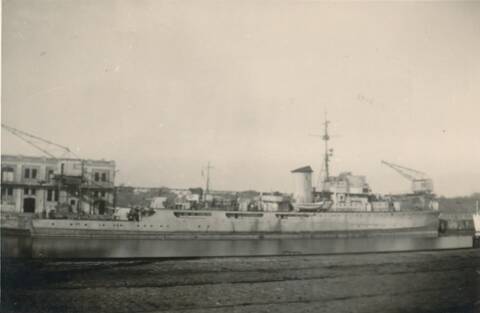
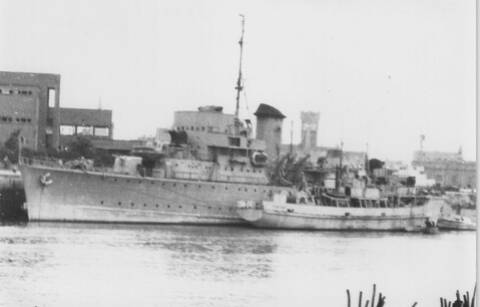
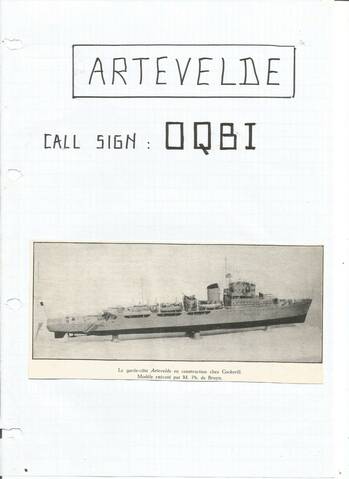
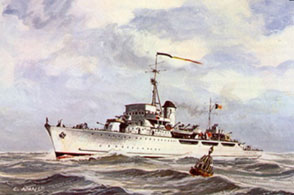
Crest of the BNC Artevelde in 1946The ship that would become K4 Lorelei began life as the Belgian Artevelde, one of two large escort vessels laid down in 1939. Designed by Cockerill as heavily armed fleet escorts for the small Belgian Navy, they were intended to mount 4 × 102 mm dual-purpose AA guns, a caliber planned specifically for these ships and not otherwise in Belgian service. Archival research suggests these 102 mm mounts were ordered abroad—possibly from Britain or Italy—but deliveries never took place before the German invasion of May 1940. Thus, Artevelde remained unfinished when Belgium capitulated.
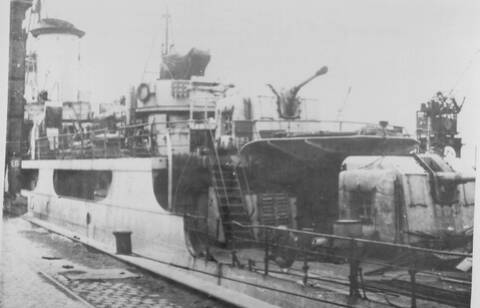
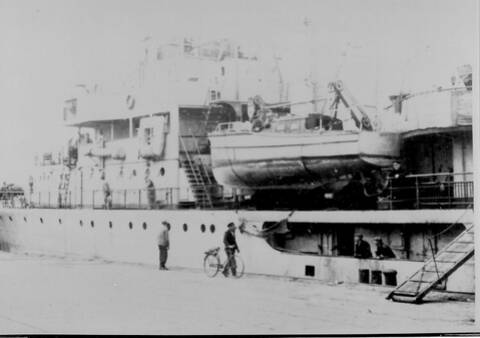
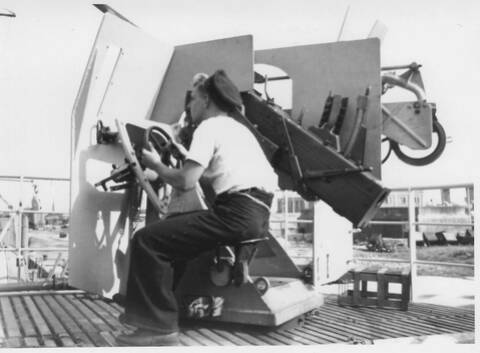
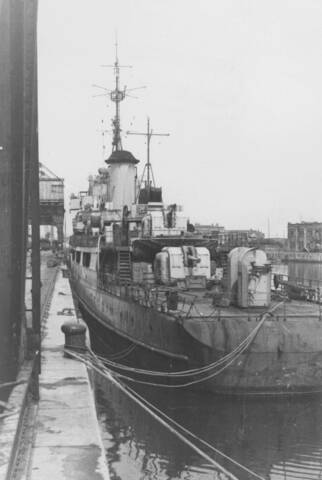
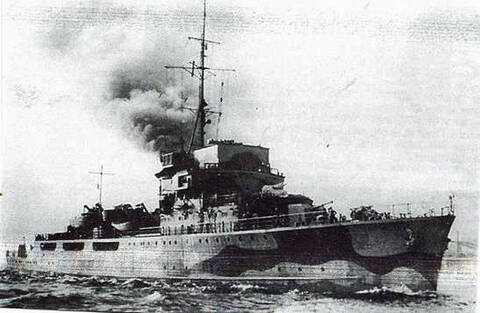
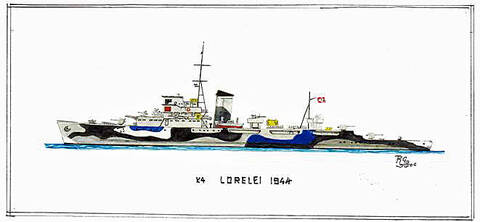
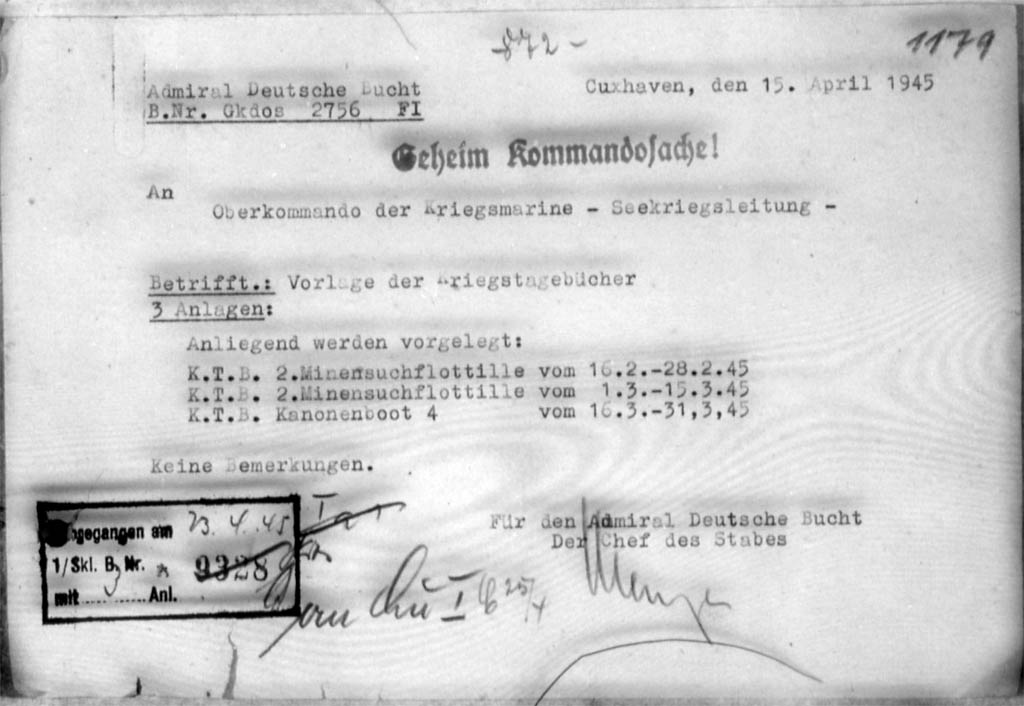
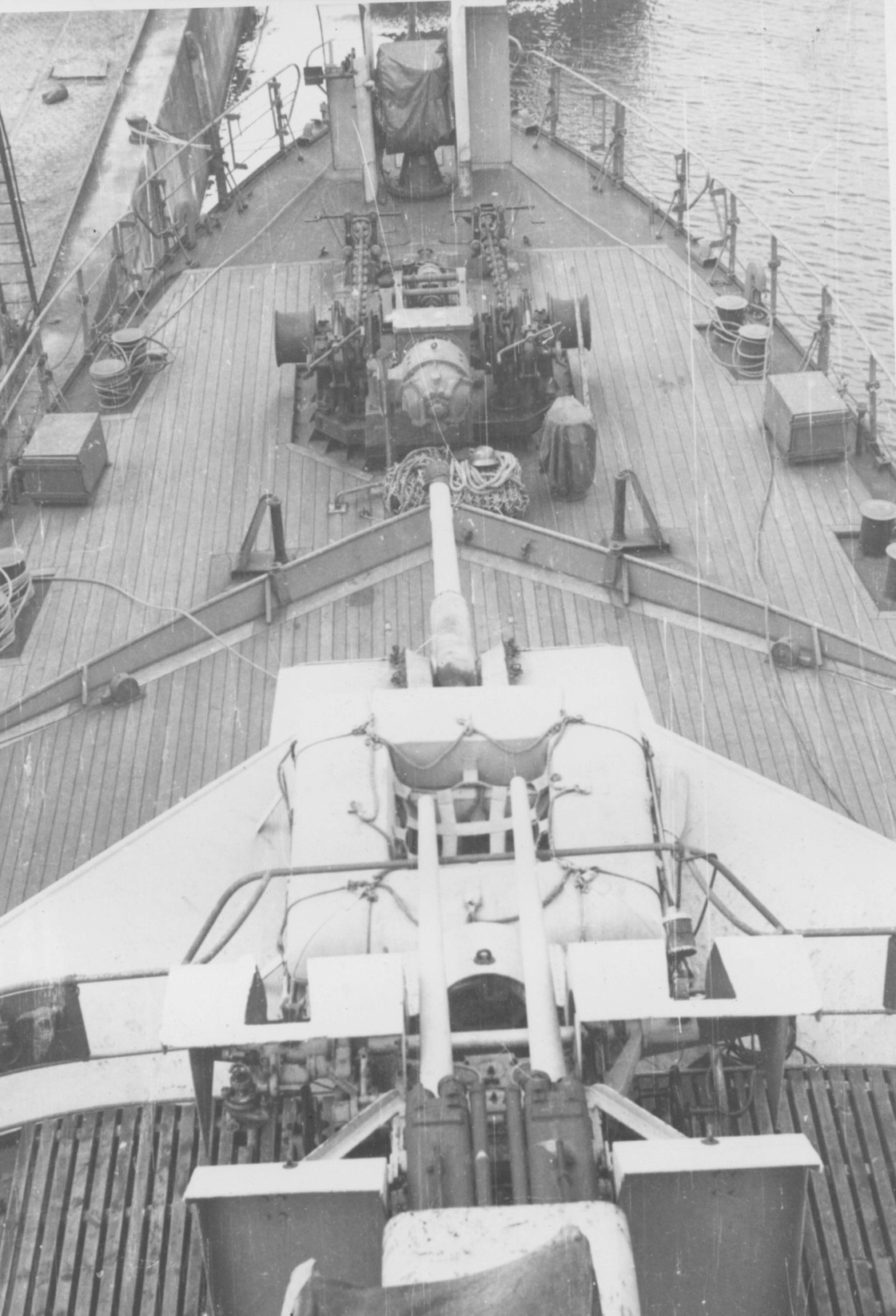
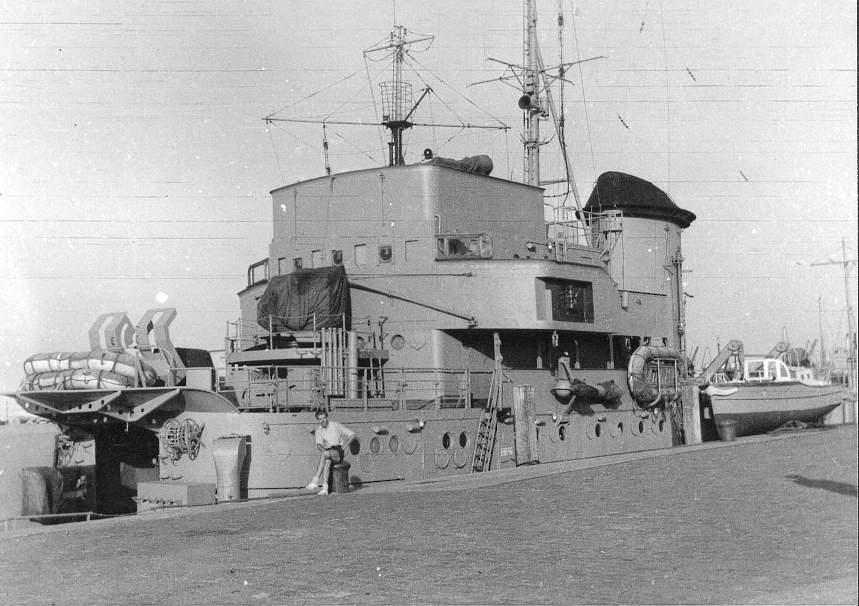
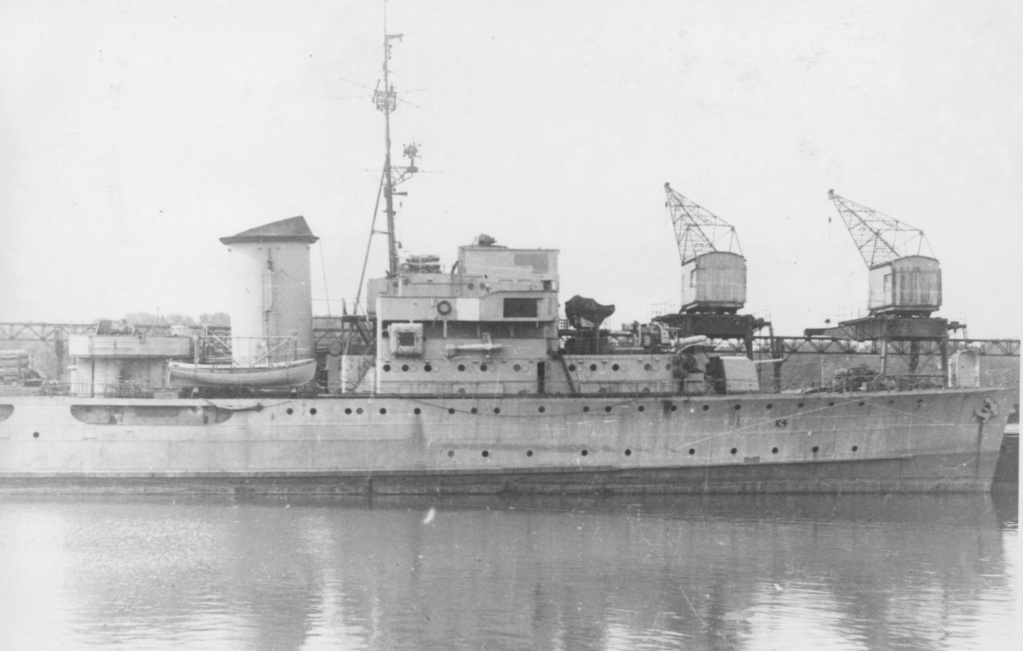
After the occupation, the Kriegsmarine took over the incomplete hull at Hoboken. Renamed K4 Lorelei, the ship was reconfigured as a Kanonenboot. Her armament was completely altered to German standards, receiving 4 × 105 mm SK C/32 naval guns, lighter AA defenses (37 mm and 20 mm Flak), and depth charge gear. This aligned her with German auxiliary warships rather than true destroyers—the Kriegsmarine never completed her as a Zerstörer, despite their shortage, precisely because her design did not fit that role.
Service in the Kriegsmarine
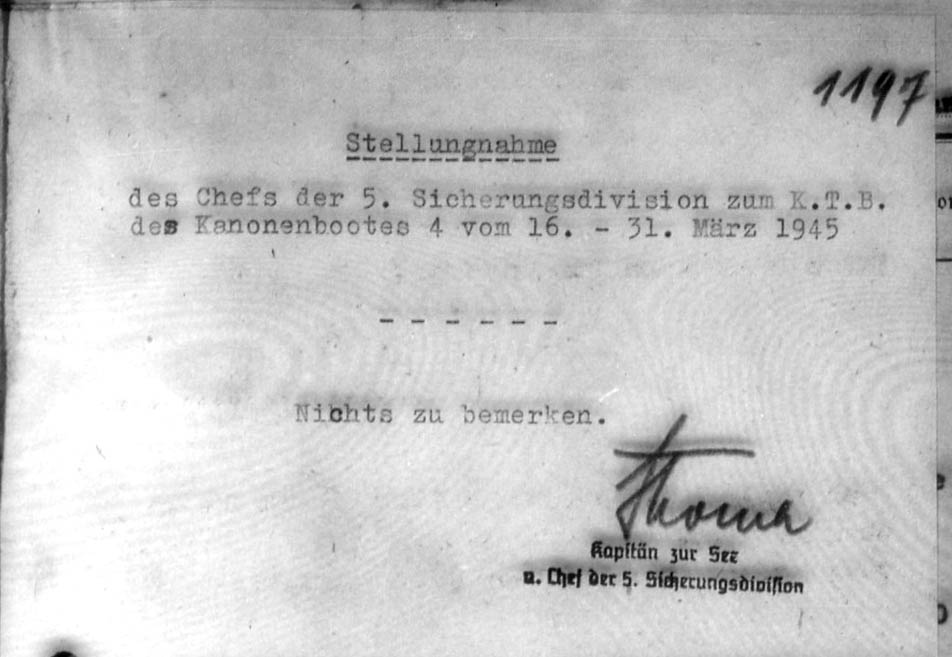
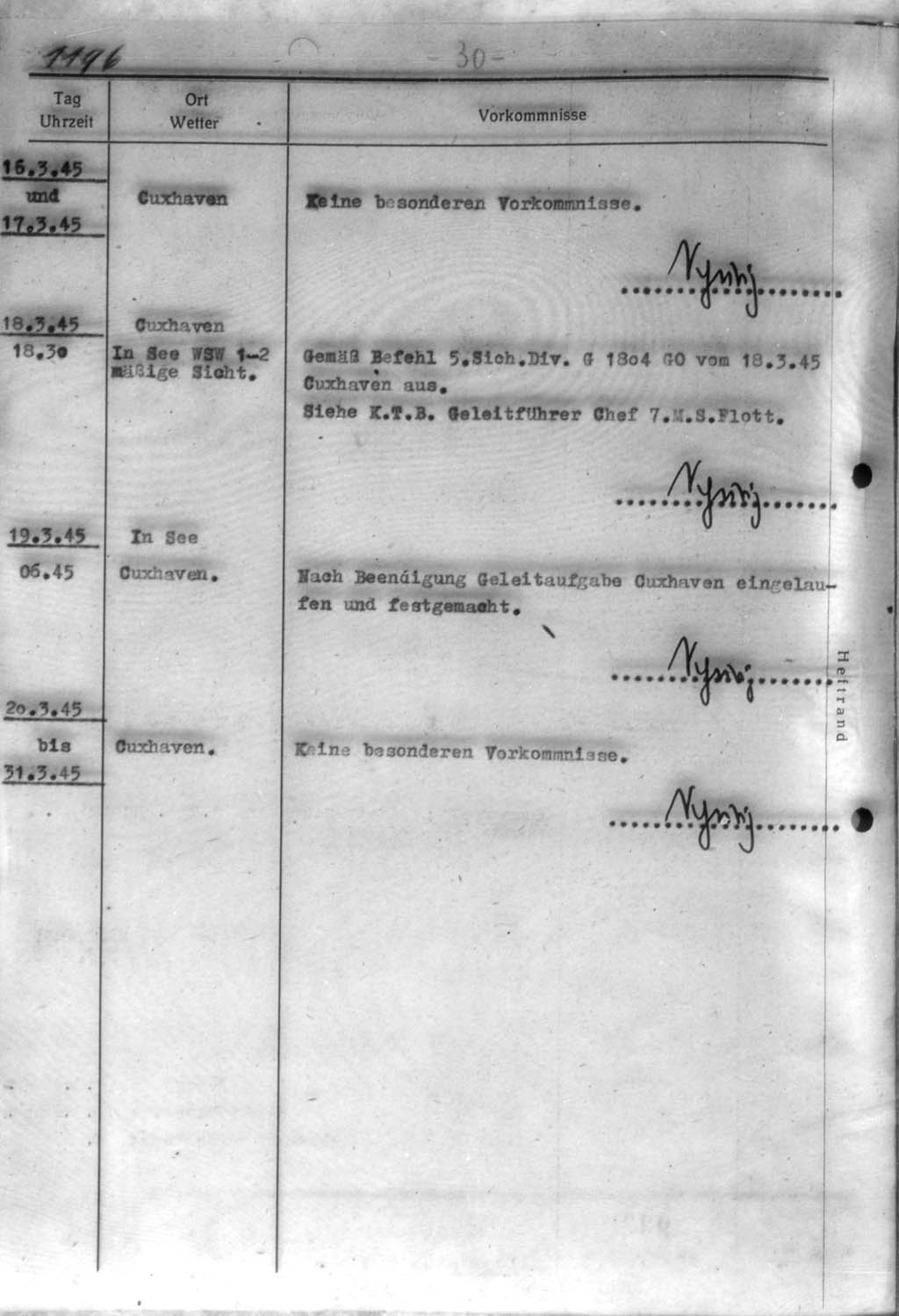
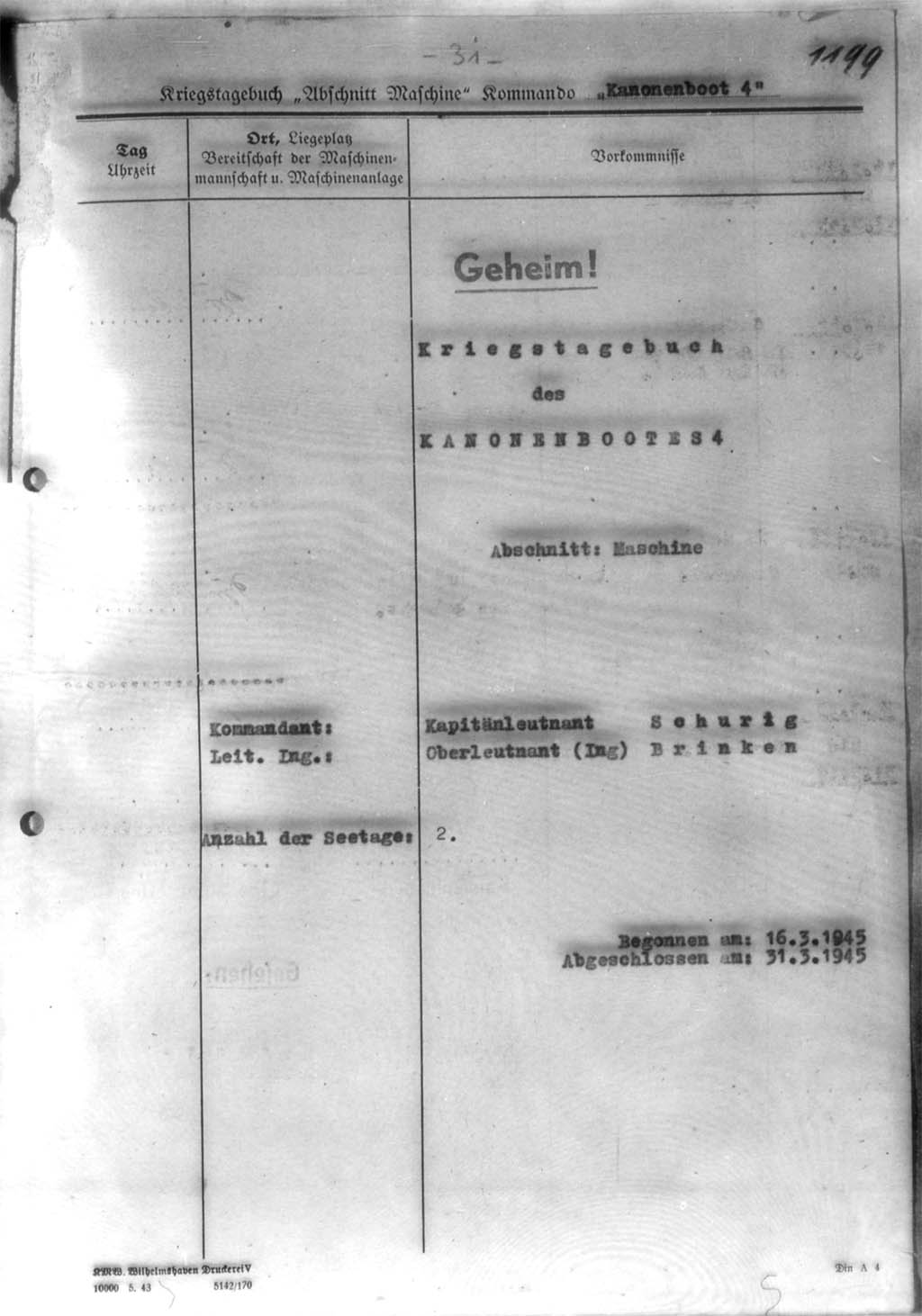
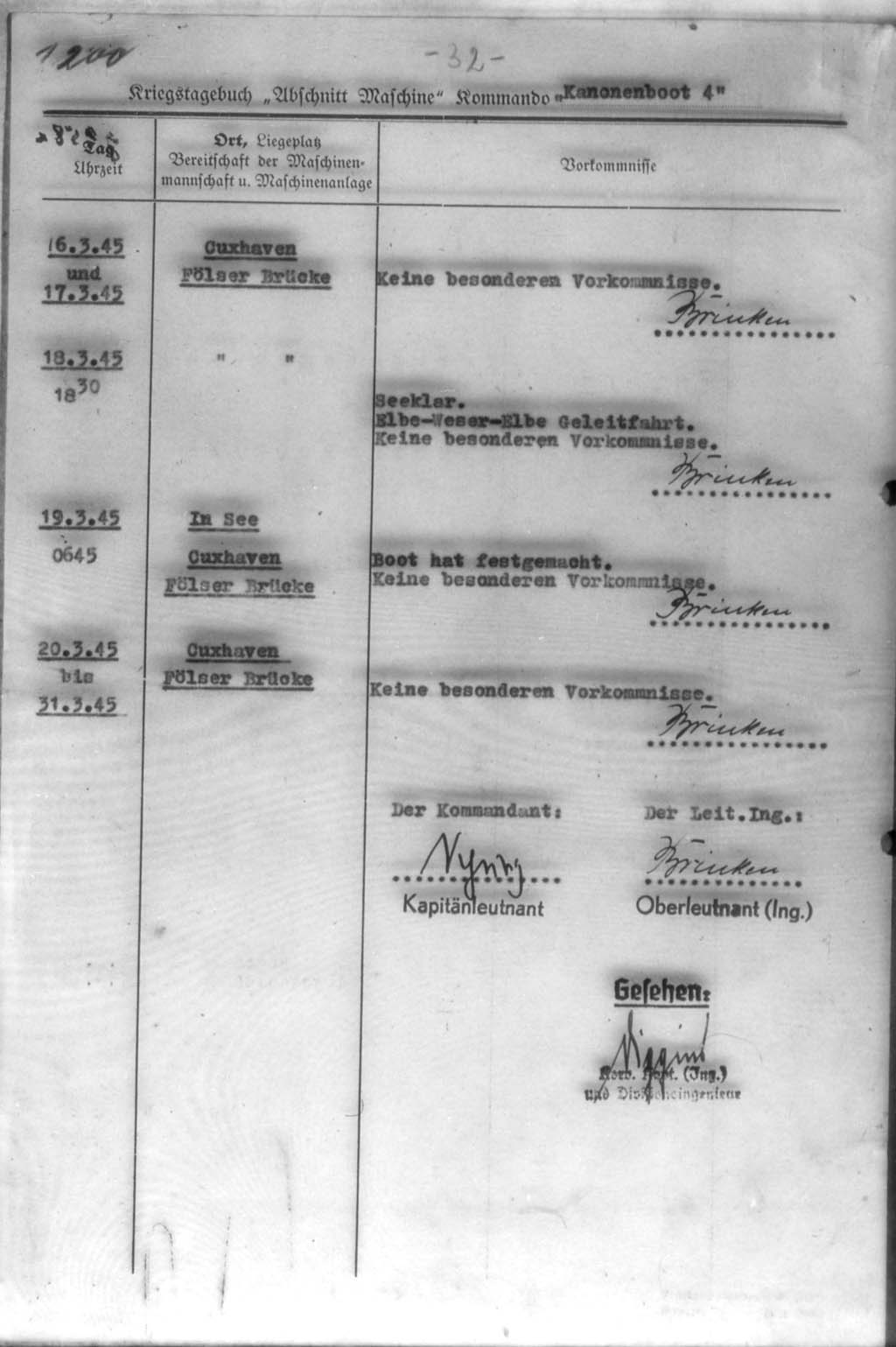
Commissioned in late 1943, Lorelei was assigned to the North Sea Command (Befehlshaber der Sicherung der Nordsee, BSN). She was used primarily as a convoy escort and patrol vessel, not as a submarine chaser or command ship. Despite later myths, she was never fitted as a flagship for admirals Raeder or Dönitz—Raeder had already been dismissed, and Dönitz directed operations from Berlin.In December 1944, Lorelei briefly hosted Dönitz overnight in Cuxhaven, but this was a one-off incident, not a command posting. Through the last year of the war she continued escort duties until Germany’s surrender.
Return to Belgium
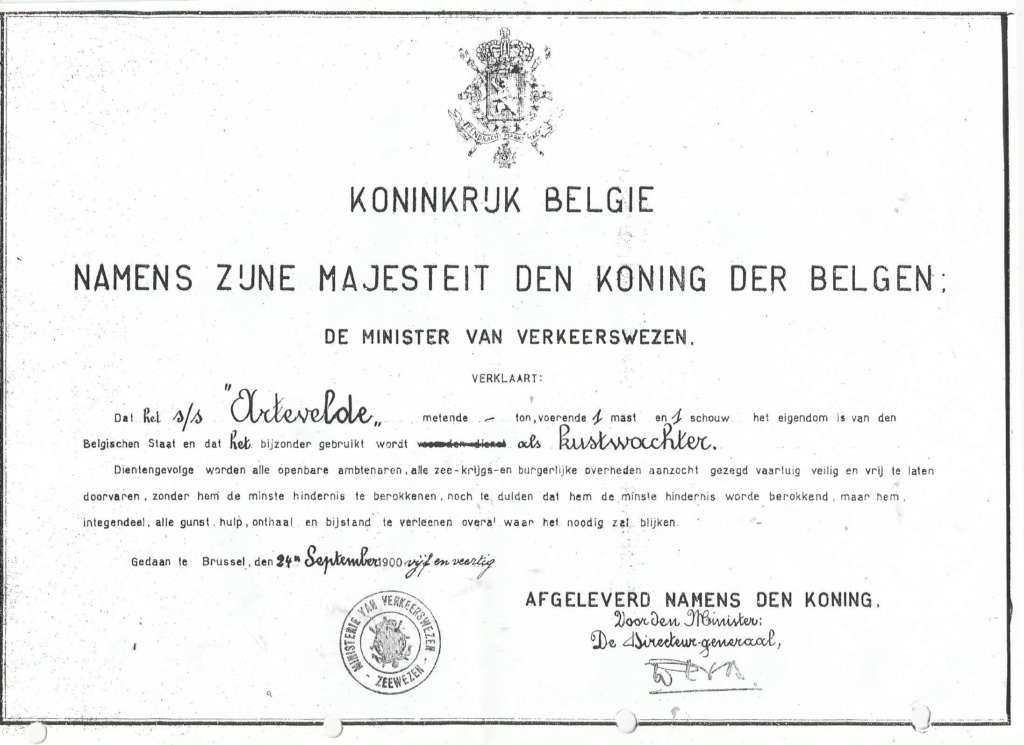
‘Koninklijk besluit’, royal order that the Belgian SS Artevelde is to be assisted in all possible ways when doing her duty starting from the 24th of september 1945.
Study on the possible refit and renovation of the SS Artevelde by Cockerill and FN in 1950.After the war, Lorelei was handed back to Belgium, stripped of most equipment except her machinery. Between 1947–1953, the ship saw only brief and experimental service under the FN, hampered by financial and technical problems. She was never recommissioned as a proper fleet unit, and her planned modernization fell through. Finally, in the mid-1950s, she was decommissioned and scrapped.
Despite her short Belgian career, the Artevelde/Lorelei remains one of the most unusual Belgian naval stories of WWII: a national warship design that fought the war under German colors.
Timeline of Service
- 1938–40 (Belgium): Ordered and laid down at Hoboken. Captured on slipway in May 1940.
- 1940–43 (Germany): Completed at Wilton-Fijenoord using salvaged material. Commissioned April 1943 as K4 Lorelei. Armed with 3 × 105 mm, strong AA, and minelaying capacity. Served in the North Sea as escort and occasional command ship. Hosted Admiral Dönitz briefly at Cuxhaven in late 1944.
- 1945 (Allied capture): Found in poor condition at Cuxhaven. Returned to Belgium.
- 1946–54 (Belgium, postwar):
- Recommissioned as Artevelde and became the flagship of the newly created Force Navale, established by the Regent’s Decree of 1 February 1946.
- Used to embark cadets, helping form the officer corps of Belgium’s merchant and naval fleets, thus avoiding the need to replace the training ship Mercator.
- Acted as fishery protection vessel and coastal surveillance escort.
- 1951: Became a stationary nautical instruction school at Bruges.
- 1954: Decommissioned on 22 November and sold for scrapping to Bakker & Zonen, Bruges.



Specifications (K4 and 1951 configuration)
Dimensions: 98.43 m length, 10.54 m beam, 3.65 m draught
Displacement: ~2,000 tons (full load)
Propulsion: 2 shafts, geared steam turbines (German Parsons-type)
Speed: 23 knots
Crew: ~200
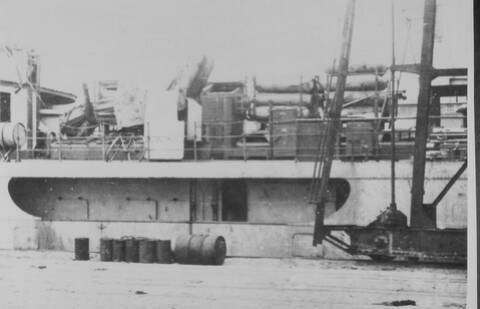
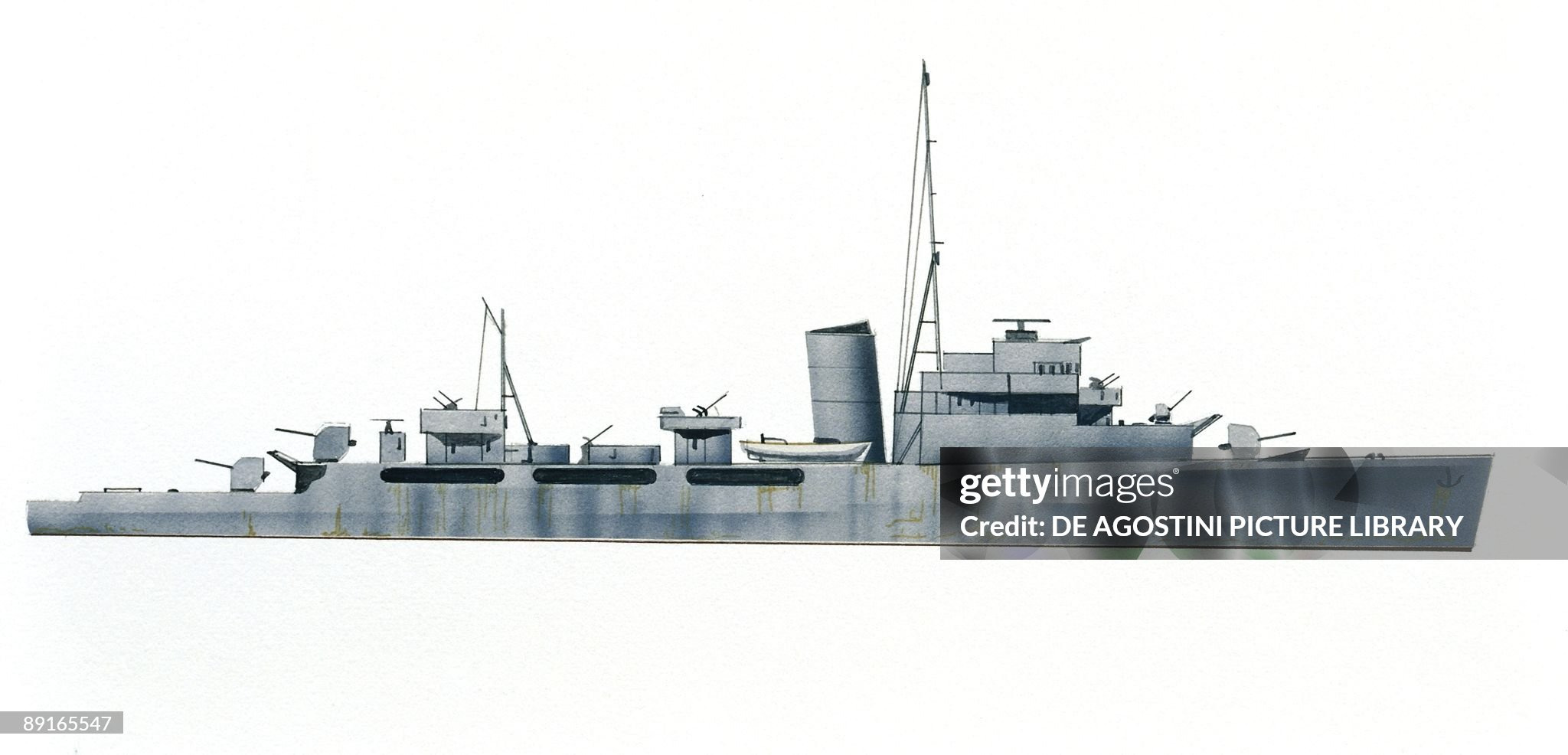
Armament Quantity Mount Caliber / Model Notes Main gun 3 Single 105/42 SK C/32 Standard surface Dual purpose engagement gun Heavy AA 2 Single 40/56 FlaK 28 High-angle anti-aircraft gun (one positioned mid-ship, the other right behind the two 105 mm at the aft) Medium AA 1 Twin 37/80 SK C/30 Dual-purpose AA / surface fire (positioned behind the front 105 mm) Light AA 4 Quadruple 20/65 C/38 Close-in air defense (one positioned behind the 40/56 FlaK 28, two at the mid-ship raised platform and one behind the two 105 mm at the aft) Mines — — — Up to 120 mines capacity
Place in War Thunder
The K4 Lorelei would represent Belgium’s wartime “lost ship” in the BeNeLux tree, but in her German configuration. She offers a unique hybrid identity: Belgian-built, German-armed, and returned postwar. Gameplay-wise, she fills the role of a light escort gunboat, comparable to German Kanonenboote.
With three 105 mm DP guns, very decent AA, and mine-laying ability, she would be best placed at mid-to-high rank III or early rank IV for coastal fleet, offering a balance of firepower and utility. She could also serve as a rank I Bluewater Fleet ship.
Regarding nations
BeNeLux or Germany
As with other Belgian vessels, her most logical placement is in a BeNeLux subtree under France. However, because her wartime service was entirely under German command, she could also appear as a premium or event ship for Germany.
Pictures
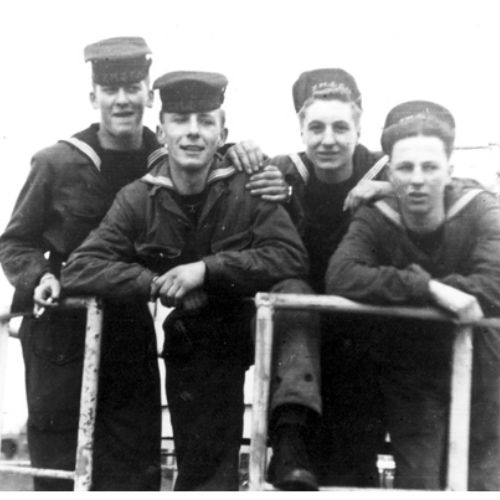
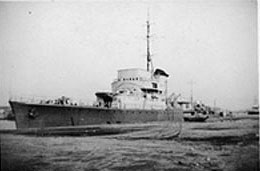
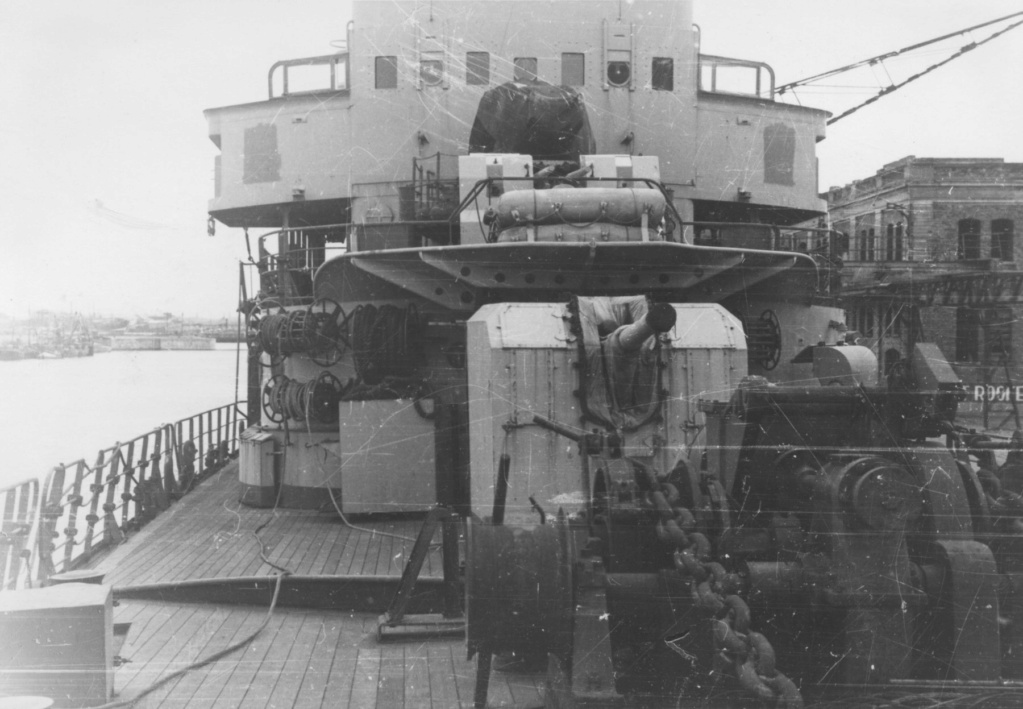
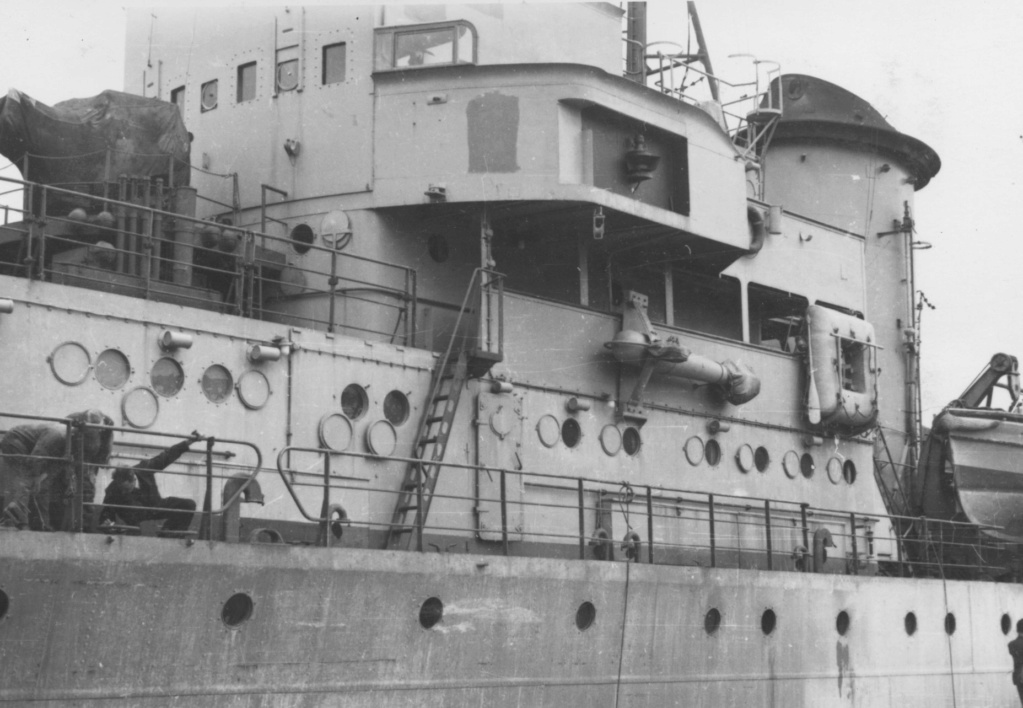
Sources
Sources
- Neptunus journal, issues 289–290: “L’Artevelde, navires de légendes.”
- Belgian Navy archives, Cockerill shipyard design notes (1939).
- Gröner, E. (1990). Die deutschen Kriegsschiffe 1815–1945, Vol. 2.
- Chesneau, R. (Ed.). (1980). Conway’s All the World’s Fighting Ships, 1922–1946. Conway Maritime Press.
- Douglas, R. (2001). Warship 2001–2002. Conway Maritime.
- Marine Royale. (n.d.). Artevelde – Fiche technique et historique. Retrieved from http://www.marinebelge.be
- Mangelinckx, D., Loiselet, M.-L., & Swertvaegher, Y. (2016–2025). Artevelde. Official website on the Marine Royale & Force Navale Belge. Retrieved from http://www.marinebelge.be