- Yes
- No
- (independent) BeNeLux tree
- France: BeNeLux subtree
- other
- no/negative
- 1× 102 mm + 4 × twin 20 mm
- 5× 40 mm
- other (please comment)
- no/negative
TL;DR: A Belgian Cold War minesweeper/escort with several armament configurations — 102 mm main gun, supported by 20 mm or 40 mm AA.

History
History
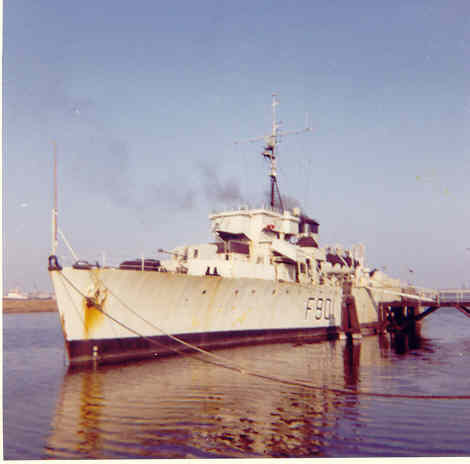
F901 Georges Lecointe was laid down in July 1942 at Port Arthur Shipbuilding Co., Ontario, Canada, launched in December 1942, and commissioned in November 1943 as HMCS Wallaceburg (J336) in the Royal Canadian Navy (Conway’s, 1980). She served during WWII as a minesweeper/escort before being redesignated as AM-172 and later FSE-172 in Canadian service.
On 7 August 1959, the vessel was transferred to Belgium, renamed Georges Lecointe, and served until 1970. She took part in NATO exercises, fisheries patrols, and was notably the flagship during Operation Camoens in the Congo Crisis (1960).
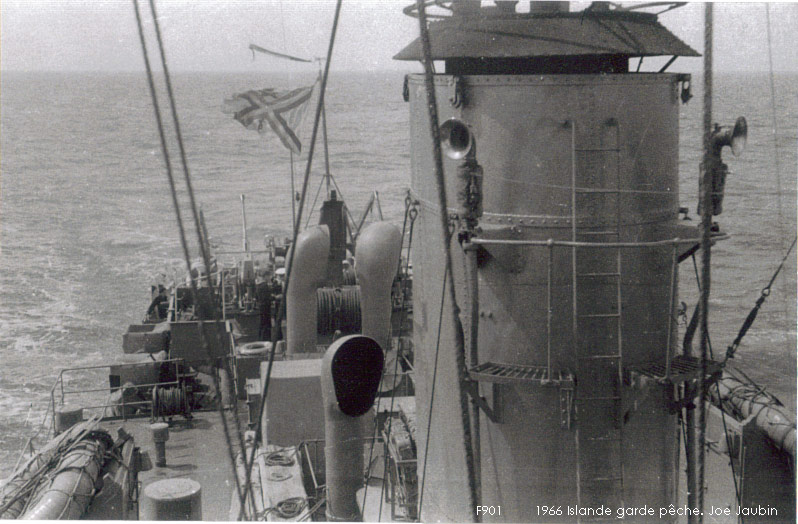
In the 1960s, the ship underwent several cruises, including calls at Nantes, Cadiz, Oslo, and Den Helder, demonstrating Belgian naval presence abroad (Marine Belge, n.d.).
The ship was decommissioned in November 1970 and sold for scrap. Despite her modest size, she served nearly three decades across two navies.
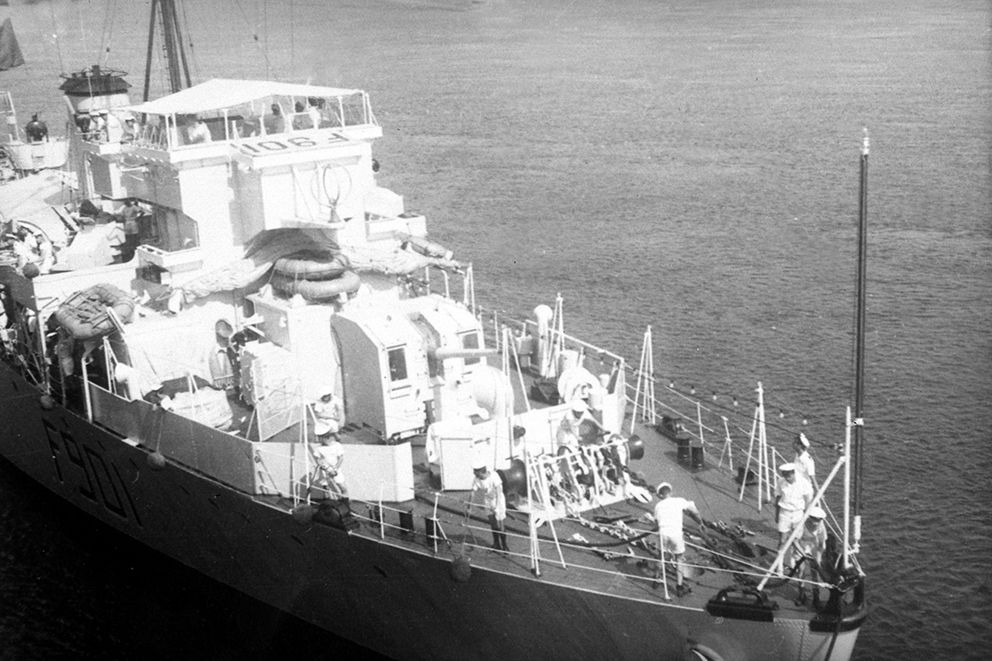
Specifications (as built / Belgian service)
Shipyard: Port Arthur Shipbuilding Co., Ontario, Canada
Laid down: 16 July 1942 — Launched: 17 Dec 1942 — Commissioned: 18 Nov 1943
Displacement: 1,040 t standard / 1,335 t full load
Dimensions: 72 m length × 10.4 m beam × 2.4 m draught
Propulsion: 2 × Admiralty triple-expansion engines (2,000 hp), 2 shafts
Speed: 16.5 knots max / 12 knots cruise
Range: 5,000 nm at 10 knots
Crew: ~100 (9 officers, 37 NCOs, 55 sailors)
Electronics: Radar types 271, 242, 253; ASDIC sonarArmament versions
Period Main Gun Secondary AA ASW weapons Notes 1959–1965 1 × 102 mm Mk XIX 4 × twin 20 mm Oerlikon 1 × Squid ASW mortar, depth charges Original Belgian fit 1965–1970 - 5 × single 40 mm Bofors 1 × Squid ASW mortar, depth charges Cold War refit
Place in War Thunder
The F901 Georges Lecointe would be a strong candidate for the BeNeLux subtree under France (or a future standalone BeNeLux tree). With multiple refit options, the ship offers flexibility:
- Early 1960s version (1 × 102 mm + 4 × twin 20 mm) → Rank II–III coastal, comparable to WWII corvettes/escorts.
- Mid-1960s refit (5 × 40 mm Bofors) → improved AA, suited for higher BR coastal engagements.
This vessel bridges WWII designs with Cold War modifications, much like other coastal fleet ships such as the Italian Albatros-class or British River-class.
Pictures
Sources
Sources
Belgian Navy Forum. (n.d.). F901 Georges Lecointe (ex-HMCS Wallaceburg).2025, from http://www.belgian-navy.be/t1028-f901-georges-lecointe-ex-hmcs-wallaceburg?highlight=F901+Georges+Lecointe
Marine Belge. (n.d.). Le cointe.from https://www.marinebelge.be/lecointe.html
Chesneau, R. (Ed.). (1980). Conway’s All the World’s Fighting Ships 1922–1946. Greenwich, UK: Conway Maritime Press.
Latinis, P. (2000). The Algerine I–III. Brussels: Belgian Navy Historical Review.
Hogg, I. V. (1970). The Guns 1939–1945. London: Ian Allan.
Minesweepers.org. (n.d.). Algerine Class Minesweepers. Retrieved from http://www.minesweepers.org.uk/algerine.htm
Janes Fighting Ships 1960-61