- Yes
- No
History
Spoiler
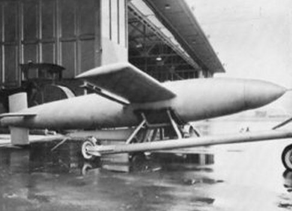
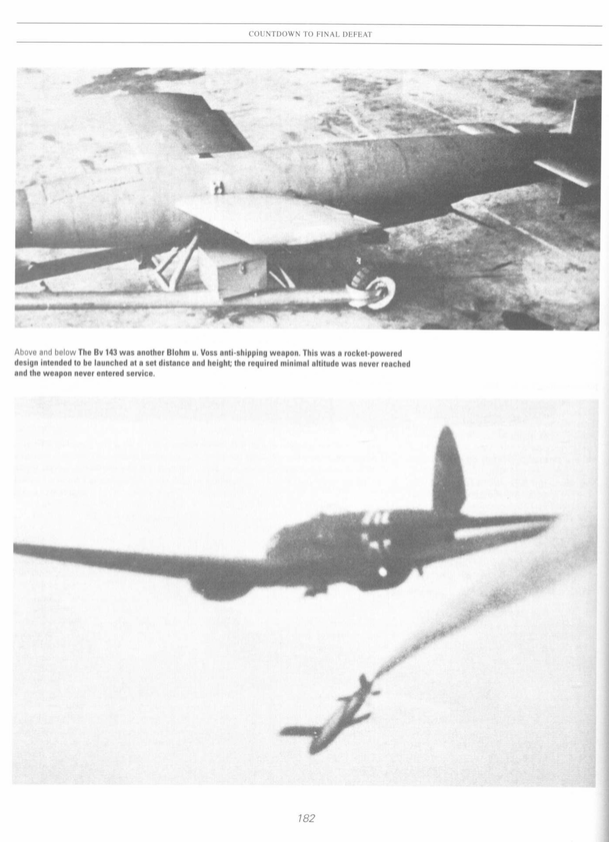
The Blohm & Voss BV 143 was one of the earliest German attempts at a guided anti‑ship weapon. Work began in 1939 under Richard Vogt at Blohm & Voss, with the idea of giving bombers a standoff weapon that could skim the sea surface and strike ships just above the waterline. The Luftwaffe wanted something that could defeat the defensive fire of Allied escorts, especially the Bofors 40 mm guns that were effective against conventional bombers.
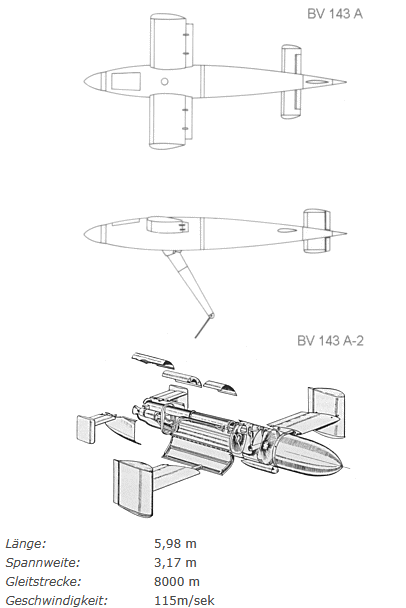
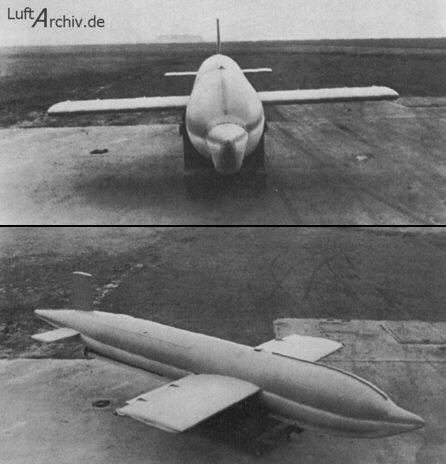
The BV 143 was a long, slender missile about six meters in length with a wingspan of just over three meters. It carried a 500 kilogram warhead and used a Walter HWK 109‑501 rocket motor for propulsion. Its most distinctive feature was a two‑meter probe that hung beneath the fuselage. When this probe touched the water, it triggered the rocket engine, propelling the missile forward at very low altitude. The concept was that the missile would glide toward the target, skim the surface, then dash into the side of a ship.
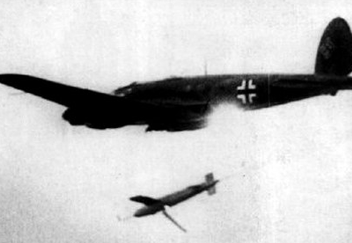
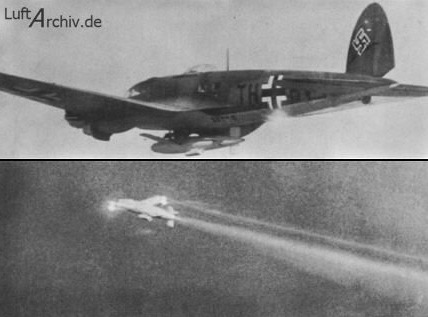
Testing began in 1941 with prototypes dropped from Heinkel He 111 bombers. The trials revealed serious problems. The probe was fragile and often broke or triggered too early. The missile had difficulty maintaining stable flight close to the water, and rocket ignition was unreliable. Later versions tried to replace the probe with a radio altimeter, but the guidance and stability issues remained.
Blohm & Voss proposed several variants, including the BV 143A for air‑launch and the BV 143B for ship‑to‑ship use with catapult launch. Between 150 and 250 prototypes were built and tested at Peenemünde and Altenwalde, but none proved reliable enough for combat. By 1943 the Luftwaffe shifted its focus to the Henschel Hs 293, which was simpler and more effective, and the BV 143 program was cancelled.
Although it never reached service, the BV 143 was an important step in the evolution of guided weapons. It showed both the ambition and the technical limits of early German missile design, and its failures helped direct resources toward more practical systems like the Hs 293 and later the Fritz‑X.
Specifications
Spoiler
| Type | Experimental guided anti‑ship missile |
|---|---|
| Length | 5.98 m |
| Wingspan | 3.13 m |
| Launch Weight | 1,073 kg |
| Warhead | 500 kg high‑explosive |
| Propulsion | Walter HWK 109‑501 rocket engine, thrust 9.8 kN |
| Guidance | Gyroscopic autopilot with mechanical feeler probe, later radio altimeter |
| Range | 10 12 km depending on release altitude |
| Launch Platforms | Heinkel He 111 bomber (tested) |
| Special Feature | Two‑meter probe beneath fuselage triggered rocket ignition when touching water |
| Production | 57–251 prototypes built |
Images / Video / art :
Sources:
Spoiler
1- William Green – Warplanes of the Third Reich
2- J. R. Smith & Antony L. Kay – German Aircraft of the Second World War
3- Manfred Griehl – German Guided Missiles of World War II: Fritz‑X to Wasserfall and X‑4
4- U.S. Army Technical Manual TM 9‑1985‑2 / TO 39B‑1A‑9 – German Explosive Ordnance
5-wiki: Blohm & Voss BV 143 - Wikipedia
Thanks for reading 💐