I already made a suggestion, Im waiting for a respond
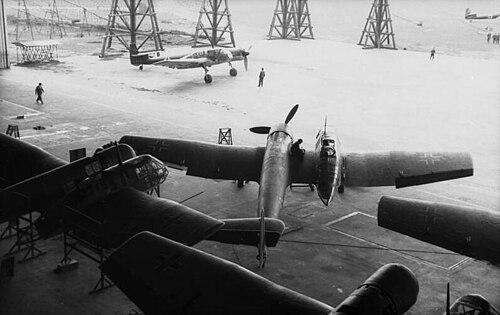
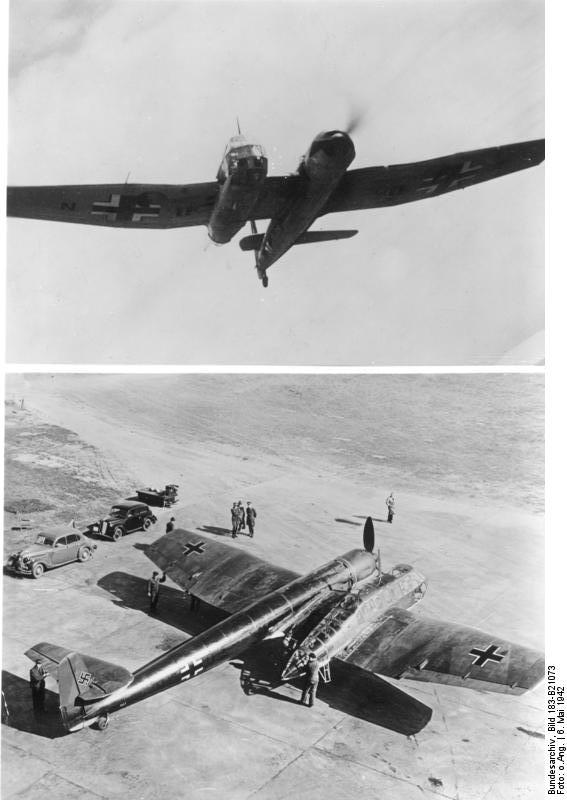
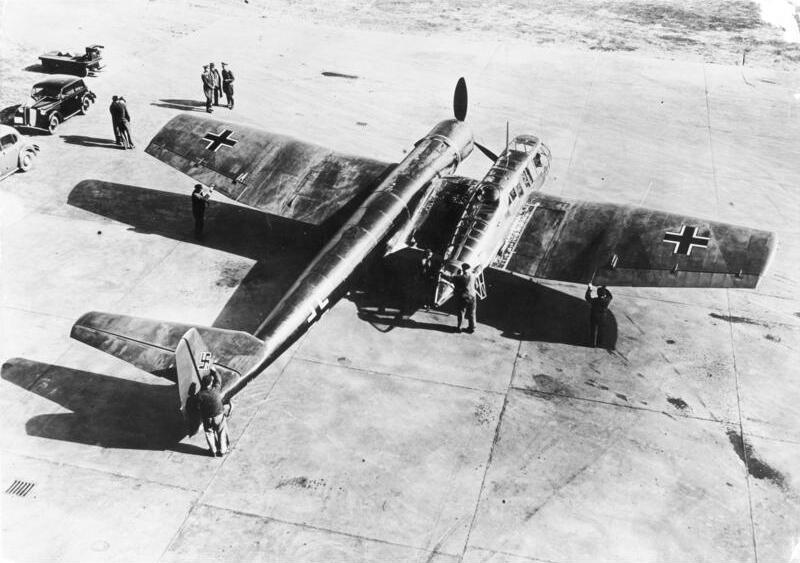
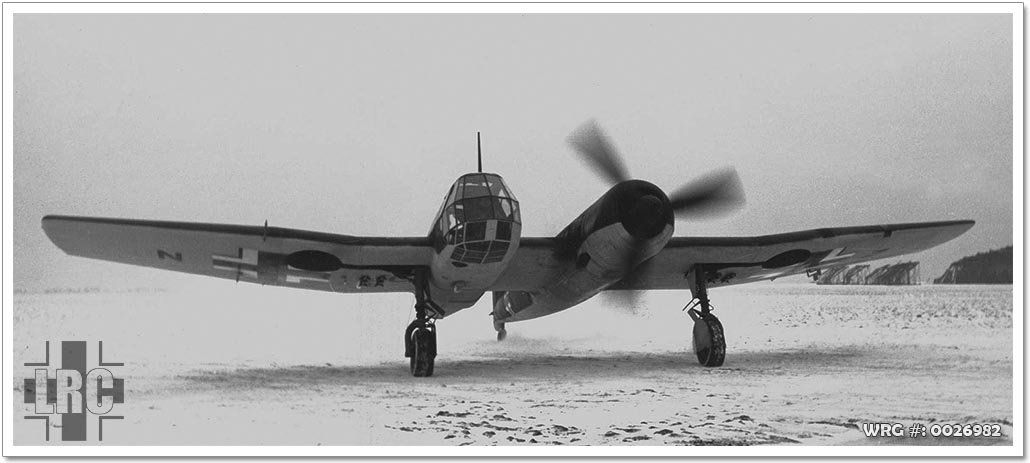
The Blohm & Voss BV 141 was one of the most unusual and distinctive aircraft in aviation history. Developed in the late 1930s, this German short-range reconnaissance aircraft broke radically with traditional, symmetrical aircraft design in order to provide the crew with an absolutely uninterrupted all-round view.
History
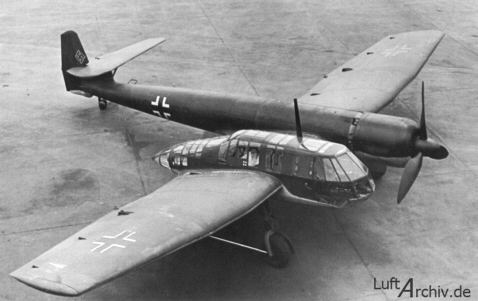
The development of the Blohm & Voss BV 141 dates back to a 1937 request by the Reichsluftfahrtministerium (RLM) for a single-engine short-range reconnaissance aircraft. The most critical requirement was excellent all-round visibility for the crew to effectively document enemy troop movements. While the competition from Focke-Wulf submitted a symmetrical design with the twin-engine Fw 189, the ingenious chief designer at Blohm & Voss, Richard Vogt, chose a radically asymmetric approach. To prevent the engine block and propeller from obstructing the crew’s view, he shifted the entire propulsion system and tail unit into a long fuselage on the right side, while the crew was housed in a heavily glazed, separate structural gondola mounted on the left wing. The prototype BV 141 V1 made its maiden flight on February 25, 1938. Despite initial skepticism from pilots, the flight characteristics proved surprisingly stable, as the torque of the engine and the asymmetric aerodynamic drag perfectly counterbalanced each other in flight.
Despite successful flight testing and exceptional visibility that surpassed even the Fw 189, the BV 141 was not destined for large-scale series production. Only about 28 to 38 units were built in total (divided between the pre-series BV 141 A and the more powerful BV 141 B equipped with a BMW 801 engine). The RLM remained deeply suspicious of the unconventional layout, and when the B-series suffered from persistent issues with its complex hydraulic system and the gearboxes of the powerful BMW 801 engine, the project was ultimately canceled in favor of the conventional Focke-Wulf Fw 189. The few operational aircraft produced were primarily sent to the Eastern Front for operational evaluation and special duties, where they flew until around 1943. Not a single specimen of the BV 141 survived World War II; all airframes were either destroyed in combat or scrapped at the end of the war.
Crew Capacity
The Blohm & Voss BV 141 was designed for a standard crew complement of three men, who were all housed together inside the fully glazed crew cabin gondola on the left side of the aircraft. This layout fostered excellent communication between the crew members, as they sat extremely close to one another compared to larger bombers. The cabin structure was fitted so extensively with Plexiglas panels that it closely resembled a flying greenhouse, providing the men with an unmatched 360-degree field of view—particularly forward, downward, and to the sides, as no engine block obstructed their line of sight.
The pilot sat at the front left, managing the flight controls and operating the fixed, forward-firing weaponry. Seated to his right or slightly offset behind him was the observer, who was responsible for navigation, monitoring the flight instruments, and operating the vertical aerial cameras mounted in the floor of the gondola. In combat situations, the observer also acted as the forward defensive gunner. The third crew member was the radio operator, who was positioned in the rear section of the cabin. His primary duty was maintaining radio contact with the home base, but he was also responsible for defending the aircraft from the rear upper and rear lower arcs by operating the flexible machine guns in the gondola’s aft stations.
Armament
Because the BV 141 was primarily envisioned as a tactical reconnaissance platform rather than a dedicated front-line fighter or bomber, its armament was relatively modest compared to pure combat aircraft. However, it featured a balanced configuration of offensive and defensive weapons to defend itself against interceptors or engage targets of opportunity during low-level flights. The offensive forward-facing armament consisted of two fixed 7.92 mm MG 17 machine guns built directly into the structure of the crew cabin gondola, which were fired by the pilot using a simple reflector sight.
For defense against enemy fighters approaching from the rear, the cabin gondola was equipped with two flexible 7.92 mm MG 15 machine guns. One of these guns was mounted in a rotating lens mount in the upper section of the cockpit (dorsal position) to counter attacks from above, while the second MG 15 was located in the fully glazed tail cone of the gondola to protect the area behind and below the aircraft. In addition to the machine guns, the BV 141 featured four external payload racks under the wings. These racks could carry a total of up to four 50 kg high-explosive bombs (SC 50), giving the aircraft the capability to directly strike ground targets or provide light close air support.
Armor Configuration
In terms of armor protection, the Blohm & Voss BV 141 was a typical product of its era and was built as a lightweight scout plane where speed, operational range, and clear visibility took priority over heavy shielding. The entire airframe was built using a standard all-metal Duralumin skin, which offered no ballistic protection against anti-aircraft shrapnel or the autocannons of enemy fighters. Because the aircraft was vulnerable in sustained dogfights, it relied heavily on its exceptional low-altitude maneuverability and the early detection of threats enabled by the crew’s outstanding all-round visibility.
Minimal armor was provided only for the pilot, whose seat in the later production variants was equipped with a light, rear-facing armored steel plate to absorb direct hits from chasing aircraft. The remaining crew positions for the observer and radio operator were completely unarmored, separated from the elements only by thin Plexiglas panels. A critical survivability feature, however, was the fuel system: the fuel tanks located within the main tail section and the wings were lined with a self-sealing rubber coating that would expand upon contact with leaking fuel to seal bullet holes automatically and prevent catastrophic fires. The large BMW radial engine in the right fuselage also acted as a massive physical shield for its own internal components, though it was not enclosed in specialized armor plating.
Technical Data
The primary performance metrics and dimensions refer to the final main production variant, the Blohm & Voss BV 141 B:
| Parameter | Specification |
|---|---|
| Engine | 1 × BMW 801 A (14-cylinder twin-row radial engine with 1,560 hp takeoff power) |
| Wingspan | 17.45 m |
| Length | 13.95 m |
| Height | 3.60 m |
| Wing Area | 53.00 m² |
| Empty Weight | 4,700 kg |
| Maximum Takeoff Weight | 6,100 kg |
| Maximum Speed | 368 km/h at sea level / 438 km/h at an altitude of 5,000 m |
| Service Ceiling | 10,000 m |
| Operational Range | Maximum of 1,200 km (at economical cruising speed) |
Asymmetric Flight Characteristics: Due to the massive propeller torque of the powerful BMW 801 engine, conventional single-engine aircraft heavily tended to veer off course during takeoff. On the BV 141, the torque of the engine mounted on the right and the aerodynamic drag of the crew gondola mounted on the left balanced each other out almost perfectly, resulting in an exceptionally stable flight attitude.