- Yes
- No
Hello everyone and welcome to this new feature.
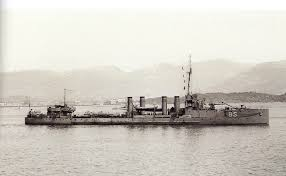
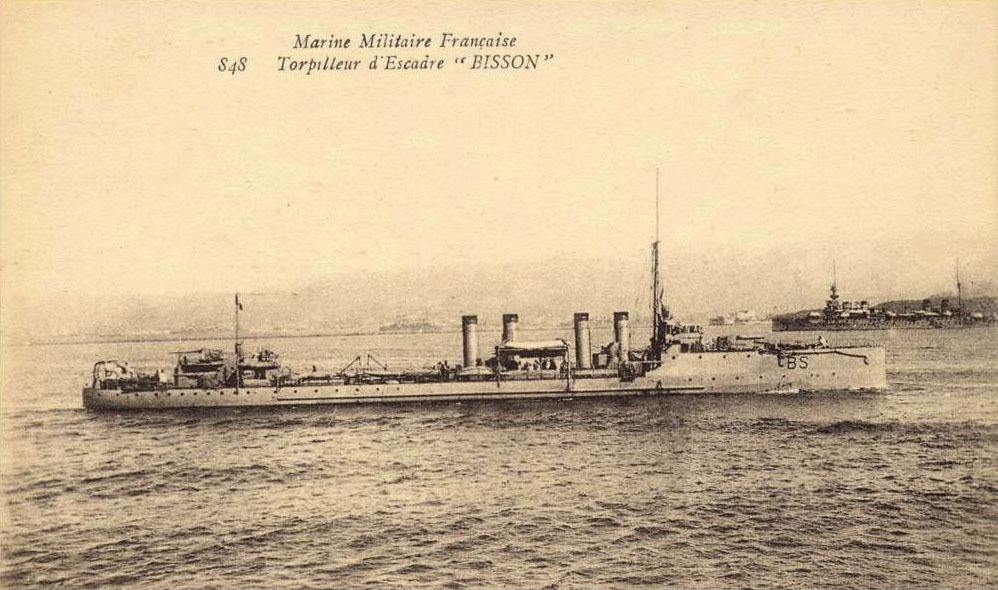
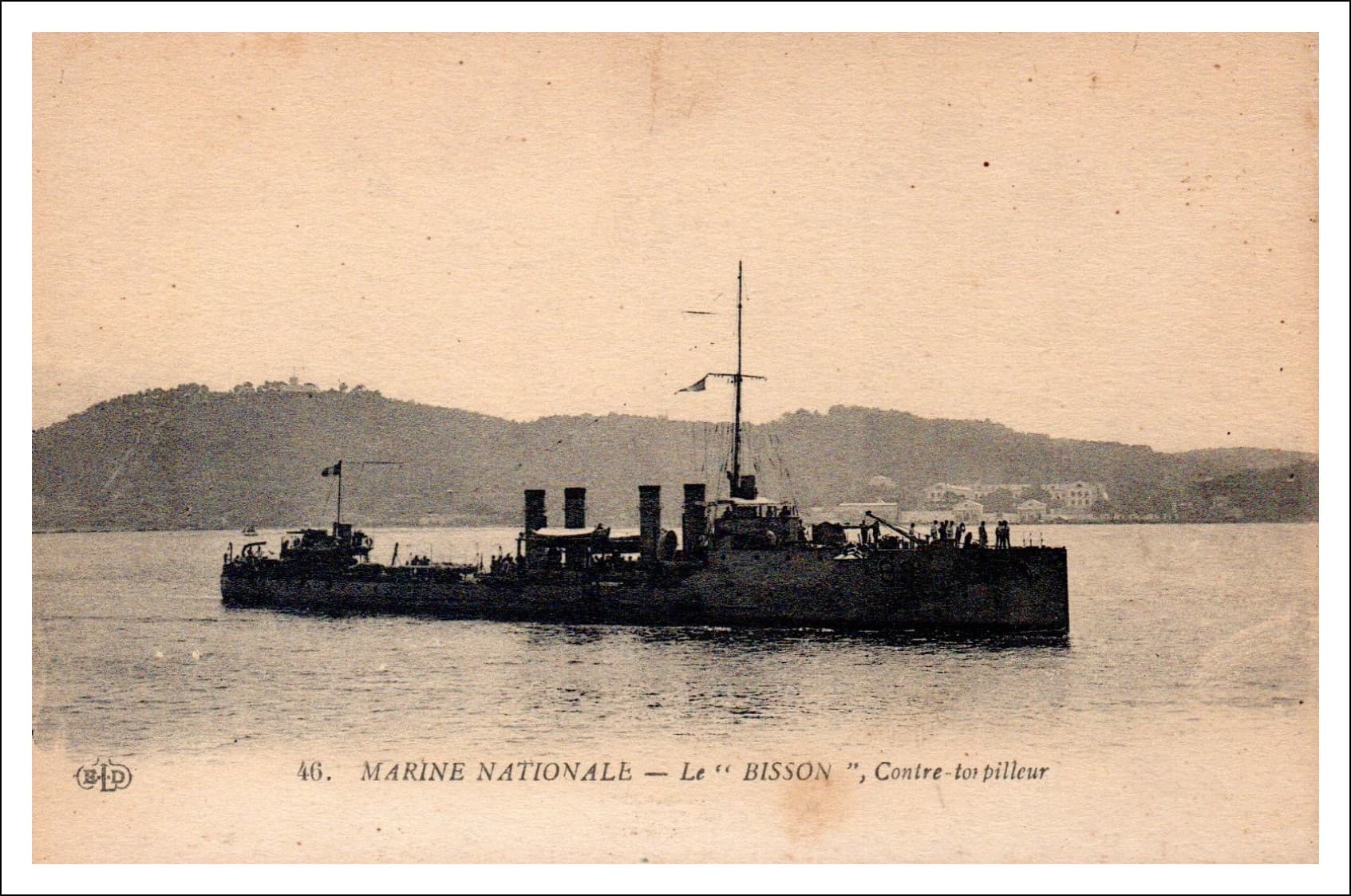
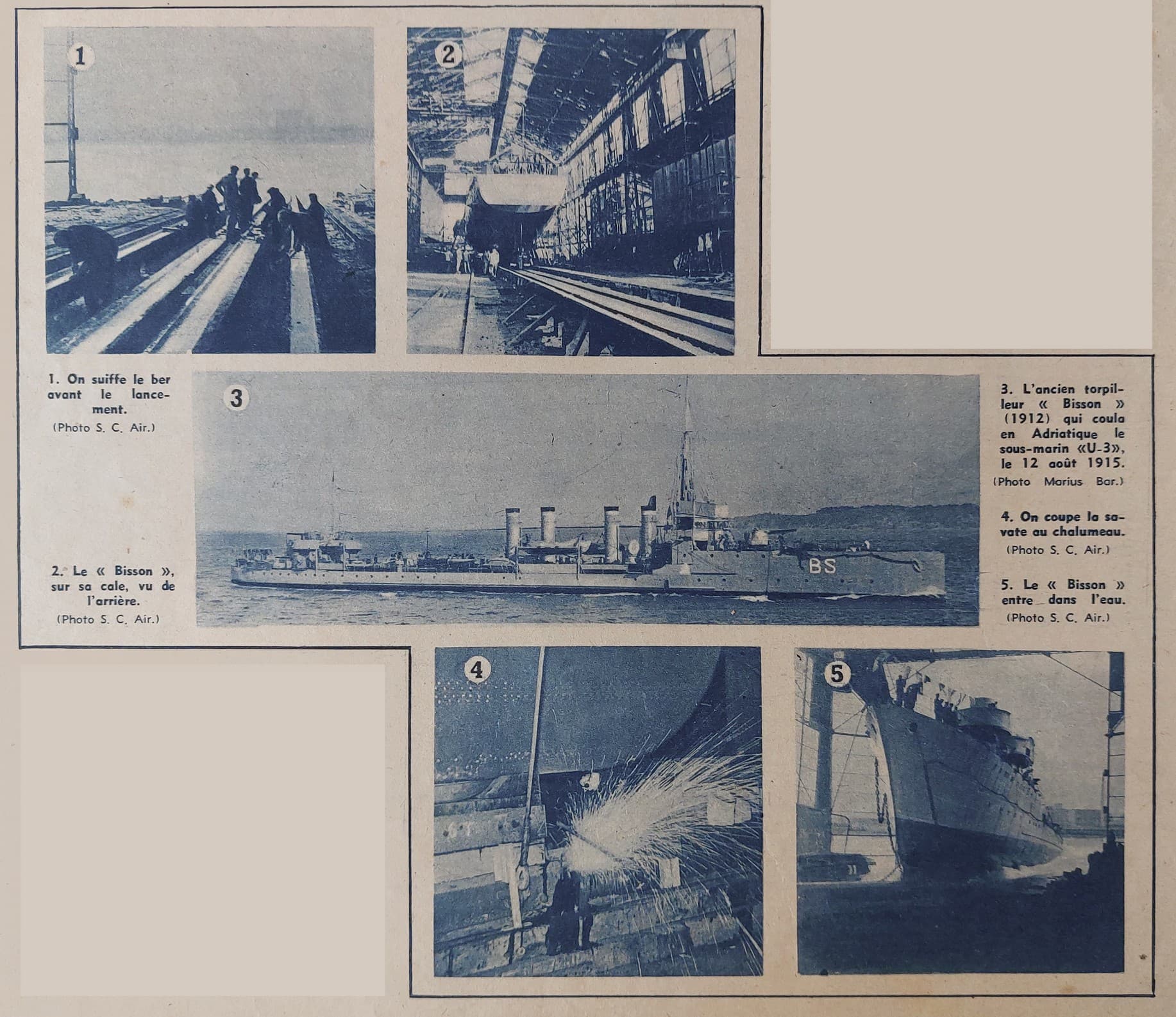
Today I’m presenting a new class of French counter torpedo boat, the Bisson class, and more specifically its first representative, the Bisson.
Laid down in 1910 at the Toulon Arsenal, the Bisson was the first representative of a new class of destroyer derived from the Bouclier class. It entered service in 1913 and joined the 6th Torpedo Squadron of the Mediterranean Fleet, based in Toulon.
During the First World War, the Bisson saw combat on numerous occasions. As the 6th Squadron was tasked with escorting armored cruisers, the ship found itself directly on the front lines at the beginning of the war, notably participating in the Battle of Antivari, during which the destroyers had little effect due to the lack of adversaries and the long distances involved in engagements.
Subsequently, the Bisson conducted numerous patrols in an attempt to locate Austro-Hungarian destroyers, without success. However, it was later that the ship saw the most action. Indeed, following the torpedoing of the Jean Bart, the French Admiralty changed tactics, preferring to withdraw its armored cruisers to protect them from submarines and to advance its smaller torpedo boats and destroyers, vessels that were more maneuverable, faster, and less vulnerable to submarine attacks. In 1915, the Bisson was transferred to a base in Italy to enable it to conduct longer raids, notably as far as Malta.
The ship found itself in combat on numerous occasions, repelling the U-4 submarine after the attack on the battleship Dublin and sinking the U-3 when it attacked merchant ships. The Bisson was also launched on many occasions in pursuit of ships, but was never able to engage them, as they were either too fast or too well armed and armored for it. At the end of the war, the Bisson was deployed to the Black Sea to escort French battleships tasked with protecting the Russian fleet. The ship was finally decommissioned in 1933 and scrapped in 1939.
The ship was named in honor of Admiral Hippolyte Bisson, a French naval officer who sacrificed himself by scuttling his ship rather than surrendering and seeing it fall into enemy hands.
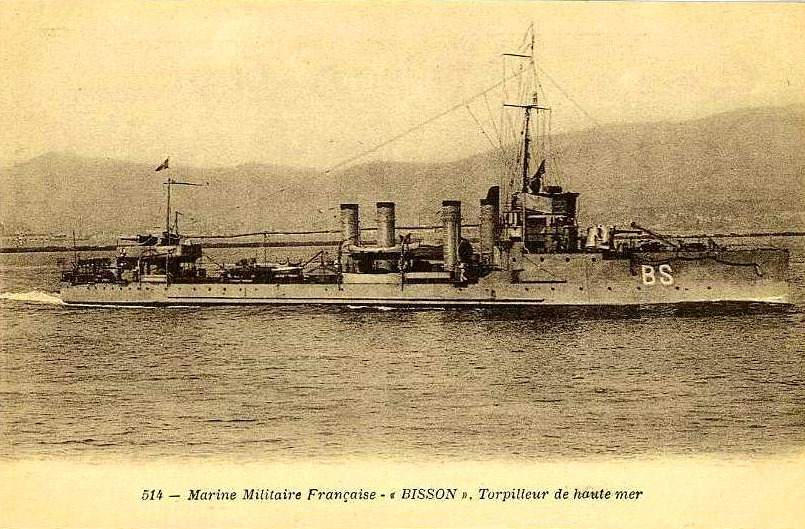
Characteristics
Length : 78.1 m
Width : 8.6 m
Draft : 3.1 m
Mass : 855 tons
The ship is powered by four turbines, each fed by a boiler, giving it a total power of 15,000 hp and allowing it to reach a maximum speed of 30 knots. Its range is estimated at 1,950 nautical miles at a speed of 14 knots. Its crew consists of 80 sailors.
Weapons
The ship’s armament is impressive, allowing the Bisson to engage all types of targets. It includes, in particular:
Cannons :
- 2 x 100mm Mle1893
- 4 x 65mm Mle1902
- 1 x 75mm (AA gun received after 1916)
- 2 x 8mm machine guns
Torpedo :
- 2x2 450mm torpedo tube
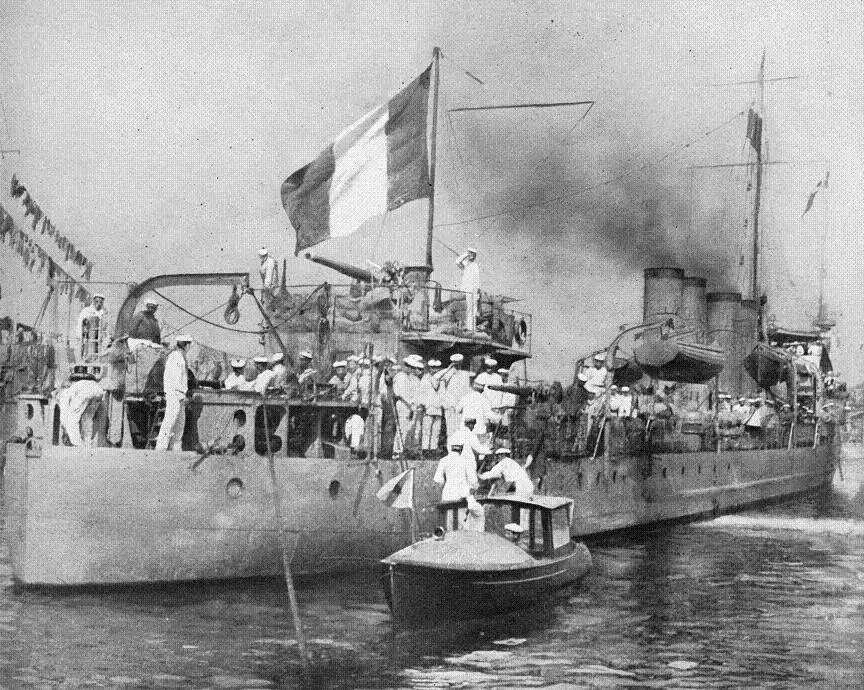
In practice, this ship would bring a new and particularly interesting class of combat vessel to the French forces, possessing both good speed and strong firepower.