- Yes
- No
- Yes, as a standard part of a vehicle
- Yes, as a removable modification
- No, it should not have it
- I voted no (first poll)

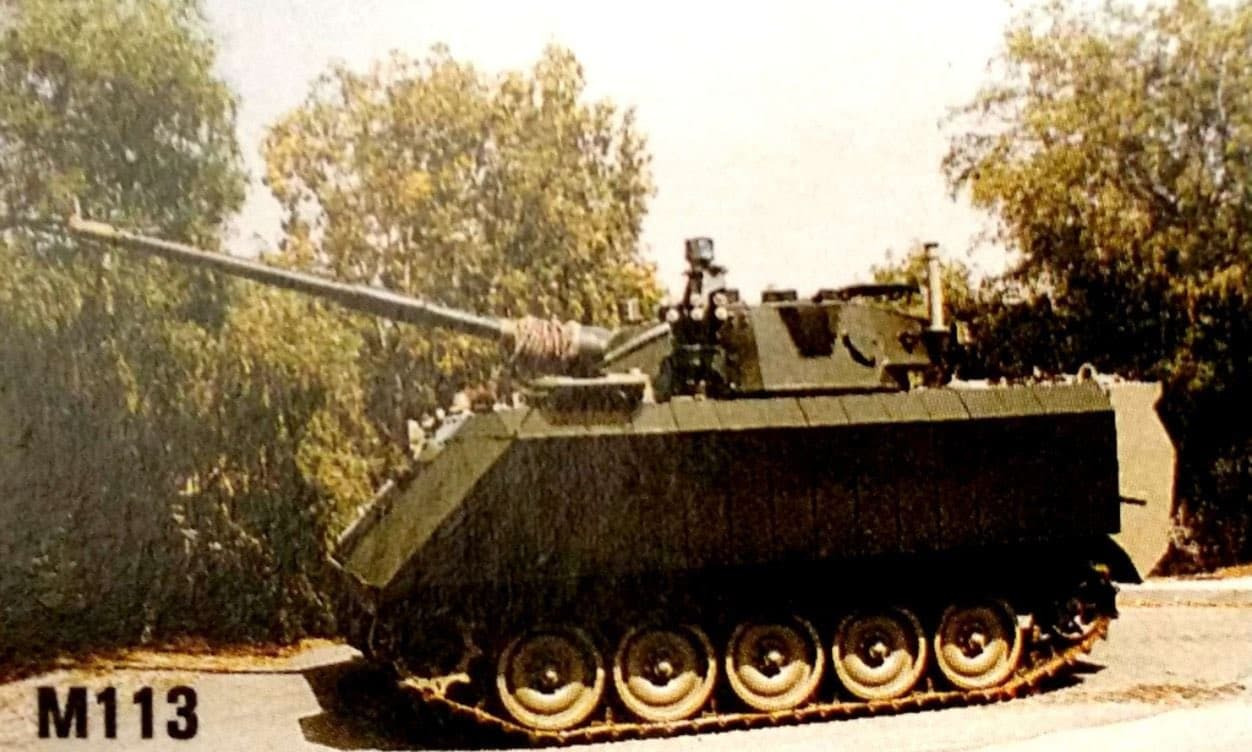
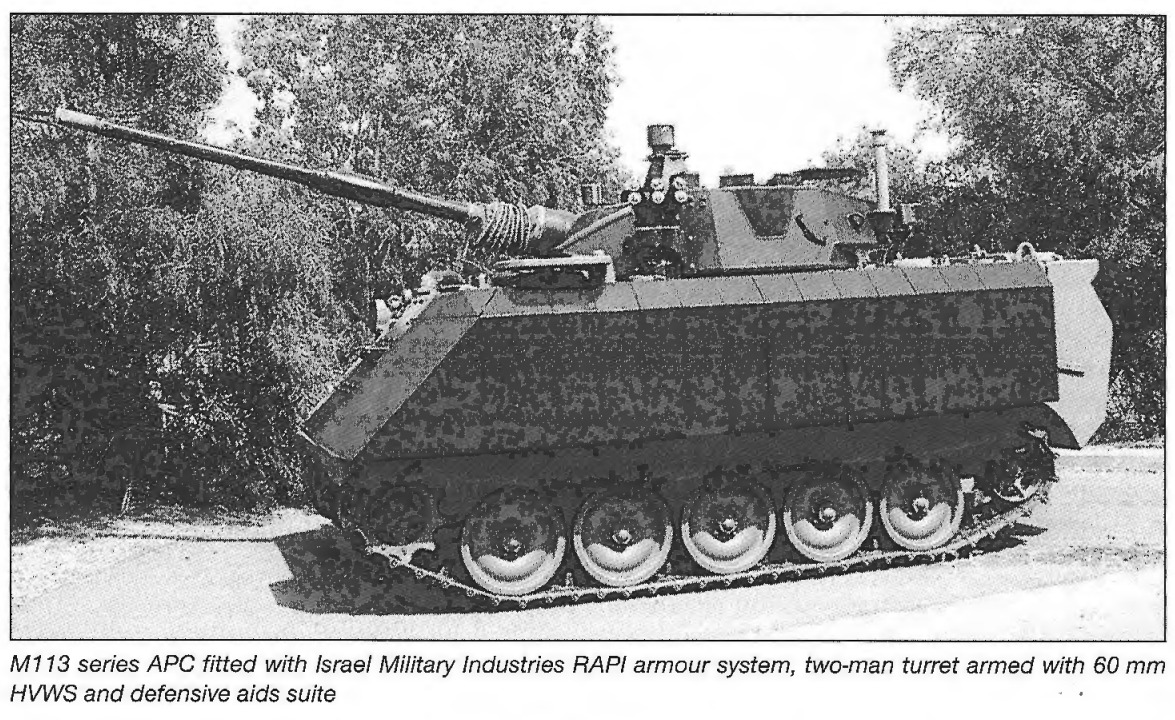
- BASIC DESCRIPTION -Bardelas HVMS (model 1996) - Is the last and most advanced known iteration of IMI’s M113-based tank destroyer concept, built as a unified technology demonstrator. It features a two-man turret armed with a 60mm HVMS cannon, equipped with two-plane stabilization, an autoloader providing 100 rpm or 3-round bursts within 1.5 seconds, and El-Op’s “Lan-Sadot” Fire Control System (featuring a laser rangefinder, electronic computer, and night-vision sight). Over the years of its use by IMI as a technology demonstrator, it received several significant improvements. The 1996 configuration (the latest known generation) integrates both the ARPAM soft-kill active protection suite (featuring warning sensors, smoke launchers, and a jammer) and the 2,000 kg RAPI Explosive Reactive Armor (ERA) package, providing frontal and side protection against RPG-7s and 14.5mm KPVT machine gun fire. It was featured in promotional materials and displayed at several exhibitions to showcase the 60mm HVMS turret system, ARPAM, and RAPI suites, making its last public appearance at the Eurosatory 1996 exhibition in France.
Spoiler
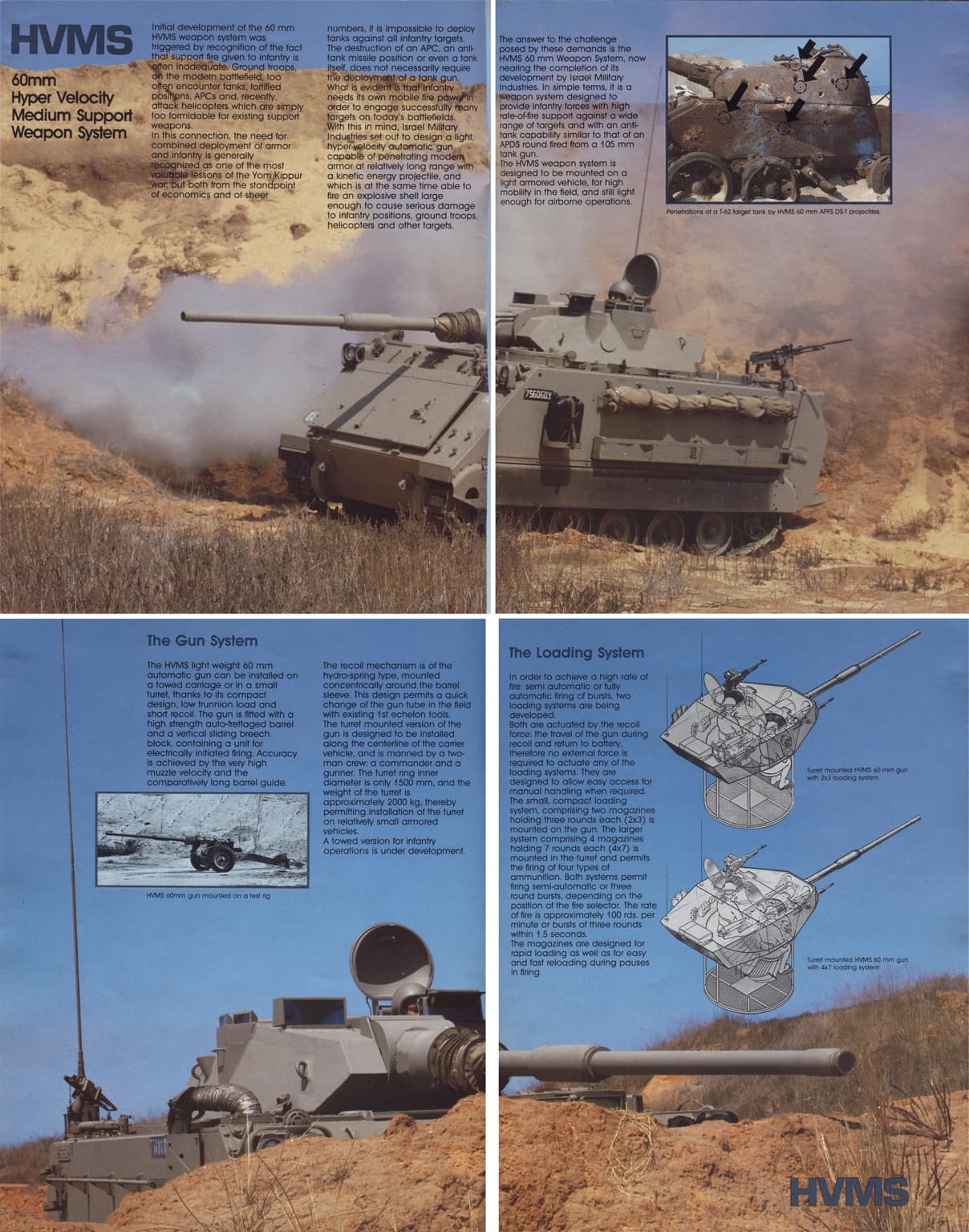
- Origins of the HVMS -ㅤAround 1977, Israeli Military Industries (IMI) partnered with the Italian company OTO Melara. Under this agreement, IMI was to develop the gun and ammunition, while OTO Melara focused on the autoloader mechanism and a lightweight two-man turret. The joint project served as a cost-effective anti-tank solution targeted at the export market. As a result of this cooperation and knowledge sharing, the two companies successfully developed a low-caliber, high-velocity 60mm smoothbore autocannon capable of penetrating contemporary Soviet armor, such as the T-55 and T-62 tank series. It was marketed under the commercial name HVMS (High Velocity Medium Support) or HVGS (High Velocity Gun System).
ㅤTo promote the new HVMS turret, an ex-IDF M113 was used, officially known as the Bardelas [“ברדלס”; Eng: “Cheetah”]. Although the two companies initially collaborated on the project, disagreements over the course of development led them to split. Consequently, both companies went on to develop their own independent evolutions of the system.
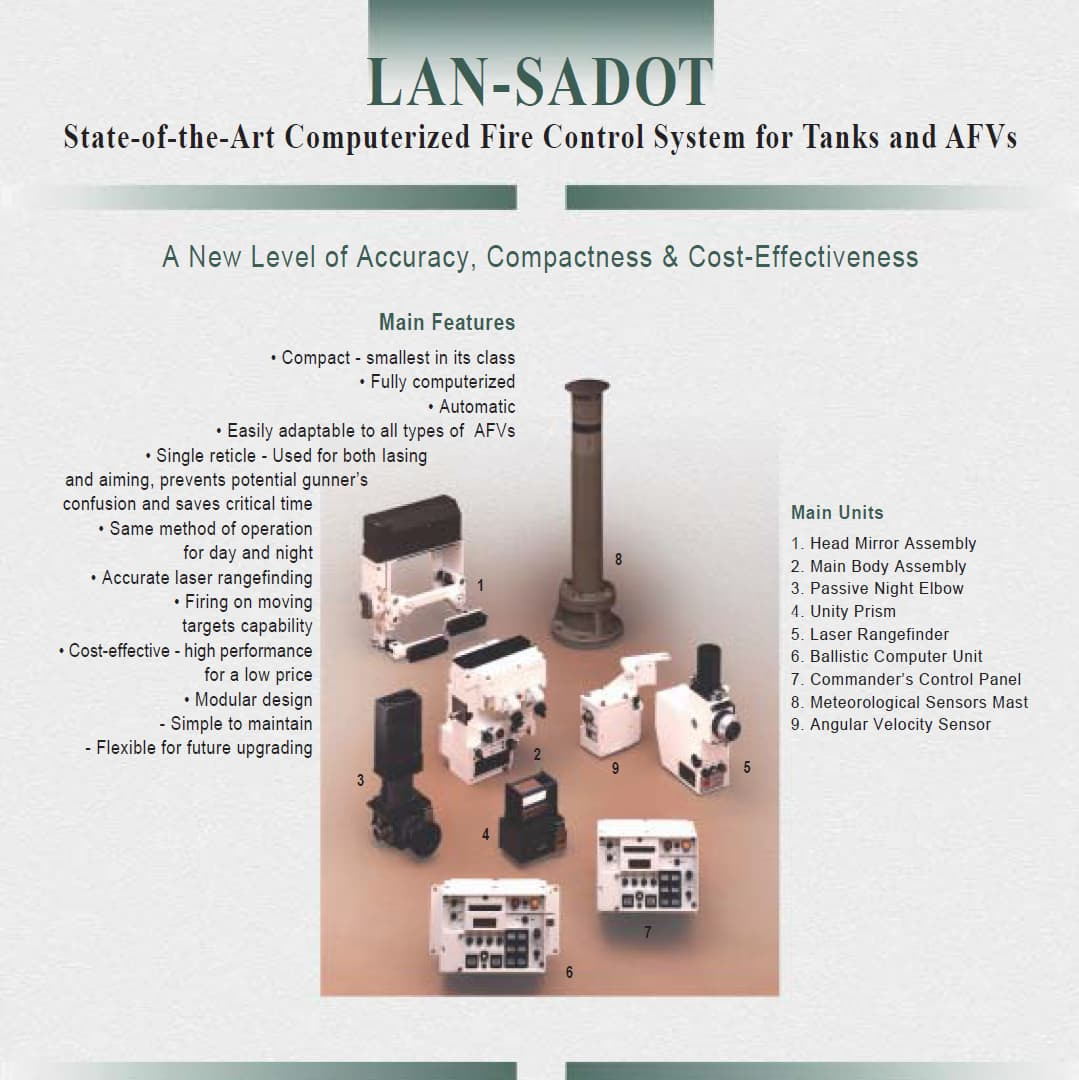
Bardelas HVMS in Early configuration with OTO-Melara designed turret- IMI’s Development Post-Separation -ㅤFollowing the separation, IMI decided to replace the Italian turret design with its own. This led to the introduction of a new, more spacious turret that improved internal ergonomics and allowed for the integration of new subsystems. While retaining the two-plane stabilization and autoloader mechanism, the new turret introduced the “Lan-Sadot” Fire Control System (FCS) (sometimes mistakenly referred to as “Lancelot”) developed by the Israeli company El-Op. The new FCS featured an electronic ballistic computer, a laser rangefinder, and two periscopes, for the gunner and commander, each equipped with day and night-vision channels. It is also mentioned that the gunner and commander have similar set of control units, meaning the commander could override the gunner if needed. Optionally, the turret could be equipped with IS-6 smoke dispensers and a meteorological sensor mast at the rear, which completed the full “Lan-Sadot” package.
Bardelas HVMS in Late configuration with IMI designed turretㅤIMI’s HVMS achieved export success, notably in Chile during the 1980s, where the cannons were installed on modified M-50 Shermans and M-24 Chaffees, and tested on the M-41 Walker Bulldog. Interestingly, in 1992, the IMI-developed turret was also tested on a Chilean Piranha I 6x6 APC in competition with different turret designs from other manufacturers, the IMI turret could withstand 14.5mm projectiles, whereas competing turrets could only resist up to 7.62mm fire.
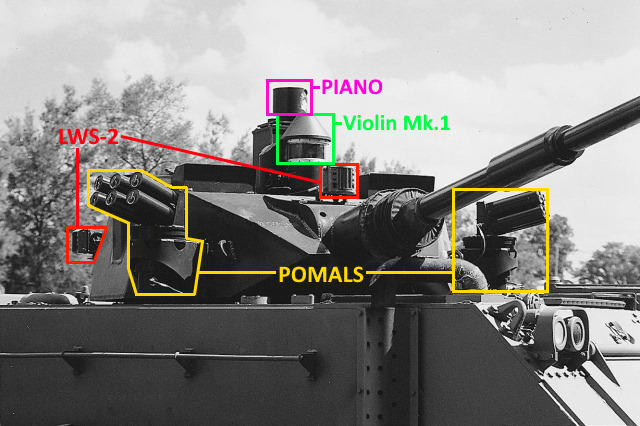
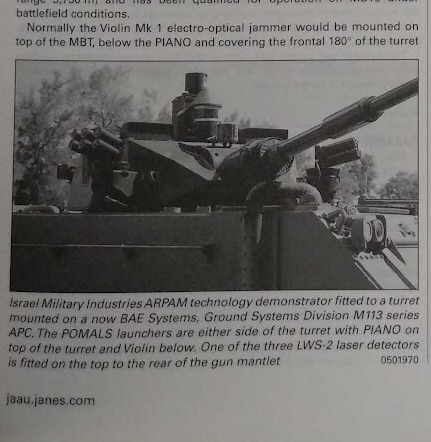
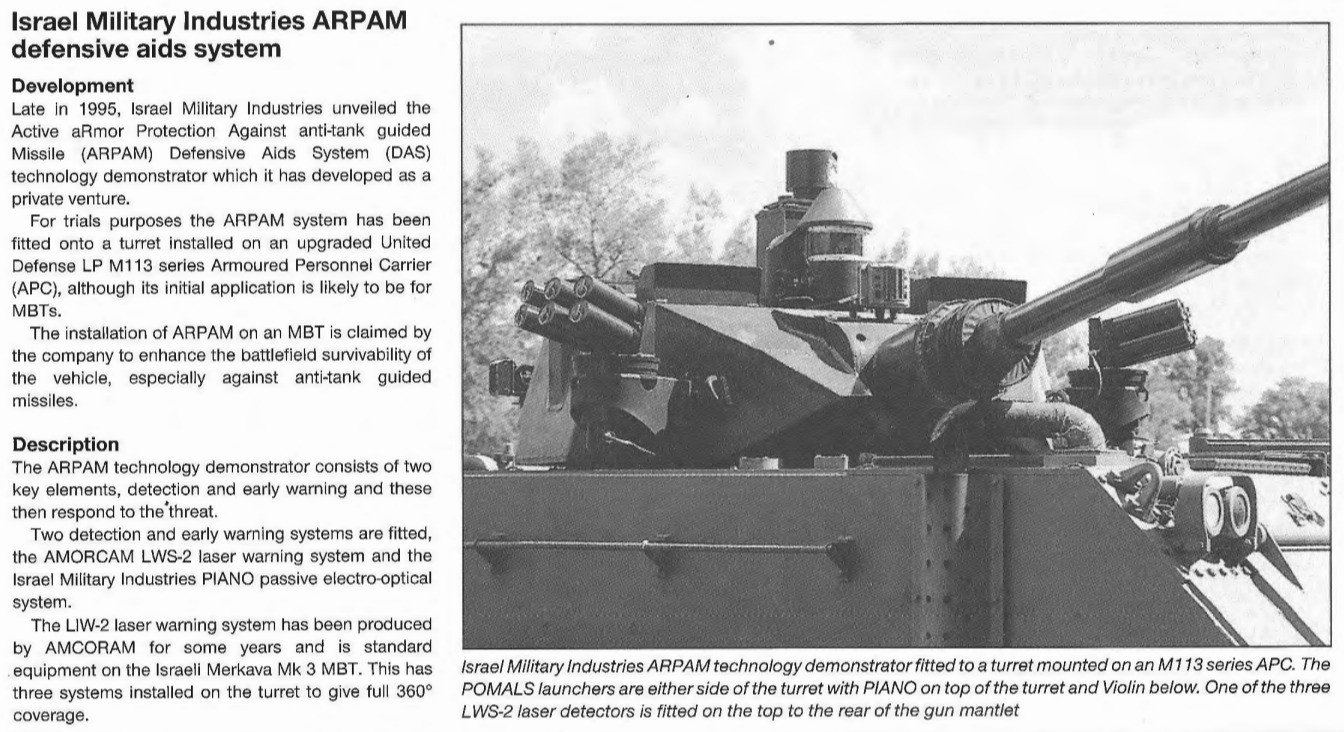
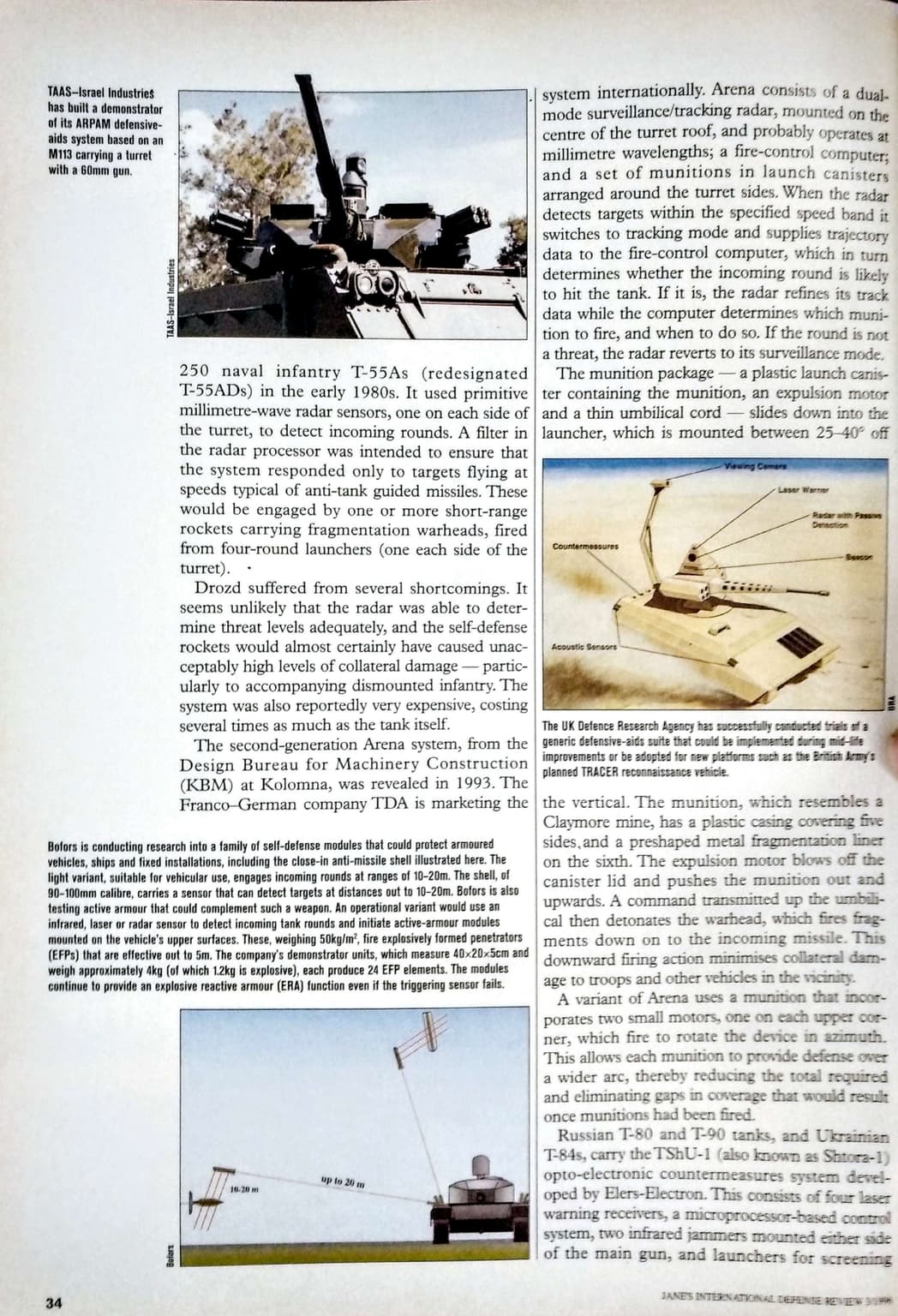
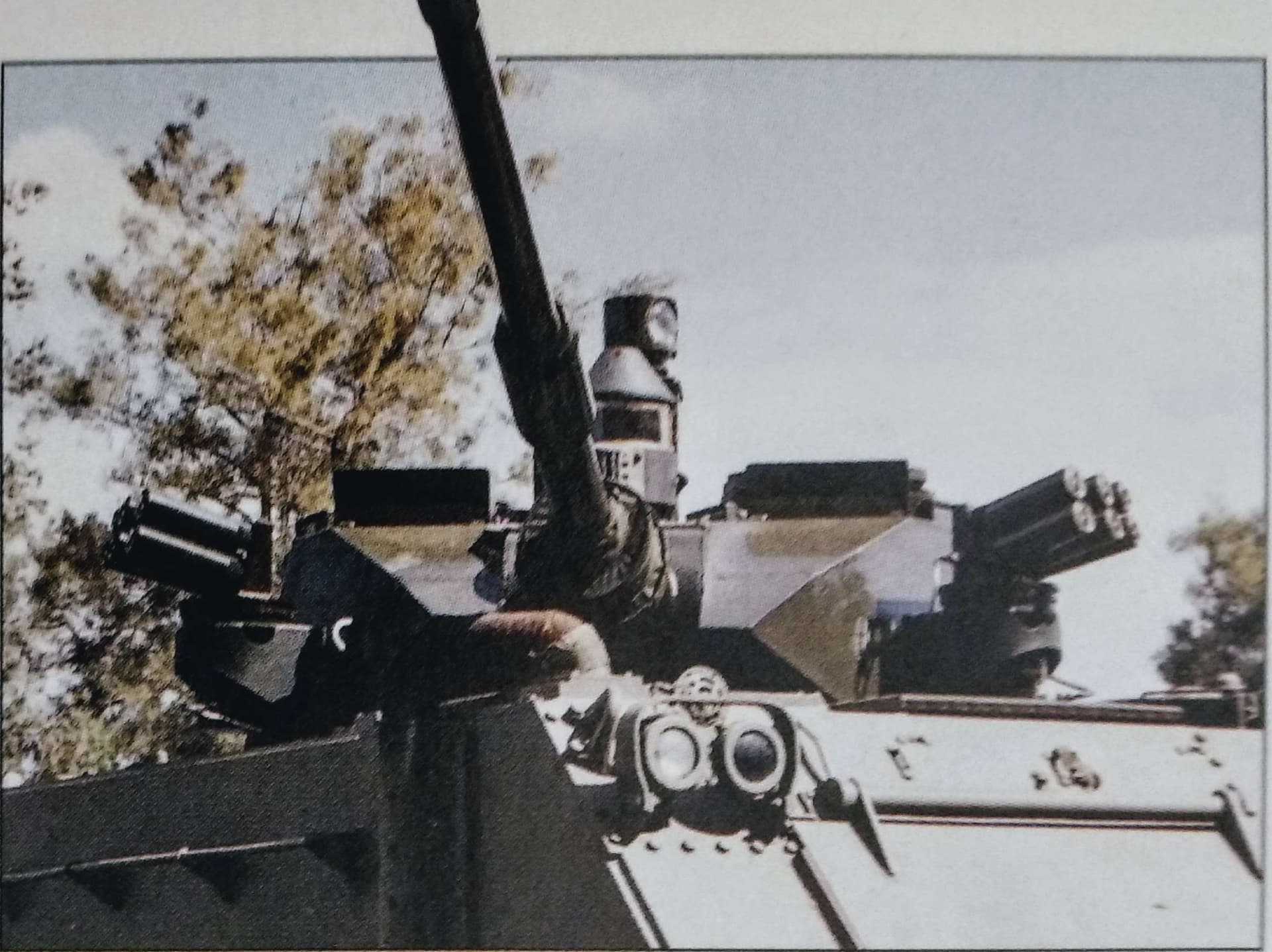
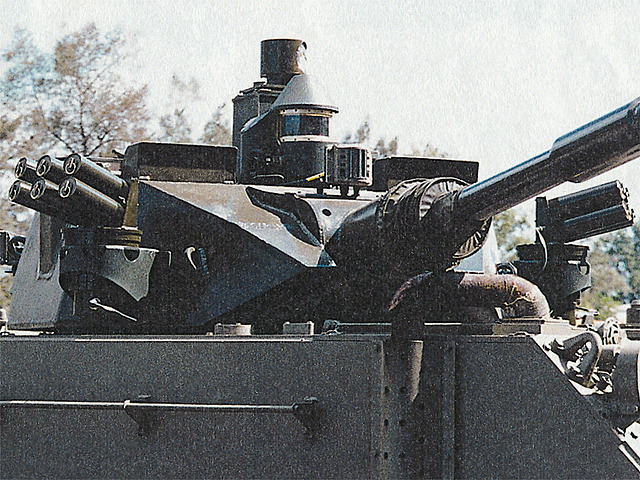
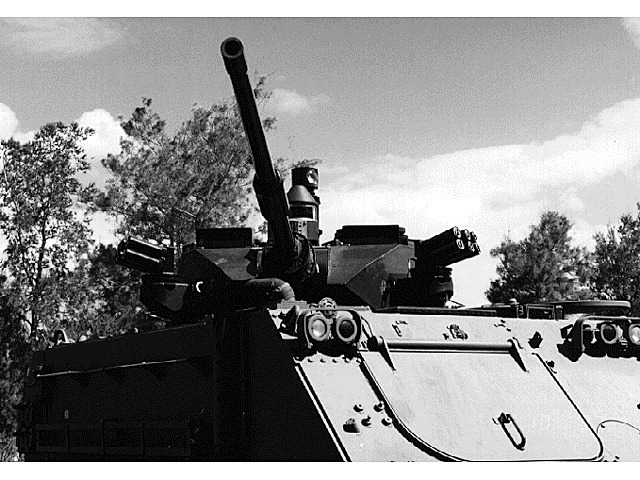
IMI’s HVMS turret trialed in Chile- Introduction of the ARPAM Protection Suite (1995) -ㅤIn the following years, the M113-based prototype likely sat in IMI’s storage until 1995, when it was brought out to promote a new soft-kill Active Protection System (APS) suite called ARPAM (Active aRmor Protection Against anti-tank guided Missiles). This complex system consisted of several integrated elements: three LWS-2 laser warning sensors (one mounted frontally above the gun, and two at the rear corners), supplemented by a PIANO passive electro-optical warning sensor mast mounted above the turret to provide 360° coverage. Soft-kill interception was provided by a Violin Mk.1 (also known as MAJIC) electro-optical jamming unit positioned just below the PIANO sensor. This covered the frontal 180° arc, where an attack was most likely to originate, and was claimed to be effective against 2nd generation ATGM missiles (Such as American TOW or the Soviet Fagot and Konkurs). Another feature of the system was POMALS, which consisted of two traversing pedestals mounted on either side of the vehicle. Each pedestal carried six smoke dischargers capable of automatically slewing toward a detected threat to deploy a smoke screen.
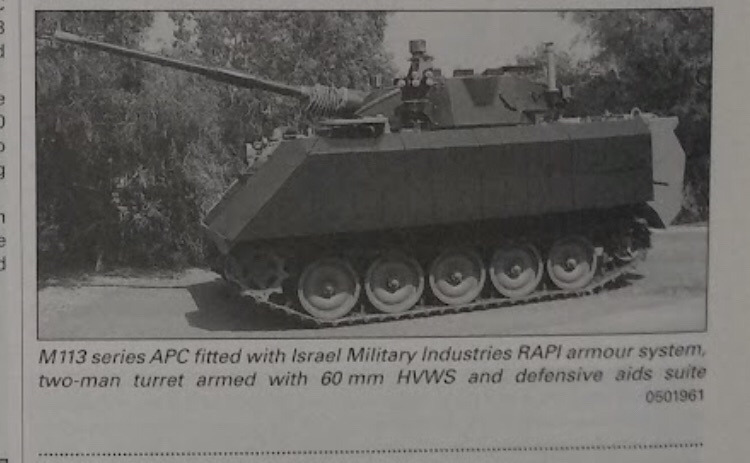
Bardelas HVMS in 1995 configuration with ARPAM suite (LWS-2, PIANO, Violin Mk.1 and POMALS)- Introduction of the RAPI ERA Suite (1996) -ㅤShortly after, in 1996, the M113 technology demonstrator received a further upgrade with the introduction of an Explosive Reactive Armor (ERA) package developed by IMI called RAPI (Reactive Armor ProtectIon). This package fully covered the front and sides of the vehicle, adding a total weight of 2,000 kg. The armor was composed of 40 kg modules, each containing several ERA elements. According to IMI, this armor could completely defeat an RPG-7 equipped with a single-charge HEAT warhead (while the exact model was not specified, this implies resistance against HEAT penetration ranging from 260mm to 500mm RHA depending on the variant), as well as heavy machine-gun fire such as the 14.5mm KPVT.
ㅤOverall, this vehicle was featured in various promotional materials and displayed at several defense exhibitions in Israel and abroad. It served as a long-running technology demonstrator: initially for the 60mm HVMS turret in the 1980s, and later for the ARPAM and RAPI suites in the mid-to-late 1990s. Its final public appearance was at the Eurosatory 1996 exhibition in France.
Bardelas HVMS in 1996 configuration with ARPAM and RAPI suites, Eurosatory '96 exhibition
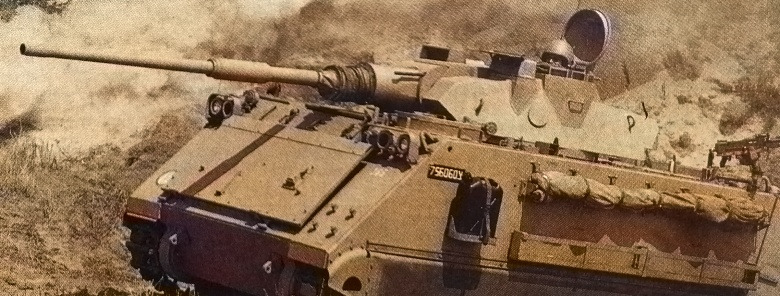
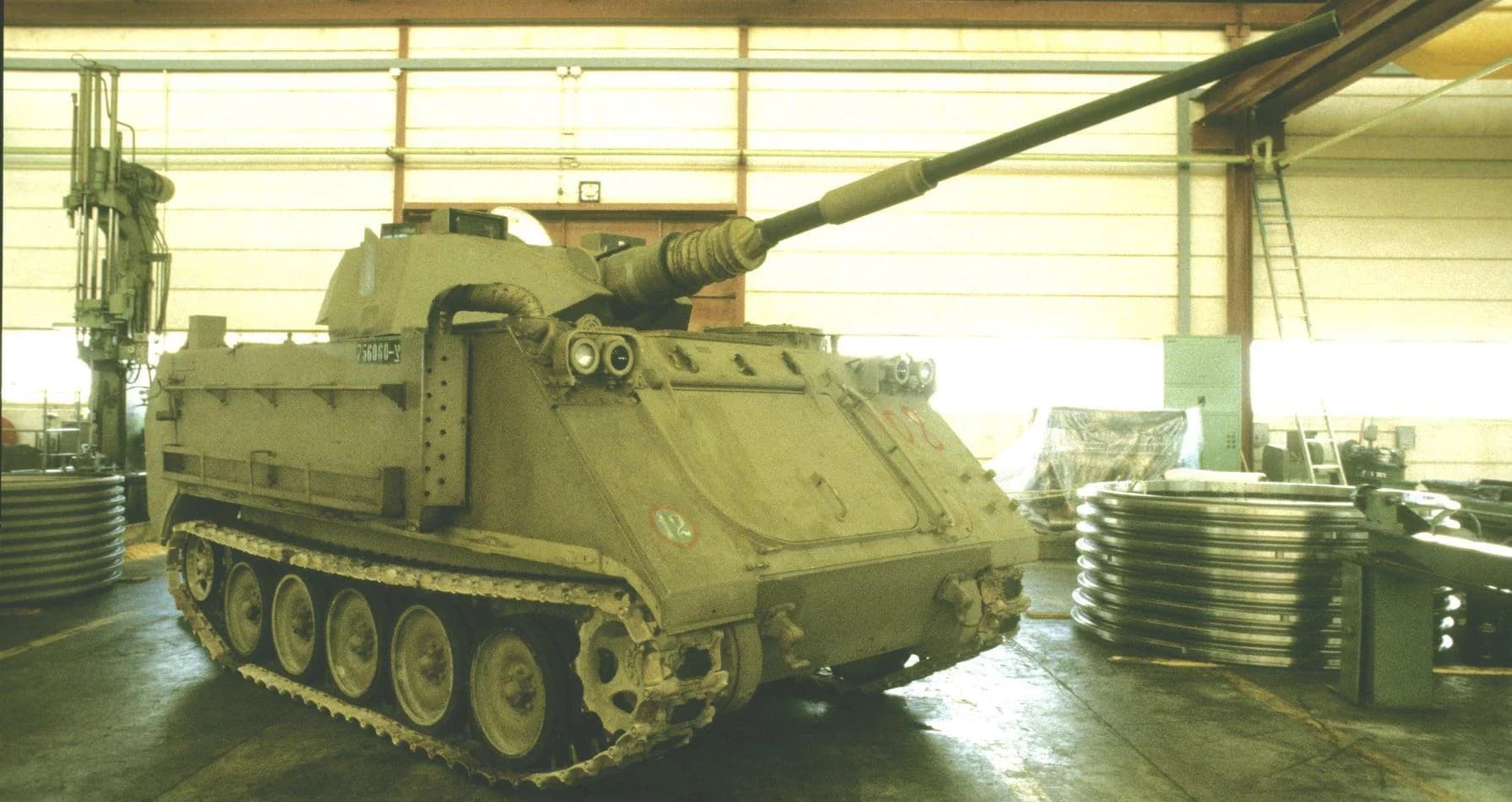
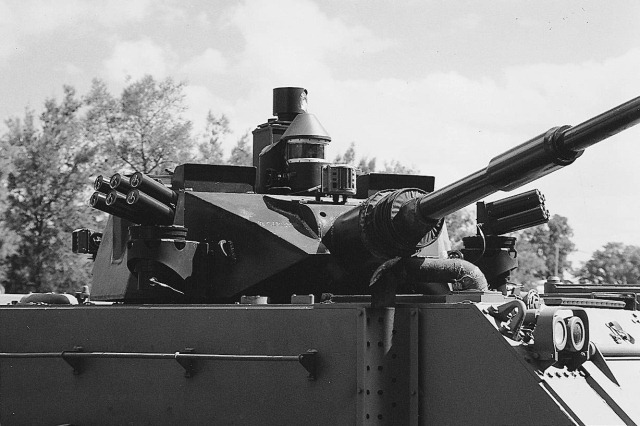
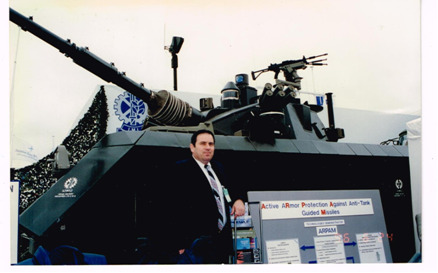
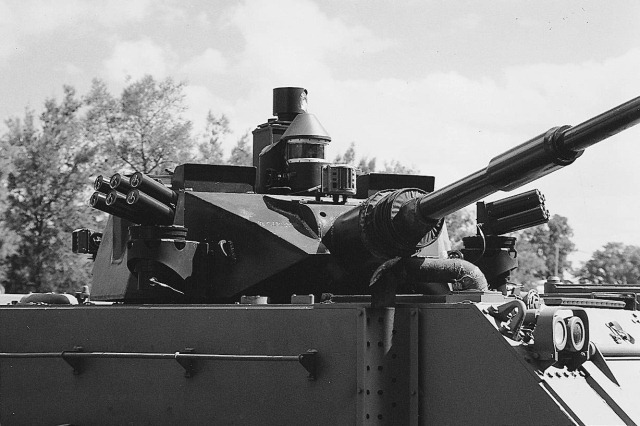
TL;DR: Key advantages of 1996 configuration over the early configuration we have in game:
- Autoloader with fire rate options of 100 rpm (0.6 sec. reload) or 3 round burst within 1.5 seconds (supposedly the early config should also have it)
- “Lan-Sadot” Fire Control System, with a laser-rangefinder, electronic ballistic computer, a night vision device and a commander’s override system.
- New turret with armor capable to withstand 14.5mm KPVT (meaning protection from over 30 mm of pen)
- ARPAM Protection Suite, consisting of laser warning system, electro-optical warning system, soft-kill APS electro-optical jamming station and POMALS traversing pedestals with smoke dischargers.
- Optionally can carry a additional ERA kit (RAPI), with protection against single-HEAT warheads ranging from 260mm to 500mm RHA, as well as against 14.5mm KPVT projectiles.
- Removal of 7.62 mm machinegun positions in the back, allowing full 360° traverse without obstacles in the back.
Spoiler
Armament:ㅤThe main and secondary armament of the Bardelas HVMS (model 1996) remains the same as on the early configuration of this vehicle: a 60mm HVMS (High Velocity Medium Support) cannon with a fast autoloader, supplemented by a coaxial 7.62mm FN MAG 60-40 machine gun and an additional pintle mounted 7.62mm FN MAG 60-40 for the commander. A redundant feature of the early demonstrator, the two additional machine gunner positions in the rear, was removed, allowing the turret to traverse a full 360° without rear obstruction.
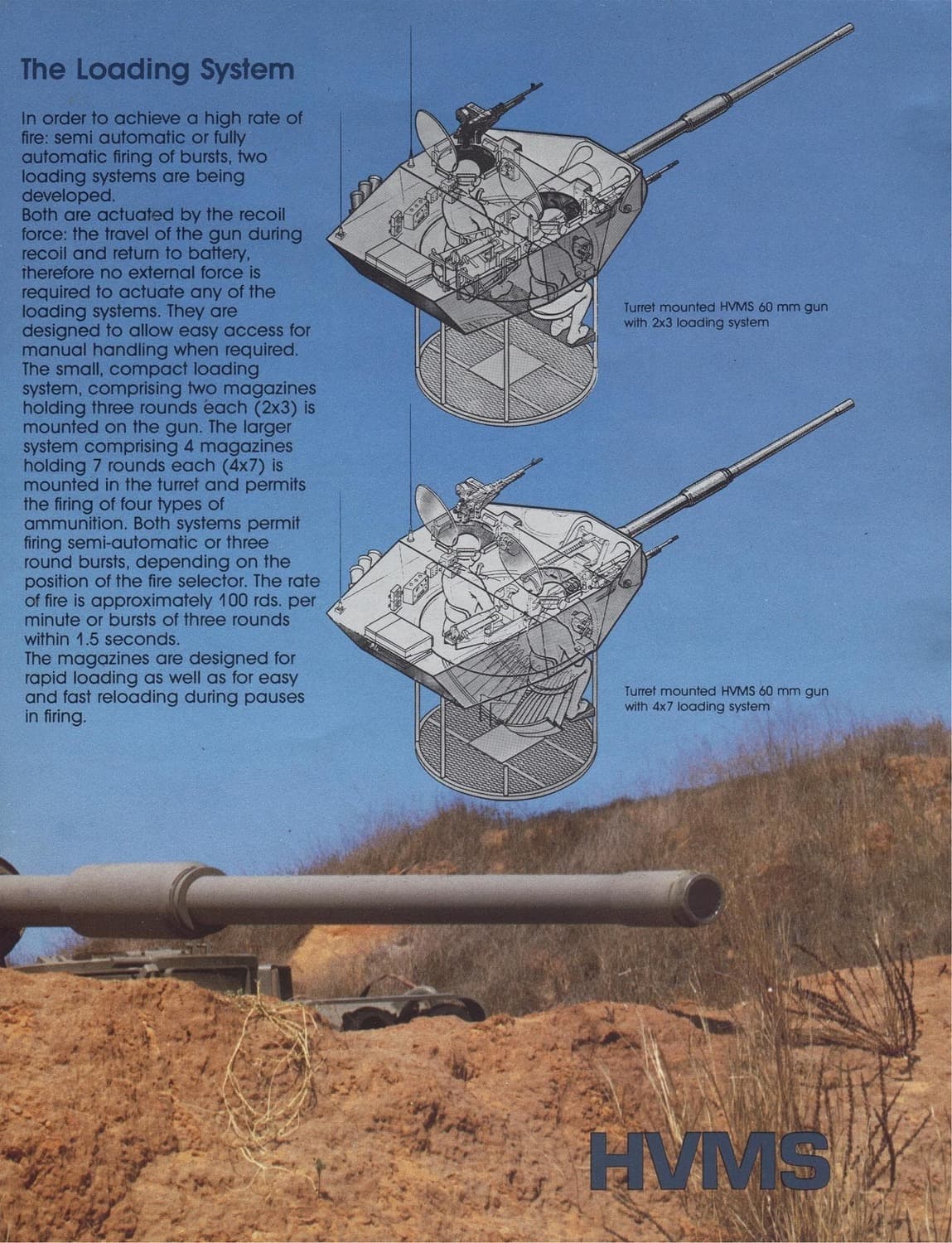
Stabilization and Autoloader:ㅤThe 60mm HVMS cannon is fully stabilized and features a high rate of fire through an autoloading mechanism offering either semi-automatic reload or burst firing modes. Two autoloading systems were offered by the manufacturer: a recoil-powered system featuring two magazines holding three rounds each (2×3), and a much larger, hydraulically power-assisted system consisting of four magazines holding seven rounds each (4×7), giving the vehicle 28 first-stage rounds plus 1 ready round in the chamber. The advertised rate of fire is approximately 100 rounds per minute, allowing an interval of just 0.6 seconds between shots, as well as optionally the autoloader can automatically fire three-round bursts within 1.5 seconds. Once the autoloader is depleted, manual reloading is possible at an average rate of 5–6 rpm (meaning a 10 to 12-second reload time per round).
Ammo Capacity and Specifications:ㅤWhile the total ammunition capacity of the Bardelas HVMS is unspecified in most sources, one source claims the vehicle carries 80 main gun rounds (60mm) and 4,000 secondary rounds (7.62mm). This indicates an ammunition layout consisting of 29 first-stage rounds in the turret (1 in the chamber and four 7-round magazines), with the remaining 52 rounds stored in the rear dismount compartment.
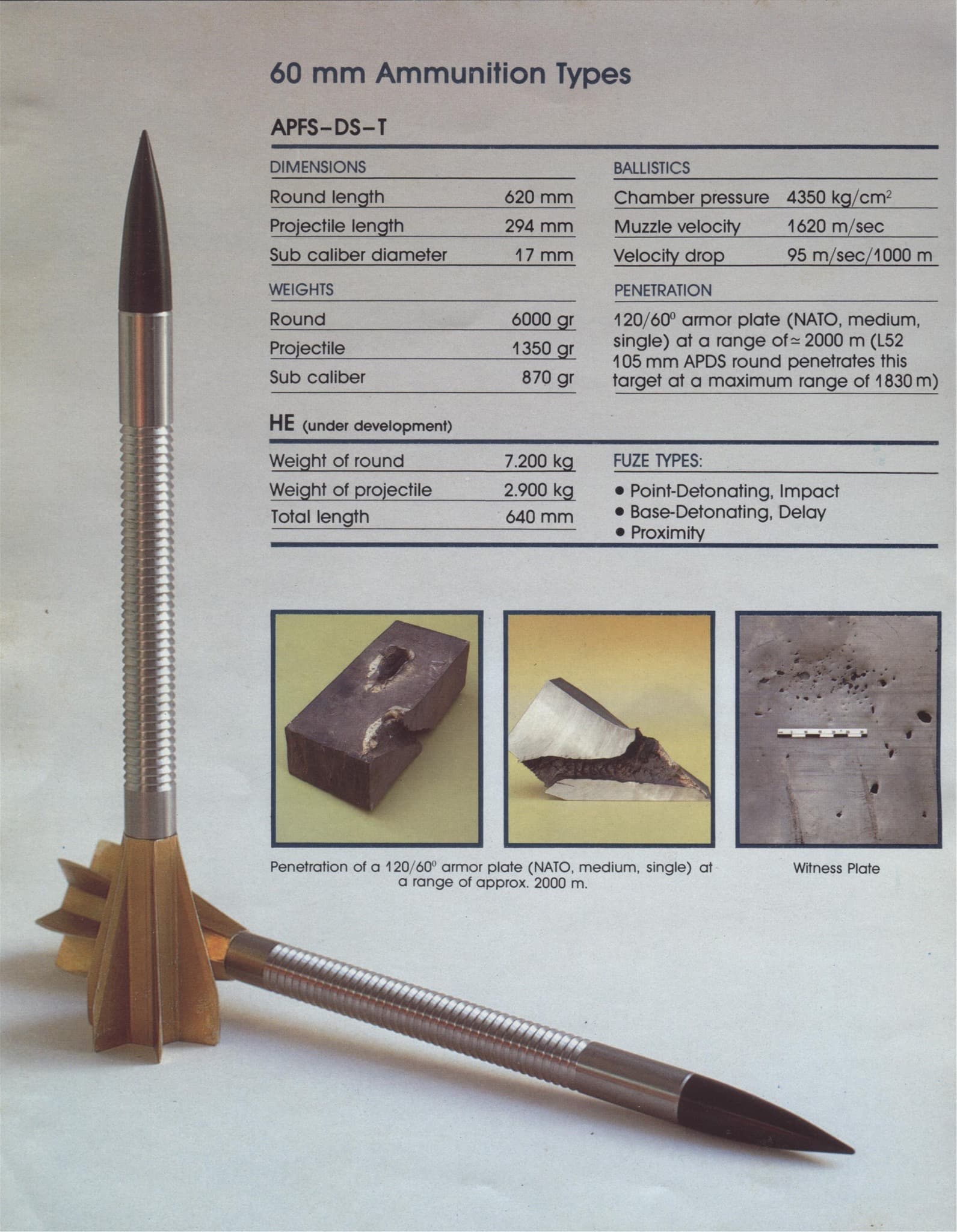
The main cannon fires two primary types of ammunition: APFSDS and HE.
- IMI M300: Armor-Piercing Fin-Stabilized Discarding Sabot
- Max. Penetration: 249 mm (at 10 m, 0° AoA)
- Caliber: 60 mm
- Projectile Mass: 870 g
- Muzzle Velocity: 1,620 m/s
- OTO HE: High Explosive
- Max. Penetration: 17 mm (at 10 m, 0° AoA)
- Caliber: 60 mm
- Projectile Mass: 3.1 kg
- Muzzle Velocity: 1,000 m/s
- Fuze Delay: 0.4 m
- Fuze Sensitivity: 0.1 mm
- Explosive Type: Hexal
- Explosive Mass: 450 g
- TNT Equivalent: 765 g
- OTO HE-VT: High Explosive Variable Time Fuze (compatible, but unknown if actually used)
- Same specifications of OTO HE, has proxy fuze.
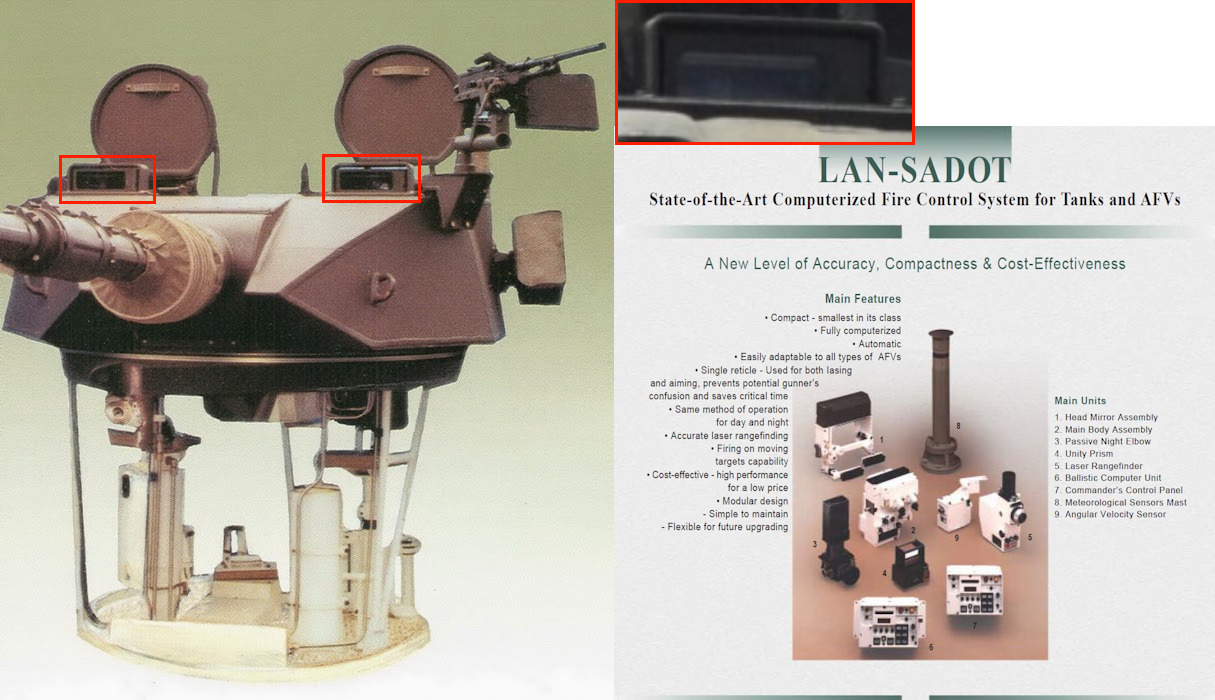
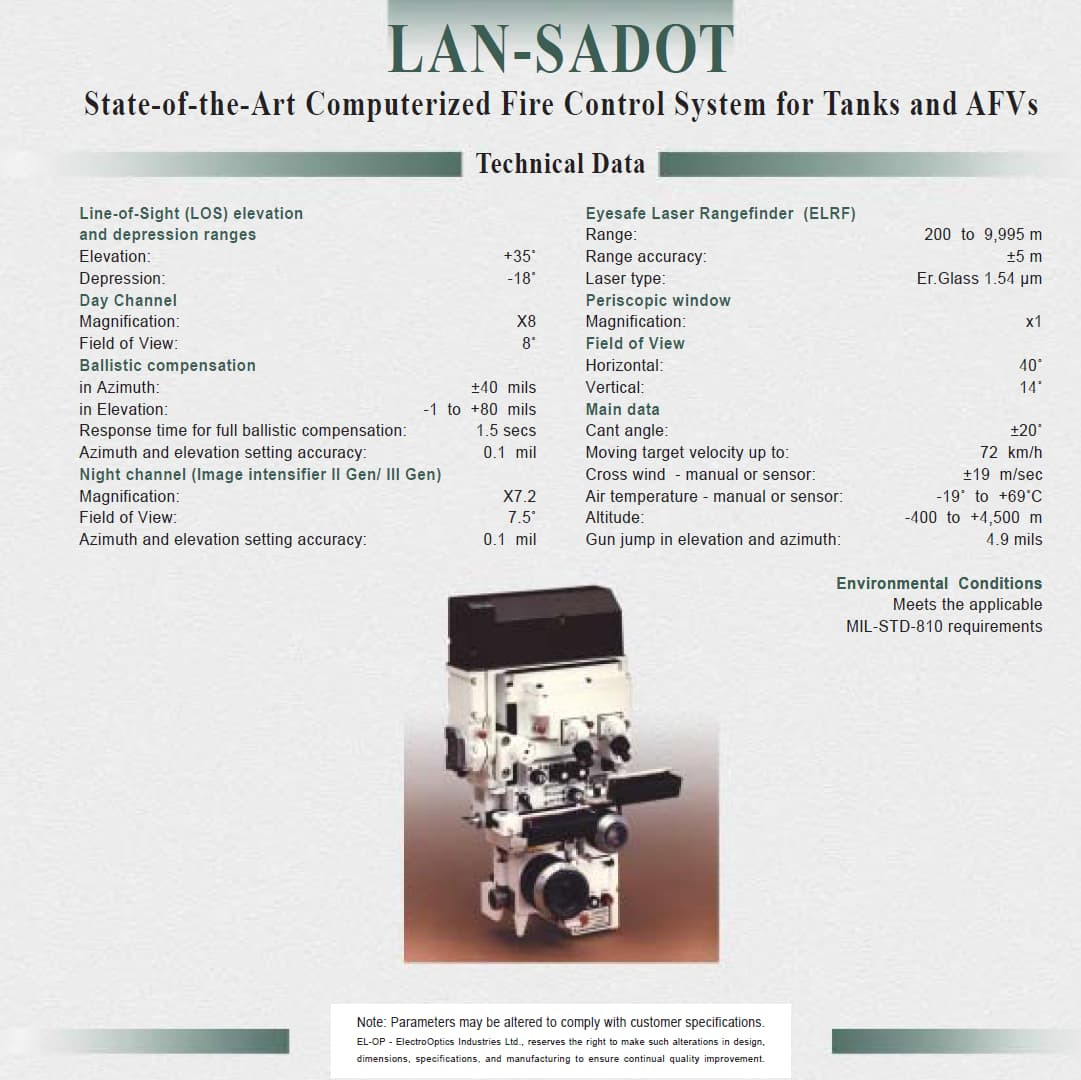
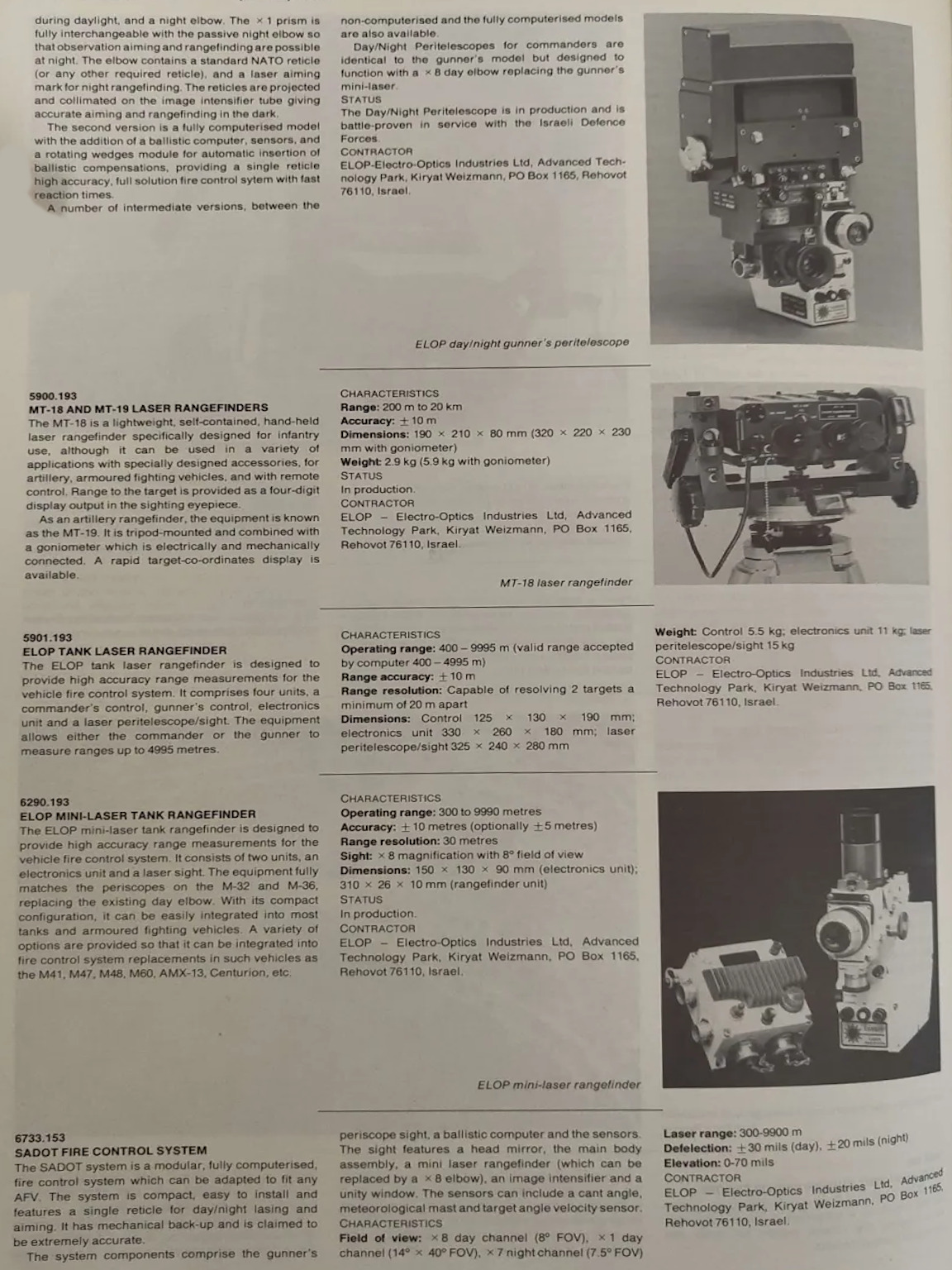
A New Turret with “Lan-Sadot” FCS:ㅤWhile all of the above applies to the early model as well, the 1996 configuration introduced significant upgrades. With the new IMI-developed turret, the vehicle gained the “Lan-Sadot” Fire Control System developed by El-Op (Elbit). Designed for light vehicles with limited space, this compact FCS incorporates an eyesafe laser-rangefinder, an electronic ballistic computer, and two sights for the commander and gunner. The both sights provide day channel with an 8° field of view with 8× magnification, as well as the 2nd-gen image intensifier (night-vision channel) offering a 7.5° field of view with 7.2× magnification. The sight features elevation limits of +35°/-18°, which likely reflects the maximum elevation range of the main cannon itself (with depression further dictated by hull clearance). It is also mentioned that the gunner and commander have similar set of control units, meaning the commander could override the gunner if needed. Interestingly, on some pictures of the new turret, the gun is seen with thermal sleeve installed, this does not mean it has access to thermals, as mentioned above only a night vision is available to this FCS.
Here we can see how Lan-Sadot FCS is identifiable from outside, plus general information regarding whole system
Lan-Sadot periscope specifications
Reload mechanism as stated by the manufacturer
Specifications for ammunition types used by HVMS
Spoiler
Hull Base Armor:ㅤThe basic armor of the hull, incorporate the original values of protection offered by M113, it is a rolled 5083/5086 H32 aluminum alloy armor (welding assembly) with following protection values.
- Front
- Upper Front Plate: 38 mm (45°)
- Lower Front Plate: 38 mm (30°)
- Sides
- Upper Sides: 44 mm (0°)
- Lower Sides: 31 mm (0°)
- Rear
- Rear: 38 mm (9°)
- Rear Ramp: 38 (8°)
- Top: 38 mm (90°)
- Floor: 28 mm (90°)
Turret Base Armor:ㅤThe turret protection values on the other had are lesser known, but based on information provided by IMI it can withstand 14.5mm KPVT machine gun fire, KPVT can roughly penetrate up 30-32 mm of armor, meaning the turret has much more above that, possibly matching with the hull’s values at 38 mm thick at different angles. Just like the hull it is built using the welding assembly.
RAPI Explosive Reactive Armor (ERA):ㅤHowever, all of the above represents only the base armor values of the vehicle. In the 1996 configuration, the hull can be up-armored with the addition of an ERA package developed by IMI called RAPI (Reactive Armor ProtectIon). This comes at a price, as the full package adds 2,000 kg to the overall weight. The armor is composed of 40 kg modules, each containing several ERA elements. According to IMI, this armor can completely defeat an RPG-7 equipped with a single-charge HEAT warhead (while the exact model was not specified, this implies resistance against HEAT penetration ranging from 260 mm to 500 mm RHA depending on the variant), as well as heavy machine gun fire such as the 14.5mm KPVT (30–32 mm RHA penetration). This package fully covers the upper sides at 0° and the upper front plate at 45°.
Bardelas HVMS in 1996 configuration with ARPAM and RAPI suitesARPAM:ㅤAnother feature of the late configuration is the integration of a Soft-Kill Active Protection System (SK-APS) suite called ARPAM (Active aRmor Protection Against anti-tank guided Missiles). This system features several warning sensors covering 360°, a jammer unit covering a 180° forward-facing arc, and an automatic smoke screen system.
Elements of the ARPAM Suite:
- LWS-2 sensors: Laser Warning System (LWS) sensors providing 360° coverage (one mounted frontally above the gun and two at the rear corners). They detect optical sources such as laser rangefinders, laser target designators, and infrared searchlights.
- PIANO sensor mast: Passive electro-optical warning sensor mast mounted above the turret, providing 360° coverage. It detects incoming missiles and provides the exact direction of the threat. Additionally, it can detect air-to-air and surface-to-air missiles.
- Violin Mk.1 (MAJIC) soft-kill jammer: Electro-optical jamming unit positioned just below the PIANO sensor. Covering a 180° frontal arc, It is effective against second-generation ATGMs, such as the American TOW or the Soviet Fagot and Konkurs. The system does not work against first-generation ATGMs, such as the Malyutka, requiring reliance on a smoke screen instead.
- POMALS smoke screen pedestals: Consist of two traversing pedestals mounted on either side of the vehicle. Each pedestal carries six smoke dischargers capable of automatically slewing toward a detected threat to deploy a smoke screen.
Bardelas HVMS in 1995 configuration with ARPAM suite, visual distinguishing essential elements of the system
Spoiler
DimensionsㅤThe height of the hull is 1.83 m, and the turret adds 0.72 m (above the turret ring). The additional height from the ARPAM system is not explicitly mentioned in official sources, but from a visual perspective, the mast adds roughly ~0.40 m above the turret. Therefore, the total height would be approximately 2.95 m with ARPAM (2.55 m without).
ㅤThe width of the base M113 is 2.68 m. With the RAPI ERA kit installed, it would be slightly wider. Although exact thickness parameters for the ERA blocks are unavailable, based on visual footage, we can assume they are about 200 mm thick. With this assumption, the overall width with ERA is estimated to be roughly ~3.08 m.
ㅤThe hull length of the base M113 (with external fuel tanks) is 5.29 m; with the added ERA kit, it would increase to roughly ~5.49 m. With the cannon facing forward, the overall length is estimated to be ~6.39 m.TL;DR:
- Height: ~2.95 m with ARPAM (2.55 m without)
- Width: 2.68 m (~3.08 m with ERA kit)
- Length: 5.29 m (~5.49 m with ERA kit)
- Length w/gun facing forward: ~6.39 m
MobilityㅤBeing based on the M113A2, the Bardelas HVMS is powered by a General Motors 6V53 6-cylinder diesel engine producing 212 hp at 2,800 rpm, paired with an Allison TX-100-1 transmission featuring 3 forward gears and 1 reverse gear. The base weight of the vehicle is 11,740 kg (including external fuel tanks). The turret adds 2,500 kg, the ARPAM kit adds an estimated ~200 kg (exact weight unknown), and the RAPI Explosive Reactive Armor (ERA) package adds another 2,000 kg.
Based on this information, the total weight would be as follows:
- Bardelas HVMS with ARPAM (1995 config): 14,440 kg
- Bardelas HVMS with ARPAM and RAPI (1996 config): 16,440 kg
ㅤThis calculation does not even account for ammunition weight, yet the vehicle still relied on its original M113 powerpack.
ㅤConsequently, the horsepower-to-weight ratio would be 14.68 hp/t without the ERA kit, dropping to 12.89 hp/t with the ERA installed. The maximum speed is rated at ~64 km/h forward and ~15 km/h in reverse, though practical speeds would likely be lower due to the significantly increased weight.
■ - yellow stands for parameters that need further research (based on a single source or estimated)
General Info:
- Name: Bardelas HVMS (Model 1996) / (דגם 1996) HVMS ברדלס
- Origin: Israel
- Manufacturer: IMI
- Year: 1996
- Class: Tank Destroyer / Light Tank
- Crew: 3
Dimensions:
- Length: 5.29 m
- Length w/RAPI era kit: ~5.49 m
- Length w/gun facing forward: ~6.39 m
- Height: ~2.95 m
- Width: 2.68 m
- Width w/RAPI era kit: ~3.08 m
- Weight: 14,440 kg
- Weight w/RAPI era kit: 16,440 kg
Armaments:
- Main Armament: 1x 60mm HVMS
- Secondary Armament: 1x coaxial 7.62mm FN MAG 60-40, 1x pintle-mounted 7.62mm FN MAG 60-40
- Ammo Storage
- 60mm: 81 rounds (1 in the chamber, 28 first-stage autoloader and 52 additional)
- 7.62mm: 4,000 rounds
- Ammo Types (60mm)
- M300 APFSDS
- OTO HE
- OTO HE-VT
- Turret horizontal limits: 360°
- Turret vertical limits: +35°/-6°
- Ammo Storage
- Stabilizer: ✓
- Laser-Rangefinder: ✓
- Optics
- Day Channel:
- Field of View: 8°
- Magnification: 8x
- Night-Vision Channel: Image Intensifier Gen 2
- Field of View: 7.5°
- Magnification: 7.2x
- Day Channel:
- Autoloader: ✓
- Fire Rate: 100 rpm
- Manual loading (backup): 5-6 rpm
Protection:
- Hull protection (F/S/R): 38 / 44 / 38 mm
- Type: Rolled 5083/5086 H32 aluminum alloy armor, welding assembly.
- Turret protection (F/S/R): Over 30-32 mm (withstands 14.5 KPVT)
- Type: Welded steel.
- Explosive Reactive Armor: ✓ (Optional)
- Name: RAPI
- Protection against AP: over 30-32 mm (withstands 14.5 KPVT)
- Protection against HEAT (single warhead): Between 260mm~500mm (can withstand an unspecified RPG-7 round)
- Soft-Kill Active Protection System: ✓
- Type: Jammer
- Name: Violin Mk.1 (AKA. MAJIC)
- Coverage: 180° (frontal arc)
- Effectiveness: effective against second-generation ATGMs only (TOW, Fagot, Konkurs etc.)
- Laser Warning System: ✓
- Name: LWS-2
- Coverage: 360°
- Passive Electro-Optical Warning System: ✓
- Name: PIANO
- Coverage: 360°
- Smoke charges: 12x (6x on each side on POMALS traversing pedestals)
Engine + Performance:
- Engine: General Motors 6V53 6-cylinder diesel engine
- Transmission: Allison TX-100-1
- Gears: 3 forward, 1 reverse.
- Horsepower: 212 hp
- Horsepower-to-Weight Ratio: 14.68 hp/t
- Horsepower-to-Weight Ratio w/RAPI era kit: 12.89 hp/t
- Speed
- Max. Forward: ~64km/h
- Max. Reverse: ~15 km/h
- Suspension Type: Torsion bar
- Range: ~480km
Sources:
Spoiler
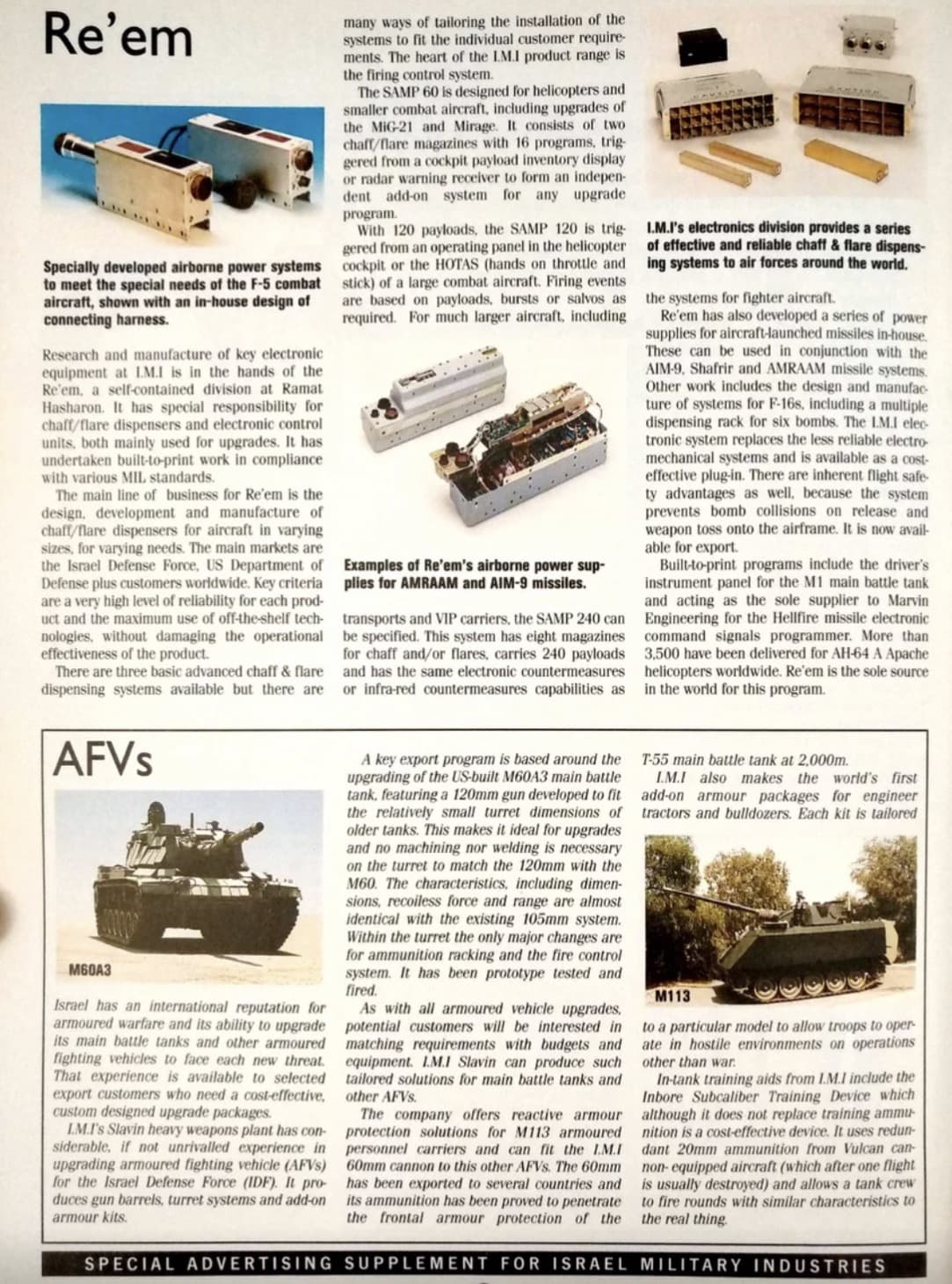
Most of the source material, comes from Jane’s books, and other promotional material including brochures for different subsystems.
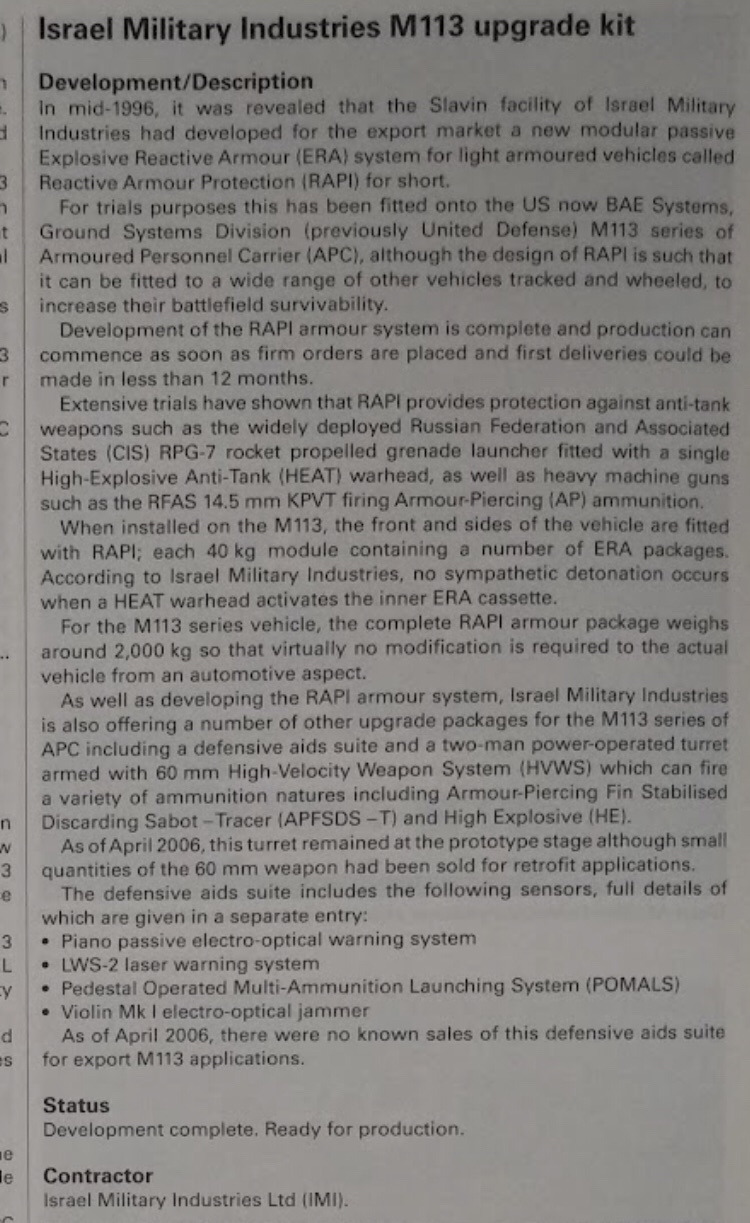
Jane’s Armour and Artillery 2006-2007
information regarding ARPAM and RAPI
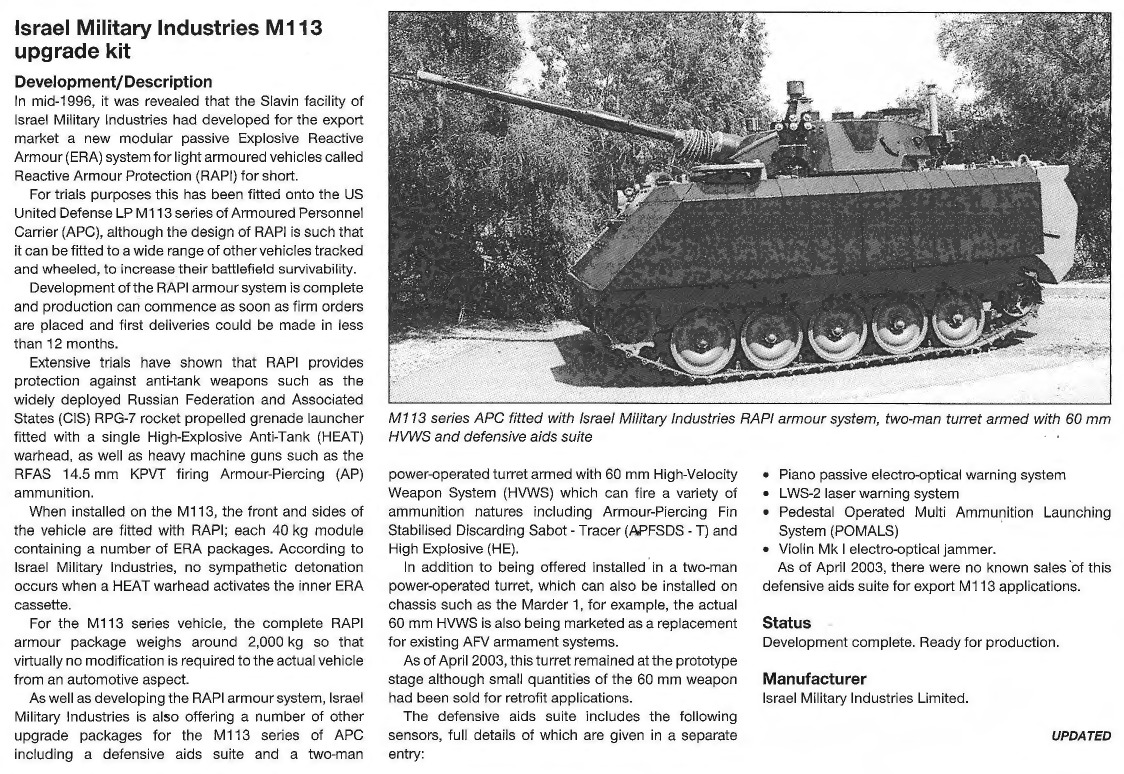
Jane’s Armour and Artillery Upgrades 2003-2004
information regarding ARPAM and RAPI

SPECIAL ADVERTISING SUPPLEMENT FOR ISRAEL MILITARY INUSTRIES
Image material
Jane’s
Image material
HVMS Brochure
Jane’s weapon systems 1988-89
Lan-Sadot info + conformation of its usage on M113 HVMS
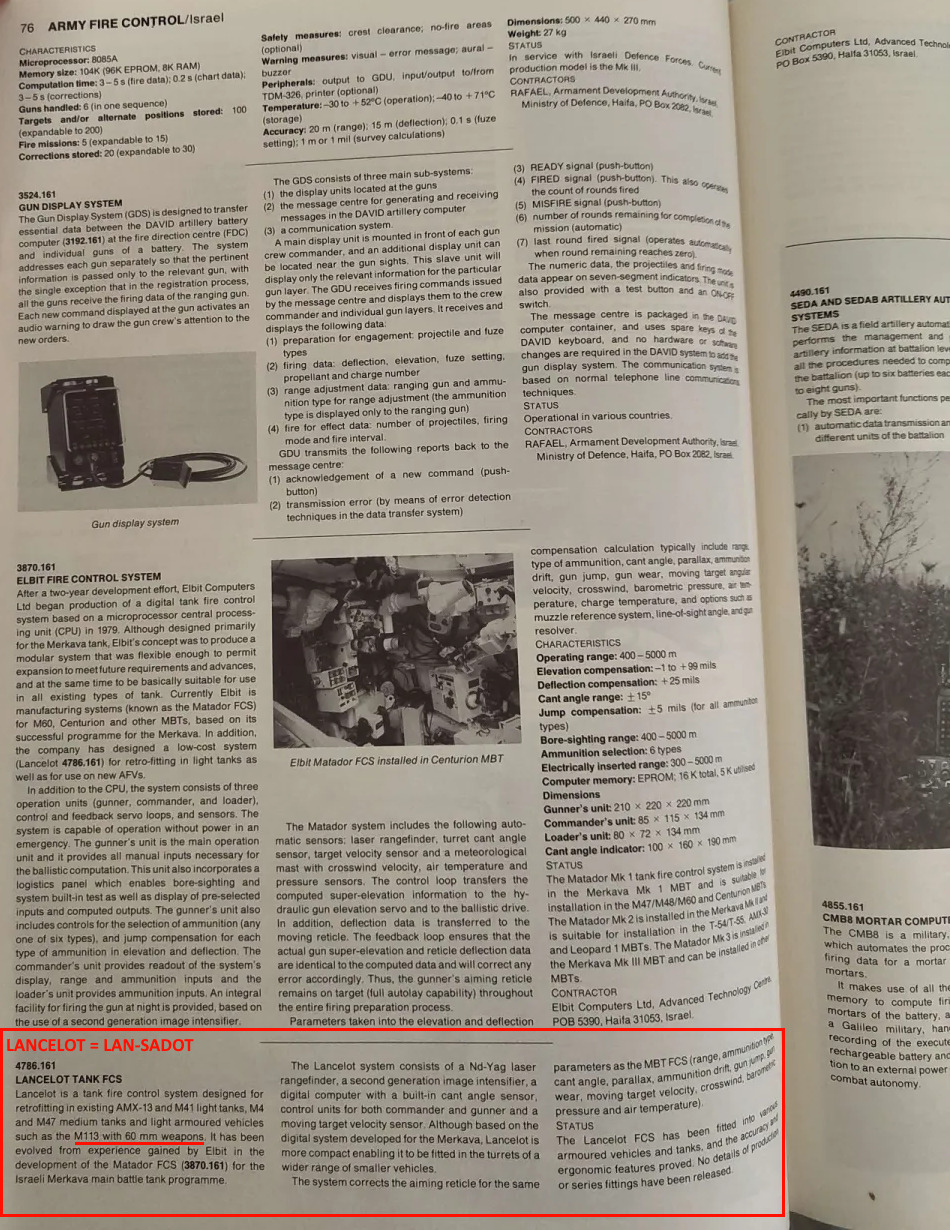
Lan-Sadot modules
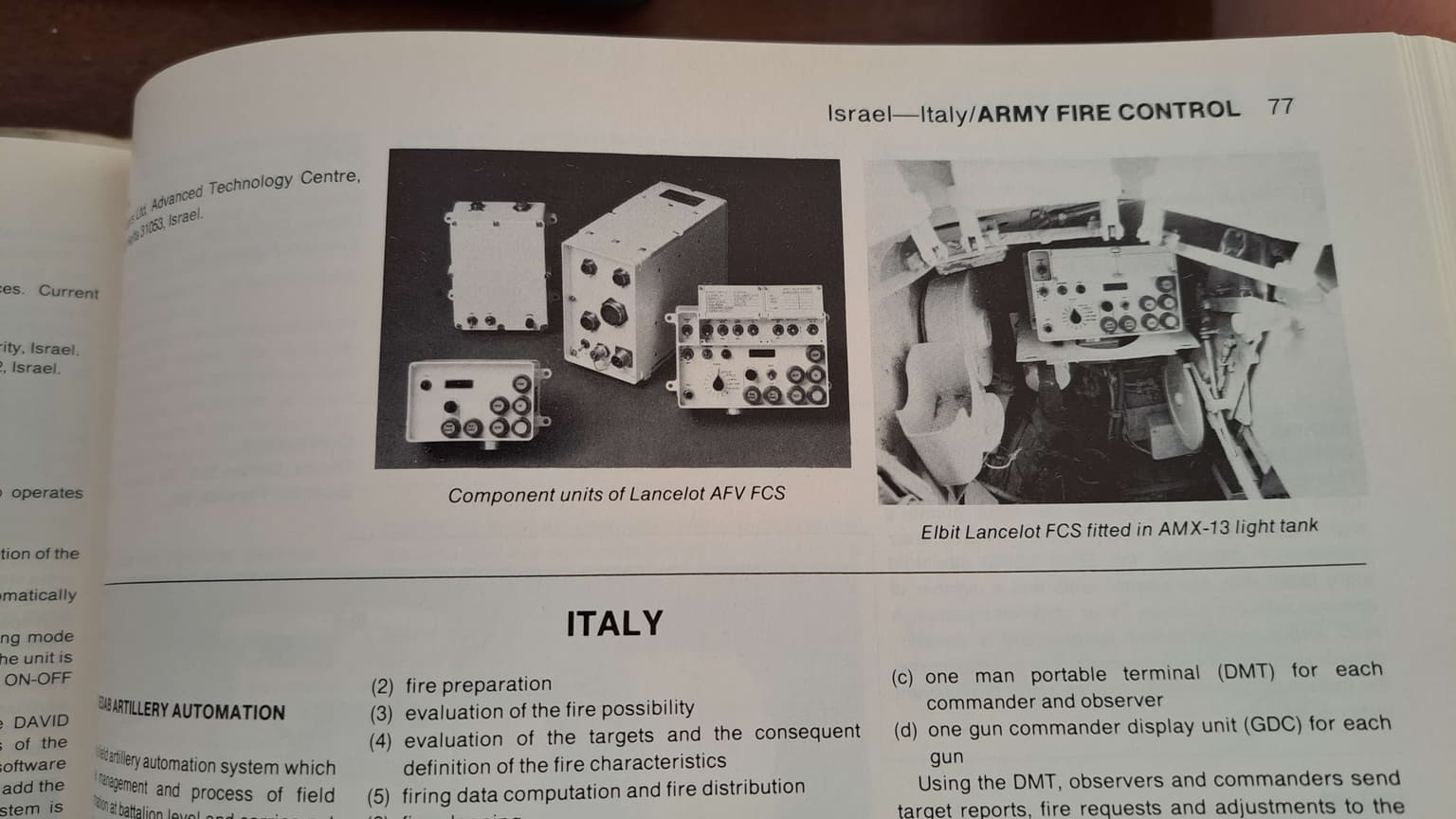
Lan-Sadot modules
El-Op’s “Lan-Sadot” Brochure
PDF: https://web.archive.org/web/20040710044234/http://www.elbitsystems.com:80/data/LanSadot.pdf
Jane’s Armour and Artillery Upgrades 2003-2004
Turret and HVMS Cannon Info
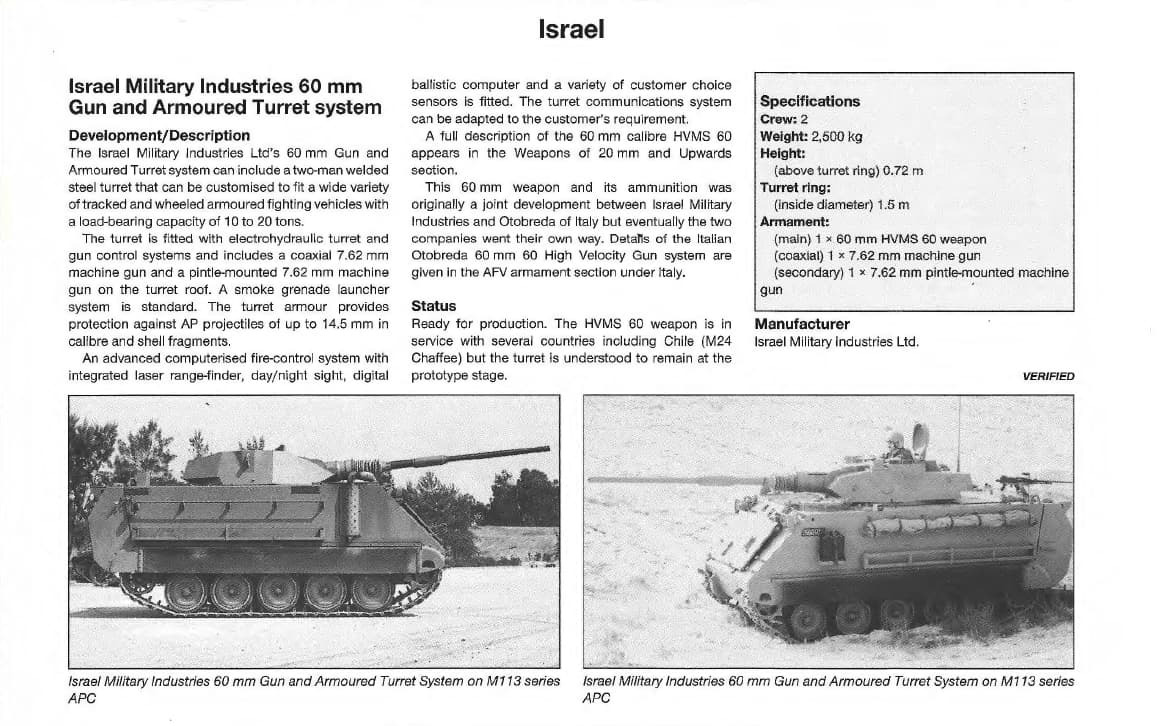
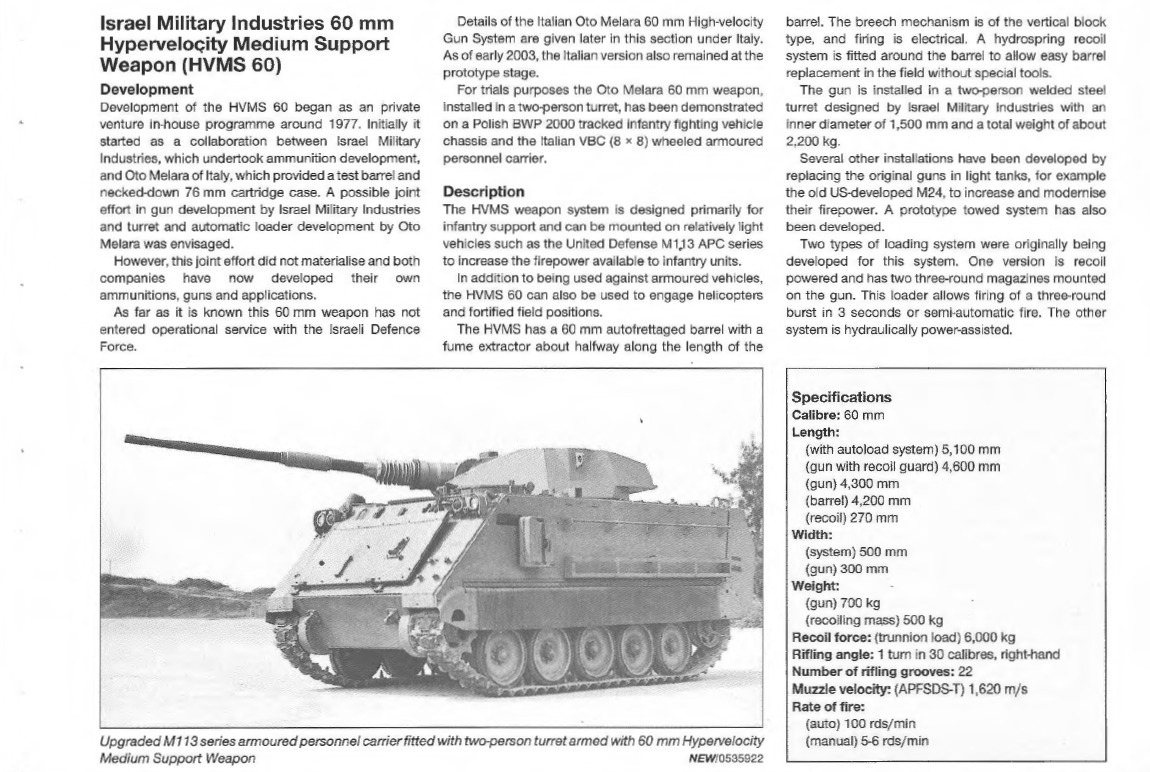
60mm ammounition Brochure
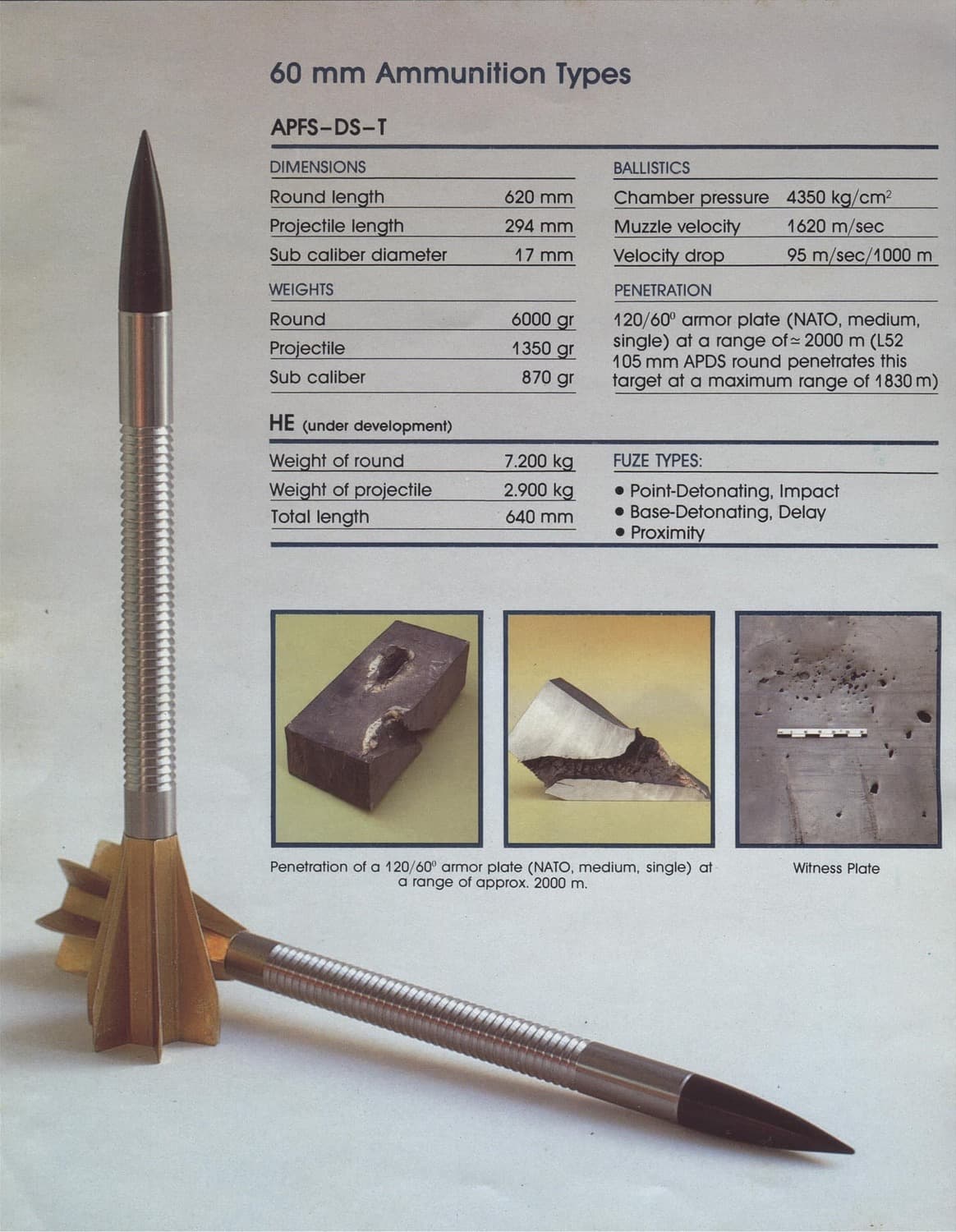
Websites
Used for footage material, and further research - https://www.fresh.co.il/vBulletin/showthread.php?t=30426
Used only for footage material - https://www.himush.co.il/?item=2585§ion=1041
ARPAM info - Системы предупреждения об опасности и КОЭП танка «Меркава»: oleggranovsky — LiveJournal
Article about HVMS - Дырокол заказывали ? - Пещера злобного Буквоеда — LiveJournal
From here comes the figure of ammunition count, needs further research - Army Guide
Specifications of M113A2 - APC M113
Image Gallery (used + unused):

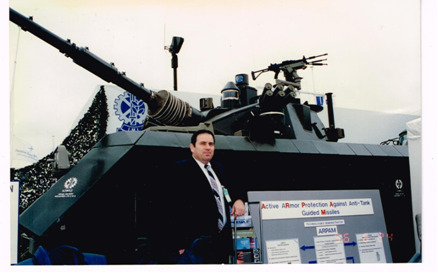
Final Words:
ㅤBy suggesting this vehicle, I am offering the most advanced HVMS-gunned vehicle Israel could receive. As the latest known iteration of the Bardelas HVMS, the 1996 version is packed with various technologies for demonstration purposes. Compared to the vehicle we have in-game, this one is superior in every way: it features a fast firing autoloader, an IMI-made turret with better protection, a laser rangefinder, ballistic computer, night vision, a laser warning system, and even a soft-kill APS. Furthermore, it can become significantly chunkier with the ERA package installed, making it much more survivable against ATGMs.
ㅤFinding information was challenging, but it was well worth it. There are still a few details that need further research and confirmation, and I would be more than happy to update the info if anyone can provide additional sources. Of course, let me know if there are any mistakes, and I will fix them as soon as I can.
ㅤBefore I conclude, I want to say a big thank you to my fellas’ from the Shiryon Archive Discord server for their help in finding book sources. Without them, I wouldn’t have been able to make this suggestion possible. in fact, I wouldn’t have even known this vehicle existed!
- Researchable
- Premium
- Event
- Squadron
- I don’t know
- I voted no (first poll)
- I don’t know
- 9.3
- 9.7
- 10.0
- 10.3
- 10.7
- 11.0
- 11.3
- Other
- I voted no (first poll)