- Yes
- No
- (independent) BeNeLux tree
- France: BeNeLux subtree
- Britain
- other
- no/negative
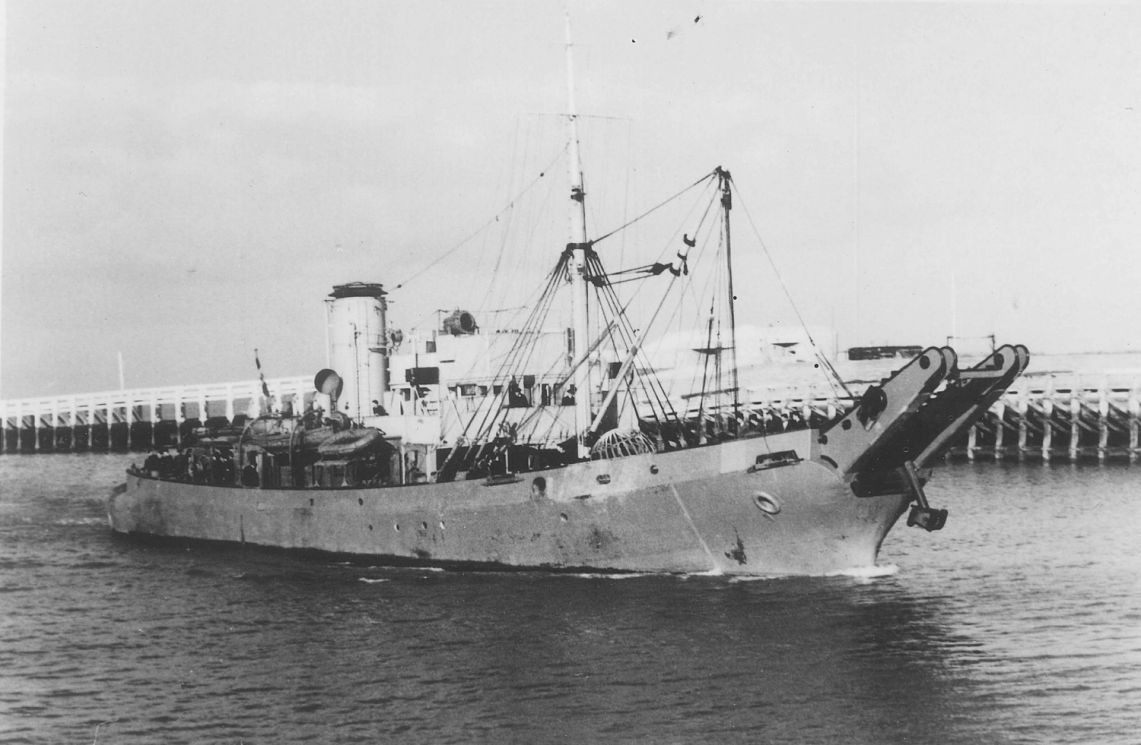
The HMS Barcock was a Belgian postwar Boom Defence Vessel (BDV), originally constructed in the United Kingdom for the Royal Navy during the Second World War. Built at Blyth D.D. and S.B. Co., she was laid down in March 1941, launched in September 1941, and commissioned in December 1941. Initially serving as Z177 Barcock, she was later transferred to Belgium on 20 September 1946. Renamed Barcock, she served until 26 September 1949 before returning to the Royal Navy as P277 Barcock. The vessel’s primary role was mooring, buoy-laying, and net deployment, although she was lightly armed with 1 × 76 mm gun and 1 × 20 mm AA cannon for defensive purposes.
TL;DR: Belgian/RN Boom Defence Vessel, specialized in mooring, buoy-laying, and net deployment. Lightly armed auxiliary support ship suitable for low-rank naval gameplay.
History
History
Construction
- Shipyard: Blyth D.D. and S.B. Co., Blyth, England (UK)
- Laid down: 3 March 1941
- Launched: 3 September 1941
- Commissioned (RN): 20 December 1941
Initially serving under the Royal Navy as Z177 Barcock, she displaced 750 tons standard and 950 tons full load, and was part of a class of 60 small but seaworthy vessels designed for mooring and net operations.
Belgian Service
Transferred on 20 September 1946 to the Belgian Navy as Barcock, she performed:
- Mooring placement and maintenance
- Buoy and light deployment along Belgian coasts
- Net laying for anti-submarine protection
To implement moorings, Barcock and her sister vessels positioned chains in a radial pattern on the seabed, secured by weights and buoys, with a vertical chain attaching the floating coffers. These structures were monitored by divers and sometimes by traditional “lead-boot” scaphanders. Each mooring arm used 90 meters of chain in 18-meter links weighing 5 tons each. For large capital ships, over 150 tons of chain and anchors were required. BDVs did not carry permanent loads; all material was loaded prior to each mission from transport vessels, sometimes even landing craft post-WWII. Stability limits restricted temporary deck loads to 40 tons.
Net-laying involved marking positions with temporary buoys, then deploying permanent buoys attached to steel mesh nets designed to withstand attacks from submarines up to 2,000 tons at 10 knots. BDVs towed, positioned, and fixed these nets repeatedly, allowing safe passage for Allied vessels. Gates in the nets were operated by BDVs acting as “porters” and monitored for enemy submarine activity.
The Barcock was approximately 60 meters long including equipment, with a crew of 34 (5 officers and 29 men). Operations required technical skill beyond basic seamanship: retrieving drifting buoys, repairing lights, and hoisting heavy equipment in rough seas. Even small tasks demanded coordination, courage, and careful handling of up to seven-ton buoys using deck cranes. The ship’s officers and crew often operated in freezing temperatures, performing these tasks under all weather conditions.
During Belgian service, Barcock regularly maintained navigational aids along the coast. Crews maneuvered precisely around buoys, handled chains and lights, and ensured safe passage for vessels using the NF series markers along the Belgian coast. Operations could be delayed in hazardous conditions, such as rough seas or ice-covered buoys, demonstrating the ship’s versatility and the crew’s skill.
Barcock returned to the Royal Navy as P277 Barcock in September 1949 and remained in service until sold in 1962. Today, only one vessel of this class survives, the Somerset (ex-Barcross), preserved at the South African Maritime Museum in Cape Town.
Commanding Officers (Belgian service)
Name Period of Command L.J. Geirnaert 20 Sep 1946 – 26 Sep 1949
Specifications
Dimensions:
- Length: 52.9 m
- Beam: 9.4 m
- Draught: 2.40 m (forward) – 4.63 m (aft)
Displacement: 750 t standard, 950 t full load
Propulsion:
- 1 × triple-expansion steam engine (coal-fired)
- Power: 850 hp
- Fuel: 216 tons coal
Speed:
- Maximum: 12 knots
- Operational: 8 knots
Range: ~5200 km at 8 knots
Crew: 34 (5 officers + 29 men)
Equipment:
- 1 × cargo mast (10 t)
- 2 × bow horns (20 t)
- 2 × winches (20 t each)
- Lifting capacity: 27–70 t depending on configuration
Armament:
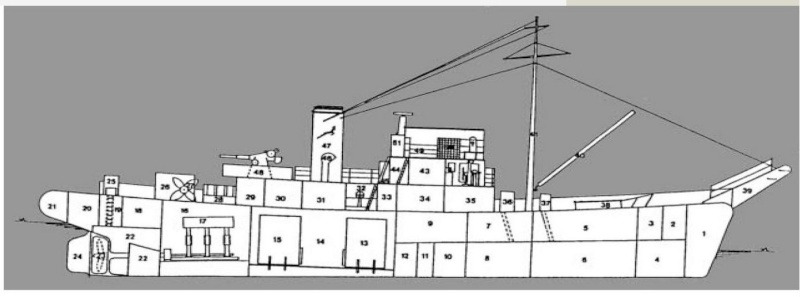
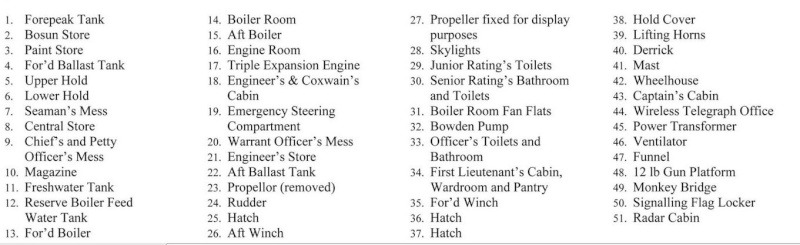
Weapon Type Mounting Quantity 76 mm naval gun Single 1 20 mm AA cannon Single 1 Diagram of BNC BAR class (BARCOCK) ZM-FN 1946-49.
Place in War Thunder
HMS Barcock would function as a rank I auxiliary support ship, ideal for players seeking non-combat naval tasks. Its slow speed and light armament make it unsuitable for frontline battles but excellent for coastal support gameplay.
Potential placements:
- Rank I tech tree vessel in a BeNeLux tree
- French coastal fleet Benelux subtree
- Premium/event ship in the British tree
Pictures
Pictures
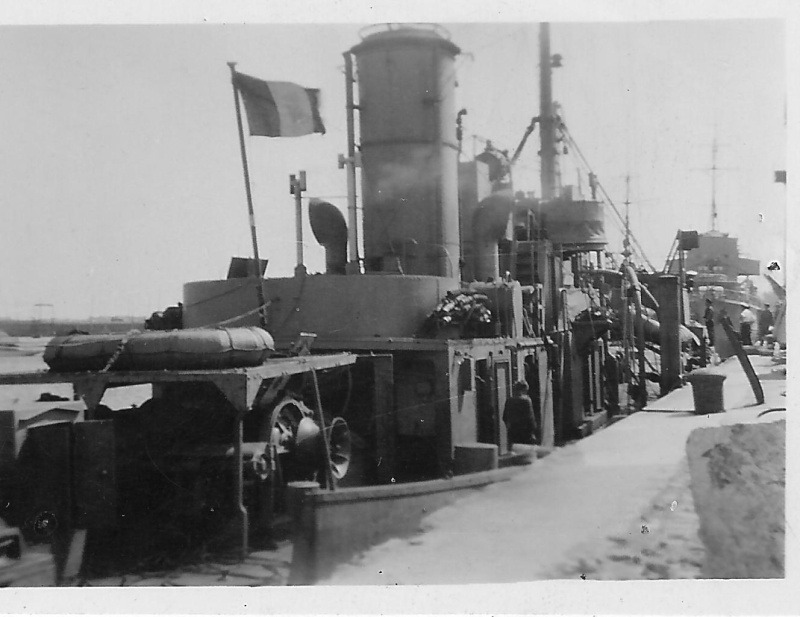
Barcock entering Ostend
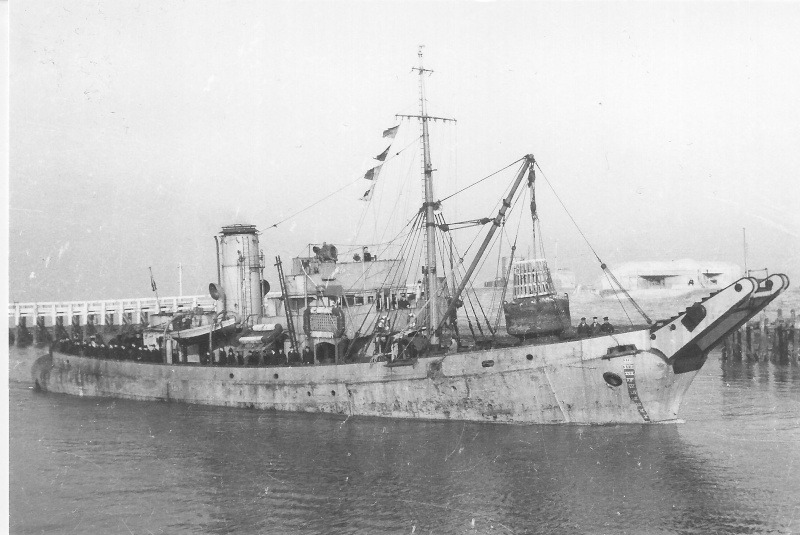
Barcock at Zeebrugge in 1948.
Sources
Sources
- Wikipedia. (2023, July 5). Barcock. Retrieved from https://fr.wikipedia.org/wiki/Barcock
- Belgian Navy. (n.d.). Barcock. Retrieved from http://www.belgian-navy.be/t1060-barcock
- uboat.net. (n.d.). HMS Barcock (Z177/P277). Retrieved from https://uboat.net/allies/warships/ship/7664.html
- Marine Belge. (n.d.). Barcock. Retrieved from https://www.marinebelge.be/barcock.html