maybe one of the extremely early designs was connected to a fighter program, but the actual Harrier was designed to do a2g and recon.
thats a trainer jet with some a2a capacity. a light fighter would be an F-16
this was because you guys lost CATOBAR capability, not because it was the best naval air superiority fighter.
personally, i find even the more a2a focused harriers too distinct in their design and tradeoffs to neatly fit in any typical CTOL or CATOBAR fighter weight category. i can elaborate if you want
initial design was forwarded for NBMR-3a. VTOL fighter. it evolved into a quasi-multirole.
hawk 100 and 200 are light fighters based on the hawk T jets. i cant with a straight face call a F16 a true light fighter when its 3 tonnes heavier than a harrier. or double the weight of a hawk 203/209/RDA
catobar is expensive and complicated. and sea harrier didnt need it. we literally built invincible class for the harriers specifically after they proved fully carrier capability in the early 70s.
its quite simple. its bigger and bulkier than the likes of a gnat, hawk or F-5. smaller and lighter than phantoms or tornadoes
yet much better since you can fly out much larger and heavier aircraft.
well yeah
and because you guys cheaped out on a decent carrier*
it is widely considered a lightweight fighter so youll just have to deal with it, the hawk is literally a trainer jet at its core so not comparable.
its also very different in design from real mediumweights like a MiG-23, F/A-18, or MiG-29. the harrier is extremely small, its well into the lightweight category, not to mention the fundamental tradeoffs and differences in a VTOL jet like abysmal combat radius
wasnt really needed tho was it. even the US shrank planes down in size from tomcat to hornet, f35 is smaller still.
invincible class turned out to be perfectly fine for the conflicts we got into didnt it?
hence why i specifically mentioned the 100 and 200. which are light fighters.
i can tell you the cockpit is, i didnt fit and im a skinny git. but the rest of the plane isnt tiny vs a lot of others other than the stubby wingspan
500 miles of range wasnt great, was tripled with the fuel tanks. but within that range it was one hell of an aircraft, climbed faster than most of its contemporaries and could pull very unusual manoeuvres that notably threw off other pilots first time they saw harriers.
1 Like
ill let you be on this one because you clearly cant understand it. also the F-35C is heavier than a super hornet
that doesnt necessarily make it a good aircraft carrier
they are still extremely light among true modern light fighters like F-16’s, they also arent very good at being fighters compared to these aircraft
AV-8B which is bigger than harrier 1 is still 3m shorter in length, 1.2m shorter in height, and 3m less wingspan than an F/A-18C which isnt a very big plane
thats ferry range not combat radius
Yep certified dogwater garbage plane.
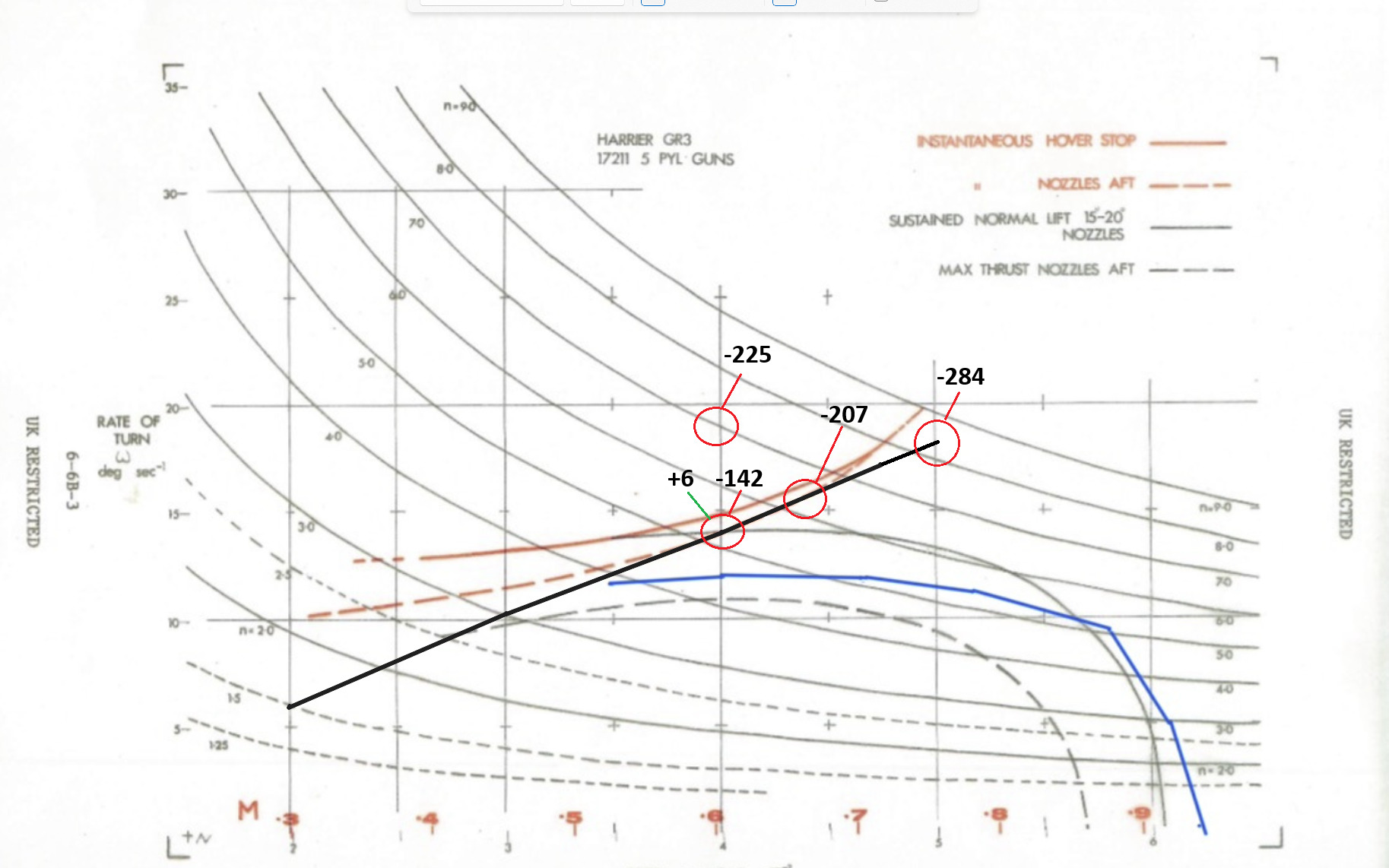
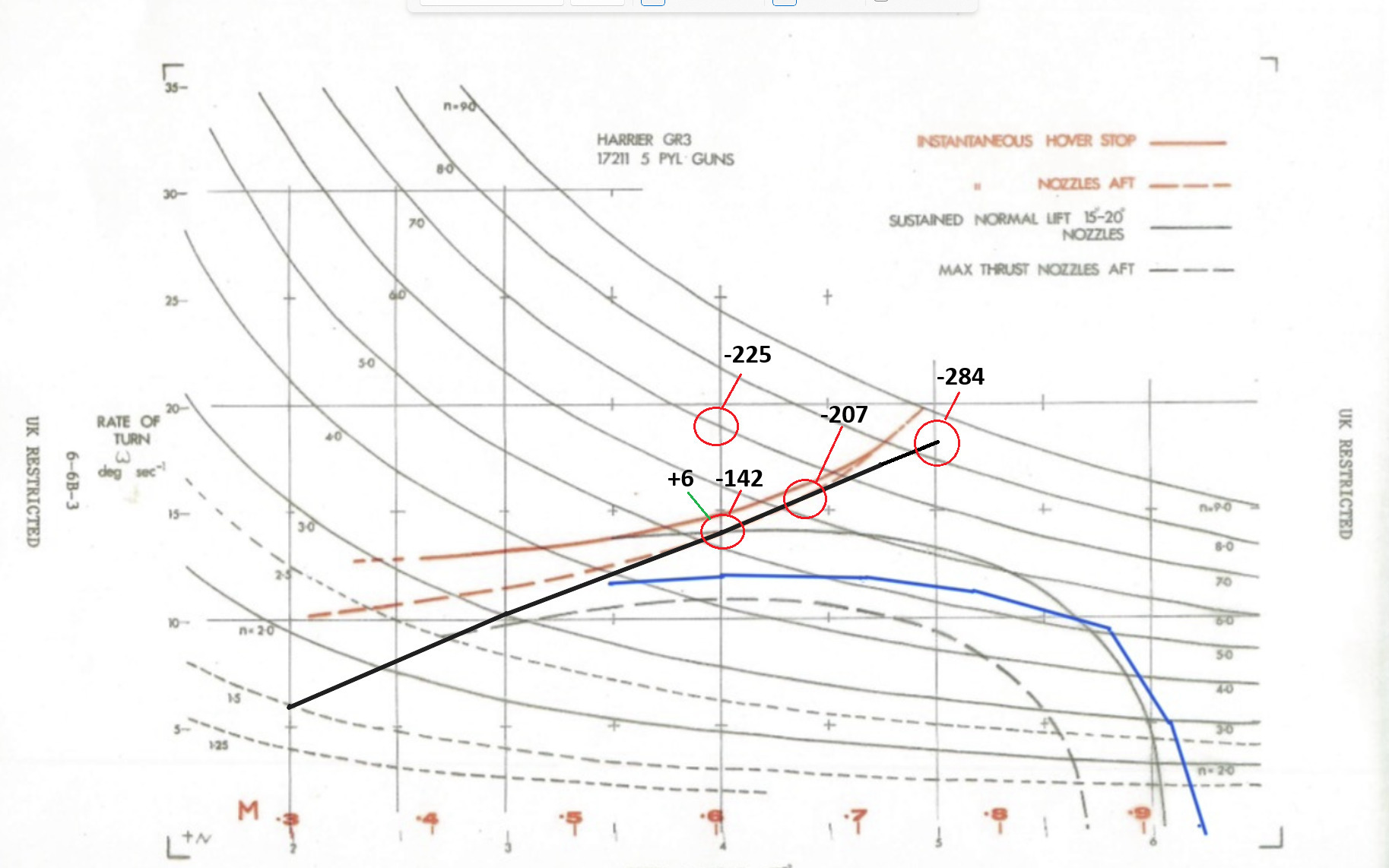
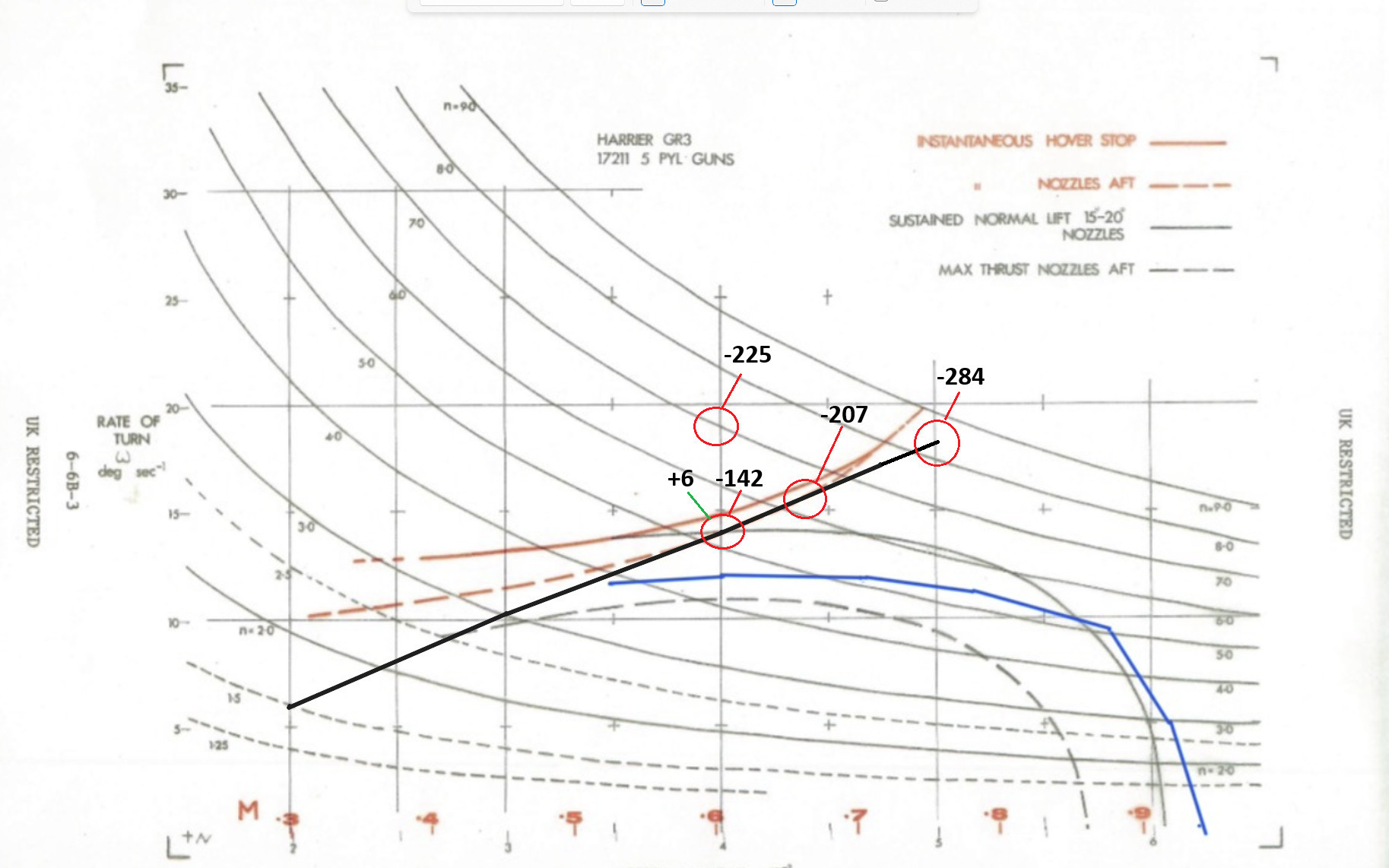
how do you get the bleed rates from this graph? also they are in knots per second right?
There isn’t. It has to be done basically from scratch and there is a wide margin of error considering the nature of the sources.
The Harrier tactics manual may or may not be using 17,211lbs as the reference weight for the paragraph about 19 degrees per second. For instance the engine diagram for thrust he likes to use is uses “Standard Weight” of 15,500lbs which is basically clean and 50% fuel. The other issue is that the CL/CD diagrams posted do not show a Mach number and even that difference is appreciable. The reference diagram is also likely for a clean airplane. Lastly it is unclear whether or not the engine diagram is utilizing installed thrust values or uninstalled thrust values.
Adding all of those factors in would significantly degrade the performance of the plane.
1 Like
284 knots per second is egregious, is that a high estimate for bleed rate?
The estimates are in feet per second.
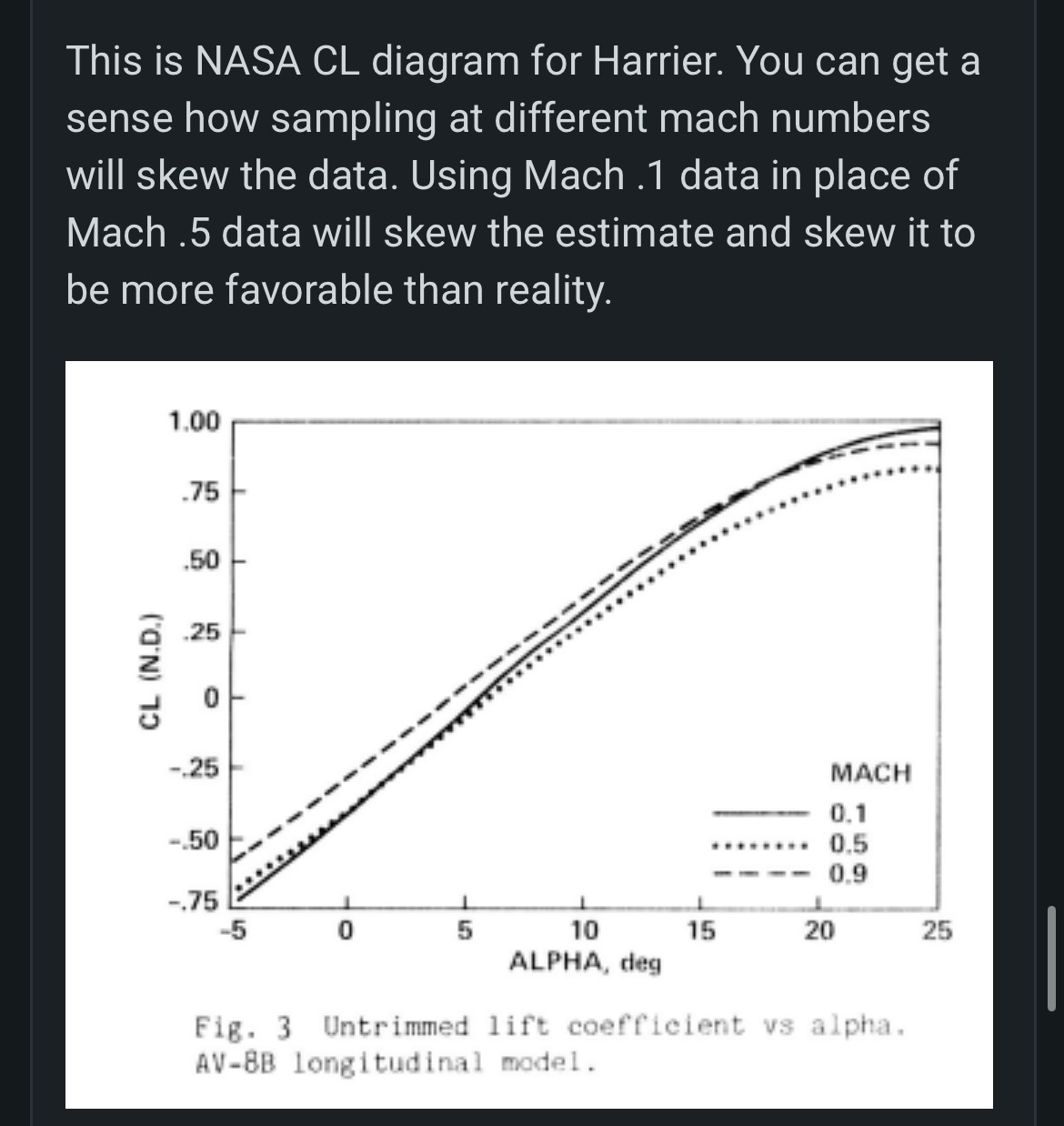
But also keep in mind that the CL/CD diagrams have a wide variation depending on who is doing them and what speed they are done at. For instance the CL/CD diagrams Matrix posted appear to be from this study.
He doesn’t say that because once again it is stringing a bunch of different sources together and attempting to cherry pick. For instance the CL/CD diagrams in here are probably at very low mach number which will skew results.
It should also be noted that study seems to be centered around basically very low speed flight / landing the aircraft. There are other CL/CD diagrams contained that at least appear to make the plane appear much worse in CL/CD when the thrust is vectored. At least that is the way it reads at a very quick glance.
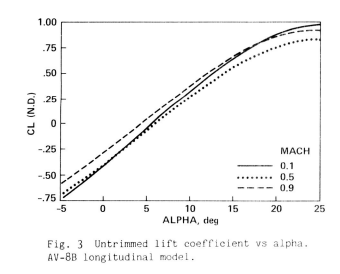
This is NASA CL diagram for Harrier. You can get a sense how sampling at different mach numbers will skew the data. Using Mach .1 data in place of Mach .5 data will skew the estimate and skew it to be more favorable than reality.
1 Like
HAHA
You didn’t even read that source BTW
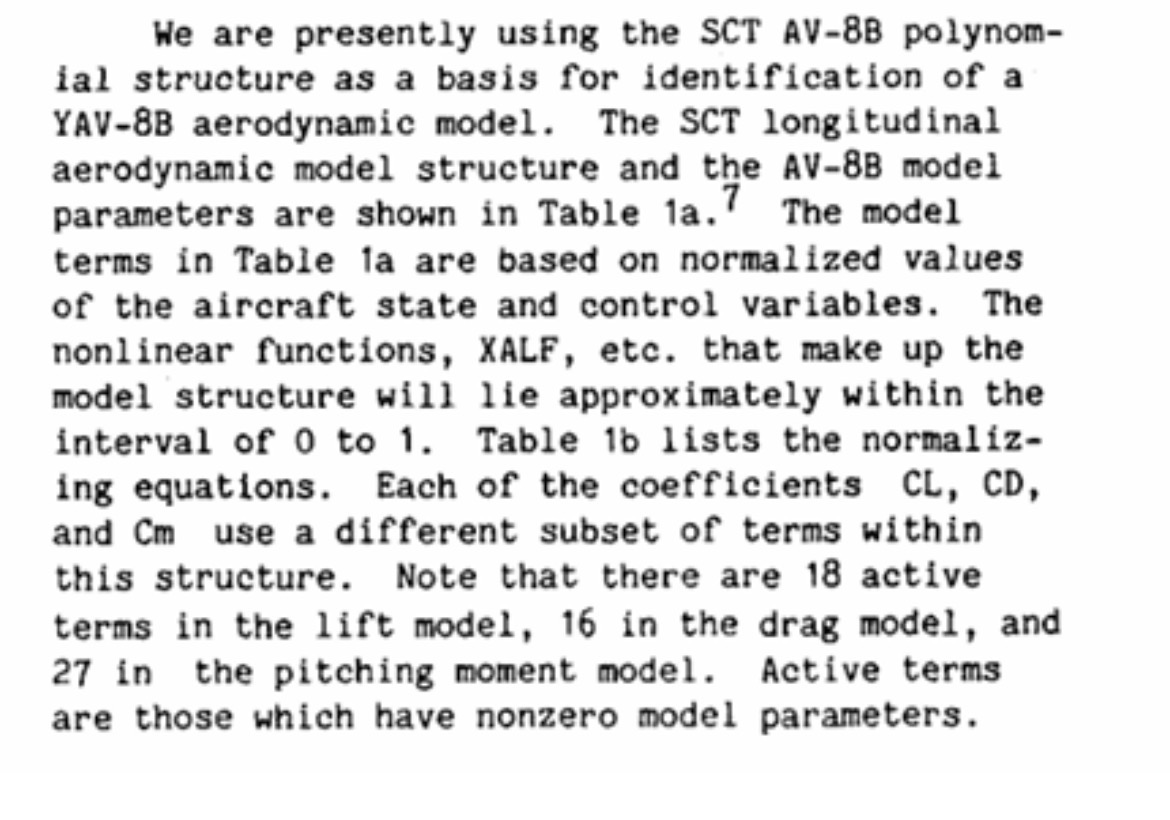
That chart you just posted was the computer analysis were all values were normalized between 0 and 1
They did that to make it easier for the computer to simulate.
The chart you posted was not the real values….
So well done, you failed to fully read the document and now you are posting FALSE information
The maximum lift coefficient in that document is actually close to 1.5
However they took the values and then normalized them meaning that 1 is now equal to about 1.5
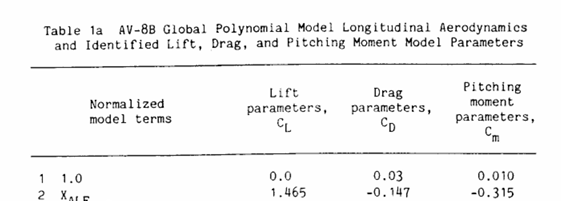
So the AV-8B is actually achieving a lift coefficient almost as high as the flanker for just a -.147 drag coefficient
Do you think CL values change with speed? Yes or no?
Slightly
That doesn’t change the fact that you used the wrong number entirely mkay
What number did I use and where did I use it?
You posted the un-trimmed lift coefficient and you assumed that was the actual lift coefficient
But you failed to read (N.D) next to it meaning normalized
You’re numbers are going to be about .5 off
No I did not. Go back and read.
No you did,
You said this is a CL diagram for the harrier
THAT IS FALSE INFORMATION
That is nearly the 0-1 normalized data of the real lift coefficient
(note the (N.D)) Normalized
Yes and? It is used as an example of showing how CL is different even at subsonic mach numbers.
What makes you think that these estimates are off and by what margin?
Ok are you failing to realize that the numbers are a good .5 off their maximum?
And again that’s for a harrier 2 anyways so why are you applying it to the harrier 1?
Also what did you calculate net thrust on?
Where did I say that I was?