Yes it can be.
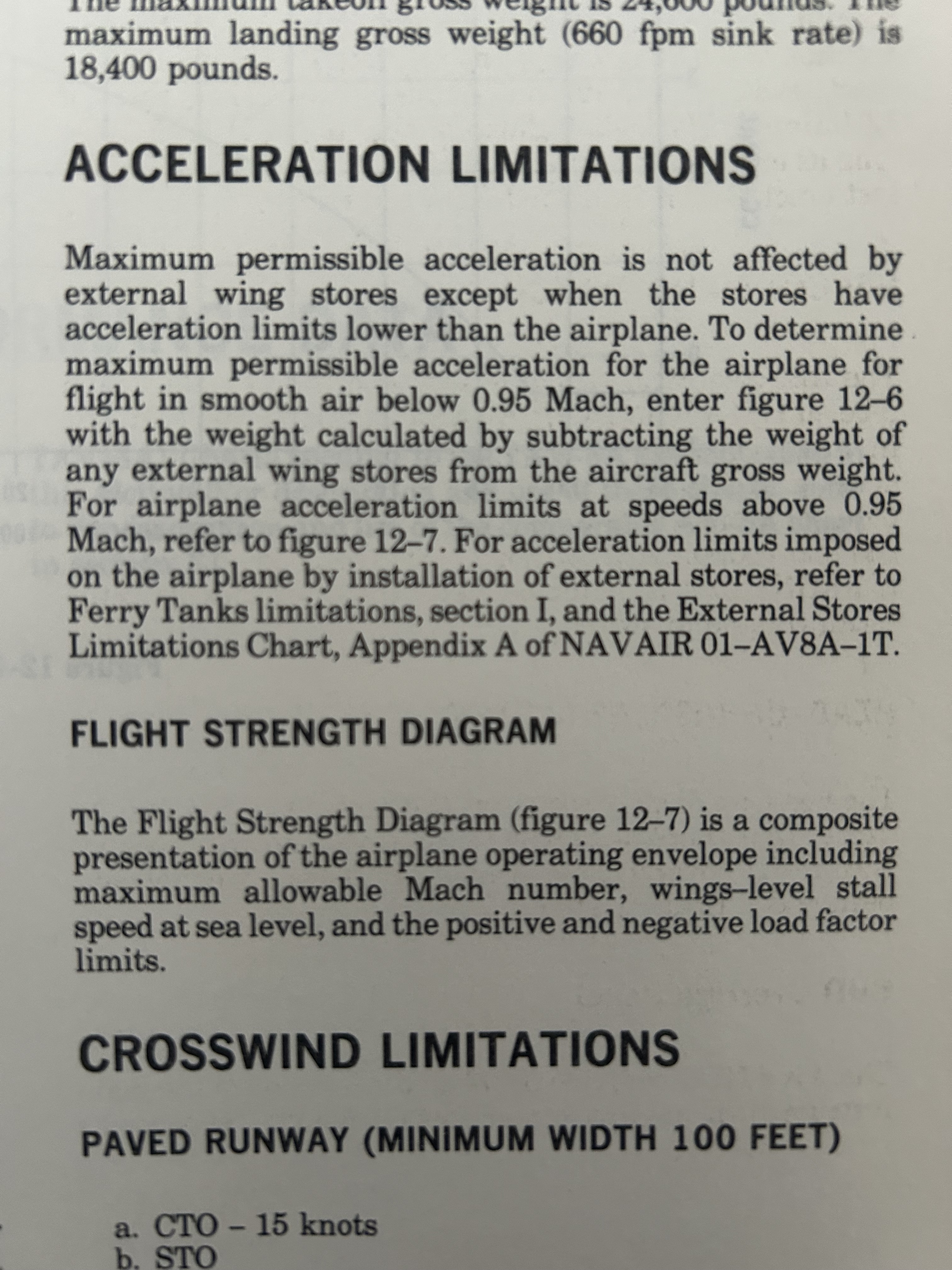
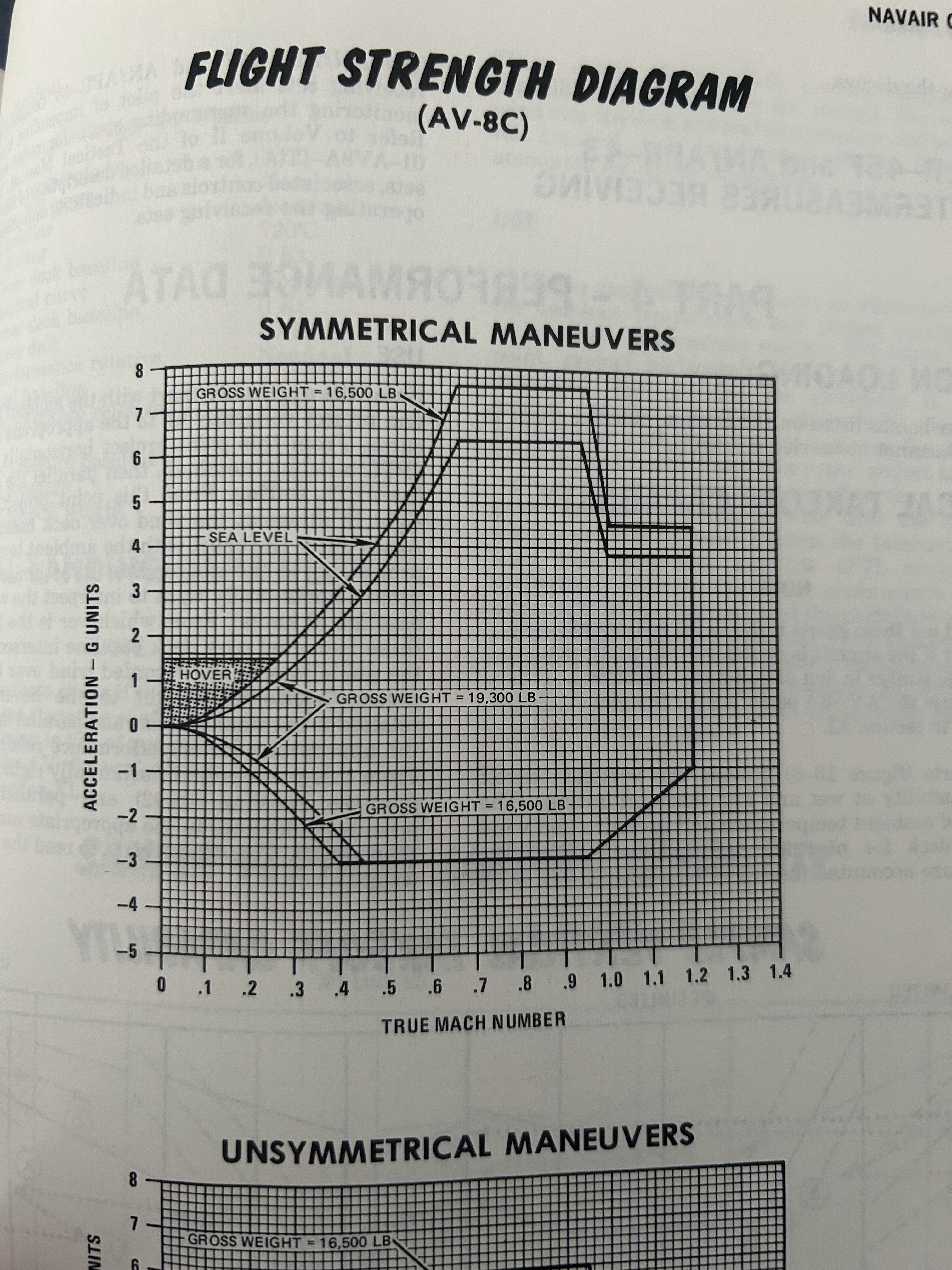
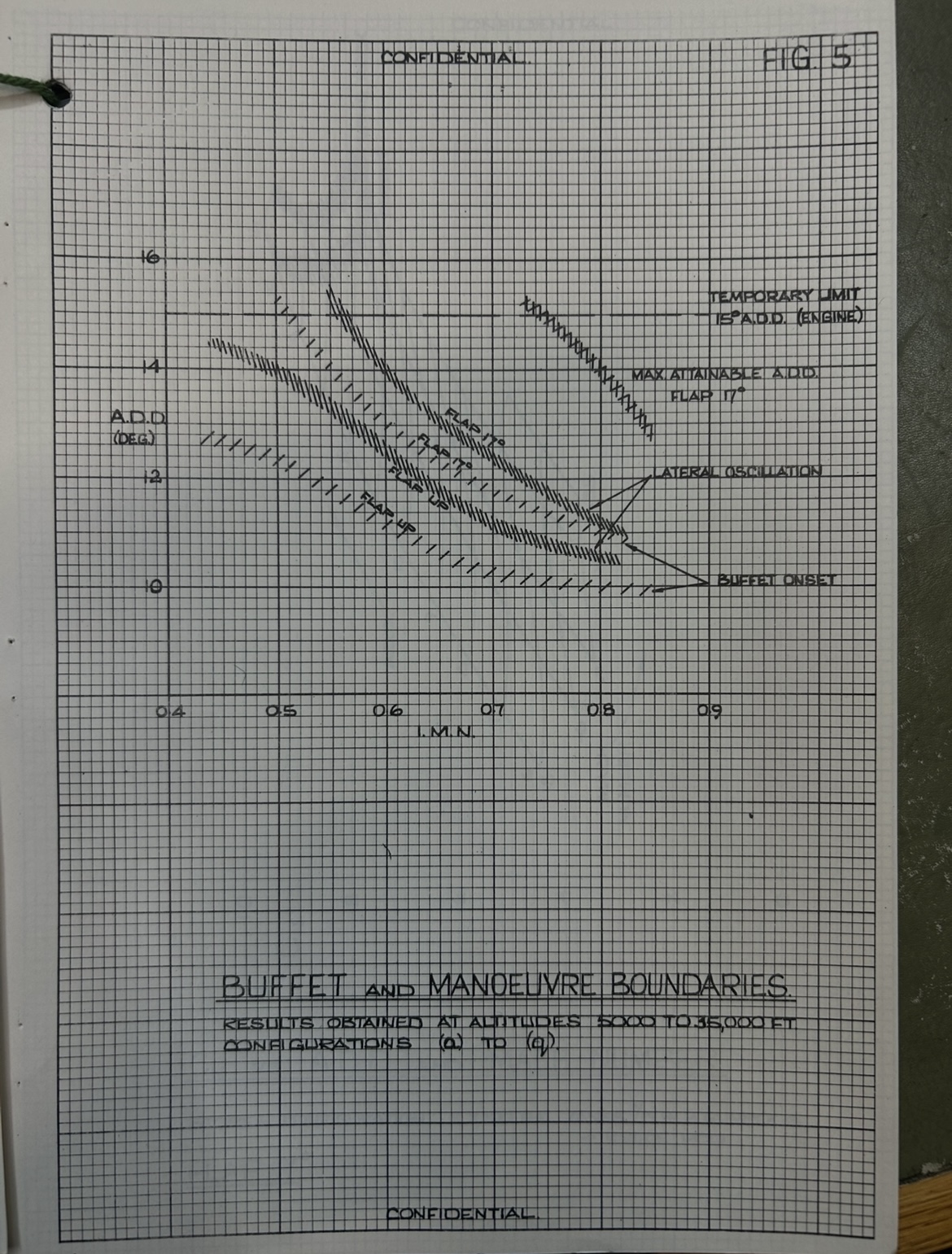
The maximum G capabilities chart and the maneuvering boundaries chart listed out AOA for G achievable at X speed.
They not a bugged this report while quoting a nasa technical manual where they misinterpreted the Cl data.
Both the operating data manual and the RtoS handling and performance document represent the exact same values in G for AOA.
https://community.gaijin.net/issues/p/warthunder/i/jcn0ARTQnKgB
They also denied the sustained G report simply because they didn’t believe the harrier has enough thrust to sustain the G seen in the E-M chart from the tactics manual.
But that’s a separate issue
7 Likes
They half ass changed the Blue fox radar. Without giving it EEGS or fixing the HUD. Or fixing its Performance.
https://community.gaijin.net/issues/p/warthunder/i/2JHbw1v5oV0r
@Gunjob
Could you push for EEGS at least for FRS.1???
Also can we get the flaps fixed please.
https://community.gaijin.net/issues/p/warthunder/i/bREFdNegPIH3
9 Likes
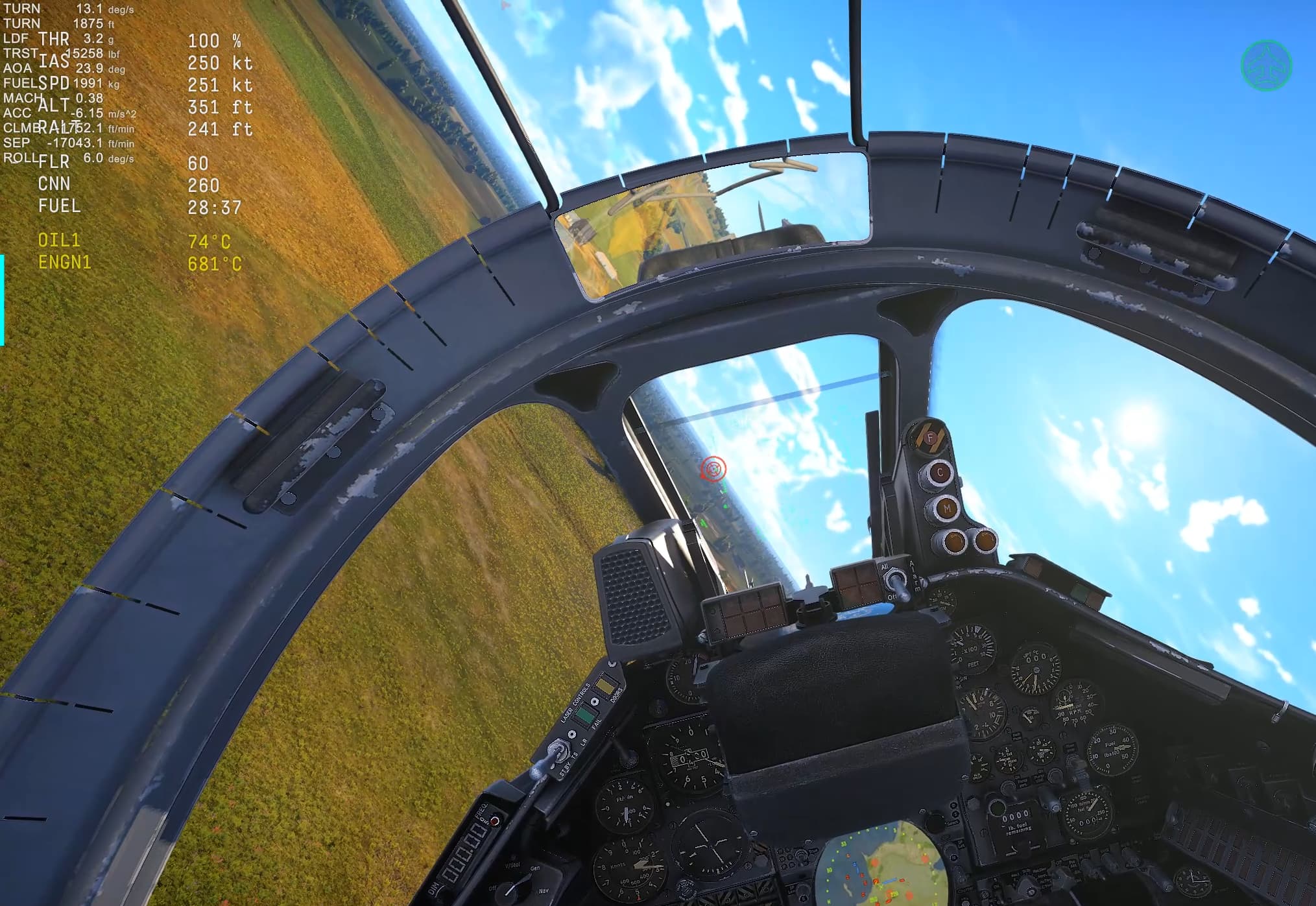
SEP test the Harrier Gr.3 should out climb the MiG-21 at 350 knots up to 20,000 feet. Yet It is almost half a minute slower to get to 20,000 feet.
Ridiculous that a jet with a TWR well over 1 is unable to out climb most of its peers. When we have many primary documents stating it should.
The Gr.3 with VIFF is also stated to have a superior instantaneous turn rate at 250 knots and below. As you can see in game its at a disadvantage by significant margins some 4 degrees per second.
13 Likes
They say all this but Art Nalls has said if you set it up right you can let go of the stick in the sea harrier and it will remain stationary.
1 Like
Yeah, I knew it was something for those who know little of aircraft but I enjoy when my favourite aircraft still get mentioned properly instead of getting dismissed because its subsonic and has a useful feature
Well yes, but this would be more AV-8B harrier 2 related.
All misrepresented in every simulator and game. I feel we will get more information about them as sundown comes around.
1 Like
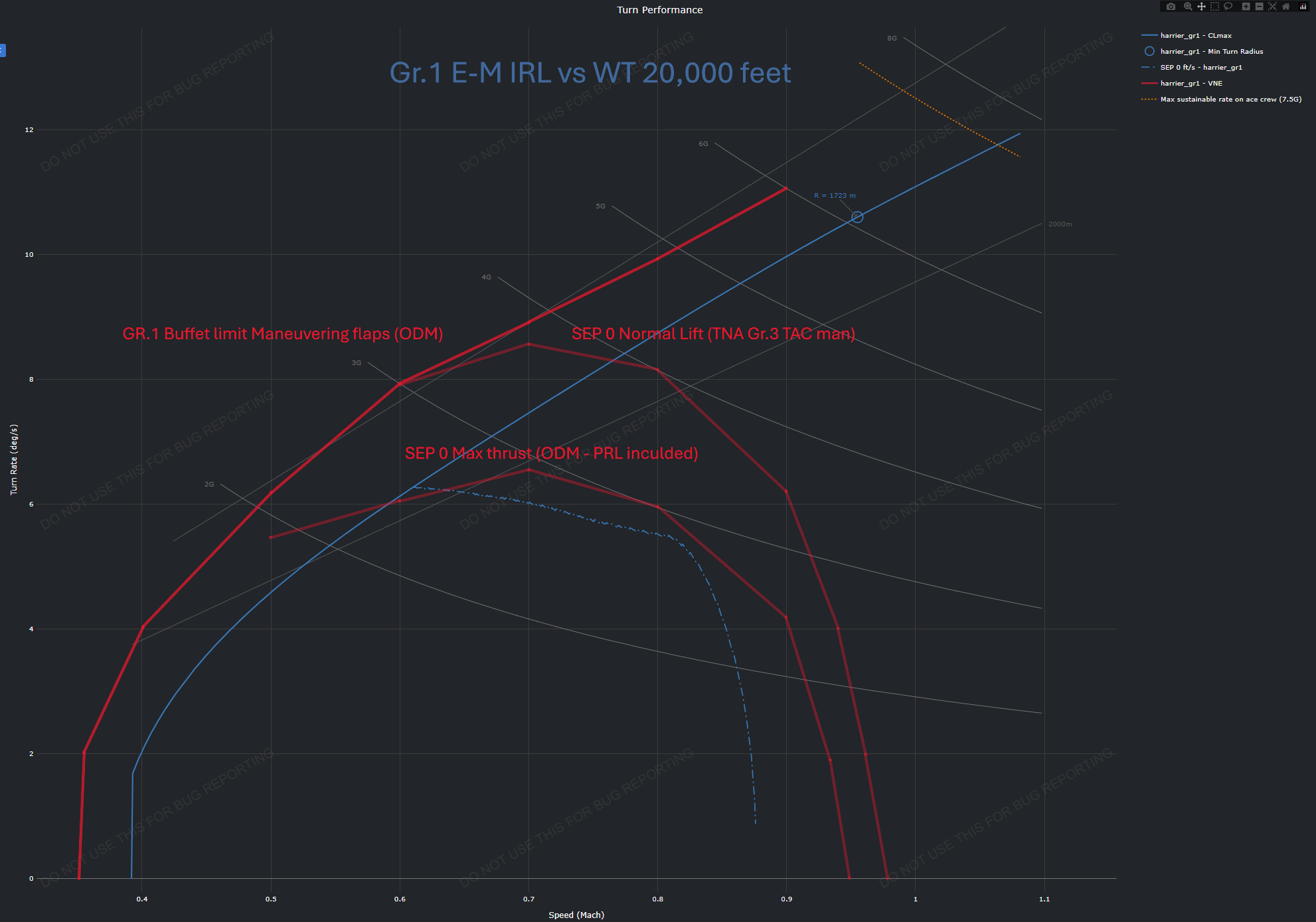
Made a 20,000 feet comparative performance chart for the data I have on the Gr.1 (RR400 - mk101 engine) Harrier
This performance would be so nice for the FA.2.
The harriers engine has a PRL that limits the rpm of the engine under certain conditions to make the engine surge free under harsh flight conditions.
When developing the FA.2 they decided to re-define the PRL and it was over-restrictive. They found that turn performance could be improved 50-100% while still maintaining the surge free AOA limits.
7 Likes
@Smin1080p_WT
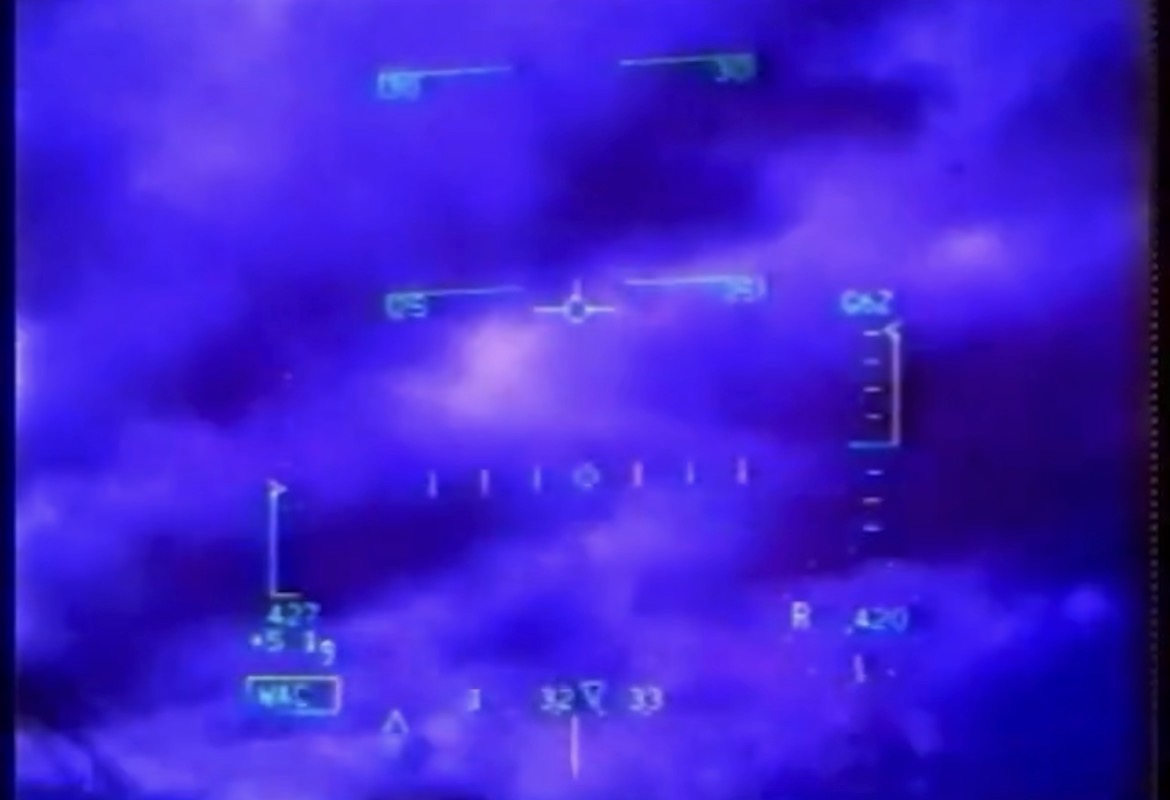
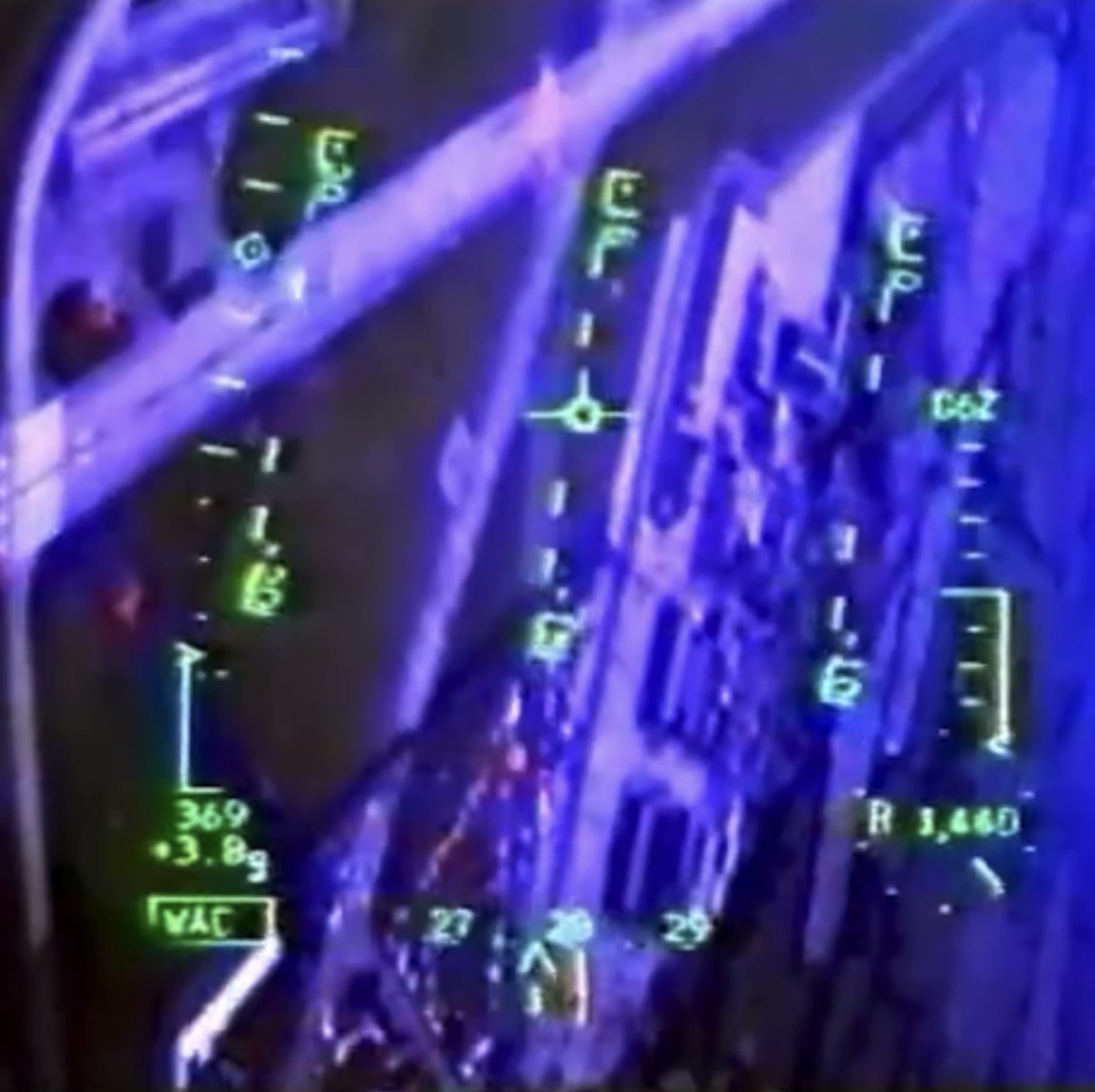
Do / would the devs consider real life HUD videos as a useable source?
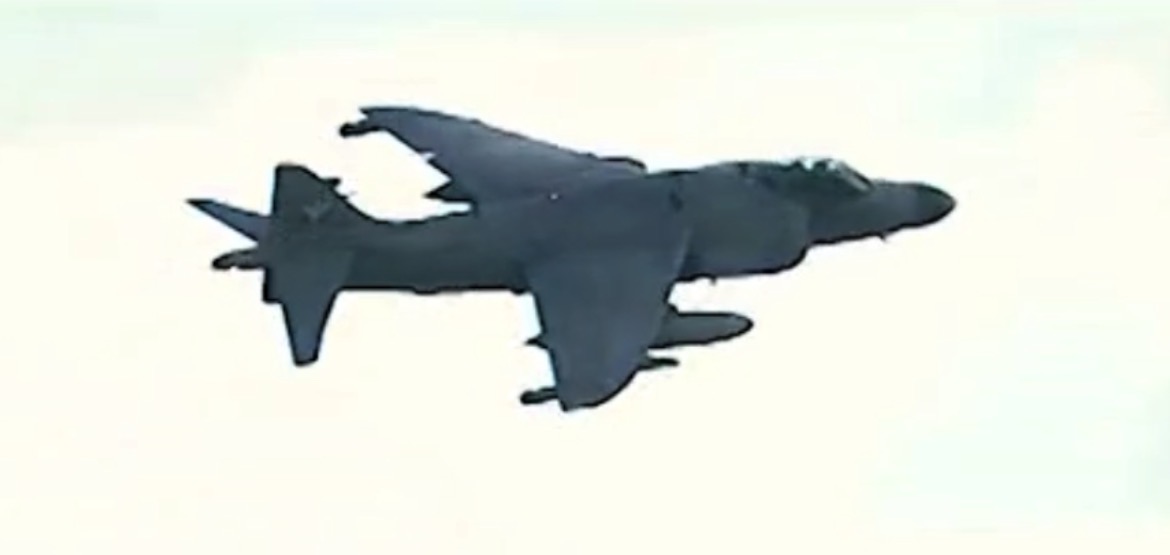
This awesome FA.2 at an airshow estimated to be at 17,900 lbs with 2 190 gallon tanks will pull 5.1G /10 degrees AOA at 427 knots.
Really running out of ideas, would be hilarious if video of the actual IRL plane pulling the G claimed in the docs is not enough proof.
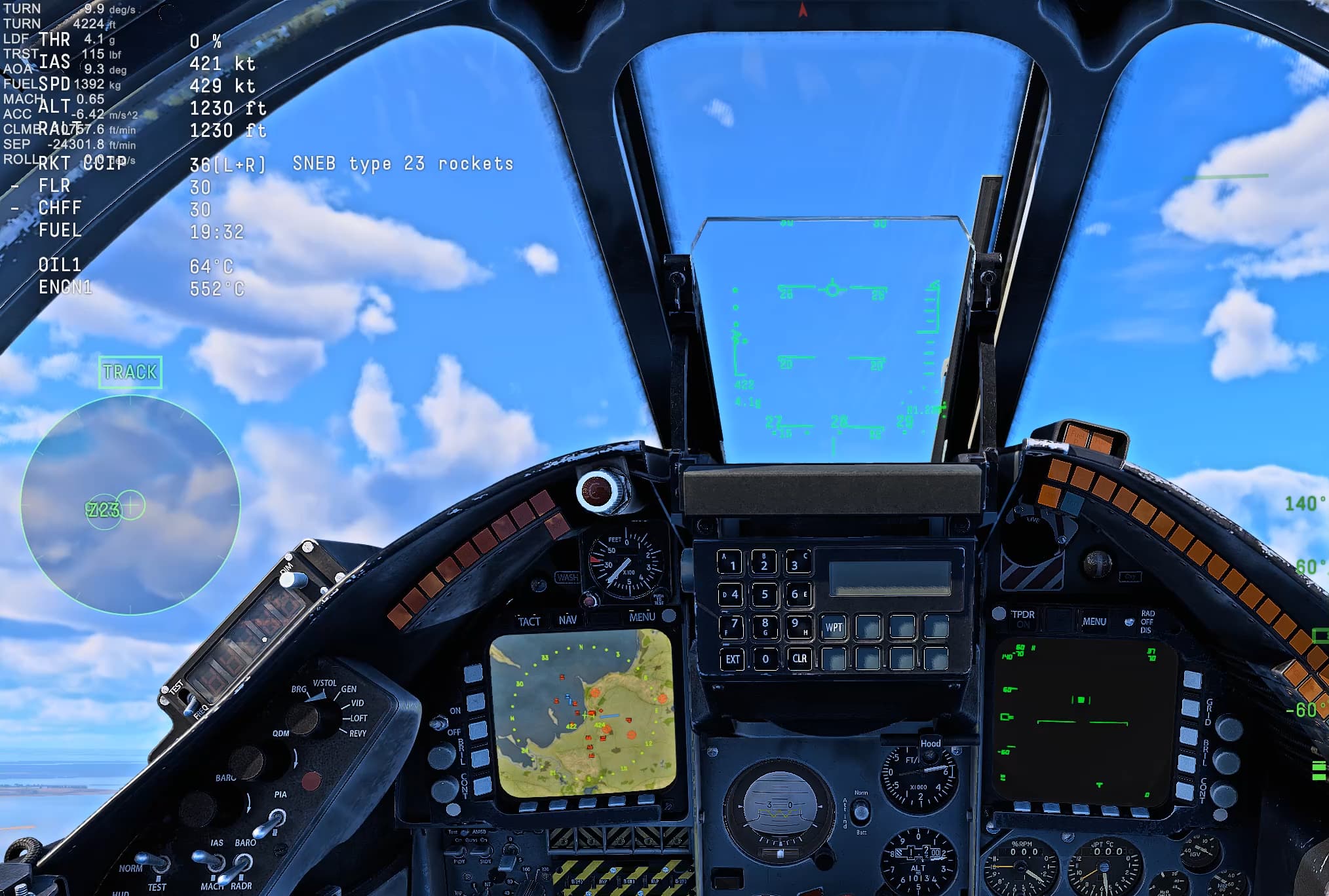
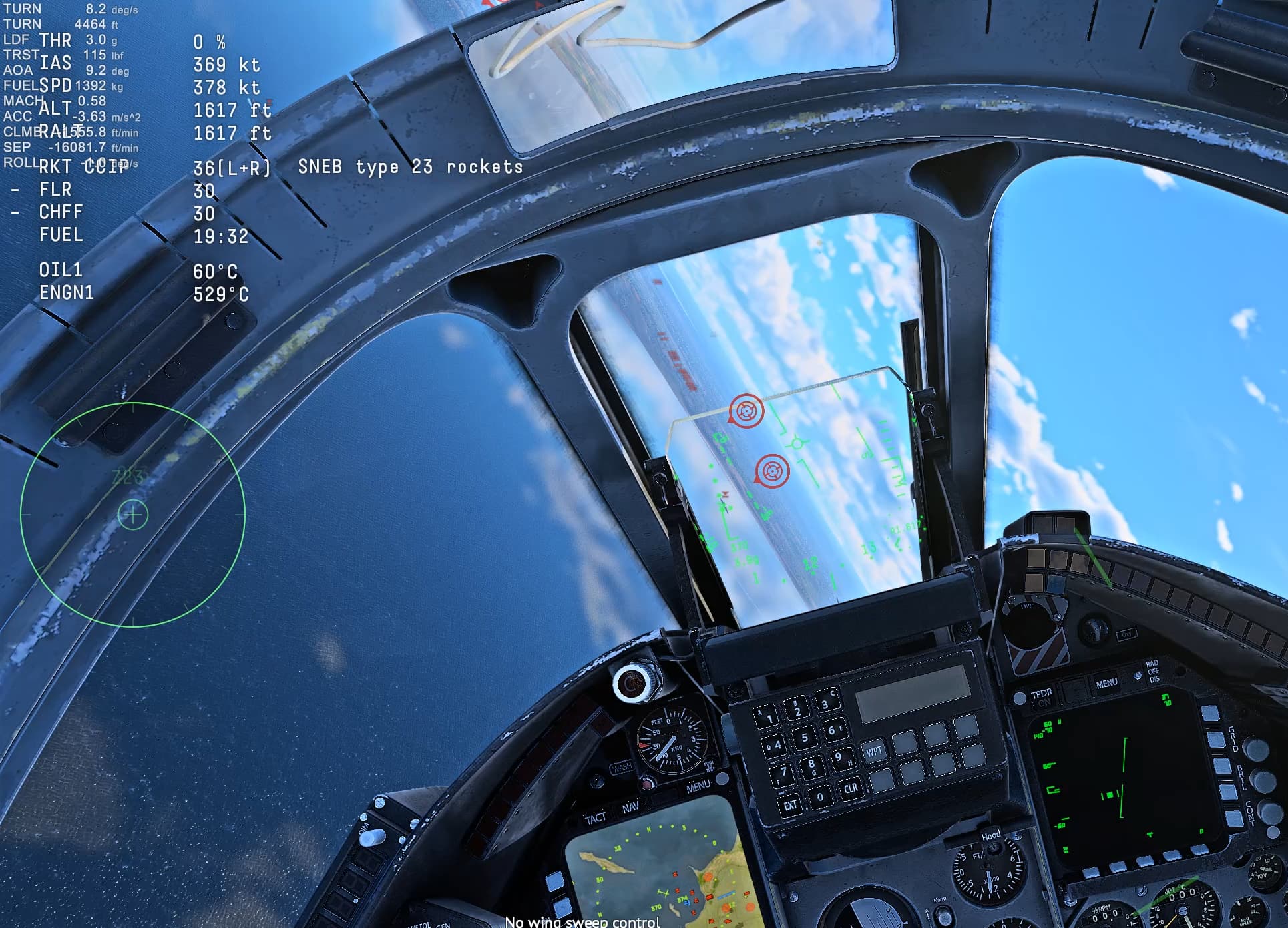
Gaijins FA.2 at the same estimated weight with 2 rocket pods will pull 4.1G/10 degrees AOA at 422 knots.
369 knots IRL 3.8G 9 degrees AOA
Gaijin - 3G
5 Likes
Hello
After several videos that were reported and misinterpreted either intentionally unintentionally over the past year or so for some top tier jets, such videos are no longer accepted, partially because:
It is based on guesswork and interpreted from the person reporting it. Rather than the factual based information coming from the manuals and other primary documents that the FM is currently based upon. So a video would not supersede this.
2 Likes
I see that’s perfectly understandable.
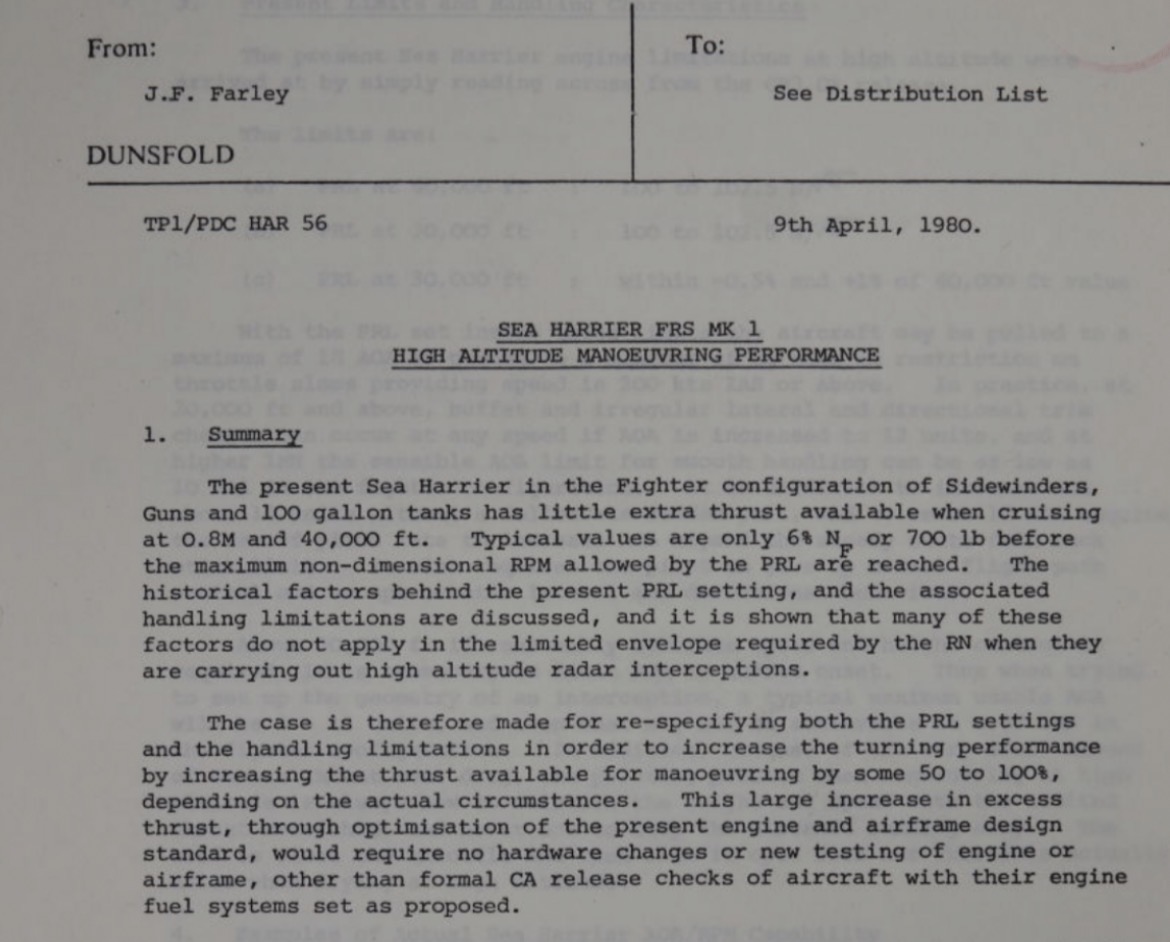
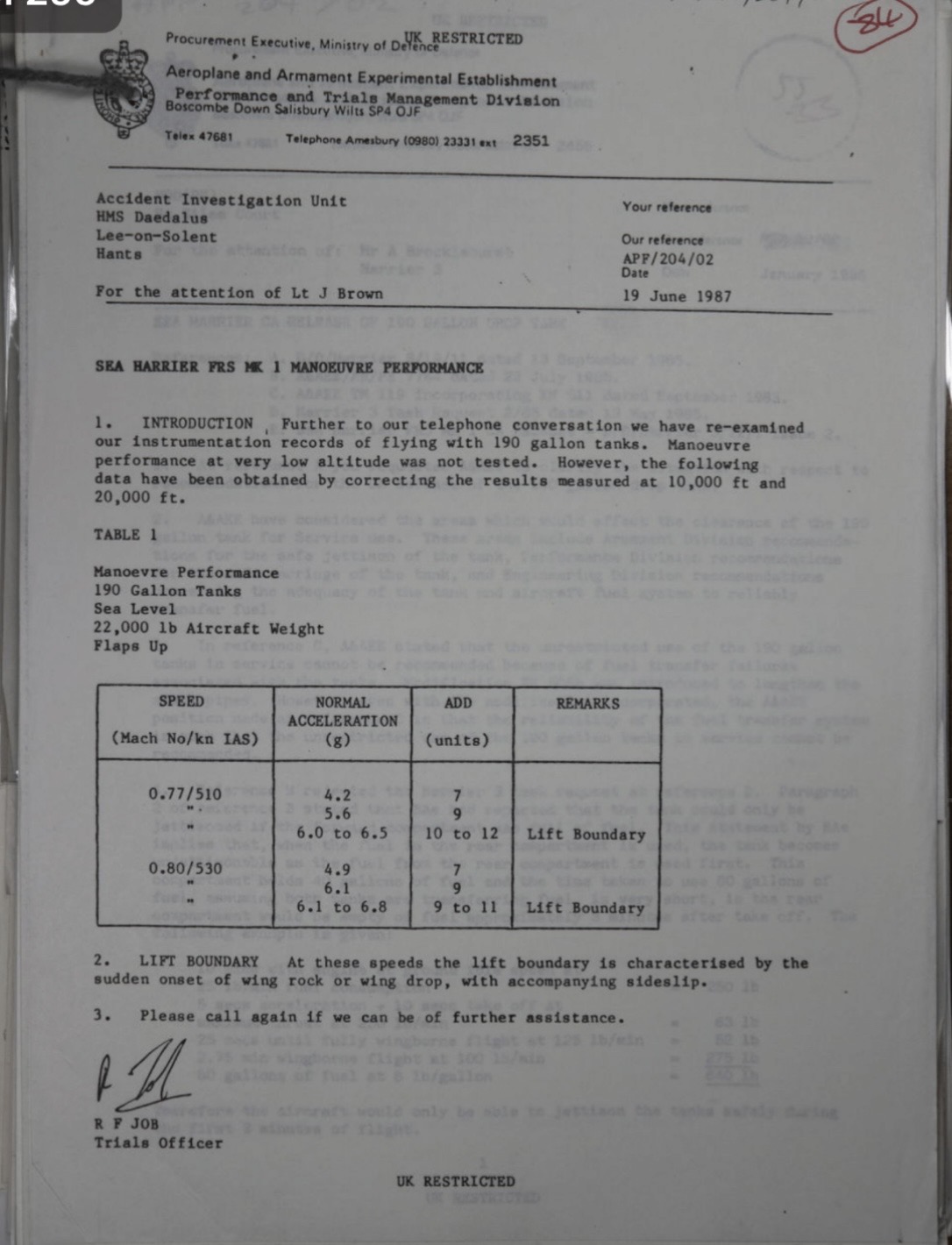
I do however have a report from BAE systems about the sea harrier maneuvering performance in this exact configuration when loaded up to 22,000 lbs.
Again I would just like to point out - according to BAE a 22,000 lbs aircraft will pull similar G at the same AOA as the source gaijin used to model the lift. That source used a 17,000 lbs aircraft. 5,000 lbs less weight to still achieve less - the same G.
10 Likes
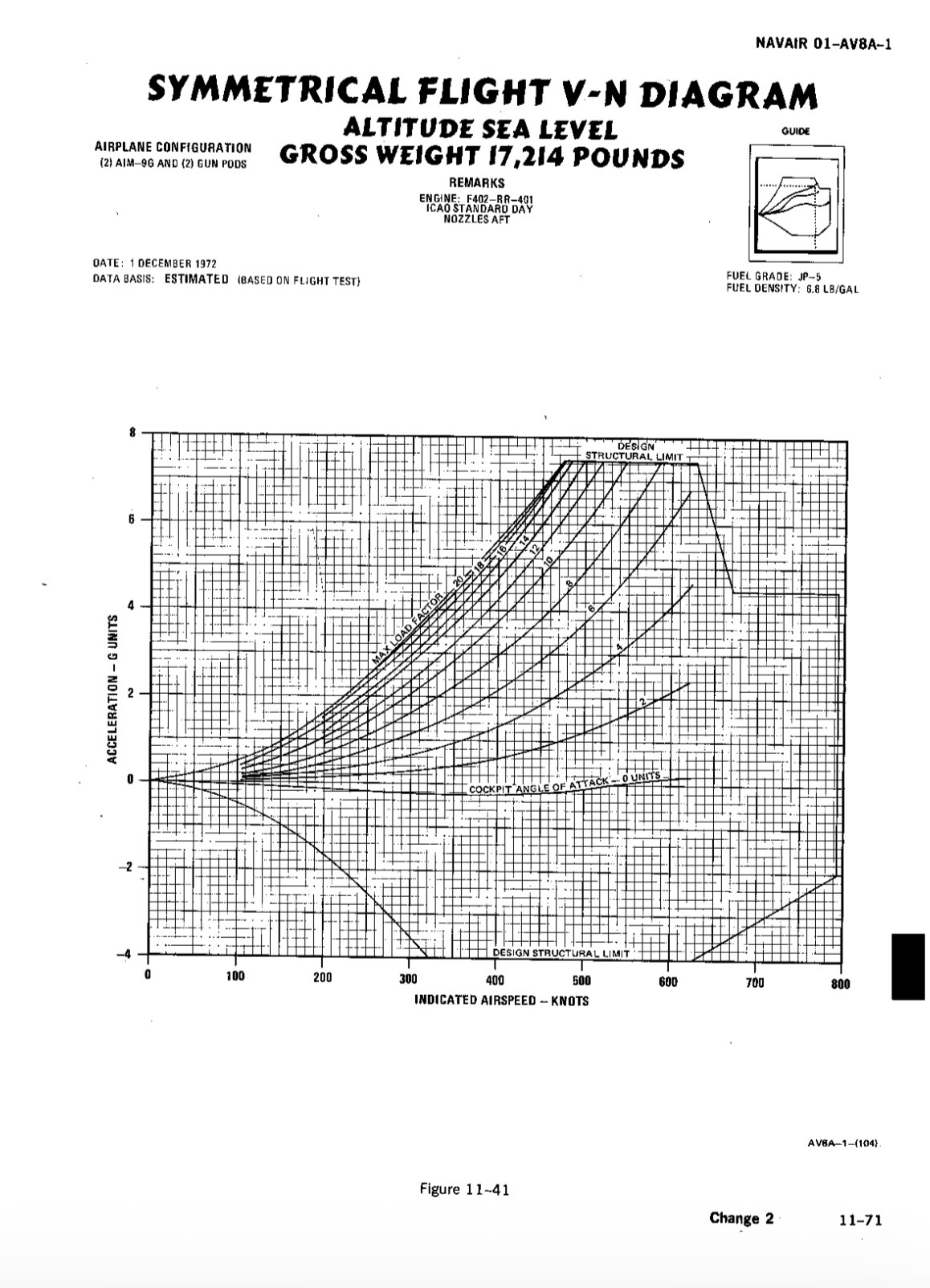
Gaijin also didn’t fully read the flight V-N diagram.
1 it uses cockpit units AOA (this is an unknown quantity as the harrier actually uses an airstream direction detector that gives units equivalent to real AOA)
2 the V-N diagram gaijin used does not includes stall boundaries (stall boundaries are found in other aircraft’s V-N diagrams like the F-4)
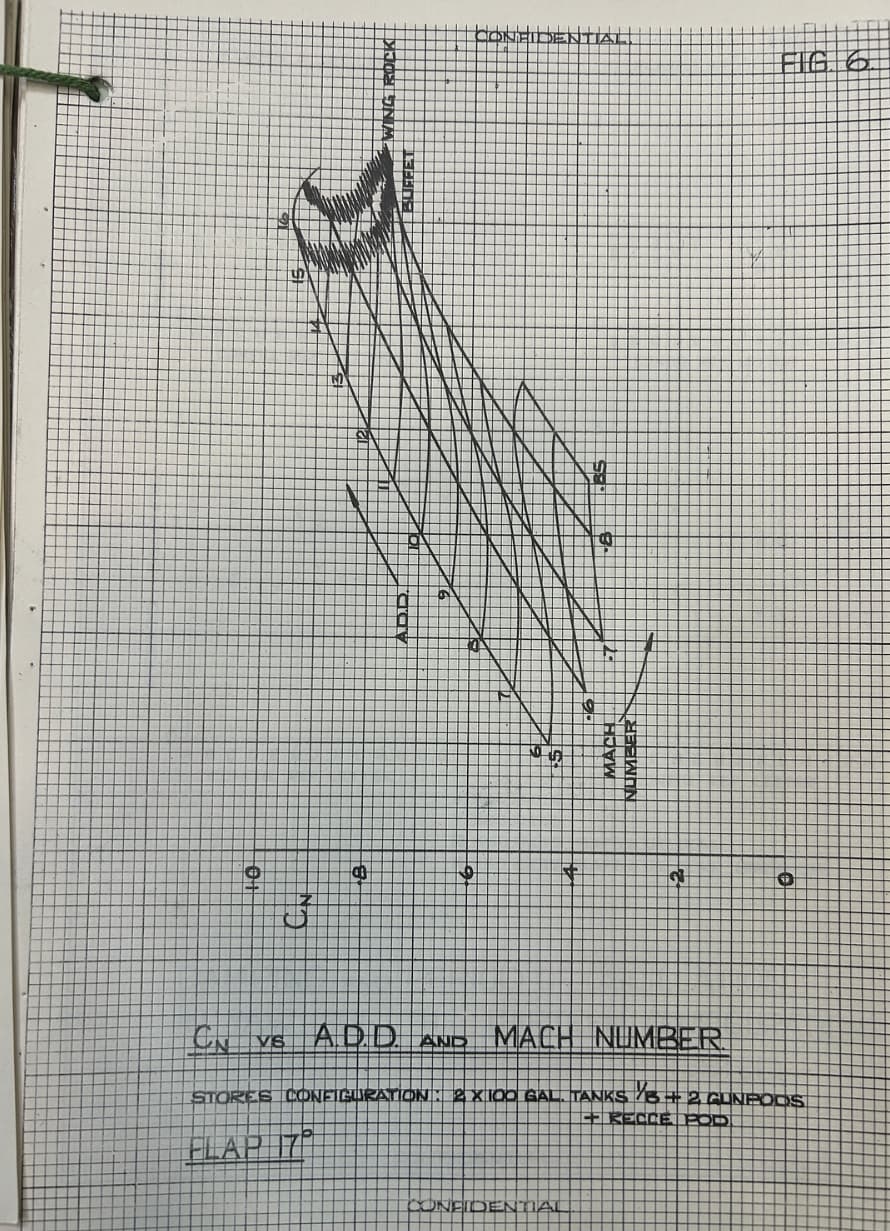
In the very manual the devs used there includes another chart that confirms my initial report.
7.5G seen at .65 Mach at the deep buffet (maximum usable Lift coefficient) AOA on a 16,500 lbs harrier 1. This would be approximately 14 degrees AOA/ADD read on the HUD and AOA indicator on the real aircraft.
9 Likes
Was it the Rafale reports?
1 Like
Goofy, ahh well we have something they don’t have.
A direct report from BAE in the exact profile at an exact weight including the AOA per G.
Unless this is not a valid source. We still have gaijins own source to use as it includes the correct lift chart, but maybe that’s not valid either.
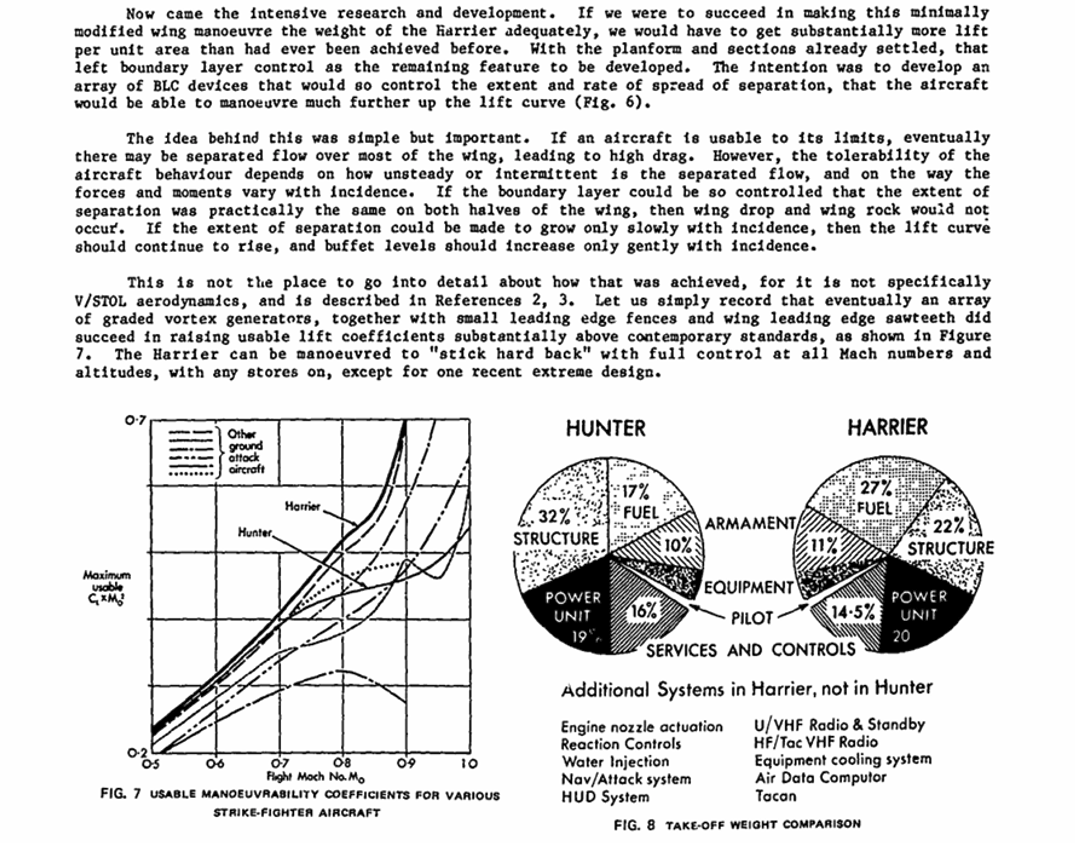
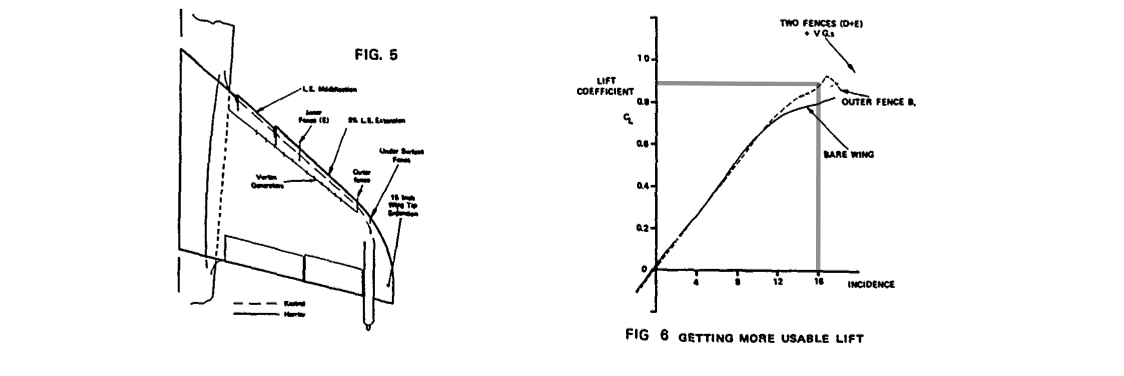
Stall AOA and Cl data for anyone who’s curious.
The Harriers wing was one of the most advanced aerodynamic profiles of its time. They had to make a wing that provided 6G lift at 400 knots at 10,000 feet that remained within the size and weight requirements.
So @Smin1080p_WT
Could you possibly ask the devs to reconsider.
The devs denied the report based on a chart from the AV-8A manual, a chart they didn’t read fully.
In the exact same manual there includes another chart that has the correct maximum lift performance.
So in their own document there is a chart that confirms my report.
We even have the coefficient of lift that the devs need to use to correct the performance.
As already explained several times, all of this information has already been reviewed. Unless there is brand new source material, the outcome will remain as its based on primary documentation.
2 Likes
Is this some kind joke now.
Operating data manual - CA release to service - nasa technical reports - BAE maneuvering performance report - THE ACTUAL PRIMARY DOCUMENT THEY USED
All 5 documents undeniably confirm my initial report.
12 Likes