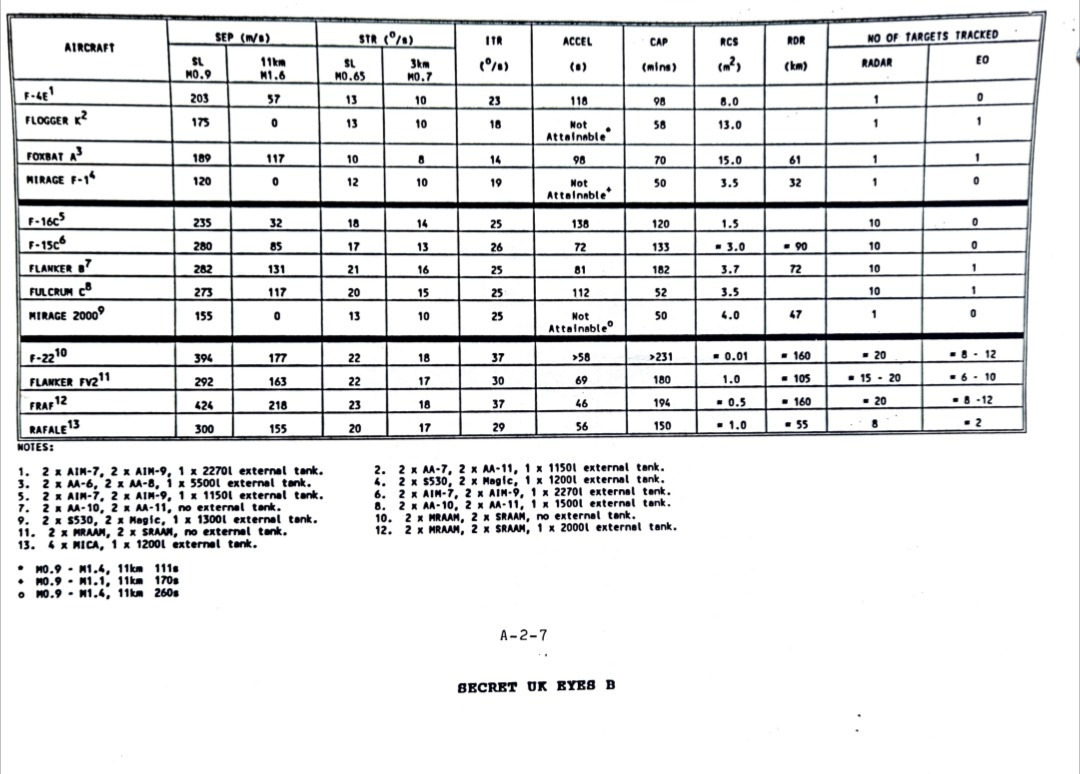
If only we could figure out how to read.


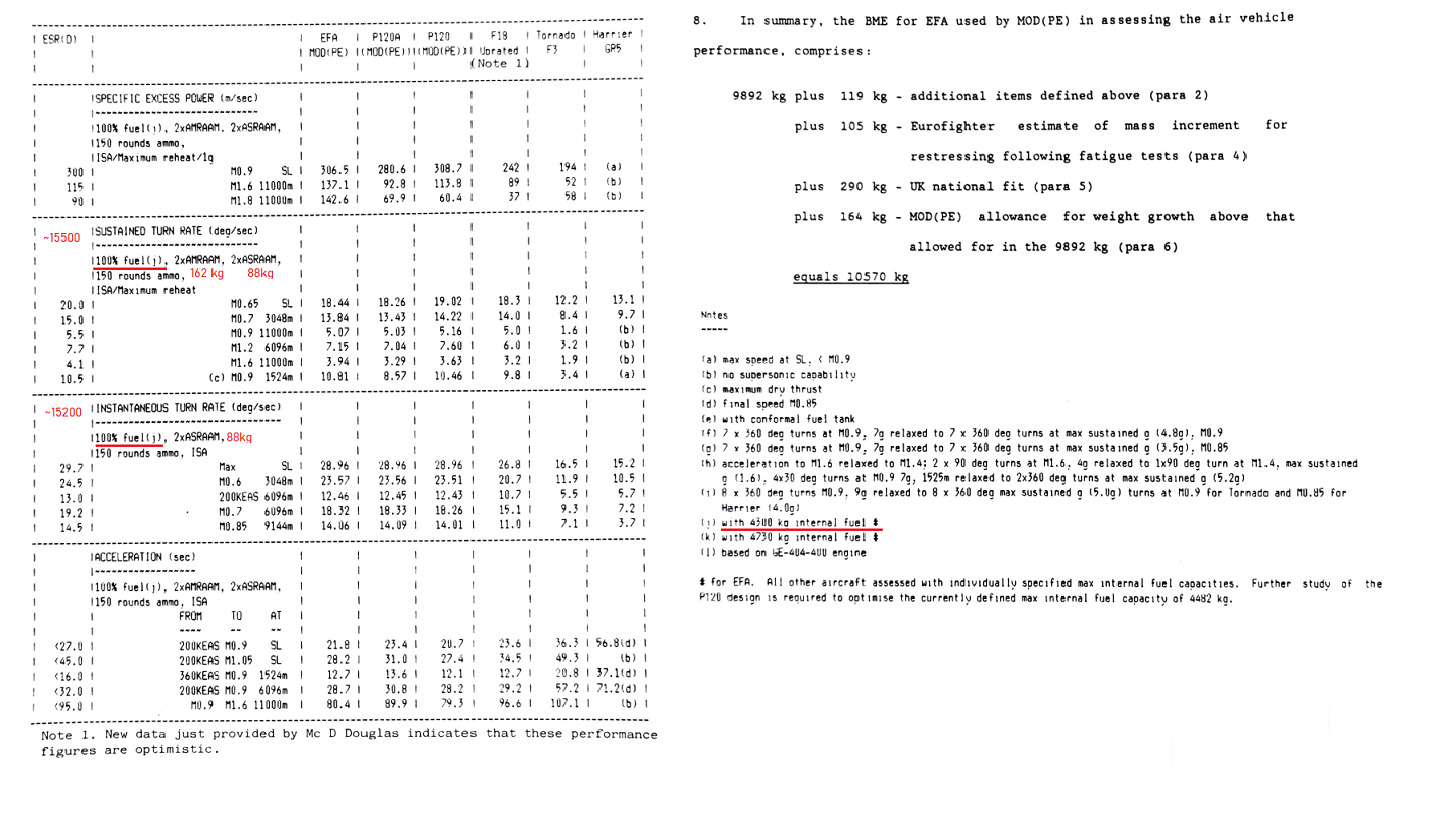
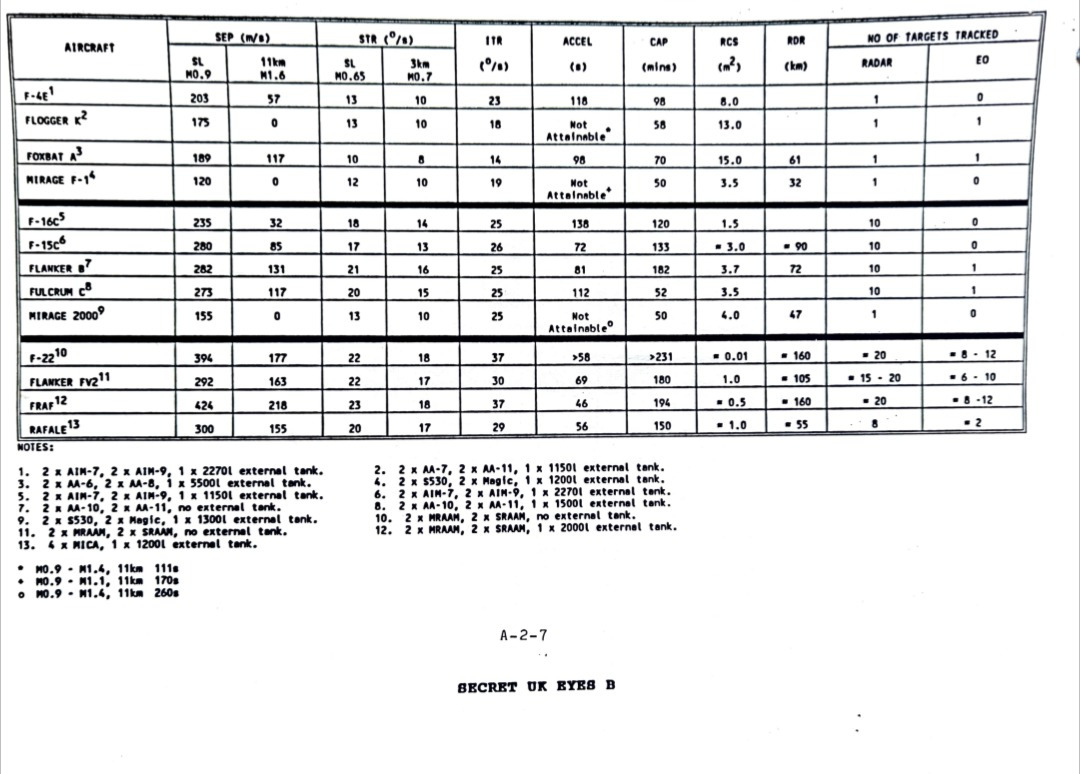
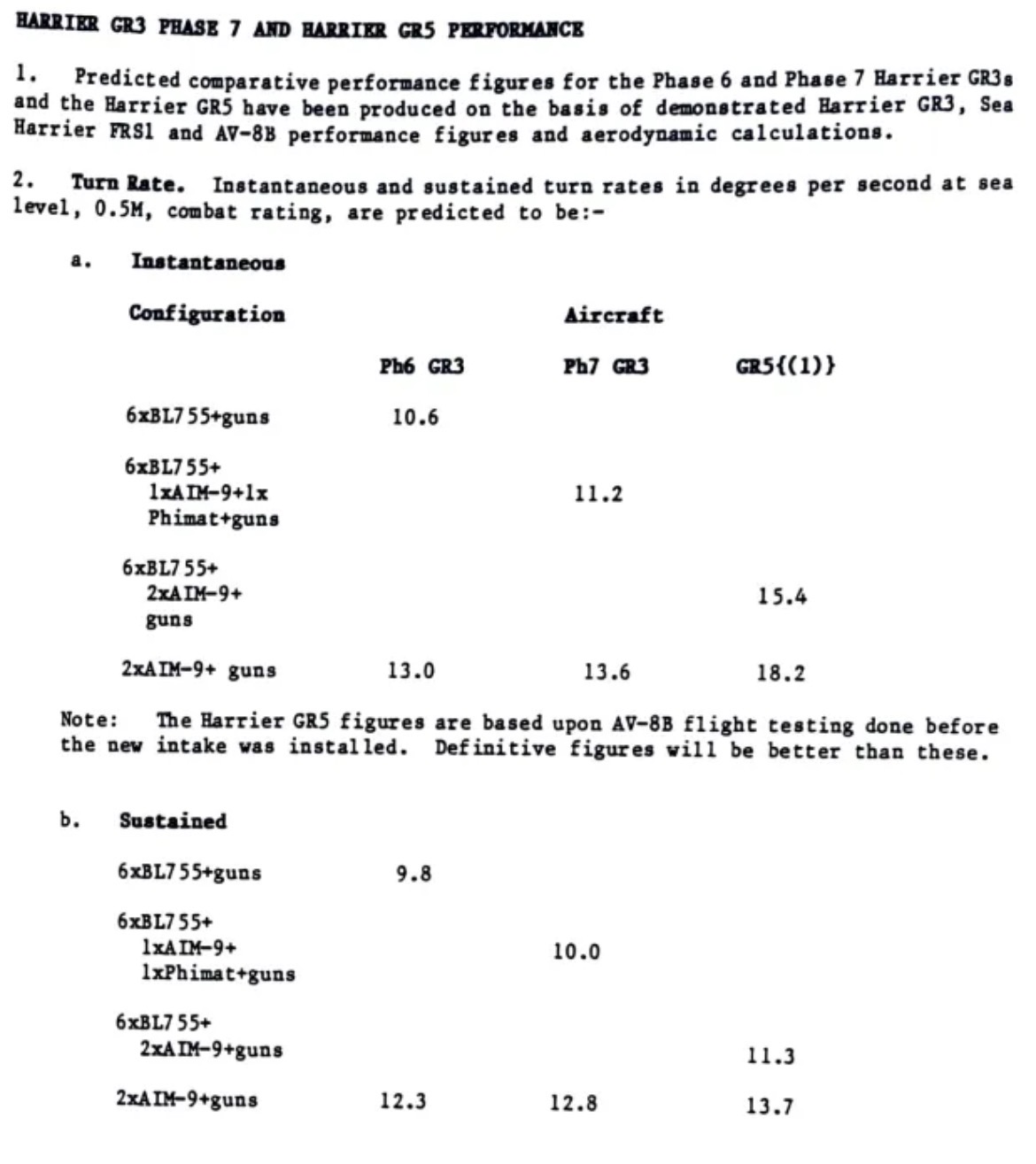
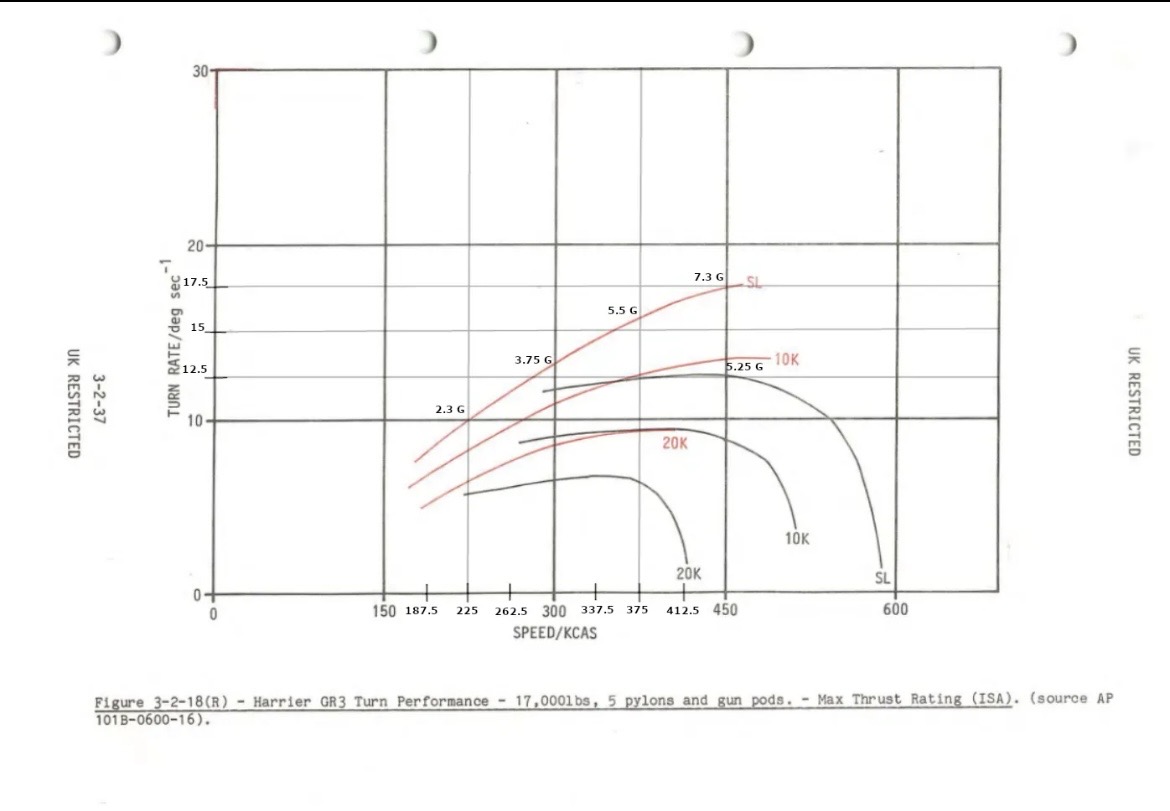
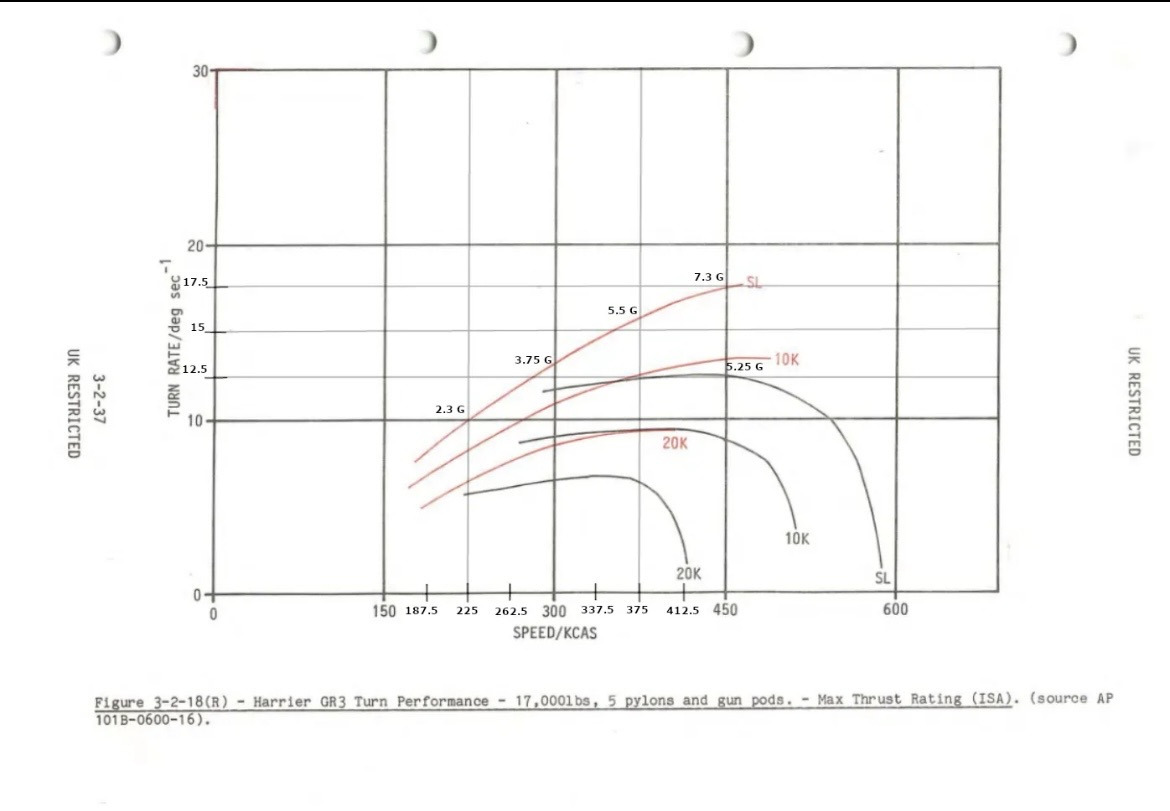
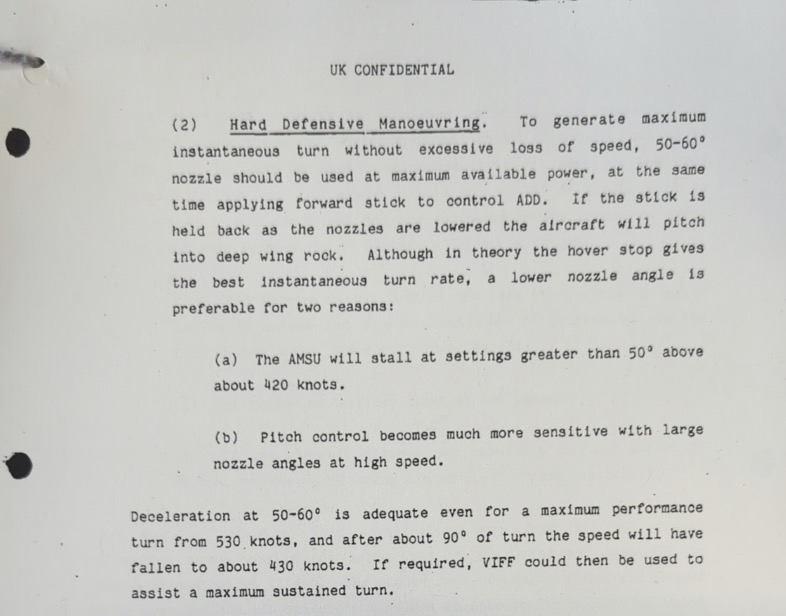
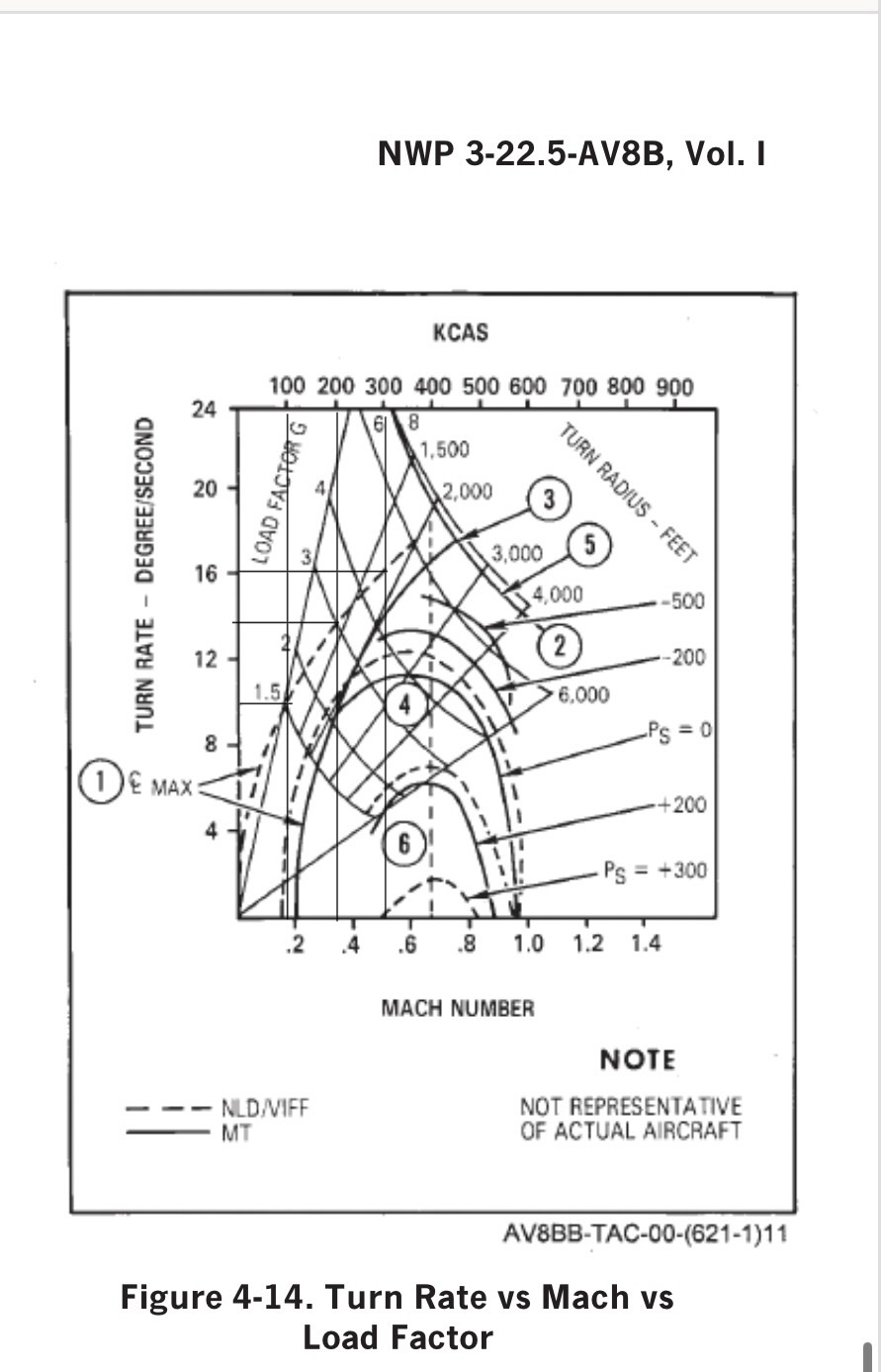
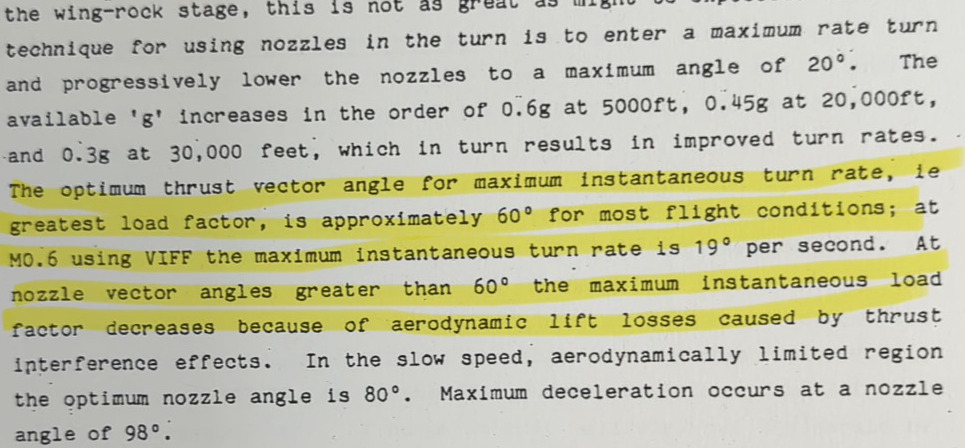
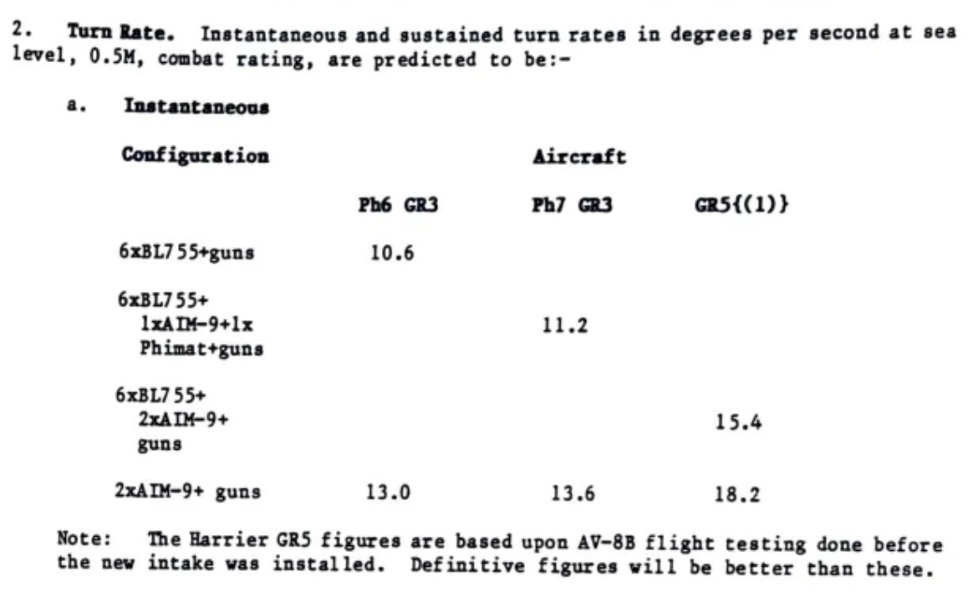
If only we knew how to read the English language we would learn that these turn figures are predictions. Not only that but we might notice that these predictions are at 0.5 Mach and not .65 Mach like in the ESR documents.
Okay lets use this one as well.
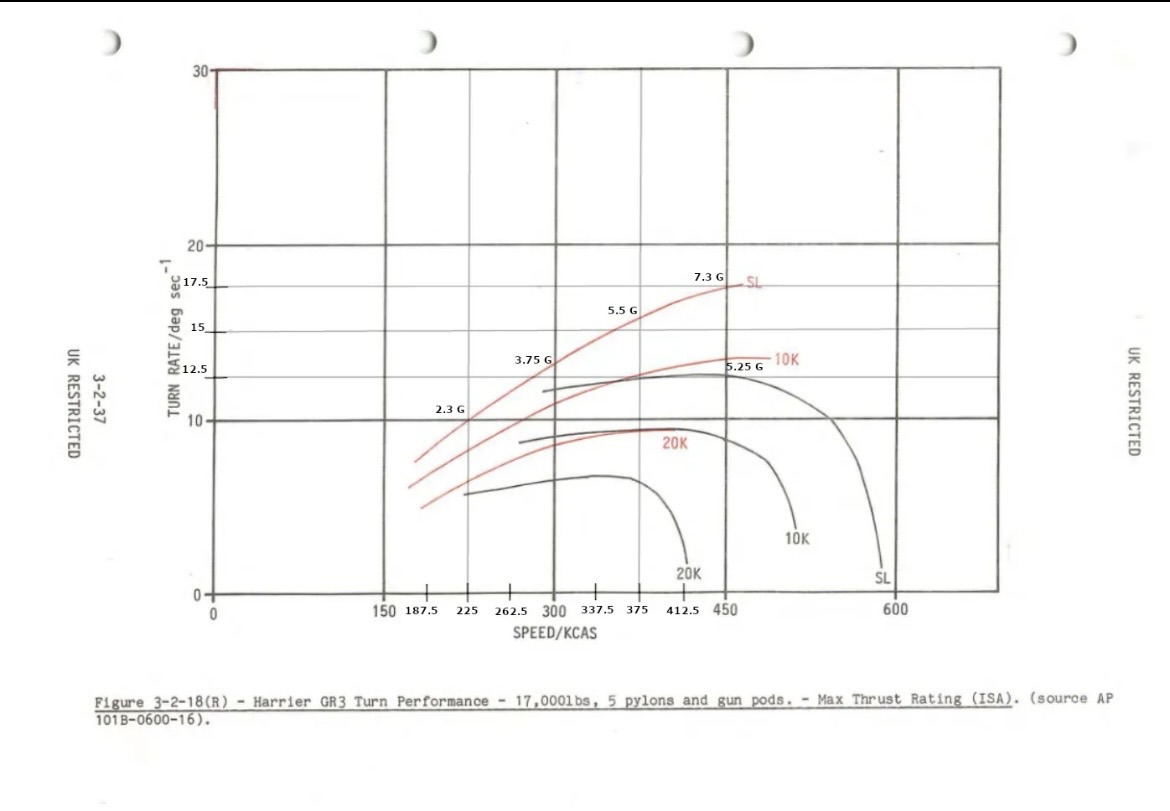
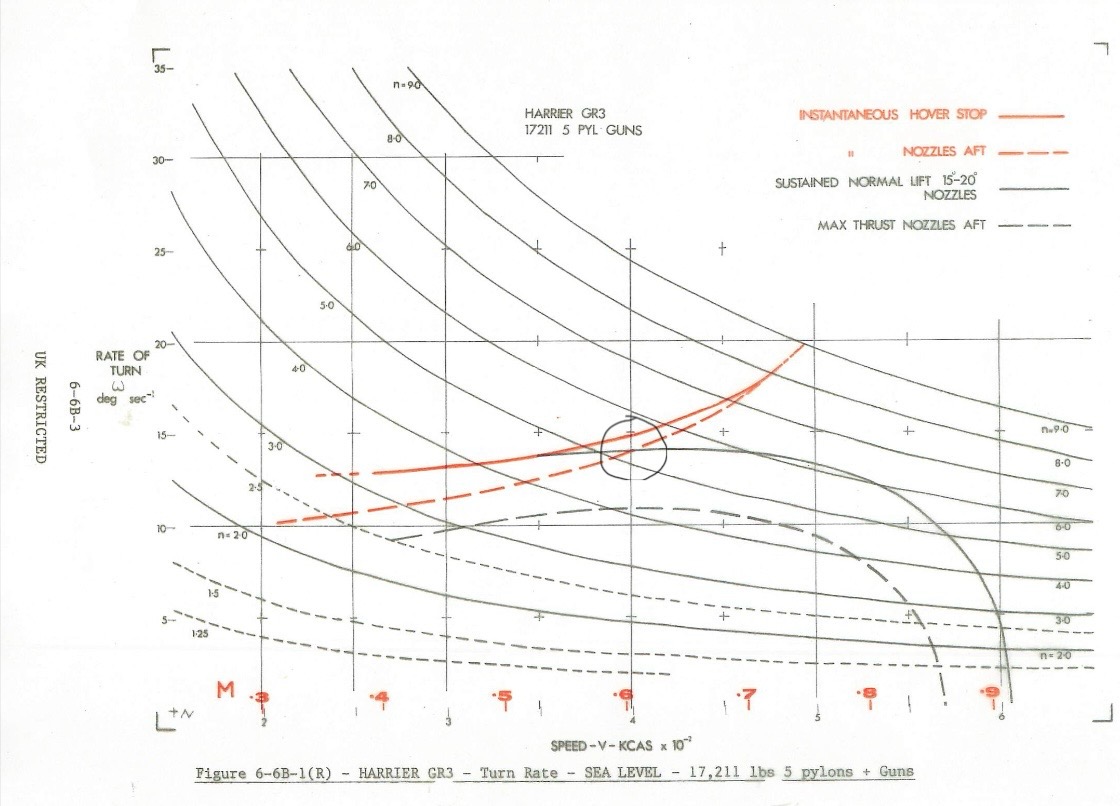
Note how it reaches a whole 17.5 degrees per second initial turn rate at sea level. Or how it reaches around 13.5 degrees per second at 10K feet. In 10K feet altitude difference it loses about 4 degrees per second in ITR. If we split the difference and assume that the ITR at 5K feet would be halfway between the SL and 10K value then we can do some simple arithmetic to get a 5K feet ITR value of 15.5 degrees per second at 450 KCAS.
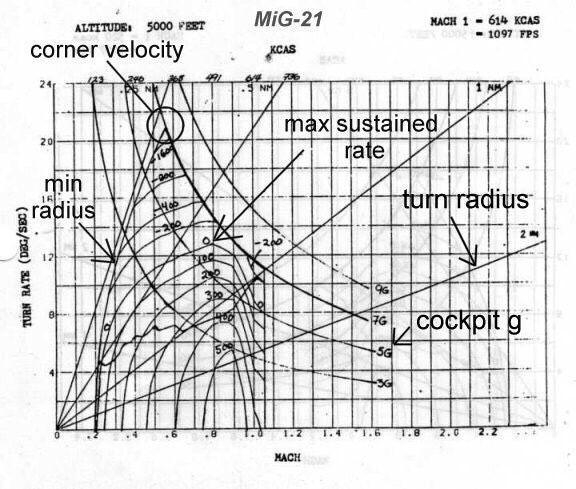
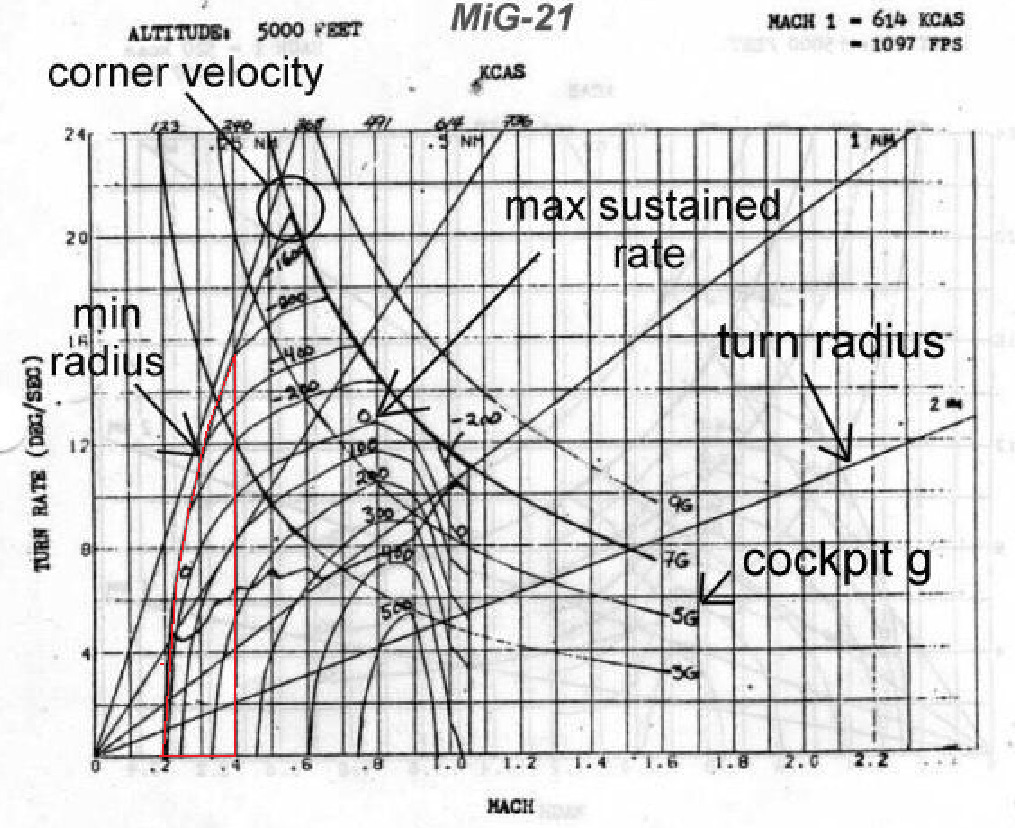
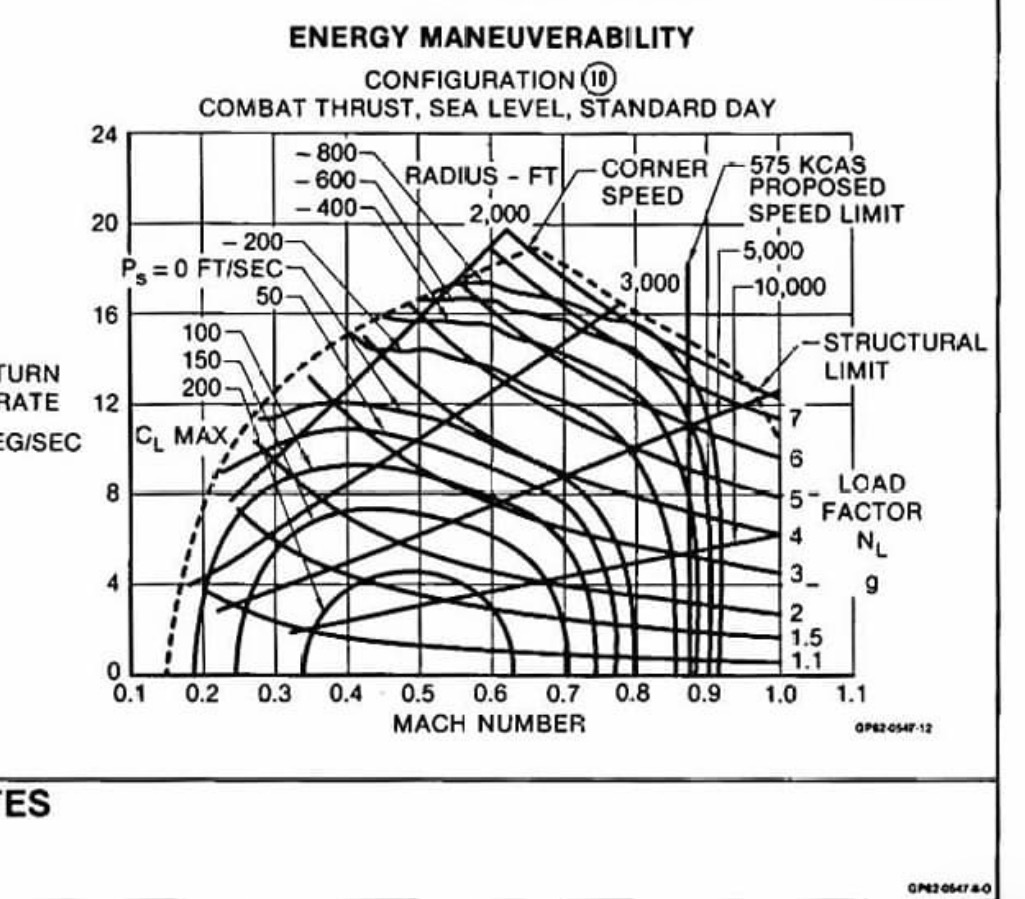
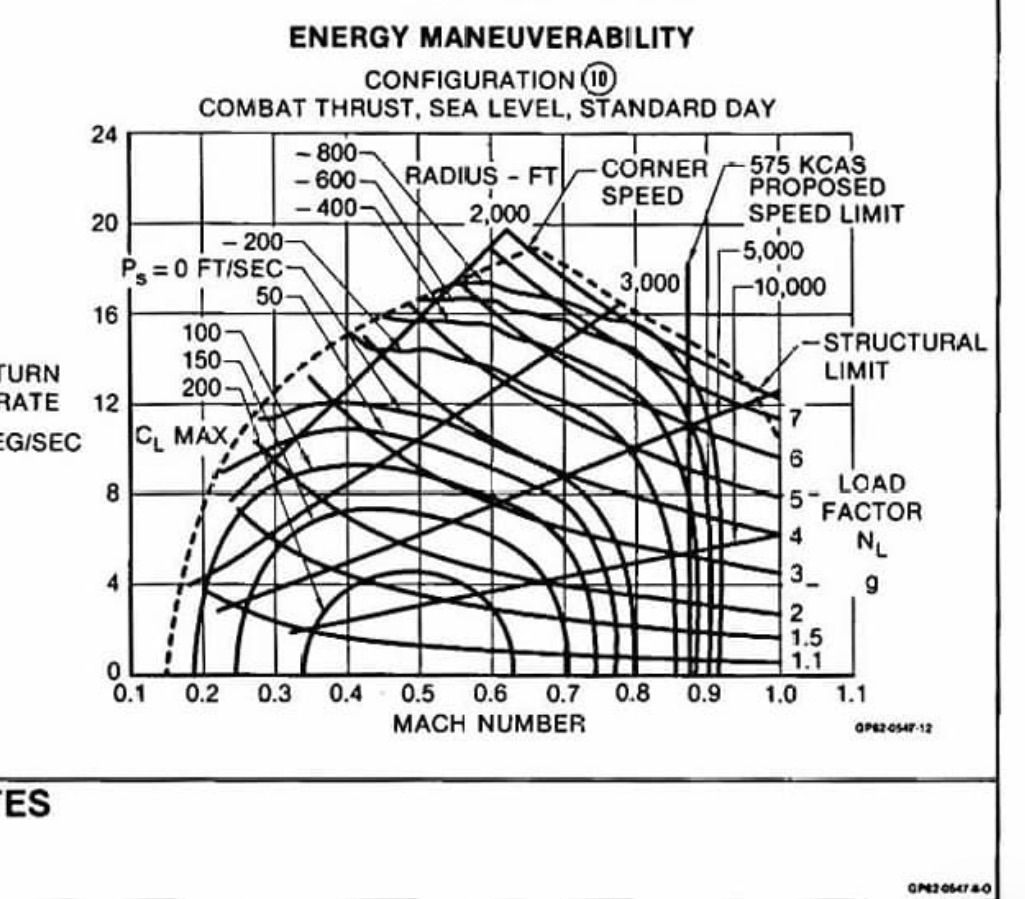
Our best corner speed for the MiG-21 at 5000 feet is a smidge over 20 degrees per second at .55 Mach or 340 KCAS. At the same speed the Harrier in your chart would only be doing around 13.5 degrees per second; once again just splitting the difference between the SL and 10K values.
Now what is the difference between 20.5 and 13.5? Let’s do some simple math.
20.5 - 13.5 = 7
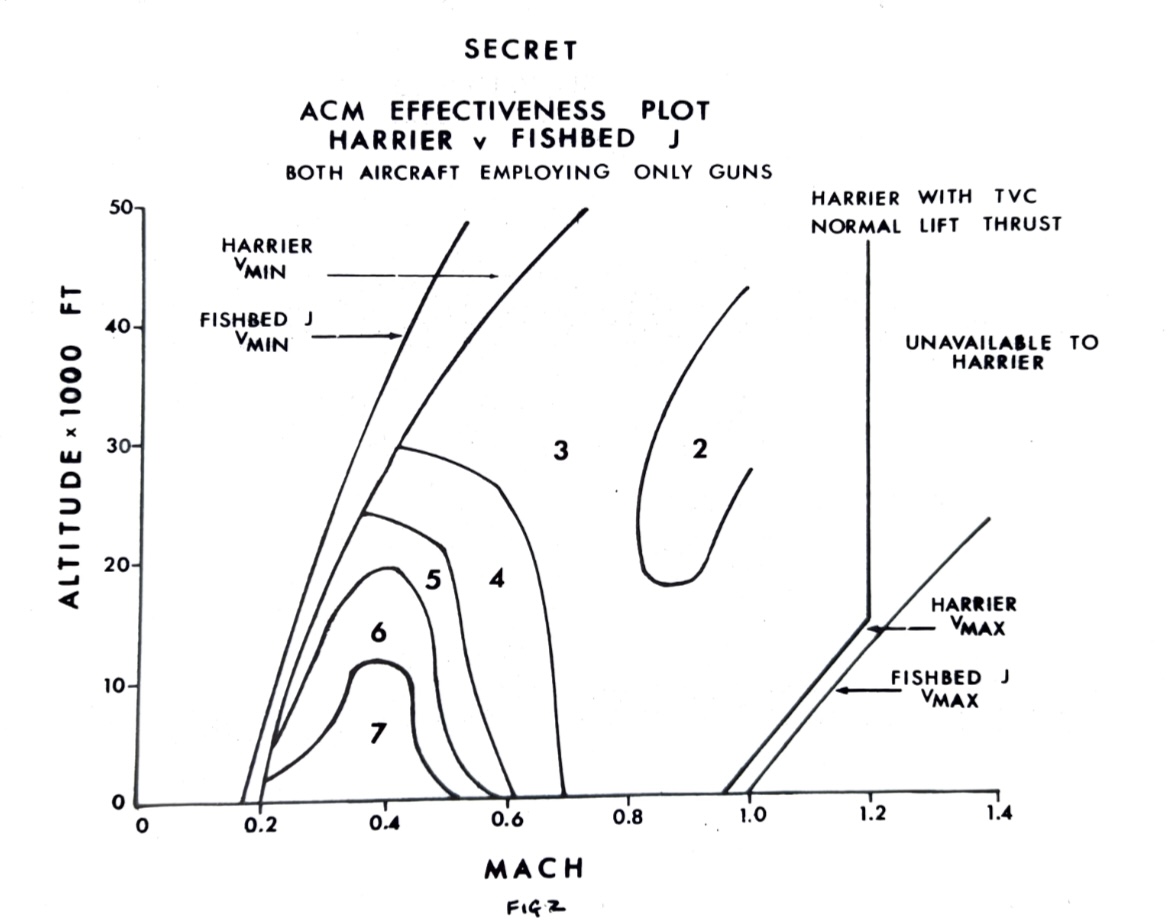
The difference in our predicted ITR is around 7 degrees per second. Where have we seen this before?
Oh wait it is right there in front of us but you somehow missed it.
I have taken the liberty of highlighting the portion of the EM diagram that coincides with 250 KCAS. Note that this advantage applies to basically the bottom 25% of the flight envelope and that in the other 75% of the flight envelope that the MiG-21 would be superior.
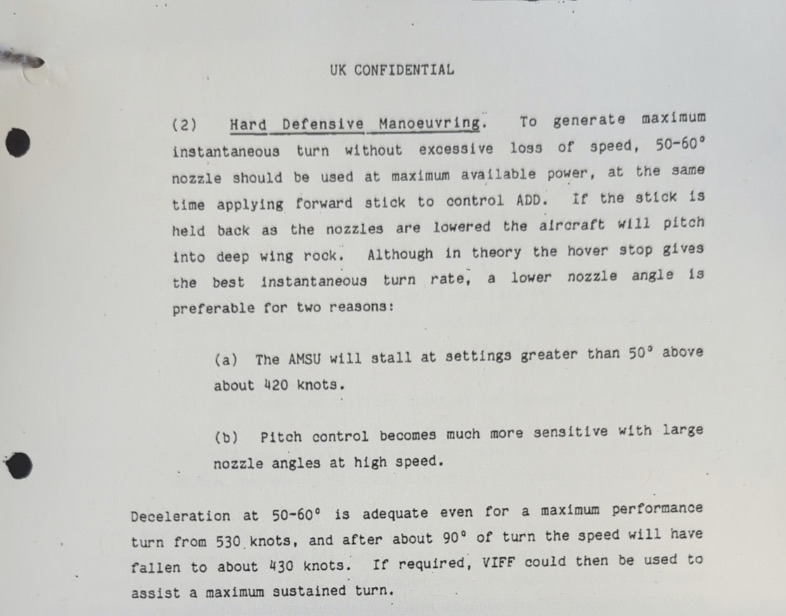
What is actually funny is we can use the two documents to compare the ITR curves and you will see that the British claims regarding MiG-21 might be pretty far off or that the EM diagram that you are choosing to use for the MiG-21 is erroneous.
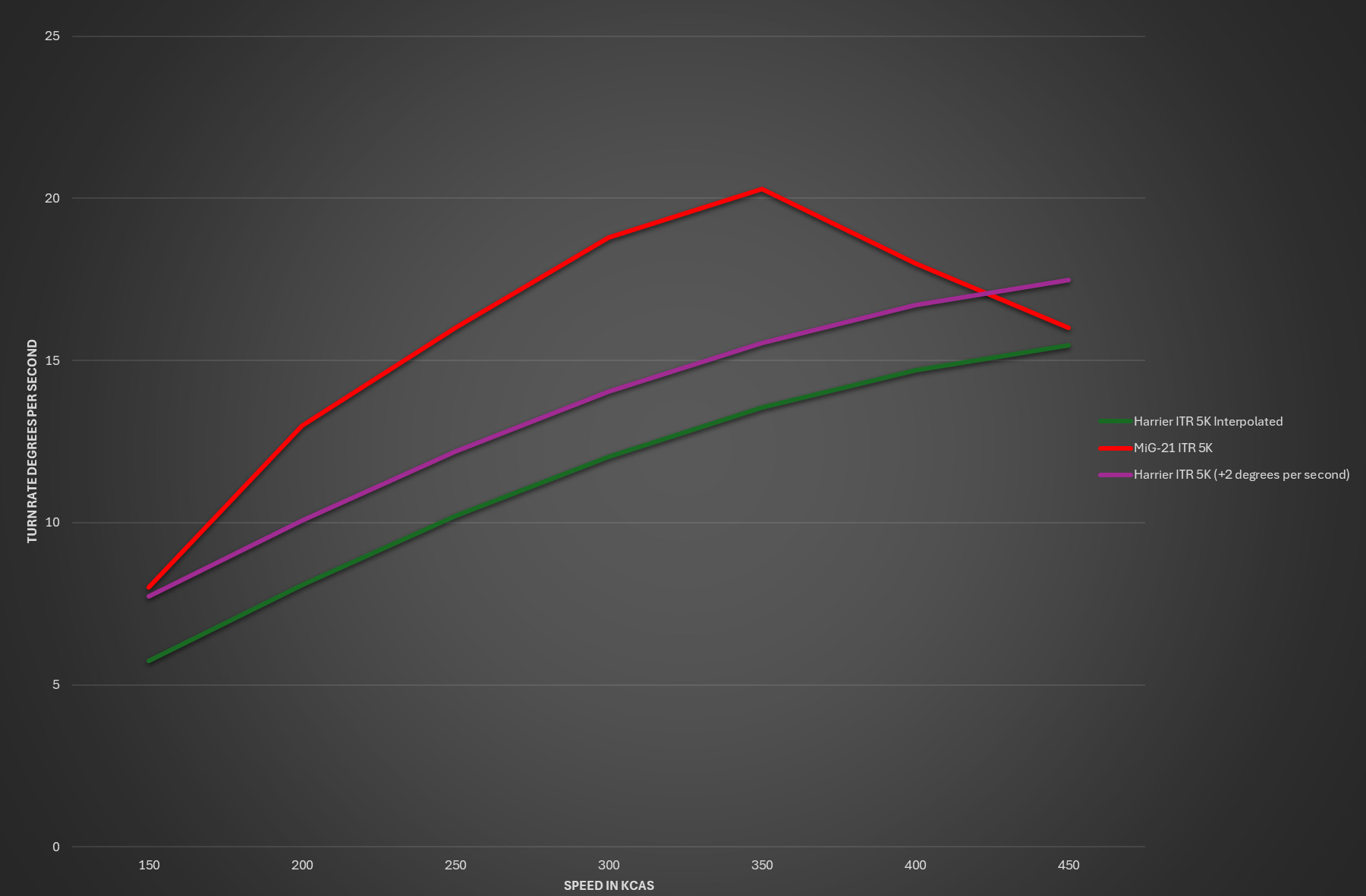
This is what happens when you make a direct comparison of the values found in your chart and the values found in the MiG-21 EM diagram. Note that the decline at high KCAS is a function of the G limitation shown in the EM diagram.
Even if we try to make the argument that the Harrier document shows at 75% fuel weight and extra generous and add 2 degrees per second to the Harrier ITR values…we still end up at the end state of it being inferior to the MiG-21 shown in the EM diagram.
Keep in mind this is referencing the MiG-21 EM diagram against your interpretation of this chart and taking the red lines as being indicative of instantaneous turn performance.
However this source doesn’t seem to even agree with your other cited source that states 13 degrees per second at Mach .5 which is equal to around 330kts KCAS. The difference in values between the two sources is about 1.5 degrees per second.
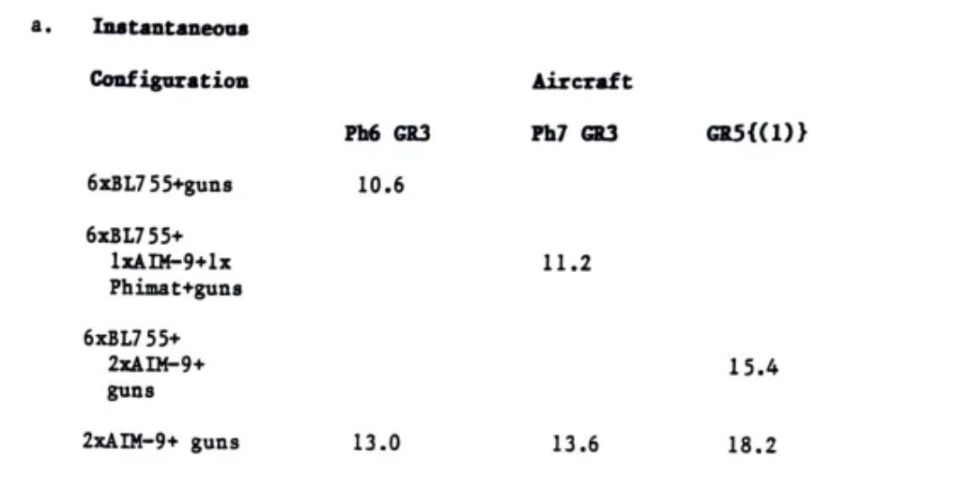
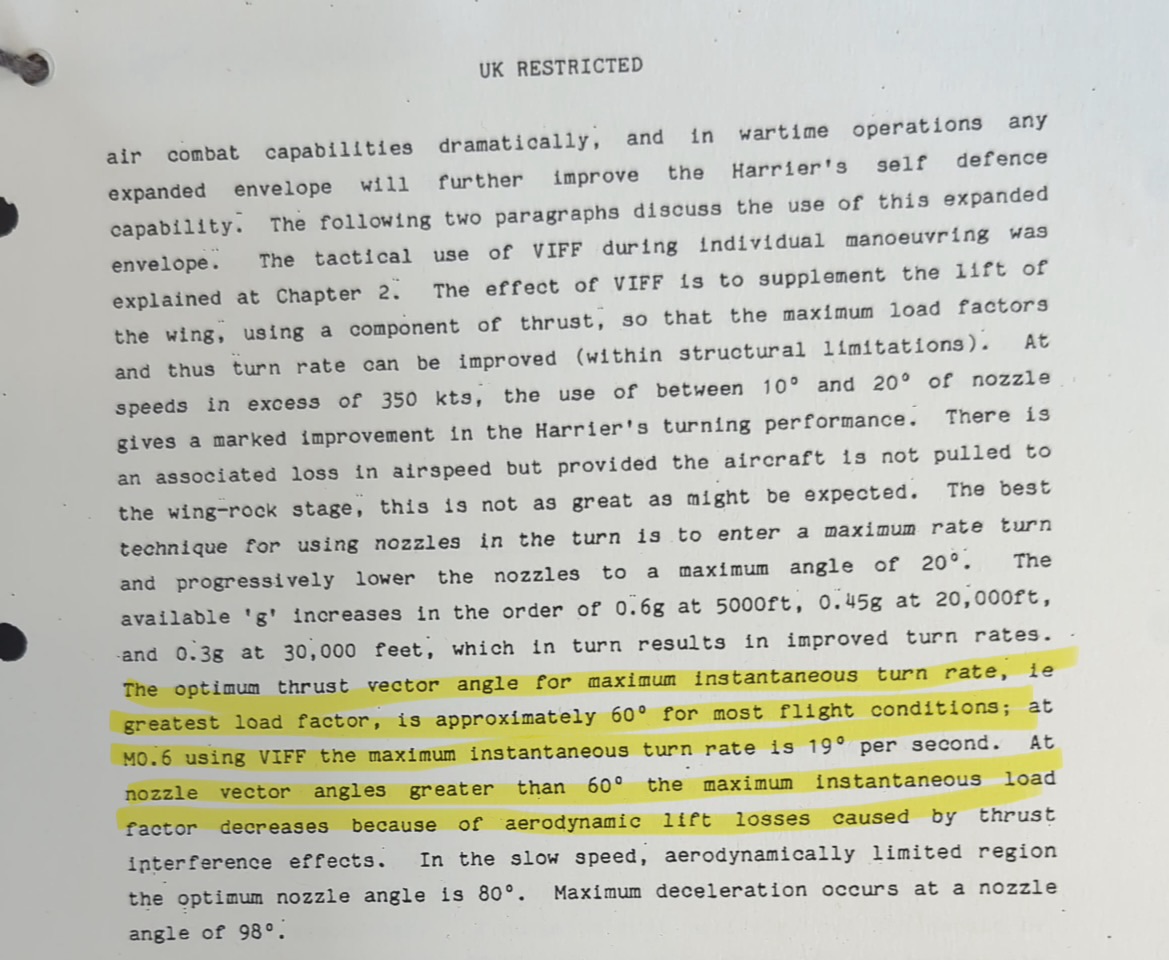
Basically this idea that the plane is some kind of supreme dogfighting machine is a hallucination that you have cooked up by willingly misinterpreting sources. For instance the greater than 16 degrees per second figure that you have cooked up is done so by attempting to link together two completely separate sources and you are ignorant of the fact that the source that you like to cite to showcase its ITR performance shows that the plane is thoroughly mediocre in that regard.
In reality the plane is not anywhere near as good at dogfighting that you claim it to be. In fact when you take into account its tendency to want to depart flight during medium and high speed turns it would be considered quite crap by anything resembling modern standards. It is simply outclassed by pretty much any 4th Generation fighter in terms of maneuverability and VIFF-ing is extremely situational and results in the plane shitting pretty much all of its energy away.
Excerpts from 3 different Harrier pilot interviews.
“You take the same pilot level in both airplanes and the Hornet is definitely a better dogfighter for sure” - Pilot 1
“In ACM/BFM type stuff with the MiG-29 vs the Sea Harrier we’re outclassed in terms of the maneuverability of the aircraft” - Pilot 2
“The major byproduct of VIFF-ing was such an aerodynamic brick that as soon as you took the thrust away from aft it would slow down and energy is life…” Pilot 3