History and information
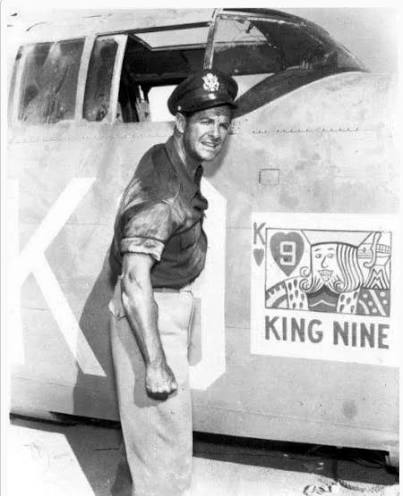
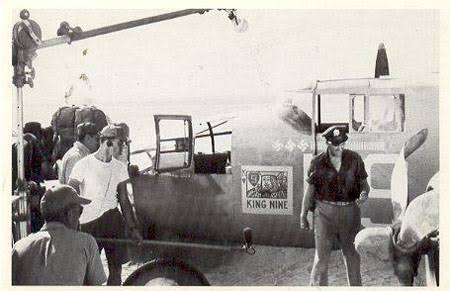
King Nine is the fictional name of the aircraft seen in the 37th episode of the TV series “The Twilight Zone”. While many people would assume she was simply a recreation, that assumption would be completely incorrect. B-25C-10-NA S/N: 42-32354 was delivered to the USAAF on January 14th, 1943, and was assigned to the 66th observation group at Morris Field, NC. The aircraft was never actually sent overseas to see combat and instead remained in the United States. Currently, the aircraft’s condition is unknown, aside from the fact that it has been disassembled and is in private ownership, reportedly awaiting restoration.
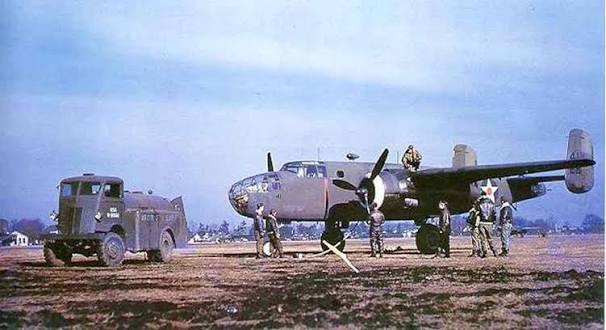
Following its initial military delivery, the North American B-25C-10-NA Mitchell bomber, completed at the Inglewood, California, manufacturing plant, was transferred to a modification center in Kansas City, Missouri. Throughout World War II, the bomber was assigned strictly to stateside training and administrative roles rather than overseas combat. While attached to base units across Missouri and Kentucky, the airframe was used to train artillery spotters and fly anti-submarine patrols off the Atlantic Coast. By late 1943, the aircraft moved to Esler Field, Louisiana, for crew training, and on December 7, 1944, it was reclassified as a TB-25C trainer at Marshal Field, Kansas, where it spent the remainder of the war before being retired to a surplus storage yard in Santa Maria, California, in September 1945.
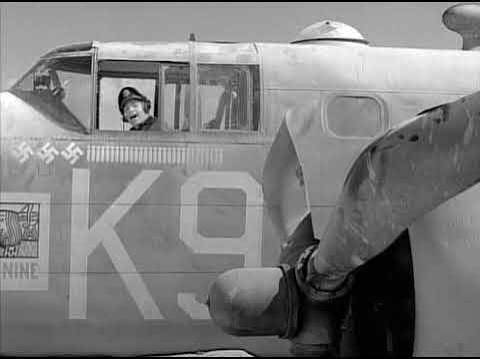
Following its military retirement, the aircraft entered a multi-decade post-war history under civilian ownership, primarily serving as a media prop. A movie studio acquired the bomber to use in the filming of the premier episode of the second season of the television series “The Twilight Zone,” titled “King Nine Will Not Return,” which aired on September 30, 1960. The production required the aircraft to be decorated with specific nose art to portray the fictional stranded bomber in the African desert. After its appearance in this episode and other minor film projects, the bomber spent years in studio storage before it was sold to Jack Hardwick of El Monte, California, in the early 1960s, where it remained dismantled for nearly three decades.
In 1988, the dismantled bomber was purchased by Carl Scholl, who relocated the components to Ocotillo Wells, California. Though the aircraft was never registered with the Federal Aviation Administration, it represents a significant historical artifact as one of the few surviving original B-25C-NA airframes left in existence. Today, the twin-engine bomber sits in Ocotillo Wells awaiting a future restoration to preserve its dual heritage as both a wartime Army Air Forces trainer and a classic television landmark.
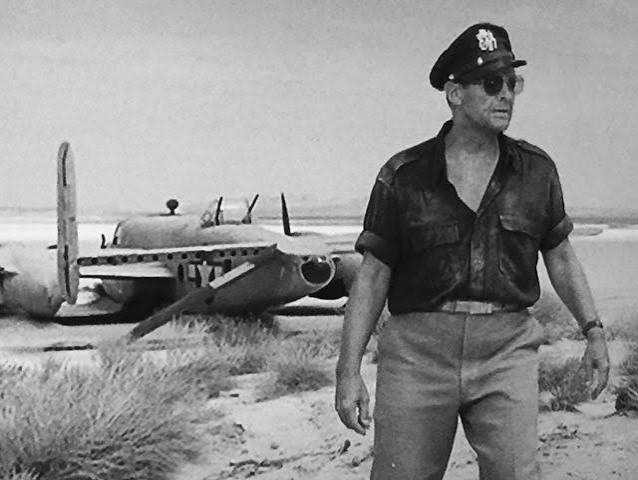
In the actual episode of The Twilight Zone, Captain James Freshly awakens in the African desert in 1943 next to the crashed wreckage of his B-25 Mitchell bomber, the King Nine. He is entirely alone, unable to find any trace of his crew, yet he repeatedly sees what appear to be illusions of them, along with mysterious modern F9F fighter jets flying overhead. Freshly descends into panic and delusion, struggling to comprehend why he survived when his men vanished, only to abruptly wake up in a modern 1960 hospital bed. It is revealed that the entire desert ordeal was a psychological hallucination suffered by a guilt-ridden Freshly, who had fainted after reading a newspaper article about the real-world discovery of his old wartime bomber’s wreckage—a mission he had missed years prior due to a sudden illness, leaving his crew to die without him.
While the episode itself is fictional, it is based on the real-life aircraft nicknamed The Lady Be Good, which was an American B-24D Liberator bomber that vanished without a trace on April 4, 1943, during its first combat mission of World War II. Returning to its base in Libya from a night bombing raid over Naples, Italy, the inexperienced nine-man crew ran into a blinding sandstorm and suffered a total failure of their automatic direction finder. Miscalculating their location, the crew failed to realize they had entirely overflown their airfield and were flying deep into the Sahara Desert.
Believing they were still over the Mediterranean Sea, the men bailed out into the pitch-black darkness when the fuel tanks ran completely dry, leaving the empty bomber to drift an additional 16 miles on autopilot before safely belly-landing itself on the desert floor. The survivors tragically passed away from dehydration during an agonizing 109-mile trek northward across the desolate sand dunes, unaware that the coast was still hundreds of miles away. The aircraft’s exceptionally well-preserved wreckage was accidentally discovered by a British oil exploration team in November 1958, sparking a massive military recovery effort that located the crew’s remains and transformed the phantom bomber into one of the most haunting mysteries in aviation history. Ultimately, only eight of the nine crewmembers were ever located, leaving the final crew member to be widely considered KIA/MIA to this day.
B-25 Development
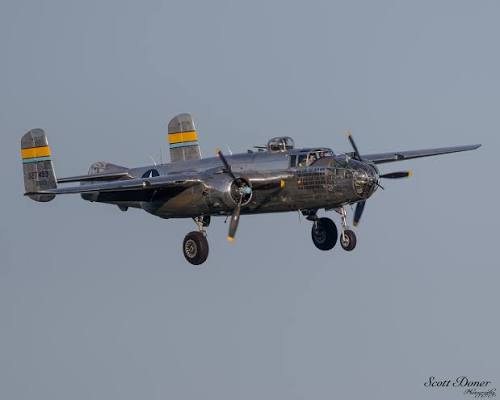
The North American B-25 Mitchell originated from a 1938 United States Army Air Corps (USAAC) requirement for a twin-engine medium bomber capable of carrying a 1,200-pound payload over a 1,200-mile range at speeds greater than 200 mph. North American Aviation initially submitted the NA-40 design, which crashed during evaluation trials in 1939. Under the leadership of Chief Engineer J.H. Kindelberger, the company re-engineered the concept into the NA-62 project to satisfy a subsequent, more demanding USAAC specification. This revised design widened the fuselage to seat the pilot and co-pilot side-by-side, expanded the bomb bay, and integrated higher-output Wright R-2600 Twin Cyclone radial engines. The military accepted the blueprints without requiring a prototype, ordering 184 aircraft in September 1939 under the designation B-25, and the initial production airframe completed its maiden flight on August 19, 1940.
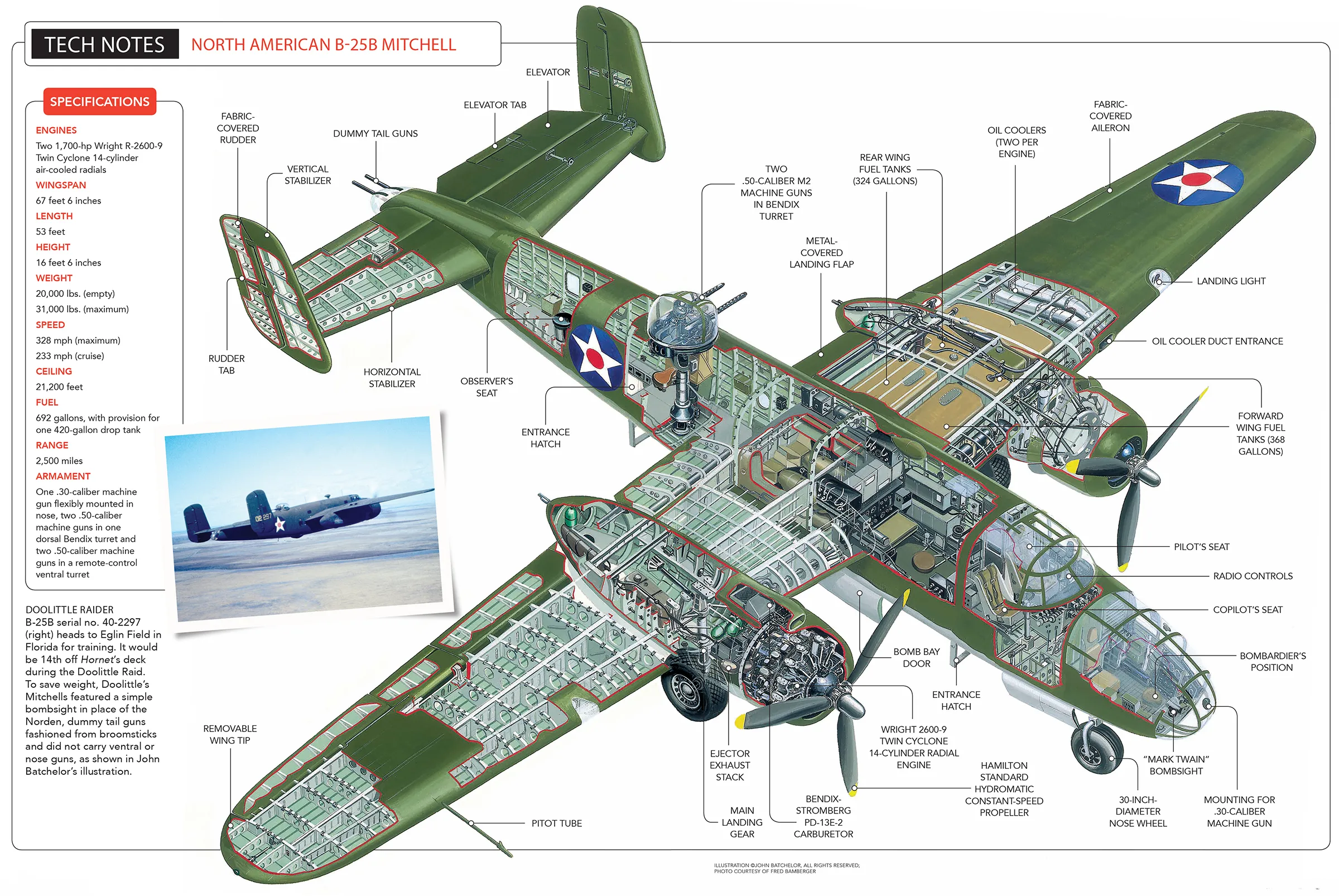
Combat data from early deployments quickly drove substantial defensive and structural upgrades over the next two years. The baseline B-25 and armor-upgraded B-25A models revealed significant vulnerability to rear attacks, prompting the B-25B variant, which added power-operated dorsal and ventral Bendix gun turrets. This variant achieved prominence in April 1942 when 16 heavily modified B-25B bombers launched from the USS Hornet for the Doolittle Raid on Tokyo. By the beginning of 1943, manufacturing consolidated around the B-25C and the nearly identical B-25D variants, which standardized the platform’s early-war configuration. These models integrated a 24-volt electrical system, a modernized automatic pilot, pneumatic wing de-icing boots, an improved glass nose layout, and Wright R-2600-13 engines, establishing a reliable, mass-produced platform operating across the Mediterranean, Pacific, and European theaters of operation by 1943.
Stats
Aircraft: B-25C-10-NA
S/N: 42-32354
Civil registration: N/A
Produced by: North American, Inglewood, California
Production date: January 1943
POWERPLANT and Dimensions
- Engines: 2x Wright R-2600-13 Twin Cyclone
- Top speed: 284 mph @ 15,000 ft
- Max altitude: 21200 ft
- Range: 1500miles
- Fuel: 974 gallons (combat load)
- Weight: Empty: 20,300 lbs./ Max: 34,000 lbs.
SURVIVABILITY
- Crew: 9
- Armor Protection: 3/8 inch plate behind the pilot and the bombardier, under the bombardier.
GUNS:
- 1 x flexible .30 caliber gun in the nose
- 2 x .50 caliber guns in the top Bendix turret
- 2 x .50 caliber guns in the bottom Bendix turret
Internal Bombs:
- 1x 2000lbs
- 1x 1600lbs
- 3x 1000lbs
- 6x 500lbs
- 12x 100lbs
External bombs:
- 6x 100lbs
Measurements
- Wingspan: 67 feet, 7 inches
- Length: 52 feet, 11 inches
- Height: 15 feet, 9 inches
- Yes
- No