- Yes
- No
 B-24D - Soviet Liberators
Summary
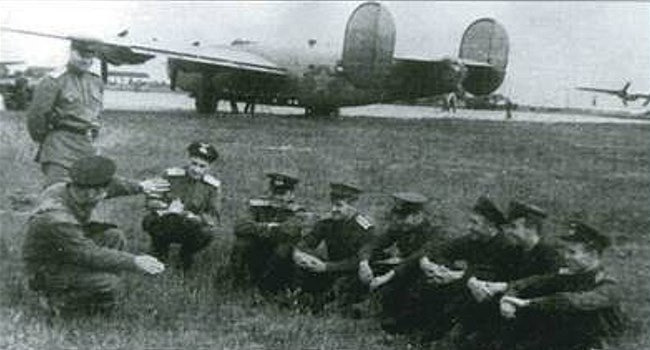
The Consolidated B-24 Liberator had only a very limited and unofficial presence flying for the Soviet Union during World War II. A small number of aircraft reached Soviet territory through emergency landings and operations like Operation Frantic.
Analysis
The service of the B-24 Liberator in the Soviet Air Force is a unique historical footnote because, unlike other American aircraft, it was never officially supplied to the USSR. Instead, the Soviet Union acquired its fleet of B-24s mostly D, J, and L models through interned aircraft that made emergency landings on Soviet-held territory after being damaged during raids over Europe.
By the end of the war, approximately 30 B-24s had been repaired and pressed into service. These aircraft were primarily assigned to the 45th Heavy Bomber Aviation Division. While the Soviet pilots respected the Liberator’s range and payload capacity, the aircraft was generally less popular than the B-17. Soviet crews found the B-24 difficult to fly, noting that its high-aspect-ratio Davis wing made it less stable at certain speeds and its tricycle landing gear more temperamental on the rougher Soviet airfields.
The primary value of the B-24 to the Soviet military was technological. Soviet engineers meticulously studied the aircraft’s systems, specifically the turbo-superchargers, the Wright R-1830 engines, and the advanced radio and navigation equipment. This process of technical evaluation provided the Soviet aviation industry with critical insights into American long-range bomber construction and high-altitude engine performance.
In terms of operational use, the B-24s were rarely used for frontline bombing due to a total lack of spare parts. Instead, they were utilized for high-priority transport missions and for training crews in the operation of four-engine heavy aircraft. This experience proved vital as the Soviet Union began transitioning toward its own strategic bomber programs in the late 1940s. Following the war, the remaining B-24s continued to fly in secondary roles for a short time before being scrapped as the Soviet Union moved into the jet age.
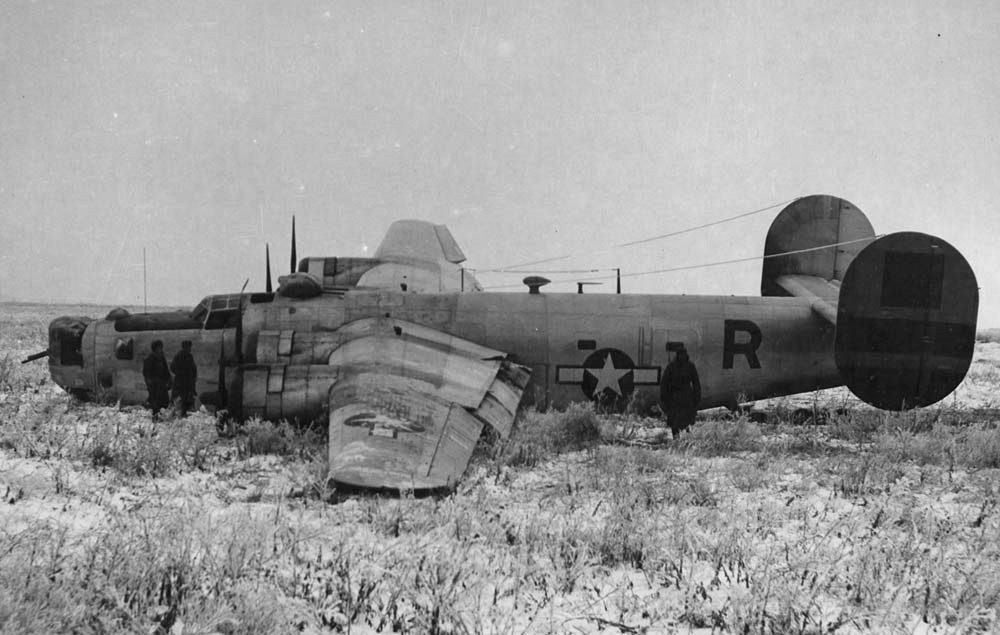
On January 4, 1945, a B-24J-195-CO Liberator (serial number 44-41142) belonging to the 780th Bomber Squadron of the 465th Bombardment Group performed an emergency landing in a field near Poltava, Ukraine. The crew was forced to bring the aircraft down after becoming disoriented by heavy fog, resulting in a crash landing.
Interesting Bits
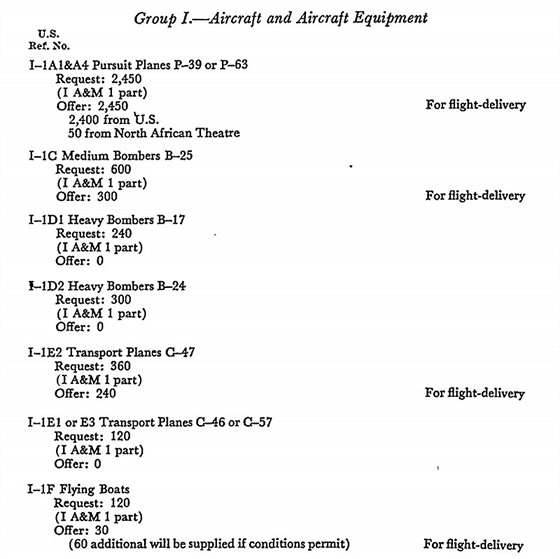
List of types of American aircraft requested by the Soviets in the fourth protocol of the Lend-Lease program. Among other things, the Soviets requested 240 B-17 heavy bombers and 300 B-24 heavy bombers. Of both types, the American offer was zero.
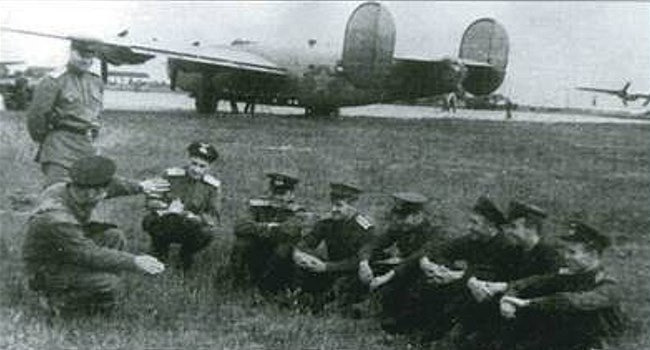
The first Liberator integrated into a Soviet long-range aviation unit was a B-24D (serial number 41-23891), originally part of the “Kamchatka” group of aircraft. After making an emergency landing at the Yelizovo airfield on September 11 or 12, 1943, the bomber underwent an extensive journey across the Soviet Union to Moscow. By October 23, 1943, it was officially assigned to the 890th Aviation Regiment within the 45th Aviation Division, a unit specializing in long-range operations that would eventually be designated for heavy bombers.
Specifications
General Information
- Origin: United States
- Status in USSR: Used for evaluation, training and rarely on the frontline
Dimensions
- Length: 20.5 m
- Wingspan: 33.5 m
- Height: 5.5 m
- Wing Area: ~97 m²
Weight
- Empty Weight: ~16,600 kg
- Max Takeoff Weight: 29,500 kg
Performance
- Engines: x4 Pratt & Whitney R-1830 radial engines
- Max Speed: 470 km/h (at altitude)
- Cruise Speed: 290 km/h
- Range: 3,200 km (combat load dependent)
- Service Ceiling: 8,500-9,000 m
- Rate of Climb: 5.2 m/s
Armament
Defensive Guns
- Multiple .50 cal (12.7 mm) Browning machine guns
- Typical B-24D layout:
- Nose turret (varies by sub-variant) (unlikely to apply to Soviet Liberators as the nose guns Liberators mostly fought in the Pacific)
- Dorsal turret
- Ventral “ball” turret
- Waist gun positions (left/right)
- Tail guns
Offensive Payload
- Max Bomb Load: 3,600 kg (standard operational load)
- Could carry: (but probobly limited to a few options in the Soviet Airforce)
- M30 (100 lb): For light targets and anti-personnel.
- M57 (250 lb): For rail yards and small buildings.
- M64 (500 lb): The standard mission workhorse for factories.
- M65 (1,000 lb): For bridges and reinforced structures.
- M66 (2,000 lb): For heavy fortifications and naval pens.
- M47 (100 lb): Filled with napalm or white phosphorus.
- M17 Cluster: A 500 lb container that dropped dozens of small magnesium fire-sticks.
- M52 (1,000 lb) Armor-Piercing: For penetrating thick concrete or ships.
- M1A1 Fragmentation Clusters: For clearing airfields and destroying unarmored vehicles.