- Yes
- No
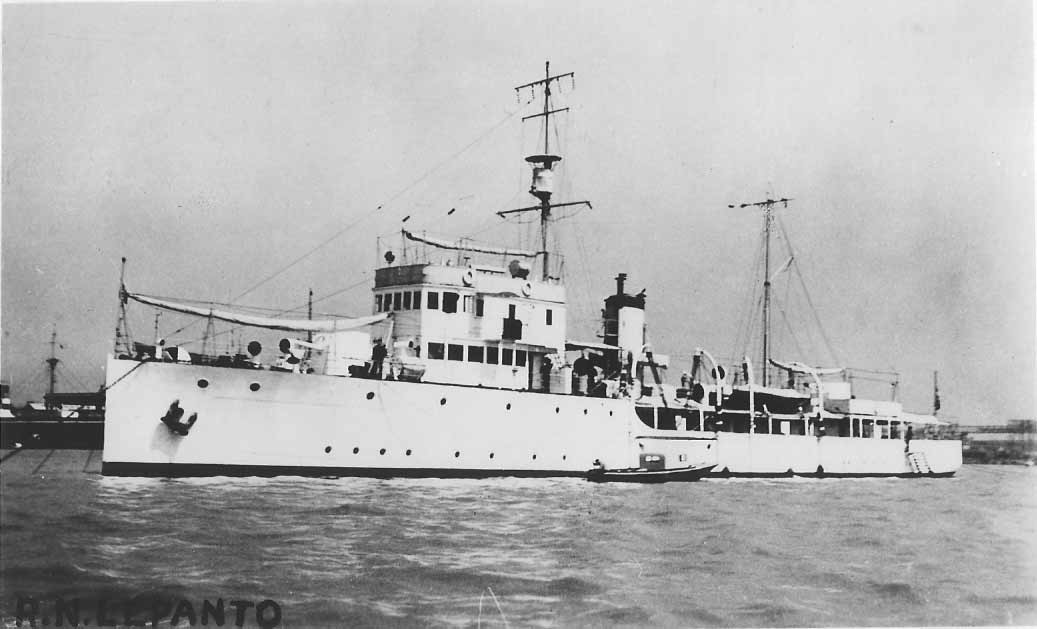
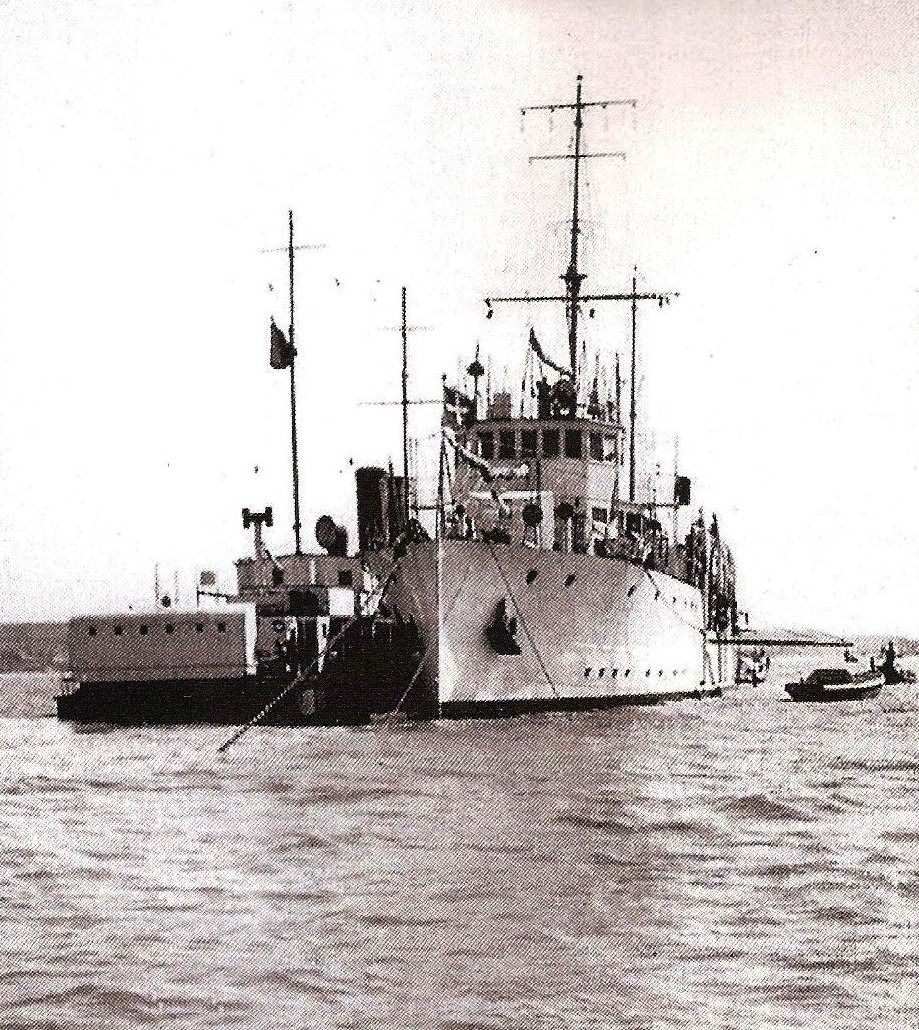
Lepanto in Shanghai (1937)
Because the vessel was originally conceived for long colonial deployments and representation in tropical climates, it was constructed with an exceptionally comfortable layout, a powerful radio suite, and specialized thermal insulation to prevent high temperatures inside the internal spaces. Furthermore, its shallow draft made it highly versatile, allowing it to navigate shallow coastal waters and rivers where larger warships could not operate. The design can be defined a great success, featuring reliability, crew comfort, and good seakeeping qualities, that made it a very stable gun platform. There were plans to build even more units of the type, with the addition of some improvements, but that never happened due to the lack of funding.
Service history of Lepanto
-
06/1925 - 1928: laid down at the Cantieri Navali Riuniti in Ancona, she was completed with modifications to her initial design that added weight, lowering her top speed by one knot (from 16 to 15 knots). Following training cruises, she was deployed to Thessaloniki, Greece, in October 1928 as a stationary unit.
-
23/02/1929 - 10/09/1931: departed Italy for an extended operational cruise, passing through the Corinth Canal to visit Greece, Libya, and Egypt before navigating the Suez Canal into the Red Sea, where she visited the Horn of Africa and the Arabian Peninsula.
-
1931: reassigned as a hydrographic survey ship to map the coastal waters of Libya.
-
11/11/1932 - 10/03/1933: designated to replace the obsolete Sebastiano Caboto in the Far East. Commanded by Commander Priamo Leonardi, she left Italy and sailed via Port Said, Aden, Bombay, Singapore, and Manila. During the final phase of her journey, she successfully navigated through a severe storm off Luzon and a dangerous typhoon, arriving in Shanghai on March 10 to begin her long service as a gunboat.
-
09/10/1934: while anchored at Kichow on the Yangtze River, she was accidentally rammed by the British steamer Hopecrag, suffering light damage to her bow.
-
Late 1934 - 1936: carried out continuous short-range riverine and coastal protection patrols along the Yangtze and Huangpu rivers, safeguarding Italian citizens and local Catholic missions during periods of intense domestic Chinese conflicts. In March 1935, she sailed upriver as far as Hankow, and later conducted an extensive summer cruise touching Chemulpo (Korea), Dairen, Taku, and Tsingtao.
-
1936: returned to Shanghai for a period of major maintenance and refitting, following which she resumed her presence on the Yangtze, hosting the Italian ambassador during Christmas in Nanjing.
-
07/07/1937: following the Marco Polo Bridge Incident and the outbreak of the Second Sino-Japanese War, a landing detachment of her crew, under Commander Vittorio Bacigalupi and alongside men from the gunboat Ermanno Carlotto, was formed. Unified with the San Marco Battalion, they garrisoned the Shanghai International Settlement to protect Western interests during the heavy fighting and ultimate Japanese occupation of the city.
-
09/1939: upon the outbreak of World War II in Europe, all larger Italian units (such as the cruiser Colleoni) and other military branches were recalled to Italy; Lepanto and Carlotto remained the only Italian warships left in China, isolated and based out of Shanghai.
-
09/09/1943: following the proclamation of the Italian armistice, rather than allowing the vessel to surrender to the surrounding Japanese forces, the crew scuttled the ship in the Huangpu River.
-
1944 - 15/08/1945: raised and salvaged by the Imperial Japanese Navy, she was extensively repaired and recommissioned into service as the escort gunboat Okitsu. Stripped of her minelaying capabilities, she was refitted with a 76 mm gun and eight 25 mm Type 96 anti-aircraft guns, serving on frontline convoy escort duties and facing numerous Allied air attacks until the Japanese capitulation.
-
1946 - 1956: handed over to the Republic of China Navy as war reparations, she was renamed Hsien Ning and served for another decade in coastal operations (including the seizure of a British merchant ship in July 1950). According to some sources, she was briefly used by the Communist People’s Liberation Army Navy (Sien Ning) before being officially struck from the register and demolished in 1956.
Why I’m proposing her?
Italy currently lacks counterparts to slow, heavily armed, high survivability gunboats like Flower class corvettes, Marne and Arras. Lepanto, other than having a very long and interesting service history, could fill that gap, and become a very effective unit at br 2.7-3.0.
In her 1942 refit, her auxiliary armament is composed of only 1x 40 mm autocannon, giving it some AA coverage, while not being overpowered against smaller coastal vessels.
Furthermore, her very low draught and good maneuverability would make her highly effective at navigating shallow waters and avoiding obstacles.
general specifications (1942)
- Displacement : standard 615 t; Full load 850 t.
- Length : 62,2 m
- Draught : 2,4 m with normal load; 2,59 with full load.
- Breadth : 8,69 m
- Machinery : 2 vertical triple-expansion reciprocating steam engines, Thornycroft tube boilers, 2 shafts, 1.500 h. p.
- Max speed : 15 knots.
- Complement : 5 officers and 69 non-commissioned officers, chiefs and sailors.
Armament and equipment
- 2x1 : 102/35 Schneider-Ansaldo 1914
- 1x1 : 40/39 Vickers-Terni 1917
- 80 mines
Photos and drawings
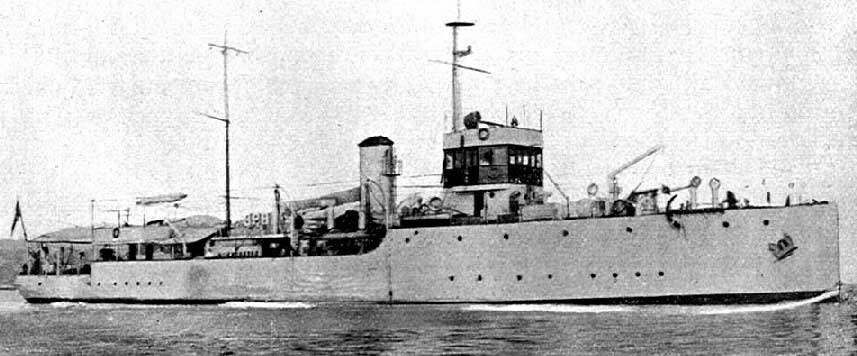
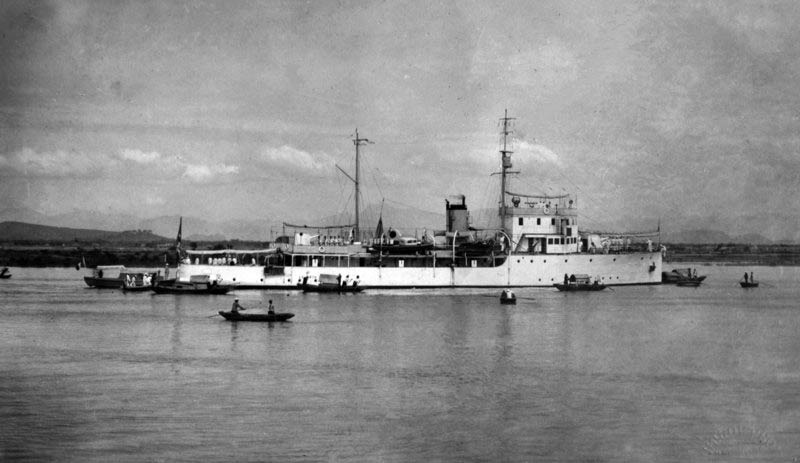
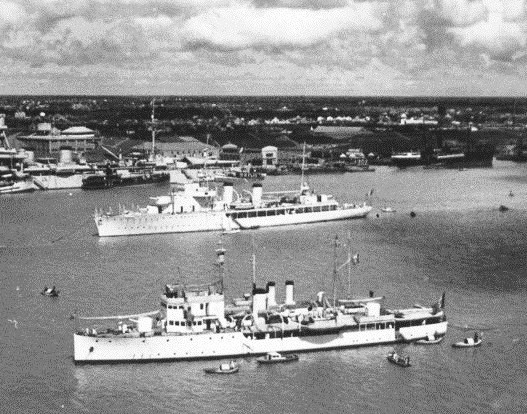
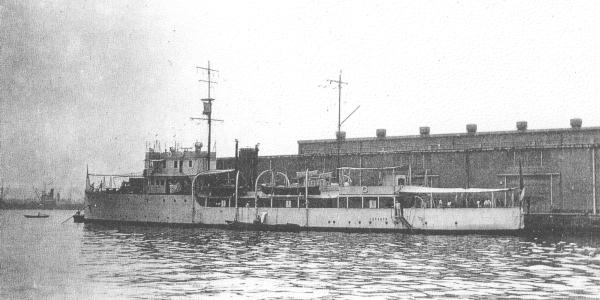
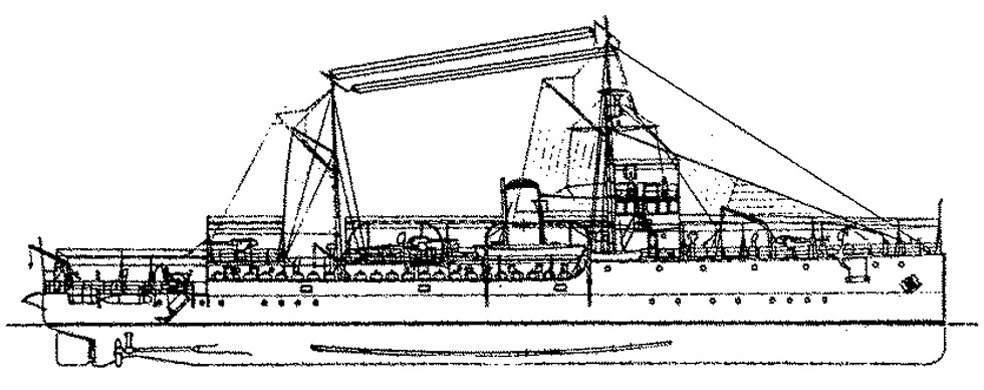
Technical drawings
Sources