- Yes
- No

History
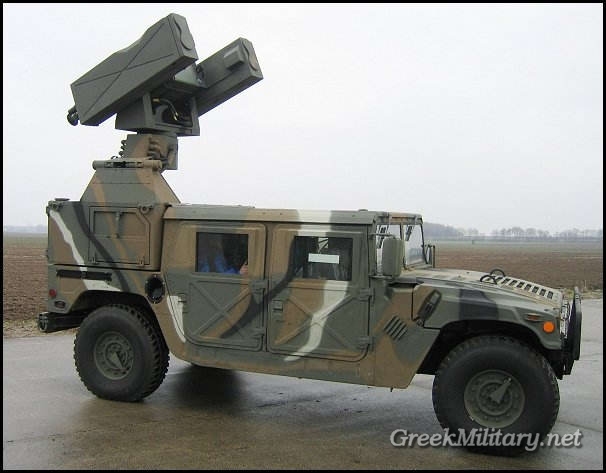
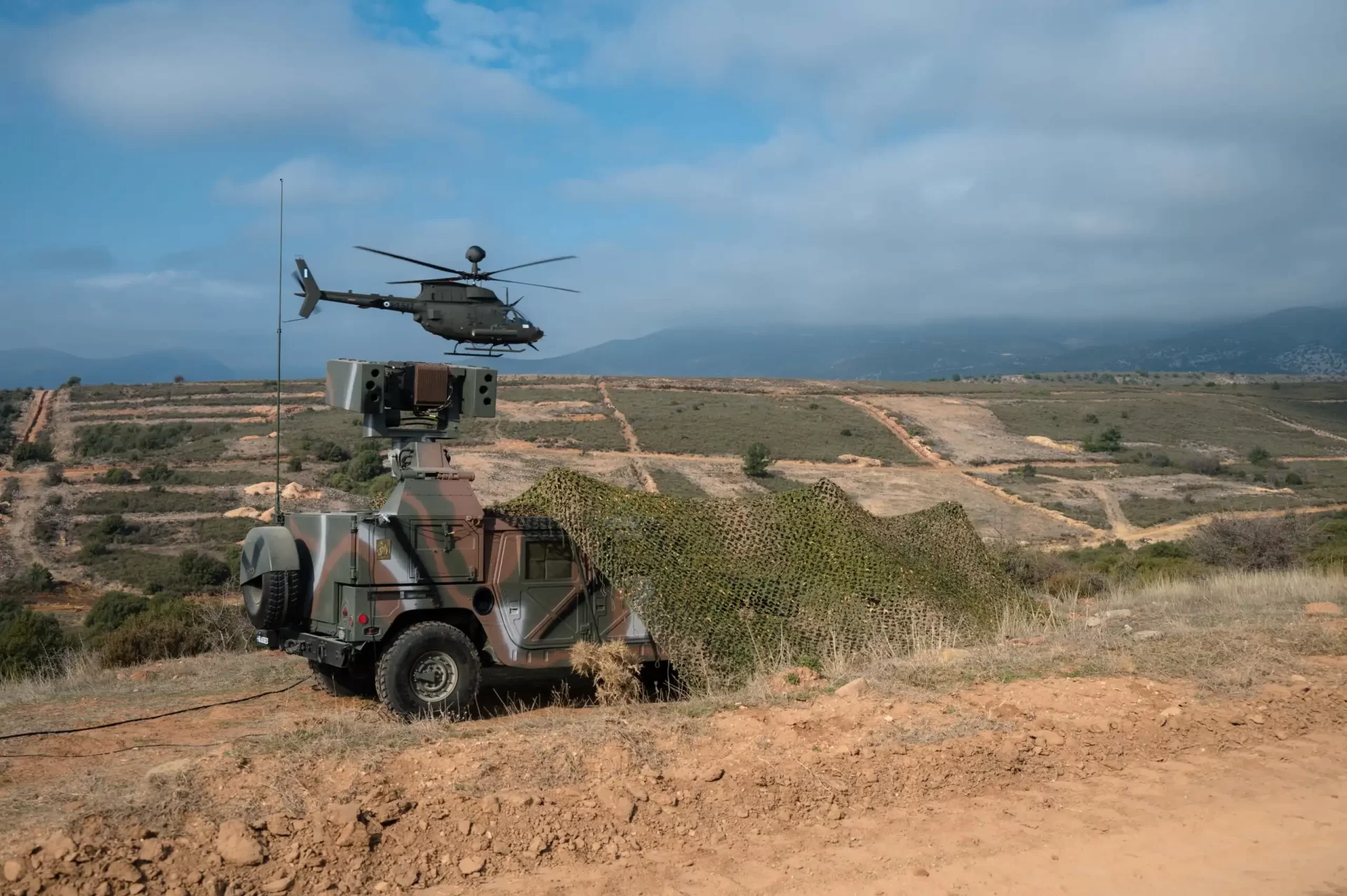
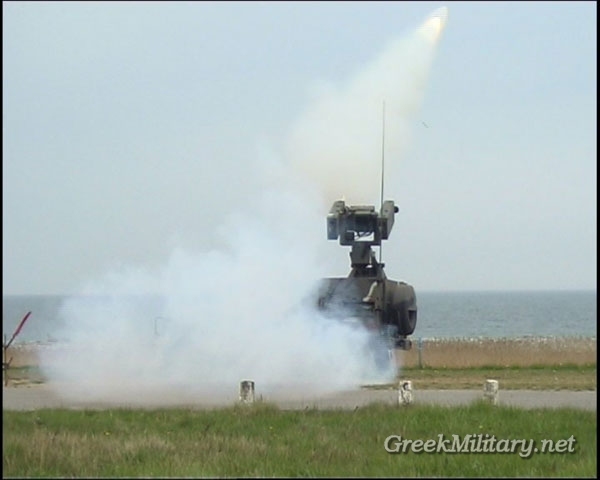
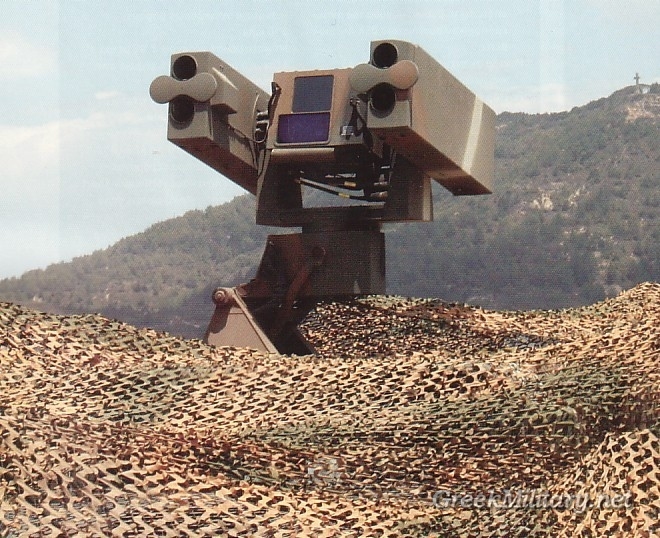
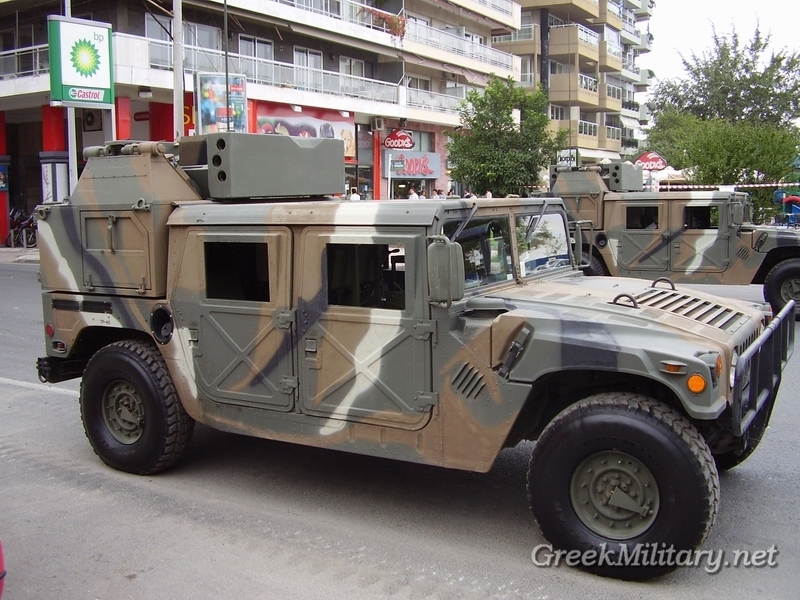
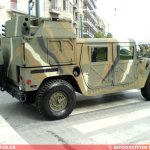
In the early 2000s, the Hellenic Army decided to modernize its short-range air defense capabilities. Looking for a highly mobile, vehicle-mounted system that could effectively counter low-flying threats, Greece launched an international competition and eventually selected the ASRAD-Hellas. This was the Greek version of the German Advanced Short Range Air Defense System, developed by Rheinmetall Defense Electronics. In October 2000, Greece ordered 54 systems equipped with FIM-92 Stinger missiles. The deal included cooperation with Greek defense companies and local production elements, with the launchers mounted on HMMWV vehicles that were assembled or modified in Greece by ELBO. Deliveries started in October 2004 and were completed by 2006. Each unit consists of a quadruple Stinger launcher on a Hummer chassis, paired with advanced sensors for day and night operations. The ASRAD-Hellas gave the Hellenic Army a flexible, lightweight mobile air defense capability to protect its forces and key assets, fitting neatly into Greece’s broader layered air defense network.
The M1097A2 Humvee (HMMWV) in Greek service
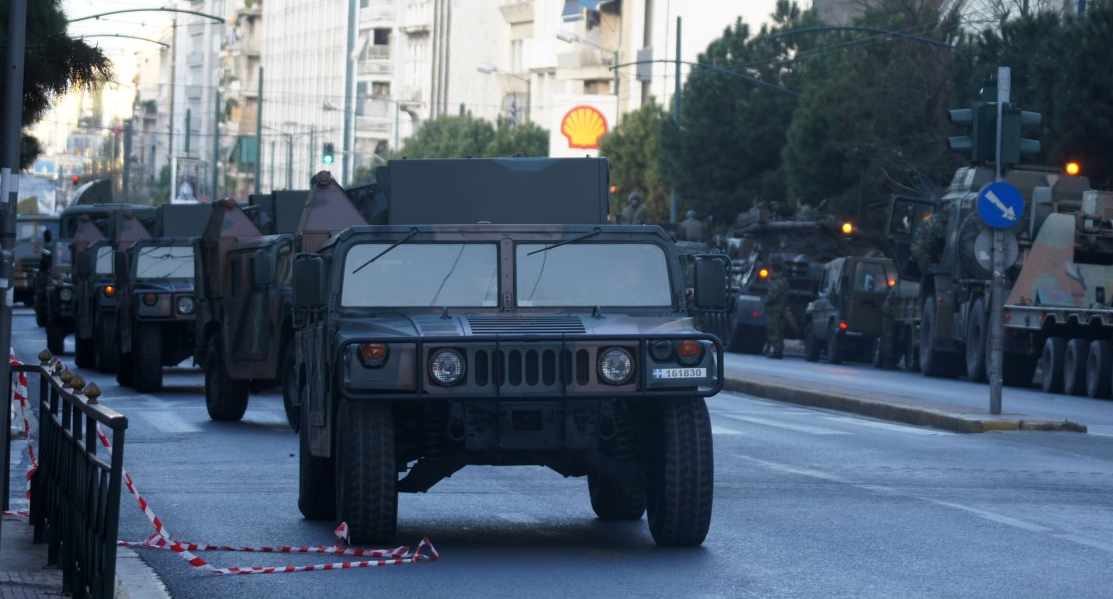
The M1097A2 Humvee (HMMWV) is the heavy cargo/troop carrier variant of the famous High Mobility Multipurpose Wheeled Vehicle family, widely used by the Hellenic Army in utility and support roles. In Hellenic Army service, the M1097A2 serves as a robust workhorse for logistics, command posts, shelter transport, and general utility tasks. Its expanded capacity makes it especially useful for carrying heavier loads, equipment, or personnel where standard Humvee variants fall short. Greece operates several hundred Humvees overall (around 680–700 across all variants), with a significant portion assembled or modified locally by ELVO (formerly ELBO) to meet Greek requirements, incorporate domestic components, and support the national defence industry. While most Greek Humvees are known under designations like the M1025A2 or armoured M1114GR/M1115GR, the M1097A2 specifically provides the heavier payload capability needed for certain support missions.
The vehicle is reliable, highly mobile, and forms an important part of Greece’s light tactical fleet alongside other locally adapted versions. Its proven off-road performance, durability in demanding terrain, and air-transportability allow it to keep pace with rapid deployment needs across Greece’s varied geography, from mainland operations to island logistics. Over the years, these Humvees have become a familiar sight in Hellenic Army exercises and everyday service, contributing steadily to the mobility and flexibility of Greek ground forces.
The FIM-92 Stinger
The FIM-92 Stinger is a man-portable, shoulder-fired surface-to-air missile system (MANPADS) developed by the United States. It stands as one of the most successful and widely used short-range air defence weapons in the world, thanks to its reliable infrared (heat-seeking) guidance and true fire-and-forget capability.
Developed in the 1970s as a replacement for the older FIM-43 Redeye, the Stinger entered service with the U.S. Army in 1981. Since then, it has been continuously upgraded and is currently operated by more than 30 countries, including Greece. The system first gained international recognition during the Soviet-Afghan War in the 1980s, where it proved highly effective against low-flying helicopters and aircraft.
The Stinger is a lightweight and relatively easy-to-operate weapon. It features passive infrared homing that locks onto the heat signature of its target. It has an effective range of up to approximately 4.8 km and can reach altitudes of around 3.8 km, with a missile speed exceeding Mach 2. The warhead is a 3 kg high-explosive fragmentation type, and the complete system weighs about 15.2 kg (with the missile itself around 10.1 kg and 1.52 meters in length). These characteristics make it particularly effective against low-flying aircraft, helicopters, and, with modern upgrades, unmanned aerial vehicles (UAVs).
Over the decades, the Stinger has evolved through several major variants. Early improvements led to the FIM-92B (POST) with dual IR/UV seekers for better resistance to flares and countermeasures. This was followed by the FIM-92C (RMP) with a reprogrammable microprocessor that allows rapid software updates to counter new threats. Later versions such as the FIM-92D, FIM-92E, and FIM-92F introduced enhanced flight control, improved counter-countermeasure capabilities, and better performance against UAVs, cruise missiles, and light helicopters. More recent life-extension programs (FIM-92J and FIM-92K) have added new components, proximity fuzes, and data-link options to keep the system relevant.
In Hellenic Army service, the Stinger has been a key air defence asset since the late 1980s, when Greece acquired its first batch of missiles and launchers. Additional purchases followed over the years, bringing the total inventory to around 631 launchers and thousands of missiles overall. A major enhancement came in the early 2000s with the acquisition of 54 ASRAD-Hellas vehicle-mounted systems, which were delivered with 432 FIM-92 Stinger Block 1 missiles. Greek forces employ the Stinger both in its classic man-portable role for infantry units and integrated onto the ASRAD-Hellas platforms for mobile short-range air defence. Recent technological advancements — particularly new proximity fuzes, improved target acquisition kits, and life-extension upgrades — continue to enhance its relevance for Greece amid evolving regional threats such as UAVs and low-flying aircraft.
Firepower
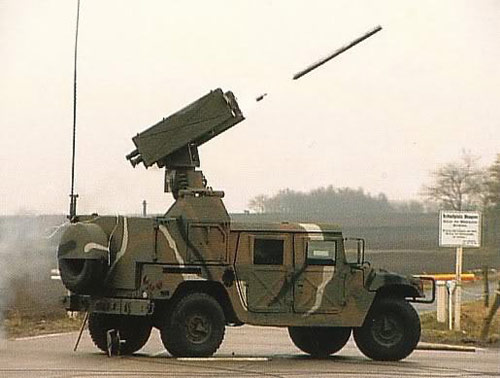
It carries FIM-92 Stinger type missiles (compatible with the man-portable launchers) and features a quadruple launcher with four missiles ready to fire, plus another four missiles in special canisters for reloading.
FIM-92E Stinger RMP Block I (also called Block 1)
This is the main current variant in Greek service.
- It offers significant improvements: better seeker, enhanced manoeuvrability (rollover sensor + revised software), improved performance against low-signature targets like UAVs, and better overall counter-countermeasures.
- Specifically, the 432 missiles acquired for the ASRAD-Hellas systems (delivered 2004–2006) are FIM-92E Block 1.
- The same Block 1 missiles are used with the man-portable launchers for full logistical commonality.
Specifications
- Crew: 2 persons (Driver/Operator and Commander)
- Length: 4.84 meters
- Height: ~1.88 meters
- Weight: 4.5t
- Elevation (Max and Min): -10° up to +70°
- Traverse: Full 360° continuous rotation
- Missile Capacity: 8 FIM-92 Stinger missiles total (4 loaded and ready-to-fire on the quadruple launcher, plus 4 secondary missiles stored in special rear containers for manual reloading)
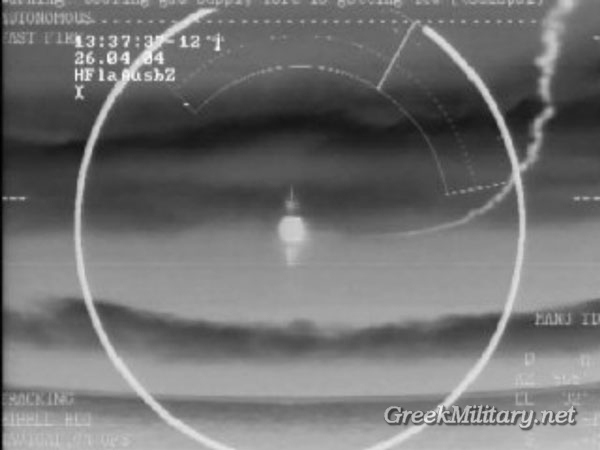
and second generation of Thermals
Mobility
- Engine: 6.5L V8 Diesel (naturally aspirated)
- Horsepower: 160 hp at 3,400 rpm
- Transmission: 4-speed automatic (GM 4L80-E)
- Max Speed: ~113 km/h
- Ground Clearance: 41 cm .
- Climbing Grade: 60% slope (vertical climb).
- Side Slope: 30%
- Vertical Step: Can climb over obstacles up to 40 cm high.
Protection
Because the ASRAD-HELLAS is built on a light, unarmored cargo chassis (the M1097A2 Humvee), its overall armor protection is quite minimal. It relies heavily on its small profile, speed, and remote capabilities to survive, rather than thick steel plating.The base cabin is generally vulnerable to everything except very light, low-velocity debris. Standard assault rifle rounds and heavy machine guns can pierce the cabin.
Sources
ASRAD-Hellas Αντιαεροπορικό σύστημα αεράμυνας μικρού βεληνεκούς
Greek Military Photos -- Greek Army
ASRAD HELLAS: Το V-SHORAD αντιαεροπορικό του Ελληνικού Στρατού
Α/Α ΣΥΣΤΗΜΑ ASRAD HELLAS – Πύλη Ενημέρωσης Προσωπικού
ASRAD Hellas - Αντιαεροπορικό σύστημα
Army Technology - The Hellenic Army Sets the Standard with ASRAD Hellas
https://defencereview.gr/amina/antiaeroporika-vlimata-fim-92-stinger-exelixi-ep/