- Yes
- No
Cheers to @ForeverAloneRage for most of the pics for this one
Introduction
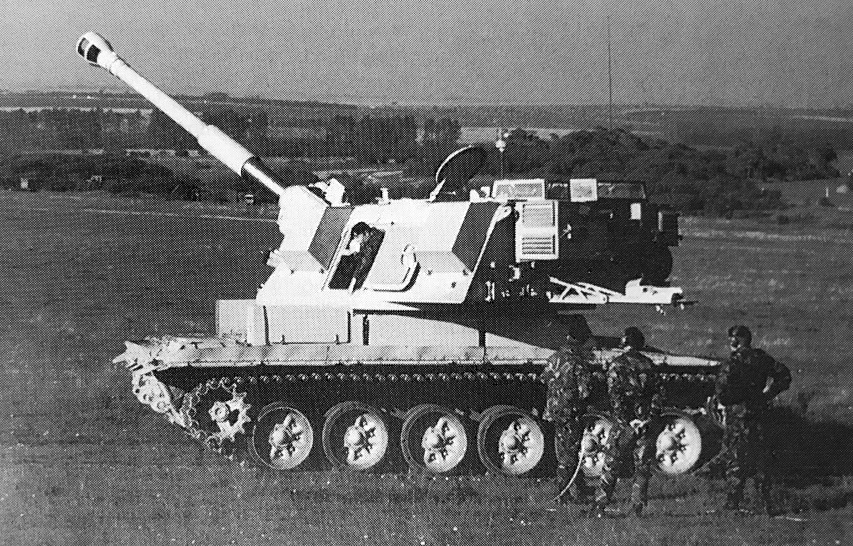
Development of what became the AS90 began in 1982, when Vickers Shipbuilding and Engineering Limited (VSEL) initiated work on the GBT 155 modular turret, originally intended for export and for retrofitting to existing tank chassis. By 1984, this effort evolved into a complete, purpose-built self-propelled howitzer concept designated V2C, later renamed Artillery System 90. From the outset, the design emphasised modularity, off-the-shelf components, and the ability to integrate future technologies. A new chassis purpose-built for the artillery piece was developed after earlier attempts to adapt tank hulls revealed limitations in crew space, mobility, and total system weight.
The first AS90 prototype was completed and displayed at the British Army Equipment Exhibition in June 1986, followed by a second prototype in 1987 built more specifically to British Army requirements. Early firing and mobility trials took place in 1988, and overall development testing concluded in September 1990. In June 1989, the British Ministry of Defence selected the AS90 under GSR 3399/1 to replace the cancelled SP-70 programme, ordering 179 production vehicles. Deliveries began when the first four systems were accepted in May 1993, and British Army production concluded in early 1995.
While the vehicle was being produced for British service, industry promotion focused on export markets where demand for modern 155 mm systems was increasing. Although initial collaborations with Brazil ended early, a major success came when Poland selected the AS90 Braveheart (52-calibre variant) in July 1999, ordering an initial 78 turrets for integration onto a domestic chassis under license.
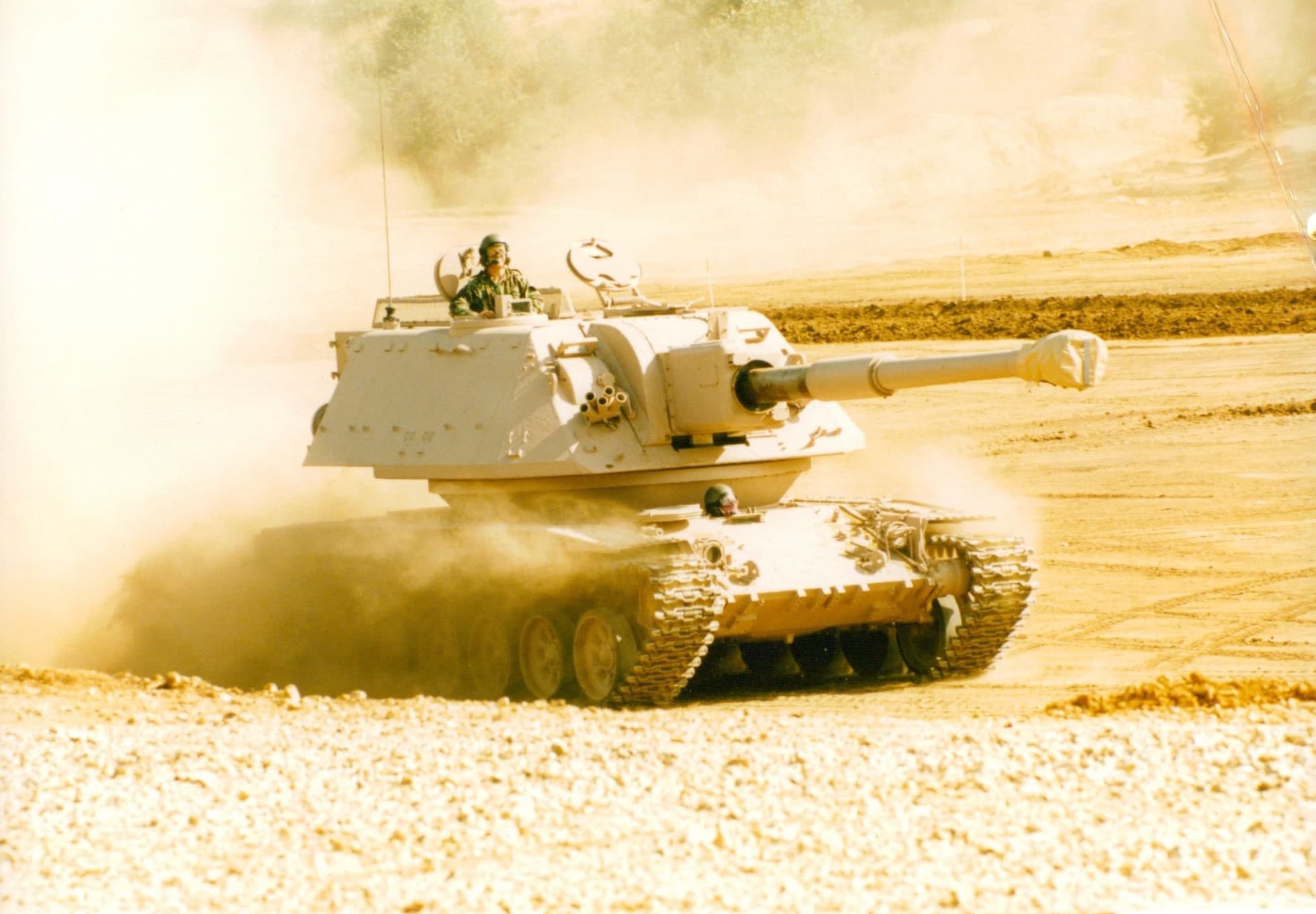
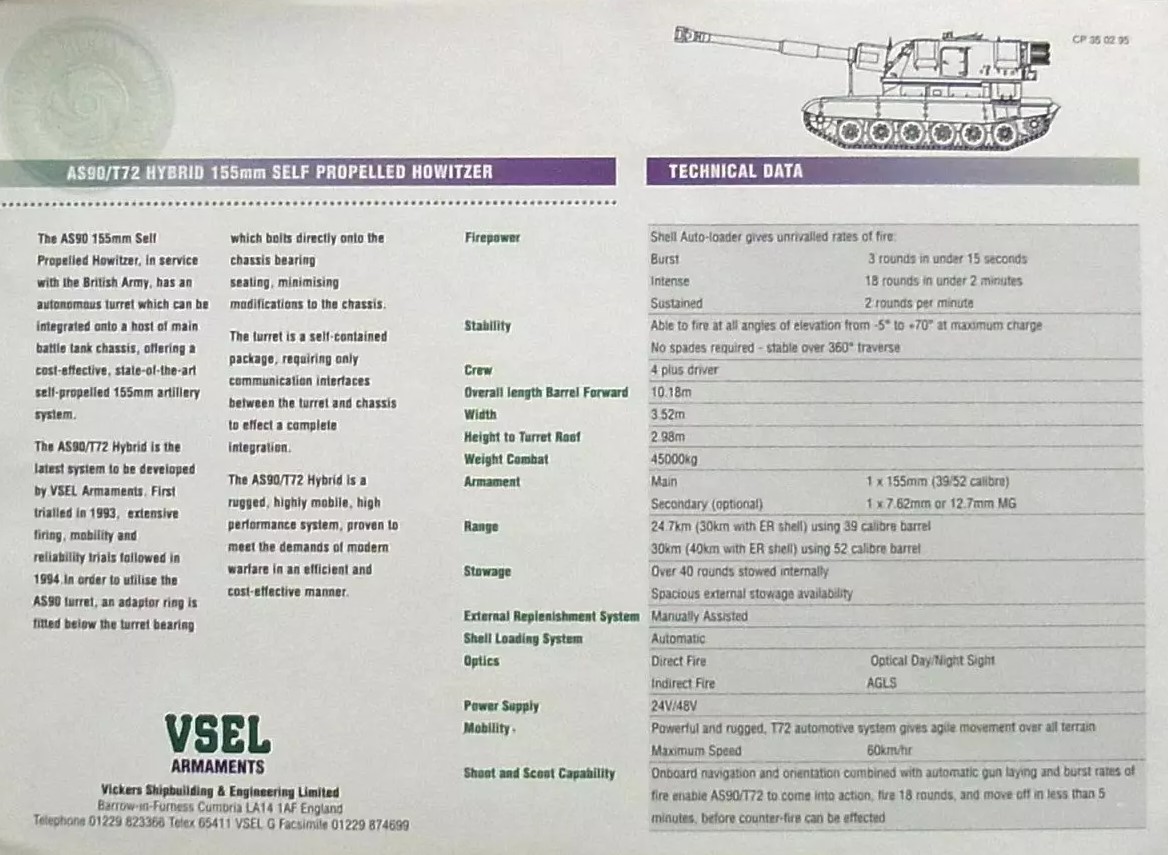
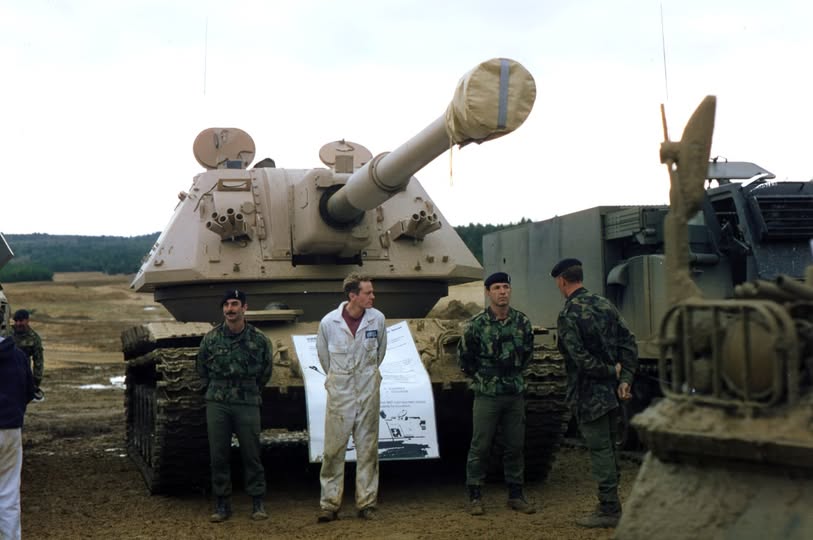
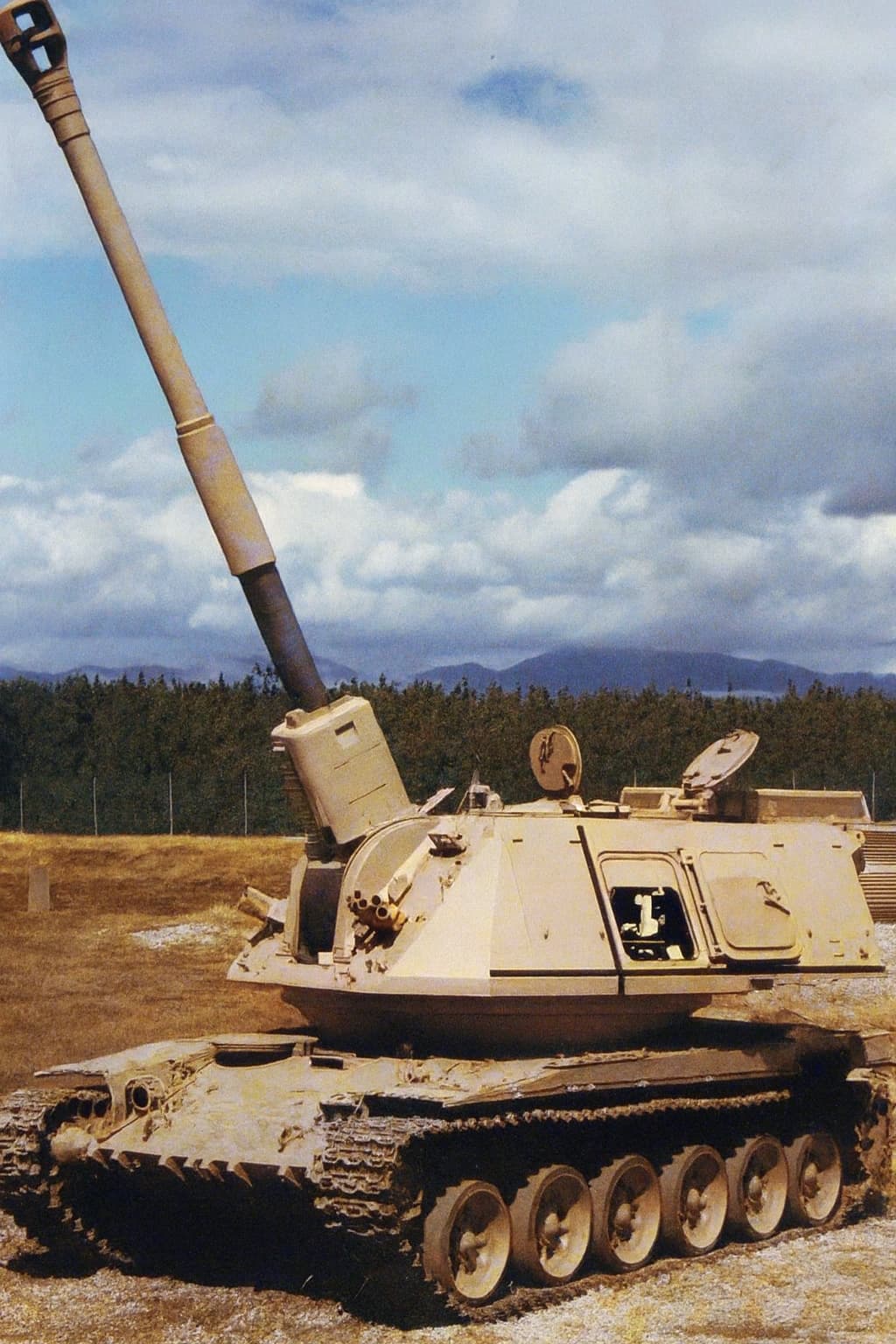
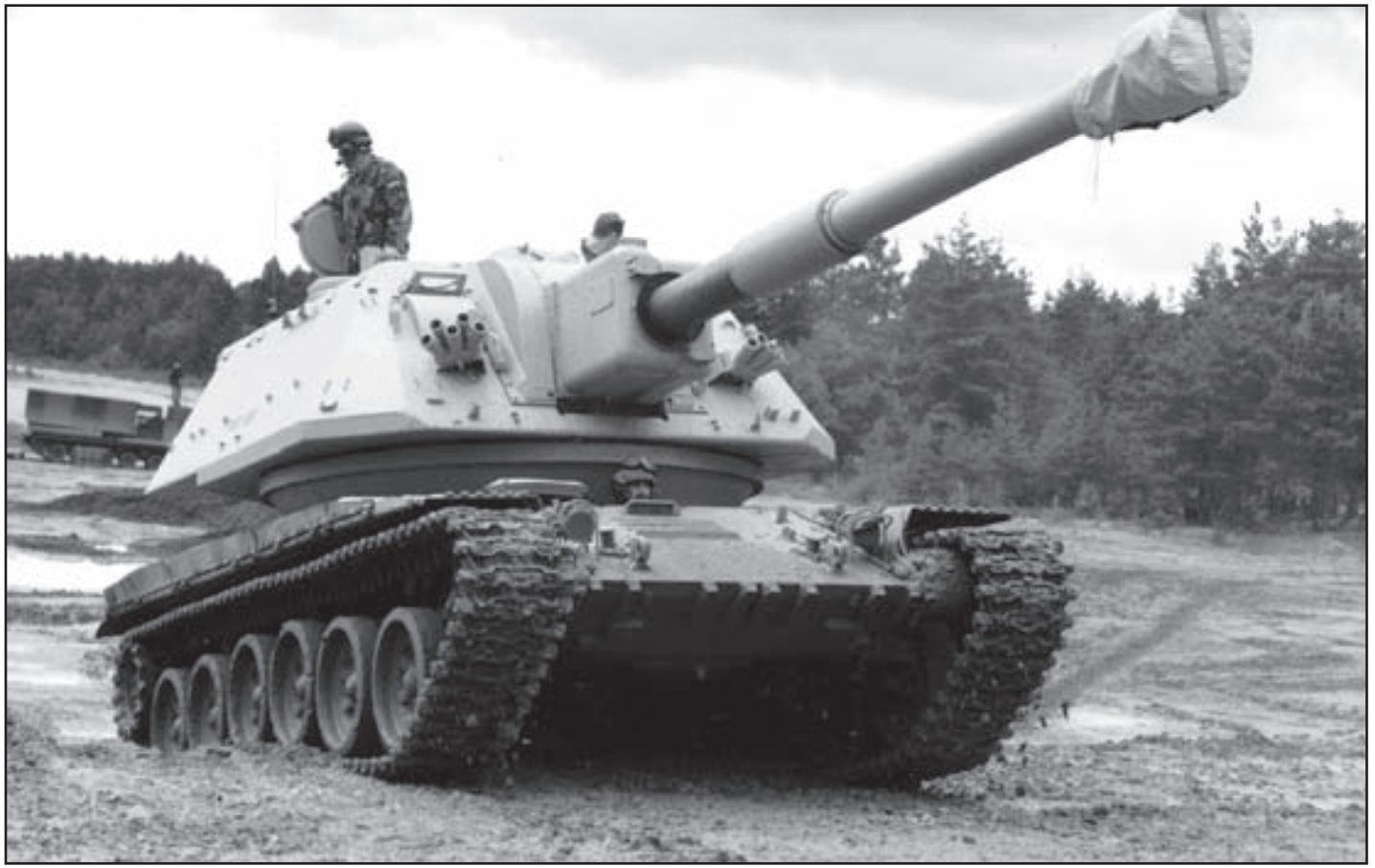
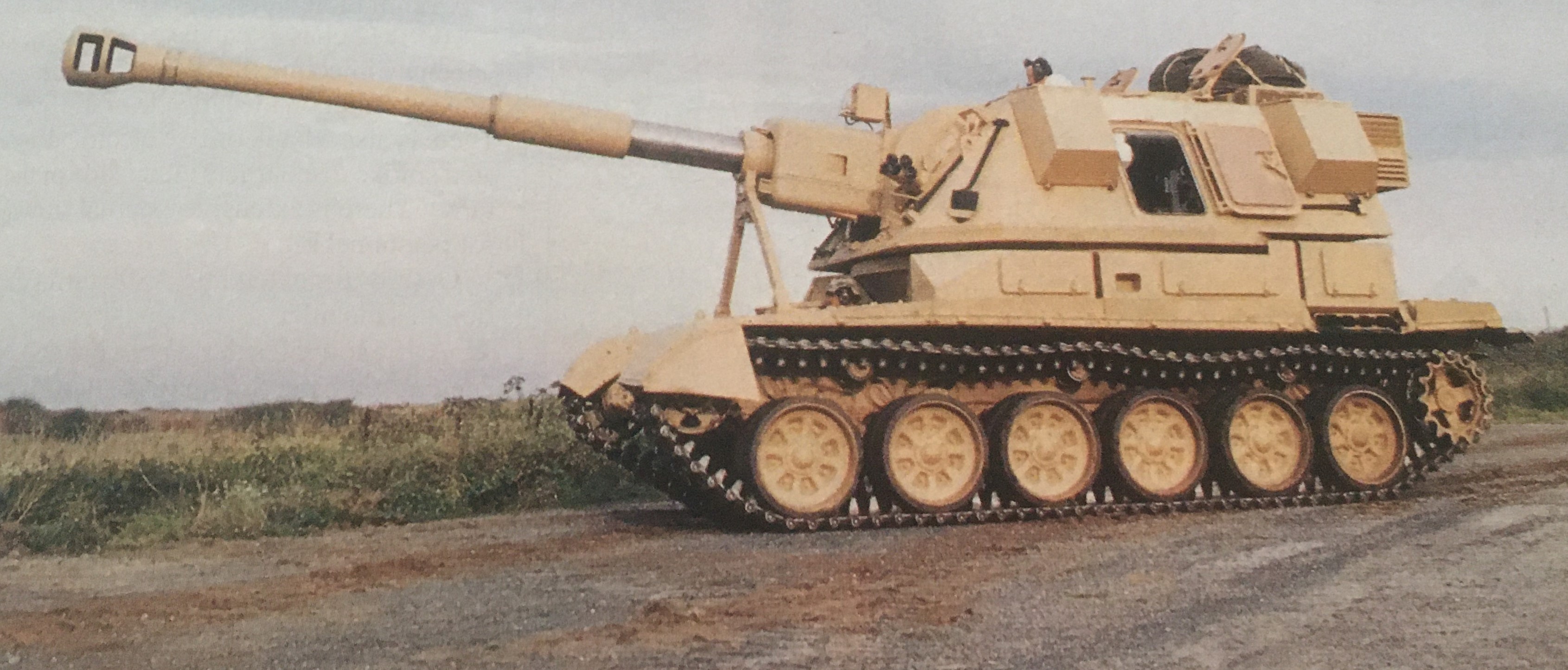
With hopes to expand export potential, VSEL initiated a programme in 1991 to integrate the AS90 turret onto a modified T-72 chassis. Quite where this T-72 chassis originated is unclear, and records are conflicted as to whether it was provided by India or was one of the several captured/trophy Iraqi T-72s brought home from the 1st Gulf War. Regardless, integration was completed in mid-1992, and the hybrid system was publicly exhibited at the British Army Equipment Exhibition in September 1993. An adapter ring allowed direct mounting of the complete AS90 turret while retaining all normal turret and fire-control functions. This variant, weighing roughly one tonne more than the standard system, was aimed primarily at India, who were in the market for a modern 52-calibre 155mm system at the time. The combination underwent firing trials at British ranges, demonstrating the flexibility of the AS90 turret, however the AS90 unfortunately did not see any export success beyond Polish adoption.
Specifications
Images
Sources
Spoiler
AS90 (T-72) Brochure
https://www.forecastinternational.com/archive/disp_old_pdf.cfm?ARC_ID=1113