- Yes
- No
Hello everyone and welcome to this new suggestion.
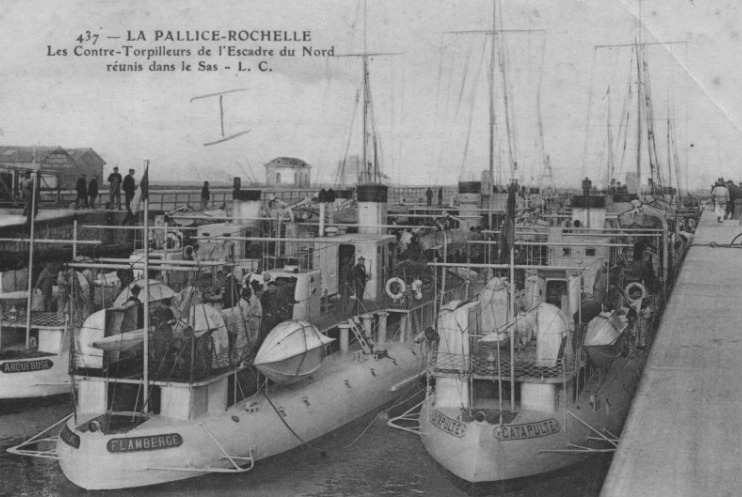
Today I present to you a new class of French destroyer boats, the Arquebuse class. And to start here is the first ship of the class, the Arquebuse.
The Arquebuse class was the fourth generation of destroyers built and commissioned by the French Navy at the beginning of the 20th century. Closely inspired by the earlier Durandal and Frameée classes, these new vessels were designed to build on their predecessors’ success while introducing notable improvements. Among these were more efficient boilers, enabling higher speeds and better acceleration. As with all ships in the class, the Arquebus was named after a weapon of war, in this case, the arquebus.
Ordered in 1900, the Arquebuse was constructed in Le Havre to a design by the Augustin Normand shipyards. Launched in 1902, it entered service the following year and was assigned to the Northern Squadron. From its base in Cherbourg, the ship carried out numerous patrol and escort missions in the Atlantic.
At the outbreak of the First World War, the Arquebuse was still in active service and was tasked with escorting and protecting Allied transport and merchant vessels, which were frequent targets of German submarine attacks. From 1915 onward, the ship was reassigned to Bizerte, which remained its home port for the rest of its operational career.
Although the Arquebuse was never directly engaged in combat, it often operated in close proximity to enemy submarines during attacks on nearby vessels. Its most notable action was the rescue of the crew of the Olga, an advisor escorting the Arquebuse. After being struck by a torpedo, the Olga was hit a second time, sealing her fate. During the sinking, crew members of the Arquebuse carried out a rescue operation, saving several sailors, including a cabin boy who had fallen overboard. Three members of the crew were later decorated for their bravery.
After the war, the Arquebuse remained in service for a short period before being officially decommissioned in 1920. Its hull was subsequently sold in Bizerte, marking the end of its career.
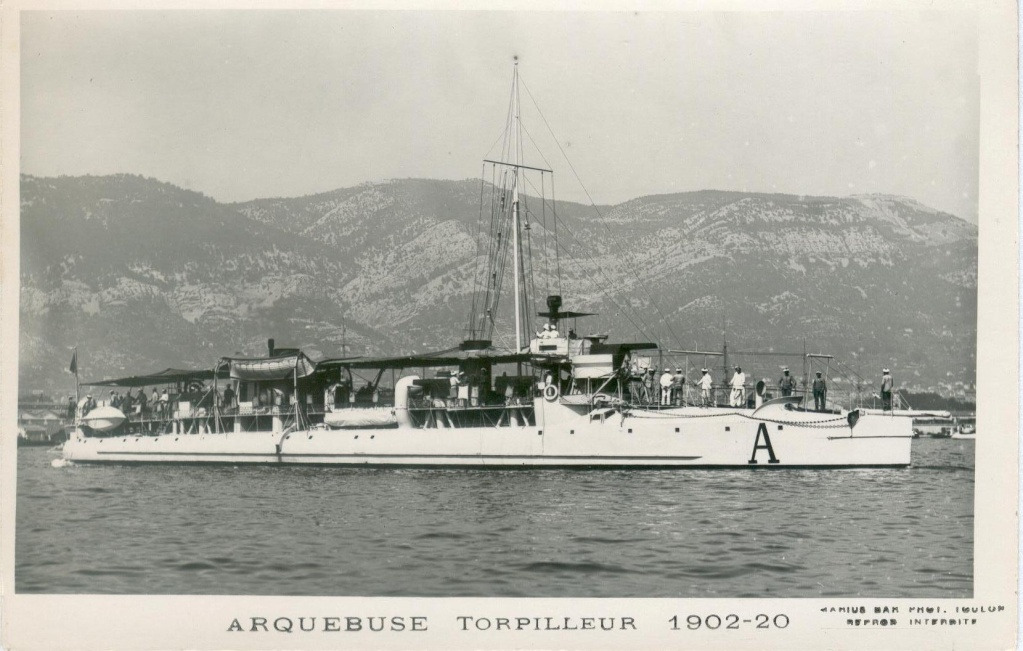
Characteristics
Length : 58.00 m
Width : 6.00 m
Draught : 3.20 m
Mass : 360.00 tons
The ship is powered by two Guyot du Temple coal-fired boilers (82 tons in the bunker), giving it a total power of 7,100 hp. This allows the ship to reach a maximum speed of 28 knots (a speed of 30.75 knots was reportedly achieved during trials). This speed is impressive for a ship of that era. Its estimated range is 1,200 nautical miles at a speed of 10 knots.
The crew consists of 62 sailors.
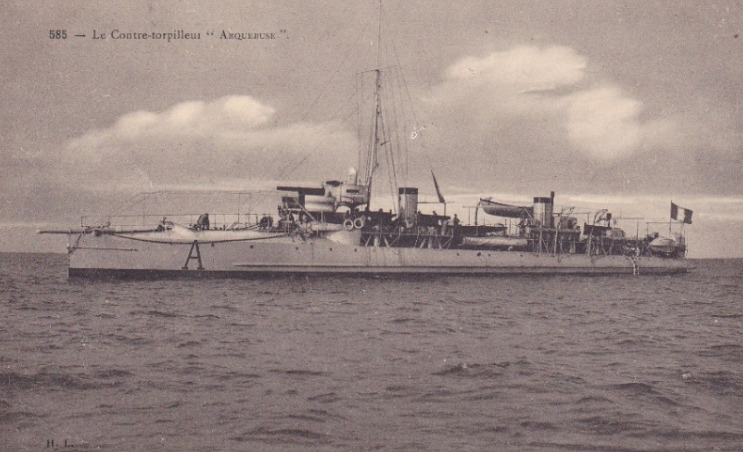
Weapons
The Arquebuse’s armament was light but allowed her to quickly engage all types of light targets and submarines without too much difficulty. Her armament included the following equipment:
- 1 x 65mm/50 Mle 1888 gun
- 6 x 1 x 47mm/40 Mle 1885 guns
- 2 x 381mm Torpedo (4 torpedoes in total on board)
After 1915 and the growing awareness of the threat posed by submarines, a depth charge launcher and ramp were installed at the stern (12 depth charges in total), allowing the Arquebuse to better defend herself against this new threat.
In-game, this ship would be an interesting addition, providing a light combat vessel with armament that allows it to engage all types of targets, without being too powerful due to the lightness of its armament, which would allow for an interesting complement to the French tree.
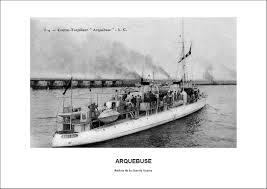
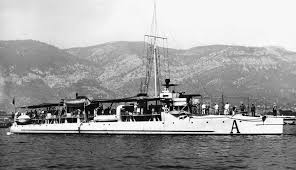
Pictures
Sources
- ARQUEBUSE, contre-torpilleur : Rapport d’essais | Service historique de la Défense
- 1916_la_guerre_en_mer_aout_decembre.pdf
- CLASSE Arquebuse
- * ARQUEBUSE (1903/1920)
- Les 20 Contre-Torpilleurs de 300 t.Type"ARQUEBUSE" - Forum PAGES 14-18
- les contre-torpilleurs catapulte, flamberge et arquebuse dans le sas
- Augustin-Normand
- Torpilleurs-Contre-Torpilleur-torpilleur