- Yes - In the Tech Tree.
- Yes - Event/BP.
- Yes - Premium.
- No - I would not like to see HMAS Protector in game.
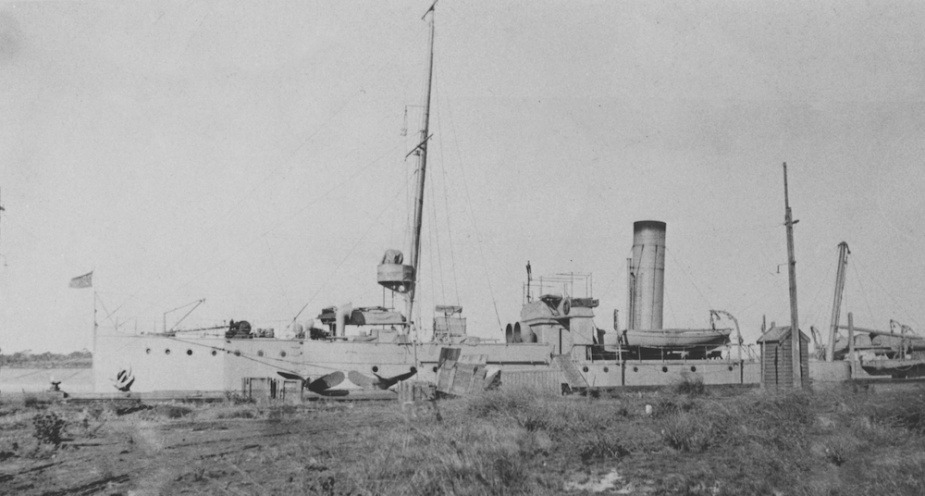
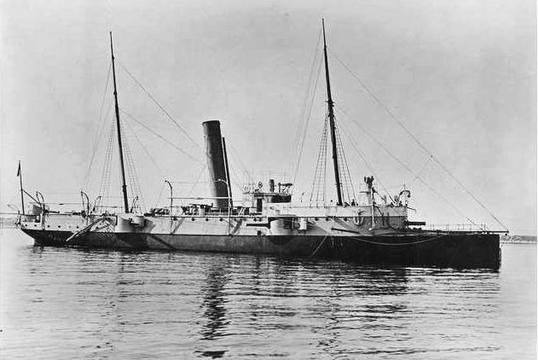
HMAS Protector alongside the Flinders Naval Base, (1924)
Description:
HMAS Protector was one of four ‘Flat Iron’ type Gunboats ordered by the individual Australian States before federation. She would be the largest and heaviest vessel of this type in Australia, being almost 1000t of displacement. Protector would be ordered by the South Australian Government as part of the second Russian scare of the 1880s, in an attempt to establish port defenses against the perceived threat of a Russian invasion of Australia & New Zealand.
Due to her large size, the Protector could also safely travel in open waters, due to this capability, she would be used operationally as a Cruiser and would occasionally be labeled as such in reports.
As she was ordered by the Independent state of South Australia, she would have the prefix HMCS (His/Her Majesty’s Colonial ship). As is common with Colonial navies, the South Australian navy would fall under British Admiralty command in times of War, however it was understood that these vessels would remain on station. In times of peace, her operations were controlled by the South Australian Government.
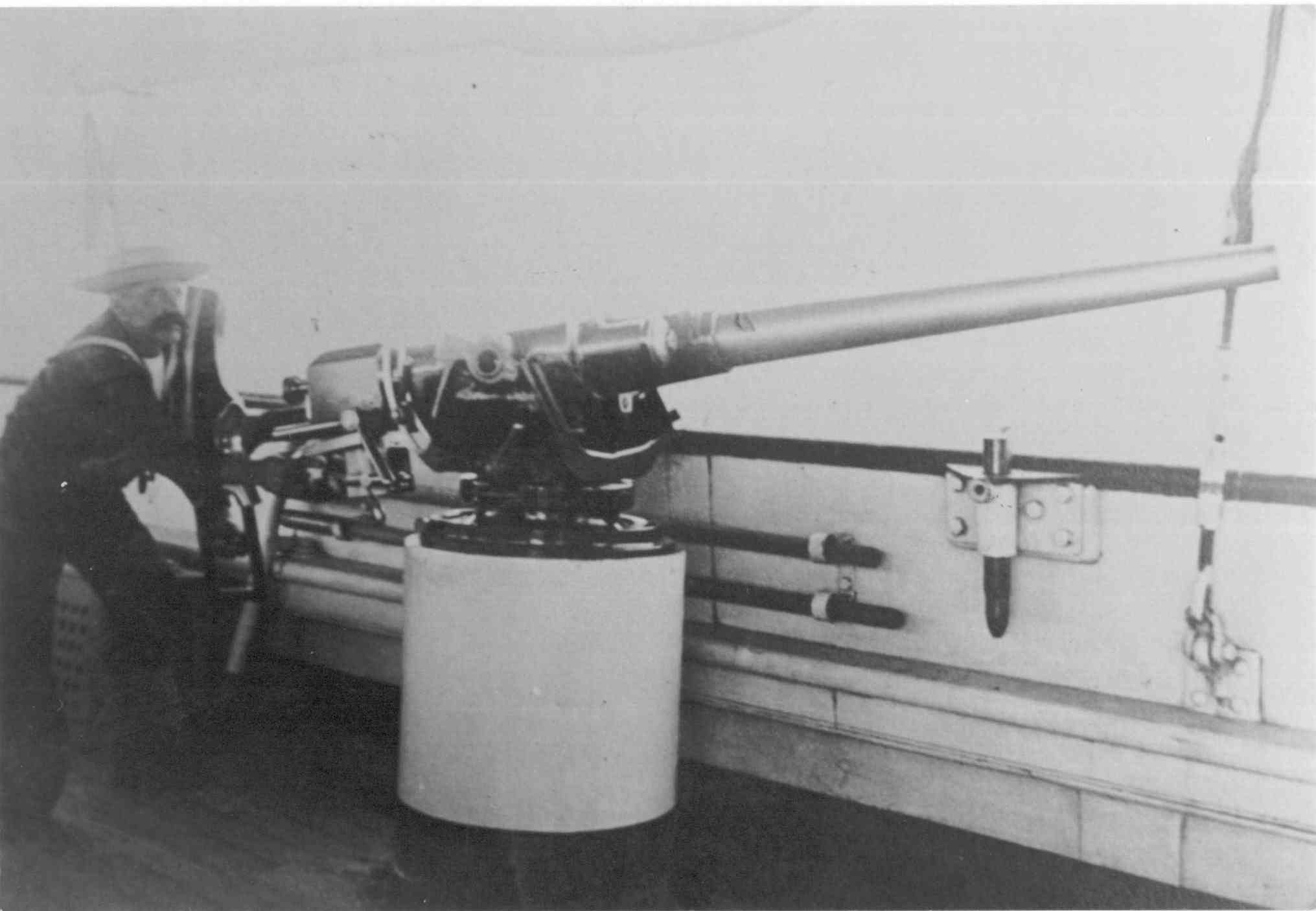
As a gunboat she would be heavily armed, with a single BL 8-inch Mk.VII facing fore in a casemate, five BL 6-inch Mk.I, four in casemates along the broadside, and one astern. She also had four QF 3pdrs and five Gatling guns. She had a low freeboard fore to allow the 8-inch gun to fire. She was also of mixed propulsion, with two masts rigged with gaffs, with the foremast also having a square sail, making her a topsail schooner in addition to her steam engines.
This suggestion is for the Protector as she appeared in the First World War in 1914.
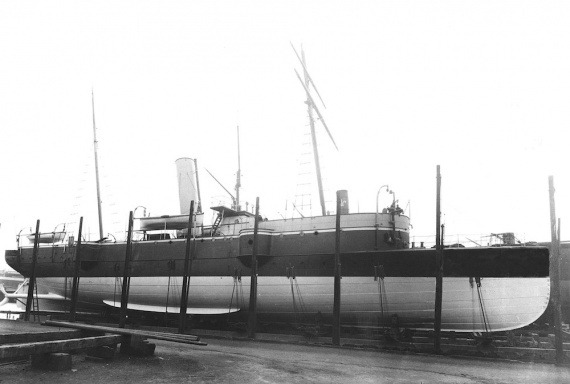
HMCS Protector sitting on her builders slipway, (1884)
History:
Pre Australian Federation state service:
Laid down by William Armstrong & Co, Newcastle, England on the 16th of May 1882, she would launch in may of 1884, finally commissioning on the 19th of June 1884, as for her voyage to Australia. She would sail from Newcastle on the 27th of June 1884, sailing via the Suez Canal, visiting Gibraltar, Malta, and Port Said, and finally Colombo. She would arrive at the port of Adelaide on the 30th of September 1884.
She would then be engaged in patrols across Largs Bay, her service would mostly be uneventful, as the Russian Invasion she would be commissioned to defend against would not materialise. She would assist the port of Adelaide in extinguishing some fires via her pumps, and lay telegraph cables between the Mainland and Althorpes island. Her secondary role would be training, due to her large crew count and overall size.
She would be in refit from August-October 1884, rebuilding the engine from her delivery voyage, with a further four maintenance refits during her life in this period. Her hull would be cleaned on the 22nd of March, removing material fouling her hull.
She would remain on station here until August 1900, when she was offered by the South Australian Government to join the Colonial Naval Forces raised to fight in the Boxer Rebellion. This would be accepted, and she would sail for Sydney on the 6th of August 1900, making further stops at Hong Kong and Singapore, until she reached Chinese waters in September.
She would be used as a survey and dispatch vessel, as the expected need for shallow draught vessels, such as the Protector did not appear. This would be uneventful, and she would sail from Hong Kong bound for Australia in September. She would arrive home on the 6th of January 1901, just in time for the celebrations for the Federation of the Australian states. Due to this, she would be inherited by the Commonwealth Naval Forces (CNF).
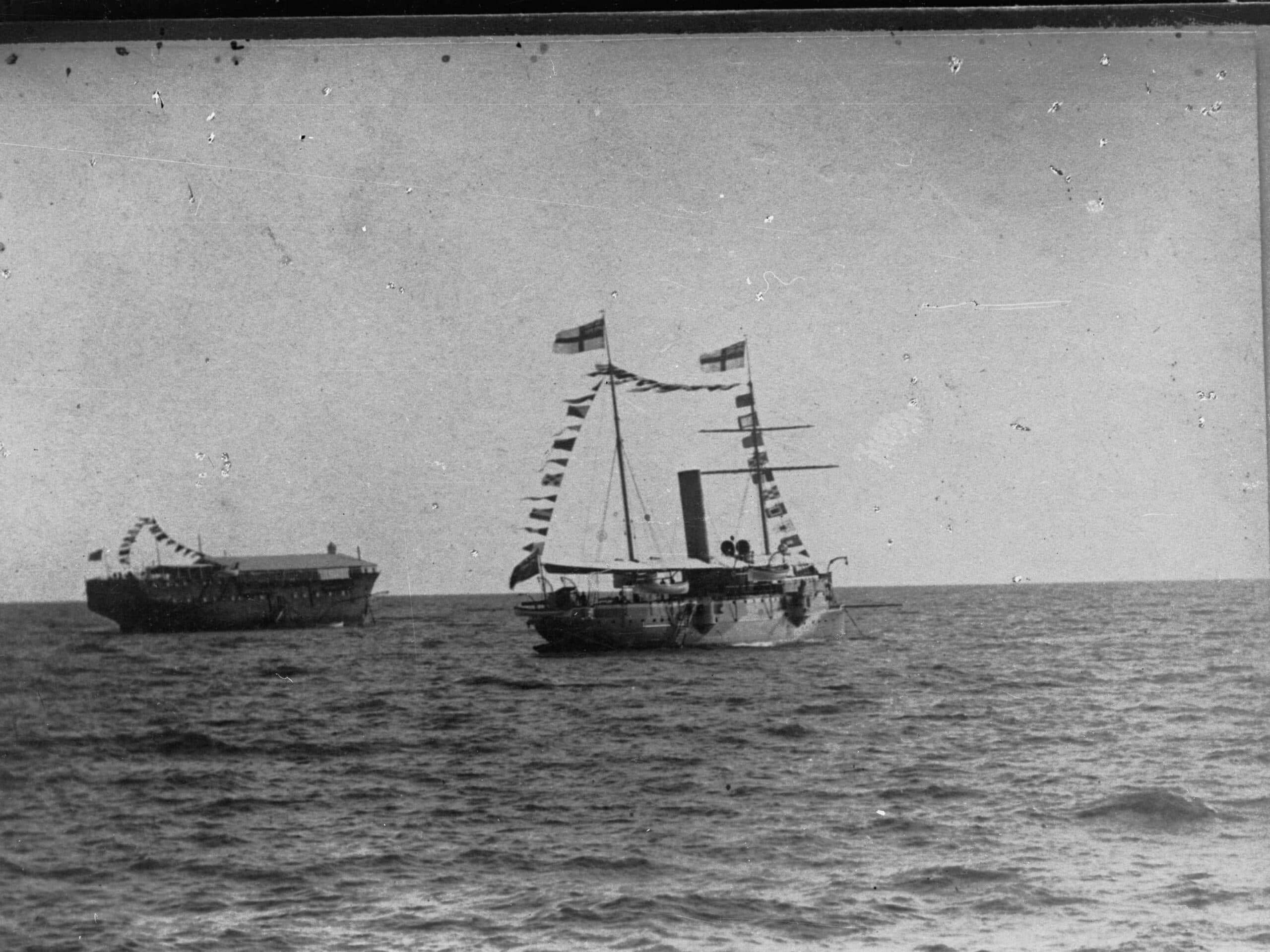
She would however remain on station at Largs bay, keeping her previous role as a training and patrol vessel. This would remain so until 1911, when King George V would allow the CNF to be renamed to the Royal Australian Navy. Due to this, the Protector would recommission as the HMAS Protector.
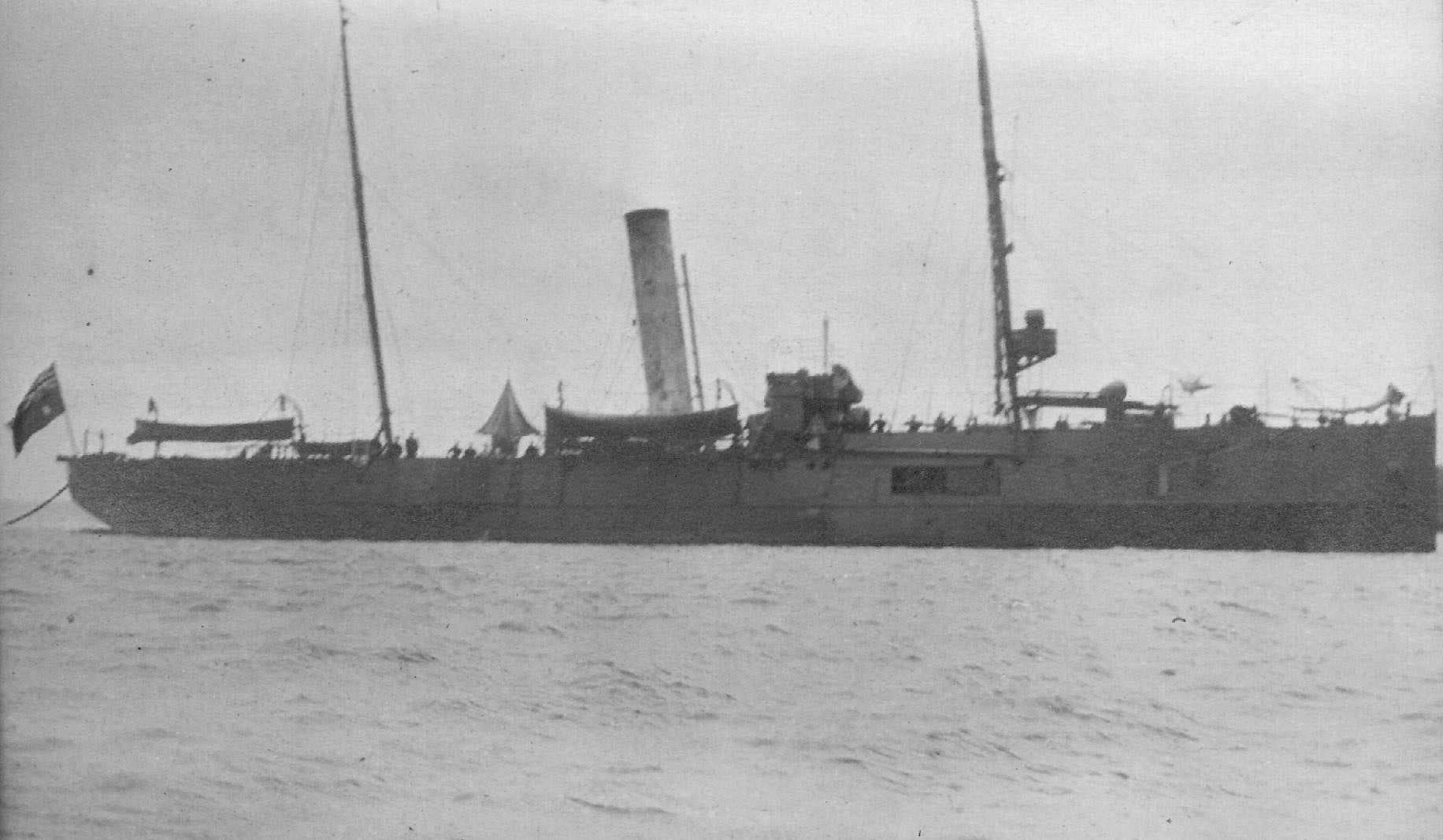
HMAS Protector on patrol, (1914)
Commonwealth Naval Forces & Royal Australian Navy service:
By 1912 she was seen as dated, and so would go into an extensive refit. This would include the removal of the 8-inch Gun fore, with the bow being extended as to be flush with the top deck. Her 6-inch guns were removed, being replaced with three QF 4-inch Mk.III mounts, two in the aft casemates, and one astern on the deck. The fore casemates remained empty. She would gain two 12pdrs, and would keep the 3pdrs. The Gatling guns were also removed.
Her Topsail Schooner rig would also be removed, and by this time coal was an established supply line, and her engines were reliable, it was also beneficial to remove this, as it was unnecessary top weight. Her masts would be replaced with pole types, with the same height, albeit without the yards to hold the sails.
After this refit she would be assigned as the tender to the HMAS Cerberus, then berthed at Williamstown, Victoria. Upon the outbreak of war in 1914, she would be the parent ship to the submarines, HMAS AE1 and AE2. She would sail with these submarines as an escort, as to take part in the Australian capture of German colonies in the region. She would remain at Rabaul until the 4th of October 1914. She would then be sent off to the Indian Ocean, as to inspect the wreck of the Cruiser Emden in 1915.
For the remainder of the war she would be tender to the Cerberus, with patrols between Sydney and Cape Howe. She would also act as a minesweeper in Victoria. Post war she would continue her tender duties to Cerberus, without the extra war patrols.
On the 1st of April 1921, she would be renamed to the HMAS Cerberus (II), with the original Cerberus being renamed Platypus (II). She would become the new tender based at the Flinders Naval Depot. This would be until June 1924, when she was sold for disposal.
Civilian and US Army service:
She would be sold for 677 pounds. Her armament and engines were sold, and she was refitted into a fuel lighter for 300t of fuel. This work would be completed in November 1929. By 1931 she would be renamed to Sidney, and be used as a wool lighter. In July 1943 she would be acquired by the US Army, and while off Gladstone bound for New Guinea, she would collide with a tug and would be wrecked.
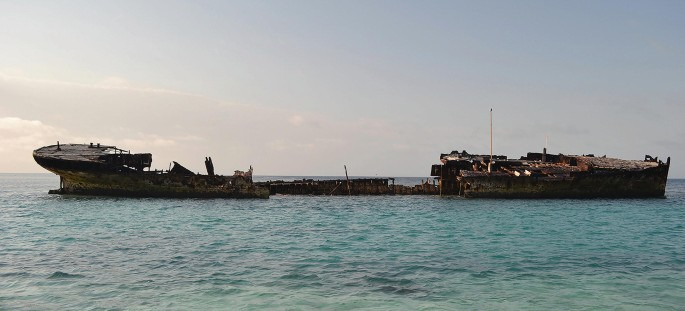
Her wreck would be purchased in 10 pounds and she would be taken off Heron Island, for use as a break water. She remains there to this day.
| General Characteristics: | |||||
|---|---|---|---|---|---|
| Name: HMAS Protector | |||||
| Country: Australia | |||||
| Type: Gunboat | |||||
| Class name: Armstrong type F1 | |||||
| Year of commission:1884 | |||||
| Refit: 1914 | |||||
| ----------------------------------------------------------------------------------------------------------------------------------------- | |||||
| Dimensions: | |||||
| Length: 180ft 6in (54.9m) | |||||
| Beam: 56ft (17.1m) | |||||
| Draught: 12ft 6in (3.7m) | |||||
| Displacement: 920t | |||||
| ----------------------------------------------------------------------------------------------------------------------------------------- | |||||
| Propulsion: | |||||
| Powerplant: Powerplant: 2x Compound steam engines, producing 1500ihp overall (1118kW), two shafts | |||||
| Speed: 14kt | |||||
| Endurance: Unknown | |||||
| ----------------------------------------------------------------------------------------------------------------------------------------- | |||||
| Armament & sensors: | |||||
| Compliment: 90 | |||||
| Primary armament: 3x1 QF 4-inch Mk.III | |||||
| Secondary armament: 2x1 12pdr 12cwt | |||||
| Tertiary armament: 4x1 QF-3pdr | |||||
| Radar: -nil | |||||
| Sonar: -nil | |||||
| ----------------------------------------------------------------------------------------------------------------------------------------- | |||||
| Armour: | |||||
| Waterline: 1.25 (32mm) |
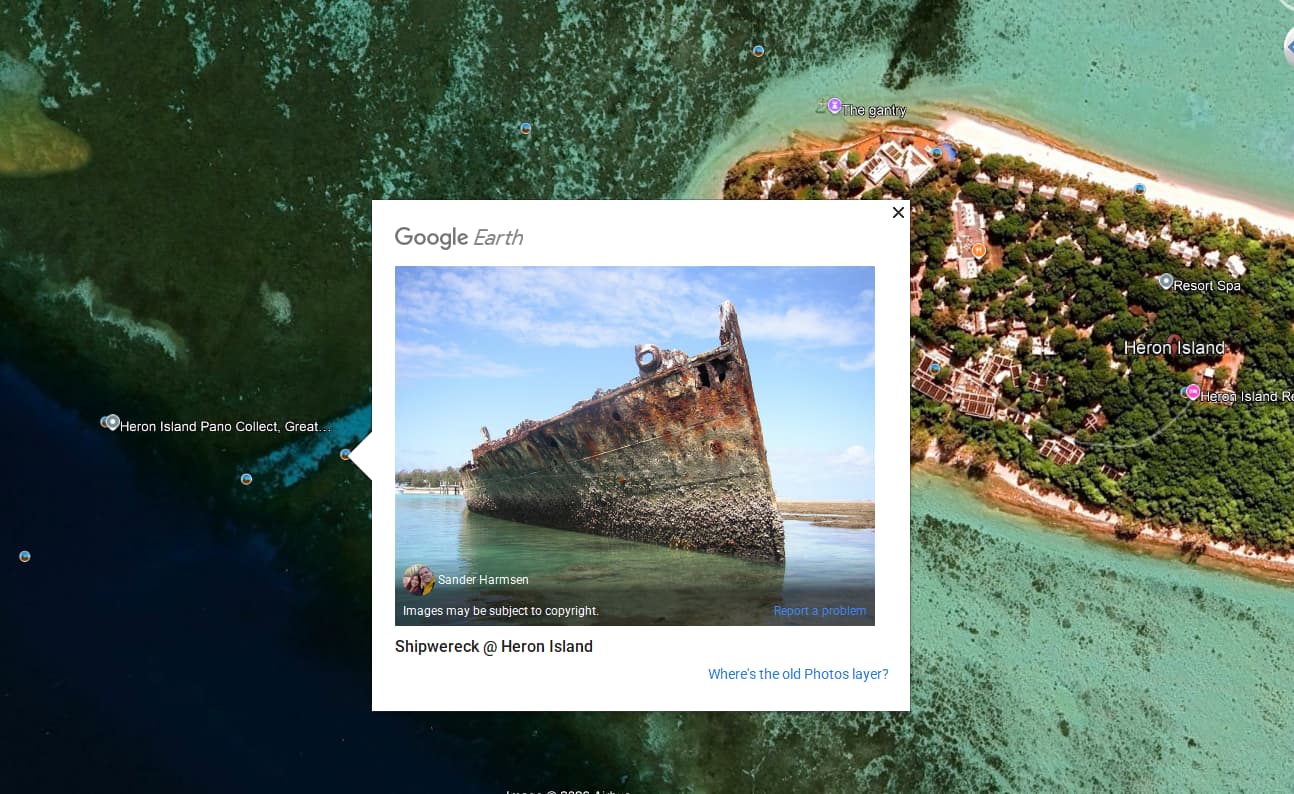
The Wreck of the Protector as she lies today.
More Photos

Sources:
Gillett, R. (1983). Australian and New Zealand Warships 1914-1945 (pp.25)
https://seapower.navy.gov.au/history/units/hmas-protector-i-hmcs
HMAS Protector (1884) - Wikipedia
https://sahistoryhub.history.sa.gov.au/things/hmcs-protector/
The Story of HMCS Protector - Page 2 of 2 - Naval Historical Society of Australia
https://vwma.org.au/explore/units/1437