Different vehicles handle ammo rack explosions inconsistently based on turret design and ammo storage location:
Type 24 IFV (Crewless Turret, Separated Ammo):
Direct APFSDS hit on ammo storage results in catastrophic explosion + complete vehicle obliteration. Vehicle is destroyed in one hit to the ammo compartment
BTR-82 (Crew-Adjacent Ammo Storage):
- Similar direct hits on ammo storage
- Result: sometime results in simple cook-off, survivable
- Players escape with damaged vehicle, engine running
- I’ve personally escaped multiple times with cook-offs months ago
BMPT (Crew-Adjacent Ammo Storage):
- Ammo stored directly next to crew compartment
- Result: Simple cook-off, not catastrophic
- Vehicle remains mobile after ammo detonation
The Contradiction
Type 24 IFV has separated ammo in a crewless compartment. Theoretically safer for crew. Yet it suffers catastrophic explosion.
BTR-82 and BMPT have ammo directly adjacent to crew. Theoretically more dangerous. Yet they can survive cook-offs.
This suggests ammo rack explosion mechanics are calculated inconsistently based on vehicle nationality or design, not actual storage logic.
Questions
- Why does separated ammo storage cause worse explosions than crew-adjacent storage?
- Are cook-off mechanics different by vehicle type/nation?
- Is this a bug or intentional balance decision?
Tbf the feed lines/links/chutes/trays not being a guaranteed kill is a concept I really like and think they should implement on more vehicles other than just the BMPTs. And of course it should effectively destroy the autoloader/ammo feed and only allow you to fire a few rounds before needing repairs.
As for why some things blow up and some don’t seems entirely arbritary (and only in rare cases making any sense from the ammunition placement and size as well as the vehicle armour)
3 Likes
Another example:
Enemy MBT-70 shot through ammo feed-link at approximately 20-45 degree angle while Type 24 was retreating behind cover (partially concealed by hill). Despite steep angle, partial cover, and indirect ammo component hit: catastrophic explosion.
Three factors that should reduce damage severity were present simultaneously. Result was still complete vehicle destruction.
in leclerc the ammo is switch when you have ammo rack explosion
Giving some vehicles arbitrary ability to ignore ammo hits is unfair to the others that are denied that. I prefer if any ammo hit is lethal for any ammo stored outside a blowout rack/external turret. If the ammo is inside the crew compartment and is destroyed, it should explode the tank. No BMPT special treatment for anyone.
1 Like
Additional example of inconsistent damage calculation:
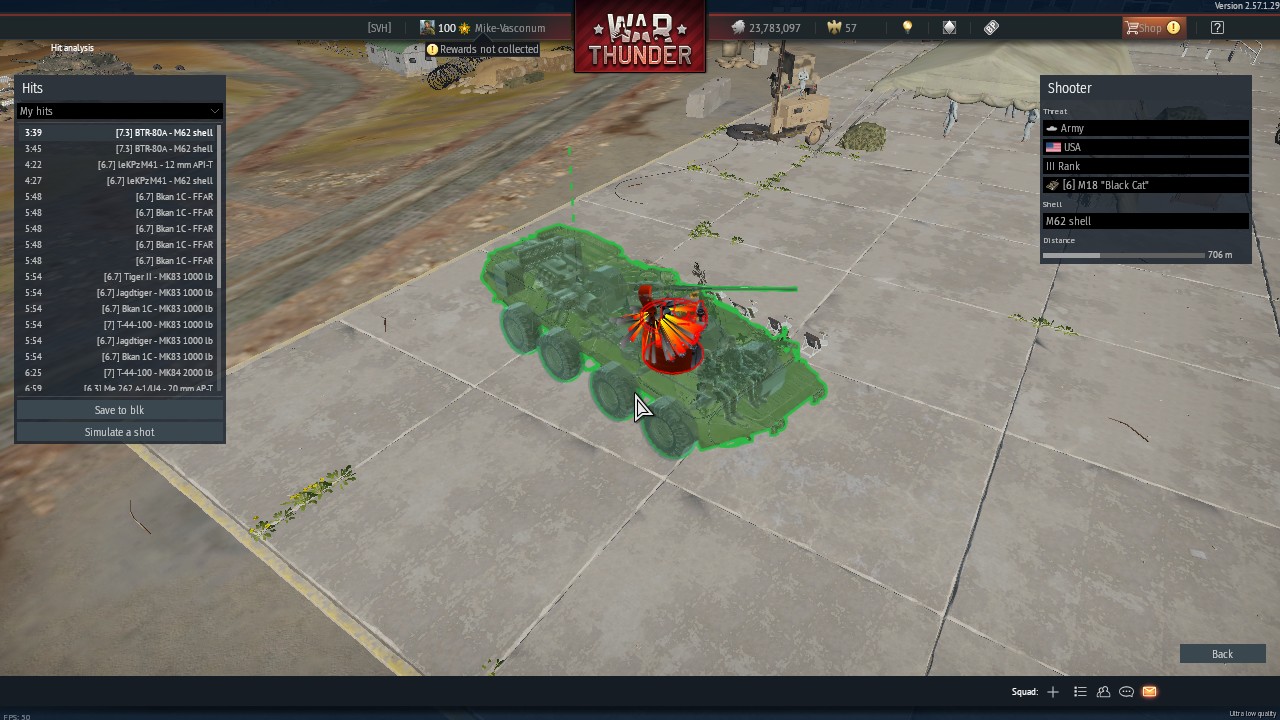
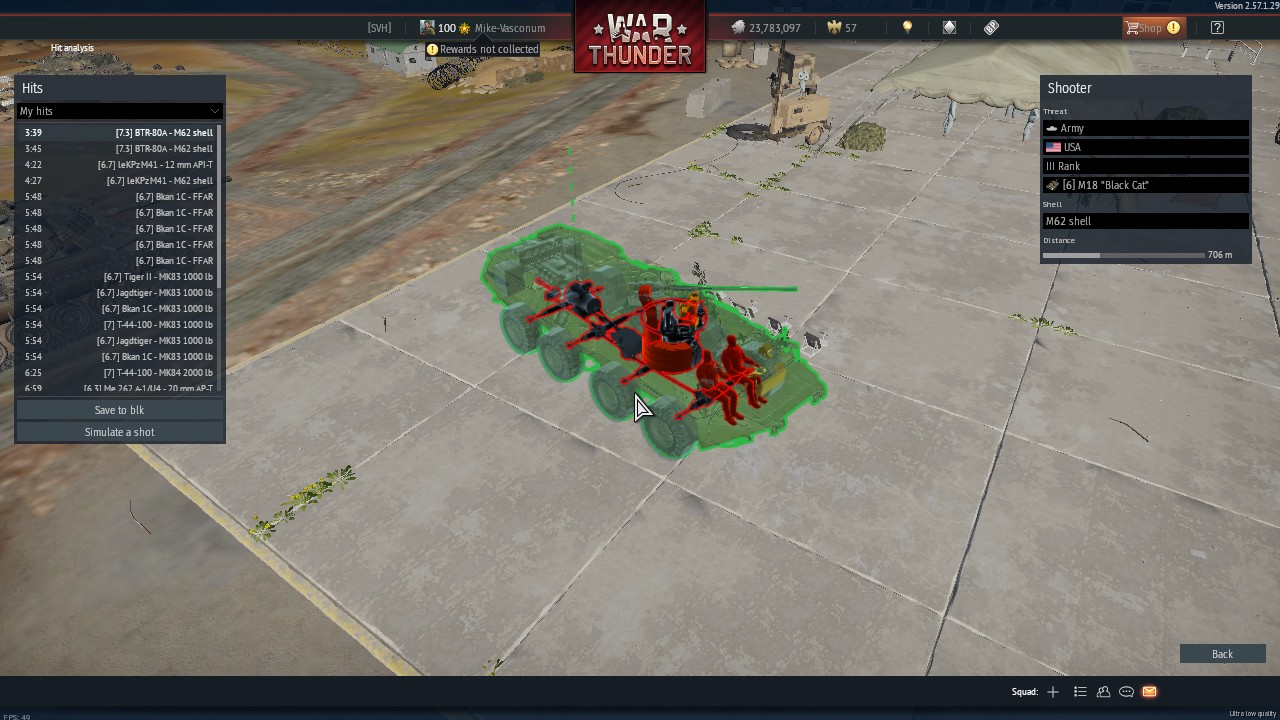
APHE round hit BTR-80A turret directly. Result:
- Gunner killed (logical: closest to impact)
- Ammo belt turned red but not detonated (illogical: sitting directly adjacent to explosion)
- Remaining crew turned red (logical if survivability stats are maxed out)
- Transmission destroyed (improbable: furthest component from turret explosion)
The same APHE round type routinely detonates ammo stored in much better protected vehicles: American, German, and Soviet heavy tanks with significantly thicker armor and more resilient ammo rack protection. Yet it cannot detonate an exposed ammo belt sitting centimeters from the explosion point inside a lightly armored APC.
APHE explosion physics should radiate outward from detonation point. Transmission sits at the opposite end of the vehicle (far below) from the turret. Spall traveling through the entire vehicle to destroy the transmission while leaving the adjacent ammo belt intact contradicts basic explosive physics.
Replay: https://warthunder.com/en/tournament/replay/499815647863408064
Timestamp: 3:39
BLK file: ussr_btr_80a_76mm_m62_219.08.blk (1.6 KB)
APHE hit screenshots
The transmission module has been universally, artificially made extremely vulnerable and easy to destroy. The VBCI for example, has the largest transmission in the game (yes, even larger than maus) and is an external module; thus allowing things such as 5.56 LMG fire to destroy it within a short burst. It appears this is a game balance decision by gaijin.
it can happen, tho bit less common on BTR. Its pretty possible on things that should not have any ammo cook off survivability. Like gepards. Ive had my gepard get its ammo cooked off despite the fact that it lacks any way to have it safely happen.
Went from full APIT ammo to 0 and only had the APDS left over.
2 Likes