- Yes - In the Tech Tree.
- Yes - Event/BP.
- Yes - Premium.
- No - I would not like to see HMCS Border Cities in game.
HMCS Border Cities soon after completion in 1944
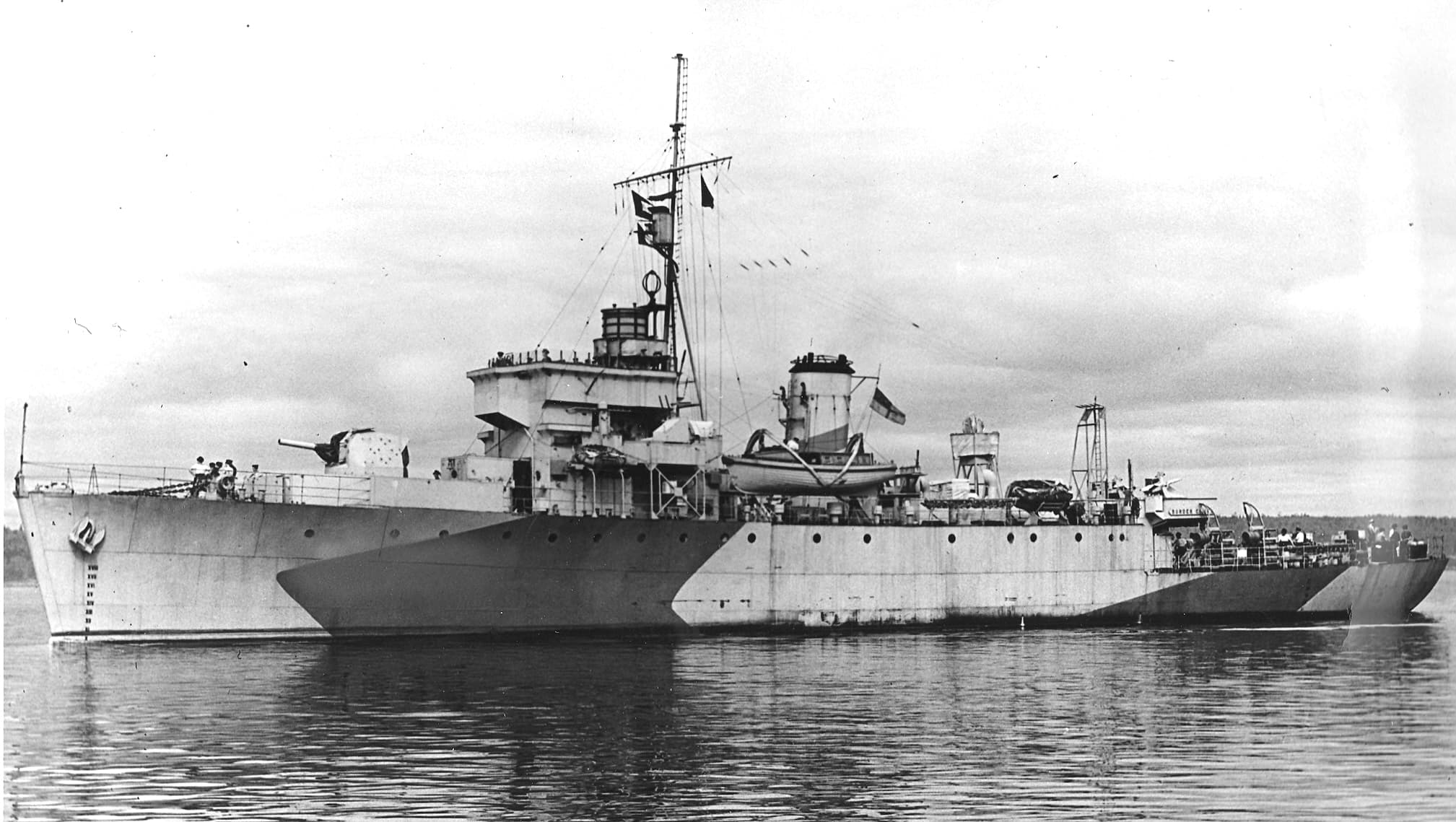
Description:
HMCS Border Cities one of twelve Algerine-class Coastal Escorts built and used by the Royal Canadian Navy during the Second World War.
The Algerine-class were initially designed as a dual use vessel, with the capability for either Minesweeping or Coastal Escort fits, in keeping with Royal Navy minesweeper design philosophy, seen in other classes such as the Bangor-class. This allowed the class as a whole to deal with both of the greatest coastal threats to shipping, enemy submarines and mines.
By 1941 this design had been chosen by the RCN, however before completion it was decided that submarines were of a greater threat than mines, and as such all of the Canadian vessels did not carry any minesweeping gear, being purely ASW vessels. They were often used as the Escort Leader, due to their large radio equipment fits.
This suggestion is for HMCS Border Cities at the end of the war in 1945.
HMCS Border Cities on escort duty, probably early 1945.
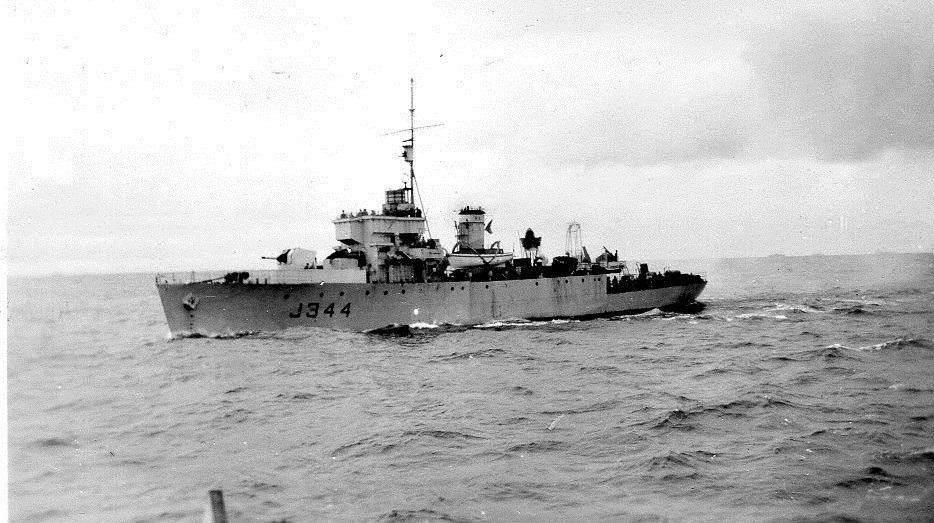
History:
HMCS Border Cities was initially ordered by the Canadian Government on the 12th of December 1941, to be built by Port Arthur Shipbuilding Co.Ltd, Port Arthur, Ontario. She would be laid down on the 26th of August 1942, finally launching on the 3rd of May 1944, and commissioning on the 18th of that month.
Upon commissioning she would continue with further trials around the area, visiting Toronto, Montreal, and Quebec City, before arriving at Halifax on the 17th. At her arrival she would undergo a small refit, receiving H/F D/F. From here she would undergo further trials until the 3rd of August.
On the 1st of August, while she was still underway on trails, she would be assigned to the West Escort Force out of Halifax, more specifically with escort group W-2. She would operate in this group, escorting both incoming and outgoing convoys from the area around Cape Race, Newfoundland, to Halifax or New York.
This work would be uneventful, however on the 17t of December 1944 she would pickup U-Boat radio signals via her H/F D/F gear while escorting HX320, with more signals being intercepted on the 26th, 30th with ON272, and on the 6th of January with HX 330.
On the 14th of January, in company with other vessels would search for a U-boat in the approaches to Halifax Harbour, but would resume escort duties without finding anything. On the 16th of February she would obtain an ASDIC contact, but it could not be discerned. Sometime in this time her Radar would be modernised, with her Type 271 being replaced by Type 268 and Type 291, however the Type 271’s lighthouse style radome was kept.
The next day while trying to transfer documents, due to a strong wind dead astern causing her to wallow about with little ability to steer, she would collide with the HMCS Runnymede, who had come up close astern of the Border Cities, with the Runnymede deck being holed and bow damaged by the Border Cities Transom, which remained undamaged. Efforts to transfer the documents would be stopped until the weather calmed the next day.
HMCS Border Cities returning from a convoy, late 1944
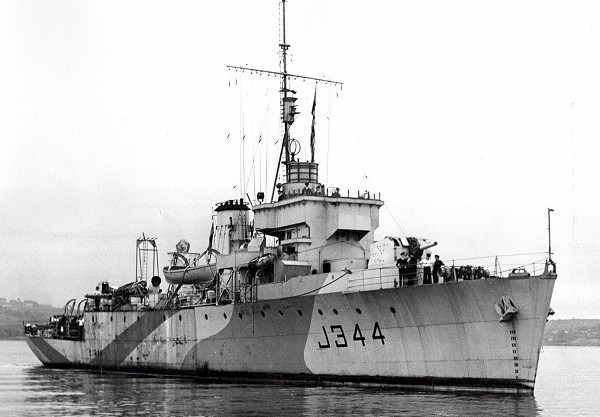
Escort activities would continue through past VE day, however the latter convoys would be routine with no incidents or interesting activity. Her final convoy would leave St.Johns on the 16th of May, with the HMCS Border Cities returning to Halifax on the 29th. She would undergo a small refit on the 1st of June 1945.
Plans would be drawn for a large refit and modernisation, however by the end of the war this was seen as unnecessary and design for this refit would not be completed. On the 8th of June she would transfer to the Halifax Force. From here she would search for the wreck of the HMCS Esquimalt, which wouldn’t be successful.
She would visit Bermuda in late June, returning to Halifax on the 4th of July. She would also visit Canadian Ports, including Winnipeg, Liverpool (Nova Scotia), St.Andrews around this time. She would be sent to reserve on the 23rd July 1945. On the 7th of September she would be taken out of reserve and moved to Shelburne with other Algerine-class vessels. As a fleet, they would visit Kingston, remaining there until the 20th.
They would continue around this area, visiting local ports in the US and other nations, until they arrived in Esquimalt where they were placed in reserve again, with HMCS Border Cities placed as the tender to HMCS Givenchy on the 15th of January 1946. In March that year she was given minesweeping gear, but would remain in reserve.
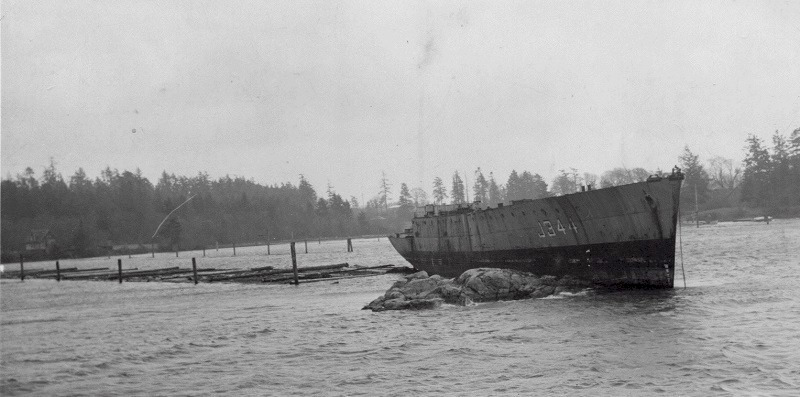
By April 1947 it was declared that she was too poor of condition to be of use, and with her equipment transferred to other vessels she was listed for disposal. She was sold for scrap in January 1948, but would sit as a hulk for several years before scrapping was finished.
| General Characteristics: | |||||
|---|---|---|---|---|---|
| Name: HMCS Border Cities | |||||
| Country: Canada | |||||
| Type: Minesweeper | |||||
| Class name: Algerine | |||||
| Year of commission: 1944 | |||||
| Refit: 1945 | |||||
| ----------------------------------------------------------------------------------------------------------------------------------------- | |||||
| Dimensions: | |||||
| Length: 225ft (68.6m) | |||||
| Beam: 35ft 5in (10.8m) | |||||
| Draught: 8ft 6in (2.6m) | |||||
| Displacement: 990t standard | |||||
| ----------------------------------------------------------------------------------------------------------------------------------------- | |||||
| Propulsion: | |||||
| Powerplant: 2x Oil fired boilers driving 2x VTE engines @ 1250hp (932kW) ea over two shafts | |||||
| Speed: 16kt | |||||
| Endurance: 5,000nmi @ 10kt | |||||
| ----------------------------------------------------------------------------------------------------------------------------------------- | |||||
| Armament & sensors: | |||||
| Compliment: 107 | |||||
| Primary armament: 1x1 QF 4-inch Mk.XIX on mount CP Mark XXIII | |||||
| Secondary armament: 4x2 20mm Oerlikon | |||||
| Tertiary armament: 1x24 Hedgehog launcher, 90 Depth Charges; 4x throwers, 2x chutes | |||||
| Radar: H/F D/F, Type 268, Type 291 | |||||
| Sonar: Type 144Q |
HMCS Border Cities, sitting as a hulk during scrapping
Sources:
Macpherson, K., & Burgess, J. (1982). The Ships of Canada’s Naval Forces 1910-1981 (p.130)
Macpherson, K. (1997) Minesweepers of the Royal Canadian Navy, 1938-1945 (pp 84-86)
Algerine Class Fleet Minesweepers
Radio Research Paper - Algerine Class
https://www.canada.ca/en/navy/services/history/ships-histories/border-cities.html
HMCS Border Cities (J 344) of the Royal Canadian Navy - Canadian Minesweeper of the Algerine class - Allied Warships of WWII - uboat.net
HMCS Border Cities - Wikipedia
HMCS BORDER CITIES - CFB Esquimalt Naval and Military Museum